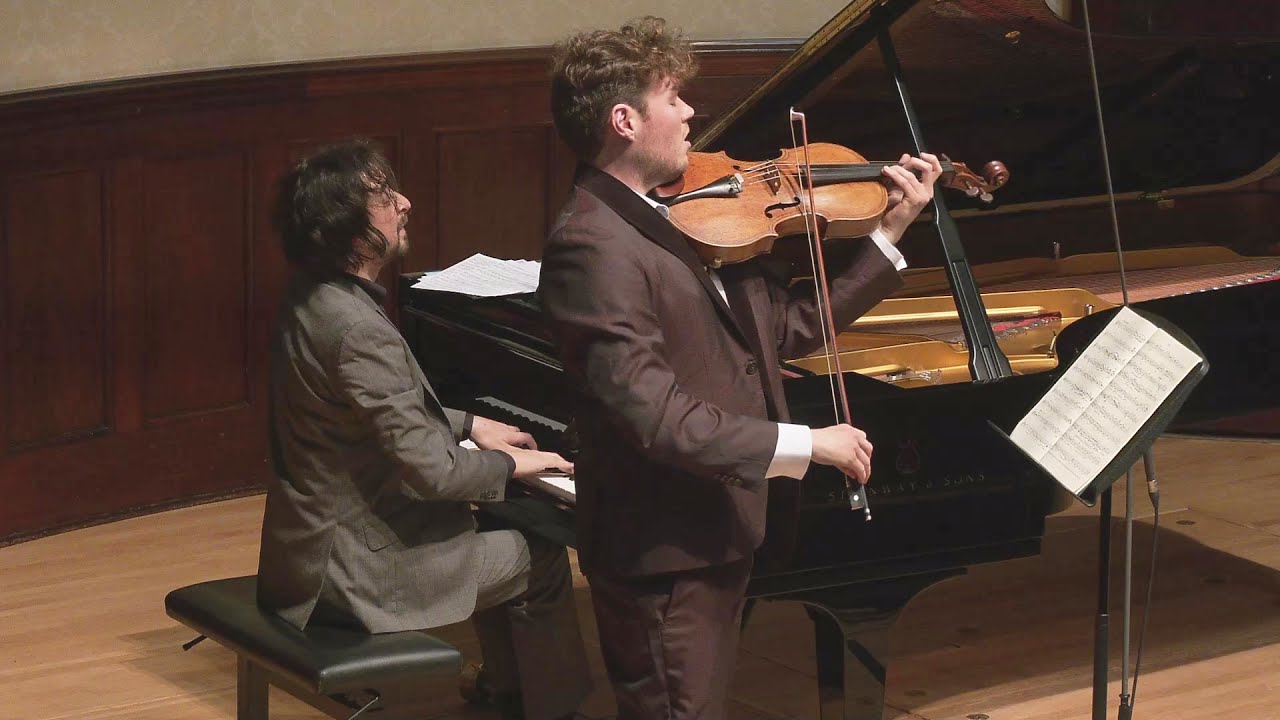
In concert – Timothy Ridout & Tom Poster: Brahms Sonatas & Schwertsik world premiere @ Wigmore Hall

ridout-poster

Timothy Ridout (viola), Tom Poster (piano)

Brahms Sonata for viola and piano in F minor Op.120/1 (1894)
Schwertsik Haydn lived in Eisenstadt (2021, world premiere)
Brahms Sonata for viola and piano no.2 in E flat major Op.120/2 (1894)

Wigmore Hall, London
Monday 10 May (review of the online broadcast)

Written by Ben Hogwood

This was, on paper, an ideal match of repertoire and performers – and it proved that way on screen too, as the Wigmore Hall served us the latest offering in its lunchtime concert program.

Timothy Ridout and Tom Poster are both beneficiaries of the invaluable Young Concert Artists Trust (YCAT) scheme and the BBC’s New Generation Artists program, of which Ridout is still a member. They are both plotting exciting paths as distinctive artists, and as a duo they enjoy an easy rapport, clearly relishing the music they play – an observation which can never be taken for granted!

The two sonatas published as Op.120 are Brahms’ final notes in chamber music, and indeed among his last works altogether. To have younger artists playing them is to reveal the youthful heart amid their autumnal colours, showing off their elusive qualities and winsome melodies.

Both works may have originated for clarinet and piano but work equally well through the burnished tones of the viola. Indeed Ridout proved with the first notes of the Sonata in F minor Op.120/1 that the range is ideal for his instrument, and the tone – not to mention Poster’s complementary piano line – was ideally weighted once he had fully secured the intonation.

The second movement had a cold shiver, thanks to the use of less vibrato, but grew warmer as it progressed. The genial Allegro grazioso was a treat, the finale more celebratory but enjoying its flowing second themes too.

The E flat sonata was if anything even more successful, lighter on its feet and with airy phrases and interplay. The first movement bobbed and weaved beautifully, especially when Ridout was playing in the higher register, which Poster clearly relished. The second movement literally rolled up its sleeves for a powerful outpouring, Ridout’s tone beautifully supple. By contrast the central section benefited from the burnished tones of the double-stopped viola. The finale’s theme and variations were well judged, thoughtful and mellow to begin with but then more capricious as they progressed, finishing with a thoroughly convincing flourish.

Between the two Brahms works was an interesting new piece by Kurt Schwertsik, commissioned by Ridout himself. Schwertsik is a Viennese composer now in his 70s, aware of his place in musical history but making original and intriguing music. This piece was characteristically elusive, under the intriguing title Haydn lived in Eisenstadt. Set in several movements, it posed questions and answers, but remained curiously unsettled. BBC Radio 3 presenter Andrew McGregor thought the piece had ended at one point, only for another two movements to follow – a situation we have all surely experienced as audience members! Ridout swept through the longer phrases of the penultimate movement against softly tolling chords from the piano, before the last movement threw furtive glances into the shadows amid bursts of activity, ending in a similar vein to early Schoenberg.

Poster ensured the harmonies were a point of focus throughout, hinting at exotic late Romanticism but never quite settling in that mood. This was a piece of intriguing thoughts and colours, a substantial utterance well worth hearing again. It proved the ideal complement to the poised Brahms sonatas around it – and the encore of the older composer’s Wie melodien, with which the concert softly concluded.

This concert is available to play for 30 days using the YouTube embedded link above.
Listening to Beethoven #148 – 7 Ländler for piano WoO 11 (1799)

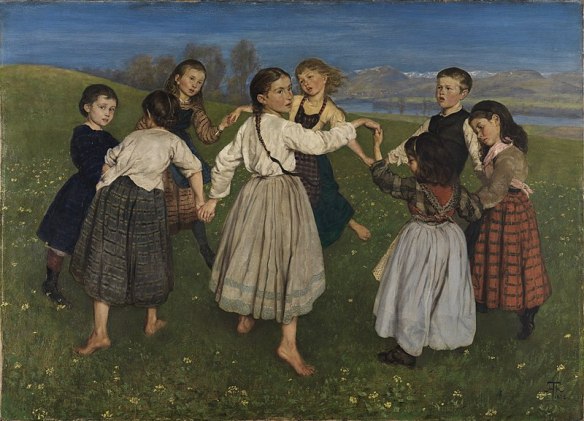
Der Kinderreigen (1872) by Hans Thoma

7 Ländler WoO 11 (1799) for piano (1799, Beethoven aged 28)

Dedication unknown
Duration 4’30”

written by Ben Hogwood

Listen

Background and Critical Reception

As part of his composing role in Vienna Beethoven did on occasion write dance music for the ball. We have already encountered sets of Minuets, written for the annual Redoutensaal balls, a discipline the composer seemed to warm to. This set of Ländler (a folk dance in 3/4 time) is thought to originate for 1798, and, writes Keith Anderson in booklet notes for Naxos, was presumably scored for two violins and bass.

That version is missing, but a piano version was published in Vienna the year after. All seven dances are in the same key, with a short coda added on the end.

Thoughts

The dances are charming and simple in their construction. Beethoven warms to the form with easy, hummable melodies and basic accompaniments often resembling drones. Harmonies are safe, and the rhythms have a nice lilt – ideal for moving easily around a crowded dancefloor. The seventh dance goes slightly offbeat, putting the emphasis on the second rather than the first beat in the bar, before a coda reinforces the drone and ends the dance with a trill.

Recordings used and Spotify links

Olli Mustonen (piano) (Decca)
Jenő Jandó (piano) (Naxos)

Olli Mustonen gives ideal account of these short, winsome pieces – and Jandó, a little faster, is enjoyable too.

Also written in 1799 Benjamin Carr Dead March and Monody

Next up tbc

Switched On – Amongst The Pigeons: Silence Will Be Assumed As Acceptance

atp

reviewed by Ben Hogwood

What’s the story?

‘We need to save humanity, because no one else will’. The stark outlook at the beginning of Daniel Parsons’ third album as Amongst The Pigeons sets the scene for a 12-track salvo against the choppy waters we find ourselves navigating. It is a first-hand response to the pandemic, the destruction of the environment, social and racial injustice, and much more besides. It is delivered through his own inimitable set of gadgetry from a garden shed outside Worthing, with home-produced music whose message travels far and wide.

What’s the music like?

Silence Will Be Assumed As Acceptance has an extremely satisfying structure, featuring a raft of carefully chosen electronics but with Parsons’ own voice opening and closing. Some of the track titles are clearly borne of the last year – N.V.O.D. especially. Standing for Natural Vectors Of Disease, this track collaborates with Richard Wiseman to call out the government on their response to the pandemic, amongst other things. There is barely concealed anger here, channeled through a hard hitting burst of electronics, and it is typical of the album’s ability to make a forceful point without resorting to cliché.

Colour Blind achieves a similar aim, Parsons’ urgent vocal nicely blended with Ollie Barron’s chorus, and while N.V.O.D. is angry, Holding My Breath works an emotive blend of flickering electronics and the well-matched vocals of Tiger Mendoza and Charis Cooper. More tender moments can be enjoyed in Bring The Stars Closer, where the cooing of singer Emma King is complemented by poolside grooves.

Before The Storm Hits is a satisfying blend of stabbing bass and a soulful vocal from Fast Trains, a complement to Megan Lundford’s persuasive tones on the following After The Storm. The beats are busy but never too obtrusive, Parsons working a healthy quotient of riffs and some really effective percussive effects. The balance is ideal, typified by the rich voice of Hannah Katy Lewis, set to quickly turning studio cogs.

The album works like a mix, with each track segued into the next, and the panning effects Parsons works in work really well on headphones. On occasion the bass hits satisfying depths, too, none more so than the fine instrumental Can You Manage? Do You Understand?

However the album’s defining moment proves to be the inspired use of a Charlie Chaplin speech on You The People. Developing like a Chemical Brothers track, it exhorts us to ‘create happiness’, to ‘make this life a wonderful adventure’. Spread Hope, with The Sad Song Co., delivers a similar if more understated message.

Does it all work?

Handsomely. Silence Will Be Assumed As Acceptance is a lean beast, scooting through its dozen tracks in under 40 minutes with no padding at all. Its message is powerful but never ‘preachy’, and the busy electronics complement the vocals rather than smothering them. A word, too, for some striking artwork from Ella Manongdo, matching the album’s impact.

Is it recommended?

Yes, enthusiastically – an album full of incident and heart but with strong underlying messages that are fiercely relevant to today’s world. It is a shot in the arm – or should I say shoulder?!

Stream

Buy


Listening to Beethoven #147 – 10 Variations on ‘La stessa, la stessissima’, WoO 73

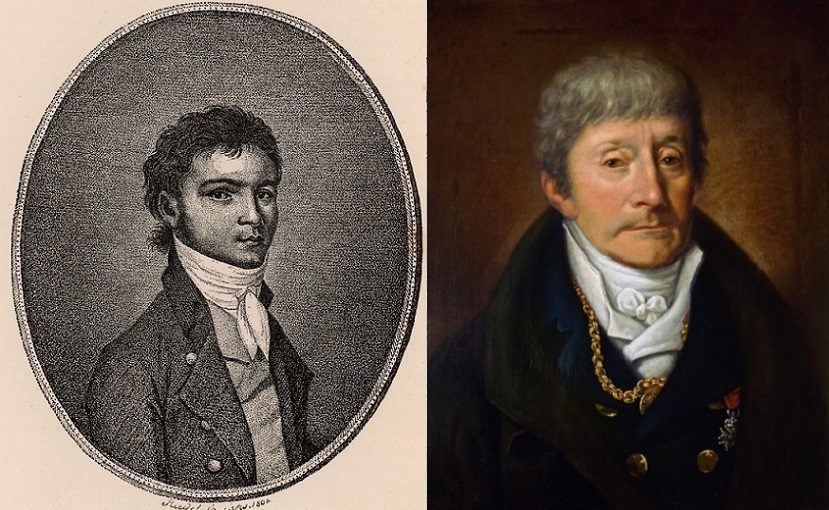
beethoven-salieriLudwig van Beethoven and Antonio Salieri (right)
8 Variations on ‘Tändeln und Scherzen’ WoO 76 for piano (1799, Beethoven aged 28)

Dedication unknown
Duration 9′

written by Ben Hogwood

Listen

What’s the theme like?

The theme is taken from a duet in Salieri‘s opera Falstaff, premiered on 3 January 1799 in Vienna’s Theater am Kärntnertor.

Background and Critical Reception

The variations that Beethoven dashed off after hearing Salieri’s Falstaff in January 1799 earned him a drubbing from critics, writes Jean-Charles Hoffelé. ‘Herr Beethoven may know how to improvise, but he is unable to create good variations’, wrote the Allgemeine musikalische Zeitung.

Hoffelé speculates on the cause of the journalist’s irritation, suggesting it might be ‘the tone of pure entertainment, the impertinent giocoso manner’. He notes however that Beethoven is enjoying himself, citing ‘the distilled Adagio in the top register of the keyboard’.

Thoughts

A strident theme sets out its stall, before Beethoven takes it for a walk in the first variation and then a quicker, propulsive jog in variation two. Again this is a composer working instinctively, the feeling being this composition may well have been written in one sitting at the keyboard.

Beethoven has fun with the offbeat comments of the third variation, while things take a sombre tone in the minor key with the fifth. The music springs out of this with an upright gait, and a fugal episode, then a terrific flurry of notes in the seventh and tenth variations, which no doubt impressed or infuriated the Viennese audience!

The final variation, the tenth, is a tour de force of athletic prowess in the right hand before adding on a coda, as so many of Beethoven’s variation sets do. This one, however, is by turns violent, amusing and touching, channelling the spirit of C.P.E. Bach as it changes mood almost by the bar. Final resolution is forcefully achieved.

Recordings used and Spotify links

Gianluca Cascioli (piano) (Deutsche Grammophon)
Cécile Ousset (piano) (Eloquence)
Ronald Brautigam (fortepiano) (BIS)

If you are happy to listen to the relatively taut sound of Ronald Brautigam’s fortepiano, you will find much to enjoy in his version, a thoroughly entertaining and dramatic reading of Beethoven’s mood changes. Cécile Ousset, perhaps inevitably, has greater elegance but also enjoys the playful aspects, not to mention the outrageous final variation.

Also written in 1799 Benjamin Carr Dead March and Monody

Next up 10 Variations on ‘La stessa, la stessissima’ WoO 73

Listening to Beethoven #146 – 8 Variations on ‘Tändeln und Scherzen’, WoO 76

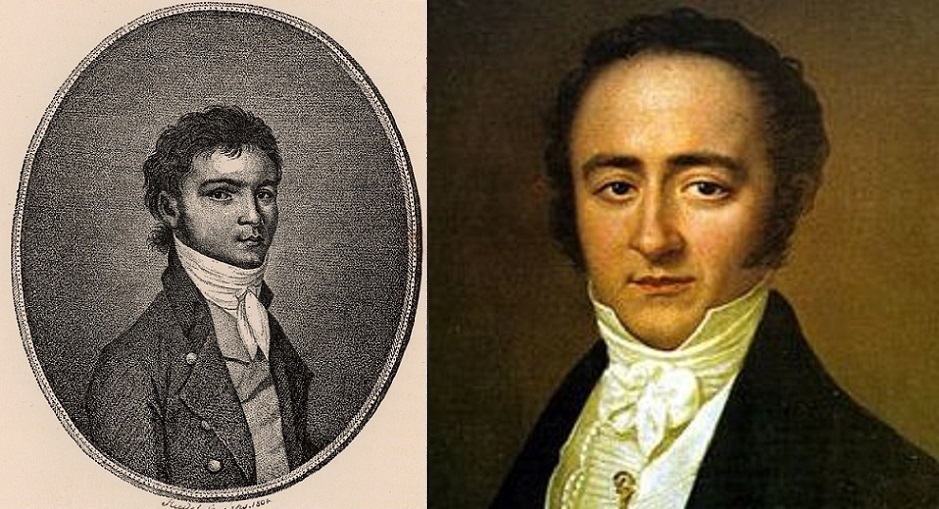
beethoven-sussmayrLudwig van Beethoven and Franz Xaver Süssmayr  (right)

8 Variations on ‘Tändeln und Scherzen’ WoO 76 for piano (1799, Beethoven aged 28)

Dedication unknown
Duration 9′

written by Ben Hogwood

Listen

What’s the theme like?

The theme is taken from a trio in the opera by Soliman oder die drei Sultaninnen by Franz Xaver Süssmayr. A popular Austrian composer at the time of composition, Süssmayr is not a familiar name in the concert hall nowadays, except for his completion of Mozart’s Requiem.

Background and Critical Reception

Thoughts

This is pure, instinctive inspiration – and is quite stop-start as a result. Yet just as Beethoven has a lot of fun with these variations, so does his listener. The fourth variation is especially brilliant, the hands tumbling down the keyboard like a waterfall.

An elegant seventh variation, the one about which Hoffelé writes, leads to a run of trills, like the end of a cadenza, which look set to complete the set – until a twist in the tale appears in the form of a fugue, crisply executed in the form of a Bach invention.

Beethoven switches unexpectedly to D major near the end, yet this is wholly in keeping with the free running approach throughout this entertaining set.

Recordings used and Spotify links

Alfred Brendel (piano) (Vox)
Cécile Ousset (piano) (Eloquence)
Ronald Brautigam (fortepiano) (BIS)

Cécile Ousset is a model performer in these variations, with enviable dexterity and a good deal of humour. Ronald Brautigam enjoys the more brash, unscripted moments and the piece sounds great on the fortepiano. Brendel is excellent too.

Also written in 1799 Benjamin Carr Dead March and Monody

Next up 10 Variations on ‘La stessa, la stessissima’ WoO 73