Listening to Beethoven #106 – Adagio for mandolin and piano in E flat major WoO 43b


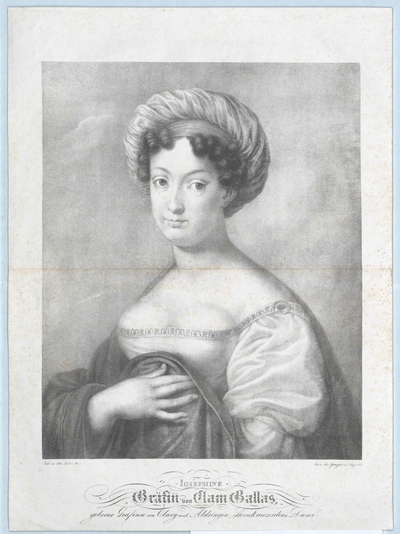
Joséphine de Clary, dedicatee of Beethoven’s music for mandolin and piano. Picture courtesy of the Beethoven-Haus Bonn.

Adagio in E flat major for mandolin and piano, WoO 43b (1796, Beethoven aged 25)

Dedication Joséphine de Clary
Duration 5′

Listen

Background and Critical Reception

The fourth and last of Beethoven’s known works for mandolin and fortepiano is a quite substantial Adagio, whose performing length is similar to the Sonatina in C minor. Its key of E flat major offers the possibility it was intended as the second movement of a bigger structure that went unfinished, as does its compatibility with the first piece. As with the other three of Beethoven’s mandolin works, it was ultimately written for Joséphine de Clary.

Thoughts

The piano takes the lead in this slow movement, which could form a complement to the Sonatina given its key of E flat major. Block chords are the support for a simple melody, the mandolin taking a supporting role at the start of what on the face of it seems like a straightforward piece. Yet here and there Beethoven mixes in some unexpected harmonies to keep the listener on their guard, and a middle section brings more energy before we revert to the original theme with the mandolin now in a higher register. It is quite a strange piece, and restless of mood.

Recordings used and Spotify links

Anna Torge (mandolin) and Gerald Hambitzer (fortepiano)

Alon Sariel (mandolin) and Michael Tsalka (fortepiano)

Julien Martineau (mandolin) and Vanessa Benelli Mosell (piano)

The block chords are clumped together on Tsalka’s fortepiano, as with Gerald Hambitzer on CPO, whereas the modern instrument gives much more sustain for Vanessa Benelli Moselli. Her account with Julien Martineau works best for this reason.

You can chart the Arcana Beethoven playlist as it grows, with one recommended version of each piece we listen to. Catch up here!

Also written in 1796 Hyacinthe Jadin – 3 Piano Sonatas Op.5

Next up 12 Variations on ‘See the conqu’ring hero comes’ for cello and piano

Listening to Beethoven #105 – Sonatina for mandolin and piano in C minor WoO 43a


Jean-Baptiste Krumpholz, brother of Wendel Krumpholz, a violin and mandolin-playing friend of Beethoven in Vienna.

Sonatina in C minor for mandolin and piano, WoO 43a (1796, Beethoven aged 25)

Dedication Joséphine de Clary
Duration 4′

Listen

Background and Critical Reception

Beethoven’s first two works for mandolin and piano, a C major Sonatina and the Andante con Variazoni, bear the publishing imprint WoO (work without opus) 44. The next two carry the number 43, but are thought to have been revised versions of pieces he started in Vienna, presumably for his friend Wenzel Krumpholz.

Beethoven’s mandolin music is not generally regarded as great, though it should be said his contemporaries, among them Hummel, were writing for the instrument around the same time. This Sonatina is of a similar length to its C major counterpart but uses the minor key. Despite that the music is more for private use than a work like the Piano Trio in C minor, the third of the Op.1 set.

Thoughts

The musical language is much more serious in this Sonatina compared to the previous one – though with the tones of the mandolin it does sound much more tongue in cheek. Soon the music shifts from the minor key to the major and it feels like all is well – but it is not long before Beethoven returns to the opening material, and the faces straighten once again.

There is a mournful, almost funereal air to the main theme if it is played slowly, but ultimately the colours are too light for it to linger.

Recordings used and Spotify links

Anna Torge (mandolin) and Gerald Hambitzer (fortepiano)

Alon Sariel (mandolin) and Michael Tsalka (fortepiano)

Julien Martineau (mandolin) and Vanessa Benelli Mosell (piano)

Alon Sariel and Michael Tsalka are quite deliberate in their account, especially at the end. Julien Martineau and Vanessa Benelli Mosell play the outer sections with tremolo at a very slow tempo, making the piece sound much more of a lament. Their central section has an appealing, graceful character. Anna Torge and Gerald Hambitzer take a similar approach.

You can chart the Arcana Beethoven playlist as it grows, with one recommended version of each piece we listen to. Catch up here!

Also written in 1796 GyrowetzString Quartet in E flat major Op.13/3

Next up Adagio for Mandolin and Piano WoO43b

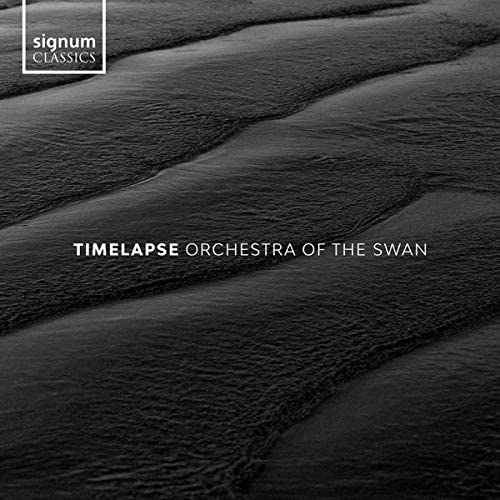
On Record – Orchestra of the Swan: Timelapse (Signum Classics)

reviewed by Ben Hogwood

What’s the story?

Timelapse is a concept album from the Orchestra of the Swan, conductor Bruce O’Neil and its artistic director David Le Page. Together they have created a sequence of works from as far back as the 17th century or as recently as last year, the concept illustrating how music can transcend time. In Le Page’s summary, Rameau and Vivaldi can be seen as fresh contemporaries of Thomas Adès or Radiohead, while the roots to songs from David Bowie and The Smiths are seen to lie in the music of Mahler and Vaughan Williams.

What’s the music like?

Timelapse hangs together as an hour of music perfectly suited to either end of the day. Its sequence is an imaginative one, and it hangs together in the way Le Page indicates thanks to the quality of his arrangements. There are no syrupy cover versions here; instead a song like Bowie’s Heroes is reduced to its bare elements. In the orchestra’s hands it becomes a contemplation on the original, a free improvisation from the flickering string ensemble complemented by icy droplets of melody from the harp.

The Smiths’ There Is A Light That Never Goes Out has similar qualities, though the substitution of an oboe for Morrissey’s voice, while beautifully played, is arguably less effective. Radiohead’s Pyramid Song fares better.

The ‘older’ music, as Le Page suggests, dovetails beautifully. François Couperin’s Les Barricades Mystérieuses and a sequence from Rameau’s Les Boreades work really well, while the addition of Trish Clowes’ saxophone to Vivaldi’s music for Sleep 1 is a nice touch, her recitative sensitively done.

The cold, spidery figurations of Schubert’s Sleep Softly – a meditation on his Serenade by Le Page – cut to a robust, bluesy solo, while the Couperin segues rather nicely to Steve Reich’s Duet and Thomas Adès O Albion, a chamber-music alternative to the Enigma Variations’ Nimrod, drawn from his Arcadia string quartet.

At the close of the set, Errollyn Wallen’s Chorale contains both soothing textures and an impassioned, wordless plea, while the last of Górecki’s Three Pieces in Old Style has a moving simplicity harking back over centuries, illustrating Le Page’s point rather nicely.

Does it all work?

Everything fits together nicely, the overall mood one of contemplation in the half light. I found the phrasing on Grieg’s Air a bit rushed at times, but that is personal taste of course – and when you’ve got round the idea of an oboe replacing Morrissey’s voice on There Is A Light That Never Goes Out you’ll agree that it works rather well.

Is it recommended?

Enthusiastically. There is a great need at the moment for music to soothe the fevered brow, and Timelapse is an effective playlist fulfilling that function every time you listen to it.

Stream

Buy

You can buy the album from the Signum Records website

Switched On – Bicep: Isles (Ninja Tune)

reviewed by Ben Hogwood

Isles is the second album from Bicep, the Belfast-born and London based duo of Matt McBriar and Andy Ferguson, who dazzled us with their self-titled album in 2017. On it they showed a love of early rave music and an ability to channel it into futuristic beats and soundscapes. This resulted in a number of high profile advert appearances (BMW especially) but also translates into a brilliant live show.

When live gigs do return, this ‘home listening version’ of their second album will find new impetus in front of an audience, with Bicep always keen to give their fans the biggest show possible.

What’s the music like?

In truth it would be impossible to recreate the primal thrill of Bicep’s debut, which was all about having the maximum possible impact on the dancefloor. Yet Isles runs its predecessor close, retaining the distinctive clipped beats and riffs that make the duo’s music instantly recognisable, and adding some imaginative samples and vocals drawn from international sources.

Second single Apricots is a prime example, powered by a double sample of traditional Malawian singers recorded in 1958 and a song from the Bulgarian State Radio and Television Choir. Along with Atlas it runs close to the sound of their first album, with enjoyable kinetic energy and early house highs. Meanwhile Sundial uses Asha Boshle and Bhupinder Singh’s Jab Andhera Hota Hai, a sublime piece of work catching the dazzling rays of our star.

The clipped beats find an ideal complement in the vocals of Clara La San on Saku, a singer who manages the balance of being quite subdued but capturing an underground garage sound. The two really feed off each other. Vocals of a very different kind inform the beatless Lido, based on a sample of a motet by Italian renaissance composer Carlo Gesualdo.

These examples show just how broad the reach of McBriar and Ferguson can be, a cosmopolitan approach that keeps a healthy edge to the music and gives the album a healthy variety.

Does it all work?

Pretty much everything does. Just on occasion it would be good to see Bicep develop their source material a bit more, as in a track like Rever, with Julia Kent, which has a really good sample but doesn’t push on as much as you might expect. Elsewhere though, when the beats ping around like images on a 1980s video game, Bicep are on great form.

Is it recommended?

Yes. While Isles may not have their immediate thrills and spills of the Bicep debut, it still has plenty going for it. A fine follow-up which shows them to be great beatsmiths on record – and let’s hope it’ not too long before we get to see them live as well.

Stream

Buy

Listening to Beethoven #104 – Andante con variazioni for mandolin and piano in D major WoO 44b


Joséphine de Clary, dedicatee of Beethoven’s music for mandolin and piano. Picture courtesy of the Austrian National Library.

Andante con variazioni in D major for mandolin and piano, WoO 44b (1796, Beethoven aged 25)

Dedication Joséphine de Clary
Duration 9′

Listen

Background and Critical Reception

Beethoven’s second work for mandolin and fortepiano was also intended for Joséphine de Clary, and is a quite substantial set of six variations on a theme of unknown origin. It can also be played – unarranged – for violin and piano, which would suit Wenzel Krumpholz, the mandolin and violin player with whom Beethoven struck up a friendship in Vienna.

The piece is clearly written for some fun to be had between two players in an informal setting, and comfortably achieves its aim.

Thoughts

The theme chugs along in a friendly mood but there are hints of trouble when Beethoven adds a few spicy harmonies in the second half, providing a departure point for the piano. The first variation shows off the mandolin with some nice figurations, then the second goes towards the extremes of the instrument’s range.

Inevitably there is a doleful minor key variation, its sadness exaggerated by the plucking of the mandolin, but it is completely trumped by the following variation which skips merrily towards the end with a broad and slightly mischievous grin. A soft-hearted coda seals the deal.

Recordings used and Spotify links

Anna Torge (mandolin) and Gerald Hambitzer (fortepiano)

Alon Sariel (mandolin) and Michael Tsalka (fortepiano)

Julien Martineau (mandolin) and Vanessa Benelli Mosell (piano)

Alon Sariel and Michael Tsalka have a nice ‘give and take’ to their recording, as do Julien Martineau and Vanessa Benelli Mosell, who are a bit quicker in their version. Anna Torge and Gerald Hambitzer, in a disc from 2018 on CPO, have a lot of fun too – it’s difficult not to in a piece like this!

You can chart the Arcana Beethoven playlist as it grows, with one recommended version of each piece we listen to. Catch up here!

Also written in 1796 GyrowetzString Quartet in C major Op.13/2

Next up Sonatina for Mandolin and Piano in C minor WoO43a