In concert – Steven Isserlis & Mishka Rushdie Momen @ Wigmore Hall

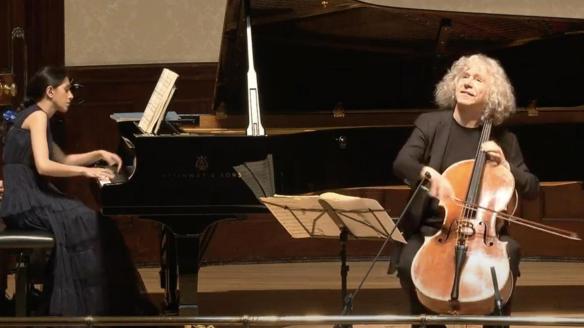
It must have been extremely special for Steven Isserlis to be playing the music of three of his favourite composers at the Wigmore Hall on this day – even more so as the date fell on the birthday of one of them, Robert Schumann.

He is one of the cellist’s greatest musical loves, and the sense persists that Isserlis is still discovering more things that make it so. One of Schumann’s many strengths is the versatility of his music, meaning pieces such as the 3 Romances Op.94, originally written for oboe and piano and given to his wife Clara as a Christmas present in 1849, can easily be performed with violin or, indeed, the cello.

Schumann’s birthday was marked by a performance of unaffected romantic beauty from Isserlis and pianist Mishka Rushdie Momen, very much on an equal footing playing the composer’s first instrument. The pair caught the doleful and slightly inquiring nature of the first romance beautifully, while the surge of feeling in the central music of the second was a strong cumulative wave. The third, its theme given in a darker shade, was briefly introspective in its unison phrases but then more overtly passionate.

Before Schumann came another ‘birthday’ composer. Beethoven’s 250th is not likely to receive quite so much live coverage as it would have done in a year without a pandemic, but what it lacks in quantity it will surely make up for in quality. The Sonata for piano and cello no.1 in F major, the first of a pair published as the composer’s Op.5, is the ideal concert opener. It begins in slight trepidation of what it is about to discover, but then, on establishing what is effectively a new form of writing for the cello and piano together, throws itself headlong into the rapids.

The Allegro that comes after that first sense of discovery was joyous indeed, with lovely dialogue in play between the two protagonists. Isserlis smiled frequently, as though revelling in the combination of favourite music and venue once again, while Momen’s clear phrasing dovetailed neatly with the cello’s, owning some of the really tricky right hand runs with fearless accuracy.

The second movement had a terrific burst of energy, the sun breaking through at every possible opportunity when its catchy theme made several reappearances. The pair also gave a nice air of mystery when Beethoven suddenly departed from ‘home’ and ended up in a number of seemingly unrelated tonal centres, before reassuring us with the warmth of the home key once again.

As he introduced his favourite 20th century cello sonata, there was a sense of Isserlis’ heart almost bursting with the chance to play music live again. He described his discovery of Fauré’s late music as ‘being outside a door but then passing through and wondering why on earth I had been outside’, before the pair played the Cello Sonata no.1 in D minor Op.108, the first of two such works from the Frenchman.

This was a very fine performance indeed, Isserlis and Momen watchful and urgent at the start, its music wracked with uncertainty but nonetheless pushing forward with great conviction. The Andante slow movement began lost in thought, the bell-like toll of the piano matched by Isserlis’ rich legato tone, before reaching heights of passion that the final movement also delivered, the performers now glorying in the major key and Fauré’s bursts of sunshine, the strong resolve of the first movement bringing its ultimate reward.

The pair finished with a profound account of Isserlis’ own transcription of a Bach chorale prelude, Ich ruf’ zu dir, Herr Jesu Christ, in which – as the cellist noted – Bach says it all.

Listening to Beethoven #10 – Piano Concerto in E flat major


Beethoven, aged 13. This portrait in oils is said to be the earliest authenticated likeness of Beethoven – but Beethoven-Haus Bonn disputes this description, claiming it to be an unknown youth painted in the early 19th century.

Piano Concerto in E flat major WoO 4(1783-4, Beethoven aged 13)

Dedication not known
Duration 24′

Listen

Background and Critical Reception

Daniel Heartz tells the story of Beethoven’s first foray into the world of the concerto. Barely a teenager, ‘it was appropriate to the young composer’s status as a virtuoso of the keyboard that he should try his hand at writing a piano concerto.’

The work was incomplete however, with the orchestral part left unfinished beyond its two-piano reduction. The trip to Holland mentioned in the previous article on the Rondo in C major looks to have been the driving force behind this composition, for Heartz says that ‘Beethoven may have performed it in a concert at The Hague for which he was paid a large sum as a pianist, and at which Carl Stamitz also appeared as a viola soloist.’

As Jan Swafford notes, the work begins with a ‘flavour of hunting call-cum-march’, an ‘abiding topic in his future concerto first movements’. He calls it a ‘lively and eclectic piece that showed off his virtuosity’, while in his booklet notes to the DG complete Beethoven edition Barry Cooper notes its proximity in style to J.C. Bach rather than Mozart.

Thoughts

In Ronald Brautigam’s recording – where he made the orchestral arrangement – the horns are prominent in the opening salvo, which is reasonable to expect given the key of E flat major which will suit them. Then the piano takes over with an upbeat theme and some florid passagework. The music is fluently written, and follows the rules relatively closely in moving to the keys expected in the course of its development – B flat major, G minor, closely ‘related’ to the home key. The music is both charming and virtuosic.

For the slow movement Beethoven revisits a Larghetto direction (slow but not as slow as the ‘adagio’ tempo marking’) and writes music of an appealing delicacy and charm – undemanding but giving the soloist room to spread their wings a little.

For the finale Beethoven uses a Rondo form (presenting three themes in the sequence A – B – A – C – A – B – A) – a form he used for the last movement of each of his five published piano concertos. Despite the rigorous structure it again sounds very natural and the ‘A’ theme – which you hear from the start – is lightly playful, suggesting a less formal dance. The grace and charm of the third movement has a nice complement in the shape of a rustic ‘C’ theme where we briefly flirt with the minor key and the melody becomes more decorative. Only the ending is a bit strange, with a sudden cut-off point.

Recordings used

Ronald Brautigam (piano), Norrköpping Symphony Orchestra / Andrew Parrott (BIS)
Orchestra of Opera North / Howard Shelley (piano) (Chandos)

Ronald Brautigam gives a fine performance of the concerto, with attentive accompaniment from Andrew Parrott and the Norrköpping Symphony Orchestra. Howard Shelley’s version has a softer orchestration for the first theme of the piece which works really nicely. His playing follows suit, proving particularly effective in the second movement where his affection for Beethoven’s early work is clear.

Spotify links

Ronald Brautigam, Norrköping Symphony Orchestra / Andrew Parrott (tracks 1-3 of the link below)

Orchestra of Opera North / Howard Shelley (piano) (the fourth disc of an album containing all the Beethoven works for piano and orchestra)

You can chart the Arcana Beethoven playlist as it grows, with one recommended version of each piece we listen to. Catch up here!

Also written in 1783 Abel 6 Symphonies Op.17

Next up Piano Concerto in E flat major WoO 4

In concert – A week locked into Wigmore Hall

At 1pm on Monday June 1st, live music-making returned to the Wigmore Hall and BBC Radio 3.

While we have been incredibly fortunate to enjoy live streams of music from around the world since lockdown began, this felt like something extra special. A whole month of lunchtime concerts, served up by our finest chamber music venue in conjunction with BBC Radio 3, and streamed on the Wigmore Hall website. With a selection of top class artists, all of whom live close enough to journey in and play, all that was missing was the audience – but this added extra poignancy, offering us private moments with the musicians in our own home, a deluxe version of what BBC Radio 3 has been giving us for decades. A note should be made for presenter Andrew McGregor‘s broadcasting manner, expertly paced and perfectly weighted.

The musical riches in the first week have been many and varied. The first concert was ideally placed, Steven Hough giving us Busoni’s epic realisation of Bach’s Chaconne in D minor and Schumann’s lovelorn Fantasie in C major. In some performances of the Bach-Busoni the virtuoso elements of the piece take over at the expense of feeling, but not here. Hough shaped the phrases with great care, bringing out the gusto when it was needed but giving an incredibly well-balanced account of a familiar showpiece.

With Schumann’s Fantasie he gave a flowing performance of a notoriously difficult work, made all the more poignant because of its circumstances, written in isolation by a composer pining for his wife Clara. There was joy, too – the march theme of the second movement ringing out with bell-like clarity, while the resolution at the end, softly voiced, left a lasting smile.

Tuesday’s song recital from soprano Lucy Crowe and pianist Anna Tilbrook had the themes of Hope and Longing – appropriately in the awful context of world events, which saw the concert begin with a two-minute period of reflection on racial inequality and violence.

Crowe began on high, judging her vibrato beautifully for Thomas Arne’s aria O ravishing delight, before three Schumann songs found her vocal control matched by her communication with the audience, in spite of the empty hall. The sound world of Berg’s 7 frühe Lieder is very different, with challenges of tricky melodic intervals and words by seven different poets, but the soprano handled them effortlessly, helped by Tilbrook’s painterly application of light and shade for the corners of Berg’s nocturnal settings.

The pair moved on to a selection of poignant folk songs, none more so than the unaccompanied She moved through the fair, before English lyrics old and new from Thomas Dunhill, Ivor Gurney, Vaughan Williams and Madeline Dring. It was a touching recital with both soprano and pianist clearly on the same page.

Few guitarists would expect to receive compliments on the quality of their quiet playing…but that was what stood out immediately from Sean Shibe’s solo recital on the Wednesday. With a collection of attractive Scottish dances the listener was drawn in from the start and borne to the beauty of the Highlands, the tunes carrying on the air in performances of extraordinary intimacy.

The same could be said for Shibe’s performance of Bach’s Lute Suite in E minor, carefully studied but delighting in the expressive interplay between the parts, bringing Bach’s notes clean off the page. Steve Reich’s Electric Counterpoint was even better, Shibe moving to a Fender to play the 12th part of this multilayered composition. The waves of sound echoing around the Wigmore as the guitarist, now barefoot, completely lost himself in the music.

Oboist Nicholas Daniel and pianist Julius Drake, both Wigmore regulars and musical partners for 40+ years, crammed their Thursday lunchtime with music old and new, all of personal significance.

They included two short premieres, the wide open textures of Huw Watkins’ haunting Arietta and the uncertainties of Michael Berkeley’s A Dark Waltz, written in lockdown. There was a rarity,too, in the first broadcast performance of Liszt’s darkly coloured Élegie, originally written for cello and piano but here in a recently unearthed version with for cor anglais.

Howard Ferguson’s arrangement for oboe and piano of Finzi’s substantial Interlude was beautifully paced and deeply felt in that slightly elusive way in which the composer writes, Drake absorbing the extra parts with ease. Meanwhile Ferguson’s arrangements of three pieces for pedal piano by Schumann studies were also nicely done. Later we heard three attractive shorter pieces from Madeline Dring, and finally Nicholas Daniel showed off the oboe’s versatility in three rewarding arrangements of popular songs, including The Girl From Ipanema and capped by All The Things You Are. A note, too, for the pair’s deeply felt and beautifully observed Bach encore, Jesu, Joy of Man’s Desiring, prefaced by a sensitive introduction.

Last but not least, Pavel Kolesnikov and Samson Tsoy reminded us what an intimate form of communication the piano duet can be. As the pair live together they have experienced isolation in each other’s company, and that in itself brought an extra poignancy to their lovingly played selection of BrahmsLiebeslieder Waltzes, a profound Schubert Impromptu in A flat from Tsoy and a bittersweet clutch of six Waltzes, Ländler & German Dances from Kolesnikov.

Together the pair enjoyed the humour and lightness of touch in Beethoven’s 8 Variations on a theme of Count Waldstein, but the best was saved for last and a wonderful performance of Schubert’s Fantasia in F minor. Recognised as one of the finest works in the piano duet repertoire, it received a performance led by Tsoy that moved from almost painful introspection to passionate outbursts five minutes later. The scherzo section had plenty of cut and thrust, while the whole piece, ideally paced, built to an almost overwhelming strength of feeling, capped by an intensely dramatic pause before the softly voiced opening theme returned.

What a musical week it has been – and looking at the roll call it looks like we are in for another three weeks of equally fine and moving insights. You can catch up with all the concerts on the links above and are strongly advised to do so, for there are some incredibly fine performances waiting to be heard. Live concerts may not be with us for a while yet, but in the meantime these intimate hours with some of our best classical music artists are an ideal substitute.

You can see the schedule for forthcoming Wigmore Hall livestreams here, the series resuming courtesy of cellist Steven Isserlis and pianist Mishka Rushdie Momen on Monday 8 June.

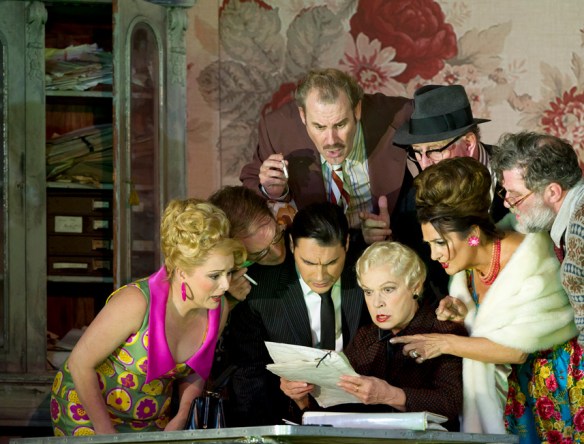
Online recommendation – Il trittico from the Royal Opera House

In the words of the Royal Opera House:

Contrast is the essence of Giacomo Puccini’s operatic triptych, Il trittico. The one-act works that form the trilogy – Il tabarro, Suor Angelica and Gianni Schicchi – range from gritty melodrama to life-affirming comedy. While each opera stands alone, the three come together to create a sense of a complete event, rich in textures and musical forms.

Director Richard Jones matches the eclectic range of Puccini’s music in a production of great verve and invention, moving from the grimy banks of the Seine to a children’s hospital and from there to a garish apartment in 1950s Italy.

Il trittico had its premiere at the Metropolitan Opera, New York, in December 1918. The trilogy was performed in full at Covent Garden in 1920 and again in 1965. Richard Jones’s acclaimed 2011 production was the first complete performance of Il trittico at Covent Garden in 46 years.

You can stream the operatic trilogy from the Royal Opera House website here, up until 19 June 2020.

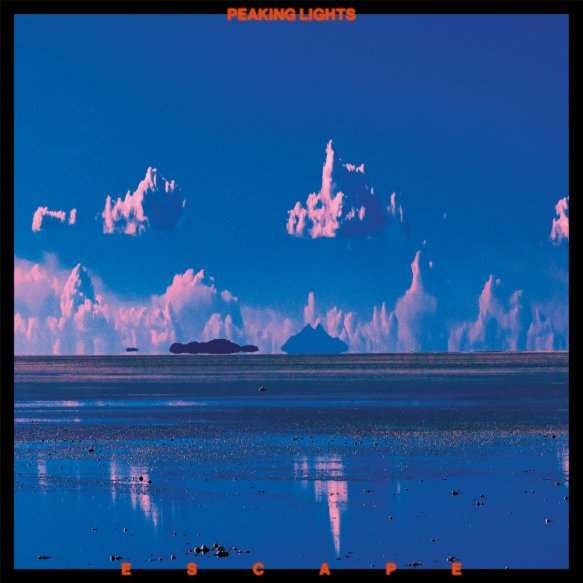
Switched on – Peaking Lights: E S C A P E (Dekmantel)

What’s the story?

Peaking Lights are easy to take for granted – but when you delve into their recent output you realise how remarkably consistent it has been. Since moving further into the mainstream with the rather wonderful 936 album of 2011, the husband and wife duo of Aaron Coyes and Indra Dunis gained momentum with Lucifer, Cosmic Logic and The Fifth State of Consciousness, all exploiting their talents for grooves infused with dub and psychedelia.

The title of E S C A P E is a pertinent one for their sixth album proper, since they have moved label (to Amsterdam’s Dekmantel imprint) and celebrate a return to the long-playing format for the first time in three years.

What’s the music like?

Put it this way, fans will be happy. Coyes and Dunis have been remarkably consistent in the quality of their album releases and E S C A P E is no different.

There is more upfront activity though, suggesting they have been energised by their new surroundings. Dharma has beguiling vocals but the beat is relatively fast and the psychedelic leanings are heavy – in a good way. Likewise for Soft Escape (Moonman Mix), with some heavy distortion, and Innerterrestrial with its fat bass line, while Traffic adds a punchy guitar. Oddly, the enchanting vocal Dunis brings to The Dammed has quite a similar melodic profile to R.E.M.’s Losing My Religion, with appealing block synths that blossom into a glorious wall of sound.

It is one of many moments for the listener to lose themselves in, as are Peace and Dreams – the ideal counterparts to the dark world climate in the last few weeks, with soothing textures. Meanwhile The Caves has more than a touch of Stranger Things with its bubbling synth lines. Perhaps the most reassuring sentiment of all is saved for last, the lush Change Always Comes devoid of beats and left for Dunis to star, part of a multilayered dreamscape.

Does it all work?

Yes. There is no need to change their approach, yet the music still sounds fresh, and there is a generously filled album here. Peaking Lights never re-tread the same ground on their music, yet they hit a familiar and very welcome combination of relaxation and stimulation unerringly.

Is it recommended?

Yes. A new Peaking Lights album is just what we need in these troubled times, drawing a veil over the world outside and allowing us to dabble with some positively blissful vibes for once.

Listen

Buy