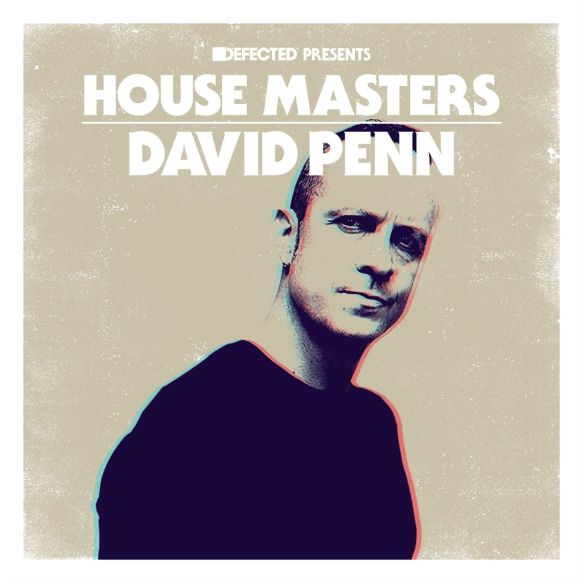
Various Artists – House Masters: David Penn (Defected)
reviewed by Ben Hogwood
What’s the story?
Spanish DJ David Penn gets this very welcome career retrospective from Defected, a chance for fans to appreciate not just his original, Latin-flavoured house tunes and his teamwork with DJ Chus, but a whole host of remixes. Penn has in the past bravely taken on classics like Pete Heller’s Big Love and Sophie Lloyd’s Calling Out, but as this collection shows he always comes out on top.
What’s the music like?
Excellent, and brimming with good vibes. The original productions include Penn’s uplifting Nobody, which sets the tone from the off, but also What Is House, with Rober Gaez, and Stand Up, a piano-led, gospel-tinged winner with Ramona Renea. The collection has a really good ebb and flow between these productions and Penn’s remixes, so early on we get the rolling beats and bass of Jack Back’s (It Happens) Sometimes and a brilliant take on Candi Staton’s Hallelujah Anyway, smooth as silk in the production but still hitting the essence of the song. Later on the same can be said for Ron Hall & The Muthafunkaz‘ The Way You Love Me, which Penn treats just right, and also Todd Terry’s Babarabatiri, which plays right into his Latino strengths.
Speaking of which, Penn’s El Sur, with Jabato, is a highlight later on – as is Esperenza, the long-established anthem made with regular sparring partner DJ Chus. Both appear later with a remix of Lenny Fontana’s The Way, before teaming up with Concha Buika to bring the house down on Will I (Discover Love).
Does it all work?
Yes. Penn’s remixing style is uncomplicated – which is an underrated quality, because it means the quality of the original still shines through in spite of the new clothing. The Mediterranean warmth is ever-present in his own productions, which flow beautifully and are consistently classy. A good piano riff is rarely far away from a David Penn production!
Is it recommended?
Yes. It’s great to see Penn getting the spotlight in this way, and he deserves his place alongside the hall of fame Defected have built up in their House Masters series. He understands what makes house music work so well in the hotter European climes, and this compilation shows off his output beautifully.
Stream
Buy
You can buy David Penn’s House Masters compilation from the Defected website here
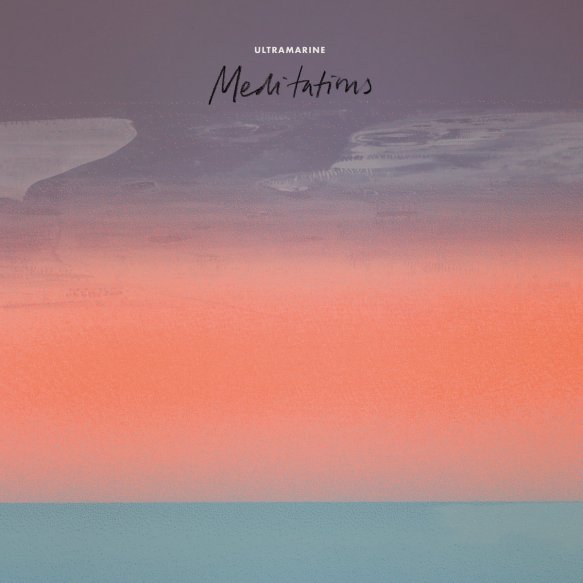
Exactly as it appears. Meditations is a companion piece to last year’s long player Signals Into Space, which Arcana particularly enjoyed. Lasting not long over half an hour, it is what Ultramarine main man Paul Hammond describes as ‘two long-form episodic ambient pieces performed with a reduced palette of kalimba, treated guitar, wavetable & analogue synths and hardware effects; recorded in London with Andy Ramsay (of Stereolab).
Meditations includes field recordings made in Brazil, engineered and mastered as part of the main recording process.
What’s the music like?
Very easy on the ear, as you can imagine – and very like the cover in terms of musical colour.
Both Meditations are best experienced on headphones or on a widescreen system in a quiet environment. Speaking from experience, they have only limited success on public transport, as the large amount of background noise means the sounds occasionally drop out of earshot unless turned up loud. Of course this music would never really be intended for such listening.
Instead, find the right environment to tune in and you will be quickly transported into Ultramarine’s world. It is a warm, watery place, out of doors and with soft, consoling noises both close up and far away, depending on where you want to focus your listening.
Meditation I settles on a dreamy sequence of two chords that follow each other without having any obvious rules, before moving to a section where the kalimba can cast its watery magic. Gradually this builds its energy, the sounds rippling outwards very pleasantly over a long pedal note.
Meditation II feels slightly closer to people, with distant snatches of dialogue audible from the field recordings. There are more obviously electronic interpolations here too, with ambient noises and subtle oscillations to guitar and keyboard. Again there are no drum beats, and virtually no bass – and the calm sonic environment casts a lasting spell, ending on a consonant, rippling chord.
Does it all work?
Yes. Ultramarine have plenty of experience in the ambient music area, and are masters at slowing down the mind while still giving it enough beneficial stimulation. You will emerge from an encounter with these two pieces with a calmer outlook for sure.
Is it recommended?
Yes. The listening environment is crucial to the success of any encounter with Meditations, just as it would be for proper meditation – so bear that in mind. As far as cancelling out the fast pace of modern life goes, or enhancing an already relaxing day, you really can’t go wrong with this one.
In which Steve Spacek goes back to basics. House music has always been at the heart of his musical thinking, but he feels it has been a long time since he indulged himself in a 4/4 beat. He does so through a long player made solely with iPhone and iPad apps, in Spacek’s words using technology to join the past with the present.
What’s the music like?
Spacek can never really sit still, which is a helpful quality to have in house music! Because of that he is always subtly creating and innovating.
In this case the past is still relatively recent – Detroit techno – but he adds his own welcome quirks to the mix, bringing in vocals to point towards soul and even experimental jazz. His own vocals are as distinctive as ever, while the resultant style is one that purposely includes UK rave music in a kind of transatlantic fusion.
As far as that translates to individual tracks, Tell Me is a really nice hybrid of deep house and UK garage, the latter diffused through its bassline. There are some nice bumpy beats and bass to African Dream which gets bigger perspective through faint keyboards. Song Life is really nice, deep and smooth with a good mix of polish and instinctive writing, which typifies the album. Love 4 Nano is great, with a cosmic synth and serrated bass sound twisting and turning among the chopped up and clipped vocals. The agile bassline of first track Rawl Aredo should not be forgotten either!
Does it all work?
Very much so. Spacek is ever inventive, and Houses works on a deeper level while providing energy through its beats. With four bonus tracks it clocks in at a generous 75 minutes, but thanks to Spacek’s subtly inventive ways through house music it never outstays its welcome.
Is it recommended?
Yes. If you’re a fan of Matthew Herbert’s house exploits you will find yourself close in style to Steve Spacek. Yet the application of his falsetto voice and the UK concessions bring individuality to Houses, in what turns out to be a really fine and invigorating album.
Sol Gabetta (cello), NHK Symphony Orchestra Tokyo / Paavo Järvi (above)
Royal Festival Hall, Southbank Centre, London
Monday 24 February 2020
Takemitsu How slow the wind (1991) Schumann Cello Concerto in A minor Op.129 (1850) Rachmaninov Symphony no.2 in E minor Op.27 (1906-07)
Reviewed by Ben Hogwood
This Royal Festival Hall concert offered the relatively rare chance to catch the NHK Symphony Orchestra, on a mini-tour from Tokyo in the company of their chief conductor, Paavo Järvi.
As he told Arcana in an interview the previous week, Järvi has been acquainting himself with the music of Toru Takemitsu in recent years, culminating in a recording of his orchestral works with the NHK. One of them, How slow the wind, was a descriptive and colourful way in which to open the concert, presenting a picture of relative calm.
One of Takemitsu’s best qualities is the descriptive power of his music, which is able to capture the elements in a subtle but meaningful way. Rain, earth and air are three you can expect to encounter with particularly vivid results, and the latter was to the fore in this intriguing symphonic poem. As the title suggests, it really was the slowed down movement of air, and was played with attention to detail and affection, painting a picture far away from the Southbank. The influence of Debussy, as outlined by Järvi, was clear, but so too were elements of Ravel and Messiaen, though the percussive colours in which Takemitsu dressed the piece were wholly his own.
Sol Gabetta then took charge of the Schumann Cello Concerto. Clearly this is a piece she loves, and it is gratifying in recent years to see the concerto come into the centre of the instrument’s repertoire. The first movement, dominated by a nagging theme that stays in your head for long after, was a dramatic affair, the cellist seizing the initiative but ensuring Järvi and the relatively small orchestral forces were with her every step of the way. Gabetta’s high register tone was probing, with unerring accuracy in her tuning.
When Schumann moves seamlessly into the slow movement it is like walking into a different, calmer room of the same house, but Gabetta ensured the links throughout were clearly signposted, and her duet with leader of the NHK cellos Ryoichi Fujimori was both sensitive and ideally balanced.
The finale found a bold approach from Gabetta capitalizing on Schumann’s innovative writing, with the written-out cadenza particularly strongly executed before a thoroughly affirmative end. Gabetta capped this with the inclusion of the first movement of Vasks’ Gramata cellam as an encore. Gabetta gave this at the first night of the BBC Proms in 2016 and it is no less startling heard once again with its vocalisation.
For the second half it was slow burning Rachmaninov, the NHK smoothly into their stride for the first movement of the Symphony no.2 in E minor. If the moody bass strings at the opening were slightly withdrawn, that gave Järvi plenty to work with as the music unfolded. With the faster tempo came an airy texture as though the sun was shining through outdoors. Once we had glimpsed the brightness it was hard not to let go of it, and the Scherzo, taken at a fastish tempo, glinted at the edges.
Järvi judged the famous Andante just right, indulging in the gorgeous textures but never overdoing it, so that Kei Ito’s clarinet was given the best possible platform to deliver a heartstopping solo. Yet it was in the excited whoops of the finale where this interpretation really delivered, the orchestra stepping up another gear as the music excitedly passed between the instrument groups, percussion adding a sheen to the wonderful wall of sound.
It being Estonian Independence Day, Järvi – while noting the amusement of celebrating the day in London with a Japanese orchestra – gave us a glimpse of summer through Heino Eller’s sunkissed Homeland Tune, from the 5 Pieces for Strings. It was a fitting end to a concert that helpfully reminded us of the approach of spring – and in the process told of classical music’s potential reach. A Japanese orchestra conducted by an Estonian with an Argentinian cellist. What’s not to like about that?!
Further listening
You can listen to a playlist of the programme performed by the NHK Symphony Orchestra and Paavo Järvi. It includes Gabetta’s recording of the Schumann, and leading recordings of the other repertoire (including encores):
For a very fine disc of Heino Eller’s music for string orchestra, this collection from the Tallinn Chamber Orchestra and Tonu Kaljuste on ECM is just the ticket:
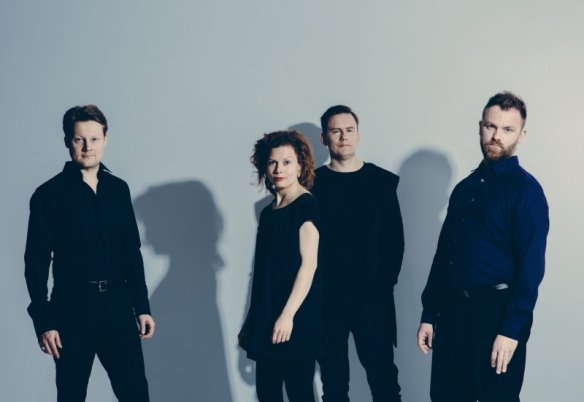
Meta4 [Antti Tikkanen, Minna Pensola (violins), Atte Kilpeläinen (viola), Tomas Djupsjöbacka (cello)]
Wigmore Hall, Monday 17 February 2020 (lunchtime)
You can listen to this concert on the BBC Sounds app here (opens in a new window)
Review and guide by Ben Hogwood
A pleasingly varied program from the Finnish string quartet Meta4, not least because it gave the Wigmore Hall and BBC Radio 3 audience a chance to hear Fanny Mendelssohn’s String Quartet, many undoubtedly experiencing the piece for the first time.
Often overshadowed by her brother Felix Mendelssohn’s musical output, Fanny was clearly a highly accomplished composer in a time when women were not encouraged to follow such musical disciplines. Only now is the quality of her music fully revealed, and this String Quartet stands side by side with the seven completed works of her brother. This one, as its composer freely admits, stands in the shadow of the late quartets of Beethoven.
The work’s dimensions are relatively unusual, pointed towards the third movement by two relatively short movements, slow and fast respectively, and it spends a lot of time in C minor as well as the ‘home key’ of E flat major, creating a tension between darker thoughts and sunnier climes. There is an enjoyable disregard for convention in the slow first movement (from 2:41 on the broadcast), with a broad and quite free approach that Meta4 have fully under their wing, the three standing players swaying and moving around the stage in response to the music.
While this could have been off putting there was no doubting their commitment and involvement, ensuring the first movement Adagio was thoughtful and profound. The following Allegretto (6:55) was quite wary initially, its C minor fluttering speaking of unease, but its central section scurried forward with an energetic fugue started by Atte Kilpeläinen’s busy viola (from 8:01).
The Romanze (10:57), beautifully played, was back in C minor but grew to be the centre of the performance, the soft heart of the movement becoming something really substantial and emotive in this performance. Meanwhile the spirited and full bodied finale (18:18) signed off in a lively fashion, powering forward through unison from viola and cello to a headlong sprint for the finish. Occasionally the intonation was a little off in the upper reaches of the violin line, but this was otherwise a very fine performance.
Bartók’s cycle of six string quartets rank among the very finest achievements in the form, and are rightly a cornerstone of any aspiring group’s repertoire. The First is the longest, in keeping with his earlier works as displaying deep Romantic-inspired passion but changing the musical language, finding a more individual voice as it strays further from tonality. The work came after several discarded attempts in the string quartet form, suggesting Bartók knew already that this would be one of his primary means of expression – and is regarded by many commentators on the composer as the work where his mature style arrives.
Much of the passion in this case was invested by the composer in a relationship with the young violinist Stefi Geyer, dedicatee of the Violin Concerto no.1, and the quartet is effectively a detailed account of their relationship and its ultimately tragic ending. That said, it is effectively a transition from the darkness of the breakup to the light and positivity of what might lie ahead.
Set in three substantial movements, this work often sounds as though there are more than four instruments playing, thanks to the use of multiple stopping (playing more than one note at a time on an instrument).
The first movement, described by Bartók as a ‘funeral dirge’, begins in shadow (26:39) but grows gradually in expressive intent. The quartet stay largely together in their outpouring, though a striking change of emphasis occurs at 31:04 when the cello takes on a drone-like figure. The music is briefly more assured, before dropping back to more threadbare, muted sounds.
The sorrowful first movement is effectively an introduction to the second (35:43) which pulls away from the slow tempo and starts noticeably to look up and outward. The textures become fuller, the dialogue between instruments is much more pronounced and the rhythmic definition starts to make itself known, as though Bartók wants to incorporate more of the traditional music around him. There are still pauses for reflection, but essentially the mood is one of grit and determination.
The third movement (46:06) is marked Allegro vivace – a real sign that the composer wants to get on with things. The cello takes up the mantle, its weighty dialogue with the viola inspiring full-bodied ensemble passages and more obviously folky asides.
The musical language flits between tonal statements, with bold tunes, and sections of music with a much less obvious centre. At 50:42 the music retreats, the quartet together but murmuring confidential asides to each other. The music builds and the statements become wilder and more sweeping. There are big chords from 55:49 where the sound could perhaps be bigger…but then Meta4 are saving themselves for a final push, finishing with a wonderfully robust and rustic chord.
As a side note, it was refreshing to see Meta4’s colourful attire for this concert, brightening up a dull February lunchtime! There need be no rules for dress in classical music like this, and it was good to see the quartet wearing what they felt comfortable with.
Repertoire
This concert contained the following music (with timings on the BBC Sounds broadcast in brackets):
Fanny Mendelssohn String Quartet in E flat major (1834) (2:41)
Bartók String Quartet no.1 (1908-9) (26:39)
Further listening & viewing
The music from this concert can be heard in the playlist below, which includes Meta4’s own recording of the Bartók from 2014:
It has taken an awful long time for the music of Fanny Mendelssohn to break through to anywhere near the centre of classical repertoire – which is unforgivable really, given how good it is. The playlist below collects her Piano Trio and Piano Quartet, bisected by a Piano Sonata in C minor:
Bartók, meanwhile, is an ever-present as one of the 20th century’s musical innovators. The string quartets form the backbone of his career, and the cycle by the Takács Quartet is certainly one of the finest:
You can see details of Meta4’s Bartók release here:


 Arcana.fm