Live review – CBSO & Ilan Volkov: Mahler Symphony no.9, Krása & Klein

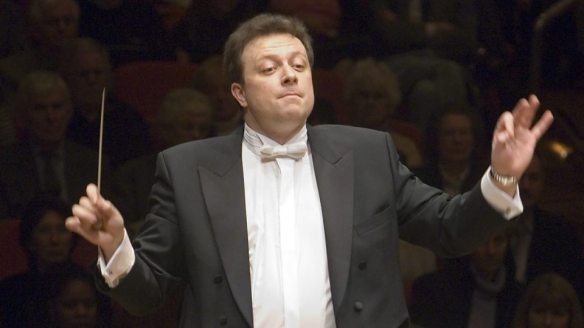
City of Birmingham Symphony Orchestra / Ilan Volkov (above)

Symphony Hall, Birmingham
Thursday 25 April 2019

Krása Overture for small orchestra (1944)
Klein arr. Saudek Partita for strings (1944)
Mahler Symphony no.9 (1909)

Written by Richard Whitehouse

Photo of Ilan Volkov (c) Astrid Ackermann

Pursuing one of the more eventful conducting careers of his generation, Ilan Volkov returned to Birmingham for this pertinent juxtaposition of music by composers who numbered among countless Nazi atrocities next to what is arguably Mahler’s greatest symphonic achievement.

Mahler has long been central Volkov’s programming (performances of the Sixth and Seventh Symphonies when principal conductor of the BBC Scottish Symphony Orchestra resonate in the memory), and this evening’s account of the Symphony no.9 exuded conviction borne of long familiarity.

Even now, it is uncommon to hear a reading of the expansive first movement which unfolded with such unforced inevitability; those extremes of anguish and introspection finding seamless accord within the composer’s most elaborate formal design. Nor was there any lack of contrast with what follows – the ‘fantasia’ on ländler rhythms whose symmetrical elegance is constantly undercut by that glancing irony at its most acute during the final pages, when the texture appears to disintegrate out of weariness then from any more rational intent.

Excellent as was the City of Birmingham Symphony’s playing thus far, it raised its game for the third movement – the Rondo-Burleske whose contrapuntal intricacy can become turgid at too stolid a tempo and lose definition at too rapid a pace. Not that this fazed Volkov, who duly steered a secure course across what is tonally and emotionally Mahler’s most fractious statement – the soulful strains of its trio section allowing for precious little repose before the initial music returns in an explosive denouement. After this, the closing Adagio emerged as long-breathed yet never flaccid as it accumulated gravitas through to a fervent climax, then subsided into a coda shorn of false emoting or affectation – the CBSO strings all the while maintaining focus as Mahler’s silence-riven gestures seemingly attained the desired closure.

The brief though worthwhile first half had featured a brace of works by Czech composer who both flourished in the Nazi transit camp at Terezin before being murdered at Auschwitz. Not that there is any sense of encroaching dread in the Overture by Hans Krása – its purposeful elision of traits drawn from Stravinsky and Hindemith abetted by scoring as economical as it is characterful. Volkov secured an incisive rendering, only easing up for the final bars whose sense of suddenly opening-out onto new and unforeseen vistas was palpably conveyed here.

Even more engaging was the Partita by Gideon Klein. An arrangement – by Vojtěch Saudek (1951-2003) – of the String Trio that proved to be Klein’s last completed work, it features at its centre a sequence of variations on a Moravian folksong in which elements derived from Janáček take on a distinctive and undeniably personal guise at the hands of one who would have surely found a defining role in post-war Czech music. If the vigorous outer movements seem less individual, they are none the less effective within the context of this piece overall.

In both these works, Volkov secured a spirited response from the CBSO strings (perhaps a little too dogged in the Klein). Hopefully he will return to this orchestra during the 2019/20 season, and hopefully include further pieces by the ‘Terezin generation’ in his programmes.

For further information on the City of Birmingham Symphony Orchestra’s 2018-19 season click here

Further listening

This concert will be broadcast as part of ‘Radio 3 in Concert’ on Friday 3rd May. To access that concert click on this link

Ilan Volkov is yet to record a Mahler symphony, but for a leading version of the Symphony no.9 from the Berliner Philharmoniker and Herbert von Karajan you can listen on Spotify below:

Wigmore Mondays – Adam Walker, Tabea Zimmermann & Agnès Clément: Music for flute, viola and harp by Bax, Debussy & Gubaidulina

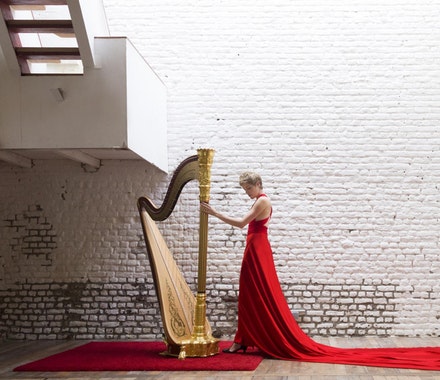
Adam Walker (flute, above), Tabea Zimmermann (viola) & Agnès Clément (harp) (both below)

Bax Elegiac Trio (1916) (1:40 – 11:15 on the broadcast link below)
Debussy Syrinx (1913) (12:47-14:28; Sonata for flute, viola and harp (1915) (17:34 – 35:44)
Stravinsky Elégie for viola (1944) (37:21-43:24)
Gubaidulina Garten Von Freuden Und Traurigkeiten (Garden of Joy and Sorrow) (1980) (45:38-1:02:34)

Wigmore Hall, London
Monday 15 April 2019

To hear the BBC broadcast through BBC Sounds, please follow this link

Photo credits: Adam Walker (c) Marco Borggreve, Agnès Clément (c) Tysje Severens

Commentary and Review by Ben Hogwood

The combination of flute, viola and harp is relatively unusual but has inspired some extremely forward-looking music since the second decade of the 20th century. Within two years of each other Bax and Debussy wrote independently for the combination, responding very differently to the potential of new and open textures.

Sir Arnold Bax was in fact the first to publish, and his Elegiac Trio immediately casts its spell through the rippling adagios of Agnès Clément’s harp (from 1:40 on the broadcast). Above this the flute of Adam Walker and viola of Tabea Zimmermann exchange airy thoughts, introspective but also free of constraint. The watery sound is beautiful and weightless, but Bax’s thoughts become more substantial. The music comes to rest in the major key, having started in the minor, with the feeling of troubles put to rest.

Of all the pieces written for solo flute, Debussy‘s Syrinx (12:47) is both the most magical and the most innovative. And yet when you listen to it there is no effort at all required, the languid lines instinctive but leading to an impressive climax. Adam Walker plays superbly here, ending in the lower register lost in thought.


Debussy’s Sonata for flute, viola and harp (from 17:34) is also a piece deserving of its description as magical, and is regarded as one of the signposts to modern 20th century music for its innovations in sound, harmony and melody. It is ideal when heard after Syrinx, as the flute begins – then the viola. As the programme booklet writer Paul Griffiths vividly observes, this first movement, marked Pastorale, takes time to pause in reflection, while demonstrating Paul Klee’s idea of ‘taking a line for a walk’. It’s elusive yet captivating.

The second movement Interlude (24:50) is graceful and a little dance like. Again the textures are beautifully open, helped by the tone quality of the three soloists, who bring to Debussy’s music that wonderful hazy warmth we associate with the composer at times. Then from 27:38 we hear a joyous tune from flute and viola together, over flowing harp, before the movement subsides to a soft end.

The Finale (31:08) is often singled out for its striking sonorities. The harp tremolo gives a rich backing for the very separate thoughts of flute and harp, one enchanting and the other relatively scratchy with the bow towards the bridge. At all times Debussy is keenly aware of the colours he wants to portray and the three players here respond superbly, bringing their close attention to sonic detail with a convincing unison.

Tabea Zimmermann then goes alone for the understated but striking Elégie of Stravinsky – striking because it is scored for solo, muted viola and sounds as though it has been imported from another civilization. It is also in two parts, so the initial idea (37:21) gives way to an austere dialogue between different ‘voices’ on the same instrument. The end recaps the mournful opening before dying away.

A world very far from the Wigmore Hall is also the destination for the unusual colours (for classical audiences at least) conjured up by Sofia Gubaidulina. East frequently meets West in her compositions, and in Garten Von Freuden Und Traurigkeiten (Garden of Joy and Sorrow) the East is most obviously present in the harp, plucking its responses to the flute’s decorations with slides of pitch. It is eerie but also compelling.

Then from around 50:15 the viola explores its harmonics – the fingers resting very lightly on the string to get a glassy sound that appears to be far-off, but which Gubaidulina uses cleverly. The flute is still the most prominent instrument, but increasingly the viola’s ‘voices of the night’ and the harp’s insistent plucking make themselves known. The music gets more animated, taking the harp right down to its lowest range – from where the flute starts a solo ‘cadenza’ (54:00)

The garden then seems to fall under its own spell, with night noises from all three instruments, until the viola plays a powerful line rising to a height. After this the music of the opening returns, with the striking harp slides again in evidence, before fading to the middle distance.

A superb performance of this piece from three friends, for whom this was their first ever concert as a trio. That would explain the wonderful spontaneity on show, for you would never have known!

Further reading and listening

The music in this concert can be heard here, including a live recording of the Gubaidulina and a legendary recording of the Debussy from the Melos Ensemble:

If Gubaidulina is a new name to your ears, then the strongest possible recommendation can be made for this recording of her Offertorium for violin and orchestra from Gidon Kremer, coupled with the Hommage à T.S. Eliot – a cycle for soprano and an octet featuring today’s viola player Tabea Zimmermann:

For more chamber music featuring the harp, this lovely collection from the Academy of St. Martin-in-the-Fields Chamber Ensemble is a treat. It includes two works by Debussy, the beautiful Introduction and Allegro by Ravel and the delightful Serenade for flute, harp and string trio by this year’s centenary composer Roussel:

Live review – Christopher Maltman & CBSO / Michael Seal perform Mahler, Sibelius & Nielsen

Christopher Maltman (baritone), City of Birmingham Symphony Orchestra / Michael Seal (above)

Symphony Hall, Birmingham
Wednesday 10 April 2019

Sibelius Symphony no.3 in C major Op.52 (1907)
Mahler Songs from Des Knaben Wunderhorn
Nielsen Symphony no.5 FS97 (1922)

Written by Richard Whitehouse

Photo of Christopher Maltman (c) Pia Clodi

Michael Seal’s concerts as Associate Conductor of the City of Birmingham Symphony are seldom without interest and tonight’s programme featured a typically bold juxtaposition of Nordic symphonies from the early twentieth century, alongside orchestral songs by Mahler.

Time was when Sibelius’s Symphony no.3 was overlooked even by his keenest advocates, but it has long since become a regular fixture and this account doubtless benefited from the CBSO’s lengthy association with the piece under Sir Simon Rattle and Sakari Oramo. That said, Seal had ideas of his own to impart – most evident with the gradually intensifying curve of momentum over the first movement’s development into the reprise, then close alignment of tempo between its successor’s diverse episodes and the lilting main theme so it elided deftly between slow movement and intermezzo. The finale was a slight disappointment – lacking that ominous mystery in its initial ‘scherzo’ phase, with the closing pages a little provisional in their affirmation – though there was no mistaking the unanimity of response on the way.

After the interval, Seal set a notably swift tempo for the first phase in the opening movement of Nielsen’s Fifth Symphony, though this was never at the expense of ongoing incident or the music’s questing ambivalence. The ensuing Adagio was eloquently projected, building to an apotheosis more powerful for Adrian Spillett’s bravura rendering of its side-drum cadenza – subsiding into a rapt though never somnolent coda where the receding presence of offstage side-drum was ideally offset by Oliver Janes’s limpid clarinet solo at the rear of the platform.

There was nothing anticlimactic about the second movement, its four-sections-in-one design itself amounting to a cohesive entity such as Seal recognized in his taut yet flexible handling of the initial Allegro – tapering away seamlessly into a Presto whose surging energy poses a challenge to ensemble that was confidently met here. The yearning polyphony of the Adagio was finely sustained by strings and woodwind, and if the notoriously tricky final pages felt a shade reined-in, their clinching of the tonal and emotional argument could hardly be gainsaid.

Between these imposing symphonies, a selection from Mahler’s song-sequence Des Knaben Wunderhorn. Christopher Maltman was the persuasive guide through their evocations of life in all its manifestations – beginning with the guileless exchanges of soldier and lover in Der Schwildwache Nachtlied (1892), before bringing a suave nonchalance to the ruminations of Rheinlegendchen (1893) then an ominous sense of dread from amid the sombre fanfares of Wo die schönen Trompeten bläsen (1898). A brief though pertinent interlude was provided by the droll moralizing of Lob des hohen Verstandes (1896), then the selection was rounded off by the stark processional of Der Tamboursg’sell (1901) with its anticipations of the Fifth Symphony then in progress. Maltman once again proved a sensitive and insightful exponent.
Throughout the selection, Seal drew playing of refinement and finesse from the CBSO which seems never to have given this sequence as an integral whole. The orchestra will, however, be returning to Mahler with Ilan Volkov when they perform the Ninth Symphony on April 23rd.

For further information on the City of Birmingham Symphony Orchestra’s 2018-19 season click here You can read about the forthcoming Mahler Ninth Symphony concert here

Further listening

Unfortunately the concert was not recorded for broadcast, but you can hear a playlist of the pieces heard on Spotify below on leading versions:

On record: Mark Bebbington, RPO / Jan Latham-Koenig – Grieg & Delius: Piano Concertos (Somm)

Mark Bebbington (piano), Irene Loh (piano duet), Royal Philharmonic Orchestra / Jan Latham-Koenig

Delius
Piano Concerto in C minor (final version) (1907)
3 Preludes (1921)
On Hearing the First Cuckoo in Spring (arr. by Peter Warlock for two pianos, 1913)
Grieg
Piano Concerto in A minor Op.16 (1869)
Sketches for Piano Concerto no.2 in B minor (1881) (edited / orchestrated Robert Matthew-Walker

Avie SOMMCD269 [74’59”]

Recorded 1-2 August 2017 (Grieg) and 22 October (Delius)

Producers Siva Oke (Grieg), Paul Arden-Taylor (Delius)

Reviewed by Richard Whitehouse

What’s the story?

Mark Bebbington continues his recording schedule for Somm with this enterprising coupling of concertos by Grieg and Delius, heard alongside shorter pieces and an unexpected novelty.

What’s the music like?

The novelty is the extant sketches for a ‘second piano concerto’ on which Grieg worked in the early 1880s, and which amount to some 150 bars. Robert Matthew-Walker has put these into performable shape, but it cannot be pretended the outcome is of more than passing interest. Bebbington also renders the sketches as a solo item and this might prove viable in terms of a recital addition or encore.

There are good things in his account of the A minor Concerto, the limpid interplay between soloist and orchestra in the central Adagio or raptness of response to the finale’s central episode with its ineffable flute melody, but the first movement is for the most part earthbound and the work’s apotheosis not free from bathos. Bebbington plays with scrupulous regard for dynamic nuance and timbral subtlety though, as in his recent account of the Gershwin concerto (SOMM260), the performance feels conscientious rather than inspired.

Fortunately. the remainder of this disc is far more persuasive. Heard here in its final version, Delius‘s Piano Concerto is a three-movements-in-one design whose occasional awkwardness of transition and tendency to rhetorical overkill is more than outweighed by the resourceful evolution of its ideas and the allure of its melodic contours. Bebbington duly responds with playing of sensitivity and panache, reinforcing the not inconsiderable claims of this work to a place in the standard repertoire.

Also featured here are the Three Preludes, their rhythmic vitality and improvisatory freedom more than usually in evidence, and a duet transcription by the teenage Peter Warlock (aka Philip Helseltine) of On Hearing the First Cuckoo in Spring that is alone worth the price of the disc: its ruminative vistas deftly and unerringly uncovered.

Does it all work?

For the most part. Bebbington is up against several decades of stiff competition in the Grieg, and his reading does not offer any great revelations. The Delius, however, is arguably a front runner for this final version, while the fill-ups are of similarly high quality.

Is it recommended?

With reservations. The playing of the Royal Philharmonic Orchestra under Jan Latham-Koenig is never less than responsive, with Irene Loh an able partner in the Delius. Sound is spacious if a little too resonant in tutti passages, and Matthew-Walker’s notes are a model of informed insight.

Further listening

You can listen to this new release on Spotify:

Further reading

You can read more about the release on the Somm Recordings website

Wigmore Mondays – Louis Schwizgebel, Benjamin Beilman & Narek Hakhnazaryan: Shostakovich & Mendelssohn

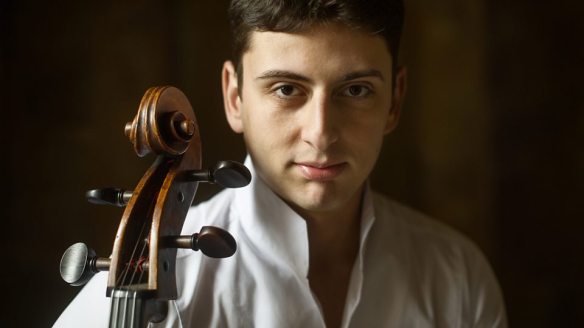
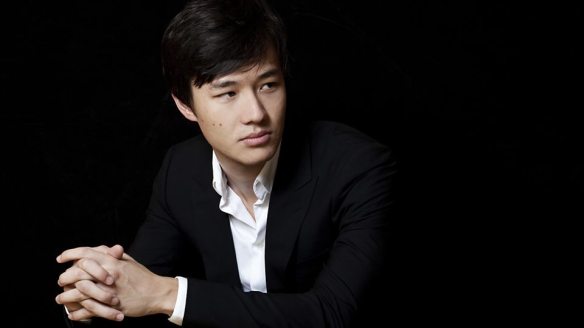
Louis Schwizgebel (piano, above), Benjamin Beilman (violin), Narek Hakhnazaryan (cello, both below)

Shostakovich Piano Trio no.1 Op.8 (1923) (from 2:14 on the broadcast link below)
Rachmaninov arr. Gayane Hakhnazaryan Vocalise Op.34/14 (1915)
Mendelssohn Piano Trio no.1 in D minor Op.49 (1839)

Wigmore Hall, London
Monday 1 April 2019

To hear the BBC broadcast through BBC Sounds, please follow this link

Commentary and Review by Ben Hogwood

A piano trio of exciting soloists gave this memorable concert at the Wigmore Hall as part of BBC Radio 3’s Lunchtime Concert series.

Pianist Louis Schwizgebel, violinist Benjamin Beilman and cellist Narek Hakhnazaryan are all making a name for themselves on their own terms, but by uniting for chamber music performances illustrate the very first principles of why this music was written.

Before their stylish performance of Mendelssohn’s Piano Trio no.1, we heard them in early Shostakovich – his first of two works in the popular form. The Piano Trio no.1 is not a typical work in the context of the composer’s full output, however – but it does show a prodigiously talented 17-year old student making formal innovations and writing heartfelt music, in this case pointing towards the work’s dedicatee, Tatyana Glivenko.

Shostakovich’s teacher Maximilian Steinberg perceived his increased ‘enthusiasm for the grotesque’, documented in Anthony Burton’s excellent notes for this concert, but looking back in the context of the composer’s full output this fascinating work revealed more of a debt to Russian romanticism than could initially be expected.

Beilman and Hakhnazaryan picked up this connection in their ardent melodies, while the steely piano of Schwizgebel gave some clues as to the source of Steinberg’s displeasure. Here though they put the seal on an outstanding account of music full of energy but with its excesses curbed through Shostakovich’s compact design. A captivating performance which is well worth experiencing from 2:14 on the broadcast link.

The inclusion of Rachmaninov’s Vocalise (from 17:50) made good sense in the context of the Shostatkovich. Made by Gayane Hakhnazaryan, mother of Narek, this arrangement illustrated the versatility of Rachmaninov’s original, more familiar to us in orchestral guise or for solo instrument with piano. Violin and cello dovetailed beautifully here, the trio managing the balance with an appropriate blend of nostalgia and poise.

Mendelssohn’s Piano Trio no.1 is perfectly suited to a recital such as this, a piece with virtuoso demands that would appeal to the soloists but also a work whose close integration brings a special intimacy to its more reflective moments. This was a terrific performance, the darker colours of the first movement established immediately in Hakhnazaryan’s heartfelt cello subject (27:02). A doleful second movement Song without words was lighter but also touching (37:04), before the twinkling right hand figures of Louis Schwizgebel led a sparkling account of the Scherzo (44:20).

The finale fused all these qualities, starting in relative seriousness and darkness (48:04) but finding bright light as the music transferred subtly but gloriously to the major key (55:16).

As an encore the Scherzo twinkled again, completing a concert notable for its fresh, enthusiastic and virtuosic qualities. Catch it if you can!

Further reading and listening

The music in this concert can be heard in the best available recordings on Spotify here: