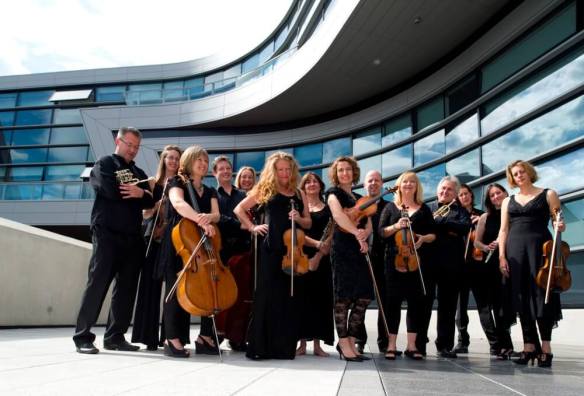
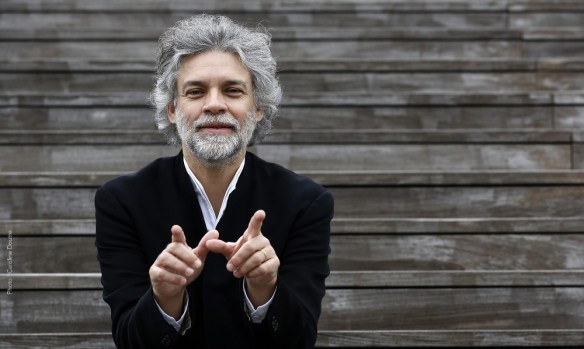
On record: Orchestre National de Lille / Jean-Claude Casadesus – Dutilleux: Symphony no.1, Métaboles & Les Citations (Naxos)

Cyril Ciabaud (oboe), Kasia Tomczak-Feltrin (harpsichord), Mathieu Petit (double-bass), Romain Robine (percussion) (all Les Citations), Orchestre National de Lille / Jean-Claude Casadesus

Dutilleux
Symphony No. 1 (1951)
Métaboles (1964)
Les Citations (1985/90)

Naxos 8.573746 [61’27”]

Recorded 18-21 July 2016 at Auditorium de Nouveau Siecle, Lille
Producer/Engineer Phil Rowlands

Reviewed by Richard Whitehouse

What’s the story?

Jean-Claude Casadesus marks his four-decade tenure at the helm of the Orchestre National de Lille with this disc of Henri Dutilleux (1916-2013), with whose music he has been associated across his conducting career and whose current status he has played no small part in securing.

What’s the music like?

Numerous listeners will have come to know Dutilleux’s First Symphony through a recording Casadesus made with his Lille forces in 1977 (released on LP by Forlane in 1984 then on CD by Erato as part of its five-disc compendium in 2014).

The present account offers no radical reassessment; rather an intensifying of what was already a taut and involving take on a work which channels elements drawn from Roussel and Honegger into a distinctive if not yet fully characteristic statement. Thus, the stealthy Passacaille and incisive Scherzo now comprise an unbroken and cumulative continuity; the ensuing Intermezzo exuding calm though little repose prior to a Finale whose variations on its bracing initial chorale unfold eventfully yet purposefully to a hushed close. Rarely has this piece evinced greater cohesion or conviction.

One of George Szell‘s selective though influential commissions for the Cleveland Orchestra, Métaboles is a linked sequence of five pieces which combine the formal logic of a symphony with the expressive immediacy of a concerto for orchestra. Casadesus places emphasis firmly on the former quality, there is assuredly no lack of impetus as he steers these musicians from the striking Incantoire, through the rapturous Lineaire then impetuous Obsessionnel and alluring Torpide, to the energetic Flamboyant which makes for a scintillating apotheosis.

Les Citations is a diptych that alludes to Britten, Mannequin and Jehan Alain over its succinct yet highly unpredictable course; in scoring which evokes the French baroque and Debussy’s revitalising of it in terms at once authentic and capricious – as this fine reading makes plain.

Does it all work?

Absolutely. Dutilleux may have come to international prominence well before his death, but there remains something innately French about both his music’s content and its sound-world, as these readings confirm. A conductor who has never sought worldwide acclaim, Casadesus has choosing to hone his repertoire and musicianship from a long-term location, so explaining the tangible chemistry and unanimity of purpose that exists between him and the Lille players.

Is it recommended?

Indeed, especially as the recording offers a near-ideal combination of detail and perspective, and the booklet notes a sure knowledge of this composer’s idiom. Anyone new to Dutilleux now has a range of options, with this new release as good a starting-point as any available.

Further listening

You can listen to this new release on Spotify:

Further reading

You can read more about the release on the Naxos website, while the video below gives a generous glimpse of the equally desirable recording these forces have made of the Second Symphony:
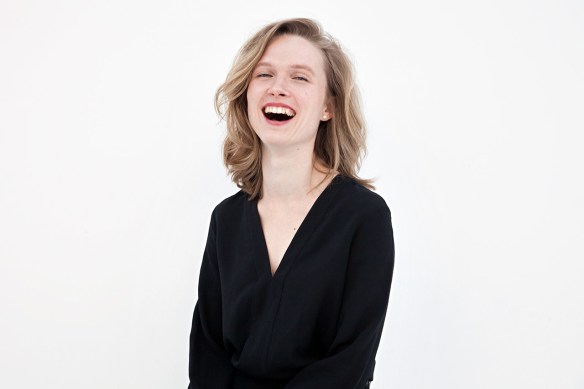
Live review – City of Birmingham Symphony Orchestra / Mirga Gražinytė-Tyla: Grieg Peer Gynt; Sibelius, Rautavaara & Salonen

Klara Ek (soprano), CBSO Youth Chorus, CBSO Chorus, City of Birmingham Symphony Orchestra / Mirga Gražinytė-Tyla

Symphony Hall, Birmingham
Thursday 14 February 2019

Salonen Dona nobis pacem (2010)
Rautavaara Cantus Arcticus (1972)
Sibelius Rakastava Op.14 (1893/8)
Sibelius En Saga Op.9 (1892/1902)
Grieg Peer Gynt – incidental music (selection), Op.23 (1875)

Written by Richard Whitehouse

You can listen to the concert as broadcast on BBC Radio 3 by clicking on this link

It may not have been a typical Valentine’s Day concert, but this evening’s programme from the City of Birmingham Symphony Orchestra certainly had an abundance of rapture and wonder.

Not least in its welcome revival of Cantus Arcticus, the ‘Concerto for Birds and Orchestra’ with which Einojuhani Rautavaara had confirmed a decisive turning away from the twelve-note procedures of the previous decade. Its utilizing his recordings of birdsong from the Finnish marshland may be nearer conceptually to Respighi’s Pini di Roma than Messiaen’s Oiseaux éxotiques, but the interplay with orchestra is deftly and poetically carried through – from the stark backdrop of The Bog, through the searching poise of Melancholy then to the gradual build-up of Swans Migrating, its hymnic apotheosis duly becoming a Rautavaara hallmark.

Mirga Gražinytė-Tyla secured a warm and euphonious response from the CBSO, which was no less attuned to the emergent drama of Sibelius’s En Saga. After an atmospheric opening, the ensuing episodes unfolded a little sectionally for momentum to be gauged consistently, though the magical passage with solo strings before the climactic section was spellbindingly delivered – then, after a suitably fraught culmination, the closing pages affectingly mingled poignancy and resignation; qualities evident not least in the clarinet playing of Oliver Janes.

Prefacing each of these works were short but pertinent a-cappella choral pieces. The upward striving of Esa-Pekka Salonen’s Dona nobis pacem gave the CBSO Youth Chorus its chance to shine, while a rare hearing for Sibelius’s The Lover brought the CBSO Chorus to the fore for a melting account of three settings from the Kanteletar – their tales of yearning, encounter then farewell between lover and beloved eloquently rendered with no trace of false sentiment. Maybe Gražinytė-Tyla will tackle the almost as seldom heard version for strings before long?

After the interval, Grieg’s incidental music for Ibsen’s Peer Gynt. What to include became far less straightforward after publication of the complete score, but tonight’s selection centred on the familiar two suites and three additional items. Gražinytė-Tyla secured a lively response in the Overture, then brought out the pathos of ‘Ingrid’s Lament’ and encroaching menace of In the Hall of the Mountain King. The influence upon Sibelius of The Death of Åse was no less evident than that of Morning on Debussy, while the Arabian Dance had nonchalance to spare and Anitra’s Dance an alluring poise. Peer Gynt’s Homecoming sounded suitably windswept, and inclusion of the soulful Whitsun Hymn gave the CBSO Chorus its moment in the spotlight. Klara Ek was soloist in Solveig’s Song and Solveig’s Cradle Song, both of which she sang simply and affectingly, avoiding the operatic overkill often encountered. A pity the grotesquely comical Dance of the Mountain King’s Daughter was not included, but what remained was a more than plausible overview – skilfully and evocatively rendered.

It more than set the seal on this well planned and rewarding concert, some of whose relative unfamiliarity was outweighed by its undoubted appeal. The Peer Gynt selection can be heard again on Saturday on BBC Radio 3, alongside the UK premiere of tone poem The Sea by Mikalojus Čiurlionis.

Further listening

Here is a Spotify playlist of music from the concert, including the whole incidental music to Peer Gynt (with the exception of the Salonen, which has not yet been recorded):

Further information on this concert can be found here

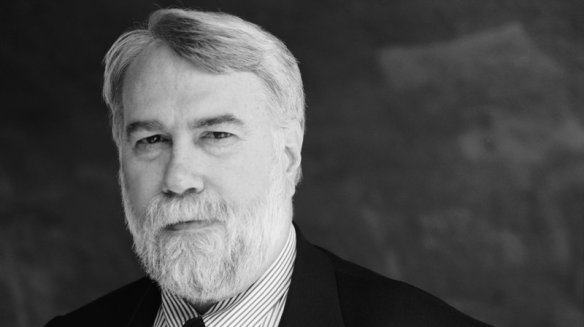
Happy 70th birthday to Christopher Rouse

Christopher Rouse is 70 today!

The American composer, although enthusiastically championed by Marion Alsop, has not yet enjoyed the exposure his music deserves.

His studies with George Crumb and Karel Husa, not to mention a thorough grounding in rock music history, have led rise to a fiercely individual voice in American music, one that is notable for its bold writing for orchestra.

Rouse has surely written some of the loudest modern music there is, and yet he does so with a sensitivity and intensity few of his piers can match. Listen to the playlist below and see if you agree:

Britten Sinfonia at Lunch – Bach, Janáček, Messiaen, Martinů & Edmund Finnis @ Wigmore Hall

Britten Sinfonia soloists [Thomas Gould (violin), Caroline Dearnley (cello), Emer McDonough (flute), Huw Watkins (piano)]

J.S. Bach Violin Sonata no.1 in B minor BWV1014 (1720)
Janáček Pohádka (1910)
Messiaen Le merle noir (1952)
Finnis Five Trios (world premiere tour) (2019)
Martinů Trio for flute, violin and piano (1936)

Wigmore Hall, London
Wednesday 13 February 2019

Photo credit Harry Rankin (Britten Sinfonia)

Review by Ben Hogwood

For years now Britten Sinfonia’s At Lunch series has been a steady delight, a way to discover the new and rediscover the old in chamber music. Using interesting combinations of instruments and building consistently innovative programs around them, the group offer a very accessible way in to discovering classical music’s treasures of the small scale.

This latest series, given in Norwich, Cambridge and London, is no exception, exploring 300 years of chamber music for flute, violin, cello and piano. Pianist Huw Watkins was the one constant for the whole concert, which at London’s Wigmore Hall gave off the unmistakeable aroma of spring.

Watkins and Thomas Gould began proceedings with a very tasteful account of Bach’s Violin Sonata. It is always good to hear Bach with piano accompaniment, for the music is so versatile that it suits the colours available. In a work like this particular sonata, where the piano plays much more than the role of a traditional accompanist, the textures were ideal. The violin, too, had more notes than normal thanks to Bach’s ‘double stopping’ writing, and Gould played these passages beautifully.

Janáček’s Pohádka represented quite a step forward stylistically but the transition was natural, and the fierce lyricism so often associated with the Czech composer was brought to the fore. Caroline Dearnley enjoyed the song-like passages and Watkins gave great clarity to the busy accompaniments, neither musician stinting on the intensity of Janacek’s writing as the plot of the fairy tale took hold.

The same could be said of Le merle noir, Messiaen’s only published work for flute and piano. An important work that signals his intent to accurately reproduce birdsong on traditional instruments, it is a remarkable piece – and Emer McDonough brought to it a wide range of colour. Most importantly she made it sound natural, for while the notes are all written out the intention of the piece is to sound as instinctive as possible. Again Watkins was the catalyst with some carefully voiced and wholly complementary thoughts.

Each ‘At Lunch’ concert features a new work on its world premiere tour, and the springlike atmosphere was ideal for Edmund Finnis and his Five Trios, for the conventional piano trio grouping of violin, cello and piano. Finnis finds an unusual amount of space in his music, and here his blend of quick movement over slow, drone-like figures opened out the textures very attractively.

There was very little bass in the five trios, notable for their translucence and bright textures. The first introduced softly oscillating figures, while the second spread shafts of light from spread piano chords and string harmonics. The dappled sunlight streaming through the Wigmore Hall roof was the ideal companion for the rippling textures of the third piece, but then in the fourth we enjoyed a bolder statement from the cello, its fuller sound ringing through a haze of sustained piano and glassy violin. To finish, the prayerful fifth piece completed a meditative ten minutes from a composer whose rarefied textures are well worth further investigation.

The Britten Sinfonia members closed their generous concert with Martinů’s Trio for flute, violin and piano. So prolific was the Czech composer that it is easy to overlook his achievements, particularly in the chamber music field. While it can on occasion be tricky to recall some of his melodies after the first hearing of a piece, the overall feel of his writing is uniformly positive and, in this case, capable of making the audience smile and clap spontaneously.

The third of four movements was responsible for the clapping outburst, a wonderful piece of effervescent writing betraying his Parisian location when writing it. The outer movements were a little grittier but still charmed with their syncopation, colour combinations and piquant melodies. The tender second movement was heartfelt too.

The standard of musicianship in this concert was extremely high. Particularly memorable moments include Emer McDonough’s final movement cadenza in the Martinů, where Watkins held the performance together admirably despite the tricky rhythms, the graceful playing of Thomas Gould in the Bach and Caroline Dearnley’s rich cello tone in the fourth of Edmund Dinnis’s trios, not to mention the expressive Janáček.

Once more from this source, an enlightening hour of music in an imaginative context. If you live in London or the East of England you really should catch them live soon!

Further listening

You can listen below to an interview with Edmund Finnis, talking with Dr Kate Kennedy about Five Trios ahead of the Wigmore Hall concert://embeds.audioboom.com/posts/7174837-edmund-finnis-talks-about-his-new-work-five-trios/embed/v4?eid=AQAAACp5ZVy1em0A

You can also hear a new release of Finnis’s music for orchestra here:

Meanwhile the remainder of the program is grouped together on this Spotify playlist:

Wigmore Mondays – François-Frédéric Guy plays Debussy, Tristan Murail & Brahms

François-Frédéric Guy (piano)

Debussy Préludes, Book 2 (1912-13): Brouillards (1:27-4:25 on the broadcast link below); La puerta del vino (4:31-7:41); Les fées sont d’exquises danseuses (7:46-10:37); La terrasse des audiences du clair de lune (10:42-15:00; Feux d’artifice (15:03-19:07)
Debussy Images, Set 1 (1901-05): Reflets dans l’eau (20:47-25:37)
Tristan Murail Cailloux dans l’eau (2018, UK premiere) (25:40-32:30)
Brahms 4 Piano Pieces, Op.119 (1893) (34:35-48:23)

Wigmore Hall, London
Monday 11 February 2019

To hear the BBC broadcast through BBC Sounds, please follow this link

Commentary and Review by Ben Hogwood

If last year saw a surfeit of Debussy’s music in the composer’s centenary year, it was for a good reason. The composer is rightly revered as one of the leading lights of early 20th century music, and brought with him new approaches to melody and harmony, not to mention sound worlds and textures unlike anything that had been heard before.

His writing for the piano is indispensable and of a consistently high and original quality, whether taking inspiration from older forms or creating new ones. In his Préludes for the piano he builds on an approach perfected by Chopin, who used each key to create 24 such works. Debussy, however, made 24 character pieces, painting portraits either of specific or deliberately vague imagery.

In this lunchtime recital François-Frédéric Guy fully immersed himself in this revolutionary writing, showing a clear affinity with five of the Préludes from the later Book 2. The swirling mists of Brouillards (Mists) (from 1:27 on the broadcast link) are vividly portrayed, with a notable attention to detail on the weighting of the notes. The swagger of the Habanera inhabits La puerta del vino (The wine door) (4:31), with its exotic harmonies matched to a free rhythmic approach.

The parallel chords of Les fées sont d’exquises danseuses (Fairies are exquisite dancers) (7:46) are also beautifully weighted, while La terrasse des audiences du clair de lune (The terrace of moonlit audiences) (10:42) grows from its introduction with a masterful crescendo. Finally Feux d’artifice (Fireworks), 15:03) is captivating, and during it you can practically see sparklers being waved around, thanks to the twinkling figurations in Guy’s right hand.

Reflets dans l’eau, taken from Debussy’s Images Set 1, is another watery wonder (from 20:47), played here with exquisite control from both fingers and feet – the use of the sustain pedal being of great importance in Debussy’s music. The rippling sounds act as the inspiration for Tristan Murail’s tribute to the composer, Cailloux dans l’eau (25:40)

His response begins at a more measured tempo than Debussy’s, savouring the colours for longer and effectively making his water slower moving. Soon, however, the ripplies become much more pronounced and twist upwards to the higher pitches on the piano (c30:00), with frothy trills that gradually subside towards silence. Guy played this with absolute control, fully immersed in Murail’s writing.

To finish, the final works for piano by Brahms. These four pieces were written as the composer reached his 60s, and mark the end of a late creative flowering including a number of chamber works for clarinet and intimate pieces for the piano. Three of Op.119 are classed as Intermezzos, a title essentially giving the composer free rein.

No.1 feels the most free of all, with a soaring right hand line beautifully floated by Guy in this performance. A real song without words, it carries deep emotional impact here. Guy moves straight on to the second piece (38:20), a flowing piece with greater urgency and a sunnier theme in the centre.

Then at 42:27, the short third piece, with repeated notes using the ‘classic’ Brahms triplet rhythms. Guy missed a couple of notes here but gauged the piece just right leading to the heroic Rhapsody (43:51) This piece is a triumphant way to end any concert, but does finish on a darker note. Until then, Brahms develops the theme, moving by 46:30 to a mood that recalls the previous Intermezzo. Then the main tune returns with great force (47:37), and just as it looks like a sunny ending Brahms plunges us into the minor key, signing off with great fire and brimstone.

To calm the waters after this, Guy returned to Debussy, and the first book of Préludes – with the most famous excerpt of all, Clair de lune (49:52-53:55).

Further listening

François-Frédéric Guy has not yet recorded any of the music heard in this concert – however the below Spotify playlist includes some leading versions of the repertoire heard:

Unfortunately the Tristan Murail is not available anywhere yet; however his complete piano music up until 2013 can be heard here in recordings made by Marilyn Nonken:

For more Debussy, Mitsuko Uchida’s album of the Études, another extension of a form pioneered by Chopin, can be heard here in an award-laden disc:

Late Brahms is one of the pinnacles of the Romantic piano repertoire, and few recorded it with the authority of Steven Kovacevich, heard here in a wonderful album for Philips: