Renowned producer Mark Barrott used the alias Future Loop Foundation in the mid-1990s, and under it he made two albums of ambient drum and bass, along with a number of EPs. Here they have been assembled with a clutch of stand-alone tracks and remixes, previously unreleased demos and a live track.
The two albums in question are Time And Bass, from 1996, and Conditions For Living, released two years later – made at a time when the reach of drum and bass was extending well beyond the club and into the home.
What’s the music like?
There are plenty of highs in Barrott’s music as Future Loop Foundation, right from the heady Discovery, with which Time And Bass begins. The clipped rhythm and spacey backdrop are perfect chill out material but there is a mass of positive energy here, enforced by the swirly textures of Kinetic Pioneers. The piano-led Journey’s End is a treat, but what stands out about the first album is Barrott’s consistency, setting a warm summery mood but utilising rhythms with a huge amount of movement and drive.
The beats get stronger and heavier on Conditions For Living, and the mood gets darker as the title track asks, “what kind of world are we living in?” Sadly it’s as relevant now as it was then. Barrott takes more risks here, to good effect on the woozy, mysterious Omerta, which blossoms into a bassy track with piano floating above. There is some inventive, long form drum and bass here, and the quickfire beats of Moog Road are a particular thrill. Karma packs a punch, suggesting a lesson learned.
The set of singles and bonus tracks is the ideal complement. Sonic Drift blends piano, warm chords and the syncopated rhythms that Barrott made a signature of his style, while the Lo-Fi Dub of Discovery shows how versatile the music could be when reworked. Darwin Sound skates along energetically, while an energetic live version of Shake The Ghost wraps things up.
Does it all work?
It does. Some of the tracks are lengthy – a habit of the time in the mid-1990s – but in this case that gives the listener a good deal of time to get fully immersed in the music. Barrott’s productions are excellent.
Is it recommended?
Absolutely. The music is very much of its time…but happily 1990s drum ‘n’ bass has aged extremely well, and the Future Loop Foundation with it. Great stuff that is well worth revisiting.
For fans of… Alex Reece, LTJ Bukem, Adam F., 4hero
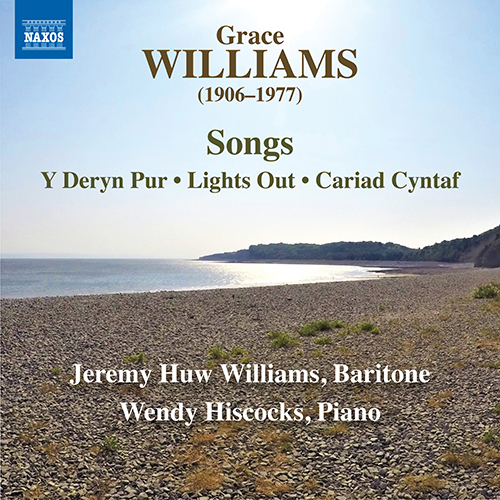
Grace Williams Slow, slow, fresh fount (c1925); I had a little nut tree (c1930); Green Rain (1933); Stand forth, Seithenin (1935, rev; 1951); Ffarwel i langyfelach (?1920s); Llangynwyd (?1920s); The Song of Mary (1939, rev; 1945); Shepherds watched their flocks by night (1948); Fairground (1949); Flight (1949, rev; 1954); À Lauterbach (c1950); Le Chevalier du guet (1949); Four Folk Songs (1950-51); When thou dost dance (1951); Three Yugoslav Folk Songs (1952); Y Deryn Pur (1958); Y Fwyalchen (1958); Cariad Cyntaf (c1960); Ow, Ow, Tlysau (1964); Dwfn yw’r Môr (c1940); Lights Out (1965); Fear no more the heat o’ the sun (1967)
Jeremy Huw Williams (baritone), Wendy Hiscocks (piano)
Recorded 28-30 September 2022 at Cooper Hall, Selwood Manner, Frome
Reviewed by Richard Whitehouse
What’s the story?
Naxos continues its long-running series of releases sponsored by the British Music Society with an album of songs by Grace Williams (1906-77), all of which are recorded here for the first time and, between them, extend chronologically over the greater part of her composing.
What’s the music like?
Even more than others of her generation, Williams has benefitted from the upsurge of interest in women composers this past decade with recordings of major works on Lyrita and Resonus. Songs may not have the primary place in her output, but they afford a viable overview of her stylistic evolution with individual instances among her most characteristic statements. Most are in English or Welsh though there also settings of French texts, while her own translations of several from the former Yugoslavia further underline the breadth of her literary concerns.
Early settings of Ben Johnson along with traditional English and Welsh poems find Williams, barely out of her teens, tackling verse with audible appreciation of this genre’s lineage within the Victorian and Edwardian eras. That of Mary Webb’s Green Rain is audibly more personal for its wistful ambivalence, while The Song of Mary brings due sensitivity to bear upon some familiar lines from St Luke. The most extended item, Fairground is a setting of Sam Harrison that captures the sights and sounds of said environment with an immediacy never descending into kitsch, while that of Flight matches the sentiments in Laurence Whistler’s poem and has a piano part testing in its intricacy. Her setting of the Jacobean-era When thou dost dance is, by comparison, slighter though no less attuned to the limpid elegance of its anonymous text.
Arrangements of traditional verse had early featured in this composer’s output, and this is not the customary text for her attractive treatment of a traditional Czech carol Shepherds watched their flocks by night. The period around 1950 saw a number of such arrangements and mainly of French texts, but with her take on the Northumbrian Bonny at Morn appreciably different from the more familiar one by Tippett. The end of that decade brought forth a trio of eloquent Welsh settings, while that of the Medieval text Oh, Oh, Treasures may be pastiche yet it has a fervency which feels not a little unsettling. The final two songs see a return to more familiar verse: that of Edward Thomas’s Lights Out evinces a subdued and even fatalistic acceptance, while that of Shakespeare’s Fear no more the heat o’ the sun captures its aura of resignation.
Does it all work?
Yes, allowing for inevitable unevenness in what is a conspectus over four decades. At least a half-dozen of these songs ranks with the best of those by British composers from this period and well warrant investigation by more inquiring singers. Jeremy Huw Williams clearly has no doubts as to their quality and, though his tone as recorded here is not always flattering, it captures his intensity of response. Nor could he have had a more committed or a perceptive accompanist than Wendy Hiscocks, who teases out myriad subtleties from the piano writing.
Is it recommended?
Indeed, and there ought to be enough remaining vocal items for a follow-up release at some stage. Graeme Cotterill pens informative notes, and while it is a pity that several texts could not be printed for copyright reasons, the clarity of Williams’s diction seems fair recompense.
“Around dawn is the best time to play piano,” says John Foxx. “Self-critical mechanisms mostly dormant, so I’m free to invent and enjoy for a while. The piano faces a window overlooking a valley surrounded by hills, where the sun comes up. There’s often an early mist in the valley – and quite often, it rains. Some notes and sounds resonate with remembered experiences and you get glimpses of times and people. It’s valuable. Quiet. Free association, myriad moments orbiting – and off you go.”
This set of eleven solo piano recordings was made in the wake of Foxx’s successful appearance at Kings Place in October 2023, where he took part in a ‘Night Tracks’ evening for BBC Radio 3. The title is mindful of friends, the music written in gratitude to them.
“So – simply, thanks.”, writes Foxx. “Wherever you are.”
What’s the music like?
Deeply personal, and extremely relaxing. There is no mistaking the intimacy of this music, that these are the thoughts of one person, but with each recording you feel as though Foxx is training his focus on a different friendship.
When She Walked In With The Dawn captures the very moment the light begins, Foxx’s piano surrounded by reverberation but revealing its thoughts with a steady gaze. By contrast Evensong is bathed in early evening sunshine, its musical language closer to the Baroque and Pachelbel’s Canon. Meanwhile Someone Indistinct goes higher in pitch, revealing a close association with the music of Erik Satie.
Foxx’s writing often has watery connotations. The water glints in the upper reaches of A Swimmer In A Summer River, while Once I Had A Love is gently reflective. The two Night Vision pieces unfold pleasantly, the latter especially evoking nocturnal memories, while Morning In A Great City, by nature, has a wider perspective. The closing title track has the warmth of appreciation.
Does it all work?
It does. Foxx’s sound world is both a comfort and a source of positive energy, giving relaxation but also helping focus the mind. Listen closely and you get hints of deeper emotion, the personal profiles difficult to ignore.
Is it recommended?
It is. Foxx has of course charmed with ambient albums in the past, and Wherever You Are draws from the best of his solo work and collaborations with Harold Budd and Robin Guthrie. These are deeply personal utterances, deceptively simple but meaningful, and offer a consoling arm around the shoulders of any listener.
For fans of… Erik Satie, Federico Mompou, Anthony Phillips, Steve Hackett
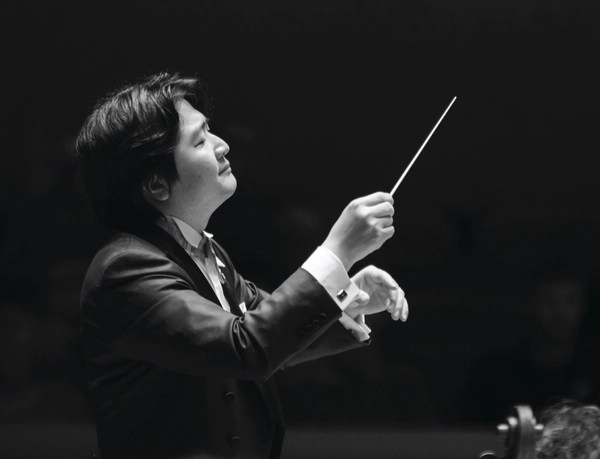
City of Birmingham Symphony Orchestra / Kazuki Yamada (above)
Takemitsu Requiem (1957) Mahler Symphony no.9 in D major (1908-09)
Symphony Hall, Birmingham Thursday 10 April 2025
Reviewed by Richard Whitehouse Picture of Kazuki Yamada (c) Hannah Fathers
Ninth Symphonies have been a recurrent feature of this season from the City of Birmingham Symphony Orchestra and Kazuki Yamada. Tonight’s concert brought this to a culmination of sorts with that by Mahler and which naturally occupied almost the whole of the programme.
Whatever else, it was a performance whose scope matched the music’s ambition and not least in an opening Andante as lays claim to being its composer’s greatest achievement. Admittedly this took a few minutes to find focus, those initial bars not so much speculative as halting, but an overall sense of the movement unfolding seamlessly across its strategic peaks and troughs was undeniable, and Yamada was mindful to underline Mahler’s holding back of its expected culmination so the closing minutes mused eloquently if uncertainly on what might have been.
The middle movements can often emerge as incidental to the formal scheme, and Yamada’s take on the Ländler gave some pause for thought. Each of its constituents was vividly shaped and articulated, but a stop-start discontinuity arguably denied it that innocence to experience trajectory which, in turn, makes tangible the fatalistic humour at its end. The Rondo-Burleske was the undoubted highlight – its abrasiveness spilling over into violence towards the close, but not before Yamada had summoned the requisite anguish from its yearning trio section.
It might have been better to continue directly into the Adagio. As it was, a relatively lengthy pause left this finale sounding less a direct reaction to what had gone before than a delayed avoidance of the issues raised. Yamada’s overall handling of this movement was fine if not exceptionally so. Such as the twilit episode prior to the main climax was lucidity itself, but the conductor having already slowed to near-stasis then made it difficult to reduce the tempo further, so that the closing bars risked feeling emotionally gratuitous rather than inevitable.
What could hardly be gainsaid was the commitment of the CBSO’s response over what, for all its latter-day familiarity, remains a testing challenge whether individually or collectively. Wisely, Yamada has resisted any temptation to fashion a self-consciously virtuoso orchestra; emphasis seems to be instead on encouraging flexibility and sensitivity of response in terms of the music at hand – a more circumspect though productive approach which suggests he is happy to stay the course in terms of a partnership which is still in its relatively early stages.
Not a few performances of Mahler Nine opt for a scene-setting piece rather than first half as such. Yamada did so with Takemitsu’s Requiem – if not this composer’s first or even earliest acknowledged work, then certainly the one that established his wider reputation. The CBSO strings did justice to its subtle interplay of expressive threnody and more angular elements in a reading that fulfilled its purpose ideally. Hopefully the coming seasons will revive some of the more innovative pieces to have languished in the three decades since Takemitsu’s death.
This was the latest in what is becoming a tradition and rightly so – a page in the programme listing those ‘‘friends, members and colleagues’’ whom the CBSO Remembers with no little gratitude. From this perspective, tonight’s programme could hardly have been more fitting.
A vinyl-only release, with the following tracklisting:
Side A Tubbsville You For Me Lady ‘E’ – Tubby Hayes & The All Stars Angel Eyes – Tubby Hayes Quintet Johnny One Note – Tubby Hayes Quintet
Side B Pedro’s Walk – Tubby Hayes Orchestra Bluesology – The Tubby Hayes Quartet Blues In Orbit – The Tubby Hayes Quartet For Members Only (Take 1) – The Tubby Hayes Quartet Hey Jude – Tubby Hayes Orchestra
What’s the story?
Tubby Hayes, born in London in 1935, was “one of the most influential and dominating personalities on the British Jazz scene” according to his one-time band mate and fellow British jazz legend Ronnie Scott. He died in 1973 at the age of 38 following a turbulent personal life that included alcohol and drug issues.
In an attempt to answer the question “Where do I start?” this album (a vinyl only release) brings together ten tracks originally recorded for the Fontana label between 1961 and 1969 and compiled by filmmaker, author and avid Tubby Hayes fan Mark Baxter, who has also written some excellent sleeve notes: “I once heard someone say that if John Coltrane had been born in Raynes Park he would have sounded like Tubby Hayes”. Interest in Tubby Hayes and his music was in no small part renewed by musician, writer and Tubby Hayes expert Simon Spillett’s magnificent 2015 biography The Long Shadow of The Little Giant: The Life, Work and Legacy of Tubby Hayes, and the 2016 documentary film Tubby Hayes: A Man In A Hurry, written and produced by Baxter.
What’s the music like?
This is a broad and thoroughly enjoyable selection of tunes capturing the virtuosity and range of a fine jazz musician in an eight year spell of his all too short career. It encompasses glorious big band music as well as some notable smaller jazz ensemble performances.
Hayes’s own composition Tubbsville (from the 1961 album Tubbs) is a great big band opener with a compelling groove and Hayes’s astounding tenor saxophone style to the fore.
The big band format is also represented on the album by three Tubby Hayes Orchestra performances including Pedro’s Walk (from 1964’s Tubb’s Tours) with its bossa nova inflections and a take on Hey Jude (recorded in 1969 but released on 1970’s The Orchestra) of which Baxter states that whilst its commercial sound may not be to some jazz lovers taste “it still has moments when you are reminded of what a jazz great Hayes was”. He’s right. It also features a terrific Spike Wells drum intro to boot.
The other Orchestra selection is Milt Jackson’s Bluesology from the album 100% Proof (1967) which sees multi-instrumentalist Hayes getting straight into vibraphone mode (he is also credited with tenor saxophone and flute) in a mellow bluesy number that features some other greats of British jazz, not least the aforementioned former Jazz Courier Ronnie Scott (also on tenor saxophone) and Kenny Wheeler on trumpet.
The first we hear of Hayes’s vibraphone playing on the album is on Lady ‘E’ (from 1963’s ‘Return Visit!’), a Roland Kirk composition whose playing of the nose flute (amongst other things) is also a stand out feature. It’s a smooth swing produced by Quincy Jones. Hayes’s finesse on the vibraphone is again on display on the slow and more subdued ballad Angel Eyes which also features Jimmy Deuchar on muted trumpet.
Things are a bit more edgy with the Tubby Hayes Quintet’s interpretation of the Rodgers and Hart show tune Johnny One Note (from 1962’s Down In The Village), with Jimmy Deuchar’s “opening tear-arsed arrangement”, to quote Simon Spillett’s apt and graphic description, going into a fast and furious ride with Hayes concentrating on tenor saxophone duties but ably complemented by the rest of the quintet including Deuchar himself on trumpet. Hayes’s saxophone virtuosity is again on display on You For Me (from 1962’s Tubbs in New York), not least in the remarkable unaccompanied introduction.
The remaining tracks are For Members Only (Take 1) taken from Grits, Beans & Greens: The Lost Fontana Studio Sessions 1969 (released in 2019) with Hayes on tenor saxophone and flute, and Blues In Orbit from Mexican Green (1968) featuring some more flying Hayes sax solos and some ripping drums from Tony Levin who, Spillett reports in his book, says that Hayes apparently never played the tune again.
Does it all work?
Absolutely. If you are new to Tubby Hayes this does indeed answer the question “Where do I start?”. If you are more familiar with his music it is a superb reminder of the talent and virtuosity of this major figure in British jazz that will send you back to the original albums.
Is it recommended?
For sure. It’s a super compilation and with the sleeve notes and artwork (the cover image is Ed Gray’s wonderful ‘Soho Soul Tubby Hayes ‘A Man In A Hurry’’) it amounts to a great package put together with love and care and released just after what would have been Hayes’s 90th birthday. We owe Mark Baxter and Decca a debt of gratitude.
Oh, and if you’re wondering where the title Splonge! comes from, Baxter’s sleeve notes point you to the count-in on the recording of Hayes’s track Voodoo (not on the album).
Listen & Buy
To purchase Splonge! An Introduction To Tubby Hayes (available on vinyl only), visit the Decca website.




 Arcana.fm