This day marks the anniversary of one of Tchaikovsky‘s biggest orchestral works, which over the last few decades has gained a foothold in the concert hall and the studio.
Tchaikovsky’s Manfed Symphony was written in between his Fourth and Fifth symphonies, and, at the suggestion of the composer Balakirev, was based on the poem of the same name by Lord Byron.
It is actually longer than any of Tchaikovsky’s numbered symphonies, and shows the influence of Berlioz – who, ironically, was given the opportunity to write Manfred but declined due to old age. Tchaikovsky too declined initially, but Balakirev, who had worked closely with him on the final revision to Romeo and Juliet, persuaded him otherwise.
Ultimately Tchaikovsky responded with a powerful work, whose impact on the listener is considerable. The composer summed it up as follows: “The symphony has turned out to be huge, serious, difficult, absorbing all my time, sometimes to utter exhaustion; but an inner voice tells me that my labour is not in vain and that this work will perhaps be the best of my symphonic works.”
Time has proved him right – and while the work, dedicated to Balakirev, was not universally praised on its premiere in Moscow, it has stood the test of time. Here it is in a 1986 performance with the Oslo Philharmonic Orchestra conducted by Tchaikovsky specialist Mariss Janssons:
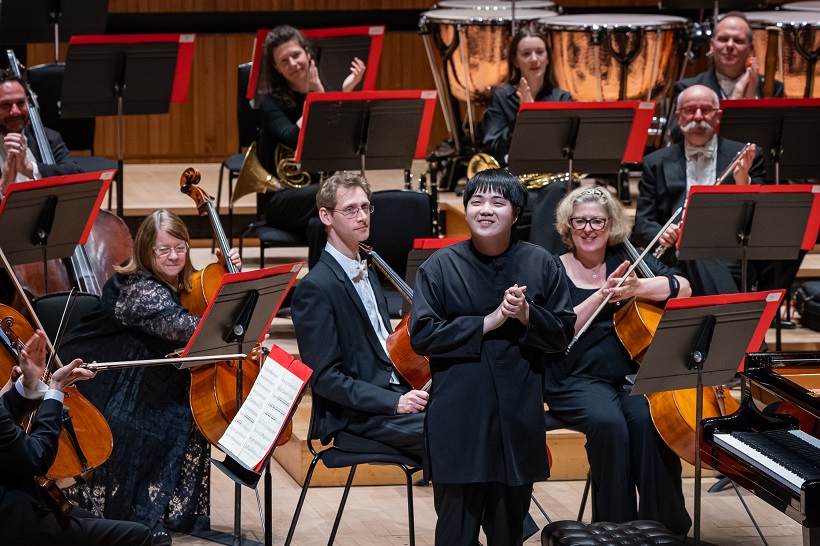
Mao Fujita (piano), Philharmonia Orchestra / Osmo Vänskä
Missy Mazzoli These Worlds In Us (2006) Mozart Piano Concerto no.25 in C major K503 (1786) Mendelssohn Symphony no.5 in D minor Op.107, ‘Reformation’ (1830)
Royal Festival Hall, London Thursday 20 March 2025
Reviewed by Ben Hogwood Picture (c) Marc Gascoigne
Japanese pianist Mao Fujita has shown his impressive Mozart credentials in highly praised recordings of the composer’s complete piano sonatas. More recently his focus has shifted to the piano concertos.
Here he was partnered by the Philharmonia Orchestra and the visiting Osmo Vänskä in the substantial Piano Concerto no.25 in C major K503, a ceremonial work with fulsome orchestral accompaniment. Yet less is often more in Mozart performance, and that was certainly the case with Fujita as his fingers spun a magical web of notes. The piano’s magical first entry, after the pomp and circumstance of the introduction, was notable for its lightness of touch, Fujita listening closely to the Philharmonia wind players.
With so much to enjoy in this performance, Fujita exuded technical brilliance but also commendable restraint, always with affectionate shaping of the melodic line. That is, until the unattributed first movement cadenza. Here the rulebook was torn asunder, and a flow of unpredictable counterpoint broke loose, revealing links back to Bach but notably forward towards Beethoven.
Back under control, Fujita made the piano sing in the operatic slow movement, aided again by the quality of the wind section under Vänskä, who secured typically detailed, transparent clarity. The first violins began the finale with their touch as light as a feather, after which Fujita put the pedal to the metal once again, taking great pleasure in Mozart’s sparky dialogue with the orchestra. His encore, the first movement of Mozart’s Piano Sonata in C major K545, featured a delightful ‘wrong’ chord near the end, affectionately given and rounding off a truly memorable performance.
Prior to this we heard Missy Mazzoli’s These Worlds In Us, dedicated to her father, who was a soldier in the Vietnam War. Her imaginative orchestration extended to the use of wheezy melodicas in the outer section, adding a dreaminess and heightening the link with the music of Bali. The sighing violin theme was profound, but most telling of all was the soft rat-a-tat of the snare drum, a quiet but ominous reminder of war amidst the otherwise bright scoring. Mazzoli’s music has deeply human qualities that came alive in this performance.
For the second half, Vänskä led a dramatic account of Mendelssohn’s Symphony no.5, the Reformation. Second in order of composition, it was the last of his symphonies to be properly published, on account of its troublesome reception in 1832. In more recent years however the work has enjoyed greater exposure, rewarding its portrayal of triumph in turbulent times.
The magical hush from the strings of the Dresden Amen, quoted by the composer in the first movement, drew the audience in before Vänskä powered through a turbulent Allegro. The second movement danced like a late Haydn minuet, brisk and with a charming trio, while the Andante looked inwards, initially beyond comfort but ultimately softening to the touch. Mendelssohn’s quotation of the Lutheran chorale Ein feste Burg came to the rescue, sweetly intoned by flautist Samuel Coles, before the orchestra enjoyed Mendelssohn’s exuberant finale, and its parallels to Handel’s Messiah. As is his wont, Vänskä revealed previously hidden orchestral detail, giving a fully convincing account of a symphony whose cumulative power is all the more remarkable given Mendelssohn was 21 at the time of composition. Youth and experience were ideal foils here.
Philharmonia Chamber Players [Maura Marinucci (clarinet), Zsolt-Tihamér Visontay (violin), Scott Dickinson (viola), Alexander Rolton (cello), Owen Nicolaou (double bass), Sarah Pennington (horn), Marceau Lefèvre (bassoon)
Beethoven Septet in E flat major Op.20 (1802)
Royal Festival Hall, London Thursday 20 March 2025 6pm
Reviewed by Ben Hogwood Picture (c) Marc Gascoigne
Beethoven’s six-movement Septet is, to all intents and purposes, a Serenade for seven instruments. As such it was perfectly timed in this early evening slot, the ideal piece with which to entertain a relaxed and healthily-sized crowd.
Clarinettist Maura Marinucci introduced the work, and her love of the piece was clearly shared by her Philharmonia Orchestra friends as they went about a performance that was by turns vigorous and lyrical.
Beethoven’s scoring was highly original in 1802, and it is easy to see why the piece proved so popular, with its abundance of good tunes and colourful textures. These were evident right from the opening, the bassoon and double bass giving a lovely heft to the lower end of the sound. They supported the winsome tunes, divided largely between Marinucci’s clarinet and the violin of Zsolt-Tihamér Visontay. Marinucci especially enjoyed the soft-hearted second movement, while Visontay had an increasingly virtuosic role to play, sometimes pushing ahead of the tempo in his eagerness but relishing Beethoven’s technical challenges.
The Minuet, with its impudent theme thumbing a nose at the audience, was nicely done, while the theme and variations forming the fourth movement were especially enjoyable, notably the first variation, assigned to the upper string trio, and the mischievous final variation and coda.
Above all this performance was a great deal of fun, the players enjoying sharing the tuneful material with their audience, an approach capped by a quickfire finale and dazzling cadenza from Visontay. Just as affecting, mind, was the hushed chorale from the winds preceding this moment.
Ultimately the music matched the weather, bringing the vitality of early spring to the Royal Festival Hall stage.
Erland Cooper always has his eye on future projects…so it is no surprise to see him following up his Orcadian odyssey Carve The Runes… with a new ambient EP. Composed as a sister piece to Do Birds Dream?, it renews his close link to bird life – and the weightless release of flight.
The piece is divided into five sections, and there is a shorter edit, but Asleep On The Wing works best as a one-off experience.
What’s the music like?
Immensely restful. What is noticeable is how at ease Erland Cooper is with longer form compositions – and as a result Asleep On The Wing evolves at a natural pace.
With comforting surrounds of ambience, the music grows around a central, sonorous drones, with piano flicks and harp-like sonorities drifting in and out of consciousness, musical images that gain focus for a while before becoming blurred again.
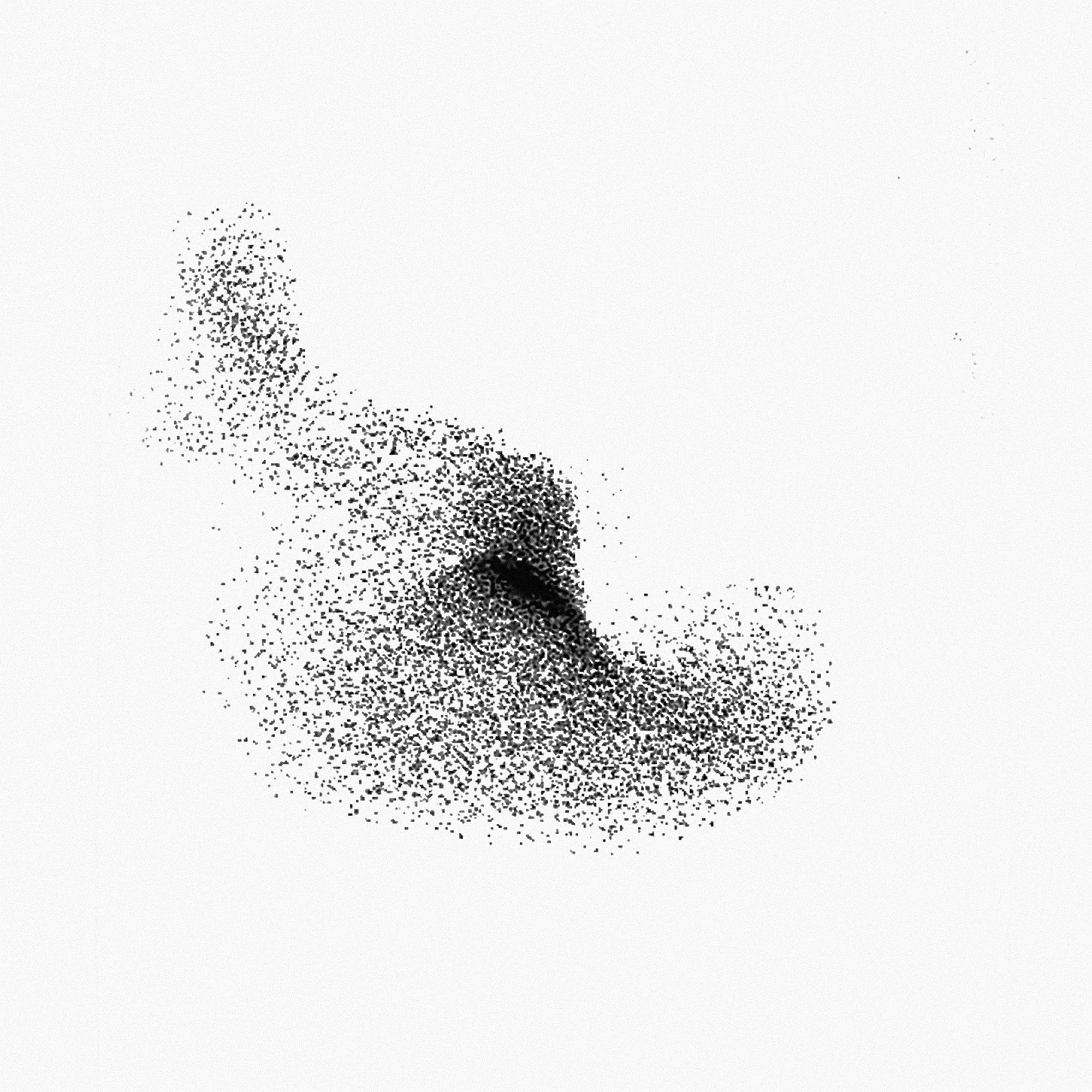
Around the seven minute-mark in the full version the ambient fuzz descends, as though in a deeper sleep, but still there is a depiction of a longer, restful time on the wing – like the murmuration depicted in the sleep visualiser on YouTube but similarly evoking a big bird of prey, a condor in the Andes for instance.
https://www.youtube.com/watch?v=JLkNWWVXJLY As ever, Cooper’s orchestration is thoughtfully crafted, for while Freya Goldmark is credited as a featured artist her violin is rarely in the foreground – yet there are signs of colouring before the bird calls at the end, which suggest a gradual awakening. Meanwhile human voices occasionally appear in the distance.
Does it all work?
It does indeed…and makes for a very calming 22 minutes.
Is it recommended?
Yes. Once again Erland Cooper has made a lovely score that rewards close inspection while forming a blissful backdrop.
For fans of… Tim Hecker, Biosphere, Stars of the Lid, A Winged Victory for the Sullen
adapted slightly from a press release received earlier today:
After a special release in Japan, Bach: The 6 English Suites by Francesco Tristano will be released globally on May 23rd on naïve, a label of Believe Group, under his imprint intothefuture. As a first glimpse into this highly anticipated album, the Prelude from the English Suite no.2 is released today.
Following Bach: The 6 Partitas, the new recording continues Tristano’s deep exploration of J.S. Bach’s keyboard works. With his distinctive style, he brings a dynamic and immersive interpretation, capturing the rhythmic vitality and expressive depth of these suites, composed in the 1710s. Listen here:



 Arcana.fm