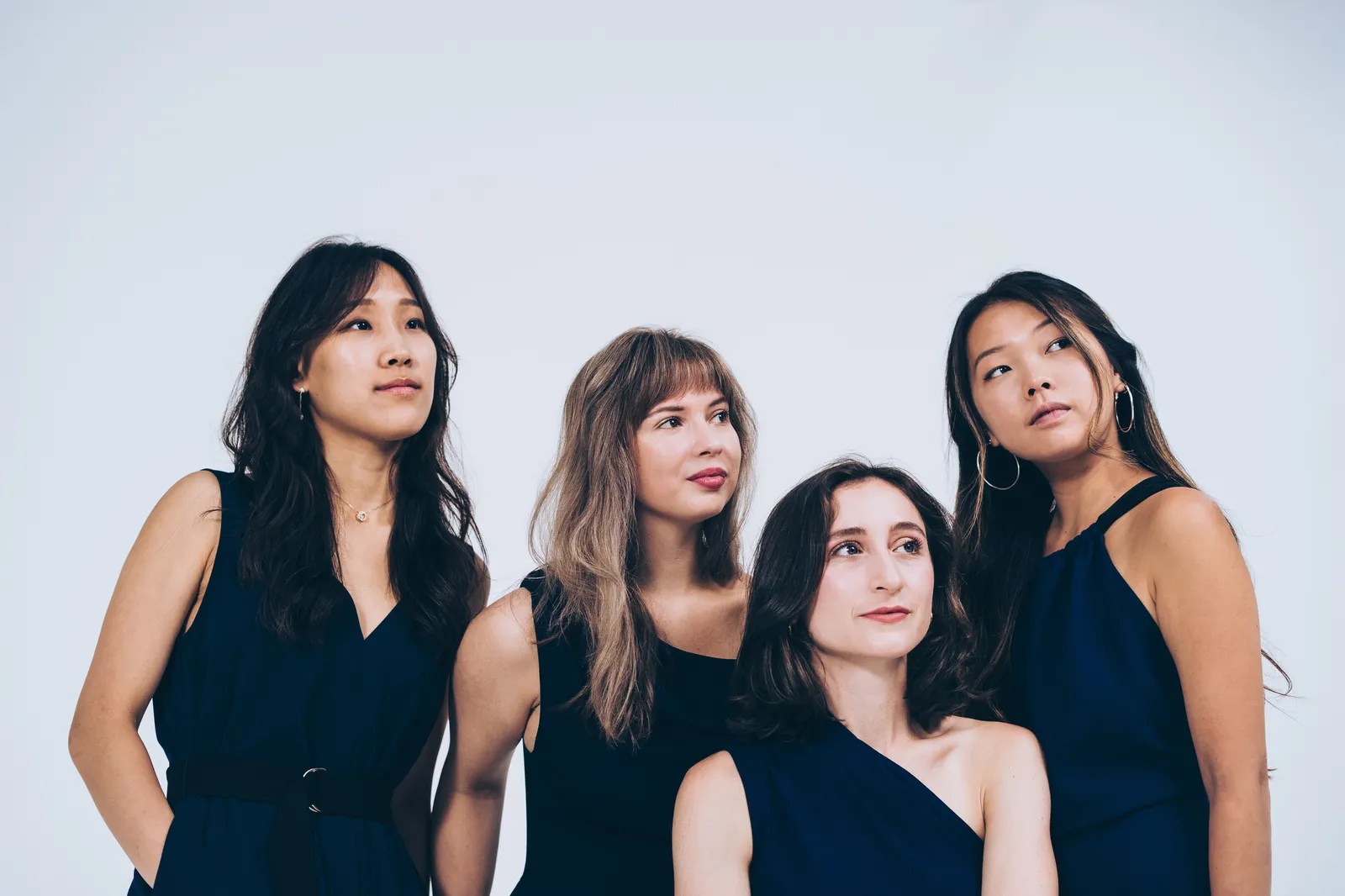
On Record – Matteo Generani: Martucci: Piano Works (Naxos)

Martucci
Romanza facile (1889)
Capriccio e Serenata Op.57 (1886)
Sei Pezzi Op.38 (1878)*
Notturno Op.25 ‘Souvenir de Milan’ (1875)*
Minuetto e Tempo di Gavotta Op.55 (1880/88)*
Sonata facile, Op.41 (1878)*
Scherzo in E major Op.53/2 (1880)
Nocturne in G flat major Op.70/1 (1891)
Tarantella Op. 44/5 (1880)
Prima barcarola, Op. 20 (1874)*

Matteo Generani (piano)

Naxos 8.574628 [71’51”] * World premiere recordings
Producer & Engineer Joseph Tesoro

Recorded 25-27 April 2023 at White Recital Hall, James C. Olsen Performing Center, Kansas City, USA

Reviewed by Richard Whitehouse

What’s the story?

Naxos continues its coverage of Giuseppe Martucci (1856-1909) with this selection of piano music, a medium for which the Italian composer wrote extensively but that has tended to be overshadowed by the upsurge of interest in his symphonies, concertos and chamber works.

What’s the music like?

As indicated by Tommaso Manera in his informative booklet notes, Martucci was established as a pianist when barely out of his teens and could have enjoyed an international career had it not been for his attraction to conducting and, most importantly, his determination to promote Austro-German symphonism when it was hardly established in the Italian-speaking territories. Even the piano pieces that enjoyed popularity in his lifetime often did so in transcriptions for orchestra, making the present anthology a viable overview of his achievement in this domain.

What is immediately noticeable about Martucci’s piano music is the relatively short time in which it was written – the 50 or so opus numbers over which it extends equating to 17 years of composing. Certainly, the Prima barcarola yields a melting limpidity redolent of Chopin, while the Notturno affords an evocation of Milan that wears any Lisztian antecedents lightly. More distinctive is the Sonata facile, a study in deftness and understatement which is by no means ‘easy’ and has an appealing humour. More substantial, however, the Six Pieces are not only contrasted within themselves but amount to a cohesive overall sequence (were they ever performed as such?). Highlights are its fourth and fifth pieces, an ebullient La Chasse then a beguiling Sérénade, but the whole sequence is demonstrably more than the sum of its parts.

Martucci’s piano output tended to fall away as the 1880s progressed, but what he did write is worth attention. Hence the capering Minuetto which was partnered almost a decade on by an even more engaging Tempo di Gavotta, or the Scherzo in E which is playful and resourceful by turns. A further set of six pieces is represented only by its final item, but this Tarantella is the most substantial piece here and testament to the increasing sophistication of its composer. Nor is Capriccio e Serenata other than a brace of genre-pieces unified in overall conception. Emerging either side of 1890, the Romanza facile is a compact study in unforced sentiment, whereas the Nocturne in G flat could hardly be further removed from that eponymous piece written some 16 years previously in terms of its harmonic subtlety and textural translucency.

Does it all work?

It does. As a composer for piano, Martucci may not have had the distinctive profile of Busoni (even at a comparable stage in their respective developments) or Sgambati, though the best of what he did write has no lack of character or personality. It is also music that cries out for the level of commitment evident throughout this selection, Matteo Generani audibly enjoying its technical challenges while always aware of that aspiring towards something more ambitious that was to find its outlet in the multi-movement works which crowned Martucci’s maturity.

Is it recommended?

It is. Although this does not survey the extent of Martucci’s piano music, Generani’s selection is an enticing one that will certainly appeal to those with any taste for the byways of musical Romanticism, along with those who have acquired earlier releases of this composer on Naxos.

Listen & Buy

Click on the artist names to read more on pianist Matteo Generani and composer Giuseppe Martucci

Published post no.2,513 – Wednesday 23 April 2025

Switched On – Walt McClements: On A Painted Ocean (Western Vinyl)

by Ben Hogwood

What’s the story?

Walt McClements began work for On A Painted Ocean in a Pasadena church in 2022. There he was given unexpected access to the building’s organ, recordings that he revisited at a later date while on tour as part of the group behind Weyes Blood.

With months on the tour bus, and restricted access to musical instruments, McClements began to add his own processed accordion sound from a synthesizer, forming the basis of the album. Unsure how to move forward, he explored collaborative options on a visit to former home New Orleans, and the album took shape with saxophonist Aurora Nealand and with studio help from Rachika Nayar.

McClements describes the album as, “A credit to strong relationships and mutual support…adapting to the tides and remembering your community can help when you feel stuck at sea.”

What’s the music like?

Often close to weightless. The woozy combination of pipe organ and accordion make appealing sonorities to form the basis of McClements’ music, whose wide open textures are surely as a result of all that time spent on the road. The music has an appealing freedom but also melancholic tones that speak of homesickness and confinement.

A Painted Ship has a touching intimacy in its thoughts, but reveals a surprising depth to the fulsome chords as the music gradually swells. The title track pares back to accordion alone, a thoughtful elegy. Washed Up has a lovely backdrop that you can dive in to, with shimmering textures that reflect the blue and white cover.

Elsewhere peace is found in the midst of a struggle. Cloud Prints is initially more elusive, before the saxophone of Aurora Nealand soars above the musical landscape like a soaring eagle – and Nealand appears too on the longer form Parade, whose stately chord sequence from the organ is adorned with glitter but also scarred – and effectively rescued by an instructive field recording. The coda, Clattering, drifts in and out of focus.

Does it all work?

It does. McClements is right – his music is a source of comfort, but also of beauty in spite of the scars.

Is it recommended?

It is. Walt McClements has created something original and rather special here, one that speaks of how it was composed – but also offers a unique form of comfort, converting damage and strife into ambience and light.

For fans of… Philip Glass, Terry Riley, Tim Hecker, Peter Broderick, Efterklang

Listen / Buy

Published post no.2,511 – Tuesday 22 April 2025

In concert – Peter Donohoe, RPO / Brabbins: Elgar ‘Enigma’ Variations; Bliss Piano Concerto; Vaughan Williams @ Cadogan Hall

Peter Donohoe (piano, above), Royal Philharmonic Orchestra / Martyn Brabbins (below)

Vaughan Williams Five Variants of Dives and Lazarus (1939)
Bliss Piano Concerto in B flat major Op.58 (1938-9)
Elgar Variations on an Original Theme Op.36 ‘Enigma’ (1898-9)

Cadogan Hall, London
Wednesday 16 April 2025

Reviewed by Richard Whitehouse Pictures (c) Andy Paradise

June 1939 saw one of the more memorable occasions for British music with several premieres at the World’s Fair of New York, this multi-day festival with its theme of ‘Building the World of Tomorrow’ thrown into ironic relief given the outbreak of war in Europe three months later.

The first half of tonight’s concert by the Royal Philharmonic Orchestra duly replicated that on June 10th, beginning with Five Variants of Dives and Lazarus which Vaughan Williams wrote for the event. One of the few non-symphonic orchestral works from his later years, its scoring for divided strings and harp gives a warmly evocative context to this succession of paraphrases whose steadily unforced evolution is rounded off by one of its composer’s most radiant codas. Various solo passages provided the RPO’s section-leaders with their moment in the spotlight.

That concert 85 years ago continued with the Piano Concerto that Arthur Bliss had written for Solomon which enjoyed frequent revival over the next quarter-century. This 50th anniversary of its composer’s death provided an ideal opportunity to reassess a work conceived within the late-Romantic lineage, notably an opening movement whose thunderous initial gestures set in motion this large-scale sonata design whose overt rhetoric is tempered by an expressive poise and more ambivalent asides which make it anything but the epigone of an already bygone era.

Among a few present-day pianists to have this piece in his repertoire, Peter Donohoe tackled its many technical challenges head-on; the RPO and Martyn Brabbins (who had never before conducted it) overcoming some occasional moments of mis-coordination so as to present it to best advantage. He brought a lighter touch and no little emotional poise to bear on the central Adagietto, its inwardness carried over into a finale whose probing introduction was a perfect foil to the bravura that followed. Whatever qualms Bliss may have had regarding the ‘world situation’, there was little sense of doubt as the music surged to its emphatic and affirmative close – thereby setting the seal on this memorable performance and a work which, whatever it lacks in distinctive invention, vindicates Bliss’s overall ambition to an impressive degree.

A pity that logistics (and economics!) made revival of Bax’s Seventh Symphony, which had originally featured in those New York concerts, impracticable but hearing Brabbins direct so perceptive an account of Elgar’s Enigma Variations was no hardship. Perhaps because of the immediacy of the Cadogan Hall acoustic, it was also one in which the relatively brief livelier variations came into their own – hence the unbridled impetus of the fourth (W.M.B), seventh (Troyte) or 11th (G.R.S) variations, though there was no lack of eloquence in the first (C.A.E) and fifth (R.P.A) variations, or suffused fervour in the ninth (Nimrod). The 10th (Dorabella) variation was made into an intermezzo halting if whimsical, and the 13th became a romanza such as opened out this work’s expressive remit onto an altogether more metaphysical plane.

Those having heard Brabbins conduct this work in the Royal Albert Hall quite likely missed that organ-reinforced opulence afforded the 14th (E.D.U) variation yet, as this finale built to its triumphal conclusion, the unfailing conviction of this performance could hardly be denied.

For details on their 2024-25 season, head to the Royal Philharmonic Orchestra website. Click on the artist names to read more about pianist Peter Donohoe and conductor Martyn Brabbins, and also to discover more on The Arthur Bliss Society

Published post no.2,509 – Monday 21 April 2025

Music for Easter Sunday – Rimsky-Korsakov: Russian Easter Festival Overture

Published post no.2,509 – Sunday 20 April 2025

On Record – Crispin Lewis & Raymond Lewis: Herbert Murrill: The Rediscovered Songs (First Hand Records)

Herbert Murrill
Four Elizabethan Songs (1927-30)
Three Carols (1929)
Self-Portrait (1929)
Trois Poèmes (1930)
Four Pastorals (1936)
The Months of the Year (c1936)
Two Herrick Songs (1938)
In Youth is Pleasure (1942)
Sonatina for Piano (1952) – Andantino

Crispin Lewis (baritone); Raymond Lewis (piano) with Rachel Broadbent (oboe, carols)

First Hand Records FHR161 [55’48’’] All world premiere recordings
English/French texts and English translations included
Producer Emily Baines Engineer John Croft

Recorded 19 & 20 April 2024 at Rosslyn Hill Chapel, Hampstead, London

Reviewed by Richard Whitehouse

What’s the story?

First Hand Records issues this first release devoted to the songs of Herbert Murrill (1909-52), now a largely forgotten though once influential figure on music circles in London and further afield; his pedagogical and administrative skills held in high esteem by a younger generation.

What’s the music like?

Murrill’s death at only 43 brought to its premature end a career which, in addition to a sizable output, involved working at the BBC – latterly as its Head of Music – and, in the earlier war years, intelligence work at Bletchley Park. An unassuming figure who operated within if at a conscious remove from the music establishment of his day, Murrill was widely respected for his professionalism – as is borne out by his own music with its lightness of touch and its deft handling of traits stemming from Stravinsky, Poulenc and neo-Classicism between the wars.

It made sense to open this recital with My Youth is Pleasure, its airy setting of Robert Wever highlighting that acute yet unforced nostalgia such as pervades so many of these songs. The lengthy The Months of the Year sustains itself ably, then a wittily engaging quartet of songs to Elizabethan texts almost inevitably recalls the influence of Peter Warlock. Four Pastorals find Murrill indulging his more lyrical tendencies to appealing effect, notably in a setting of the anonymous text Phillada Flouts Me that unerringly catches its deadpan anguish. Nor is he unwilling to tackle more contemporary writers, witness his Satie-esque response to verse by Jacques Prévert and Robert Desnos; though whether those changes to the former’s poems were considered improvements or just unintentional anomalies is now impossible to decide.

A trio of carols with oboe accompaniment (including a Medieval Scottish translation of verse by Martin Luther) would be a welcome addition to a medium which features little other than Vaughan Williams’s masterly Blake settings. After which, the wryly elegant Arioso from a Piano Sonatina makes one wish the surrounding movements could have been included (there was certainly room in terms of playing time). The brace of songs to texts by Robert Herrick summons a more sustained and eloquent response, as to suggest that Murrill’s music might have explored deeper emotions had he lived. This anthology concludes with Self-Portrait – four settings of his contemporary Geoffrey Dunn which anticipate Betjeman in their dry wit and self-deprecating humour – a very English take, indeed, on matters of existential import.

Does it all work?

Yes, albeit for the most part within its narrowly while precisely defined limits. As a composer, Murrill was clearly not out to change the world but rather to offer a discreet commentary from the margins, which he does with admirable skill and not a little affectingly. He has a devoted advocate in Crispin Lewis, for whom this project was doubtless a labour of love, and who is sensitively accompanied by Raymond Lewis or, in the Three Carols, Rachel Broadbent. He also contributes informative and well-researched notes about the life of this singular figure.

Is it recommended?

It is, and there is enough of interest musically to make one curious to hear such as Murrill’s jazz-opera Man in Cage, written to a libretto by Dunn and that enjoyed an eight-week run in London in 1930 before vanishing without trace. For now, this collection ably fulfils its remit.

Listen & Buy

Click on the artist names to read more on Crispin Lewis, Richard Lewis and Rachel Broadbent

Published post no.2,509 – Saturday 19 April 2025