In concert – Alisa Weilerstein, CBSO / Joshua Weilerstein: Dvořák, Rachmaninoff & Still

Alisa Weilerstein (cello, below), City of Birmingham Symphony Orchestra / Joshua Weilerstein (above)

Still Poem for Orchestra (1944)
Dvořák Cello Concerto in B minor, B191 (1894)
Rachmaninoff Symphonic Dances, Op. 45 (1940)

Symphony Hall, Birmingham
Wednesday 12 March 2025 (2:15pm)

Reviewed by Richard Whitehouse Picture of Joshua Weilerstein (c) Beki Smith

Joshua Weilerstein is always a welcome returning artist to the City of Birmingham Symphony Orchestra, invariably with artful programmes such as this afternoon’s interplay of American music with that by European composers finding themselves in temporary or permanent exile.

The music of William Grant Still has made a tentative re-emergence over recent years, Poem for Orchestra being typical of that from his maturity in its galvanizing a late-Romantic idiom with an emotional range of almost cinematic immediacy. Weilerstein steered a secure course through a piece whose darkness-to-light trajectory mirrors that of an accompanying poem by the composer’s wife Verna Avery, in which the foreseeable end of world war might yet bring a new unity and compassion as is reflected through the enfolding euphony of its final pages.
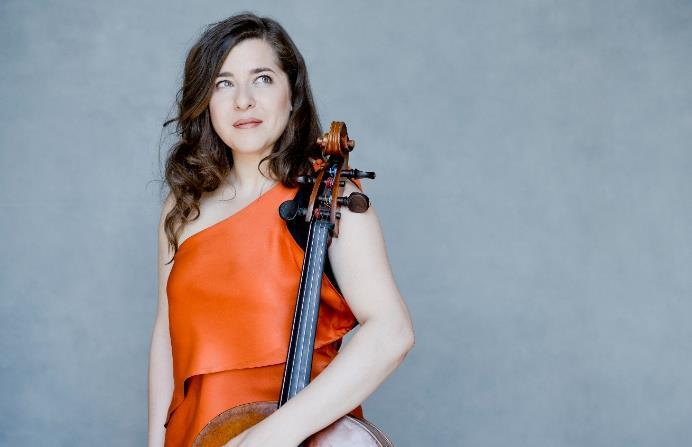
Joshua and his sister Alisa (above) have both appeared often with the CBSO, though Dvořák’s Cello Concerto seems to have been their first Symphony Hall collaboration. Hopefully not the last, their rapport manifest as soon as the opening Allegro’s orchestral tutti has run its purposeful course. Any marginal falling-off of momentum over the latter stages of the development was more than offset by the soloist’s thrilling ascent into the reprise of the easeful second theme, with the coda’s treacherous passagework assuredly negotiated prior to an affirmative ending.

The ensuing Adagio is the work’s emotional heard in all respects, but these siblings rightly refrained from milking the pathos of its ruminative main theme at all times, so throwing the drama of the central episodes then especially the confiding intimacy at its close into greater relief. Lunched directly, the Finale exuded an impetus as sustained this movement through to its extended coda which, more than usually, seemed to warrant a raptly inward outcome – though there was nothing contrived about the heady arrival of those exhilarating final bars.

Rachmaninoff’s Symphonic Dances is hardly a stranger to concert programmes these days, the CBSO having given several memorable accounts in recent seasons. That by Weilerstein was certainly among them, above all with an opening dance whose trenchant outer sections elided perfectly into then out of the central span characterized by Kyle Horch’s soulful alto saxophone. Nor did the Tempo di valse disappoint in its mingled stealth and malevolence, even if the closing pages perhaps dispersed their ominous aura just a little too temperately.

Much the most difficult movement to hold together, the final dance left a potent impression. Its outer sections never rushed and superbly articulated, Weilerstein made the most of that spellbinding transition into a central section where (uniquely with this composer) harmony or texture predominate over melody in defining this music’s expressive persona. From here he ratcheted up tension heading to a seismic confrontation of competing plainchants, then a denouement almost choreographed in its stillness as that final tam-tam echoed into silence.

Directing without a score, this is definitely a work with which Weilerstein feels an especial identity, and the CBSO was unstinting in its collective response. One can only look forward to further concerts between this orchestra and conductor, and hopefully in the coming season.

For details on the 2024-25 season A Season of Joy, head to the City of Birmingham Symphony Orchestra website. Click on the names to read more about conductor Joshua Weilerstein, cellist Alisa Weilerstein and composer William Grant Still

Published post no.2,472 – Thursday 13 March 2025
Playlist – InFiné Ambient (InFiné)

from our friends at InFiné:

“We Are Emotional People.”

Ambient music lies at the very core of InFiné. We’re devotees of the great Brian Eno, raised on the 4AD label, and nurtured on KLF’s pioneering Chill Out and Aphex Twin’s Selected Ambient Works on Warp. Ever-curious listeners, we soaked up the German vibrations of early Ash Ra Tempel before diving into the abyssal basslines of Moritz Von Oswald or the stark minimalism of Pole.

Later, we encountered other wizards around the globe: Murcof in Mexico, Loscil in Canada, Kaito in Japan, Biosphere in Scandinavia, and more recently Kmru in Kenya. This music forms a central thread in our catalog, sitting alongside more rhythm-driven electronic styles, innovative classical hybrids, and increasingly even pop. In Ambient, the role of sound is more vital than in any other genre! Each note needs ample space to resonate, and every piece immerses you in the pure essence of its sound. These tracks stretch time by using minimal resources to create a profound experience. Here, silence is part of the composition, offering a depth and richness unlike anything else.

What seems simple often takes hours in the studio to refine and place each note, adjusting the movement of a resonance like an architect shaping a structure. Everything must be perfectly calibrated, without artifice, like a zen garden where the tiniest imperfection disrupts the harmony. Ambient goes straight to the heart of music: emotion! Sound becomes a safe haven, a powerful instrument for resilience and introspection, bringing us together to face personal or collective challenges. Fueled by this conviction and countless hours of practice, InFiné developed its own “medicinal music” series. We’ve carefully selected audio potions from our catalog—often electronic, sometimes more organic or experimental—to guide you through beneficial emotional landscapes. InFiné Ambient is an invitation to travel without moving, a moment to reset our humanity in a world assaulted by outside turbulence.”

#WeAreEmotionalPeople

Published post no.2,471 – Wednesday 12 March 2025

On Record – Andy Bell: pinball wanderer (Sonic Cathedral)

by Ben Hogwood

What’s the story?

Andy Bell is on a creative roll these days. While it’s not clear if the Ride guitarist will become part of the Oasis live tour later in the year, he is pressing ahead as he hits a rich vein of form in his solo career. Whether under his own name or the GLOK alias, where he operates more electronically, Bell has maintained a satisfying blend of recent past and future, bringing together song-based material with experimentation and the joy of repetitive beats.

pinball wanderer looks set to further his enjoyment in these areas, with a busy year ahead!

What’s the music like?

Bell achieves a really satisfying blend of electronic and acoustic here, bringing in some elements of the GLOK alias – especially an enjoyment of Krautrock – to rub shoulders with influences from early 1990s Manchester and, further back, a healthy dash of Byrds.

The result is music that is never short of a hookline, but adds some really interesting and rewarding quirks when the mood takes it. A great example is the groovy Apple Green UFO, a track aware of the groovier side of Stone Roses’ repertoire, but striking out through dropping a beat in the bar, giving it a subtle edge the likes of A Certain Ratio would enjoy.

Panic Attack is equal parts Krautrock and Manchester, promising warmer climes, while a well judged cover of The PassionsI’m In Love With A German Film Star features ideal guest turns from Dot Allison and Michael Rother. The title track is a brightly coloured groove, while the dreamy Space Station Mantra allows the mind to wander at the cosmic close.

Does it all work?

It does – and with repeated listens, Bell’s music grows in stature and impact. Be warned, there are many earworms in this album!

Is it recommended?

It is. Andy Bell is clearly relishing his music making at the moment, and this meeting of his different musical minds is thoroughly enjoyable, laden with grooves, riffs and good times.

For fans of… A Certain Ratio, Neu!, Andrew Weatherall, Primal Scream

Listen / Buy

Published post no.2,470 – Tuesday 11 March 2025

Switched On – ANiML: Star Walk (Stratasonic)

by Ben Hogwood

What’s the story?

There is an element of mystery behind German / Canadian collective ANiML, who made their first appearance a year ago as the first release on their own label Stratasonic.

Then they released the four track Accidental Effects, but here they go two better with an album to showcase their grooves.

What’s the music like?

ANiML’s music is consistently engaging. Their loping grooves are powered by string bass lines, with nods to hip hop, dub and funk but with a welcome freedom that means you can’t fully pin the music down.

Cherry has the warm promise of summer in its dubby beats and languid riff, while Baby D has a nocturnal feel, evoked by the vibraphone. Star Walk is a descriptive cross genre beauty, with hints of a march in its cross rhythms. The clipped beats of Bruv are effective, nicely on the scratchy side, while Titles is a really strong, low-slung groove.

That leaves the opening Breather, an evocative track laced with tension as its loping beat takes hold. Its keyboard hook would suit an opening credits sequence.

Does it all work?

It does – the only regret being there isn’t more music! ANiML’s grooves are consistently satisfying.

Is it recommended?

Yes, enthusiastically. If you want some quality, streetwise grooves, with a dose of freshness and invention, ANiML are your new find.

For fans of… Massive Attack, Portishead, DJ Shadow, Unkle

Listen / Buy

You can listen to clips and explore purchase options at the Traxsource website

Published post no.2,469 – Monday 10 March 2025

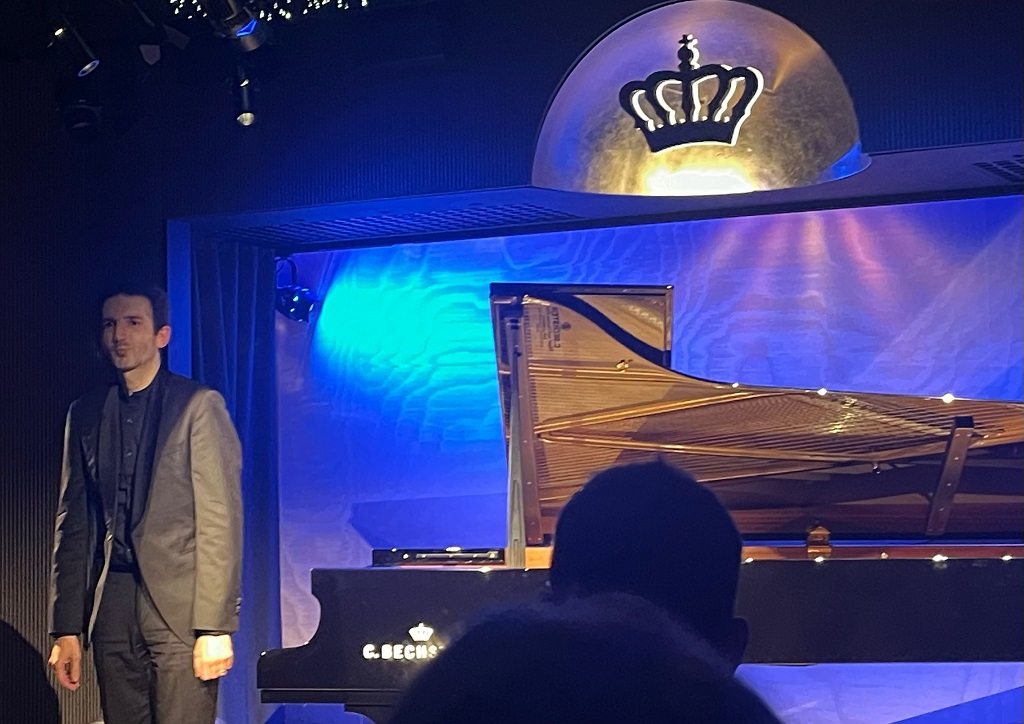
In concert – Emmanuel Despax @ Bechstein Hall, London

Emmanuel Despax (piano)

Ravel Miroirs (1905)
Despax Sounds of Music – Concert Paraphrase on The Sound of Music by Richard Rodgers and Oscar Hammerstein (unknown)
Fauré arr. Despax Après un rêve Op.7/1 (1877)
Debussy Clair de lune (1905)
Ravel Gaspard de la nuit (1908)

Bechstein Hall, London, 7 March 2025

by John Earls. Photo credit (c) John Earls

The most recognised piece of music by French composer Maurice Ravel is his 1928 large orchestral work Boléro, famously used in the film 10 and by Torvill and Dean when ice dancing their way to a 1984 Winter Olympics gold medal.

But there is also a magnificent repertoire of piano music including for solo piano and this provided the main feature of this recital by Emmanuel Despax, marking the 150th anniversary of Ravel’s birth.

The first set opened with Miroirs (Mirrors), a suite of five short movements Ravel dedicated to his fellow members of the French avant-garde artist group Les Apaches.

Noctuelles (Night Moths) had twinkling moments of calm surfacing through its dark undertones, contemplative birdsong is evoked in Oiseaux tristes (Sad Birds), Une barque sur l’océan (A Boat on the Ocean) captured both the flow and ripple of the waves, Alborada del gracioso (The Jester’s Aubade) had a jittery, Spanish aspect, and the bells of La vallée des cloches (The Valley of Bells) are not peals so much as melancholic, dark flashes.

The set ended with Despax’s Sounds of Music, a ‘Concert Paraphrase’ on Rodgers and Hammerstein’s The Sound of Music. I enjoyed its dark humour and nods to other classical piano composers – “If you hear something you recognise it’s not plagiarism, it’s on purpose” Despax forewarned us.

The second set opened with Despax’s arrangement of Faure’s Après un rêve (After a Dream) which was serious and majestic followed by Debussy’s Clair de lune (Moonlight) which whilst thoughtful and considered was also beautifully delicate and expressive.

But the evening was Ravel’s and it concluded with his epic three part masterpiece Gaspard de la nuit (Gaspard of the Night) derived from the prose poems by Aloysius Bertrand. Described by Despax as a “symphonic work for solo piano” it is notoriously difficult to play.

Ondine’s hypnotic trills are shaken by a short powerful blast towards the end and Despax displayed his virtuosity throughout. Le Gibet presents bells of a different kind to those featured in the earlier set, more disturbing and ominous as the repeating tolls maintained throughout evoke the lone hanged man of its inspiration. The way Despax leaned into his keyboard in rapt concentration reminded me of jazz pianist Brad Mehldau at his most intense. The final piece, Scarbo, depicts a mischievous goblin and was spritely before its dramatic long pause towards the end and a forceful energetic finish. It was as captivating to watch as it was to listen to.

What was clear from this performance is the attachment and affinity that Emmanuel Despax has for the music of Maurice Ravel. This was confirmed by an encore of Pavane pour une infante défunte (Pavane for a Dead Princess) which provided a moving and tender conclusion to the evening.

John Earls is Director of Research at Unite the Union. He posts on Bluesky and tweets / updates his ‘X’ content at @john_earls

Published post no.2,468 – Sunday 9 March 2025