In concert – Jess Gillam, CBSO / Jaume Santoja Espinós: Jess Gillam’s American Roadtrip

Jess-Gillam

Gershwin Cuban Overture (1932)
Villa-Lobos
Fantasia for Saxophone W490 (1948)
Copland
Danzón cubano (1942)
Milhaud
Scaramouche Op.165c (1937/9)
Copland
Appalachian Spring – Suite (1944/5)
Barber
Symphony No. 1, Op. 9 (1935-6, rev, 1942-3)

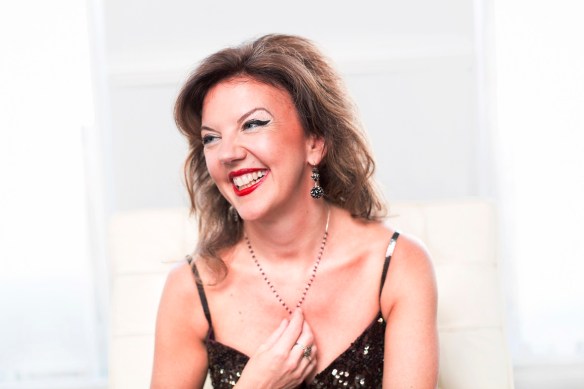
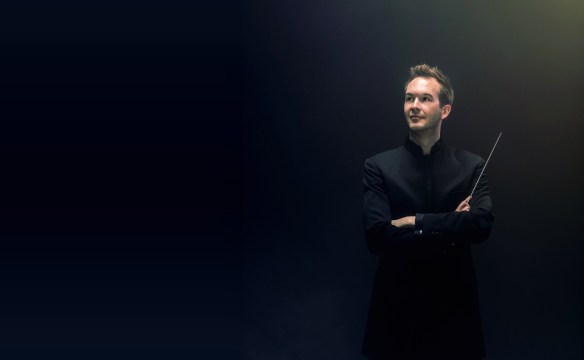
Jess Gillam (saxophones, above), City of Birmingham Symphony Orchestra / Jaume Santoja Espinós (below)

Symphony Hall, Birmingham
Wednesday 20 October 2021

Written by Richard Whitehouse

This evening’s concert by the City of Birmingham Symphony Orchestra took a break from ‘standard’ repertoire to focus on music by composers either American or with an American focus, in a programme which rung the changes to often vibrant and always appealing effect.

A familiar radio presence, Jess Gillam has already encouraged renewed interest in the music for classical saxophone, as her contributions amply demonstrated. Little heard in his lifetime, the Fantasia by Villa-Lobos is among those more modest creations of a composer known for his (over-reaching) ambition – its three short movements drawing animated and ruminative responses from the soloist enhanced by a restrained orchestration. Swapping soprano for the alto instrument, Gillam returned for Milhaud’s Scaramouche which was no less engaging in this arrangement than the original for two pianos; whether in its incisive opening movement, soulful central interlude or its final Brazileira which could hardly fail to provoke a response from orchestra and audience – the latter evidently appreciative of such an infectious display.

The CBSO captured the spirit of both pieces, thanks not least to former assistant conductor Jaume Santoja Espinós, who had opened the concert with Gershwin’s Cuban Overture – the percussion-clad exuberance of its outer sections a telling foil to the haunting pathos of those canonic textures at its centre. Copland’s Danzón Cubano can seem irritating in its rhythmic over-insistence, but Espinós brought an unsuspected wit and subtlety to this amalgam of coy nonchalance with an orchestration recalling Stravinsky’s forays into ‘crossover’ at this time.

Latin-American traits made way for those of a Europeanized East Coast after the interval, Espinós directing the suite from Copland’s Appalachian Spring with a cohesion as brought out expressive contrasts between the various sections without these becoming too episodic. The idealization inherent in this ‘Ballet for Martha’ can hardly be gainsaid, yet the chaste eloquence of its musical content came through no less affectingly – not least as the familiar ‘Variations on a Shaker Hymn’ subsided into the serene inevitability of the final evocation.

The highlight was a welcome revival for Barber’s First Symphony, whose continuous design marries Sibelian formal precision with that unabashed emotionalism closer to Russian music from this period, with a cumulative impact to its four-in-one trajectory which was palpably in evidence. From the stark foreboding with which it begins, through the relentless impetus of its ‘scherzo’ and consoling poise of its ‘slow movement’ (felicitous oboe playing by Emmet Byrne), to the inexorable force of its closing passacaglia, this was a performance to savour.

An eventful evening, then, and was more to come with a post-concert informal performance from the quintet El Ultimo Tango, familiar from its several recordings and here providing a 30-minute overview of Astor Piazzolla for what was a – necessarily – belated tribute in the year of his centenary. Those wanting a longer selection can hear this group at CBSO Centre next February, while the CBSO returns next week for a programme of mainly French music from conductor Kevin John Edusei with Kirill Gerstein in both of Ravel’s piano concertos.

Further information on the CBSO’s current season can be found at the orchestra’s website. For more on Jess Gillam, click here – and for more on El Ultimo Tango, here. For more information on Jaume Santoja Espinós, head to the conductor’s website
Playlist – Sound of Mind 3: Orchestral

Today’s playlist of music for the mind has an orchestral theme, which will hopefully bring you some colour if you’re stuck indoors.

This one features Aaron Copland‘s brightly-scored ballet music Appalachian Spring, the first movement of Rachmaninov‘s Second Piano Concerto, Elgar‘s Sospiri, shorter works by Grieg and Debussy, and Vaughan Williams‘ timeless Fantasia on a theme of Thomas Tallis:

I hope you enjoy it – and stay tuned for some uplifting Friday vibes tomorrow!

Ben Hogwood

Live review – Anna Vinnitskaya & CBSO / Mirga Gražinytė-Tyla perform Shostakovich

Anna Vinnitskaya (piano, above), Jonathan Holland (trumpet), City of Birmingham Symphony Orchestra / Mirga Gražinytė-Tyla (below)

Symphony Hall, Birmingham
Saturday 16 March 2019

Shostakovich
The Limpid Stream: Suite Op.39a (1935)
Piano Concerto no.1 in C minor Op.35 (1933)
Symphony no.5 in D minor Op.47 (1937)

Written by Richard Whitehouse

Photo of Anna Vinnitskaya (c) Gela Megrelidze

With Birmingham Opera Company’s staging of Lady Macbeth of Mtsensk having finished its run, an all-Shostakovich concert by the City of Birmingham Symphony was not just apposite but underlined the rapport between the orchestra and its music director Mirga Gražinytė-Tyla.

The programme centred on Shostakovich’s music before and after an infamous Pravda article irrevocably altered the composer’s evolution. Attacks on The Limpid Stream were admittedly gratuitous; this last of his ballets finds Shostakovich at his most accessible – as witnessed by the suite devised several years later. Starting with a suave Waltz (which found fame as title-music for Stanley Kubrick’s Eyes Wide Shut), this continues with a vigorous Russian Dance then breezy Galop. The highlight is an Adagio whose soulful cello melody was eloquently rendered by Eduardo Vassallo. A deft pizzicato Polka was a rather inconclusive ending: the uproarious final dance (which follows-on almost continuously) would have made for a more decisive conclusion. No matter, this was still an engaging sequence and captivatingly played.

Shostakovich conceived his First Piano Concerto for his own pianism. Influences derive more from stage and screen than any earlier concertos, but its formal ingenuity is undeniable. Anna Vinnitskaya gauged ideally the first movement’s volatile tempo changes, while the Lento had poignancy and no mean vehemence at its climax; the ensuing intermezzo an upbeat to a finale whose high-jinx were teasingly held in check. Jonathan Holland was engaging in the obligato trumpet part, and the CBSO strings retained their articulation even in the hectic closing pages.

Whether or not an explicit response to that condemnatory Pravda article of January 1936, the Fifth Symphony is crucially important for moving the emphasis within Shostakovich’s output away from the theatrical. Nothing reinforces this more than the opening Moderato, with its individual take on sonata design that Gražinytė-Tyla handled with real assurance – keeping the exposition in motion with a fleeter than usual second subject, before eliding seamlessly into a purposeful development then an anguished reprise and desolate coda. The Scherzo had ironic wit without heaviness, whereas the slow movement impressed through its inevitability of progress towards a central episode of rapt inwardness; after which, the searing climax did not pre-empt the coda with its musing interplay of harp and celesta against suspended strings.

The finale offers the greatest challenges but Gražinytė-Tyla had its measure too, her fast yet never inflexible tempo for the surging initial stages segueing into the central episode with its heartfelt recall of earlier ideas then ethereal searching towards a crowning peroration. Neither wantonly triumphal nor turgidly defeatist, this was a thoughtful yet decisive conclusion to the overall emotional trajectory; maybe those searching trumpet dissonances could have sounded even more baleful, though a sense of coming through against the odds was never in doubt.

This was an impressive account of a symphony which has been much harder to interpret once its ultimate ‘message’ became a matter for debate. Gražinytė-Tyla provided no easy answers; instead, her presenting the work as a cohesive and integral whole was its own justification.

For further information on the City of Birmingham Symphony Orchestra’s 2018-19 season click here

Further listening

Unfortunately the concert was not recorded for broadcast, but you can hear a playlist of the pieces heard on Spotify below, including Anna Vinnitskaya‘s recording of the Shostakovich with Kremerata Baltica:

Live review – CBSO Youth Orchestra / Cristian Măcelaru: Copland Symphony 3, Clyne & Szymanowski with Tasmin Little

Tasmin Little (violin) CBSO Youth Orchestra / Cristian Măcelaru (below)

Symphony Hall, Birmingham
Sunday 24 February 2019, 3pm

Clyne This Midnight Hour (2015)
Szymanowski Violin Concerto no.1 Op.35 (1916)
Copland Symphony no.3 (1946)

Written by Richard Whitehouse

Concerts from the CBSO Youth Orchestra have long been a regular and welcome fixture on the Symphony Hall calendar, with this afternoon’s programme offering a judicious selection such as ranged across almost a century of music by British, Polish and American composers.

Many CBSO Youth Orchestra concerts feature a world or local premiere, and today started with a first Birmingham outing for Anna Clyne’s This Midnight Hour. Drawing inspiration (albeit obliquely) from poems by Juan Ramon Jiménez and Charles Baudelaire, this compact piece initially alternates between energy and rumination with steadily accumulating impetus. A pity, then, that the second half rather loses focus through an uneasy amalgam of waltz-like flaccidness and folk-inflected juvenilia; the whole seeming rather less than the sum of its parts.

Tasmin Little (above) then joined the orchestra for Szymanowski’s First Violin Concerto, now firmly established as a repertoire item after many years on the periphery. Not the least fascinating aspect is its formal ambiguity – the continuous span interpretable both as a three-movement form as well as an extended sonata design.

It was a measure of Little’s insight that she elided between these possibilities in a performance which stressed the music’s organic inevitability as much as its heady sensuousness, abetted by Cristian Măcelaru’s attentive handling of an orchestration as by no means ‘plays itself’ in terms of overall balance. This was evident not least in the rapturous main climax – after which, Little vividly despatched the brief cadenza prior to the coda’s poignant recollection then the disarming evaporation of those final bars.

Copland’s Third Symphony is another piece to have garnered regular hearings in recent years – consideration of its being an anomaly in the composer’s output, by dint of its monumental aspirations, having become secondary to the sheer impact invested into its relatively modest (Brahmsian rather than Mahlerian) dimensions. A quality Măcelaru kept in mind throughout what was a cohesive and convincing account – whether in the steadily arching accumulation of tension then release across the first movement, tensile interplay of energy and nonchalance in the scherzo, or the calmly unfolding sequence of variants on a wistful opening theme that is the slow movement. Not the least significant aspect is the degree to which Copland secures thematic consistency across the broader span in the interests of formal and expressive unity.

The CBSO Youth Orchestra responded admirably, not least when being tested to the limit by the music’s polyphonic intricacy and textural density. Gratifying, too, that the best was saved until last – the finale powerfully launched by a paraphrase on Fanfare for the Common Man, before it heads into intensive discussion of the various thematic strands then builds inevitably to a majestic peroration. In Măcelaru’s hands, the latter conveyed affirmation without bathos – as though to confirm that emotional oneness no doubt at the heart of Copland’s conception.

The performance assuredly left its mark on the Symphony Hall audience, which responded with a well-deserved ovation. Next up is a concert by the CBSO Youth Orchestra Academy – for a programme of Weber, Shostakovich and Dvořák – at Town Hall on Sunday 28th July. You can find out more on the orchestra’s website

Further listening

Unfortunately there are no recording of Anna Clyne‘s This Midnight Hour online currently, but you can hear a recording of her orchestral piece Night Ferry on Spotify below:

Meanwhile Tasmin Little‘s recording of both violin concertos by Szymanowski for Chandos Records can be heard here, coupled with a scarcely recorded concerto by Mieczysław Karłowicz:

Finally Copland‘s Symphony no.3 can be heard below in a famous recording where the New York Philharmonic Orchestra is conducted by Leonard Bernstein:

Live review – CBSO with Oliver Janes & Andrew Gourlay: Strauss, Copland & Rachmaninov

Oliver Janes (clarinet), City of Birmingham Symphony Orchestra / Andrew Gourlay (above)

Symphony Hall, Birmingham. Thursday 6th April, 2017

Richard Strauss Don Juan Op.20 (1888)

Copland Clarinet Concerto (1948)

Rachmaninov Symphony no.3 in A minor Op. 44 (1936)

Written by Richard Whitehouse

An ear infection meant that Mirga Gražinytė-Tyla had to withdraw from this concert, which provided a welcome opportunity for Andrew Gourlay (now into his second season as Music Director of the orchestra in Valladolid) to make his debut at Symphony Hall with the CBSO.

A pity the Fourth Suite from the ballet The Golden Key by Mieczysław Weinberg had to be dropped from the programme, but that will hopefully be rescheduled (and if Gražinytė-Tyla could tackle one of this composer’s symphonies as his 2019 centenary approaches, then so much the better). Instead, Gourlay directed an account of Strauss’s Don Juan which, while it rather failed to ignite in the earlier stages, evinced some suitably enticing playing during the amorous central episode and then a rousing culmination prior to those fatalistic closing bars.

Hardly a natural complement to Copland’s Clarinet Concerto, but the latter piece works well in a variety of contexts. It also provided an impressive showcase for Oliver Janes, now into his third season as principal clarinet of this orchestra and a player whose elegant while never unduly soft-grained tone was admirably suited to the first movement, with its limpid backing for strings and harp. Janes tackled the central cadenza with no less security – necessarily so as, in addition to its technical virtuosity, it functions as a formal and expressive ‘bridge’ into the second movement. This latter, substituting piano for harp and focusing on the jazz idioms often to the fore in Copland, was a little too reined-in over much of its course with the final pages failing to lift off, though there was never any doubting Janes’s identity with the piece.

The highlight of the concert came after the interval with a perceptive and involving account of Rachmaninov’s Third Symphony. Although it lags well behind its predecessor in terms of performance, this piece has moved from the periphery of the repertoire as earlier tendencies to dismiss it as a rerun of past glories have yielded to a recognition of just how subtly while effectively it overhauls the composer’s thinking for the inter-war period. Not for nothing was Nikolay Medtner alarmed by what he heard as the ‘modernization’ of Rachmaninov’s idiom.

In terms of textural balance and formal continuity it poses more problems than any other of Rachmaninov’s orchestral works, but Gourlay was never fazed by these potential pitfalls. The unworldly ‘motto’ launching the first movement was hauntingly rendered, and the only error in what followed was the omission of an exposition repeat necessary to balance an extensive development whose crisis-riven denouement was acutely realized here.

Neither did Gourlay misjudge the integration of slow movement and scherzo in what follows – the outcome being a developing variation as seamless as it was affecting. If the finale then unfolded at slightly too relaxed a pace, this enabled Gourlay to characterize detail in as resourcefully orchestrated a movement as Rachmaninov ever penned – with the closing accelerando vividly brought off.

A convincing take, then, on this engaging symphony and a fine marker for Gourlay to have laid down in what should prove an ongoing association with this orchestra. Those unable to attend Saturday’s repeat can hear it being broadcast by BBC Radio 3 on Tuesday 18th April.

For more information on future CBSO concerts head to their website