
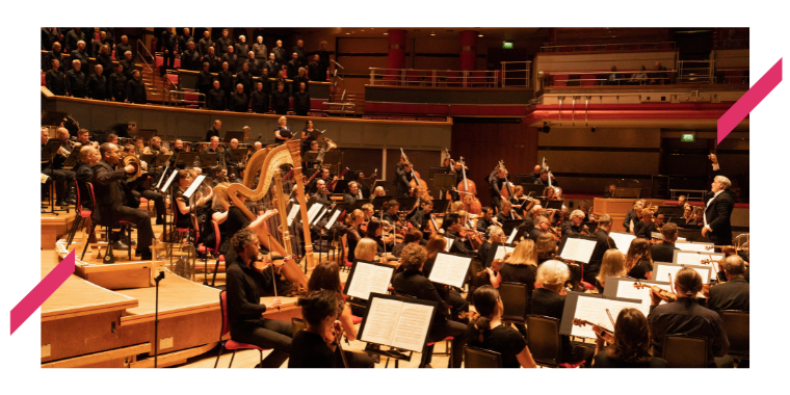
Alice Coote (mezzo-soprano), Brenden Gunnell (tenor), Ashley Riches (bass-baritone), CBSO Chorus, City of Birmingham Symphony Orchestra / Ryan Wigglesworth
Elgar The Dream of Gerontius Op.38 (1899-1900)
Symphony Hall, Birmingham
Thursday 2 March 2023
Reviewed by Richard Whitehouse
It may have had a disastrous premiere here in October 1900, but Birmingham has more than made amends to The Dream of Gerontius through many subsequent performances by the City of Birmingham Symphony Orchestra with conductors ranging from Vernon Handley to John Eliot Gardiner, two recordings from its previous chief conductors (Simon Rattle and Sakari Oramo), and tonight a reading which more than confirmed that this ground-breaking piece remains a touchstone of the choral repertoire almost 125 years on from that initial failure.
Although the innate Catholicism of John Henry Newman’s text no longer presents obstacles, the work’s technical demands remain considerable. Not least the characterizing of Gerontius himself, in which Brenden Gunnell acquitted himself with conviction – whether his wearied pallor then combative reckoning with Sancta fortis in Part One, or his wonderous musings then anguished acceptance of his purgatorial fate with Take me away in the longer second part. This role was consequently more believable and more empathetic because more human.
Not a little of that impression was abetted by Alice Coote’s contribution as the Angel. Less imperious than many predecessors (or contemporaries), the extent of her involvement only deepened as Part Two unfolded – the restraint, even reticence, of My work is done taking on heightened eloquence during There was a Mortal, before the Softly and gently of her farewell brought with it a transfiguring radiance as carried through to the close. This was a thoughtful and, increasingly, affecting approach to some of this work’s musical highpoints.
Nor should the contribution of Ashley Riches be underestimated, even though this is limited to two, albeit crucial, appearances in either part. Arresting and suitably proclamatory at the Priest in Proficisere, anima Christiana, he brought unfailing gravity and powerfully wrought rhetoric to Angel of the Agony – the substance of whose musical presentation can be heard in Elgar’s music across the decades to come, whatever the extent to which the composer moved away from accepting those tenets of Catholic orthodoxy that are set out in Newman’s poem.
One of several works to which it has returned regularly over its half-century of existence, the CBSO Chorus brought its wealth of experience to a piece whose difficulties of ensemble and intonation cannot be gainsaid. From the halting appearances of the Assistants, through to the intricate polyphony of the Demons then cumulative grandeur of the Choir of Angelicals and distanced poise of the Souls in Purgatory, the authority of its contribution – prepared on this occasion by Julian Wilkins – added in no small measure to the impact of the performance.
As, of course, did that of the CBSO. Any regret over Andrew Davis’s indisposition was duly tempered by Ryan Wigglesworth’s tangible immersion and belief in this score – to which he brought a composer’s concern for clarity and cohesion, with a sense of pacing and a placing of its emotional climaxes which made appreciate anew the ambition and audacity of Elgar’s overall conception. Birmingham will doubtless hear many more performances of Gerontius over ensuing decades, with this one a marker as to what the work can and should represent.
You can read all about the 2022/23 season and book tickets at the CBSO website. Click on the artist names for more on Alice Coote, Brenden Gunnell, Ashley Riches and the CBSO Chorus. Meanwhile you can read more about Ryan Wigglesworth at two different locations – his composer profile from publisher Schott, and his conductor profile

 Arcana.fm