In concert – Wednesday 12 November: English Symphony Orchestra to bring Roaring Twenties to life in opening concert of 2025-26 Malvern Residency

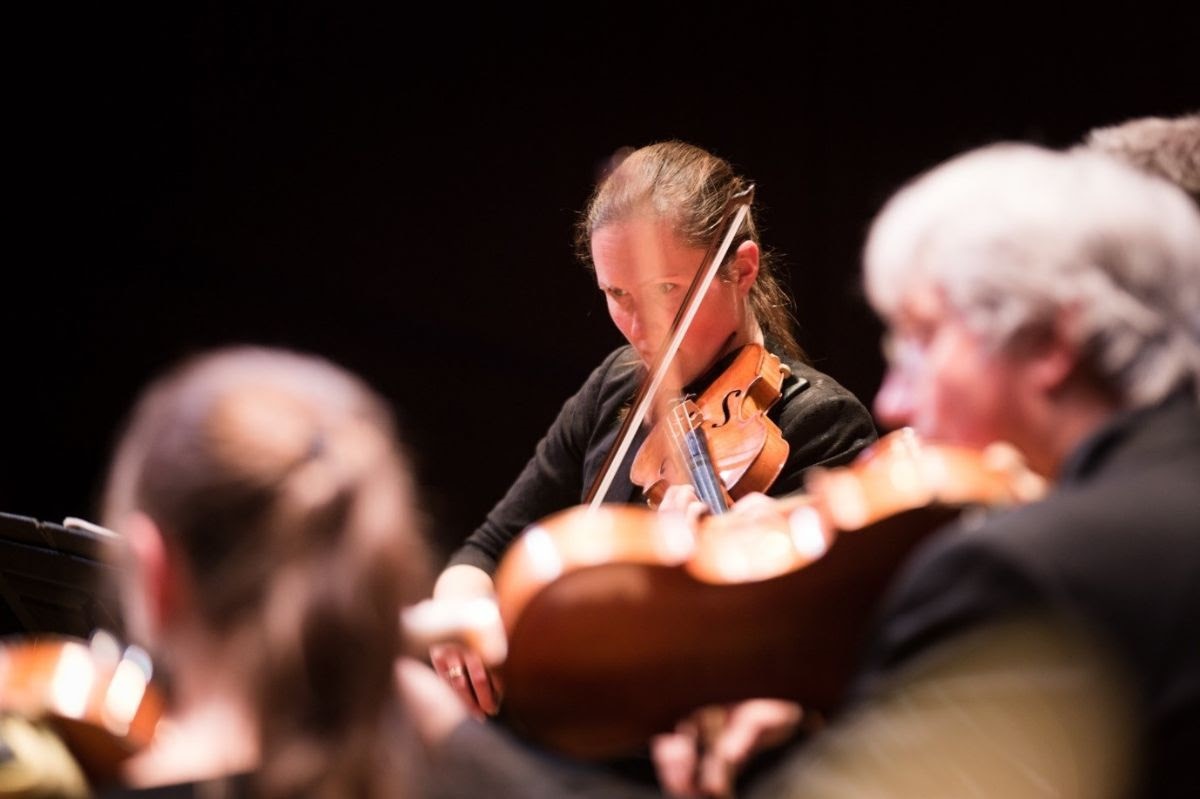
reposted by Ben Hogwood Photo Zoe Beyers leading the English Symphony Orchestra (c) Michael Whitefoot

The renowned English Symphony Orchestra (ESO), under their principal conductor Kenneth Woods, is to make a highly anticipated return to Malvern Theatres, Worcestershire on Wednesday 12 November at 7:30pm with a programme celebrating the adventurous spirit and playful energy of the 1920s, as part of their Autumn-Winter Residency.

LIVELY SPIRIT OF THE ROARING TWENTIES

The evening will feature works by composers who captured the era’s lively spirit, including Erwin Schulhoff’s Suite for Chamber OrchestraDarius Milhaud’s The Ox on the Roof’ and Kurt Weill’s raucous cabaret songs, to be performed by the ESO’s first affiliate artist, soprano April Fredrick. The programme opens with the music of Joseph Haydn and a performance of his Symphony No. 60 entitled The Absent-Minded Gentleman, delighting in the composer’s celebrated wit and humour.
 
Kenneth Woods, Artistic Director and Principal Conductor of the ESO, introduces the programme: “Erwin Schulhoff’s suave Suite for Chamber Orchestra takes listeners on a guided tour of 20s dance crazes, from the shimmy to the tango. Milhaud’s zany ballet score The Ox on the Roof was inspired by the comedy of Charlie Chaplin and the dance music of Brazil, while Kurt Weill’s songs reflect life in and around the cabaret scene in all its humour and sensuality. The programme opens with Haydn’s Symphony No.60, The Absent-Minded Gentleman, quite possibly the funniest and most surreal symphony ever composed.”

ENGLISH SYMPHONY ORCHESTRA – MALVERN RESIDENCY

Wednesday 12 November 2025, 7.30pm
Malvern Theatres Grange Road, Malvern, Worcs. WR14 3HB
English Symphony Orchestra: The Joker’s Wild – Mischief in Music
Haydn Symphony No. 60 (‘Il Distratto’) in C
Weill Cabaret Songs
Schulhoff Suite for Chamber Orchestra
Milhaud The Ox on the Roof

April Fredrick (soprano), English Symphony Orchestra / Kenneth Woods

For more information visit the Malvern Theatres website

Published post no.2,708 – Tuesday 4 November 2025

On Record – MahlerFest 36 & 37: Mahler & The Mountains: Kenneth Woods conducts Symphony no.4 & selections from Des Knaben Wunderhorn

April Fredrick (soprano), Brennen Guillory (tenor – Trost im Unglück, Der Tambourg’ sell; Revelge), Colorado MahlerFest Orchestra / Kenneth Woods

Mahler
Symphony no.4 in G major (1892; 1899-1900)
Des Knaben Wunderhorn: Lied des Verfolgten im Turm; Des Antonius von Padua; Fischpredigt; Trost im Unglück; Rheinlegendchen; Der Schildwache Nachtlied; Der Tambourg’sell; Revelge

Colorado MahlerFest 195269364564 [two discs, 89’22”]
Producer Jonathan Galle Engineer Tim Burton
Live performances at Macky Auditorium, Boulder, Colorado, 20 May 2023 (Des Knaben Wunderhorn), 19 May 2024 (symphony no.4)

Reviewed by Richard Whitehouse

What’s the story?

Recorded coverage of Colorado’s MahlerFest continues with these performances taken from the past two editions, duly confirming the significance of this event in the annals of Mahler interpretation and the increasing excellence of the orchestral playing under Kenneth Woods.

What are the performances like?

It may be the shortest of his cycle and the one which initially gained his music acceptance in the UK and US, but Mahler’s Fourth Symphony received as rough a reception as any of his premieres and it remains a difficult work fully to make cohere. While he undoubtedly has its measure, Woods might have pointed up those expressive contrasts in its opening movement a little more directly; the music only finding focus with a development where the emotional perspective opens out to reveal an unforeseen ambiguity. The remainder is unfailingly well judged, while the scherzo impresses through a seamless transition between the sardonic and the elegance of its trio sections. Alan Snow sounds just a little tentative with his ‘mistuned’ violin, but the unexpected panorama of enchantment prior to its coda is meltingly realized.

At just over 20 minutes, the Adagio feels relatively swift (surprisingly so), even if Woods is mindful never to rush its unfolding double variations and what becomes a contrast between intensifying expressive states whose Beethovenian antecedent is not hard to discern. If the climactic ‘portal to heaven’ lacks little in resplendence, it is that hushed inwardness either side such as sets the seal on a reading of this movement to rank among the finest in recent years. Nor is its segue into the finale other than seamless – Mahler having realized that an earlier vocal setting was the natural culmination to where his symphony had been headed. Suffice to add that April Fredrick’s contribution is of a piece with Woods’s conception in its canny mingling of innocence and experience prior to an ending of deep-seated repose.

The second disc features seven songs taken from Mahler’s settings of folk-inspired anthology Des Knaben Wunderhorn. April Fredrick is truly in her element with a Rheinlegendchen of winning insouciance and a Des Antonius von Padua Fischpredigt of deftest irony. Brennen Guillory comes into his own with the final two numbers, Der Tamboursg’sell distilling the darkest humour as surely as Revelge conveys that innate fatalism behind the resolve with which the soldier meets his destiny. Woods provides an astute and sensitive accompaniment.

Does it all work?

Yes, insofar as the collection of folk-inspired poetry proved central to Mahler’s evolution as both a song and symphonic composer. It might have been worthwhile to include the original version of Das himmlische Leben, not least as its appreciably different orchestration shows just how far the composer’s thinking had come during eight years, but the present selection is nothing if not representative. Hopefully those Wunderhorn songs not featured will appear on a future issue from this source, maybe in tandem with the Rückert songs of the next decade.

Is it recommended?

Yes it is. The symphonic cycle emerging from MahlerFest is shaping up to be a significant addition to the Mahler discography, with the latest instalment no exception. Hopefully this year’s account of the Sixth Symphony will find its way to commercial release before long.

Listen / Buy

For further purchase options, visit the MahlerFest website – and for more information on the festival itself, click here. Click on the names for further information on conductor Kenneth Woods, soprano April Fredrick and tenor Brennen Guillory

Published post no.2,681 – Wednesday 8 October 2025

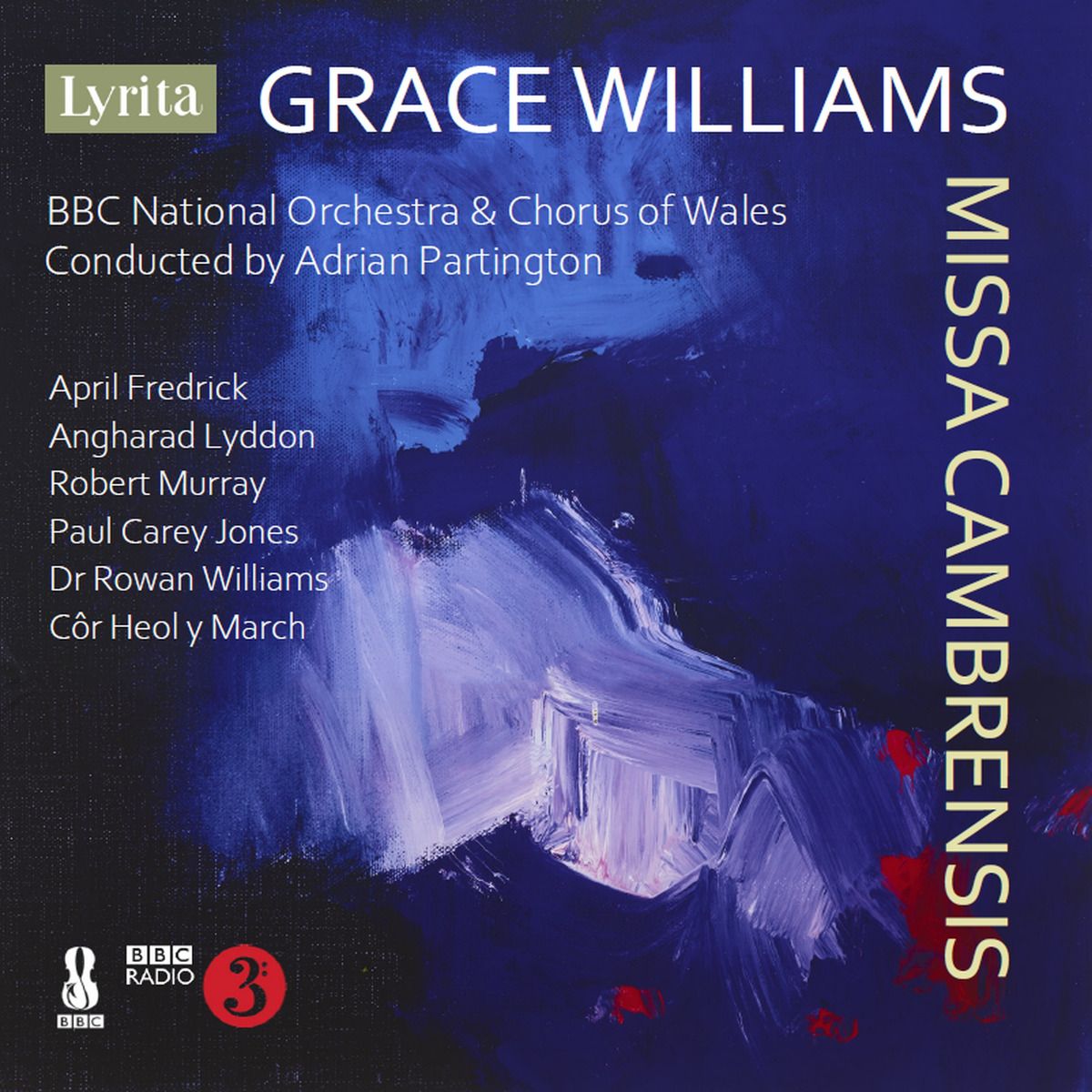
On Record – Soloists, BBC National Chorus and Orchestra of Wales / Adrian Partington – Grace Williams: Missa Cambrensis (Lyrita)

Grace Williams Missa Cambrensis (1968-71)

April Fredrick (soprano), Angharad Lyddon (mezzo-soprano), Robert Murray (tenor)
Paul Carey Jones (bass), Dr Rowan Williams (narrator); Côr Heol y March, BBC National Chorus and Orchestra of Wales / Adrian Partington

Lyrita SRCD442 [66’41’’] Latin / Welsh text and English translation included
Producer / Engineer Adrian Farmer, Engineer Simon Smith

Recorded 20-21 January 2024 at BBC Hoddinott Hall, Cardiff

Reviewed by Richard Whitehouse

What’s the story?

Lyrita continues its coverage of Grace Williams (1906-1977) with her largest concert work, Missa Cambrensis, in a recent studio recording which confirms it as the defining statement from a composer who, almost half a century since her death, is only now receiving her due.

What’s the music like?

As Paul Conway observes in his typically thorough booklet notes, Missa Cambrensis is one among a number of works by Williams that is Welsh only in a titular sense. Premiered at the Llandaff Festival in 1971, it was well received by fellow composers, critics and public alike but not heard again until 2016 in a performance one recalls as originally intended for release on Lyrita and which can be heard via the composer’s dedicated website. Not that the present account is other than successful in conveying the essence of this powerful yet elusive piece.

Many settings of the Mass since Haydn have unfolded a symphonic trajectory, but Williams goes further with the division into five clearly defined movements. The initial Kyrie Eleison not only introduces most of those salient motifs but also establishes that tone, mystical in its undulating equivocation, such as characterizes this work’s long-term expression: the contrast here between choral and soloistic textures duly accentuated by their hieratic and supplicatory quality. This duly sets up an emotional contrast intensified in the Gloria, outwardly the most straightforward part of the work but with a calmly ecstatic response at Laudamus te then an eloquent Dominus Deus that are nothing if not personal, together with an intensely wrought Cum Sancto Spiritu whose culminating Amen’s convey a distinctly ambivalent affirmation.

As most often, the Credo is the most substantial portion but Williams rings the changes by dividing this into halves, a pertinent division coming at Et homo factus est and Crucifíxus étiam pro nobis. In between are interpolated a setting of Saunders Lewis’s Carol Nadolig (A Christmas Carol) for children’s voices with viola, cello and harp of melting pathos, offset by a starkly narrative treatment of the ‘Beatitudes’ prior to a mostly ruminative resumption of the Credo. Pivoting between contemplation and elation, the Sanctus is rounded off by a joyful Hosánna in excélsis which is not to be heard again after the subdued eloquence of the Benedictus. An anguished response to the Agnus Dei feels the more acute, as also a searching Dona Nobis Pacem which brings the work full circle to its contemplative close.

Does it all work?

Yes, and with an understated while readily identifiable personality that surely makes this the most potent setting of the Mass from a Welsh composer. Subliminal influences might not be hard to discern, among them Britten’s War Requiem, but they never detract from Williams’s own idiom. The soloists cannot be faulted in terms of commitment, with Rowan Williams a notably incisive reciter, while Adrian Partington secures a lustrous response from his choral and orchestral forces. Overall, it is hard to imagine the work given with greater conviction.

Is it recommended?

It is indeed, not least in the hope that further live hearings of Missa Cambrensis may prove forthcoming. Good news, moreover, that Lyrita has now acquired the premiere performance of Williams’s only completed opera, The Parlour, which is scheduled for imminent release.

Listen & Buy

You can read more about this release at the Wyastone website

Published post no.2,516 – Monday 28 April 2025

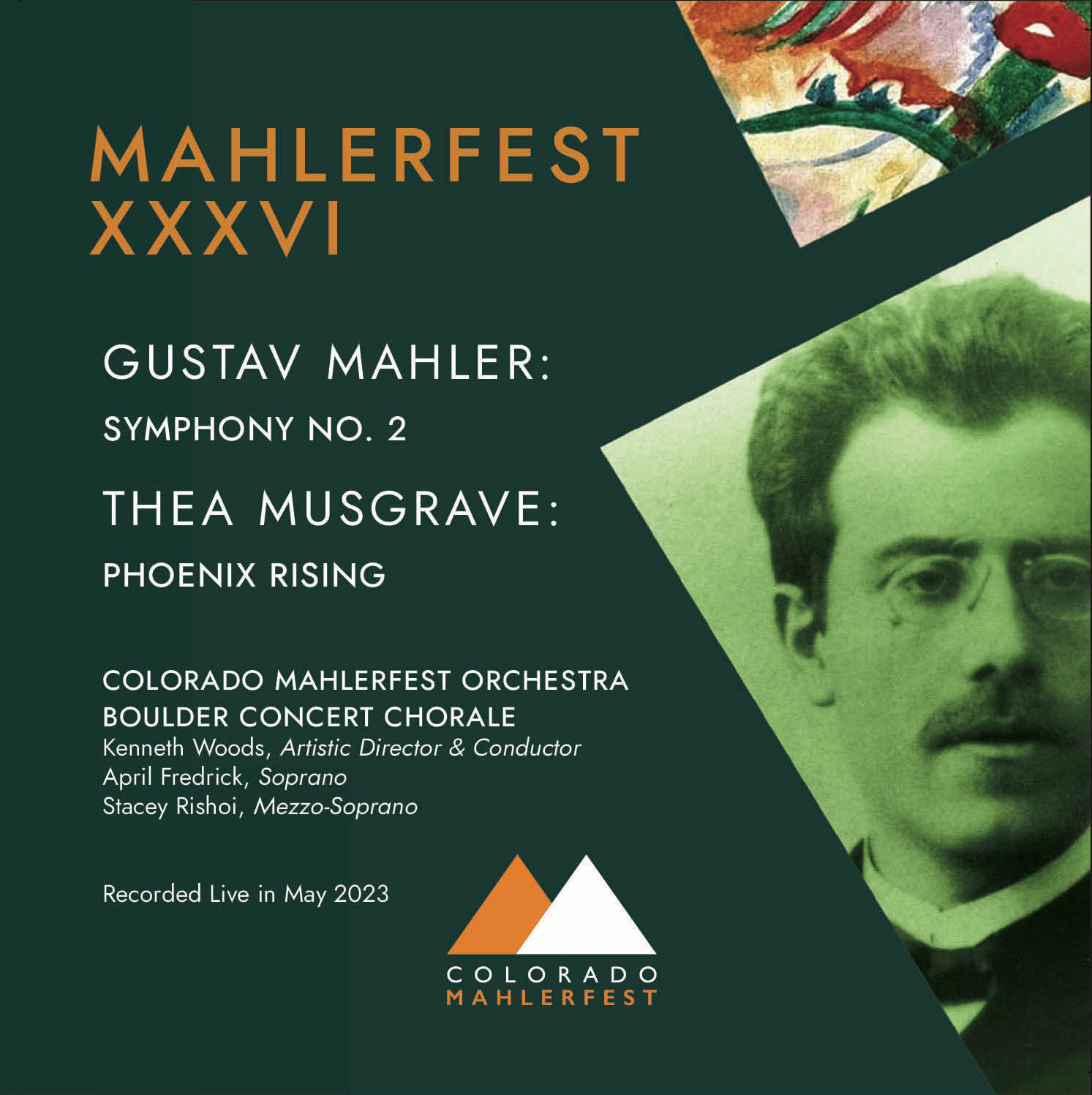
On Record – MahlerFest XXXVI: Kenneth Woods conducts ‘Resurrection’ Symphony & Musgrave’s Phoenix Rising

April Fredrick (soprano), Stacey Rishoi (mezzo-soprano), Boulder Concert Chorale, Colorado MahlerFest Orchestra / Kenneth Woods

Musgrave Phoenix Rising (1997)
Mahler Symphony no.2 in C minor ‘Resurrection’ (1888-94)

Colorado MahlerFest 195269301194 [two discs, 104’02”]
Live performances on 21 May 2023, Macky Auditorium, Boulder, Colorado

Reviewed by Richard Whitehouse

What’s the story?

Last year’s edition of MahlerFest continued its latest, not-quite-chronological traversal of the symphonies with the Second – appropriately coupled on this release (as in the concert) with a work such as considers ‘resurrection’ from a very different while no less relevant perspective.

What’s the music like?

Six years in the writing, Mahler’s Second Symphony fairly laid the basis for his reputation as a composer at its Berlin premiere in 1895. It is a measure of this performance that it captures something of the shock or excitement no doubt in evidence back then, not least in an opening movement with Kenneth Woods notably more interventionist tempo-wise as compared to that of the Third Symphony a year before. What emerges is imposing but never diffuse, at its most gripping in that baleful lead-in to a development whose terseness duly accentuates its impact, with the pathos of the second subject on its reprise making the coda’s sardonic recessional the more acute. After which, the second movement feels the more enticing through its alternation of warm sentiment with capering animation while heading to a conclusion of beatific repose.

There is no lack of incident in a scherzo whose glancing irony is leavened yet not lessened by its trios, the first as soulful with its lilting trumpets as the second is ominous in its import; but not before Stacey Rishoi has characterized the Urlicht setting with rapt inwardness. What to say about the finale other than, while this may not be the most overwhelming take on its vast fresco, it is matched by relatively few as regards an organic unfolding that sees the movement whole. Its contrasting elements here fuse with unforced cohesion to a fervent rendering of the chorale episode then on to a surging Toten-marsch – the kinetic momentum carried through to a methodical reprise of earlier ideas, then a rendering of Klopstock’s text (much altered by the composer) as only grows in intensity before the majestic affirmation of its closing pages.

As the ‘first half’, Thea Musgrave’s Phoenix Rising provides an ideal complement. The much esteemed (latterly more in the US than the UK) nonagenarian has written often for orchestra, but seldom with such immediacy than in a piece whose formal and expressive trajectory feels nothing if not symphonic in its progress. Comparison with the 2016 studio recording by BBC National Orchestra of Wales and William Boughton (Lyrita SRCD372) confirms that, passing tentativeness in ensemble excepted, Woods’s reading demonstrably makes more of this aspect.

Does it all work?

Yes, pretty much always. As on previous releases in this ongoing Mahler cycle, the Colorado MahlerFest Orchestra punches appreciably above its weight in music which should never fall prey to wanton virtuosity. The unyielding acoustic of Macky Auditorium is less an issue than before, with the finale’s offstage brass adeptly managed. April Fredrick brings her customary eloquence to bear on this movement, and the Boulder Concert Chorale – as prepared by Vicki Burrichter – rises to the occasion with notable fervency as this work reaches an ecstatic close.

Is it recommended?

It is. There have been too many superfluous Mahler cycles, but this traversal is shaping up as one of the most worthwhile and more than the memento of a memorable occasion. Hopefully such standards will be maintained by the Sixth Symphony as part of next year’s 37th edition.

Buy

For further purchase options, visit the MahlerFest website – and for more information on the festival itself, click here. Click on the names for further information on conductor Kenneth Woods, soloists April Fredrick, Stacey Rishoi and composer Thea Musgrave

Published post no.2,244 – Friday 19 July 2024

On Record – April Fredrick, Thomas Humphreys, ESO Chorus, English Symphony Orchestra / Kenneth Woods: Sawyers – Mayflower on the Sea of Time (Nimbus)

April Fredrick (soprano), Thomas Humphreys (baritone), ESO Chorus, English Symphony Orchestra / Kenneth Woods

Sawyers Mayflower on the Sea of Time (2018)

Nimbus NI6439 [58’57’’]
Producer and Engineer Tim Burton Engineer Matthew Swan
Live recording, 17 June 2023 at Worcester Cathedral

Reviewed by Richard Whitehouse

What’s the story?

Philip SawyersMayflower on the Sea of Time was to have been launched with performances in Worcester Cathedral four years ago, but the pandemic inevitably derailed this. Happily, the composer’s largest work so far was finally heard last June in the venue as originally intended.

What’s the music like?

Commissioned to mark the 400th anniversary of the sailing of the Mayflower from Leiden to Plymouth, this is an oratorio in concept but equally a choral symphony in design. Its libretto, mainly by the artist Philip Groom, features set-pieces for various Old and New World figures largely for soprano and baritone alongside summative passages for chorus. Self-deprecating about his literary abilities, Groom yet achieves a viable balance between the characterization of individuals as part of a continuous and cumulative trajectory relating that of ‘the journey’.

There are four continuous parts: Persecution and Journey, a sonata design which informs the Pilgrims’ flight from religious persecution and their decision to cross the Atlantic; Arrival in the New World, a slow movement charting their arrival then tentative initial interaction with native cultures; Survival and Making our Community, a brief scherzo in which the Pilgrims’ industriousness and idealism all too soon becomes its own justification; and Our New World, a sizable rondo-finale whose looking to the future is framed by choruses of growing fervour.

Sawyers’ writing for the chorus is expert and resourceful, not least when this elides between a depiction of Pilgrims or Natives with that of a more abstract commentary, while solo sections allow his lyrical impulse free reign – not least towards the end of the second and fourth parts, closing with luminously ecstatic choruses that accentuate an essentially affirmative message. Worth noting is the poignant incorporation of a motet by Thomas Tomkins into its fourth part, which also sets lines by Walt Whitman with a tangible understanding of its expressive syntax.

Does it all work?

Almost always, and not least owing to the persuasiveness of this performance. April Frederick and Thomas Humphreys (the latter after a slightly strained start) can hardly be faulted in their commitment or insight, while the new-founded ESO Chorus evinces a power and immediacy abetted by Worcester Cathedral’s spacious acoustic to belie its modest forces. The ESO gives its collective all throughout, conveying the textural intricacy and the emotional heft of music whose overall formal integration is fully conveyed through Kenneth Woods’ astute direction.

The initial performances might have fallen through, but the associated educational project did go ahead and enabled several hundred youngsters to experience the piece at first hand. This is worth remembering given Mayflower should have a ready appeal for those who know little of the historical background or, indeed, contemporary music. That it can be rendered by around two-dozen singers ought to commend it to enterprising choral societies able to muster the 45 musicians, especially when Sawyers’ writing for both is often exacting but always practicable.

Is it recommended?

Very much so. The sound captures the resonance of its acoustic with no loss of definition, and there are detailed notes by composer, author and conductor. A pity the actual text could not be included, but that this can be scanned via a QR code is another incentive for younger listeners.

Listen & Buy

You can listen to sample tracks and purchase on the Wyastone website. For further information on the artists, click on the names for more on April Fredrick, Thomas Humphreys, the English Symphony Orchestra and their conductor Kenneth Woods. Click on the name for more on composer Philip Sawyers

Published post no.2,157 – Tuesday 23 April 2024