In concert – Three Choirs Festival: Adrian Partington conducts Elgar’s ‘Dream of Gerontius’

John Findon (tenor), Niamh O’Sullivan (mezzo-soprano), David Ireland (bass-baritone), Three Choirs Festival Chorus, Philharmonia Orchestra / Adrian Partington

Wagner Parsifal – Prelude to Act One (1878)
Elgar The Dream of Gerontius, Op. 38 (1899-1900)

Gloucester Cathedral
Saturday 1 August 2026

Reviewed by Richard Whitehouse Photo credits (c) James O’Driscoll

Closing this latest edition of the Three Choirs Festival with Elgar’s The Dream of Gerontius felt both inevitable and fitting, given its seminal place in the annals of the English choral tradition as of this festival, in what proved if not an unblemished then certainly a memorable realization.

Hearing this work now is to feel surprise how, aside from aspects of Cardinal Newman’s text, its musical treatment could have seemed so problematic whether technically or interpretively. Maybe the musical lineage on which it drew being not yet fully assimilated by musicians and listeners, or its contrasts between life and after-death being so emotionally charged, presented challenges to be overcome only with time and perseverance. If such were the case, then those challenges have certainly been met in the 124 years since its first hearing at the Three Choirs.
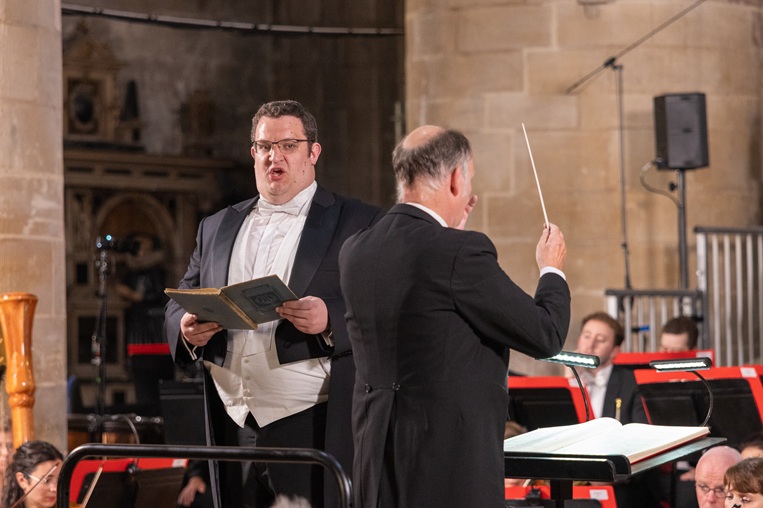
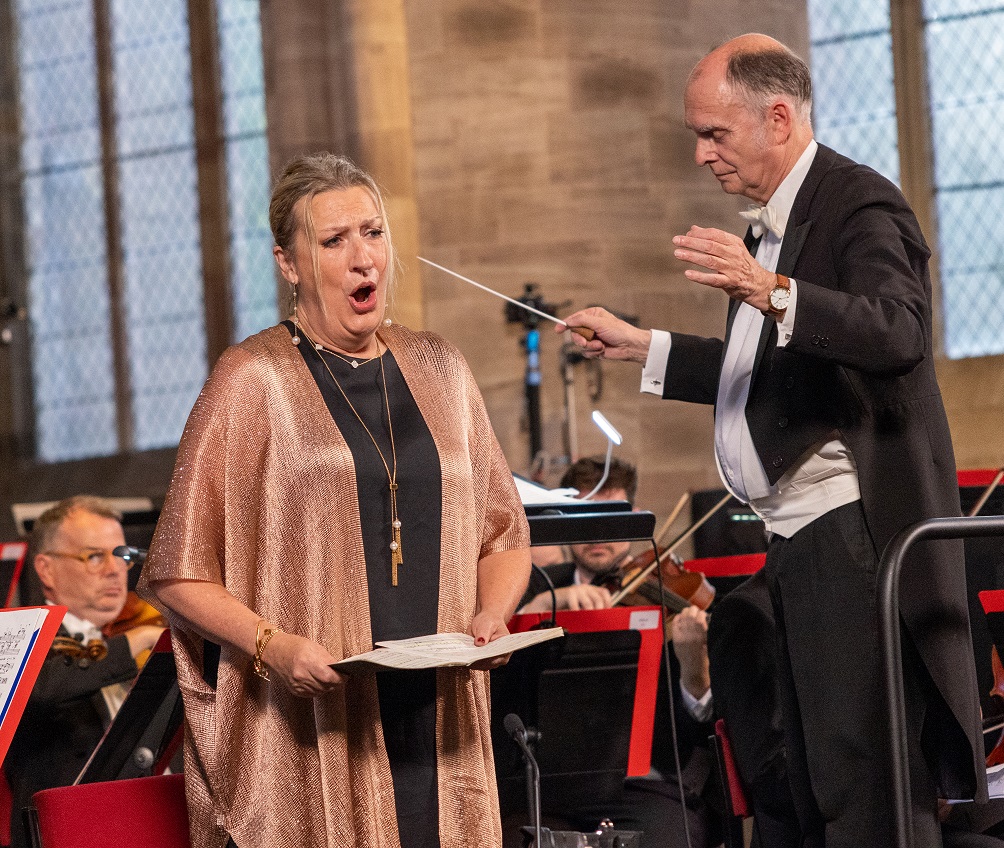
Allotting the vocalists so they merge into a balanced and complementary whole is a task this evening’s performance met convincingly. John Findon (above) brought fervour and an immediacy to Gerontius which never threatened overkill. Witness the assured pacing of his ‘Sanctus fortis’ solo so it dominated the opening part without undermining the latter’s formal and expressive trajectory; or the respective poise and fervour of ‘I went to sleep’ and ‘Take me away’, at the start then climax of the second part, in furthering overall dramatic flow.
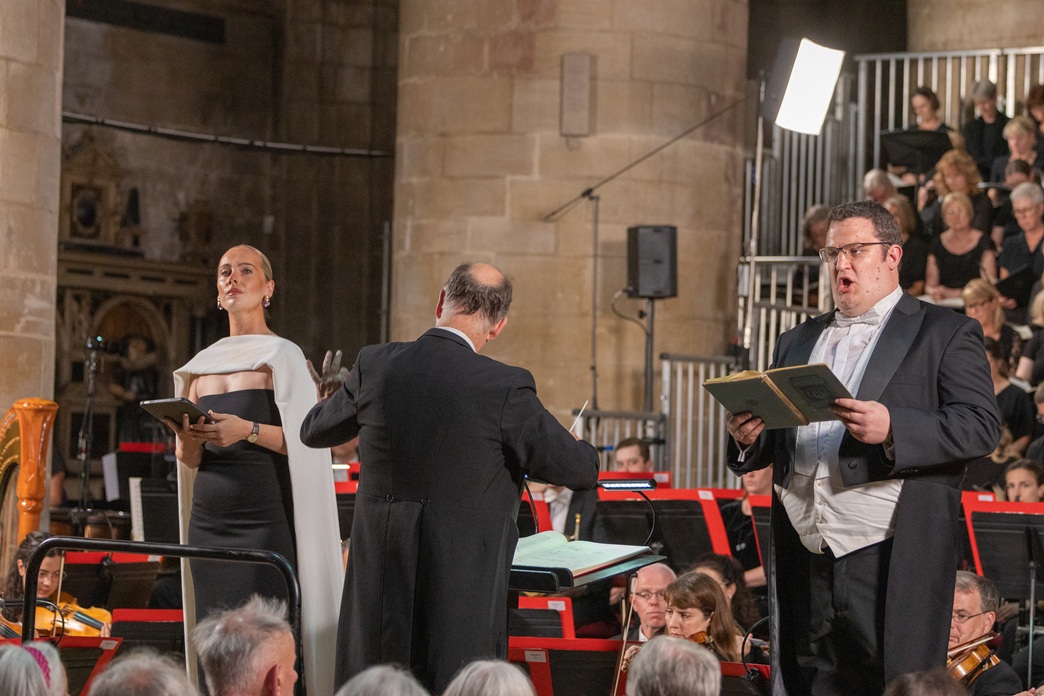
A little too detached initially, Niamh O’Sullivan (above, with Findon) duly entered into the persona of the Angel such that ‘Softly and gently’ exuded an affecting poise. Starkly implacable as the Priest, David Ireland (below) brought to Angel of the Agony an understatement preferable to that wanton rhetoric often encountered.
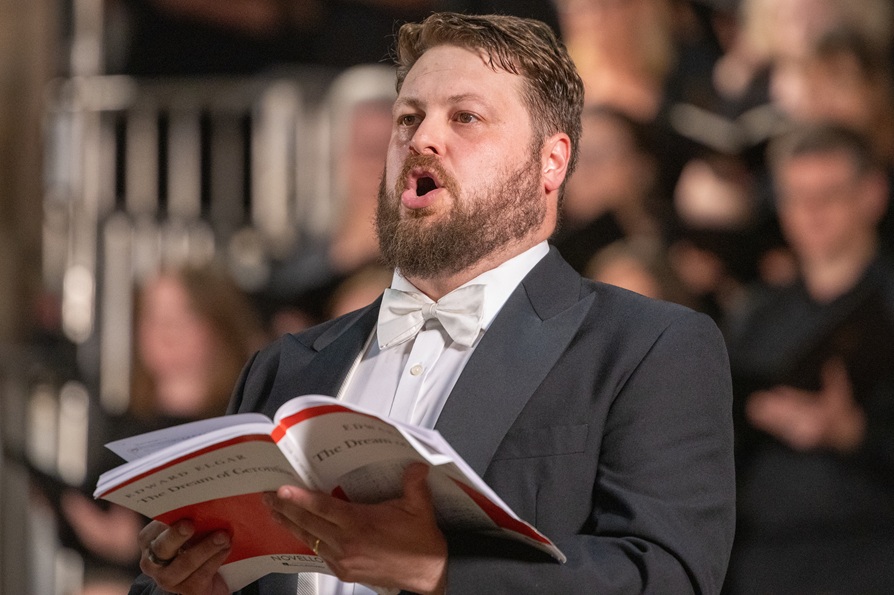
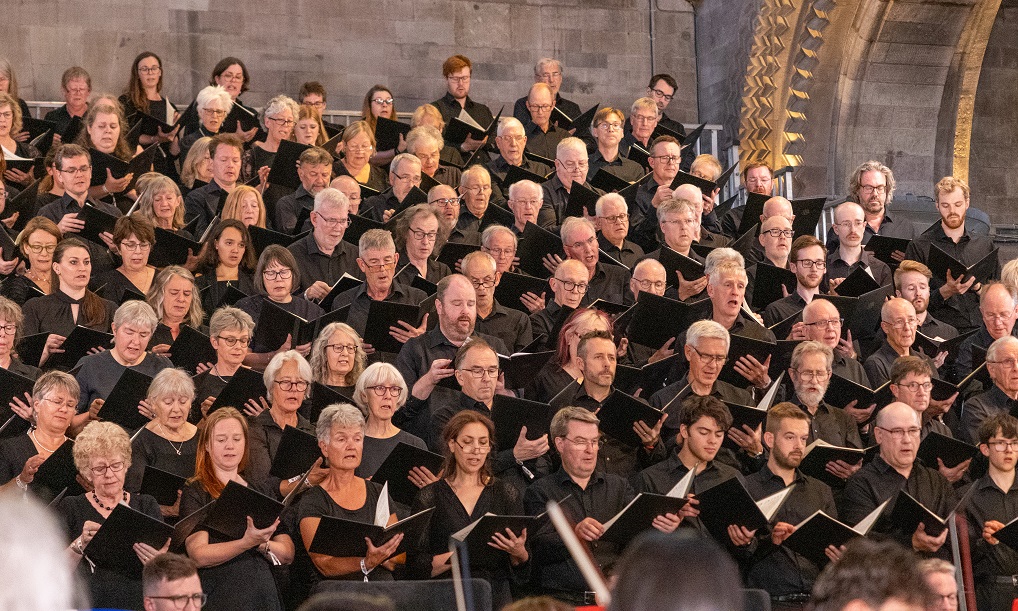
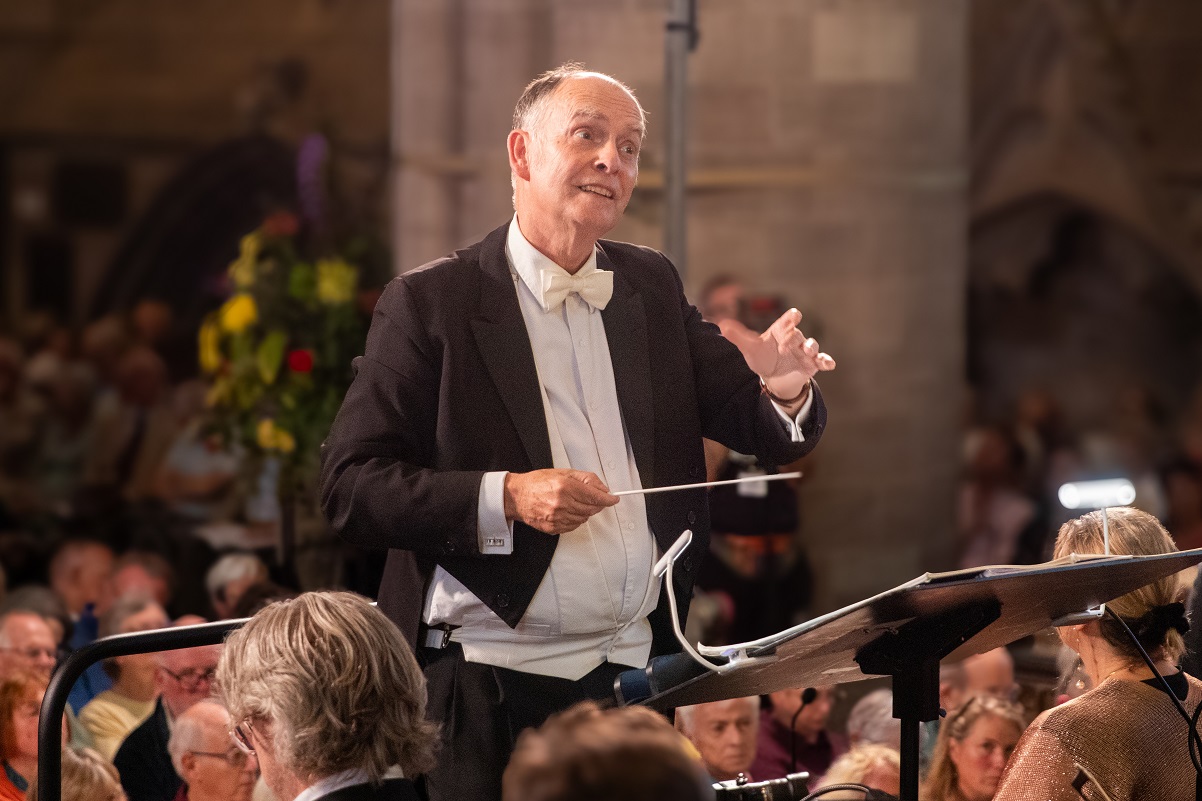
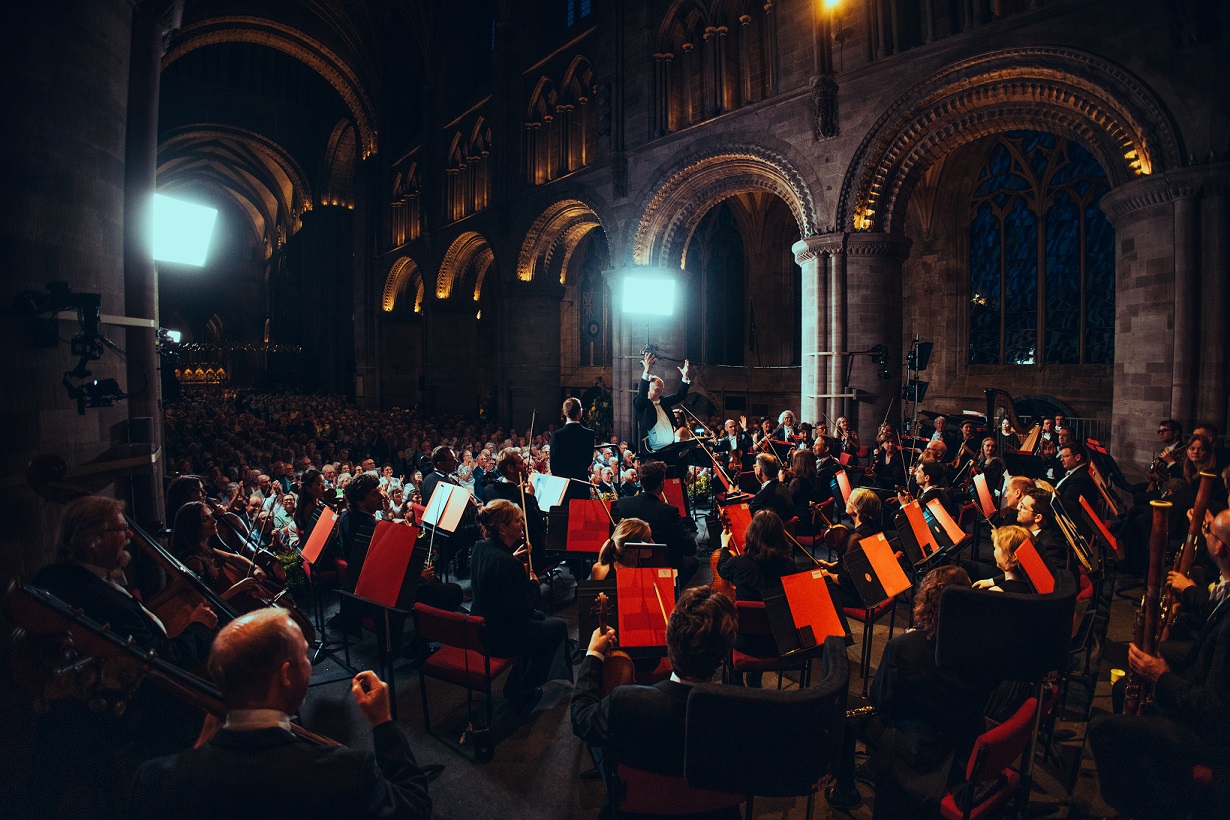
Few such works have so extensive and varied a choral component as Gerontius, in which the Three Choirs Festival Chorus did not disappoint. Thus the distant response of the Assistants, menacing aggression of the Demons, accumulating power of the Angelicals in their majestic ‘Praise to the Holiest’ or ethereal chant of the Souls in Purgatory were all characterized with the requisite insight. Nor was the Philharmonia found wanting in Elgar’s always resourceful though often demanding orchestral writing, notably a Prelude such as unfolded purposefully towards its eloquent culmination. Here, as throughout, Adrian Partington (below) gave notice of his deep knowledge of and unfailing involvement with this score – not least when bringing out those sombre if luminous hues as were a hallmark of the composer’s orchestration forthwith.

Orchestral and conductor were also at one when delineating the hieratic mystery or grandeur of the Prelude to Wagner’s Parsifal. Its inclusion prior to Gerontius has often found favour in recent years yet, other than pointing up that debt which Elgar repaid handsomely in his own terms, it hardly seems necessary given the emotional scope or inclusiveness of what follows. If it is included then better, surely, to play this piece without its Act One ‘resolution’ then go straight into the Elgar to point up their conceptual connection and ensure cohesion forthwith.

Attendees at the performance had the benefit of programme notes by Martin Lee-Browne – author, authority on British music (not least Delius) and one-time Chairman of Gloucester Three Choirs – whose presence at and contributions to this festival will be greatly missed.

To read more about the 2027 festival in Worcester, head to the Three Choirs Festival website. Click on the names for more on the artists in this concert – tenor John Findon, mezzo-soprano Niamh O’Sullivan, bass-baritone David Ireland, the Philharmonia Orchestra and conductor Adrian Partington

Published post no.2,954 – Monday 6 July 2026
In concert – Three Choirs Festival: Three Choirs Festival Chorus, Philharmonia Orchestra / Adrian Partington – Howells Hymnus Paradisi & Bliss Mary of Magdala

Rebecca Hardwick (soprano), Dame Sarah Connolly (mezzo-soprano), Michael Bell (tenor), Malachy Frame (baritone), Three Choirs Festival Chorus, Philharmonia Orchestra / Adrian Partington

Howells Paradise Rondel (1925)
Bliss Mary of Magdala (1962)
Howells Hymnus Paradisi (1936-38)

Hereford Cathedral
Wednesday 30 July 2025

Reviewed by Richard Whitehouse Photos (c) Dale Hodgetts (Dame Sarah Connolly, Festival Chorus), James O’Driscoll (Hereford Cathedral, Rebecca Hardwick, Adrian Partington)

Interesting that all three works comprising this concert were premiered at the Three Choirs in Gloucester or Worcester but they were, for the most part, admirably suited to the less opulent while always spacious ambience of Hereford Cathedral in what was a welcome retrospective.

Upsurge of Arthur Bliss performances in this fiftieth anniversary of his death continued with Mary of Magdala, essentially a cantata albeit with an element of operatic scena in the intense characterization of its title-role. Compiled by Christopher Hassall (the last collaboration with Bliss before his untimely death), its text finds Mary approaching the sepulchre where Christ’s body has been placed after crucifixion only to find it gone – Christ having assumed the guise of a gardener who bestows his blessing upon this most maligned yet most loyal of his circle.

The main part was given by Dame Sarah Connolly (above) with her customary fervour and insight, not least in the final stages after recognition when the music exudes a radiant gentleness rarely, if ever, encountered in Bliss hitherto. Malachy Frame drew an understated strength from the brief yet crucial role of Christus, but excessively large choral numbers rather compromised the relative intimacy of the music. Not that it seriously undermined the conviction of a timely revival for what is one of the least known though inherently personal among the composer’s later works.

It stayed under-wraps for over a decade after completion, but Hymnus Paradisi has long been the best known of Herbert Howells’s larger pieces and something like a ‘sacred text’ in Three Choirs culture. Written after the death of the composer’s son, it is avowedly music within the English choral tradition; not least that Gerontius-like aura of a Preludio (actually written last) whose yearning theme pervades what follows. The Requiem aeternam further intensifies such introspection, and if a setting of Psalm 23 tends towards the discursive, even generalized, that of Psalm 121 has a rapture that builds on an effervescent Sanctus in what is the most arresting section. A ruminative setting from The Burial Service precedes the impulsiveness of that from Salisbury Diurnal, with the return of the Requiem aeternam bringing about a fatalistic repose.

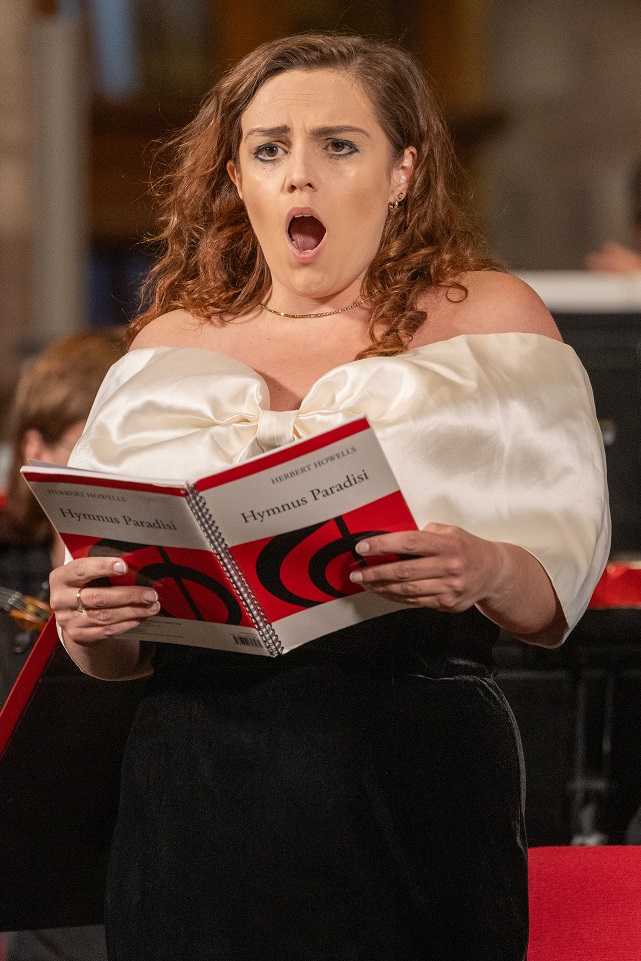
Something of a staple at these festivals it might be, Hymnus Paradisi is never an easy work to sustain in performance and tonight’s was a notable though not unqualified success. The vocal parts were well taken, Rebecca Hardwick’s occasional shrillness ostensibly a price to be paid for surmounting those often dense choral textures and Michael Bell making up for in accuracy what he lacked in personality. The sizable orchestral forces of the Philharmonia proved more than equal to the task, not just of balancing but in opening-out the expressive power of choral writing where the Three Choirs Festival Chorus was wholly in its element. Adrian Partington secured an interpretive focus that gained in conviction as the performance unfolded, making for an account which underlined the strengths yet also the weaknesses of this singular work.

It was the earlier and uninhibited Howells which ushered in proceedings. With its translucent orchestration and, at times, almost concertante-like piano part, Paradise Rondel makes for as irresistible a curtain-raiser as it no doubt was evoking that Cotswold hamlet of a century ago.

Published post no.2,615 – Sunday 3 August 2025

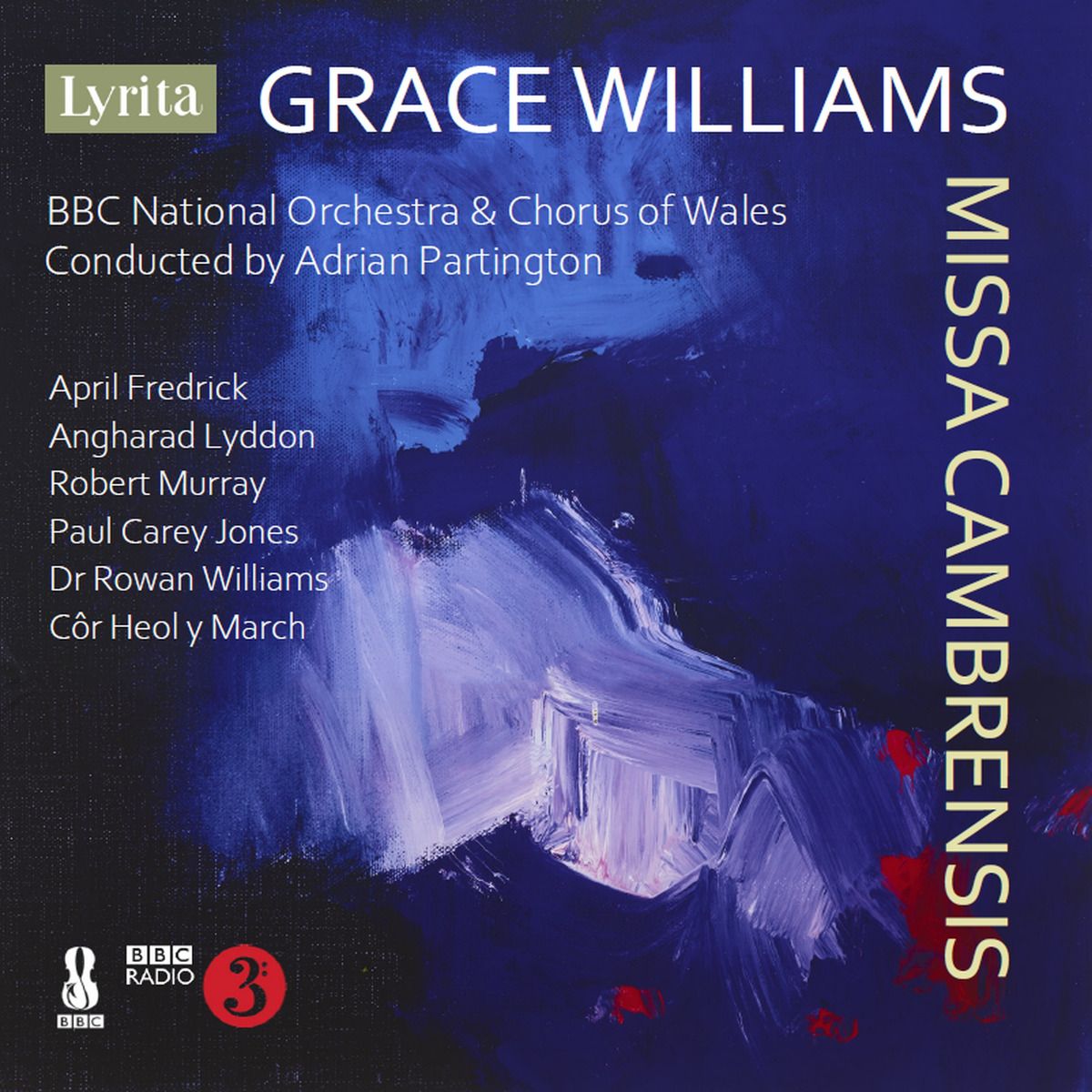
On Record – Soloists, BBC National Chorus and Orchestra of Wales / Adrian Partington – Grace Williams: Missa Cambrensis (Lyrita)

Grace Williams Missa Cambrensis (1968-71)

April Fredrick (soprano), Angharad Lyddon (mezzo-soprano), Robert Murray (tenor)
Paul Carey Jones (bass), Dr Rowan Williams (narrator); Côr Heol y March, BBC National Chorus and Orchestra of Wales / Adrian Partington

Lyrita SRCD442 [66’41’’] Latin / Welsh text and English translation included
Producer / Engineer Adrian Farmer, Engineer Simon Smith

Recorded 20-21 January 2024 at BBC Hoddinott Hall, Cardiff

Reviewed by Richard Whitehouse

What’s the story?

Lyrita continues its coverage of Grace Williams (1906-1977) with her largest concert work, Missa Cambrensis, in a recent studio recording which confirms it as the defining statement from a composer who, almost half a century since her death, is only now receiving her due.

What’s the music like?

As Paul Conway observes in his typically thorough booklet notes, Missa Cambrensis is one among a number of works by Williams that is Welsh only in a titular sense. Premiered at the Llandaff Festival in 1971, it was well received by fellow composers, critics and public alike but not heard again until 2016 in a performance one recalls as originally intended for release on Lyrita and which can be heard via the composer’s dedicated website. Not that the present account is other than successful in conveying the essence of this powerful yet elusive piece.

Many settings of the Mass since Haydn have unfolded a symphonic trajectory, but Williams goes further with the division into five clearly defined movements. The initial Kyrie Eleison not only introduces most of those salient motifs but also establishes that tone, mystical in its undulating equivocation, such as characterizes this work’s long-term expression: the contrast here between choral and soloistic textures duly accentuated by their hieratic and supplicatory quality. This duly sets up an emotional contrast intensified in the Gloria, outwardly the most straightforward part of the work but with a calmly ecstatic response at Laudamus te then an eloquent Dominus Deus that are nothing if not personal, together with an intensely wrought Cum Sancto Spiritu whose culminating Amen’s convey a distinctly ambivalent affirmation.

As most often, the Credo is the most substantial portion but Williams rings the changes by dividing this into halves, a pertinent division coming at Et homo factus est and Crucifíxus étiam pro nobis. In between are interpolated a setting of Saunders Lewis’s Carol Nadolig (A Christmas Carol) for children’s voices with viola, cello and harp of melting pathos, offset by a starkly narrative treatment of the ‘Beatitudes’ prior to a mostly ruminative resumption of the Credo. Pivoting between contemplation and elation, the Sanctus is rounded off by a joyful Hosánna in excélsis which is not to be heard again after the subdued eloquence of the Benedictus. An anguished response to the Agnus Dei feels the more acute, as also a searching Dona Nobis Pacem which brings the work full circle to its contemplative close.

Does it all work?

Yes, and with an understated while readily identifiable personality that surely makes this the most potent setting of the Mass from a Welsh composer. Subliminal influences might not be hard to discern, among them Britten’s War Requiem, but they never detract from Williams’s own idiom. The soloists cannot be faulted in terms of commitment, with Rowan Williams a notably incisive reciter, while Adrian Partington secures a lustrous response from his choral and orchestral forces. Overall, it is hard to imagine the work given with greater conviction.

Is it recommended?

It is indeed, not least in the hope that further live hearings of Missa Cambrensis may prove forthcoming. Good news, moreover, that Lyrita has now acquired the premiere performance of Williams’s only completed opera, The Parlour, which is scheduled for imminent release.

Listen & Buy

You can read more about this release at the Wyastone website

Published post no.2,516 – Monday 28 April 2025