In concert – Ryan Wigglesworth and the BBC Symphony Chorus and Orchestra at the Barbican

ryan-wigglesworth

Picture (c) Benjamin Ealovega

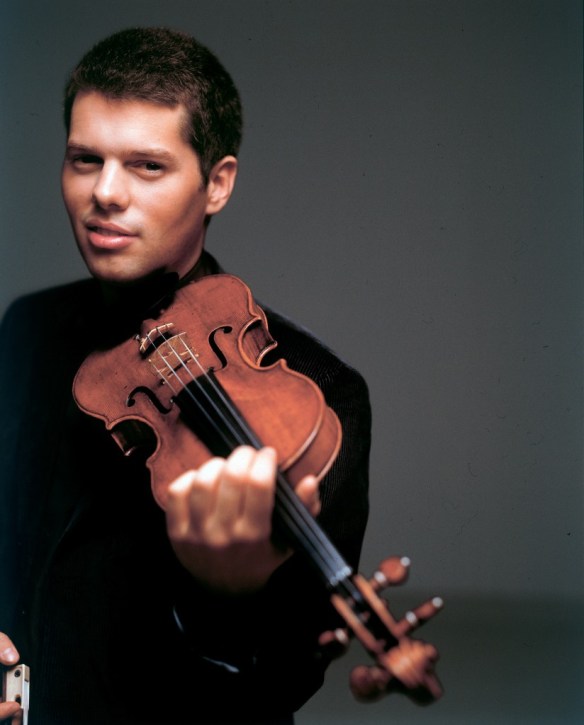
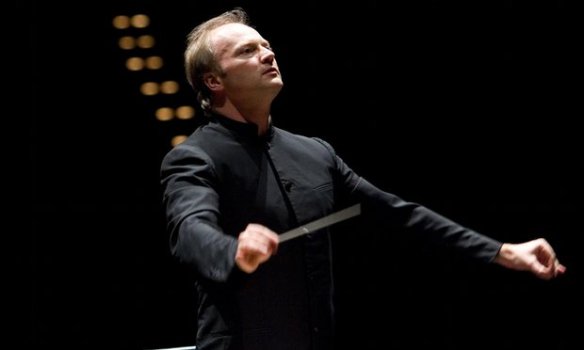
Barnabás Kelemen (violin), BBC Symphony Orchestra / Ryan Wigglesworth (above)

Barbican Hall, London / Wednesday 2 March

This typically well-planned BBC Symphony Orchestra concert had a surprise or two in store. Bookending the quartet of works on display were two pieces by Stravinsky – the Agon ballet from 1957 and the Symphony of Psalms.

They provided a good illustration of how Stravinsky changed styles as a composer, and how in spite of that he retained a fascination with older polyphonic styles. Some of the sound worlds in Agon, a set of twelve tableaux for twelve dancers, frequently alighted on melodic figures or chords that felt ‘old’, holding dissonances and deliberately leaving chords unresolved.

Agon is viewed as the work where Stravinsky starts to take his leave from a more obviously tonal approach to composition. In this performance it was lean yet colourful, with excellent solos from leader Stephanie Gonley, mandolin player Nigel Woodhouse, harpist Sioned Williams and Christian Geldsetzer and Richard Alsop, the two BBC SO lead double bass players, who nailed their otherworldly harmonics on each appearance.

The Symphony of Psalms was more obviously outgoing but saved its greatest emotional impact for the quieter music, the closing pages of ‘Omnis spiritus laudet Dominum’ (‘Let everything that hath breath praise the Lord’) from the BBC Symphony Chorus given out with softly oscillating orchestral figures.

Stravinsky uses the lower end of the orchestra in this piece, with no violins or violas, adding extra percussive punch from two pianos – all aspects that Wigglesworth brought forward in a taut performance. Great credit should however go to chorus master Hilary Campbell, who was unfortunately not mentioned in the concert programme. She is clearly popular with the singers, and helped secure that extra degree of accuracy and emotional involvement. One of Stravinsky’s most cinematic scores, it was in this performance a powerful statement of affirmation.

Wigglesworth positioned his own Violin Concerto modestly after the interval – I say modestly as in its five years of existence the piece has already ramped up an impressive number of performances. On this evidence its status is well-deserved, for it is a tightly structured unit of no little tension, the soloist searching for his ultimate melody while the reduced, ‘classical’ orchestra try and find their ultimate tonality.

barnabas-kelemen

Soloist Barnabás Kelemen (above) was a macho presence, with a little too much testosterone at times when the violin was surging forward, but he balanced that with some incredibly sensitive playing at the quietest moments of the piece, where the audience strained on his every note. Both melody and tonality were resolved in moments that confirmed Wigglesworth as a composer of impressive style and instinct.

The one dud in the program was Britten’s Four Sea Interludes and Passacaglia from the opera Peter Grimes, seen through the visual projections of Tal Rosner. This was a commission from four American orchestras in Britten’s centenary year 2013, with each interlude was set to the images of the city from which the commission came. For its UK premiere Rosner added a portrait of London to go with the other orchestral excerpt from the opera, the Passacaglia. This was centrally placed, keeping the order in which the scenes appear in the opera.

Although well played by the orchestra, the idea sadly fell flat on several levels. Although Britten spent time in America – and indeed began Peter Grimes there – the work’s roots are so entrenched in Suffolk that to suggest anything other than the Aldeburgh coastline through the music feels completely wrong. Rosner’s constructions were skilled, and had a few fine moments where close-up images of the Golden Gate Bridge rotated in technicolour.

Sunday Morning, with its bright building blocks of orchestral colour, was revealed to be a minimalist precursor of the music of John Adams through the clever constructions of its visuals. However despite Britten’s more universal appeal as a composer these days, Peter Grimes surely belongs wholeheartedly in Suffolk – and any suggestion to the contrary, however well intended, feels wrong.


Friendly Fire – Shakespeare 400: London Symphony Orchestra / Gianandrea Noseda

gianandrea-nosedaFriendly Fire – Simon Trpčeski, London Symphony Orchestra / Gianandrea Noseda (above)

Barbican Hall, London; Thursday 25 February 2016

Welcome to Arcana’s new ‘alternative’ reviews slot! It is an ‘ask the audience’ feature – where I (Ben Hogwood) take a friend / colleague to a classical concert and get them to review it in the bar afterwards. Our second ‘reviewer’ in the series is John Earls, a family man from Harrow & Wealdstone who works as Head of Research at Unite. He shares his thoughts on a program of music inspired by ‘Shakespeare 400’ – with works by Smetana (Richard III), Tchaikovsky (Romeo and Juliet), Richard Strauss (Macbeth) and the seemingly unconnected Piano Concerto no.2 by Liszt. The artists are pianist Simon Trpceski and the London Symphony Orchestra under newly announced guest conductor Gianandrea Noseda.

john-earls

Arcana: How did you prepare for this concert?

John: I didn’t do that much in the way of preparation, other than see what the four pieces in the concert were, and whether I was familiar with them. At the time the only one I thought I was familiar with was the Tchaikovsky, but you reminded me I had heard the Liszt before.

What was your musical upbringing?

As a young child, pretty limited. Most of the music I heard from my parents would have been Irish music, then as I went through school I was more exposed to bits of classical music, as I learned the clarinet. In my teens I got more into contemporary music, rock music, new wave – I played in my own band – and became more interested in jazz and classical music as I got older and attended more concerts and read more about those particular types of music. Jazz and classical are the forms of music I listen to most now.

Name three musical acts you love and why:

(almost without hesitation): Miles Davis was a trailblazer and an innovator who has done some very different things throughout his career. He also struck me as a great leader of bands and ensembles, because he was a great talent spotter who pulled some phenomenal musicians together, and it always struck me that anybody who played with him was better for the experience. They tended to be either better musicians or composersafter having gone through the Miles Davis experience, and also his ensembles tended to be greater than the sum of their parts.

I would also go for Christy Moore, who in many ways would be the soundtrack to my development and my life. I think he has a huge amount of integrity, and if you listen to him sing he comes across as somebody who really means it. If you see him performing live you see a gifted songwriter but also somebody who has a mission to transmit the songs he knows. He has a great deal of songs he hasn’t written but he is able to communicate and pass them on.

I should pick a band really…Wire. I saw them last year for the first time in around 30 years, at the Lexington near Kings Cross. They were influential in my formative days in the late 1970s / early 1980s. They were innovative and straddled the artistic side with the punk sensibility, but had the credibility of doing what they wanted to do. To release an album like they did last year nearly 40 years after they first started, and to think they can still do it, was a phenomenal achievement. They are still great live and the songs incredibly well crafted.

Have you been to classical music concerts before, and if so what has been your experience?

I’m not sure I fit your criteria of ‘someone who doesn’t normally attend a classical concert’. I’m actually a regular classical concert goer – all forms and types. Living in London I’ve been able to see some of the finest musicians and orchestras in the world. Many of my most treasured musical moments have been at ‘classical music’ concerts – Mitsuko Uchida playing Schubert’s late piano sonatas, Rattle and the Berlin Phil doing Mahler’s Resurrection Symphony, Steve Reich’s Music for 18 Musicians with Reich himself playing. I also think some pieces are best experienced live – Messiaen’s Turangalila, for example. Had a few disappointments too! But live music is really important to me. 

What did you think of the Smetana?

I thought it was OK – I could see why they had used it as a piece with which to start. Would I have got the Shakespeare connection? Probably not, but having known it I could see there were bits that sounded regal. Some bits reminded me of a royal hunt, with lots of trumpet. Some of it was like a fanfare but there was solo trumpet that was quite ‘angsty’ and personal. I suppose the trumpet has royal connections. Those things came into my mind while I was listening but I’m not sure, as a piece of music, I would be in a huge hurry to listen to it again.

What about the Liszt?

I hadn’t remembered that I had heard it before. I quite enjoyed it, but there were parts where the pianist seemed a bit stroppy and belligerent, reminiscent of Jerry Lee Lewis! I enjoyed it a bit less than I thought I was going to but the thing that did stick out for me was the cello (Rebecca Gilliver’s solo in the third movement – ed). The sound was absolutely beautiful.

What about the Tchaikovsky?

I was more familiar and knew what to expect. I wasn’t used to being that close to the orchestra! If you heard those four pieces of music and was told there was a Shakespeare link to be honest I probably couldn’t have noticed it, but the one that would be most likely would be that one – and you would probably think Romeo and Juliet because of the tragedy, the romance and the action. You almost feel like you’re in a Bond movie! It’s got everything in it, around 16 minutes, it packs it all in, and it’s Tchaikovsky, who I love.

Finally, what about the Richard Strauss?

I thought that was a good piece to finish on. It had a range of things. I don’t think I would have thought Shakespeare but it was more personal in that it was not necessarily a narrative story – you’re inside somebody’s head. I’ve got ‘magisterial’ written down here, and I felt there was a real tension in it. The offstage snare drum was great, I always like that use of the space, and I’ve not heard the percussion played like that before (the tam tam I think! – ed)

It was more psychological I think, and it was only in that piece that I noticed Noseda’s score was tiny, I’ve never seen one so small! I enjoyed the music, and would go back to listen to it again. I didn’t realise Strauss was 24, that’s quite a phenomenal achievement – not only to put all the instrumentation together but to get the psychological elements at that stage, you would think only an older composer would manage that.

What about the environment and setting of the concert, and how it was promoted?

The only PR I’ve seen was the Shakespeare-related things, and I couldn’t see the link with the Liszt, but I like the idea of linking things in. Sometimes it can be a bit contrived but I think if it’s used as a technique to expose you to different bits of music then that’s fine – like Romeo and Juliet – and it worked for me in the case of the Strauss but not the Smetana.

I think they got the range and order of the pieces right. I’ve been to the Barbican as a venue, and I do like the way it works with an instrument offstage, like they did with the Strauss. I’ve seen that done with vocal and choral pieces and it can work. I think the conductor was quite energetic, not necessarily in a flowing way – quite staccato would be your terminology! There seemed a good rapport between him and the orchestra, the sense they really respect him.

If you could give it a mark out of 10 what would you give?

Probably a 7, but that would be an average. The Tchaikovsky and the Strauss would be an 8 or 9, and the Smetana would drag it down a bit. But it was certainly worth going to!

Arcana’s brief thoughts on the concert:

The connections between classical music and Shakespeare are many, but the London Symphony Orchestra did really well to present a variety of nineteenth century settings. All fall into the ‘Romantic’ period, where composers were getting to grips with the idea of the orchestra being a storyteller in what was known the ‘symphonic poem’.

Smetana’s Richard III was an ideal curtain opener, though like its subject it had an uneven walk – brilliantly portrayed but still with a sense of a portrait not quite fully fledged.

Tchaikovsky’s Romeo and Juliet was different. This was the London Symphony Orchestra on white hot form, Gianandrea Noseda conducting like a man wholly affected by the tragedy. This music surged forward with passion and drama in equal measure, and the hair stood up with the volley of brass and percussion, and the intensity of the love theme on the strings.

Richard Strauss’s Macbeth was equally intense, though even more effective in exploring the minds of the two main protagonists of the story. The lower strings had a steely effectiveness, the double basses brilliantly marshalled, while the drama above unfolded in compelling fashion.

Though Liszt’s Piano Concerto no.2 had no Shakespearian connection it was a relatively sound choice, for he is a composer unable to resist the temptation of telling a story! This one had its moments of drama, albeit fleeting in comparison to the warhorses of the second half.

In concert – Actress and the London Contemporary Orchestra at the Barbican

Actress (above) and the London Contemporary Orchestra

Barbican Hall, London / Wednesday 10 February 2016

This intriguing collection of musical thought had three aims. The first was to draw on a long-held ambition of Darren Cunningham, to work with an orchestra under his Actress pseudonym, while the second and third celebrated – or rather illustrated – the ‘brutalist’ architecture of the Barbican and the data readings behind the LAGEOS (Laser Geodynamics) satellite. Into all of these blueprints, curated by Boiler Room, were fed the music of Actress – a potent blend of techno, soul and dark electronica that lends itself to classical structures and instruments. In new arrangements and pieces Actress and Hugh Brunt, conductor and co-Artistic Director of the London Contemporary Orchestra, found a meeting point of all these elements, presenting them to the Barbican with video artist Nic Hamilton.

They called the collision Momentum, a banner symbolised by a circular object that initially resembled a giant glitterball but was in fact the spacecraft used in the LAGEOS missions. In practice it rotated at a much slower pace, responding to Cunningham’s beats – if indeed there were beats at all.

momentum

There was an air of tension from the start of the performance, with a long period of silence before the music began. Even then it only gradually crept into the consciousness, and with the lights down low a feeling of forced ambience crept over the audience, restful but not relaxed in the way earlier Aphex Twin can work. Slowly Cunningham built through Lagos and Momentum, two new tracks, his set already clearly conceived on a larger scale.

Brunt’s arrangements for a string quartet of violin, viola, cello and double bass were striking, the instruments softly voiced to begin with but using a wide vibrato to make the centre of pitch far less certain. Oliver Coates’ cameo on a detuned cello was darkened by the use of a curious, semi-elliptical bow. The harp sprinkled planetary dust on the strings through the hands of Victoria Lester, while Hamilton’s astronomical backdrop helped create space in the closed environment.

As the audience began to fidget a breaking point was nearly reached, emphatically punctured by the volleys of Galya Beat, kick drums thrown from the pads of Sam Wilson’s machine. From here the music had greater power and caught the attention, the arrangements enhancing the beauty of Ascending, the harp and manipulated piano twinkling at the top of the sonic pile, while Piano Scrapes worked with subtle humour and more imaginative textures through the strings and the clarinet of Harry Cameron Parry.

Elsewhere Actress worked with claustrophobic backdrops, bringing the concrete maze of Hamilton’s Barbican video work to life. The strings provided essential colour to the largely grey backdrop of the thick but rather lush keyboards, themselves ambient but restless as before. The imaginative scoring included the creative use of a plastic bag in the percussion section.

Though it was a relatively small London Contemporary Orchestra on this occasion – much smaller than the forces used for Jonny Greenwood’s There Will Be Blood recently – it was used with imagination and flair by Cunningham and Brunt, the resulting music of substance and structure. Rather like the Barbican, in fact – together with a relative lack of pure emotion in the more calculated sections.

It would be great to see Actress flexing his muscles some more in the fascinating area in which he finds himself, bringing forms of music face to face with each other without anything sounding contrived. Future collaborations are surely inevitable; they are greatly anticipated!

Actress played: Lagos, Momentum, Galya Beat, Chaos Rain I-II, Ascending, Piano Scrapes, Surfer’s Hymn, Skygraff (Game Theory), N.E.W., Chasing Numbers, Voodoo, 5 Audio Track I-II, Hubble.

Names of Players:

Actress (electronics), London Contemporary Orchestra – Galya Bisengalieva (violin), Robert Ames (viola), Oliver Coates (cello), Dave Brown (double bass), Harry Cameron Penny (clarinet), Sam Wilson (percussion), Katherine Tinker (piano), Victoria Lester (harp)

The Inextinguishable Fire

The Inextinguishable Fire – The BBC Symphony Orchestra and Sakari Oramo reach the Fourth Symphony in their Nielsen cycle, adding Sibelius, Ravel and Zemlinsky for good measure

sakari-oramo
Anne Sofie von Otter (mezzo-soprano), BBC Symphony Orchestra / Sakari Oramo (pictured) – Barbican Hall, 19 February 2015

Listening link (opens in a new window):

http://www.bbc.co.uk/programmes/b052lpjh

on the iPlayer until 19 March

Spotify

Those unable to get the BBC concert can follow the same pieces here in appropriate recordings:

What’s the music?

Sibelius – The Oceanides (1914) (9 minutes)

Zemlinsky – 6 Maeterlinck Lieder, Op.13 (1913, orchestrated 1921) (19 minutes)

Ravel – Le Tombeau de Couperin (1914-17, orchestrated 1919) (18 minutes)

Nielsen – Symphony no.4, ‘Inextinguishable’ (1914-16) (34 minutes)

What about the music?

nielsenThe composer Carl Nielsen

This is a carefully picked program of intriguing opposites, part of the BBC Symphony Orchestra’s celebration of 150 years since the birth of Danish composer Carl Nielsen. All four pieces date from the same decade, and inevitably the First World War is an immovable presence, but these are four very different works that look to harness strength in adversity.

Sibelius, in his tone poem The Oceanides, looks abroad for its stimulus. He was on his only trip to America when he wrote the work at Yale University, taking an Ancient Greek legend as his inspiration. The ‘Oceanides’ are daughters of the water that circles the earth – water in all of its forms – and in this piece Sibelius describes the water as ‘a single breaker growing in force’. The version played here is the Yale version, rather than the later (and longer) revision.

Zemlinsky wrote his Six Maeterlinck Lieder while digesting the news that Alma Schindler, a long time obsession, had decided to marry the composer Gustav Mahler. This news upset and angered him, for he was preoccupied with Alma for many years – yet in these elusive and often unresolved songs he found the ideal vehicle for his response. As Anne-Sofie von Otter said in an interview broadcast on BBC Radio 3, the cycle of six songs is ‘not easy to get the balance right’ between voice and orchestra.

The work is ‘elusive and enigmatic. The stories aren’t straightforward!’

Le Tombeau de Couperin worked for Ravel on a couple of levels; firstly it helped him to observe the passing of several close friends in the First World War, while secondly it gave him chance to pay homage to the great composers of the French Baroque (from the 1700s) such as Couperin, held up as a national treasure and regarded as superior to the German equivalents, especially in time of war! It is an elegant piece, revelling in its role as a pastiche composition – using dance forms of the Baroque – but never resorting to imitation. Instead Ravel uses some cheeky and quite spicy harmonies to keep the hint of a smile on the face of the music.

Finally we have the Inextinguishable symphony, Nielsen’s Fourth and best known example in the form. This is a hugely affirmative piece of music, ‘that which is life’. David Fanning describes it as a ‘midlife crisis’ piece, as Nielsen’s life was undergoing a number of changes. It runs without a break, from searing melodies to small evocations of a village band – truly embracing the many forms and sizes of life itself.

Performance verdict

A fascinating and stimulating concert. Sakari Oramo has already gained a reputation for his prowess in Scandinavian music, and he brought Sibelius’ brief tone poem to life with a succession of watery colours. This was in direct contrast to the Nielsen, which was taut and thrilling, the strings producing some piercing lines while the real glory went to the drums, rolling like thunder in the background.

The Ravel, meanwhile, was notable for its glassy clarity, each melodic line clear to the ear and lovingly turned by the conductor. Oboist Richard Simpson was superb throughout, each of his leading tunes beautifully phrased and voiced. In some ways it was the Zemlinsky, the least known piece of the four, that made the greatest impact. Anne Sofie von Otter, ideally dressed in a long burgundy gown, got right to the heart of these poems – as much as you can with verse such as Maeterlinck’s, at any rate!

What should I listen out for?

Sibelius

3:47 – a murky start with very quiet strings and murmuring timpani. The two harps are prominent at this stage. As the music grows louder you can almost feel the water with every swirl of the harps!

6:09 – a trademark figure for woodwinds which falls back to the murky depths of the soft strings.

8:11 – the big wave grows and swells, powered by timpani, strings and woodwind

9:54 – the music settles on a home note and immediately takes on a happier air

12:09 – the big spray of a ‘breaker’ – and a typically concise finish to the piece, courtesy of a single clarinet – whose note resolves right at the end.

Zemlinsky

16:39 – Die drei Schwestern (The Three Sisters). The music moves with deliberate tread, as though walking carefully. The music moves through a succession of harmonies without stopping, and the singer too is tense – until a brief but meaningful climax which cuts off suddenly.

20:34 – Die Mädchen mit den verbundenen Augen (The Maidens with Bound Eyes). Silvery strings introduce the singer, who initially shadows the cor anglais. Zemlinsky uses the orchestra very deftly, with lots of light and shade, though eventually this song becomes darker and sorrowful.

23:41 Lied der Jungfrau (The Song of the Virgin) The otherworldly sound of the harmonium can be heard at the start of this song in conjunction with a solo violin. Zemlinsky reduces the string section to eight players and there is some truly odd but rather enchanting music here!

26:21 – Als ihr Geliebter schied (When her lover went away) Richly coloured but once again strangely elusive. This is one of the songs Zemlinsky wrote as Alma Mahler, the long-time object of his affections, had a ‘dalliance’ with another man, a year after her husband’s death

28:25 – Und kehrt er einst heim (And should he return one day)­ – the golden ring of the song glints in Zemlinsky’s orchestration for harp and celesta.

31:23 – Sie kam zum Schloss gegangen (She came towards the castle) – this song to me sounded more like Mahler than any of the other five. The oboe and cello paint a ghostly picture to begin with, and as the mysterious story unfolds there is a curious fascination on the part of the listener.

Ravel

1:03:11 – Prélude – a graceful and slightly furtive solo, beautifully played here by Richard Simpson. The strings offer a silvery melody as a complement

1:06:43 – Forlane – a French dance form that Ravel wanted to make like the tango. In the event he is quite restrained here, but the use of ‘wrong’ notes in the melody makes the dance more exotic. At 1:11:37 the clarinet introduces another section, then at 1:12:12 the melodies become awkward and twisted.

1:13:09 – Menuet – the emotional centre of the work, with a polite if slightly sad melody from the oboe, then a minor key section (1:15:08) where the shadows cast over the work get longer. Again this is beautifully phrased by the BBC woodwind, with harmonics on the strings in the background.

1:18:28 – Rigaudon – here is music of greater hope, a quick and high spirited dance that skips along.

Nielsen

1:25:24 – with a massive heave the symphony gets underway, unleashing a seemingly unstoppable force through the whole orchestra.

1:26:56 – the clarinets duet in what becomes the great theme of the symphony, heard softly at first but then in an affirmation from the whole orchestra at 1:29:31

1:35:15 – the affirmative second theme returns to close off the first movement in joyous spirits, at which point we lead to…

1:36:37 – a small village wind band pipe up with a thoughtful melody. The sound is small compared to the first movement and not rhythmically consistent.

1:40:01 – the village band returns, but the music still feels a little distracted

1:41:29 – the third movement, a tense exchange that begins with piercing high notes on the violins.

1:50:41 – strings hurry around at the start of the fourth movement, exerting a sheer primal force

1:52:35 – rolling timpani, one set of drums each side of the orchestra, dominate the sound

1:56:48 – rolling timpani return, driving forward to a thoroughly affirmative finish where the big theme from the first movement comes back in its crowning glory

Want to hear more?

The Spotify playlist link above also contains some extra items for each composer. These are the short but tuneful Karelia Suite of Sibelius, then the two other movements from Le Tombeau de Couperin that Ravel did not orchestrate, a Fugue and a Toccata. There is Zemlinsky’s highly regarded three movement Sinfonietta, a major work, and to finish the suite written by Nielsen for Aladdin.

For more concerts click here

Rattle conducts Sibelius – Symphony no.7

Rattle conducts Sibelius – Symphony no.7, in the last of a three-concert residency from the Berlin Philharmonic Orchestra, performing all the composer’s symphonies

sibelius-symphony-7

Berlin Philharmonic Orchestra / Sir Simon Rattle – Barbican Hall, live on BBC Radio 3, 12 February 2015.

Listening link (opens in a new window):

http://www.bbc.co.uk/programmes/b051czxp

on the iPlayer until 13 March

Spotify

For those unable to hear the broadcast, here is a Spotify link. Sir Simon has not recorded this piece with the Berlin Philharmonic, but this is a recording he made with the City of Birmingham Symphony Orchestra for EMI (track 6):


What’s the music?

sibelius-7-dad
(c) Brian Hogwood

Sibelius – Symphony no.7 in C major, Op.105 (1924) (22 minutes)

What about the music?

This symphony is a remarkable piece of work that reveals more and more with each subsequent listen. Initially it can seem too simple in its melodic material or too dense in the sheer amount of ideas, but in fact it is an amazingly self-contained unit, like a single long melody lasting for just over twenty minutes.

Sibelius worked on it at the same time as his Sixth Symphony, hence the reason for Rattle performing the two together without a break – but the recommendation (from here at least!) is to make the most of each piece on separate terms.

In my mind’s eye I often feel as though this piece is a seascape, with the spray almost tangible to the touch. The music is brooding at times, and its complex harmonies can twist the human response, but it is an overwhelmingly positive way in which to finish a symphonic cycle. And how better to finish than with a C major chord, regarded as the purest in all music?

Performance verdict

Rattle’s interpretation of the Seventh would appear to be spot-on tempo-wise, and as is the conductor’s wont it picks apart the structure to highlight all the different themes the composer uses – yet is always moving forward to the next musical ‘signpost’.

In each of the three occurrences of the trombone theme he stresses its heroic quality, and the overall impression of the symphony is a positive, resilient one.

What should I listen out for?

The symphony is in a single section, and though it is possible to break it in to constituent parts, it is so compressed and tightly bound together that is it best to listen to it as a single whole.

1:31:24 – a single timpani roll ushers in an ascending scale on the lower strings. Already the music is noticeably broader than the Sixth Symphony.

1:32:13 – the wind play a relatively distant figure that assumes great importance as the symphony progresses.

1:36:43 – the strings swell to a rousing theme on the trombones, just about rising above the whole orchestra.

1:41:00 – now the music is speeding up, with the strings adopting a similar figure to that found in faster moments of the Sixth Symphony.

1:41:52 – the swirl of the violins gets gradually slower, until 1:42:11, where the trombones return with their tune, now more isolated.

1:43:43 – the quicker theme returns on the woodwind.

1:48:21 – the ascending scale from the opening of the work simmers, but there is a tension between two different speeds before the trombone theme returns at 1:48:40.

1:51:43 – the final section, which ends with what seems the simplest resolution at 1:53:02.

Want to hear more?

After the Symphony no.7 – if you’re on Spotify – keep listening and you will hear another of Sibelius’s orchestral ‘tone poems’ – that is, an orchestral piece that describes a particular story or event. This one, Nightride and Sunrise, is not so well known, but is a descriptive work that draws on an unknown sequence of events for the composer.

For more concerts click here