On Record – James Turnbull, Poppy Beddoe, Mira Marton, BBC NoW / Matthew Taylor: Matthew Taylor: Orchestral Music Vol.2 (Toccata Classics)

James Turnbull (oboe), Poppy Beddoe (clarinet), Mira Marton (violin), BBC National Orchestra of Wales / Matthew Taylor

Matthew Taylor
Symphony no.6 Op.62 (2021)
Oboe Concerto Op.60 (2020-21)
Clarinet Concertino Op.63 (2021)
Violin Concertino Op.52 (2016)

Toccata Classics TOCC0708 [69’32’’]
Producer Andrew Keener Engineer Andrew Smillie
Recorded 17 & 18 December 2022 in Hoddinott Hall, Millennium Centre, Cardiff

Reviewed by Richard Whitehouse

What’s the story?

Toccata Classics continues its now extensive coverage of Matthew Taylor (b.1964) with this coupling of his most recent symphony alongside three of his concertante pieces, two of them here played by the soloists for whom they were written and all with the composer conducting.

What’s the music like?

Those familiar with Taylor’s symphonic output will recall that the Fifth ended with an adagio of powerfully inward emotion, and the Sixth Symphony picks up on this directly. Dedicated to the memory of Malcolm Arnold in the year of his centenary, it is his contemporary Robert Simpson (a pervasive influence on Taylor’s formative years) who comes most to mind in an opening movement whose alternation between relative darkness and lightness is informed by a gradually cumulative momentum the more striking given this music’s textural transparency.

The second of three continuous movements centres on a fugal theme of affecting poise, one whose transformation is made more so by orchestration where piano and harp confirm their substantive rather than merely colouristic roles. Only with the finale does Arnold’s presence assert itself – the jazzy cast of its clarinet theme facilitating allusions to, if not quotations of, several of this composer’s salient works prior to a culmination that, launched by a crescendo of mounting anticipation, rounds off the whole work with a decidedly no-nonsense terseness.

Of the other pieces, the Oboe Concerto is most substantial. Imaginatively scored for Haydn-esque forces, with cors anglais instead of oboes, it inverts the expected order of movements with the first of these featuring a central section whose intermezzo-like deftness offsets the sombreness either side. There follows a Scherzo which further develops the primary motifs with dextrous virtuosity, before an Adagio affords not just closure but a sense of fulfilment   through the emotional raptness such as pervades this most eloquent among Taylor’s finales.

Taylor having earlier written concertos for clarinet and violin, the present works are lighter in their overall mood but not slighter in actual content. Thus, the Violin Concertino intersperses respectively trenchant and lively outer sections with an ‘aria’ of wistful elegance, whereas the Clarinet Concertino frames its pert amalgam of slow movement and scherzo with an Andante of autumnal repose then a finale of artless naivety. Brahms is mentioned in the latter instance, though the late woodwind sonatas of Saint-Saëns and Poulenc might be felt equally apposite.

Does it all work?

It does, and not only because of Taylor’s sill in writing from a soloistic or orchestral vantage. Each of the concertante pieces confirms his feeling for the instrument in question, while the symphony reaffirms his status among the leading exponents of this genre from the past half-century. The three soloists are audibly attuned to his music, and the BBC National Orchestra of Wales continues the favourable impression it made with his Fourth Symphony (recorded by Kenneth Woods on Nimbus NI6406) by similarly responding to the composer’s direction.

Is it recommended?

It is, and not least when the booklet features informative notes by Taylor himself. This release is dedicated to the memory of Tom Hammond (1974-2021), trombonist and conductor whose untimely death deprived the musical world of a gifted musician and exemplary human being.

Listen & Buy

You can listen to samples and explore purchase options on the Toccata Classics website Click on the names for more on artists James Turnbull, Poppy Beddoe and Mira Marton, the BBC National Orchestra of Wales and composer / conductor Matthew Taylor

Published post no.2,219 – Monday 24 June 2024

BBC Proms 2023 – Geneva Lewis, BBC National Orchestra of Wales / Jaime Martín – Pejačević, Grace Williams & Holst

Prom 32 – Geneva Lewis (violin), BBC National Orchestra of Wales / Jaime Martín

Pejačević Overture in D minor Op.49 (1919) [Proms premiere]
Williams Violin Concerto (1950) [Proms premiere]
Holst The Planets Op.32 (1914-17)

Royal Albert Hall, London
Tuesday 8 August 2023

by Richard Whitehouse photos by Chris Christodoulou / BBC

Although this evening’s Prom did not quite conform to that ‘overture – concerto – symphony’ format it came quite close, with its first half bringing to the attention of a near-capacity house two representative pieces by women composers who most definitely warrant greater exposure.

The centenary of Dora Pejačević’s death has duly consolidated what was already a burgeoning reputation curtailed by her untimely demise at only 37. Written two years after her impressive Symphony, which Sakari Oramo has performed and recorded (and will revive at these concerts on August 14th) to great acclaim, the Overture is a curtain-raiser as succinct as it is eventful – ably contrasting its respectively impetuous and equable main ideas in a tensile development, then on to a coda which rounds off this immensely appealing piece with decisive affirmation.

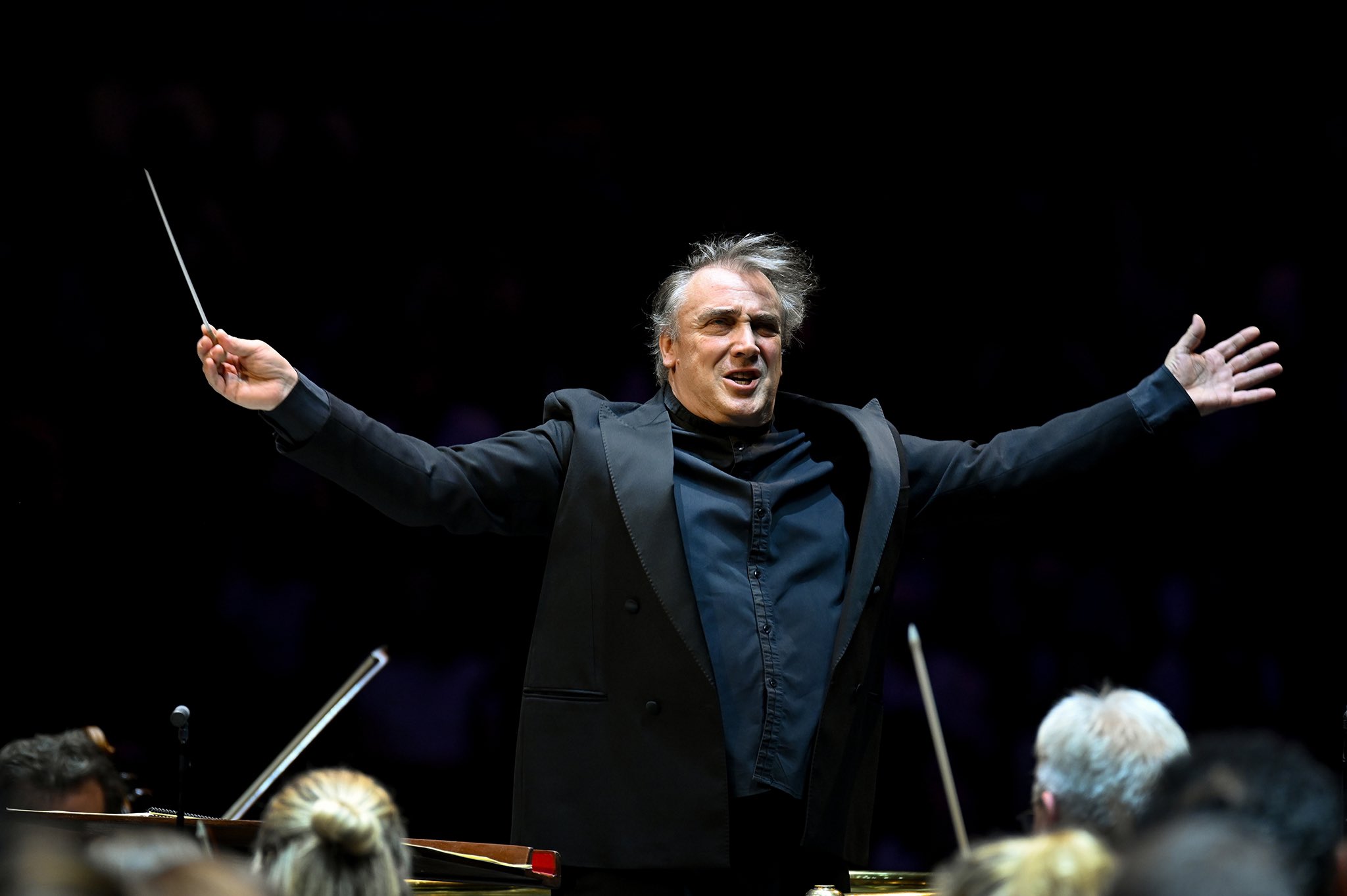
With Jaime Martín an animated podium presence, the BBC National Orchestra of Wales gave it a rousing rendition then was no less finely attuned to the very different ethos of the Violin Concerto by Grace Williams, which it premiered (as the BBC Welsh Orchestra) 73 years ago. There have been few performances since but, on the basis of that tonight, New Zealand-born Geneva Lewis is an eloquent advocate – even if the initial Liricamente arguably needed more purposeful sense of direction for its pensive and often searching inwardness not to risk inertia.

Not that Lewis’ unforced manner or tonal elegance were other than appropriate in this music, as was demonstrated even more directly in the central Andante with its impressionist eddying of melodic phrases and fastidious timbral shading. Following without pause, the final Allegro brought the work’s only fast music in which Lewis’s deftness and articulation gained through her assured coordination with BBCNOW. The cadenza was incisively despatched, while the ensuing coda brought the work to a close the more satisfying for its teasing unexpectedness.

There cannot have been many Proms season this past half-century when Holst’s The Planets has not been played, and it would be good to have welcomed this account more consistently. As it was, the performance took time to recover from a Mars whose stolid tread and lack of textural clarity made for a less than gripping traversal. Venus was better, for all that Martín’s fluctuations of pulse undercut its essential raptness, and though Mercury started off with the requisite humour, some effortful playing in its latter stages left the music feeling earthbound.

This was less of an issue in Jupiter, whose outer sections had all the right verve and energy, even if the trio’s indelible tune verged on the blousy. Pacing its stark opening bars effectively, Martín rather rushed the baleful climax of Saturn, though the radiance of what followed was nothing if not eloquent and bought the best out of BBCNOW. Uranus was almost as fine in this respect, and if the central processional sounded affable rather than sardonic, the sudden emptiness of its closing stages prepared well enough for the otherworldliness of Neptune.

If Martín might have obtained even more hushed and inward playing in this final movement, a sensuous contribution from the London Symphony Chorus enhanced the music-making. An enjoyable reading, albeit one where the whole was less than the sum of its individual planets.

For more on the 2023 BBC Proms, visit the festival’s website at the BBC. You can also click on the link to listen to Dora Pejačević’s Cello Sonata, performed by Laura van der Heijden and Jâms Coleman as part of their Proms at Dewsbury concert on 6 August.

Meanwhile click on the names for more information on artists Geneva Lewis, Jaime Martín and the BBC National Orchestra of Wales – and for information on the composers Dora Pejačević, Grace Williams and Holst

BBC Proms 2023 – Elena Urioste, BBC NoW / Tadaaki Otaka – Rachmaninoff / Respighi, Coleridge-Taylor & Beethoven

Prom 7 – Elena Urioste (violin), BBC National Orchestra of Wales / Tadaaki Otaka

Rachmaninoff (orch. Respighi) Five Études-tableaux (1911-17, orch 1930) [Proms premiere]
Coleridge-Taylor Violin Concerto in G minor Op.80 (1911-12)
Beethoven Symphony no.5 in C minor Op.67 (1807-08)

Royal Albert Hall, London
Wednesday 19th July 2023 [7pm]

by Richard Whitehouse photos by Andy Paradise / BBC

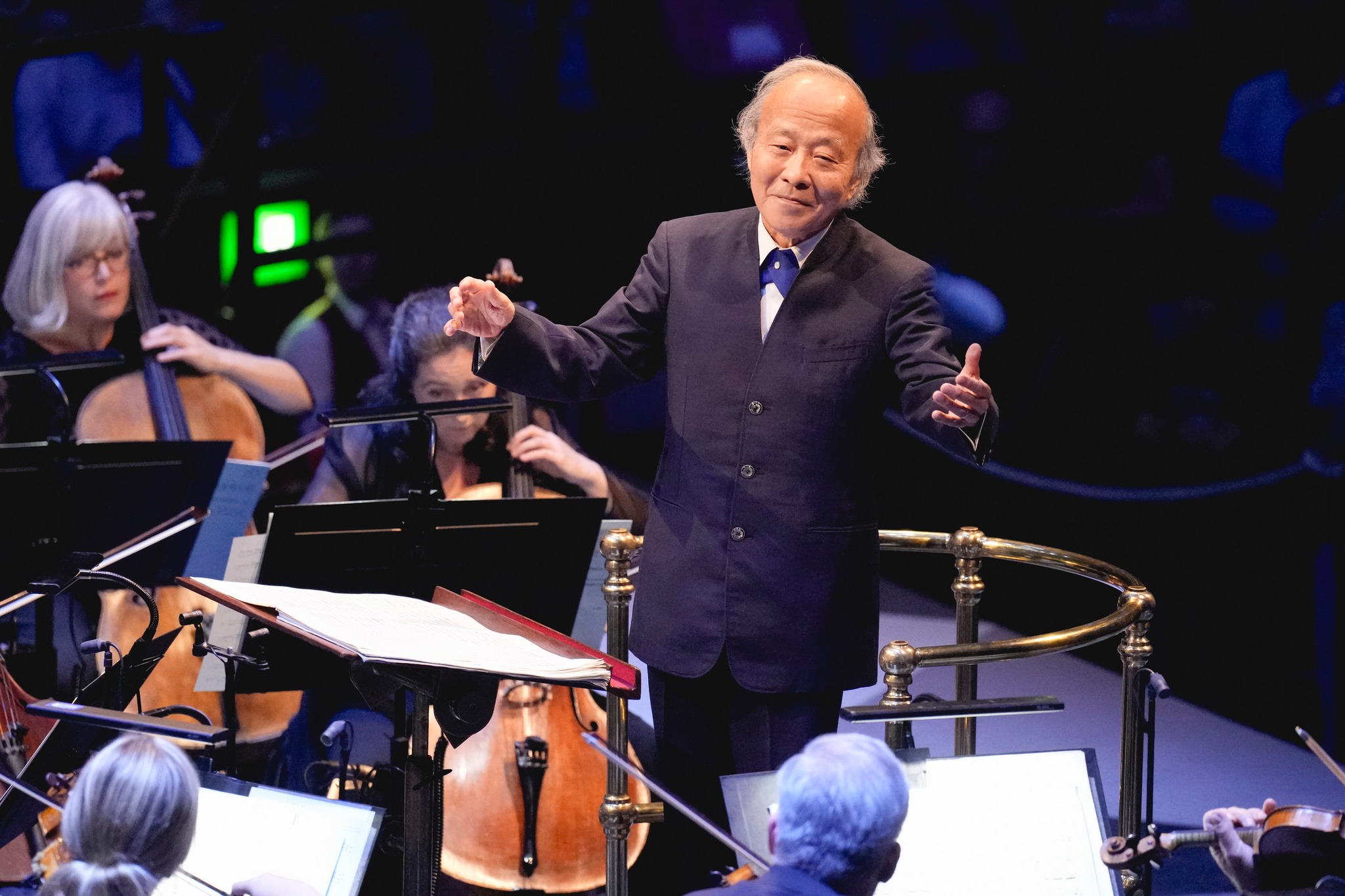
Tadaaki Otaka’s years at the helm of the BBC National Orchestra of Wales (1987-95) were a highpoint of the latter’s history, and it was good to see and hear the rapport between them now that he is Conductor Laureate being maintained throughout this evening’s programme.

Surprising that Respighi’s orchestration of five from Rachmaninoff’s sets of Études-tableaux had not been given at the Proms, but the respective 150th and 80th anniversaries of his birth and death provided an ideal opportunity. Otaka brought out the listless calm of The Sea and the Seagulls with its death-haunted aura, then conveyed the scintillating energy of The Fair. With its evocations of Orthodox chant and heady pealing of bells towards the close, Funeral March is the most imposing and Otaka gave it its due – not least by pointing up the deadpan humour of Little Red Riding Hood and the Wolf which provides greatest possible contrast. The sheer effervescence of March made a fitting conclusion to a sequence that, while other orderings are possible (not least 2-1-4-3-5), is a viable and a cohesive entity in its own right.

The resurgence of interest in Samuel Coleridge-Taylor continued apace with a revival of his Violin Concerto, 111 years after its UK public premiere at these concerts. Its composer’s last major work, this is a work audibly in the Romantic tradition and while the initial Allegro gets off to a less than promising start with its blousy and over-emphatic first theme, the resource with which the soloist elaborates both this and the insouciant idea that follows is as engaging as the cadenza underpinned by drum-roll is arresting. The central Andante is the undoubted highlight, its warmly confiding main melody capable of unexpected plangency as it unfolds, then the final Allegro draws on the Afro-American inflections of Coleridge-Taylor’s heritage in a spirited discourse whose climax sees an opulent restatement of the work’s opening theme.

A testing assignment such as Elena Urioste (after last year’s Proms debut with Ethel Smyth’s Double Concerto) gave with no little panache, her vivid while modest tone heard to advantage in Tom Poster’s eloquent take on Harold Arlen’s Over the Rainbow that was given as encore.

A staple of the Proms since its very first season 128 years ago, Beethoven’s Fifth Symphony comes so weighted with expectation as to make any performance in itself a provocative act. Eschewing astringency and portentousness, Otaka (rightly) rendered the initial movement as an elemental though unpredictable play on its indelible opening motif; the ensuing Andante pursuing an equally eventful course as its main theme evolves via a process of developing variation, the heroic and inquisitive held in unforced accord through to the decisive ending.

A pity that Otaka opted not to take the repeat in the Scherzo (rather than that of the finale) – its interplay between the ominous and the impetuous abetted by a transition of speculative intent. Here too there was never any risk of pomposity or overkill, Otaka steering this most visceral of symphonic finales through a development of bracing immediacy then on to a coda whose insistent C major reiterations were the outcome – no more and no less – of this movement’s innate potential. The undiminished relevance of this music was never for a moment in doubt.

For more on the 2023 BBC Proms, visit the festival’s website at the BBC. Click on the names for more information on the BBC National Orchestra of Wales, Tadaaki Otaka and Elena Urioste

On Record: Emily Howard: Torus (NMC Recordings)

Emily Howard

Antisphere (BBC Philharmonic Orchestra / Vimbayi Kaziboni)
Producer Matthew Bennett, Engineer Stephen Rinker
Recorded 29 November 2022, Bridgewater Hall, Manchester

sphere (BBC National Orchestra of Wales / Mark Wigglesworth)
Producer Dean Craven, Engineer Stephen Rinker
Recorded at the Aldeburgh Festival, 23 June 2018, The Maltings, Snape

Compass (Julian Warburton (percussion), Birmingham Contemporary Music Group / Gabrielle Taychenné)
Producer & Engineer David Lefeber
Recorded 4 December 2022, Royal Northern College of Music, Manchester

Torus (BBC Symphony Orchestra / Martyn Brabbins)
Producer Ann McKay, Engineer Christopher Rouse
Recorded 11 November 2019, Barbican Hall, London

NMC Recordings D274 [68’58″]

Reviewed by Richard Whitehouse

What’s the story?

NMC releases a second collection of music by Emily Howard – now in her early forties and established among the most distinctive while forward-looking composers of her generation, heard in scrupulous performances by a notable line-up of British orchestras and ensembles.

What’s the music like?

Few world premieres from recent years have left an impression comparable to that of Taurus at the Proms in 2016. Its appearance, moreover, marked a further stage in an evolution which had commenced just over a decade earlier and has continued apace, with major commissions from British and European organizations. This has been paralleled by Howard’s commitment into researching the intrinsic properties of sound, most recently via the Centre for Practice & Research in Science and Music (PRiSM) at Manchester’s Royal Northern College of Music.

As it now stands, Torus is the first part in an informal trilogy of pieces collectively entitled Orchestral Geometries. It evolves along the perceived trajectory of a doughnut-shaped ball whose central void is crucial to music evoking absence as much as presence. Not that a work subtitled Concerto for Orchestra could be found lacking in either immediacy of content or virtuosity of gesture, which qualities come demonstrably to the fore as it unfolds and make for a composition involving in its expressive profile and fascinating in its formal process.

By contrast, Sphere is a succinct yet eventful journey through and around the global shape in question and which, in this context, might reasonably be thought an extra-terrestrial interlude – its ideas pithy while exuding enough potential for their development in subsequent pieces.

This is what happens in Antisphere which forms its conceptual opposite though also its aural continuation, the piece gradually encompassing the ‘sound-space’ through an engrossing and imaginative demonstration of orchestral prowess. Evident too is an increased focus upon the visceral nature of the musical content, likely reflecting a form which can precisely be defined in mathematical terms but remains all but intangible as regards human perception. Fortunate, then, that Howard has been able to render this concept as an emotional and affective whole.

Hardly less absorbing is Compass, the most recent of these pieces. This takes the spatial and nautical connotations of its title as the basis for music which unfolds as a cohesive dialogue between string septet and percussion that complements it and offers contrasts at every turn.

Does it all work?

It does, not least for providing an arresting take on that interplay of ‘heart and brain’ that has been a mainstay of Western music. The cerebral basis of all these pieces may be undeniable, though equally so is the precision of their forms and, above all, the allure of their expression judged intrinsically as sound. Much the same could be said of the music of Iannis Xenakis, the centenary of whose birth was commemorated last year, and whose thinking is continued by Howard from a vantage that is inherently personal while being decisively of the present.

Is it recommended?

It is, not least for its excellent performances by three of the BBC orchestras and Birmingham Contemporary Music Group, with booklet notes by Paul Griffiths and mathematician Marcus du Sautoy. This impressive release reinforces Howard’s significance in no uncertain terms.

Listen & Buy

Torus is released on Friday 28 April. You can explore buying options at the NMC Recordings website, and listen to clips from the album at the Presto Music site. You can read Arcana’s interview with Emily Howard by clicking on the link, and click on the names for more on the composer Emily Howard, plus performers Vimbayi Kaziboni, Mark Wigglesworth, Julian Warburton, Gabrielle Teychenné and Martyn Brabbins

On Record – BBC Welsh Chorus & Orchestra / Bryden Thomson & Sir Charles Groves – Daniel Jones: Symphonies 12 & 13 (Lyrita)

Daniel Jones
Symphony no.12 (1985)a
Symphony no.13 ‘Symphony in memory of John Fussell (1992)b
Come, my Way, my Truth, my Life (1987)c

Maldwyn Davies (tenor) (c), BBC Welsh Chorus (c, BBC Welsh Symphony Orchestra (a) and (c) / Bryden Thomson (a), Sir Charles Groves (c); BBC National Orchestra of Wales (b) / Tecwyn Evans (b)

Lyrita SRCD391 [65’35”] English text included
Dates: (a) – BBC studio recording 22 March 1990; (b) – BBC concert broadcast 23 January 2017; (c) – BBC broadcast from Swansea Festival, 10 October 1987

Reviewed by Richard Whitehouse

What’s the story?

Lyrita completes its coverage of symphonies by Daniel Jones (1912-1993) with this coupling of his final two such works, alongside the premiere performance of his last cantata, heard in readings by artists who identified closely with the composer’s music throughout their careers.

What’s the music like?

It was only midway through this cycle that Jones realized he could start a symphony on each note of the chromatic scale. The Twelfth Symphony thus completes this process – its overall structure being among the composer’s most concentrated. At barely six minutes, the opening movement seems relatively expansive with the tensile sonata-form of its Agitato bookended by affecting Tranquillo passages. There follows a rumbustious Giocoso the more potent for its brevity, a Serioso such as might almost be thought a ‘song without words’ with its lyrical understatement, then a Risoluto which extends just long enough to round off the whole work by effecting an oblique return to its initial bars. Four decades on from his first so-designated piece and Jones can be said to have brought his symphonic cycle decisively to its conclusion.

That, however, was by no means the end of the story: the death, in 1990, of Jones’s friend the organist and administrator John Fussell prompted a Thirteenth Symphony as proved to be his last completed work (an Eighth String Quartet being realized by Malcolm Binney and the late Giles Easterbrook). Relatively expansive next to those later such pieces, with some especially imaginative writing for percussion (allocated to no less than seven players), this unfolds from the restless and eventful Solenne – at almost 10 minutes a worthy ‘memorial’ in itself – via an animated and nonchalant Capriccioso then a Lento whose plangent woodwind writing makes it among his most searching slow movements, to a finale whose Agitato-Tranquillo trajectory is pursued twice as this intensifies inexorably towards an ending as powerful as it is eloquent.

Coming between the two symphonies, Come, my Way, my Truth, my Life is the last of Jones’s four cantatas and again has recourse to metaphysical poetry – in this instance George Herbert, the seven short movements being arranged as to chart the spiritual progress of the author (by extension, that of John Aeron-Thomas – founder-member of the Swansea Festival, for whom this is a memorial). Intersected with a fervent orchestral Fantasia, the six choruses traverse contrasted and even conflicted emotions before attaining an unforced affirmation at the close.

Does it all work?

It does. As has previously been noted in these reviews, Jones was not a composer who sought or attracted easy plaudits – opting for an idiom whose methodical evolution is consistent and absorbing. The performances reflect this thinking, Sir Charles Groves and Bryden Thomson both focussed on capturing the essence of works whose integrity is abetted by deftness and no little humour. Tecwyn Evans’s conducting suggests he, too, is primarily concerned with projecting the spirit of this music. Nor does Maldwyn Davies’s contribution leave anything to be desired.

Is it recommended?

Indeed. The broadcasts have been expertly remastered (No. 13 understandably sounding the best), with Paul Conway contributing detailed and insightful annotations. Job done by Lyrita, which will now hopefully complete a similar intégrale of the symphonies by Alun Hoddinott.

For further information and purchasing options, visit the Lyrita website For more information on Daniel Jones, click here