Proms Interview: Cheryl Frances-Hoad – From the Beginning of the World

cheryl-frances-hoad
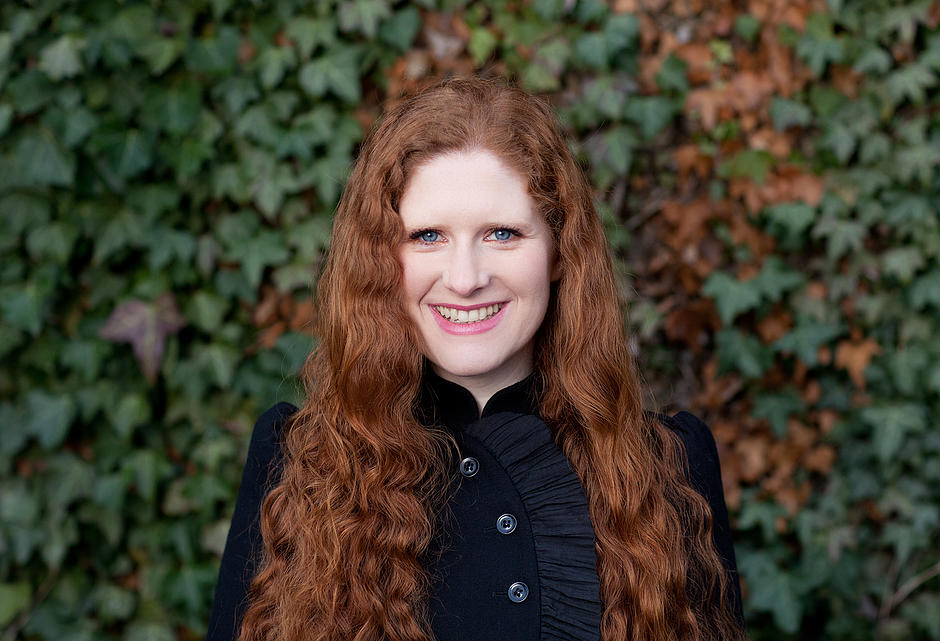
Cheryl Frances-Hoad Photography by Mat Smith Photography

Ahead of an appraisal of her new piece on this site, here is an interview with composer Cheryl Frances-Hoad about The Beginning of the World, a commission for the BBC Proms – to be performed in the company of the music of Thomas Tallis. Cheryl talked with Arcana about rubbing shoulders with one of the greats of English music – and the thrill of writing for the BBC Proms:

When did the BBC approach you with this commission?

Actually it was the Cardinall’s Musick who approached me, in March of last year (my piece isn’t an official BBC commission, although it is a Prom Premiere. Originally my new work was supposed to be premiered in Leeds, but the timings didn’t work out, so, it was decided that it would be premiered at the Proms instead. Leeds is a wonderful city, but in this case I’m glad the original premiere date didn’t work out! 🙂

Was there a particular brief?

Yes, the Cardinall’s Musick wanted a piece for eight voices (double SATB choir) (soprano-alto-tenor-bass) that was a homage to Tallis, and about 7 minutes long (I ended up writing a piece that’s closer to 9 minutes). They suggested some words (I eventually selected my own) but were otherwise completely free about how I should approach the commission.

In the Proms guide the working title for your new work was ‘Homage to Tallis’. At what point did it become ‘From the Beginning of the World’?

At the time we had to list the piece in the Proms brochure, I still had absolutely no idea what the piece was going to be called (or, I think, what text I was going to use – I only finished the piece on the 20th June!)

I got a bit stuck when I began to think about this piece – Tallis is such a wonderful composer but I found a lots of the texts he set, well, a bit boring (mostly because a large amount were in Latin). I wanted to find an exciting text that was somehow relevant to Tallis and contemporary times, but for about a month I was utterly stuck.

I plodded through a two foot high pile of books about Tallis but got nowhere. But, little by little (and at this stage with quite a lot of help from Google) I started connecting things – Tallis lived in Greenwich towards the end of his life, which lead me on to reading about the refinements of timekeeping and the calender during his lifetime, which then lead on to discovering that there was a major astrological event that happened whilst he was alive…which came to symbolize (to me) the massive changes that occurred during Tallis’s lifetime (including for instance the Reformation)…which lead to discovering Tycho Brahe’s (A Danish astronomer) ‘Treatise on the Great Comet of 1577’….

Where does the text come from?

Tycho Brahe‘s German Treatise on the Great Comet of 1577.  I spent several weeks in libraries attempting to find a suitable text. Whether Tallis knew about the comet is unknown of course, but this seismic event, to me, seemed emblematic of all the great changes that occurred during his lifetime, in areas such as religion, the calendar, and time-keeping (finding out that Tallis lived out his last days in Greenwich was an extra bonus).

The text also seems to speak to contemporary times: whilst Brahe may have thought the comet’s birth would cause the sun to ‘bring unnatural heat’, nowadays we know that its ‘venom [will be] spewed over the lands’ due to mankind’s continued pillaging of the earth’s natural resources, a fact which our political ‘pseudo-prophets’ seem to deem less important than saving us from a false austerity.

The full text of From the Beginning of the World

Then it comes to pass that something new is born in the heavens

Contrary to the custom of nature
And all mankind holds it to be a great wonder.

Videte Miraculum  (Behold the miracle)
A miracle of the heavens.

From the beginning of the world
From the uppermost sphere of the fixed stars
This new birth reveals itself
A comet with a very long tail.
Something new can be generated in the heavens.

Gloria Patri et Filio et Spiritui Sancto (Glory to the Father, and to the Son, and to the Holy Ghost)

But what do such unnatural births mean?

Creator caeli et terrae! (Creator of Heaven and Earth),
Respice humilitatem nostram (Be mindful of our lowliness)
Peccavi (Have mercy)

Great mortality among mankind.
Mighty and destructive wind storms
Peccavi
Poisonings of the air
Peccavi
Terrible earthquakes
Great harm by fire.

Great mortality among mankind.
The sun will bring unnatural heat
The sun will bring harmful, unnatural heat
It will spew its venom over the lands

Great mortality among mankind
Gruesome pestilence
Incurable pains
(Pestilential)

Those who deal with political regimes
Will be much stifled
(Creator caeli et terrae)
Those who seek their own honour as pseudo prophets
(Respice humilitatem nostram)
Will be punished, punished.

Great wars and bloodsheddings.
Peccavi
Miserere Nostri  (Have mercy on us)

However, there are actually no reliable grounds
For predicting the end of the world from this comet.
It thus behooves us to use well our short life here on earth,
So that we may praise him for all eternity.
Our short life here on earth…
Amen.

The music itself is very influenced by Tallis, and canons and imitation abound. During my time as a ‘cellist at the Yehudi Menuhin School, I performed Ralph Vaughan Williams’s Fantasia on a Theme of Thomas Tallis many times, and so From the Beginning of the World, which also uses Tallis’s Third Mode Melody from the English Hymnal, is really a homage to both composers.

How would you describe the piece?

At this point of interview I haven’t heard the piece yet (I have to wait until Saturday 18th to hear it for the first time!) But, I hope it is a tremendously dramatic piece, perhaps a bit melodramatic! (also see paragraph above this question…)

Is it daunting knowing the work will be performed around such a well-loved work as Spem in alium, or does that become an inspiration as it is a homage to Tallis himself?

It was inspiring when I was composing, but now it’s daunting. It’s silly, I’ve written far bigger pieces than the one that’s to be premiered on the 20th, but I have to say I’m getting incredibly nervous for this premiere! I really hope I haven’t gone and written a dud! However! I’ve consciously both based this piece closely on Tallis, AND tried to do some things that are very different in style – so, at the very least, my piece will stand out hopefully!

How does it feel to be writing a piece for the Proms?

Really exciting!

Does it help that the concert is available on the iPlayer afterwards, for people to get a chance to properly get to know the piece?

Absolutely! And this year, all the Proms are also downloadable which is wonderful! Particularly as my piece is being performed at lunchtime, I imagine many people won’t be able to listen live, so it’s so wonderful to be able to nag people to listen to it on iPlayer for 30 days after the premiere!

The BBC are actively encouraging new music with programs like ‘Five Under 35’ – do you feel the corporation is stronger than ever in its support for current composers at the Proms?

I’m not really sure to be honest – I’ve been exceptionally lucky to have been chosen as one of the Five under 35 (as part of the International Women’s Day celebrations) and feature in the Proms – but I’m not sure how connected the two are.

You can listen to the world premiere of Cheryl Frances-Hoad’s FromThe Beginning of the World as part of the first Proms Chamber Music concert of the season, given by the Cardinall’s Musick and Andrew Carwood, by clicking here

You will shortly be able to hear Cheryl’s thoughts on how it went – and an Arcana appraisal – on the site in the next few days.

For more information on Cheryl you can visit her website – and as a taster here is a recent YouTube post of her Mazurka for violin and piano:

Proms guide – First Night: A tale of two Belshazzars

belshazzars-feast-rembrandt

Belshazzar’s Feast by Rembrandt

Prom 1 – Christopher Maltman, BBC Symphony Orchestra / Sakari Oramo

BBC iPlayer link

http://www.bbc.co.uk/iplayer/episode/b062nrdk/bbc-proms-2015-season-first-night-of-the-proms

Sibelius’ suite begins at 57:45; Walton’s interpretation at 1:18:36.

The Biblical tale of Belshazzar’s Feast, where the downfall of Babylon is predicted by a human hand writing on the wall during a lavish party, inspired three very different responses. The first, from Handel in 1744, took the form of a large scale sacred piece, but the second half of this Prom threw together two very different responses by twentieth century composers.

Sibelius wrote a score of ten scenes, condensing it into a suite of four for concert performance. It finds the composer in typically economic form, though it is a surprise to note the exotic Oriental Procession, colourfully rendered by Sakari Oramo and the BBC Symphony Orchestra. The Finnish conductor is an expert in this music, and found the emotional depths of the stark Solitude and the emotive Nocturne, where flautist Michael Cox spun a delectable web of notes. The finale, Khadra’s Dance, signed off in typical style.

058
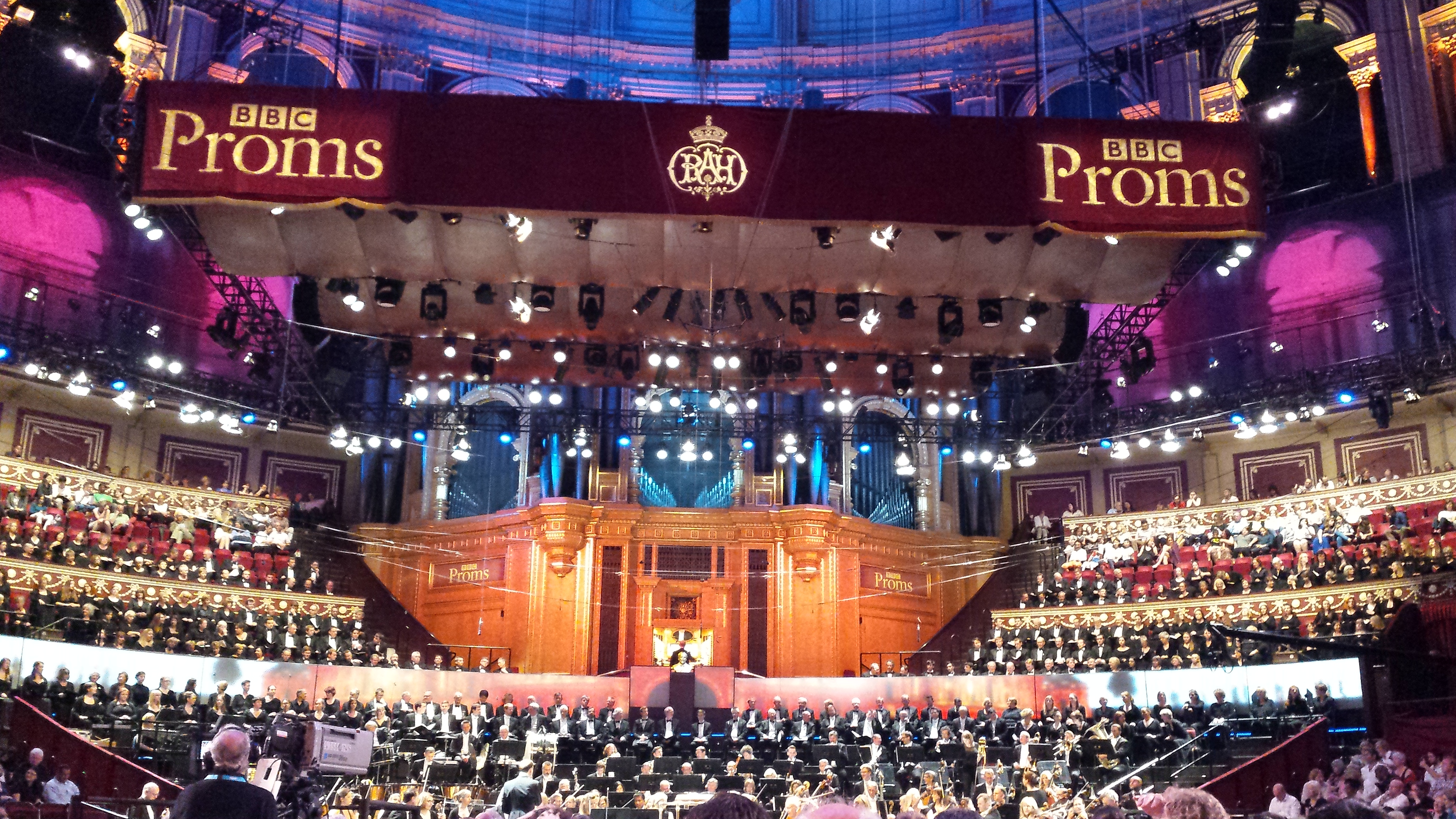
The massive forces assembled for Walton’s Belshazzar’s Feast. Photo (c) Ben Hogwood

Walton, on the other hand, throws everything at his 35-minute tale, including the whole story in a choral dramatisation that at times threatened to take the roof off the Royal Albert Hall. With 256 singers (give or take one or two on the naked eye count from the Arena!) this was a massive scale on which to play out the story, and Christopher Maltman did a sterling job in the baritone solo role.

The chorus were the stars, though, and the combined forces of the BBC Singers, the BBC Symphony Chorus and the BBC National Chorus of Wales were absolutely superb; hair-raising, even. Their shout of “SLAIN!” when Belshazzar finally perished was terrifying. No less chilling was the macabre percussion used when the hand appears.

Yet the epic climax of the piece, with Babylon’s redemption trumping the empty jubilation of the feast, was the crowning glory. Brilliantly marshalled by Oramo and superbly sung by the assembled BBC National Chorus of Wales, BBC Singers and BBC Symphony Chorus, this was a piece to fire the starting gun on the 2015 Proms with maximum power. Here’s to the next 75!

Further listening

If this is your first encounter with the music of Walton, a strong recommendation goes to the composer’s Symphony no.1, his finest orchestral composition:

Sibelius‘ incidental music is curiously elusive – so here is some more in the form of his score for the play Pelléas et Mélisande. You will doubtless recognise the first movement, At the Castle Gate, as the music used for the BBC’s The Sky at Night:

If your curiousity is aroused for the third of the Belshazzar interpretations, this Spotify link gives you Handel‘s oratorio in its entirety:

This BBC Prom also included Nielsen’s ebullient overture to Maskarade and Mozart’s masterly Piano Concerto no.20, with soloist Lars Vogt. They are also on the iPlayer link above

Proms premiere – Gary Carpenter: Dadaville

gary-carpenter

BBC Symphony Orchestra / Sakari Oramo (Prom 1)

Duration: 7 minutes

Watch here (Dadaville begins at 2:29)

Dadaville begins at 11:30

What’s the story behind the piece?

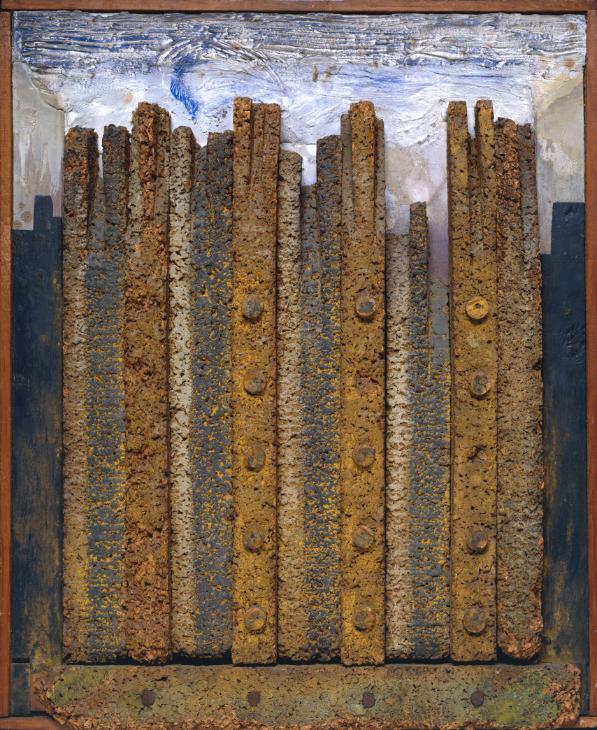
Dadaville c.1924 Max Ernst 1891-1976 Purchased 1983 http://www.tate.org.uk/art/work/T03707

Dadaville c.1924 Max Ernst 1891-1976 Purchased 1983 http://www.tate.org.uk/art/work/T03707

Dadaville is a musical response to the painted relief by Max Ernst shown above. What appears to be an iron wall in the imposing structure is actually made of cork, flimsy enough to be kept behind glass.

Carpenter bases his piece on the notes D – A – as in the first two letters of the painting’s name – and uses the nine letters of the word as the basis for the structure of the piece.

The tuba takes a starring role, allocated a nine bar bass line in the middle that the orchestra build on comprehensively, while towards the end of its 180 bars (20×9!) there is a reference to Beethoven’s Symphony no.9.

Did you know?

Gary was the Associate Musical Director on the film The Wicker Man. Among the many instruments he played during the recording of the film are piano, recorders, ocarina, fife and the Nordic lyre. You can read his recollections of recording here

Initial verdict

A piece obviously composed with the First Night in mind, especially if the surprise pyrotechnics at the end were anything to go by! Yet Carpenter largely succeeded in his musical sketch of Max Ernst’s Dadaville, with a piece that was both fragile and robust – just like the painted relief itself.

It was particularly good to see the tuba and bass clarinet given starring roles, making use of a swinging bass line of jazzy syncopations, while some of the string lines recalled Debussy and, at the opening, Britten.

Second hearing

There is an air of tension at the beginning of this piece in the cold string lines, but soon the energy begins to be released. The orchestral textures are crisp and clear.

The piece really acquires its direction once the tuba and bass clarinet are called into action from 6:55, and this low bass line generates the energy for the rest of the piece, which really starts to swing, all the while leading towards the fireworks at the finish. It completes a score with an impressive array of sounds and an appealing, uplifting mood.

Where can I hear more?

From Gary’s Soundcloud page, here is his Saxophone Quartet The North:

Proms Interview: Colin Currie – Into the open

colin-currieColin Currie. Photo: Marco Borggreve

It is not an exaggeration to say that Colin Currie is one of the most exciting classical musicians at work today. The percussionist has been instrumental in securing a number of vital commissions from leading composers – Steve Reich, Elliott Carter and Rautavaara among them. Now he returns to HK Gruber for a second percussion concerto, into the open…, which he will give at Prom 5 with the BBC Philharmonic Orchestra and John Storgårds.

The piece is dedicated to the memory of David Drew, who in 1976 was appointed director of publications at the leading music publisher Boosey & Hawkes. In a chat with Arcana Colin took us through the piece itself, the instruments he uses and how Gruber’s music responds to bereavement.

Do you remember your first encounter with the Proms?

Yes – I think I played before I attended! It was in 1993, with the National Youth Orchestra of Scotland. I was playing timpani, and we played Holst’s The Planets, and a new violin concerto by Thomas Wilson. It was a typical Proms programme.

What was your first Prom as a soloist?

I gave the premiere of Ruby by Joe Duddell in 2003. By then I had attended many Proms as a student. I would stay down in London over the summer and Prom ‘binge’, and from around 1995 I went to dozens of Proms, usually as a Prommer. I think it’s the best way to experience the festival, and the best way for me is to stand towards the back of the arena. The gallery also gives a really nice perspective.

It is amazing to play in the Royal Albert Hall for the first time, it is a huge hall and a wonderful audience. There were people packed around the orchestra in this concert, and it was wonderful.

You’ve worked with HK Gruber for nearly 15 years now. How do you think his music has changed and / or developed in that time?

He is always going through different stages of density in his music. At certain points his writing has become incredibly dense, and at other times he has the confidence to let things thin out, to use his charm and charisma. His qualities become transparent that way. He is developing often in a most challenging way, always looking for new angles and takes. His is an extremely creative and inquisitive mind, and he does things with a childlike wonder. An interesting comparison to showcase is the first percussion concerto, Rough Music, but I think this one is a better one. Rough Music is a wonderful piece, but this shows how things have moved on. It is more challenging for the soloist and for the orchestra, and it is highly intensified, more extreme, more daring and audacious!

The impression HK Gruber gives is that he has a keen sense of humour.

He does have a wicked sense of humour, that’s all true, but he is also extremely serious about his music, and it is done with lightness and enjoyment. It’s all about music and high art, nothing else matters, and he is incredibly passionate about it. If you don’t want to listen it is beyond him, and that’s why music is so strong for him.

You must have built up quite a set of memories of collaborations with composers.

Definitely. These composers I have got to know and I treasure those experiences, they are fascinating to me. I have come to relate strongly to their endeavours and the challenges they face. They are extremely strong characters, and not always easy, but it is an amazing sweep of personalities that I have been lucky enough to work with. I try to be a facilitator, and I will put them way ahead of anything that might be bugging me. I will put their music over and above their egos, and I try to put mine last!

into the open… is scored for a variety of percussion instruments. Can I get you to explain these ones?

Cencerros: “they are tuned cow bells”

Plate bells (or bell plates) “They sound like large church bells. There are three of them in this piece, and they are deep and resonant. None of the instruments are especially unusual, but the combinations Gruber uses are unusual. The plate bells are used with the marimba, gongs and temple blocks. It is a monstrous percussive machine! There are also six timpani with tom toms, snare and bongos – a grand total of 22 drums!”

Cajón (pronounced ca-hon) – “A box you sit on and play with your hands. It is used in Latin music.”

African balafon – “essentially a xylophone”

Did you know David Drew at all?

I did meet him briefly, but only meeting him once I was completely inspired by him. He was eccentric, and without being disrespectful it is fair to say he was crazy about music. I met him not long before he died, when I gave a concert in 2009. It was a concerto by Kurt Schwertsik, a Boosey & Hawkes composer, who is Austrian and a good friend of Gruber. Drew signed them in the 1980s I believe, and he was so passionate, jumping up and down like a child as he was energised by Mozart, Stravinsky and Schwertsik. I’ll be doing my best to do him proud in the performance.

(click here to watch an introduction to Schwertsik’s Marimba Concerto from the Scottish Ensemble

How does into the open… remember David Drew?

The piece itself is about thwarted feelings of desperation and loss. It confronts bereavement in an angry and passionate way. It is a violent piece, and an unhappy one too – but it is also extremely lyrical and tender. The person, the subject, is clearly missed – but it is not easy to put into words.

You have worked with John Storgårds on new percussion works previously. Do you find him particularly understanding to your requirements?

He is the best! He has a wonderful way of working with soloists, and he has been a vast presence in maintaining concerto-level performances. Nothing is ever too complicated, and nothing gets between him and the music. He always get the simplest approach, and gives us soloists confidence while also keeping us calm. He and the BBC Philharmonic Orchestra are fantastic, I could not be happier with them.

What are your plans for the rest of the year?

I am going to Vienna, which is a big deal as I am playing at Wien Modern, a festival I have revered from afar. I am playing the Gruber with the Vienna Symphony Orchestra, and it will be wonderful as it is my debut there.

I have some concerts further away but I am giving the premiere of a Percussion Concerto by Andrew Norman called Switch next season. That will be with the Utah Symphony Orchestra, they are celebrating their 75th anniversary in Cadogan Hall.

Are you continuing to work with Steve Reich?

Absolutely, the group is very busy touring away. Next season we will play the Music for 18 Musicians at the Royal Festival Hall, and will play the Quartet that he wrote for us. We are also very busy with upcoming projects and playing in Japan, and all around music. There is a great spirit for collective music, we have a lot of fun playing it. The Southbank performance will be part of my role as Artist in Association there, and after the Metal Wood Skin festival we have some wonderful plans in the pipeline!

Colin Currie performs into the open… with the BBC Philharmonic Orchestra conducted by John Storgårds at the BBC Proms on Monday 20 July, in a concert that includes Haydn’s Symphony no.85 and Stravinsky’s Petrushka.

You can get more information about his disc of Gruber’s first Percussion concerto, Rough Music, by clicking here.

Finally an obituary and appreciation of David Drew from the composer Alexander Goehr can be read on the Guardian website

BBC Proms 2015 – 10 to try

bbc-proms-2015

BBC Proms 2015 – 10 to try

It’s nearly time for the BBC Proms. The world’s biggest classical music festival – which seems to get bigger every year – starts this coming Friday at the Royal Albert Hall.

With so much to choose from Arcana has taken on the task of choosing ten Proms to attend, watch or listen to – which you can read about and preview below. The idea is to mix up a few obvious recommendations and a wildcard or two.

The Arcana coverage of the Proms is going to be a little bit different from your average review site. For a start any Prom reviewed in person will be experienced from the Arena rather than from a seat. This is for two reasons – the Arena has arguably the best acoustic in the notoriously tricky hall, and it’s also the place where the biggest cross section of musical public brush shoulders.

This year in its Proms coverage Arcana will also be focusing on new music, offering an appraisal of each premiere at the festival. This is a surprisingly demanding task, because there are 32 new pieces from the likes of Eric Whitacre, Hugh Wood and even a newly discovered work by Olivier Messiaen. An early interview on Arcana will feature percussionist Colin Currie talking about the new concerto into the open…, written for him by HK Gruber. So here we are then – ten Proms and tasters for you, however you intend to experience them. Happy Promming!

18 July: Ten Pieces Prom (Prom 2 – repeated on 19/7 at 11:00am) (TV)

Ten Pieces is the BBC’s initiative to get classical music into schools – but of course the learning need not stop there! This prom, presented by Dick and Dom, Molly Rainford and Dan Starkey, is comprised of all ten pieces, from John Adams’ Short Ride in a Fast Machine through to the end of Stravinsky’s ballet The Firebird. Here’s a link to a preview of all ten pieces:

http://bbc.in/1HIJOLe

20 July: Thomas Tallis’ Spem in alium (Proms Chamber Music 1)

Once again Proms Chamber Music will visit the Cadogan Hall every Monday lunchtime – but to begin with The Cardinall’s Musick will perform sacred music by Cheryl Frances-Hoad – a world premiere – and the jawdropping Spem in alium of Thomas Tallis, a 40-part choral piece that simply has to be heard. Here is the Tallis Scholars’ conductor Peter Phillips discussing the work:


28 July: Prokofiev – Piano concertos 1-5 (Daniil Trifonov, Sergei Babayan and Alexei Volodin, London Symphony Orchestra / Valery Gergiev (Prom 14)

Not one for the faint hearted, this! Prokofiev wrote for the piano both as a percussion instrument and a lyrical one, so some of his works feature stabbing but often jaunty tunes. The Piano Concerto no.2 is particularly epic:


3 August: MacMillan – Symphony no.4; Mahler – Symphony no.5 (Prom 24)

The world premiere of Sir James MacMillan’s Symphony no.4. Donald Runnicles will also conduct the underrated BBC Scottish Symphony Orchestra in Mahler’s Symphony no.5, which promises to bring new life to the old warhorse:


4 August: Monteverdi – Orfeo (Prom 25)

Described as ‘the first great opera’, Orfeo will be sung in Italian and conducted by Sir John Eliot Gardiner, who will, to quote the BBC Proms website, ‘transform the Royal Albert Hall into the 17th-century Mantuan court of the Gonzagas with some of Monteverdi’s loveliest melodies and most colourful instrumental writing’. Here’s what we have to look forward to:


5 August: Late Night with 6Music (Prom 27)

Following the successful 6Music night two years back, the station returns – this time with Mary Anne Hobbs at the helm to explore new music from two composers on the Erased Tapes label who write with classical music in mind. These are Nils Frahm

…and the duo A Winged Victory for the Sullen:


17 August: Osmö Vänska conducts Sibelius – Symphonies 5, 6 & 7 (Prom 43)

An obvious recommendation perhaps, but if you wanted to see a Sibelius concert and had a choice of conductor, Osmö Vänska would surely be it. His interpretations of the composer are both incredibly detailed and deeply passionate, and the BBC Symphony Orchestra will no doubt fall under his spell for three of the composer’s symphonic masterpieces:


19 August: Elisabeth Leonskaja plays Mozart (Prom 45)

Elisabeth Leonskaja is quite simply one of the best pianists in the world today – and in Mozart’s Piano Concerto no.22 her performance should be sublime. Charles Dutoit and the RPO will no doubt prove sensitive accompanists – but in Debussy (the Petite Suite) and Shostakovich (Symphony no.15) they should also be rather special. Here is Leonskaja in solo Mozart:


9 September: Nielsen and Ives (Prom 72)

This intriguing night of music takes two wildly different forces from twentieth century music – anniversary composer Carl Nielsen, born 150 years ago, and the maverick Charles Ives, gradually revealed as one of the most influential composers of modern times. The former is represented by the impressive Violin Concerto, which will be played by the extravert violinist Henning Kraggerud. The latter by Symphony no.4, which really is best experienced in person. It contains a number of hymns, performed by a choir beforehand. Andrew Litton will be the guiding hand.


11 September: Elgar – Dream of Gerontius with Sir Simon Rattle (Prom 75)

Sir Simon Rattle returns for a second night at this year’s festival, leading the Vienna Philharmonic and a starry trio of soloists in Elgar’s magnificent choral work, with Toby Spence, Roderick Williams and wife Magdalena Kožená. Here’s an excerpt from the Berlin Philharmonic: