Ailish Tynan and James Baillieu – French Song at the Wigmore Hall

French Song at the Wigmore Hall
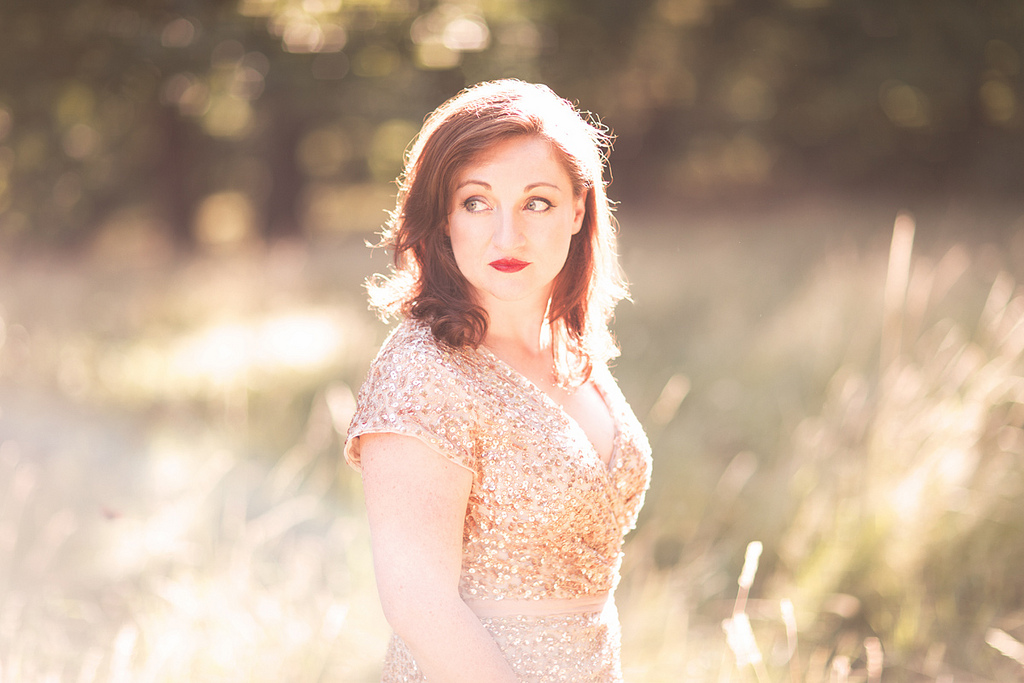
ailish-tynan

Ailish Tynan (soprano), James Baillieu (piano) – Wigmore Hall, London, live on BBC Radio 3, 22 June 2015

Listening link (opens in a new window):

http://www.bbc.co.uk/programmes/b05zh7pr

on the iPlayer until 21 July

Spotify

In case you cannot hear the broadcast, I have put together a Spotify playlist of most of the music in this concert, including recordings the artists have made where possible. The playlist can be found below:

What’s the music?

Hahn: Fêtes galantes; En sourdine; A Chloris (various) (9 minutes)

Poulenc: La courte paille (1960) (11 minutes)

Poulenc: Trois poèmes de Louise de Vilmorin (1937) (7 minutes)

Hahn: Venezia – Chansons en dialecte vénitien (1901) (16 minutes)

What about the music?

There is something rather special about a recital of French songs, and this intriguing program brings together one of its best exponents – the soprano Ailish Tynan – and one of the best up and coming accompanists, pianist James Baillieu. Of course to call him an ‘accompanist’ recognises just how important that role is, setting the tone and providing the colour.

The two composers here are well matched, despite their very different styles of writing. Reynaldo Hahn, born in Venezuela but moving to Paris when three years old, is best known for his songs, especially settings of Victor Hugo and Paul Verlaine. The BBC Radio 3 announcer Sara Mohr-Pietsch sums up the songs in the first trio as ‘a group of young men serenading their beloveds, the piano imitating a mandolin’ (Fêtes galantes), ‘a muted nocturnal love song’ (En sourdine) and ‘a love poem set with a loving nod to Bach (A Chloris). In contrast the cycle of five songs Venezia glorifies the gondoliers in the city, setting it as ‘the elegant playground of the rich and famous’, in Graham Johnson’s words.

Francis Poulenc, meanwhile, is completely different, writing with economy but also with an appealing brashness and humour that mean he gets away with some pretty outrageous settings. There are touching moments too, though, and in his last song cycle La coute paille (The short straw) he sets seven nonsense rhymes, a present for realised in music for the singer Denise Duval, so that she could sing them to her young boy. The simplicity of Poulenc’s musical language is perfectly suited to the text.

Complementing this is a short mini-cycle of poems set in 1937 to the poetry of another good friend, Louise de Vilmorin.

Performance verdict

Ailish Tynan is in her element in this sort of program, and the combination of Poulenc with Hahn is not one to miss. Poulenc can never resist humour in his songs and Tynan makes it her mission to seek it out, from the zany and oddball moments of La coute paille to the heady eroticism of his three de Vilmorin settings.

The performance of Venezia is glorious, and even listening on the radio you can tell just how much fun she gets from Che pecà. Before then however there are the heady heights of La barcheta, Tynan’s voice both flexible and incredibly well controlled.

James Baillieu’s setting of each scene is also carefully managed and vividly painted.

What should I listen out for?

Hahn

1:11 – Fêtes galantes A lively song, begun by the clang of the piano in the upper register, and a playful interplay between him and the singer, who has quite an unusual contour to the melodic line.

3:05 – En sourdine (Softly) A slower and much more languorous affair this, and it’s easy to imagine a hot and sultry evening where nobody is able to sleep. Verlaine’s text has something else in mind, reflected by Tynan’s wonderful higher note at 6’12” or thereabouts.

6:42 – À Chloris (To Chloris) the tread of the bass line and the profile are indeed similar to Bach, a kind of equivalent to his Sleepers Awake. Baillieu introduces the song with an admirable calm, before the rapturous entry of the singer. This rather wonderful song finishes softly at 10:08.

Poulenc

La courte paille (The short straw) – with words here

11:37 – Le sommeiil (Sleep) A light and graceful song to start the cycle – though there is a dark underside to it, as ‘sleep is on vacation’ and the mother is frustrated.

13:35 – Quelle aventure! (What an adventure!) This song trips along with outbursts in the higher register of the voice, reflecting the nonsense text of the flea pulling an elephant in a carriage. A surreal dream!

14:46 – La reine de cœur (The Queen of Hearts) This sleepy song depicts the enchantment of the queen, beckoning the listener into her castle.

16:40 – Ba, be, bi, bo, bu The nonsense is evident in the spiky piano part – depicting the cat who has put his boots on! – and in Tynan’s shrieks and whoops, brilliantly stage managed. It’s all over in a flash!

17:16 – Les anges musiciens (The musician angels) A more sombre and graceful affair, again suggesting the onset of sleep as the angels play Mozart on their harps

18:42 – Le carafon (The baby carafe) The alternation in the vocal part between swoops and gliding notes gives an indication of the surreal nature of the text.

20:01 – Lune d’Avril (April moon) Initially lost in thought, this final song of the cycle builds to an impressive climax

Trois poèmes de Louise de Vilmorin

23:45 – Le garçon de Liège (The boy of Liège) A fast moving and breathless song with plenty of ‘wrong’ notes in the piano part.

25:16 – Au-delà A colourful piano introduction alternating between two chords as the singer goes on a breathless voyage of self-examination.

26:43 – Aux officiers de la Garde Blanche (To the officers of the White Guard) A thoughtful mood runs through this song, which Graham Johnson notes to be unusual in Poulenc’s output for its contemplation.

Hahn

Ailish Tynan introduces this cycle as a portrayal of ‘sultry, steamy, sensual Venice – where young men lure you into gondolas’!

32:18 – Sopra l’acqua indormenzada (Asleep on the water) This song is notable for its high and clear sound from the soprano, as she entreats her subject to join her in the boat. As part of this she stylishly glides between notes, occasionally sliding between them (a technique known as ‘portamento’)

36:01 – La barcheta (The little boat) The boat itself is home to simmering passion in a minor key. There is a really nice ornamentation to the melody, then a vocalise on the word ‘Ah’ at the end of each verse.

39:26 – L’avertimento (The warning) An urgent song warning the lads off ‘the lovely Nana’, who ‘has the heart of a tiger’. There is an impressive outburst at the end.

41:02 – La biondina in gondoleta (The blonde girl in the gondola) A slower and longer song, describing the raptures of an encounter with the blonde girl. Heady music, with a breathless final verse!

45:35 – Che pecà! (What a shame) Described by Tynan as ‘one of my favourite songs of all time’, this is a stuttering march, perhaps suggesting the rickety man of the text. Tynan’s voice rings out on the high notes, before the ‘Che pecà’ response, a distinctive reply, falls lower down the scale to comedic effect.

Encores

48:59 The boy From… by Mary Rogers, with words by Stephen Sondheim. A send-up of The Girl from Ipanema. You may be able to hear Ailish dedicating the song to the Director of Wigmore Hall, John Gilhooly, before vividly illustrating her comic powers!

52:41 – Extase by the French composer Henri Duparc (1848-1933) The other side of the singer in a carefully controlled but poignant account.

Further listening

If you enjoyed this recital then the next recommendation can only be for more Ailish Tynan, for she is wonderful in French song. Here she is in a disc of Fauré, with the pianist Iain Burnside. Well worth hearing for the composer’s open-air writing style!

For more concerts click here
The Gould Trio play Schubert at the Wigmore Hall

The Gould Piano Trio play Schubert at the Wigmore Hall

gould-piano-trio

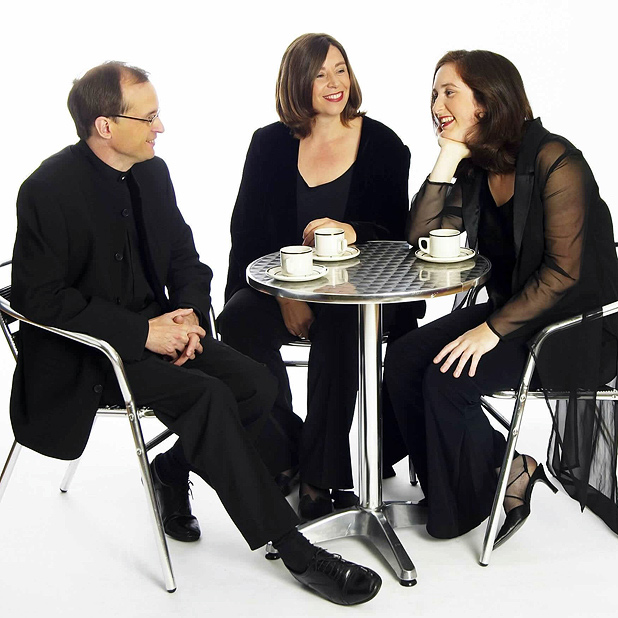
The Gould Piano Trio (Lucy Gould (violin), Alice Neary (cello), Benjamin Frith (piano) – Wigmore Hall, London, live on BBC Radio 3, 15 June 2015

Listening link (opens in a new window):

http://www.bbc.co.uk/programmes/b05y61y9

on the iPlayer until 15 July

Spotify

In case you cannot hear the broadcast, I have put together a Spotify playlist of most of the music in this concert, including recordings the artists have made where possible. The playlist can be found here:

Meanwhile clips of the Gould Piano Trio playing the music of York Bowen on a recent release for Chandos can be found here

What’s the music?

York Bowen: Rhapsody Trio (1926) (13 minutes)

Schubert: Piano Trio no.1 (1827) (40 minutes)

What about the music?

A nicely balanced hour of chamber music, with one classic of the piano trio repertoire complemented by a very little-known work.

That said, the music of York Bowen has received a lot of exposure of late – too much, some would say! At its best though Bowen’s writing shows that his high regard from composers such as Camille Saint-Saëns was not misplaced. It is chamber music that seems to be the most consistent part of his output. This Rhapsody Trio – written in a single movement format popular with English composers in the early decades of the twentieth century – was premiered at the Savoy Hotel early in 1926 at the annual dinner of the Federation of British Music Industries.

Schubert’s two big works for piano trio are justly celebrated, being two of the best and most substantial pieces for the form. The first was written a year before the composer’s death, for the same trio that gave the first performance of Beethoven’s Archduke piano trio. Incidentally that work is set in the same key, B flat major, leading to the drawing of similarities between the two. The works are similar length, but Schubert imposes his own distinctive style here, writing music that seems on the face of it to be very optimistic – but which can on closer inspection have a few worrisome moments. There is no shortage of tunes, though, and in the slow movement especially Schubert brings his song-writing prowess to bear in some beautifully written duet work for violin and cello above the piano.

Performance verdict

Watching this performance from The Gould Trio it was immediately clear just how much enjoyment they took from the music. The Schubert was full of sleights of humour but was also very detailed, and pianist Benjamin Frith demonstrated an uncanny instinct for knowing when to hold back slightly in a phrase, or when to push on.

The first movement emphasised how gracefully Schubert writes for strings, even in the midst of a lot of bluster, while the song-based second movement lived up to its billing. The ‘Scherzo’ was witty and took time over the longer notes of his contrasting ‘trio’ section, while as the curious last movement wended its way through all sorts of different keys the trio always had a firm hand on the tiller.

Meanwhile the Bowen was given the conviction and passion his music needs, emerging as a really fine piece of music. The end in particular was extremely well done, thoughtful but holding the audience in the palm of its hand.

What should I listen out for?

Bowen

2:23 – the music begins as though emerging from a dream into the morning light. Held notes from the strings and some lazy thoughts from the piano are initially quite unfocused, but gradually the trio find their footing and a bold, louder passage ensues. At 4:34 a fetching melody can be heard on violin and cello in unison.

The music gradually picks up speed, the instruments now a lot more independent and the piano part more demanding. Although the comparisons are often between Bowen and Rachmaninov, I find the appealing unison passage from 9:30 to be like Fauré.

After another passionate section the music seems to be spent, but Bowen brings out a really atmospheric and rather affecting ending from around 14:00 onwards, all three instruments seemingly lost in thought.

Schubert

17:55 – Few chamber works begin with this much positivity! Here the Gould Piano Trio are at pains to stress this music can also be graceful – a lot of trios give the opening of the first movement too much oomph. Here though the tune shines through, and is nicely articulated by pianist Benjamin Frith at 18:49.

19:49 – Schubert’s light and songful second main tune appears on the cello. The trio repeat the first section of this movement at 21:49.

25:35 – Schubert now takes the music further from home, moving through a number of different keys as the main tune gets distorted and more worked up. Eventually this leads back to ‘home’, and the main tune in its original state, at 29:01, from the piano with soft accompaniment. Then at around 31:40 the music pulls back, leading through to an emphatic finish at 32:46.

33:12 – the second movement – marked Andante (at a walking pace) – begins with a cello solo and soft piano accompaniment. The cello is soon joined by the violin with the same melody. The atmosphere is relaxed and nocturnal. However there are shadows that occasionally fall over the music. A good example is at 36:11, where a minor chord introduces a much colder edge. Everything is suddenly less certain, and Schubert alternates between these moods – mostly touching on the positive, and especially so as the movement subsides to a gentle close (from 42:20)

42:55 – the third movement begins. This is a ‘Scherzo’ (normally a jokey kind of movement) and it begins here with an innocent sounding melody. Then Schubert develops a kind of melodic cell that gets passed between the three instruments. The humour – exploited by The Gould Trio – comes mostly in the stop-start nature of the music. The trio section – usually a contrast – begins at 46:14 and is graceful, with long notes in the strings. The scherzo section returns at 48:05.

50:09 – the last movement begins with a sweet tune from the violin, then moves onto a more obviously dance-based second tune (50:49) Schubert then takes the music on a tour of some pretty distant tonal centres, setting his tunes in increasingly playful formats but keeping in the spirit of the dance. Then as the end approaches Schubert keeps pretending to finish before moving off in contrary directions…until he finally does at 59:02, setting off on a quick coda.

Further listening

Two bits of further listening for you this week – if you particularly enjoyed the Schubert, then The Gould Trio have a recording of the second piano trio made at the Wigmore Hall. It can be heard on Spotify below, occupying the last four tracks:

Meanwhile the Gould Piano Trio’s most recent recording, to be reviewed shortly on Arcana, is a fascinating collection of works for piano trio by three British composers – Sir Peter Maxwell Davies, the recently knighted Sir James MacMillan and Sally Beamish. That disc can be heard on the Spotify link below:

For more concerts click here

Skampa Quartet at the Wigmore Hall – Writing home

Writing Home – the Skampa Quartet and Krzysztof Chorzelski at the Wigmore Hall

skampa-quartet

Skampa Quartet (Helena Jiříkovská and Adéla Štajnochrová (violins), Radim Sedmidubský (viola) and Lukáš Polák (cello), with Krzysztof Chorzelski (viola) – Wigmore Hall, London, live on BBC Radio 3, 8 June 2015

Listening link (opens in a new window):

http://www.bbc.co.uk/programmes/b05xq5w0

on the iPlayer until 7 July

Spotify

In case you cannot hear the broadcast, I have put together a Spotify playlist of most of the music in this concert, including recordings the artists have made where possible. The playlist can be found here:

What’s the music?

Suk: Meditation on an Old Czech Hymn ‘St Wenceslas’ Op 35a (1914) (6 minutes)

Pavel Fischer: String Quartet No 3 ‘Mad Piper’ (16 minutes)

Dvořák String Quintet in E flat major (1893) (34 minutes)

What about the music?

After the recent successes of Steven Isserlis and friends in playing Czech chamber music, the Wigmore Hall welcomed back the Skampa Quartet to explore more of the same. Few thrills in classical music beat Czech musicians enjoying the melodies and rhythms of their home country, and here the Skampa have picked a very satisfying program.

First up are the Meditations on an Old Czech Hymn ‘St Wenceslas’, written by Dvořák’s son-in-law Josef Suk, himself an accomplished composer of much orchestral music. This piece was written as World War I began, providing a boost to national morale in either of its versions, for string quartet or for string orchestra.

Dvořák himself was abroad when writing his third published String Quintet in E flat major, completed at Spillville in Iowa in the space of five weeks. This was the same place in Iowa where he wrote the celebrated American string quartet – and for the work that occupies Op.97 in his published catalogue (the ‘American’ is 96) he simply adds a second viola.

In the middle of the concert lies the third quartet of Pavel Fischer, a founder member and first violinist of the Skampa Quartet. Fischer has become interested in combining chamber and world music, as he has done here with a depiction of different pipers – Scottish (Mad Piper, a depiction of Piper Bill, who played while under fire during the D-day landing at Normandy) and Bulgarian (Sad Piper).

Performance verdict

The Skampa Quartet have long been one of the very best of their kind, and in Czech music there are few ensembles to equal them. This performance reminds us why, from the deeply soulful Suk to the strong folk flavours of the Pavel Fischer piece, which works really well in this performance – both tuneful and obviously ‘outdoors’.

The jewel in the crown, though, is the Dvořák, which receives an ideal performance here, its combination of American and Bohemian flavours perfectly blended.

What should I listen out for?

Suk

1:54 – We first hear a solemn intonation of the hymn from the quartet, given with very little vibrato, reminding us that the original hymn dates from around the twelfth century. Gradually Suk imposes his thoughts on the music as it gradually gains weight to a climactic point around 4:00, making a powerful impact. Then from around 6:00 there is heavier, gritty music, the full quartet digging their bows into the strings, then the first violin reaching for the heights. Then the music subsides, concluding softly at 8:34.

Pavel Fischer

11:10 The first movement (Mad Piper) shows how well the sonorities of a string quartet lead themselves to depictions of a bagpiper. The musical language is tonal, leading to an eloquent tune from the viola at 13:15, beautifully inflected here.

17:09 The second movement (Carpathian) begins with a quick pizzicato (plucked) line from the cello that sounds a bit like a walking bass, supporting a rough-shod and folky violin tune. This becomes more vigorous by turn.

18:56 The third movement (Sad Piper) gives its principal melody to the viola again, making a uniquely downcast and bird-like call.

22:28 The distinctive snap of the bow being hit on the string acts as a percussive beat to this final movement, called Ursari. Both violins duet in the distinctive melodies, which have a ‘knees-up’ quality, before the frenzied cello comes in, and then the action passes to the viola. At 24:34 a striking passage in the music takes us to a relatively ‘straight’ C major – but there is a jaunty finish in store from the ensemble at 26:50.

Dvořák

29:30 Dvořák has the uncanny knack of taking his listener outside with almost the first note of any of his American works, and he does so once again here, with the wide open textures and slightly plaintive melody – until the main theme makes itself fully known at 30:46, a firm and almost defiant tune. At 31:15 this is countered by a more obviously American tune on the viola.

A lot of these tunes use the pentatonic scale, which you can read more about here The movement continues with fluent writing for the quintet, with tautly argued versions of the tunes, the first of which returns at 36:02.

39:14 The second movement, a ‘Scherzo’, is one of the composer’s best loved, written with endearing mischief. Barely has the movement started when you realise you are actually hearing its main theme. Then, at 41:10, there is a tender tune from the viola that stops you in your tracks if played as beautifully as it is here! It is a very close relative of tunes used by the composer in his New World Symphony, and is picked up by the first violin before the main tune of the Scherzo itself returns at 43:13.

45:23 – the third movement, a slow movement marked ‘Larghetto’ (in a slow tempo), begins in the same key that the second movement left off. It presents a lower texture of cello and viola, playing a relatively mellow and tender tune that spends half its time in the minor key, half in the major – giving it a ‘darkness to light’ quality. This tune then passes through a sequence of variations that enable Dvorak to show his mastery of development, putting the original tune in some very different guises (52:10, for instance, a vigorous transformation!)

55:43 – the last movement begins with a catchy tune. Clearly Dvorak likes his audiences to leave with a tune to whistle! He adds a second one in a minor key for good measure at 56:59, providing an effective contrast – skilfully easing back into the main tune at 57:41. The minor key tune appears again at 1:00:19 – before Dvorak once again brings us to the main tune at 1:01:03. By now it’s a fully-fledged earworm! The piece is wrapped up with a short but emphatic coda from 1:03:22.

Further listening

While we’re enjoying Czech chamber music it seems churlish not to mention a new disc from the Pavel Haas Quartet, just released on Czech record label Supraphon, which features the two string quartets of Smetana. These are abundantly tuneful pieces, enormous fun to listen to but with a depth to them that shouldn’t go unnoticed – the first charting the composer’s loss of hearing with a dramatic twist in the last movement.

For more concerts click here

Tasmin Little and Martin Roscoe at the Wigmore Hall – A fitting tribute

Tasmin Little and Martin Roscoe at the Wigmore Hall – A fitting tribute

tasmin-little-martin-roscoe

Tasmin Little (violin), Martin Roscoe (piano) – Wigmore Hall, London, live on BBC Radio 3, 1 June 2015

Listening link (opens in a new window):

http://www.bbc.co.uk/programmes/b05wytj1

on the iPlayer until 30 June

Spotify

In case you cannot hear the broadcast, I have put together a Spotify playlist of most of the music in this concert, including recordings the artists have made where possible. The playlist can be found here

What’s the music?

Brahms: Scherzo from the ‘FAE Sonata’ (1853) (6 minutes)

Dvořák: 4 Romantic Pieces, Op.75 (1887) (13 minutes)

Franck: Violin Sonata (1886) (28 minutes)

What about the music?

A well-chosen program of music for violin and piano, drawn from the period in the late nineteenth century known as ‘Romantic’. Yet as well as being from that period it is Romantic in nature.

Brahms wrote three substantial sonatas for violin and piano, each of them admired, and he also wrote a sonata in collaboration with Robert Schumann and his pupil Albert Dietrich. It was a gift to their friend Joseph Joachim, himself a composer and also a virtuoso violinist who was to inspire many more works from Brahms, Schumann and Dvořák among others.

The 4 Romantic Pieces of Dvořák were not written for Joachim, and are not greatly demanding technically – but are a perfect illustration of just how tuneful the composer’s music can be, and how through great simplicity he could write music of great expression. There is charm and wit in abundance here, music that seems to celebrate the great outdoors.

The Violin Sonata by Belgian-born French citizen César Franck is one of the chamber music masterpieces of the nineteenth century. Treating the two instruments very much as equals, it is memorable firstly for its dreamy first movement theme, which creeps in like a summer breeze, then for the darkly passionate movement that follows it. After the freedom of the third movement Franck plays his trump card, a ‘canon’ – that is, where violin and piano play the same melody but a little distance apart. This one is a beauty.

Peter Cropper. Credit: Hanya Chlala/ArenaPAL

Credit: Hanya Chlala/ArenaPAL

Performance verdict

This was a particularly moving concert, given a short while after the announcement of the death of Peter Cropper, first violinist with the Lindsay String Quartet and a close personal friend of Martin Roscoe. Not only was Roscoe intent on going ahead with this concert, he and Tasmin Little chose to dedicate their performance of the Franck Sonata to his memory – and in doing so they paid a deeply meaningful tribute.

The Franck is a lovely work and both Little and Roscoe brought out the deep-seated passion of the second and third movements, dovetailing beautifully with the charm of the outer movements. Roscoe was extremely responsive so that the melodies were passed back and forward with ease and enthusiasm.

The Dvořák Romantic Pieces were also extremely appealing, their apparent simplicity still given plenty of depth in this performance, with an especially poignant last piece. Warmth and wistfulness combined irresistibly in the first and third pieces, while for the second country dance it was as though someone had flung open the windows of the hall!

It was like that too for the Brahms Scherzo, which Little began almost before Roscoe had sat down, such was her eagerness to get on with it. The music surged forward as though intent on devouring everything in its path.

What should I listen out for?

Brahms

1:26 A surge of excitement as the piece begins, the violin using its lowest string and the ‘G’ an octave above it. The swaying motion of the theme is typical of Brahms, who often writes in triplet rhythms, and it creates an appealing syncopation, an ebb and flow between violin and piano.

There is a triumphant coda from 6:30, crowning this piece by the young Brahms with a flourish.

Dvořák

8:32 The first piece is warm and a little wistful, affectionately played.

11:48 The second piece is a grander affair, but also takes on the form of a country dance.

14:34 Marked ‘Allegro appassionato’, the third piece at first sounds remarkably similar to the first, being in the same mood and key, but becomes more passionate with Little playing two strings at once

16:43 A shadow falls over the sunshine created by Dvořák in the first three pieces, with music of introspection and contemplation. There is however still a positive ending.

Franck

23:40 A dreamy introduction from the piano, which hovers on an exotic chord until the violin comes in with the tune, also in a dreamy state. The mood becomes more passionate – amorous perhaps – and Franck manages that expression with very little variation to the tune itself.

30:00 The second movement begins with the turbulent rumblings of the piano, which give way to a passionate violin theme. At 33:35 this reaches a natural climax, before the turbulent theme is heard again. The onward flow of the music is impressive here, a torrent of notes – so much so that there is applause at the end of this movement!

38:05 – A ‘recitative’ forms the third movement – that is a passage of freedom for the violin, after the piano has set the scene. This gives it the opportunity to show off in a semi-improvised way, and after this the violin and piano exchange ideas, leading to a natural climax point at 41:10, the music at its most passionate again. There is a strong reference to the sonata’s opening at 43:30 – an example of Franck’s ‘cyclical’ way of writing, where he brings back themes from earlier in the work.

45:07 The canon, as described above, begun by the piano and followed by the violin. Franck writes it rather sweetly, with an innocence that proves touching throughout, but again it grows in stature. The violin and piano spend much of the movement imitating each other’s melodies in this way, with references to the first movement, before returning to the main music at 49:57 and then an uplifting finish.

Encore

53:00 An encore of Brahms’ Hungarian Dance no.5, probably in the arrangement by Joseph Joachim, as described above. Little plays this with great theatricality, Roscoe very sure-footed (or should that be handed?!) by her side.

Further listening

A rather attractive companion piece to both the FAE Scherzo and the Franck Violin Sonata is BrahmsViolin Sonata no.2, a summery piece that finds the composer in relatively relaxed mode. A nice complement to this is the shorter but quite fiery Légende by the Polish composer Henryk

A rather attractive companion piece to both the FAE Scherzo and the Franck Violin Sonata is Brahms’ Violin Sonata no.2, a summery piece that finds the composer in relatively relaxed mode. A nice complement to this is the shorter but quite fiery Légende by the Polish composer Henryk Wieniawski. Meanwhile a piece that joins everything together nicely is another red blooded piece of chamber music by Franck, his Piano Quintet, which in the right performance offers some high voltage music making! The one on this playlist, by Sviatoslav Richter and the Borodin Quartet, leaves absolutely nothing to chance.

Meanwhile a piece that joins everything together nicely is another red blooded piece of chamber music by Franck, his Piano Quintet, which in the right performance offers some high voltage music making! The one on this playlist, by Sviatoslav Richter and the Borodin Quartet, leaves absolutely nothing to chance.

For more concerts click here

Jean-Efflam Bavouzet at the Wigmore Hall – Imitations and Studies

Imitations and Studies – Jean-Efflam Bavouzet at the Wigmore Hall

Jean-Efflam Bavouzet (piano) – Wigmore Hall, London, live on BBC Radio 3, 25 May 2015

Listening link (opens in a new window):

http://www.bbc.co.uk/programmes/b05w7tdx

on the iPlayer until 23 June

Spotify

In case you cannot hear the broadcast, I have put together a Spotify playlist of most of the music in this concert, including recordings the artists have made where possible. The playlist can be found here

What’s the music?

Beethoven: Piano Sonata No. 24 in F sharp major Op. 78 ‘A Thérèse’ (10 minutes)

Boulez: Piano Sonata No. 1 (11 minutes)

Maurice Ohana: 3 from the 12 Études d’interprétation, Book 1 (Mouvements parallèles; Quintes; Main gauche seule) (15 minutes)

Debussy: 3 from the Etudes Book I (Pour les tierces; Pour les sixtes; Pour les octaves) (10 minutes)

What about the music?

At first glance this program has the appearance of a slightly random but interesting set of composers and works; on closer inspection they are shown to have intriguing connections.

Beethoven’s middle period sonata, subtitled ‘à Thérèse’ in recognition of its dedicatee, Countess Thérèse von Brunswick, is a snip at just ten minutes and is one of the lesser known of the 32 sonatas. It also has a strange key and unusual structure, so to all intents and purposes it feels like an experimental work – yet it is concentrated in its emotion and ultimately rewarding for the listener.

The Boulez sonata, his first of three, was written when the composer – now 90 – was just 21. It was intriguingly modelled on the Beethoven work just heard – both in length and design – so it makes sense to hear the two together. Going further than Beethoven’s unusual key choice, Boulez writes using the ‘twelve-tone’ method – which means each note of the conventional Western notation has to sound before the initial note can be heard again. Twelve-tone pieces can often present challenges for audiences, but this one does still emphasise certain pitches – ‘B’ especially – and uses a wide range of dynamics and expressive nuances that make it much more palatable to the untrained ear.

Maurice Ohana is not a composer often encountered in the concert hall at all. His upbringing as an Andalusian of Jewish descent born in Morocco and eventually settling in France is reflected in the cosmopolitan nature of his music, uniting all these strands. Ohana often makes use of microtonality, using pitches between the semitones we are so used to in Western music. That of course is not possible on a tuned piano as in this concert – but we hear a flavour if his unusual harmonies in this selection of Etudes, modelled on Debussy’s equivalent works for the piano. The final etude is written for the left hand only.

Debussy’s Études are masterpieces that follow Chopin’s lead in making colourful and often emotional pieces from what are ostensibly technical exercises. Jean-Efflam Bavouzet chooses three here.

Performance verdict

An inventive program from Bavouzet, whose relatively recent recordings of Beethoven are complemented by a Boulez piece where the pianist is able to put his friendship with the composer to great authoritative use.

Bavouzet’s technical command is formidable, and comes to the fore in the studies by Ohana and Debussy, where we can hear each composer exploring the limits of the pianist through some particularly athletic writing.

What should I listen out for?

Beethoven

2:04 A short introduction leads to the main theme proper of the first movement (around 2:34). The music is relatively at ease here, but not a note is wasted, especially when Beethoven develops this theme – an intense section where the melody twists around but never beyond recognition. The tune dominates but Beethoven’s continued stress of the unusual F sharp tonality creates an unusual form of tension in this performance.

9:38 Bavouzet moves quickly into the second movement, where the first tune has a clipped melody, then the second sounds like two fingers chasing each other repeatedly around the keyboard.

Boulez

14:13 Like the Beethoven, the music seems very sure of itself right from the off. Although this is what is known as a ‘twelve tone’ piece, certain pitches come to the fore and there is an unmistakeably expressive shape to each statement. As the movement progresses there are some particularly crunchy discords, and often a longer phrase is followed by a flurry of notes in a downward descent. The movement ends convincingly at a lower pitch.

19:46 A wiry sound to the lower edge of the piano as this movement starts, and then the mood gets a bit more frivolous – with the ‘chasing’ around the keyboard as experienced in the Beethoven. This more ‘playful’ movement, which still sounds quite straight faced (in the manner of its creator, perhaps!) leads to an uncompromising and perfunctory finish.

Ohana

26:50 – the first etude, a study in parallel motion, starts at the extremes, with the right hand high and the left hand low. The inflections in the melody are full of Eastern flavour, then some of the chords are clumped together before a firm end. This is a virtuoso piece that has a greater rhythmic profile

31:37 – a cool profile to the beginning of Etude no.5, which is a study in the hands playing in fifths. The irregular rhythms make the music feel less secure, but the Eastern flavour is there once again in some of the softer melodies.

36:54 – a study for the left hand only, beginning immersed right at the bottom of the piano but soon ascending to the heights. Ohana asks a lot of the pianist here, and it is difficult to believe that some of the gymnastics here are for just the one hand, as this study flies along – until a stately slower passage.

Debussy

43:24 (Pour les cinq digits) (For the five fingers) A deceptive piece this, as it starts with a simple scalic motif but then moves about restlessly before filling out considerably.

46:38 (Pour les tierces (For the thirds) As the title indicates, this study uses a lot of smaller chords made up of thirds, Debussy giving a unique rocking motion to the music. If anything by the end the music is also a study in octaves as well as thirds.

50:36 Pour les octaves (For the octaves) Some big stretches for the hands in this piece, often playing an octave apart and at quick motion. Then in a typical move for Debussy we suddenly arrive at an emphatic finish in a key that is at once a logical but also surprising move.

Encore

54:22 An encore of Debussy’s L’isle joyeuse (The joyful island), played with typical pizzazz by Bavouzet!

Further listening

With the emphasis still on studies and modern music, an interesting – if challenging – next step are some Studies by Conlon Nancarrow, arranged for instrumental ensemble. These were originally written for a ‘player piano’ – that is, a piano that plyed itself – because the music was thought to be too difficult for human performance. Some pianists do defy gravity to play it, but the versatility of the music is shown by the ease with which it transfers to instruments. Nancarrow’s fiercely original voice can be heard in technicolour here

For more concerts click here