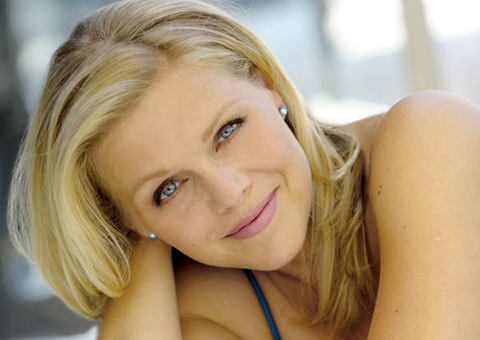
Christoph Prégardien – The Darker Side of Love

The Darker Side of Love – Christoph Prégardien and Daniel Heide at the Wigmore Hall

christoph-pregardien

Christoph Prégardien (tenor), Daniel Heide (piano) – Wigmore Hall, London, live on BBC Radio 3, 18 May 2015

Listening link (opens in a new window):

http://www.bbc.co.uk/programmes/b05tpryp

on the iPlayer until 17 June

Spotify

In case you cannot hear the broadcast, I have put together a Spotify playlist of most of the music in this concert, including recordings the artists have made where possible. The playlist can be found here

What’s the music?

Schubert: An den Mond, D259; Schäfers Klagelied, D121

Schubert: Erster Verlust, D226

Schubert: Rastlose Liebe, D138

Schubert: Wandrers Nachtlied II, D768

Schubert: Willkommen und Abschied, D767 (17 minutes)

Schumann: Dichterliebe, Op.48 (30 minutes)

What about the music?

The relationship between Schubert and the poetry of Goethe was long-standing, beginning in October 1814 and yielding tens of songs. Many of them are darker utterances, and the collection here enjoys the composer’s ability to cast a nocturnal scene for voice and piano seemingly at will. It also celebrates his faster, galloping songs, the singer in the saddle for an action-packed horse ride, while the sheer simplicity of shorter songs such as Erster Verlust is pure and touching.

Schumann’s famous year of song reached its creative peak in May 1840, when he wrote the Liederkreis, published as Op.39, and Dichterliebe, where he sought inspiration once again from the poetry of Heinrich Heine. The quote in the Wigmore Hall program sums it up perfectly, Schumann describing the verses as ‘short, maliciously sentimental, and written in the folk style’. They evoke outdoor scenes but also inward and often crippling emotions, the singer – and possibly the listener! – an emotional liability by the end. Schumann rescues Dichterliebe, however, through the piano postludes he provides to Am leuchtenden Sommermorgen (One bright summer morning) and the closing song Die altern, bösen Lieder (The bad old songs), attempting and largely succeeding to restore stability.

Performance verdict

Christoph Prégardien has been singing these songs (or ‘Lieder’, as we should really call them!) for a long time – he recorded most of them a while back – but he still brings keen emotion to the stage.

The silence of Wigmore Hall during a song as tense as Schumann’s Ich hab’ im Traum geweinet (I wept in my dream), the ninth of Dichterliebe’s dozen, said it all. Here was a performer creating vivid pictures from Heine’s barbed text and Schumann’s equally frosty responses to the dark side.

In Schubert, too, the steely edge of even the most youthful Goethe setting could be glimpsed, brought out in an early song like An den Mond (To the Moon) by pianist Daniel Heide, stressing the notes Schubert brings in to challenge the happier times of the song.

Schubert’s horse-riding songs, Rastlose Liebe and Wilkommen und Abschied, were adrenalin-fuelled dashes into the country, while Schäfers Klaglied brilliantly evoked both the tempest and its subsequent rainbow.

Prégardien is an unfussy singer who communicates with his audience through subtle but meaningful expression, both visually and with the use of his hands. This somehow carries over to the listener too, either in the hall or at home, part of a masterclass in how to sing these songs.

What should I listen out for?

Schubert

1:50 – An den Mond (To the Moon) A calm and seemingly contented song to begin the selection – though there are some warning signs, chiefly in the piano part, to suggest all is not well.

5:27 – Schäfers Klagelied (Shepherd’s lament) A downcast and solemn song, with a vivid depiction of a storm in its central section from the piano (from 6:55), which also somehow describes the resultant rainbow (7:13) before a return to sadness.

8:58 – Erster Verlust (First loss) A song of striking simplicity and sadness, with an aching melody where the purity of Prégardien’s tone really comes through

11:22 – Rastlose Liebe (Restless love) A song that gallops out of the blocks with its rapid movement on the piano, and the breathless voice almost struggles to keep up. Meine signs off beautifully at 12:30.

12:47 – Wandrers Nachtlied II (Wanderer’s Nightsong II) Here we can feel the stillness of a summer evening, the conditions in which Goethe scribbled the verses for this poem as he stood outside in a garden. Prégardien’s higher notes are beautifully tailored.

15:18 – Willkommen und Abschied (Greeting and farewell) Another of Schubert’s quick dashes through the text, though at the end of each verse we have a pregnant pause. Prégardien cries out ‘ihr Götter’ (‘O gods!’) at 17:17. The text at the end translates as ‘what a joy to be loved’

Schumann

The words for Dichterliebe can be found here

21:12 – Im wunderschönen Monat Mai (In the wondrous month of May) A graceful song to begin the cycle, with some beautiful top notes (the translated words ‘blossom’ and ‘desire’) that Prégardien very subtly stresses through a pause.

22:54 – Aus meinen Tränen sprießen (From my tears will spring) The spring-like openness continues, in the same key.

23:51 – Die Rose, die Lilie, die Taube, die Sonne (Rose, lily, dove) A playful song, over in a flash!

24:23 – Wenn ich in deine Augen seh (When I look into your eyes) A tender love song, that tellingly moves to the purity C major to tell of how ‘when I kiss your lips, then I am wholly healed’. There is a yearning postlude on the piano.

26:12 – Ich will meine Seele tauchen (Let me bathe my soul) Another short love song, this time with a flowing, watery piano accompaniment.

27:08 – Im Rhein, im heiligen Strome (In the Rhine, the holy river) The singer adopts a much more imposing tone to evoke the grandeur of the Rhine and the great cathedral of Cologne, where hangs an image of ‘Our beloved Lady’ – which the singer equates to that of his own love. The piano postlude is reminiscent of a Baroque aria.

29:16 – Ich grolle nicht (I bear no grudge) The text turns darker, though the musical language is still generally positive. The tenor has a heavier tone here, the voice more of a baritone in its richness.

30:49 – Und wüßten’s die Blumen, die kleinen (If the little flowers only knew) The piano matches the tenor in this flowing, limpid song – spring like in its subject matter but ultimately sad and regretful at a broken heart. This leads straight into…

32:05 – Das ist ein Flöten und Geigen (What a fluting and fiddling) A proud song but once again with a darker centre.

33:29 – Hör’ ich das Liedchen klingen (When I hear the little song) This is Heine’s poetry at its coldest, and in this brief song it gets a suitably bare response from Schumann, who then attempts some consolation in the extended piano postlude, which in reality says just as much as the song does.

35:47 – Ein Jüngling liebt ein Mädchen (A boy loves a girl) A more positive mood now – but soon the poetry turns dark as well. Schumann keeps his tongue firmly in his cheek, allowing the tenor a bit of sardonic humour and the piano a grand finish

36:47 – Am leuchtenden Sommermorgen (One bright summer morning) A beautifully simple song – though now the mood of sadness is taking hold with greater certainty. Again we have a longer piano postlude, the pianist reflecting the text through music and trying to console.

39:38 – Ich hab’ im Traum geweinet (I wept in my dream) Schumann’s use of silence here is striking and altogether ominous. Prégardien gathers the power of the final verse, the texture sparse as can be, until the music stops abruptly.

42:25 – Allnächtlich im Traume (Nightly in my dreams) An elusive song – another dream but one the poet cannot really remember – which possibly explains why Schumann leaves the music sounding half-finished at the end.

43:54 – Aus alten Märchen winkt es (A white hand beckons) There is greater optimism in this song, using the upper register of the piano for the first time in a while, but once again Heine insists on an ending that takes away the potential for happiness. Schumann’s music rescues this in the postlude however!

46:39 – Die alten, bösen Lieder (The bad old songs) A bit of nostalgia to finish – though this is a purge, the poet casting all his ‘bad and bitter dreams’ away in a heavy coffin. Schumann responds with gallows humour, a song that is bold and defiant in its execution but which fades away to reflection. Once again we have a piano postlude, this one even more meaningful as it tries to draw the cycle to a soft conclusion. In the right performance however, like this one, a level of bitterness remains.

Encore

53:05 – SchumannMit Myrthen und Rosen (With myrtle and roses) (the last song from Liederkreis, Op.24) This has an effortless, upward curve to the melody. Prégardien’s gestures to the audience here were beautifully observed.

Further listening

With Christoph Prégardien demonstrating his almost unparalleled abilities in Schubert, here is a Spotify link to a recent recording of him singing the great Schubert song cycle Winterreise. Again this is music on the dark side, but is greatly inspired at that. Texts can be found http://www.recmusic.org/lieder/assemble_texts.html?SongCycleId=47″>here and the playlist is here

For more concerts click here
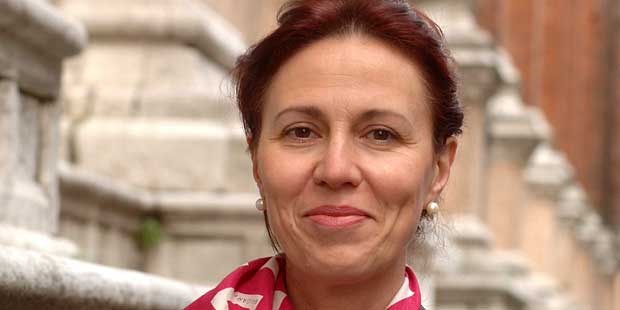
Sara Mingardo sings Italian Laments

Sara Mingardo – Italian Laments at the Wigmore Hall

sara-mingardo

Sara Mingardo (contralto), Ivano Zanenghi (theorbo), Giorgio Dal Monte (harpsichord) – Wigmore Hall, London, live on BBC Radio 3, 11 May 2015

Listening link (opens in a new window):

http://www.bbc.co.uk/programmes/b05tpryp

on the iPlayer until 10 June

Spotify

In case you cannot hear the broadcast, I have put together a Spotify playlist of most of the music in this concert, including recordings the artists have made where possible. The playlist can be found here

What’s the music?

Monteverdi (1567-1643): Quel sguardo sdegnosetto; Voglio di vita uscir, voglio che cadano (8 minutes)

Frescobaldi (1583-1643): Toccata Seconda (5 minutes)

Andrea Falconieri (1586-1656): Vezzosette e care pupillette; Non più d’amore (4 minutes)

Giacomo Carissimi (1605-1674): Deh memoria e che più chiedi? (7 minutes)

Alessandro Piccinini (1566-c1638): Toccata XX; Aria di sarabanda in varie partite (6 minutes)

Salvatore (early 1600s -1688): Allor che Tirsi udia (9 minutes)

Barbara Strozzi (1619-1677): L’Eraclito amoroso (6 minutes)

What about the music?

First, a bit about the voice and instruments in this concert. Sara Mingardo is a contralto singer – that is, lower than a soprano and a little bit lower and richer in colour than a mezzo-soprano. Think of a boy alto, add femininity and a lot of body to the sound and you have something approaching her voice.

In this concert she is accompanied by Giorgio Dal Monte, playing a harpsichord from the late seventeenth century, and Ivano Zanenghi, playing a theorbo. The theorbo is a variation on the lute – which, in case you didn’t know, is a very early equivalent to the guitar. This particular instrument is a recreation and has no fewer than thirteen strings! They are spread over two different frets, rather like the instrument pictured here (photo from Early Music Studio:

theorbo

The music itself is all from the Renaissance and early Baroque periods in Italy. The only composer names likely to be familiar to listeners are Monteverdi and Frescobaldi, both pioneers in their expressive vocal music. The trio perform the music all together, save for a harpsichord solo (the Frescobaldi) and two pieces for the theorbo by Alessandro Piccinini. As you will hear the styles are particularly expressive, particularly in the laments – which most of these songs are.

Performance verdict

If you have yet to see Sara Mingardo perform then I urge you to do so without delay. Everything about her concerts draws the audience in, from the carefully thought out programs to her irresistible performance manner. Everything is delivered with musical freedom, and – text allowing – a modest yet winning smile.

Yet of course the voice is the reason for experiencing Mingardo’s charms in person, for she has an incredibly rich sound especially to the lower register that is rare among singers. Even better, she knows just how to control it.

This concert was beautifully put together and executed, and the laments carried an almost painful intensity that reduced the Wigmore Hall audience to silence. They were countered by airy, improvisatory pieces for harpsichord (Frescobaldi) and theorbo (Piccini) which were stylishly played by Giorgio Dal Monte and Ivano Zanenghi respectively.

This was very much a voyage of discovery, a reminder of just how intense Italian vocal music of the Renaissance and early Baroque periods can be.

What should I listen out for?

Monteverdi

1:34 – Quel sguardo sdegnosetto (A message) This song begins with an amiable figure on harpsichord and theorbo. The rhythms have a gentle lilt and the voice, rich and luxurious, uses melisma – which is a form of writing where a single word is spread over a large number of notes.

4:32 – Voglio di vita uscir, voglio che cadano (I want to leave this life, if by loving you I have offended you) A sprightly second song, cheery in spite of its subject matter. Towards the end it takes on sombre colouring as the harpsichord is replaced by the softer tones of the theorbo, and Mingardo sings ‘S’apre la tomba, il mio morir t’annutio’ (‘The tomb opens, I proclaim my death to you’). The control from Mingardo at the end is heartfelt and exquisite.

Frescobaldi

10:58 – This solo harpsichord piece becomes progressively more elaborate as it progresses. It is not rigid in tempo, which makes it sound improvised, and eventually the writing for right hand sounds like a waterfall of notes.

Falconieri

17:00 – Vezzosette e care pupillette (Bewitching and beloved sparkling eyes) Quite an elaborate theorbo introduction, and Mingardo uses a swooning vocal style here, especially when the text is repeated.

19:48 – Non più d’amore (No more wooing) Another very expressive though song which finds Mingardo in the upper part of her range.

Carissimi

21:26 – Deh, memoria (Say, memory) – a slow introduction reveals the rich tone of Mingardo’s lower range. This is a profound song written in the pain of another’s death, and Mingardo gives a powerful and emotive performance, shadowed beautifully and stylishly by the harpsichord and theobo. The song is especially profound at the end, returning to the singer’s lower range.

Piccinini

29:26 – Toccata XX. This begins almost as though the player was tuning up, with a very relaxed approach. Piccinini makes use of the lowest notes on the theorbo, which gives the music an expansive quality.

31:54 – Aria di Sarabanda in varie partite. The Aria sets out a short loop of music over which there are progressively more complicated variations, rather in the vein of Pachelbel’s Canon which was to follow a number of years later. Some of the variations go up quite high on the instrument.

Salvatore

36:25 – All’hor che Tirsti (When Thyrsis heard) In this declamatory song Sara Mingardo seems to be shaking a fist at the ‘Crudi fati, astri malvagi’ (‘Cruel fates, evil stars’). The accompaniment is initially for harpsichord only, the theorbo making a notable appearance at asdr when Mingardo sings ‘Et tu, caro ben mio’ (‘And you, my dear beloved’). Then she alternates between anger and a deeply mournful tone, with which this extremely expressive song ends.

Strozzi

44:36 – L’Eraclito amoroso (Hear, lovers) There is a florid accompaniment to more cursing of bad fortune. The sobbing nature of melodic writing when Mingardo sings ‘I singulti mi sanano’ (‘Sobs are my healing balm’) is striking. Towards the end Mingardo sings ever so slightly flat, deliberately accentuating the sorrow felt by the subject of the song, before finishing on an extremely low note.

Encore

52:31 – Tarquinio Merula (1594-1665) – Folle e ben che si crede. A more relaxed air to this encore, the voice floating on the higher notes. There is a lovely transition where Mingardo arcs gracefully up to a higher note at the end.

For more concerts click here

Elias String Quartet and Simon Crawford Phillips – Messages Old and New

Messages old and new – the Elias Quartet give an Emily Howard world premiere, and are then joined by Simon Crawford Phillips for Schumann’s Piano Quintet

elias-quartet

Elias Quartet (Sara Bitlloch, Donald Grant (violins), Martin Saving (viola), Marie Bitlloch (cello), Simon Crawford-Phillips (piano) – Wigmore Hall, London, live on BBC Radio 3, 4 May 2015.

Listening link (opens in a new window):

http://www.bbc.co.uk/programmes/b05qypn8

on the iPlayer until 9 June

Spotify

In case you cannot hear the broadcast, here is a link to a recording of the Schumann (Howard’s pieces is a world premiere so not yet recorded). The Schumann is played here by Sviatoslav Richter and the Borodin String Quartet:

Spotify

What’s the music?

Emily Howard Afference (2015) (22 minutes)

Schumann – Piano Quintet (1842) (32 minutes)

What about the music?

Emily Howard’s new piece Afference, a substantial work for string quartet, is based on a physiological term to describe the way in which the brain processes our experiences of the world. Howard herself has a degree in maths and computer science, something that might lead an audience to expect a very calculated approach to composing music. This is not entirely the case though, as the biography on Howard’s own website suggests.

Afference appears to be her first work for string quartet, commissioned by the Elias Quartet themselves. It joins a canon of pieces that range from large-scale orchestral works (Axon and a symphony called Magnetite) to smaller scale compositions for clarinet and piano.

Schumann’s Piano Quintet was written in 1842, when he was still giddy with love for wife Clara. She was the dedicatee of this work, but as the BBC Radio 3 announcer Georgia Mann details it was first performed with none other than the composer Felix Mendelssohn at the piano.

Performance verdict

A fine concert, with concentrated playing from the Elias Quartet of what is on two listens an engaging new work for string quartet. Emily Howard writes in a distinctive style that the Elias Quartet understand, and the colours she achieves are consistently interesting and imaginative. It helps to know the program for the piece, as there do indeed seem to be a lot of messages transmitted in 22 minutes. Some of them are very nervy, though ultimately the piece feels of a positive nature.

The Schumann receives an excellent performance, the happiness of the first, third and final movements a joy to behold – while the second movement, if a tiny bit slow in its central section perhaps, is uneasy and in need of consolation this ultimately provides. Simon Crawford-Phillips plays brilliantly, with authority but also ensuring the strings are heard at all times. His nimble finger work in the third movement scherzo is especially impressive.

What should I listen out for?

Emily Howard

1:20 – a busy start with all four instruments playing frenetically then cuts to a section with a very small voice, doing battle with the quartet.

5:55 – the instruments all take a melodic line that uses portamento (sliding from one pitch to another) before a more intimate phrase starts to dominate. At this point the instruments are close together in pitch.

8:09 – a much slower section, with an intense violin pitch that grows into what sounds like a sorrowful lament, while the other three instruments give softly breathed harmonies. This leads on to some feverish activity, Howard’s nervous messages transmitted at great intensity.

13:17 – As the second movement starts there is a large gap between the instruments – violins on high and cello down below. The lack of a key centre brings to mind some of the quartet writing of Schoenberg, though Howard’s writing has more pitch-related implications in the cello’s continual return to its low ‘D’.

16:50 – a striking passage for violin with upwards phrases, in which Howard seems to be reaching for higher plains

18:51 – the instruments stick closer together again, but at 19:53 the violin shoots out a much higher phrase. The harmonies still make the music sound quite uneasy, as if in a state of dread.

22:20 – a piercing line on the violin returns to the pitch of D, before the rest of the quartet finish the piece with a short series of comments.

Schumann

26:23 – the first movement begins with a wonderfully positive outpouring of music from piano and strings together. The theme itself is a surprisingly catchy one

27:35 – a lovely tune makes itself known on the cello, Schumann at his most romantic with the music flowing beautifully onwards. This tune is then picked up with a counter melody from the violin.

32:03 – now in the centre of the development section, the music gets more turbulent, the piano lines swirling around those of the string quartet, but then we switch to a triumphant reprise of the opening music at 32:45.

35:33 – the subdued second movement begins. This is a form of funeral march and it has a halting tune, played by both strings and piano with short notes. This is complemented by a much sweeter episode of music that begins at 37:19, still in the spirit of remembrance but with a positive approach. The sombre first theme returns once again at 38:56.

40:10 – a faster episode begins, led by the piano, the strings with much heavier lines alongside – but still the tune persists from the viola at 41:00, picked up by the violin – and the sweeter theme also makes a reappearance (41:49).

44:16 – the third movement, a Scherzo, begins with fizzing interplay led by the piano. Schumann again finds music of great positivity and energy. At 45:34 a second section begins, in the far-removed key of F sharp major, before the main scherzo returns with just as much irrepressible energy at 46:16. At 46:58 a new section is introduced, again with plenty of energy! The main theme returns at 48:02, carrying through to an emphatic finish at 48:57.

49:04 – the last of the four movements begins, and again the energy levels are up – though here we begin in a minor key that briefly recalls the second movement march. Quickly the music moves to E flat major – the ‘home’ key of the piece. The music then becomes more reserved and secretive.

51:24 – the first theme comes back, though the music is still in a minor key and still feels a long way from ‘home’. Gradually though the music gets greater presence in the ‘home’ key, and by the time we get to 54:16 it is rooted here, and sweeps to a decisive finish by way of a fugue, instigated by the piano at 54:41 and rounding off at 56:28.

Want to hear more?

Following the contrasting nature of the two pieces in this concert, the suggested further listening looks to progress from the Howard with Schoenberg’s String Quartet no.2. This famously has a last movement that sets the text ‘I feel the air from another planet…’, sung by a soprano and said to consciously signal the composer’s move away from writing in a particular key (tonality). Here the words are sung by Susan Narucki, in conjunction with the Schoenberg Quartet.

After the Schumann a rewarding next port of call is the Piano Quintet by Dvořák, his second in the form – and once again played by Sviatoslav Richter and the Borodin Quartet. The playlist can be found on Spotify here:

For more concerts click here

The ever-flexible Bach – Antoine Tamestit at Wigmore Hall

Antoine Tamestit performs two solo Bach suites and a new commission from Olga Neuwirth

antoine-tamestit

Antoine Tamestit (soprano) – Wigmore Hall, London, live on BBC Radio 3, 27 April 2015.

Listening link (opens in a new window):

http://www.bbc.co.uk/programmes/b05s3dhx

on the iPlayer until 28 May

Spotify

In case you cannot hear the broadcast, I have put together a Spotify playlist of the Bach suites played by Tamestit himself. Because the piece by Olga Neuwirth is so new – this was in fact the first performance – it has not been recorded yet. Here is the link to the Bach:


What’s the music?

J.S. Bach – Solo Cello Suite no.1 (arranged for viola) (1724, 15 minutes)

Olga Neuwirth – Weariness heals wounds (2014, 11 minutes)

J.S. Bach – Solo Cello Suite no.3 (arranged for viola) (1724, 19 minutes)

What about the music?

One sign of a great composer is surely the effectiveness of his music when heard on any instrument, not necessarily the one it was written for. J.S. Bach ranks among those whose music is incredibly versatile – Toccata and Fugue, Ave Maria and Sheep May Safely Graze just for starters! – and all have been successful in any number of guises.

So it is to a lesser extent with the solo cello suites, which transcribe for other stringed instruments – guitar and viola – very well.

The Austrian composer Olga Neuwirth has written for Tamestit before, in 2009 – a concerto for viola and orchestra. This much more private utterance, a response to the saturation posed by new media and some thoughts on how we can get away from that, takes a few quotations from the Concerto.

Performance verdict

These are excellent Bach performances, from a performer who is notable both for his technical command and expressive input. Tamestit ensures the Bach suites really dance, by taking pretty fast speeds but also giving plenty of air to the music. It suits the faster movements down to the ground, while the slower Sarabandes take time out for reflection.

The new piece Weariness heals wounds also gets a fine and concentrated performance. Tamestit clearly believes in this composer, and in the course of the ten minutes it is easy to hear the themes of frustration and saturation coming to the surface.

What should I listen out for?

Bach – Cello Suite no.1

1:37 – being up an octave from the cello original replaces the mellow sound of the lower instrument with a brighter viola. It works well as the dancing figures of the Prelude begin to work their magic. Towards the end an obsessive figure breaks out into a sunny finish.

3:42 – an Allemande, the first of the dance music, is relaxed and airy, and Tamestit adds to this feeling by slowing down at times in the more reflective passages. It is an effective technique.

7:50 – the Courante is a bit more lively, suggesting a quicker step in the dancing feet. Tamestit almost loses his way in the first half, with what seems like a memory lapse, but also adds some attractive ornamentation to Bach’s melodies, which is the performer’s prerogative here.

10:14 – the lovely Sarabande, a slower dance. Tamestit doesn’t let the bow rest on the string for too long, so the notes seem a bit shorter, and as a consequence they are lighter.

12:45 – the lively pair of Minuet begins, with a bracing first followed by a solemn second (beginning at 13:54 – and taken pretty fast by Tamestit here). As is customary in these suites, we hear the first Minuet again (14:45)

15:22 – the final movement in these Bach suites is always a Gigue, a dance of French origin in triple time that usually signs off the suite with some gusto. That is definitely the case here!

Neuwirth

18:33 – quite a biting start, with two strings playing pitches very close together that sound like quarter tones. The mood is tense and – as in the title – given with a certain weariness.

The jarring notes return again, suggesting that the new media is grating somewhat? Then a more aggressive section begins, where the bow is positioned near the bridge of the instrument to create a scratchy sound. Discomfort abounds!

At 25:15 a semblance of a tune begins, but it is uneasy. Then at 26:04 the ‘G’ pitch asserts its importance before a series of virtuosic and sweeping runs. Again the use of quarter tones is in evidence, and when the melodies get longer Tamestit makes the viola sound bluesy and mournful. The piece ends with a sharply plucked note.

Bach – Cello Suite no.3

31:19 – there is a nice and slightly mischievous approach in the stop-start Tamestit applies here, with grand gestures followed by quite hurried phrases. It works well as the Prelude progresses through a number of different but utterly logical keys, before going through a quick series of movements over a ‘pedal’ note, after which it works to a big finish.

34:11 – quite a bouncy Allemande this one, genial too.

37:47 – a Courante with plenty of energy, bounding out of the blocks. If you were dancing to this one – the cello suites do after all have dance movements – you’d have to be pretty quick on your feet!

40:24 – a grand Sarabande, which might not be as weighty in the hands of the viola as it is on the cello, but which still makes a strong impression. As so often in the slower dances there is time for intensely concentrated thought.

43:44 – a genial pair of Bourrées comes into view – another dance Bach used for some of his solo instrument works. Bach often writes one in a major key but contrasts it – as here at 45:07 – with a more reserved one in the minor key. Once again the first Bourrée is repeated, coming back at 46:22.

47:06 – the Gigue swings into action with an energetic burst. There is some quite dissonant double stopping too (more than one string played at once)

Encore

Kurtág – Perpetuum mobile, one of the Signs, Games and Messages

51:19 – this piece is little more than a gruff introduction and a few jarring notes lasting little more than a minute! Yet as always with Kurtág, whose pieces are famously brief but incredibly concentrated, it takes longer to write about his music than to listen to it.

Want to hear more?

Not many composers wrote for the viola on its own, but the composer Max Reger – for whom Bach was a hero and inspiration – wrote three suites. They can be heard on Spotify here as part of an album of his chamber music for viola, played by Nobuko Imai, who is accompanied by Ronald Brautigam in the substantial Sonata for viola and piano. The album can be found here

For more concerts click here

Miah Persson – songs for voice, violin and piano at the Wigmore Hall

Miah Persson, Malcolm Martineau and Birgit Kolar perform works by Handel, Donald Waxman and Richard Strauss

miah-persson

Miah Persson (soprano), Malcolm Martineau (piano) and Birgit Kolar (violin) – Wigmore Hall, London & live on BBC Radio 3, 20 April 2015.

Listening link (opens in a new window):

http://www.bbc.co.uk/programmes/b05qypn8

on the iPlayer until 21 May

Spotify

In case you cannot hear the broadcast, I have put together a Spotify playlist of the songs sung by Miah Persson. She has not recorded any of them as yet, so I have selected suitable alternatives. The playlist can be found here:


What’s the music?

Handel – 3 German Arias (1724-1727) (17 minutes)

Donald Waxman – Lovesongs (1989) (14 minutes)

Richard Strauss – Violin Sonata, Second movement – inspiration (1887) (8 minutes)

Richard StraussSeptember and Beim schlafengehen (from the Four Last Songs)(1948) (10 minutes); Morgen (1894) (4 minutes)

What about the music?

The combination of voice, violin and piano is not heard much in the concert hall these days, but here Miah Persson, Birgit Kolar and Malcolm Martineau constructed a program of compositions using the forces spanning 265 years. A little imagination was required on the part of the listener – particularly in two of the three Strauss songs where the violin was introduced – but otherwise the combination worked well.

Handel’s three German Arias are part of a group of nine he wrote while setting poetry by his friend Heinrich Brokes – and they are his only settings in the language. Each is scored for a singer, a treble instrument (the violin in this case) and ‘continuo’ – which is the group of people supplying either bass line, chords or both. In this case Malcolm Martineau’s piano comfortably fulfilled that discipline.

Donald Waxman celebrates his 90th birthday this year, inviting comparisons with Elliott Carter, the grandest of old men of American music. Waxman’s best known musical currency is the song, and this group of four love songs contains poems about love by Rainer Maria Rilke, Robert Herrick, an anonymous author and Thomas Hardy.

Finally three songs by Richard Strauss, introduced by the luscious, Romantic harmonies of the second movement of his Violin Sonata. Two of the composer’s last songs are chosen as well as an early song, Morgen, which was a wedding present to his wife.

Performance verdict

Miah Persson has a rather special voice, and heard in person at the Wigmore Hall it could easily melt the most stubborn heart.

This program was a slightly curious one, but made sense in the way it was presented. Handel’s word painting was brought to life by Persson in three of the Nine German Arias, which she sang beautifully – restrained but elegant. Meanwhile Donald Waxman’s rich Loveletters offered a more obviously Romantic view of the world and were passionately sung.

The violin was a helpful counterpart here, but was not always at its most useful in the Strauss songs, picking up elements of the orchestral part for which it was written, and ensemble with Martineau was just occasionally scrappy at the beginning and end of songs.

Two of Strauss’s Four Last Songs felt a bit bereft without the others, and despite Malcolm Martineau’s superhuman efforts there was too much going on in the piano version. Morgen, however, was a sumptuous finish to the program.

What should I listen out for?

Handel

1:49 Das zitternde Glänzen der spiegelden Wellen (The shimmering gleam of dancing waves)

This attractive aria begins with a bright violin solo, before a similarly bright entrance from the soprano. The two instruments Martineau’s very sensitive playing brings out the countermelodies when they are needed.

7:53 In den angenehmen Buschen (In these pleasant bushes, where light and shade intermingle)

A shadow falls over the music initially, with a solemn violin solo presumably painting the shade of the text. The bright soprano soars beautifully overhead, however, and finds a rather lovely major key at 9:01, then a brief but really stunning piece of virtuosity to close at 12:11.

13:00 Meine seele hort ihm Sehen (My soul hears through seeing)

‘How all things rejoice and laugh’ is the text during this aria, and Persson seems to be doing just that, her bright voice complemented perfectly by the relative restraint from Kolar and Martineau. This aria, as the BBC Radio 3 announcer Sara Mohr-Pietsch observes, is full of the joys of spring.

Waxman

20:07 Lovesong (Rainer Maria Rilke) – this piece is just for voice and violin and has a curiously exposed feeling, right from the opening notes from the violin. Kolar plays double stopped (more than one note at once) until Persson glides in, at which point she largely switches to a single note. The tonality is often elusive but the song is carefully thought.

23:57 The Mad Maid (Robert Herrick) – the two instruments begin with unhinged figures that threaten to settle into a busy, Stravinsky-like rhythm, with plenty of syncopations – yet the song feels beyond reach, rather like the mind of the maid, right through to its colder conclusion.

28:16 Nocturne (Anon) – a more obviously romantic song. The close interplay between violin and piano leads to a slow, sonorous melody from the singer. There is a much sweeter aftertaste to this encounter.

32:04 A Bygone Occasion (Thomas Hardy) – a festival air to the last song through the busy piano line, with some jazzy elements in the exchanges with violin. Again Persson’s voice is imperious, and joyful too.

Richard Strauss

35:20 – Violin Sonata, Second movement – an improvisatory and rapturous movement for violin and piano, exploring rich harmonies and melodies. The piano part is particularly full-bodied, as though Strauss were writing for a miniature orchestra. A choppy central section introduces some turbulence that rights itself for a return to the main theme.

43:37 – September from the Four Last Songs­ – this may be music of an old man (Strauss was 84 at the time of composition) but it is clearly a man who has enjoyed a good life. Persson sings with real passion, and the note where she comes back in at 45:07 is worth hearing several times!

48:06 – Beim schlafengehen (When falling asleep)­ – the sleep here of course is the ultimate, end-of-life sleep – but Strauss paints a contented picture, as does Persson – though the piano part has a job rendering all the orchestral detail with just two hands! The violin arrives to help at 49:44, upon which the soprano becomes more and more powerful, the vocal line sweeping upwards as though reaching for heaven.

Encore

54:09 – Morgen (Morning) – one of Strauss’s most celebrated songs, and in the intro the listener can almost imagine the sun hovering at the horizon, ready to break through and begin the day. With it comes an atmosphere of intense calm, taken up by Persson.

Want to hear more?

During the Waxman in particular I was put in mind of the songs of Samuel Barber and Aaron Copland, both found on a wonderful disc from the soprano Barbara Bonney, accompanied by none other than André Previn. It can be heard on Spotify here

For more concerts click here