Wigmore Hall Portrait Gallery – Christiane Karg and Gerold Huber

Wigmore Hall Portrait Gallery – Christiane Karg and Gerold Huber perform an intricate sequence of portraits of literary figures by Wolf, Brahms, Richard Strauss, Hahn and Duparc
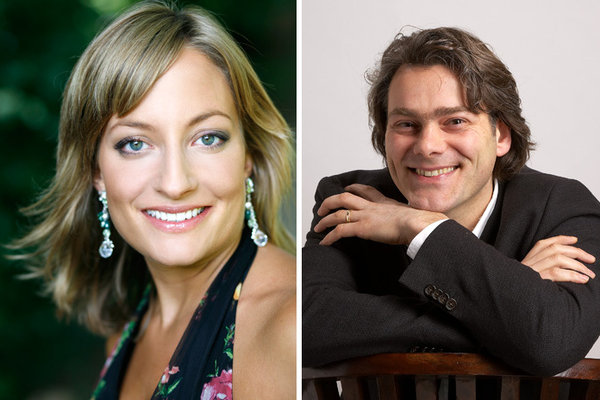
christiane-karg-gerold-huberChristiane Karg and Gerold Huber – Wigmore Hall, live on BBC Radio 3, 9 February 2015. Photos © Steven Haberland / Albert Lindmeier

Listening link (opens in a new window):

http://www.bbc.co.uk/programmes/b051zyhb

on the iPlayer until 8 April

For non-UK listeners, this Spotify playlist is available:

For those unable to hear the broadcast I have put together a Spotify playlist. Christiane has recorded the Strauss songs but nothing else from the program, so I have chosen suitable available versions:

What’s the music?

Wolf4 Mignon Lieder (1888) (15 minutes)

Brahms and Richard Strauss – Ophelia Lieder (interspersed – the music is Brahms’ 5 Ophelia-Lieder (1873) and Strauss’s 3 Ophelia Lieder Op.67 (1918) followed by Saint-SaënsLa mort d’Ophélie (1857) (14 minutes in total)

Hahn – 3 songs (Lydé (1900), A Chloris (1916) and Séraphine (1896) (8 minutes)

Duparc – 2 songs (Phidylé (1882), Romance de Mignon (1869) (9 minutes)

What about the music?

wigmore-portraits
Ophelia by John Everett Millais (1852) is part of the Tate Gallery collection. His painting influenced the image in Kenneth Branagh’s Hamlet.

This is a really well chosen program from Karg and Huber, justifying the singer’s burning of the midnight oil (in the announcer’s anecdote!) to come up with some vivid character portraits that draw the casual listener in through the links between the songs. This is surely how a song recital should be structured.

Thanks to their enterprise we get an interesting blend of Romantic Lieder – that is, nineteenth century song writing that is much more obviously expressive. German composers are strongly represented, beginning with Wolf’s four settings of Goethe, and his poems on the tragic figure of Mignon.

Then our gaze turns to Ophelia, by way of five early Brahms Lieder and three late, eccentric interpretations by Richard Strauss – before a French alternative from Saint-Saëns.

Finally the heady fragrance of three sublime songs from Hahn and two more substantial, meaty efforts from Duparc clinch a consistently engaging recital.

Performance verdict

On this evidence – listening on the radio rather than in the hall – Karg and Huber are ideally matched. Their delivery is especially emotive during the Wolf, where the soprano inhabits a lot of the distress and strife handed out to Mignon.

It is a great idea to fuse the portraits of Ophelia in this way, and anyone approaching Brahms songs for the first time would be surprised at the brevity and simplicity of them. They contrast nicely with the Richard Strauss examples, where Karg shows a lot of vocal agility without ever losing control.

The French songs are sumptuous, especially the Hahn, throwing open the doors to let in some Spring light.

What should I listen out for?

Wolf

The words for these songs can be found here

1:55 – Heiss mich nicht reden (Bid me not speak) – the first Mignon setting moves in unexpected harmonic directions, never really sure of itself as Mignon seeks peace ‘in the arms of a friend’. Judging by the piano postlude this is not found.

5:04 – Nur wer die Sehnsucht kennt (Only those who know yearning) – a sombre minor-key opening from the piano.

7:25 – So lasst mich scheinen (Let me seem to be an angel) – a cold piano sound and a distracted vocal. Again the harmonies move restlessly, as does the melody, the song in a dream state but not at rest either.

10:47 – Kennst du das Land (Do you know the land)– a rather more positive outlook in this relatively relaxed song until a sudden outburst from the piano, which on its second appearance follows a particularly fraught passage from the soprano.

Brahms / Richard Strauss

The words for the Brahms can be found here, and for the Richard Strauss here

18:57 – the first of five very brief Brahms songs – this one a thoughtful melody with singer and piano together.

19:42 – the second Brahms song, a mere 20 seconds!

20:06 – the first Strauss song inhabits a weird world of a piano part seemingly cut loose from its moorings, and a melody that doesn’t have an obvious resting point. Mysterious but intriguingly so.

22:37 – the third Brahms song, a much brighter affair.

23:12 – the second Strauss song trips along in a state of high agitation but is perhaps too short to make a sustained impact.

24:44 – the fourth Brahms song, another incredibly brief number – but beautifully delivered here.

25:32 – the fifth Brahms song – even though it is a minute long there is still a distinctive melody here.

26:49 – the third Strauss song, and a deeply mysterious one that casts its spell immediately through the piano line, broken momentarily by outbursts in the middle and at the end.

Saint-Saëns

29:58 – an urgent song from the French composer, with the high soprano voice doubled by the left hand of the piano.

Hahn

The words for the Hahn songs are to be found here

35:04 – Lydé – a much more positive outlook is immediately evident in this song, with an open air texture and bright vocal. There is a grand piano postlude, and what sounds like a wrong note.

37:50 – A Chloris – a twinkling piano introduction has a melodic ornamentation that takes its lead from Bach’s AIr on the G string before the soprano arrives in a lower register. A contemplative song, one of Hahn’s very best, this is beautifully sung by Karg. The interaction with the piano is ideal.

40:33 – Séraphine – a calm and radiant atmosphere runs through the third Hahn song.

Duparc

The words for the Duparc songs can be found here

43:28 – Phidylé – Karg sounds imperious in her control of the fuller melody that makes the second part of this song. The exotic musical language is very much in thrall to Wagner, and reaches its peak with high notes and turbulent, stormy piano writing.

48:15 – Romance de Mignon – another perfumed song, but this is an early song suppressed by the composer. Duparc writes so well for the voice.

Encore

54:00 – Schubert’s Gretchen am Spinnrade – going back to the first composer to write about the ‘mad woman’ Mignon, as Karg describes her. Huber shapes the piano part superbly under Karg’s urgent vocal.

Want to hear more?

It is difficult to suggest another step after such an intriguing and well-thought program, but underneath the songs of on the Spotify link above are further possibilities – including Wolf’s remarkable Prometheus, Brahms’s Four Serious Songs, in a legendary recording from Jessye Norman, and to finish some more Duparc.

For more concerts click here
Signum Quartet – Late Beethoven

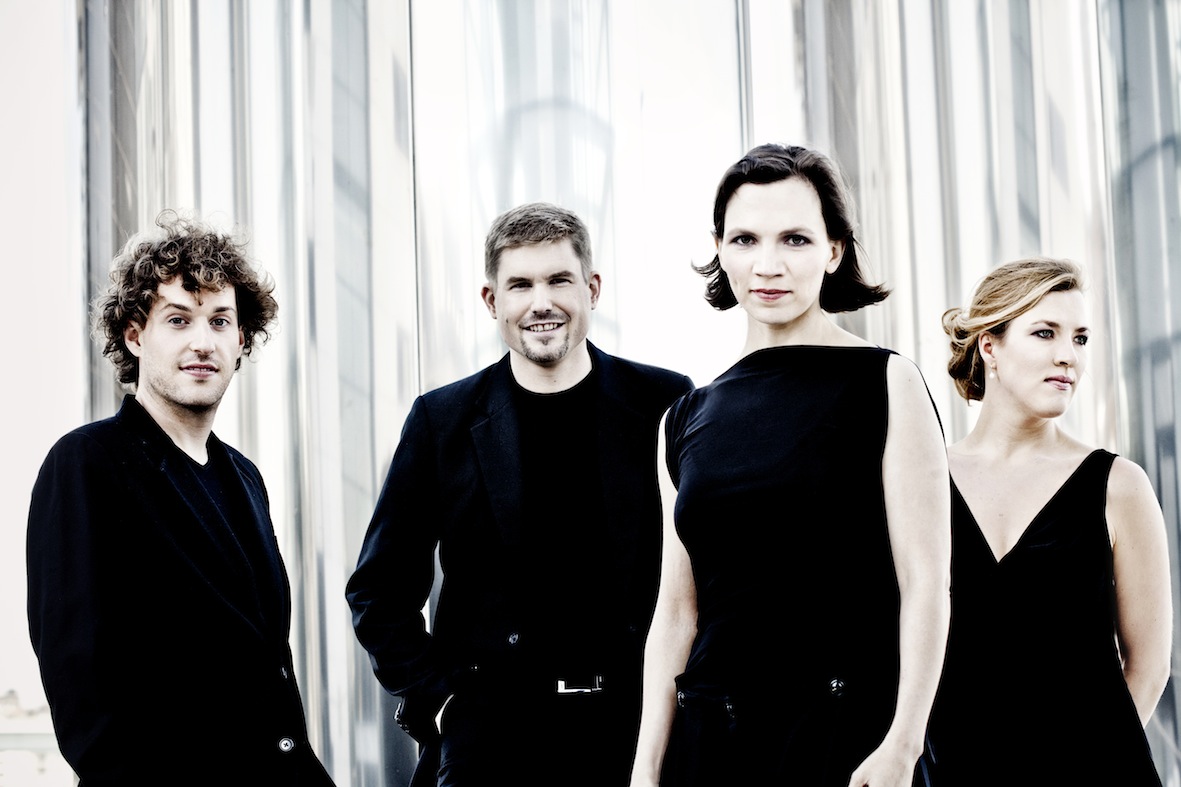
The Signum Quartet take on Beethoven’s massive B flat major string quartet Op.130, complete with Grosse Fuge

signum-quartet

Louis Schwizgebel – Wigmore Hall, live on BBC Radio 3, 23 February 2015

Listening link (opens in a new window):

http://www.bbc.co.uk/programmes/b053zy7y

on the iPlayer until 31 March

Spotify:

For those unable to hear the broadcast I have put together a Spotify playlist. The Signum Quartet have not recorded this repertoire, so I have chosen an alternative version by the Artemis Quartet:

What’s the music?

beethoven
Beethoven – String Quartet in B flat major, Op.130 – including Grosse Fuge (1825) (47 minutes)

What about the music?

If this is your first venture into listening to a Beethoven string quartet, then prepare to be overwhelmed! I mean that in the best possible way, because this is one of Beethoven’s very biggest works, especially when performed with the massive final movement Grosse Fuge at the end.

Even now, nearly 200 years on from when he wrote them, Beethoven’s late string quartets are forward-looking works of wonder. This B flat quartet, one of five such works published towards the end of the composer’s life, is a remarkable work that still gets musicologists hot under the collar with debate, especially when the Grosse Fuge is taken into account.

Beethoven wrote the quartet in 1825 for Prince Nikolai Galitzin of Russia, an amateur cellist. His publisher suggested a slighter finish than the Grosse Fuge, and Beethoven obliged with a shorter and more amicable substitute. This was because the great finale was so substantial and so unusual in its musical language that it inflated the work to a daunting 50 minutes, out of the range of audiences and players alike, and presented them with an incredibly challenging finish. Today’s audiences are different, of course (not necessarily better!) and often warm to the thrill of a work that has not just this at the end, but also the tiny second movement Presto, a helter-skelter piece of music that is done in just over two minutes, and the heart-melting Cavatina, the fifth movement.

This part of string quartet has been sent into space, a recording from the Budapest String Quartet part of a record loaded onto both Voyager space probes. So any alien that happens to possess a record player will be able to hear the Cavatina, presumably as their first experience of Beethoven!

Performance verdict

The Signum Quartet give a keenly thought performance here, though I did wonder on occasion if they could have played a little closer to the edge, sacrificing a little control for out-and-out roughness, so as to catch Beethoven’s invention and daring.

That said there are many fine things here – the Cavatina especially, lovingly played as though it is the slow movement of an early 20th century symphony. The third movement is lovely too, given an affectionate reading. The Grosse Fuge is very clearly played, but arguably needs more rough-hewn passion. That said, nobody attending the Wigmore Hall on this occasion would have been disappointed with the standard of performance!

What should I listen out for?

First movement (marked Adagio, ma non troppo – Allegro (Slow but not too much – fast))

3:24 – a softly voiced slow introduction leads to a stop-start fast movement from 4:24, with some excitable faster passages contrasted by pauses for thought. The music is often busy, Beethoven passing ideas between instruments. The first section is repeated at 7:16.

9:40 – the music alights in the remote key of D flat major, led by the chromatic line of the cello. This is not what is supposed to happen, but Beethoven was never one to follow rules. It sounds so inevitable here!

Second movement (marked Presto (very quick))

16:41 – this is one of Beethoven’s ultra-quick, no-nonsense pieces. A bit too much ‘forward and back’ in this performance, the movement doesn’t quite feel fully formed. There is a remarkable series of motifs from the first violin (beginning at 17:54) which could easily have been written by a composer one hundred years later, so striking is its musical language.

Third movement (Andante con moto, ma non troppo. Poco scherzoso) (At a walking pace, not too fast, with humour)

18:58 – a calmer atmosphere for this movement, with a steadier foundation.

Fourth movement (Alla danza tedesca. Allegro assai)(German dance. Faster)

25:56 – music of grace and poise for the fourth movement, its triple time used by Beethoven as a stately Minuet.

Fifth movement (Cavatina)(a short and simple song)

29:28 – the Cavatina, Beethoven said, moved him more than any other single piece of his own music. It is played here with a reverential hush, and as the concert note from Paul Griffiths says, the music approaches the Romanticism of Mahler in the depth and richness of its harmonic workings. It is beautifully and tenderly played here.

33:04 – the Cavatina moves into a more thoughtful section, the first violin seemingly talking to itself while the other three chug sympathetically in accompaniment. Beethoven quickly moves back from this to the home key, however.

Sixth movement (Grosse Fuge)(Grand fugue)

35:58 – music of remarkable tension and bite to begin the massive Grosse fuge, which starts with an angular introduction from the whole quartet before we hear the music for the fugue itself (36:47). After the serenity of the Cavatina the sheer drama of this music is remarkable.

What is also remarkable is that Beethoven is executing all manner of clever musical tricks, all relating to the main theme and different variants / transcriptions of it – but as a listener you don’t necessarily need to note that, and can appreciate the unfolding drama with the string players pushed to the limit, both technically and emotionally. Towards the end it really feels as though the music is breaking up under its own weight and strain, before Beethoven brings it together to force an ending of togetherness and ultimately conviction.

Want to hear more?

How about some more Beethoven…that isn’t quite so much of an intense experience for the brain?

It can be possible…so here are the Artemis Quartet again in three more Beethoven String Quartets – two early and one very late. The early ones, two of the set of six that were published as the composer’s Op.18, are full of good natured humour and energy, while Beethoven’s last published quartet, Op.135, is also a lighter piece of work. Here they are:

For more concerts click here

A New World in old clothes

A New World in old clothes – The Orchestra of the Age of Enlightenment, conducted by Adam Fischer, bring new life to Dvořák’s New World symphony, with Brahms’ Violin Concerto from Viktoria Mullova

oae
Viktoria Mullova (violin), Orchestra of the Age of Enlightenment / Adam Fischer – The Anvil, Basingstoke, live on BBC Radio 3, 26 February 2015

Listening link (opens in a new window):

http://www.bbc.co.uk/programmes/b0535tzx

on the iPlayer until 28 March

Spotify

For those unable to hear the broadcast, here is a Spotify link to the same program – with Viktoria Mullova’s recording of the Brahms included.

What’s the music?

Smetana: The Bartered Bride Overture (1865) (7 minutes)

Brahms: Violin Concerto (1878) (39 minutes)

Dvořák: Symphony no.9 (From the New World) (1893) (45 minutes)

What about the music?

dvorakThe composer Antonin Dvořák

This is a ‘period instrument performance’ – that is, played on instruments either from the time the music was written or before – and performed in a style audiences of the day might have witnessed. It is relatively rare for the Orchestra of the Age of Enlightenment to venture this far forward in time, for their instruments tend to be more geared towards the performance of music between 1700 and 1850.

They begin with a popular overture, a crowd pleaser – the curtain raiser for Bedřich Smetana’s comic opera The Bartered Bride. The work is something of a Czech institution, full of Smetana’s interpretations of Czech dances such as the polka and furiant. As BBC Radio 3 presenter Martin Handley says, Smetana became ‘the father of Czech nationalism’ through his patriotic and uplifting set of works for orchestra, Ma vlast (My Country), completed in 1879.

Dvořák was a Czech composer, but the action in the New World symphony takes place far from home. Always one to fill his music with good tunes, the composer turned to American heritage for a lot of his source material, declaring in the New York Herald that “In the negro melodies of America I discover all that is needed for a great and noble school of music“. Dvořák was homesick at the time, and the melancholy tinge to some of his tunes reflects that.

The symphony was commissioned by the New York Philharmonic and given its first performance in Carnegie Hall in 1893, and has been extremely popular ever since. In recent years themes from it have frequently been heard on TV, most famously when the tune of the second movement Largo was used in a Hovis advert.

In between these Bohemian classics is music by Brahms, his Violin Concerto – which, at the time of composition, was one of the biggest such works around. It was written for the Hungarian virtuoso Joseph Joachim, a composer himself – and he had considerable input into the piece, having also commissioned a concerto from Dvořák. When receiving the parts for the first time Joachim remarked on the symphonic design of the concerto, and on how difficult it was to play – even for him!

The first movement is a big unit in itself, lasting longer than the second and third put together but gripping the listener as a closely fought dialogue between violin and orchestra, both seemingly on equal terms. The third movement finale is based on a gypsy tune, and caught the eye of Paul Thomas Anderson, who chose it for the closing credits of his film There Will Be Blood.

Performance verdict

Having emphatically blown away the cobwebs with a vigorous account of the Smetana overture, the Orchestra of the Age of Enlightenment get their teeth into Brahms.

The Violin Concerto benefits from their slightly smaller numbers, and thanks to Fischer’s conducting we can really hear all the inner workings of the orchestral introduction. The pace is relatively slow at this point, but picks up when the violin enters. Mullova’s tone is lovely, though just occasionally in the first movement she is a little ‘under’ the note of the orchestra – which, given the performance is on period instruments, could even be due to the heat in the venue.

The rustic finale has plenty of swagger, enthusiastically led by Mullova, while the slow movement – which seems to go quickly here – is beautifully rendered.

For the Dvořák the lean textures of the orchestra bring out the beauty of his melodies, and also the strong sense of longing the composer felt from New York for his home. The spiritual melodies help him to express this, but Fischer also keeps the spirit of dance to the fore.

What should I listen out for?

Smetana

2:24 – a brisk and breezy introduction from the orchestra. Soon the violins take up a rushing theme, as do the violas (3:08) and then the cellos and basses. As with much of Smetana’s fast music he generates terrific energy.

Later there is a gentler passage for the woodwind, with a more ‘reedy’ sound than a modern symphony orchestra would provide. This is rudely interrupted by the drums.

The music dips and then comes back with a terrific crescendo, where it feels like the players are standing on tiptoe.

Brahms

12:08 – a smooth, ‘legato’ start to the first movement, marked Allegro non troppo (fast but not too fast). This is the beginning of a long orchestral introduction. It is a long time before we hear the violin

14:22 – a sudden injection of power from the strings, a moment of real drama in this music that prepares the way for the entry of the violin 20 seconds later.

20:08 – the violin now takes up the energetic music the strings had earlier, and this is taken up by the full orchestra. There follows a lovely unison melody at 21:27.

24:25 – the culmination of the movement, violin soaring above the orchestra.

27:45 – deep unease in the violin part as Brahms writes some very uncertain double stopping for the instrument, with mysterious lower strings, until the injection of power happens again at 28:02. This leads through to…

29:13 – the start of the cadenza, a showy section for violin alone. This is a pivotal part in any performance of the Brahms, as a large number of cadenzas from different composers are available – or the soloist can perform their own. I suspect this one is by Joseph Joachim. The orchestra return at 32:07 and the mood has changed to one of calm reflection – which builds to an affirmative finish at 33:40 – at over twenty minutes, a first movement of impressive size!

34:50 – the start of the slow second movement, marked Adagio (slow). Soothing horns and woodwind set a scene of calm. If the music ever sounds out of tune, this is because the brass have a ‘temperament’ that can be slightly out of kilter on certain notes. If anything it makes the music more authentic! The violin comes in at 36:49 with a sweetly toned melody.

42:34 – a wonderful gypsy tune to begin the finale, which sounds full of the open air. This performance brings out the dance, and Mullova takes the lead effortlessly. Lovely woodwind trills at 43:11 too. The catchy tune appears on a number of occasions, structured by Brahms as a ‘Rondo’, running through to the end at 50:30.

Dvořák

1:16:19 – a solemn introduction on lower strings, then woodwind, before the full orchestra interrupt suddenly. Gradually the tension builds before a statement of the main theme of this movement from the horn (1:18:08)

1:18:38 – full brass on the theme, then the texture drops to 1:19:09 and a dance-like melody.

1:20:17 – another tune from the flute, slightly mournful this time, but then given more power by the brass (1:20:44), at which point the horn returns to the tune from the opening.

1:25:19 – the recap of the symphony’s themes so far begins with the horn once again, then the introverted flute tune (1:26:01), then moving seamlessly to the slighty mournful flute tune (1:27:01) – again heard with much greater power a few moments later. There is then a tautly argued close.

1:29:26 – the famous second movement Largo begins, with its homesick melody first heard on the cor anglais at 1:30:07. This is wonderfully controlled by the OAE’s Gonzalo X. Ruiz.

1:32:09 – a more involved section starts with the strings gradually moving the music on by way of a variation on the main theme. Beautifully hushed in this performance. Then the cor anglais returns at 1:33:01.

1:34:02 – the music switches key from major to minor and a darker shadow emerges, but at 1:37:10 this is emphatically put to rights by the woodwind – and then we hear a reference to the first movement in the loudest part of the Largo.

1:38:03 – the tune returns, again on the cor anglais – and then we get the solemn music of the brass introduction, now closing a rather special reverie.

1:41:48 – the third movement (a Scherzo) begins, with spiky fragments from flute and clarinet, taken up by the violins at 1:42:17 and debated by the whole orchestra. This section is repeated.

1:43:23 – another winsome melody from Dvorak, begun by the woodwinds, before the music works its way back round to the mood of the opening.

1:44:46 – this symphony has its mysterious moments, and here is another from the cellos and basses – before yet another catchy melody begins in the woodwinds at 1:45:07. This works around to another statement of the main tune (1:47:10). The orchestral sound is still wide open, as though standing on the prairie. We hear all the tunes again, then the horn brings in another reference from the symphony’s first movement at 1:49:08.

1:49:53 – a terrific sense of expectation with the introduction to the final movement here, justified by the theme that appears on the brass at 1:50:10. This is music of great resilience. Then at 1:51:05 an equally thrilling and persuasive dance tune appears. Yet another big and resilient tune appears at 1:52:31.

1:55:31 – at this point Dvorak brings back the main theme from the symphony’s first movement, now in defiant guise, with extra input from the brass. This theme effectively ‘resets’ the symphony, the feeling now of greater resolution – even when Dvorak skilfully combines two themes at 1:58:35 and we hear some pretty discordant music. The music subsides until…

1:59:57 – the coda of the symphony, with a solemn utterance of its first theme, then proclaimed by the orchestra to an ultimately winning finish over rolling timpani, ending at 2:01:10.

Want to hear more?

How about some dances? All three composers wrote dances for orchestra, so here is a playlist combining two other dances from Smetana’s The Bartered Bride, some Hungarian Dances by Brahms and finally some of Dvořák’s winsome Slavonic Dances with Adam Fischer. As another bonus, dropped into the middle is Dvořák’s own Violin Concerto, written for Joachim and played here by Julia Fischer:

For more concerts click here

Louis Schwizgebel

BBC Radio 3’s New Generation artist Louis Schwizgebel gives a live recital of piano works by Haydn, Chopin and Liszt

Louis SchwitzgebelPhoto © Caroline Doutre

Louis Schwizgebel – Wigmore Hall, live on BBC Radio 3, 23 February 2015

Listening link (opens in a new window):

http://www.bbc.co.uk/programmes/b05302mn

on the iPlayer until 24 March

For non-UK listeners, this Spotify playlist is available:

For those unable to hear the broadcast I have put together a Spotify playlist. Louis has not recorded this repertoire, so I have chosen suitable available versions:

What’s the music?

HaydnPiano Sonata in E flat major (1789-90) (19 minutes)

ChopinBallade no.3 in A flat major (1841) (7 minutes)

ChopinÉtude in C# minor (1836) (5 minutes)

ChopinWaltz in C# minor (1847) (4 minutes)

ChopinFantaisie-impromptu in C# minor (c1834) (4 minutes)

LisztConsolation no.3 in D flat major (1849-50) (4 minutes)

LisztHungarian Rhapsody No. 6 in D flat major (c1863) (6 minutes)

What about the music?

This is a cleverly structured recital taking in three giants of the piano.

Schwizgebel begins with Haydn, godfather of so many musical forms – and one of the first composers to start writing what became known as the mature piano sonata, in three movements. His examples in the form – many written like this one for the palace of Esterházy in Hungary – show good humour and a delicate touch. This work, not often heard in concert, fits the bill nicely as an opening piece.

Schwizgebel’s Chopin selection is carefully structured so that the keys fit – moving from A flat major for the Ballade into C# minor for the three other works. The Ballade is a form in which Chopin made very personal expressions but which also allowed him the chance to experiment formally. The three works following are an unusually profound Etude (Study) – which sounds technical but is far from dry, shot through with characteristic Chopin melancholy. The Waltz is more playful, coming back to the same theme again and again, while the freeform Fantaisie-Impromptu makes the most of its freedom.

Liszt was a barnstorming virtuoso – the piano equivalent of Jimi Hendrix, you could say! – but he had his sensitive side too, as the Consolations show – and this one selected is a tribute to Chopin himself. It is a thoughtful example, leading to the fire and brimstone of the Hungarian Rhapsody no.6, given the natural inflections of the music of Liszt’s own country before a helter-skelter coda.

Performance verdict

Schwizgebel is a thoughtful Haydn pianist, and gives a rather touching performance of the slow movement in particular. He is commendably modest in performance, preferring not to go for the demonstrative approach, but instead letting his playing do the talking. The Chopin selection is excellent, very well played, losing a little rhythmic definition in the climax of the Étude but trumping that with a dazzling Fantaisie-impromptu.

The Liszt could perhaps have done with more of the reckless bravura you get in the Hungarian Rhapsodies, a sense of living right on the edge. That said, the closing pages are brilliantly played, the octaves written for the right hand immaculately delivered.

What should I listen out for?

Haydn

4:19 – a matter-of-fact start to the first movement, with a slightly gruff accompaniment to the tune. Yet Haydn’s easy charm is soon in evidence, despite the left hand having to work pretty hard in accompaniment!

11:14 – the second movement begins, headed by a graceful melody, as if assigned to a singer. Then, later on, it nearly stops as the right hand melody gets lost in thought before ambling to an easy close.

19:46 – a typically perky Haydn finale, nicely proportioned and sensitively played here.

Chopin

24:36 – the Ballade no.3 – beginning with an attractive introductory theme before the music assumes the profile of a waltz (from 26:27). Schwizgebel takes this slower than a lot of pianists, with a delicate approach – allowing greater contrast for then the music appears again, much more forcefully, at 27:20. At 29:35 a shadow falls over the music and it becomes more fraught as it moves into a minor key – C sharp minor, which is the key for the next three works in the recital. The Ballade’s main theme comes back at 30:57 before the closing passage.

31:52 – the Étude in C# minor, numbered 7 in the second book of studies Chopin published as his Op.25. The left hand takes the lead with a rising theme, and sets the melody throughout in what is a deeply intense piece, the longest of Chopin’s Études.

37:25 – the more playful Waltz in C# minor, published as Op.64/2, characterised by a sparkling theme high up in the piano’s register. This returns frequently to trump the underlying melancholy in the music, and the player has the chance to play around with the speed to give the music more ebb and flow. A contrasting section (38:28) brings a ray of light in the middle.

40:35 – the Fantaisie-Impromptu, a freeform piece where the floodgates just open! A torrent of notes form the main theme, wheeling up and down the keyboard, before taking the foot off the gas for a sweetly toned second theme (41:31)…which segues neatly back to the river of notes again (43:24)

Liszt

46:02 – the Consolation in D flat major, one of a set of six. Intimate and romantic, especially in this performance.

50:07 – the Hungarian Rhapsody no.6 begins with a drone and a rustic tune, very controlled in this performance, which takes some nice liberties with the tempo, holding back where necessary. There is some dazzling virtuosity as the piano then unfurls a variation on that melody before a solemn second theme (51:50) makes itself known. At 54:01 the final section starts with a melody played in octaves, which soon works to a thunderous climax (55:33).

Encore

57:36 – Moszkowski’s Étincelles (1886) – a showpiece from the Polish composer, with some brilliant runs up and down the keyboard as well as some sharply pointed notes. Schwizgebel dispatches it very impressively, with a wonderful throw-away finish!

Want to hear more?

Haydn’s humour makes for lovely music to work to – and a personal favourite is his C major sonata.
Chopin’s Ballades reward repeated listening – so after the intimate Third I would recommend the stormier Fourth – with the calm of an A minor Waltz and the famous Raindrop prelude completing a very attractive selection.

For Liszt with real depth the Vallée d’Obermann can be strongly recommended as a powerful utterance.

All these are collected on a Spotify playlist, below the repertoire played by Schwizgebel:

For more concerts click here

The Inextinguishable Fire

The Inextinguishable Fire – The BBC Symphony Orchestra and Sakari Oramo reach the Fourth Symphony in their Nielsen cycle, adding Sibelius, Ravel and Zemlinsky for good measure

sakari-oramo
Anne Sofie von Otter (mezzo-soprano), BBC Symphony Orchestra / Sakari Oramo (pictured) – Barbican Hall, 19 February 2015

Listening link (opens in a new window):

http://www.bbc.co.uk/programmes/b052lpjh

on the iPlayer until 19 March

Spotify

Those unable to get the BBC concert can follow the same pieces here in appropriate recordings:

What’s the music?

Sibelius – The Oceanides (1914) (9 minutes)

Zemlinsky – 6 Maeterlinck Lieder, Op.13 (1913, orchestrated 1921) (19 minutes)

Ravel – Le Tombeau de Couperin (1914-17, orchestrated 1919) (18 minutes)

Nielsen – Symphony no.4, ‘Inextinguishable’ (1914-16) (34 minutes)

What about the music?

nielsenThe composer Carl Nielsen

This is a carefully picked program of intriguing opposites, part of the BBC Symphony Orchestra’s celebration of 150 years since the birth of Danish composer Carl Nielsen. All four pieces date from the same decade, and inevitably the First World War is an immovable presence, but these are four very different works that look to harness strength in adversity.

Sibelius, in his tone poem The Oceanides, looks abroad for its stimulus. He was on his only trip to America when he wrote the work at Yale University, taking an Ancient Greek legend as his inspiration. The ‘Oceanides’ are daughters of the water that circles the earth – water in all of its forms – and in this piece Sibelius describes the water as ‘a single breaker growing in force’. The version played here is the Yale version, rather than the later (and longer) revision.

Zemlinsky wrote his Six Maeterlinck Lieder while digesting the news that Alma Schindler, a long time obsession, had decided to marry the composer Gustav Mahler. This news upset and angered him, for he was preoccupied with Alma for many years – yet in these elusive and often unresolved songs he found the ideal vehicle for his response. As Anne-Sofie von Otter said in an interview broadcast on BBC Radio 3, the cycle of six songs is ‘not easy to get the balance right’ between voice and orchestra.

The work is ‘elusive and enigmatic. The stories aren’t straightforward!’

Le Tombeau de Couperin worked for Ravel on a couple of levels; firstly it helped him to observe the passing of several close friends in the First World War, while secondly it gave him chance to pay homage to the great composers of the French Baroque (from the 1700s) such as Couperin, held up as a national treasure and regarded as superior to the German equivalents, especially in time of war! It is an elegant piece, revelling in its role as a pastiche composition – using dance forms of the Baroque – but never resorting to imitation. Instead Ravel uses some cheeky and quite spicy harmonies to keep the hint of a smile on the face of the music.

Finally we have the Inextinguishable symphony, Nielsen’s Fourth and best known example in the form. This is a hugely affirmative piece of music, ‘that which is life’. David Fanning describes it as a ‘midlife crisis’ piece, as Nielsen’s life was undergoing a number of changes. It runs without a break, from searing melodies to small evocations of a village band – truly embracing the many forms and sizes of life itself.

Performance verdict

A fascinating and stimulating concert. Sakari Oramo has already gained a reputation for his prowess in Scandinavian music, and he brought Sibelius’ brief tone poem to life with a succession of watery colours. This was in direct contrast to the Nielsen, which was taut and thrilling, the strings producing some piercing lines while the real glory went to the drums, rolling like thunder in the background.

The Ravel, meanwhile, was notable for its glassy clarity, each melodic line clear to the ear and lovingly turned by the conductor. Oboist Richard Simpson was superb throughout, each of his leading tunes beautifully phrased and voiced. In some ways it was the Zemlinsky, the least known piece of the four, that made the greatest impact. Anne Sofie von Otter, ideally dressed in a long burgundy gown, got right to the heart of these poems – as much as you can with verse such as Maeterlinck’s, at any rate!

What should I listen out for?

Sibelius

3:47 – a murky start with very quiet strings and murmuring timpani. The two harps are prominent at this stage. As the music grows louder you can almost feel the water with every swirl of the harps!

6:09 – a trademark figure for woodwinds which falls back to the murky depths of the soft strings.

8:11 – the big wave grows and swells, powered by timpani, strings and woodwind

9:54 – the music settles on a home note and immediately takes on a happier air

12:09 – the big spray of a ‘breaker’ – and a typically concise finish to the piece, courtesy of a single clarinet – whose note resolves right at the end.

Zemlinsky

16:39 – Die drei Schwestern (The Three Sisters). The music moves with deliberate tread, as though walking carefully. The music moves through a succession of harmonies without stopping, and the singer too is tense – until a brief but meaningful climax which cuts off suddenly.

20:34 – Die Mädchen mit den verbundenen Augen (The Maidens with Bound Eyes). Silvery strings introduce the singer, who initially shadows the cor anglais. Zemlinsky uses the orchestra very deftly, with lots of light and shade, though eventually this song becomes darker and sorrowful.

23:41 Lied der Jungfrau (The Song of the Virgin) The otherworldly sound of the harmonium can be heard at the start of this song in conjunction with a solo violin. Zemlinsky reduces the string section to eight players and there is some truly odd but rather enchanting music here!

26:21 – Als ihr Geliebter schied (When her lover went away) Richly coloured but once again strangely elusive. This is one of the songs Zemlinsky wrote as Alma Mahler, the long-time object of his affections, had a ‘dalliance’ with another man, a year after her husband’s death

28:25 – Und kehrt er einst heim (And should he return one day)­ – the golden ring of the song glints in Zemlinsky’s orchestration for harp and celesta.

31:23 – Sie kam zum Schloss gegangen (She came towards the castle) – this song to me sounded more like Mahler than any of the other five. The oboe and cello paint a ghostly picture to begin with, and as the mysterious story unfolds there is a curious fascination on the part of the listener.

Ravel

1:03:11 – Prélude – a graceful and slightly furtive solo, beautifully played here by Richard Simpson. The strings offer a silvery melody as a complement

1:06:43 – Forlane – a French dance form that Ravel wanted to make like the tango. In the event he is quite restrained here, but the use of ‘wrong’ notes in the melody makes the dance more exotic. At 1:11:37 the clarinet introduces another section, then at 1:12:12 the melodies become awkward and twisted.

1:13:09 – Menuet – the emotional centre of the work, with a polite if slightly sad melody from the oboe, then a minor key section (1:15:08) where the shadows cast over the work get longer. Again this is beautifully phrased by the BBC woodwind, with harmonics on the strings in the background.

1:18:28 – Rigaudon – here is music of greater hope, a quick and high spirited dance that skips along.

Nielsen

1:25:24 – with a massive heave the symphony gets underway, unleashing a seemingly unstoppable force through the whole orchestra.

1:26:56 – the clarinets duet in what becomes the great theme of the symphony, heard softly at first but then in an affirmation from the whole orchestra at 1:29:31

1:35:15 – the affirmative second theme returns to close off the first movement in joyous spirits, at which point we lead to…

1:36:37 – a small village wind band pipe up with a thoughtful melody. The sound is small compared to the first movement and not rhythmically consistent.

1:40:01 – the village band returns, but the music still feels a little distracted

1:41:29 – the third movement, a tense exchange that begins with piercing high notes on the violins.

1:50:41 – strings hurry around at the start of the fourth movement, exerting a sheer primal force

1:52:35 – rolling timpani, one set of drums each side of the orchestra, dominate the sound

1:56:48 – rolling timpani return, driving forward to a thoroughly affirmative finish where the big theme from the first movement comes back in its crowning glory

Want to hear more?

The Spotify playlist link above also contains some extra items for each composer. These are the short but tuneful Karelia Suite of Sibelius, then the two other movements from Le Tombeau de Couperin that Ravel did not orchestrate, a Fugue and a Toccata. There is Zemlinsky’s highly regarded three movement Sinfonietta, a major work, and to finish the suite written by Nielsen for Aladdin.

For more concerts click here