In concert – Lukas Sternath, BBC Singers, Symphony Chorus & Orchestra / Sakari Oramo @ BBC Proms: Bliss ‘The Beatitudes’, Grieg & Gipps

Lukas Sternath (piano), Elizabeth Watts (soprano), Laurence Kilsby (tenor), BBC Singers, BBC Symphony Chorus, BBC Symphony Orchestra / Sakari Oramo

Gipps Death on the Pale Horse Op.25 (1943) [Proms premiere]
Grieg Piano Concerto in A minor Op.16 (1868 rev.1907)
Bliss The Beatitudes F28 (1961)

Royal Albert Hall, London
Sunday 7 September 2025

Reviewed by Richard Whitehouse Photos (c) BBC / Chris Christodoulou

This evening’s Prom – launching the final week of the present season – was billed as ‘Grieg’s Piano Concerto’, no doubt the reason why many in the audience were attending while hardly being the most interesting aspect of a typically adventurous programme from Sakari Oramo.

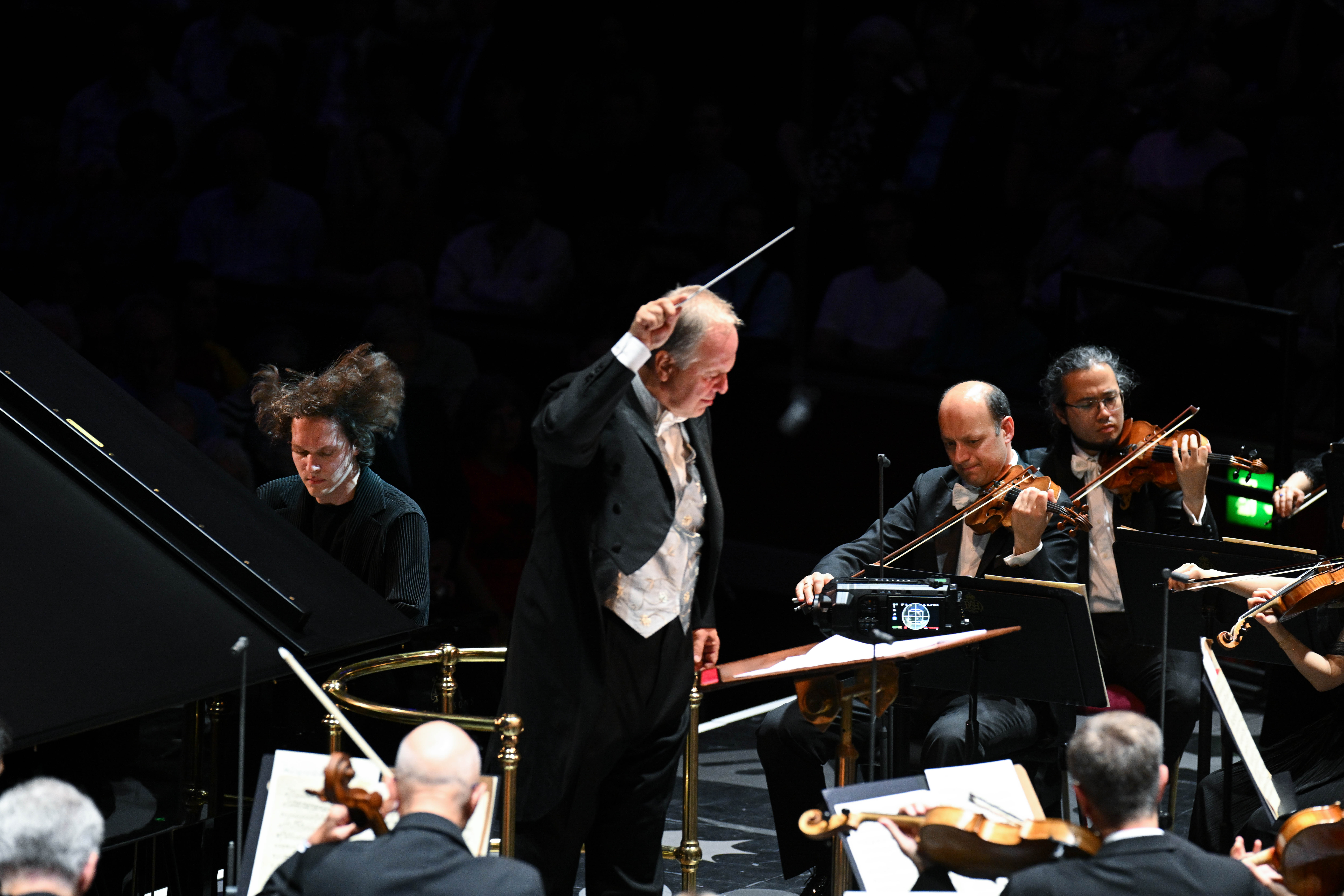
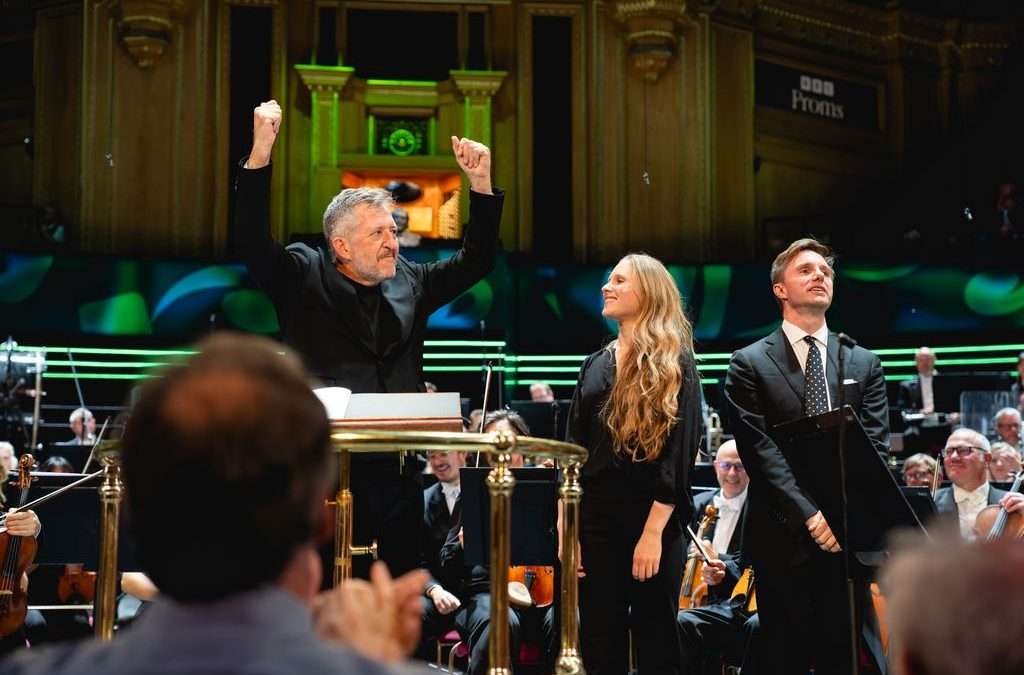
In the event the Grieg received a responsive reading from Lukas Sternath (below, with Oramo), the Viennese pianist who, still in his mid-20s, was most at home in more inward passages. The second theme of the initial Allegro was enticingly taken up after a heartfelt rendering by cellos, as was the Adagio’s eloquent melody and that first emerging in the finale on flute, where it was soulfully rendered by Daniel Pailthorpe. Nor were the more demonstrative aspects underplayed – Sternath having the measure of a cadenza whose mounting rhetoric was pointedly reined-in, while the finale’s outer sections were incisively inflected prior to an apotheosis which felt the more exhilarating through its absence of bathos. A melting take on Richard Strauss’ early song Morgen!, transcribed with enviable poise by Max Reger, served to reinforce Sternath’s formidable pianistic credentials.

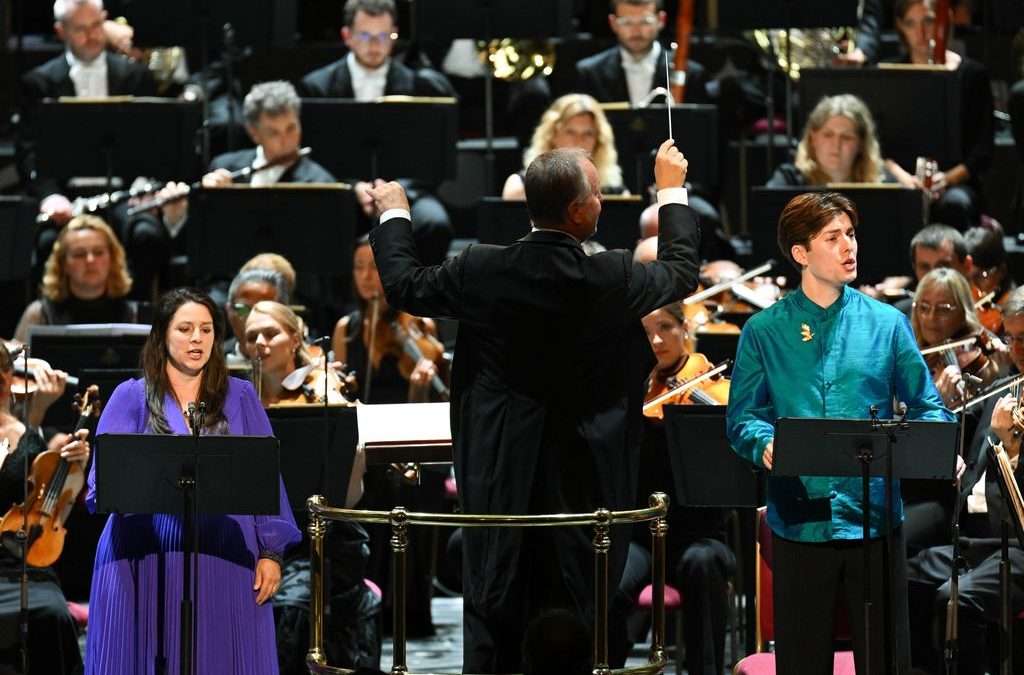
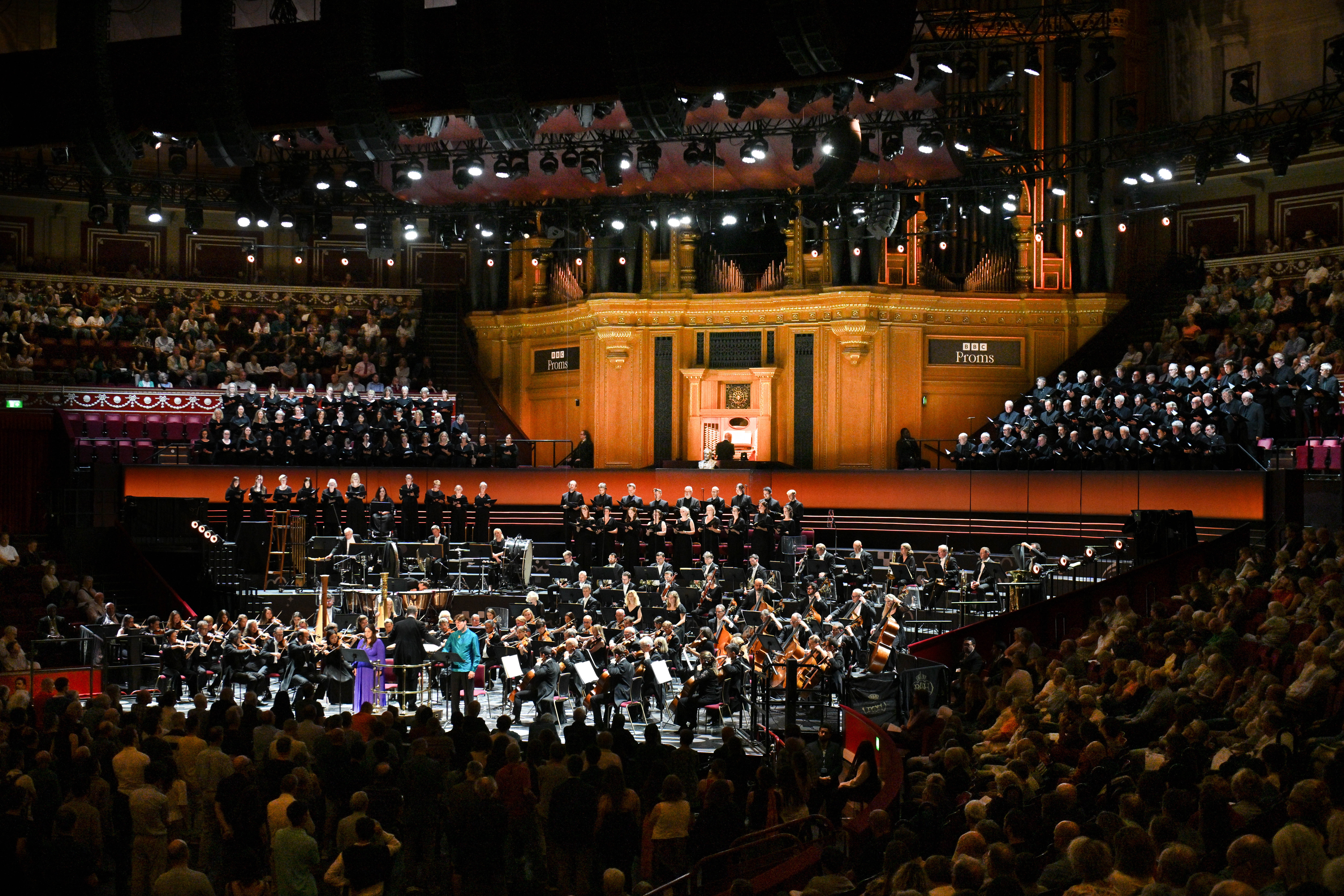
The 50th anniversary year of Sir Arthur Bliss’s death has seen a gratifying number of revivals, few more significant than that of The Beatitudes. The misfortune of its premiere having been moved from Coventry’s new Cathedral to its Belgrade Theatre, thus freeing up rehearsal time for Britten’s War Requiem, rather condemned it as an also-ran from the outset. Yet Bliss had created a piece unerringly suited for the consecration in what, in itself, remains an impressive conception. Unfolding as 14 short sections which can be grouped into six larger movements, this is less a cantata than a choral symphony. Setting all nine Beatitudes, Bliss none the less merged several of these and interspersed them with settings from three 17th-century and one 20th-century ‘metaphysical’ poets to commemorate the past from the vantage of the present.

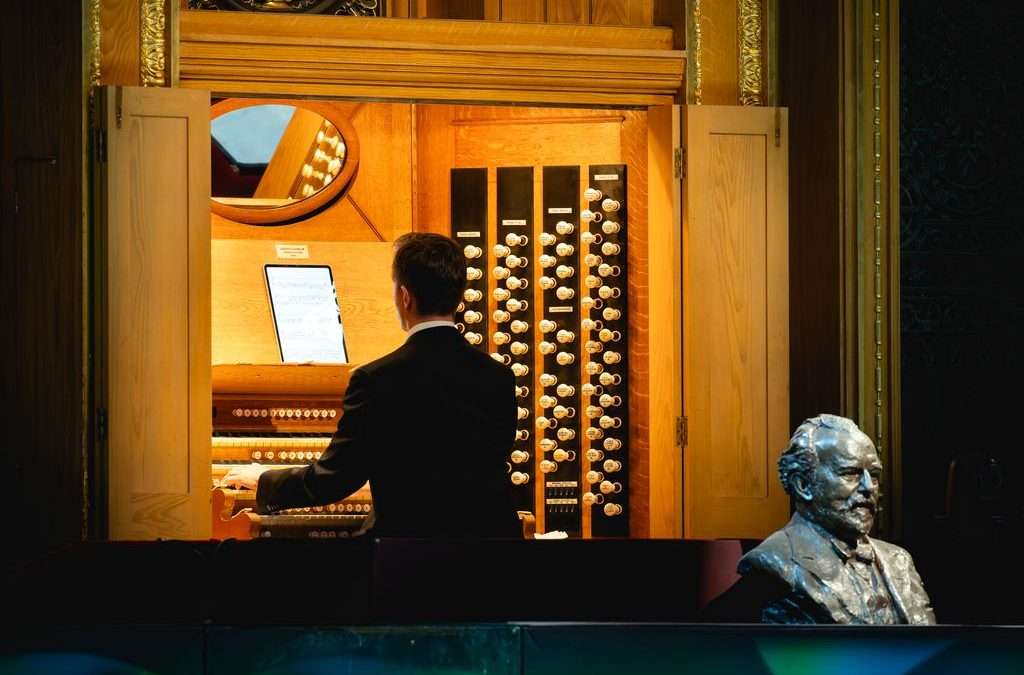
The texts, drawn from Henry Vaughan, George Herbert and Jeremy Taylor, anticipate a future redemption – as, more ambivalently, does Dylan Thomas in And death shall have dominion which builds implacably to the climactic Ninth Beatitude and Voices of the Mob prior to the hard-won serenity of the Epilogue. That The Beatitudes has enjoyed relatively few revivals is less to do with its intrinsic quality than the demands of its choral writing, to which the BBC Symphony Chorus and BBC Singers did notable justice. Elizabeth Watts responded with real sensitivity and perception to some radiant soprano writing and while Laurence Kilsby was a little effortful in the more demonstrative passages, he brought conviction to a tenor role both fervent and compassionate. Nor did Richard Pearce disappoint with his extensive organ part.

Oramo paced the 50-minute entity superbly as to make one hope he will tackle more works by Bliss – not least the masterly Meditations on a Theme by John Blow, which has inexplicably fallen through the net this year. He had started tonight’s concert with a most welcome revival for Death on the Pale Horse – the succinctly eventful tone poem by Ruth Gipps which, while it might not capture the visceral drama of Blake’s eponymous engraving, distils an evocative atmosphere from pithy initial ideas that audibly reflects the circumstances of its composition.

Click on the artist names to read more about soloists Elizabeth Watts, Laurence Kilsby and Lukas Sternath, the BBC Singers, BBC Symphony Chorus and BBC Symphony Orchestra, and their conductor Sakari Oramo. You can also click to read more about composers Arthur Bliss, Ruth Gipps and the BBC Proms

Published post no.2,652 – Tuesday 9 September 2025

In concert – Chineke! Orchestra / Jonathon Heyward @ BBC Proms: Coleridge-Taylor, Coleman, James Lee III & Shostakovich

Chineke! Orchestra / Jonathon Heyward

Coleridge-Taylor The Bamboula Op.75 (1910)
Coleman Fanfare for Uncommon Times (2021) [UK premiere]
James Lee III Visions of Cahokia (2022) [European premiere]
Shostakovich Symphony no.10 in E minor Op.93 (1953)

Royal Albert Hall, London
Friday 5 September 2025

Reviewed by Richard Whitehouse Photos (c) BBC / Andy Paradise

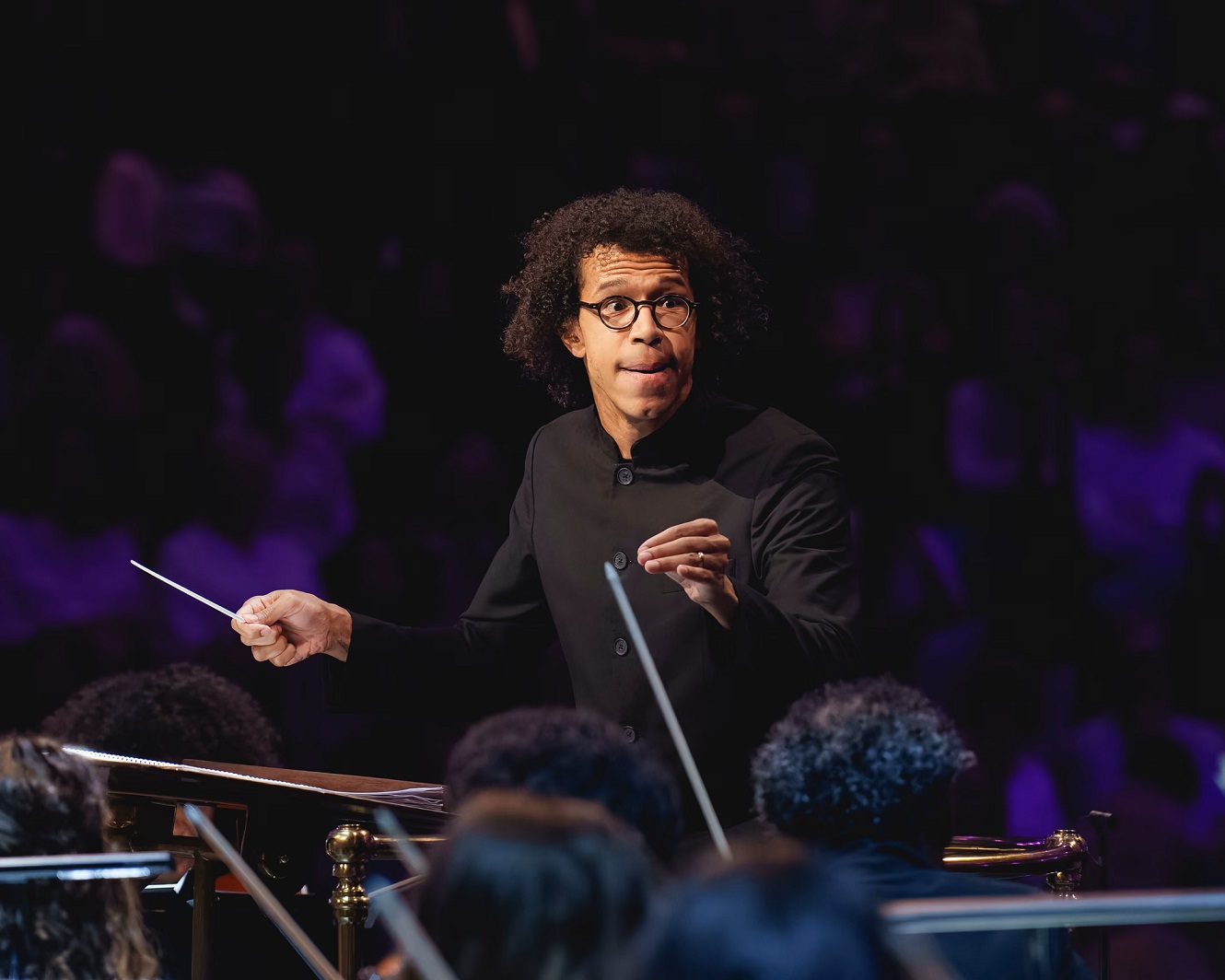
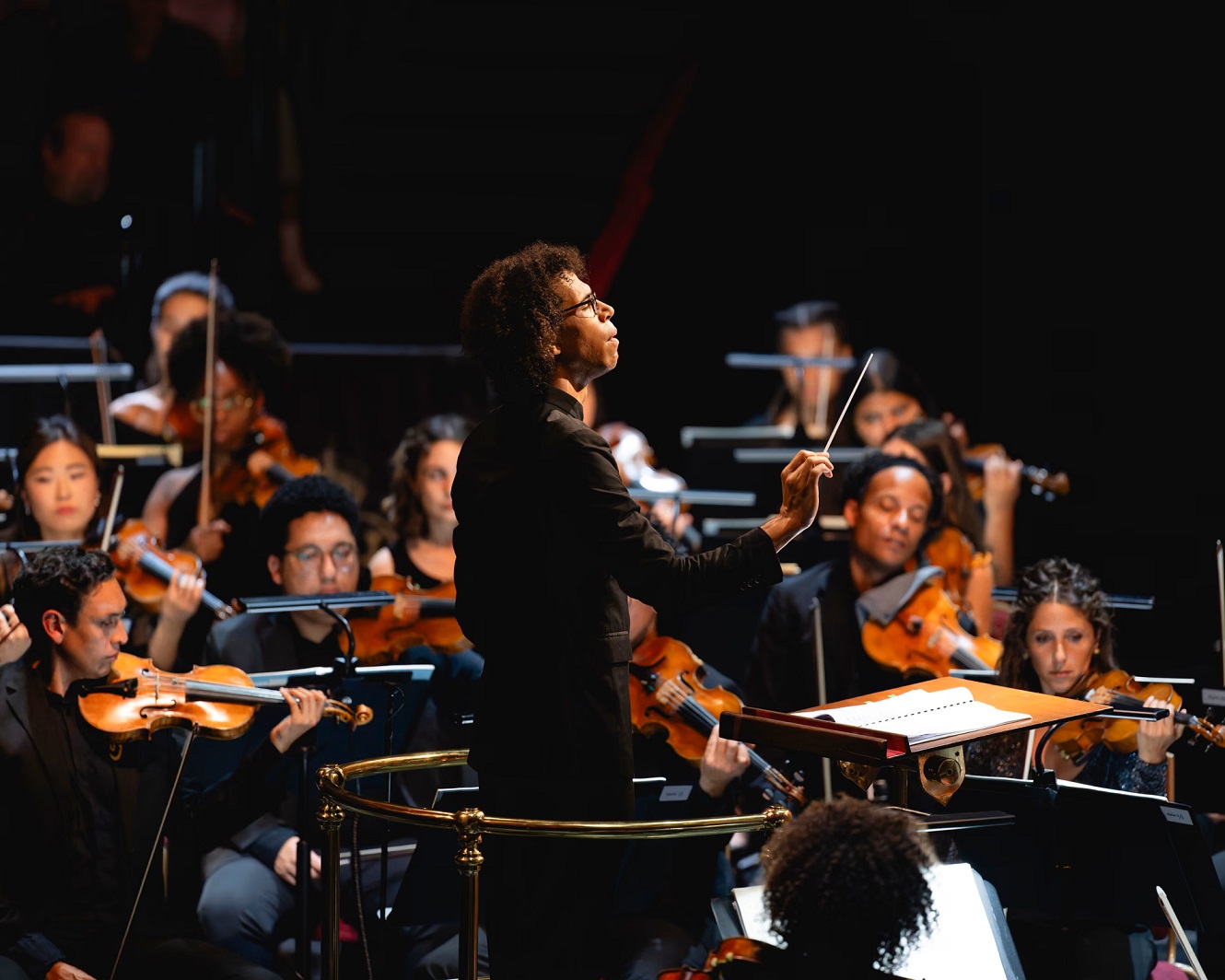
Sir Simon Rattle may have stood down from his second Prom this season, but as his replacement for Chineke! Orchestra’s eighth appearance here was the highly regarded Jonathon Heyward (current music director of the Baltimore Symphony), a positive outcome was all but ensured.

Curious, if not unexpected, that Samuel Coleridge-Taylor’s The Bamboula enjoyed 16 Prom performances in 22 seasons before going into oblivion for 91 years. Although this ‘Rhapsodic Dance’, inspired by a West African drum that found its way into Haitian spiritual practice, is not among its composer’s major works, the increasingly fluid juxtaposition of animated and soulful dances makes for highly sophisticated light music of its period. Certainly, it came up newly minted in this effervescent and responsive reading under Heyward’s assured guidance.

Two pieces from American composers of the middle generation afforded productive contrast in this first half. Aside from its titular play on Copland’s evergreen, Fanfare for Uncommon Times found Valerie Coleman reflecting societal as well as musical ambiguities in a piece that builds not a little ominously in waves of activity towards a latter half whose interwoven brass and percussion conveys a vibrant if disturbing impression: her call to ‘‘face these ‘uncommon times’ with a renewed sense of hope and determination’’ shot through with not a little anxiety.

From here to James Lee III’s Visions of Cahokia was to be transported back into a Medieval settlement which became a centre for Mississippian culture until its still-unexplained demise in the 14th century. Whatever else, this provided inspiration for an orchestral triptych whose fusing elements from Stravinsky with those of Villa Lobos or even Revueltas was evident in the music’s variegated textures and evocative colours. Effectively a ‘concerto for orchestra’ of compact dimensions yet immediate impact, it might well prove a highlight of this season.

As, interpretively speaking, might the performance of Shostakovich’s Tenth Symphony after the interval. Interesting that this piece is currently the most often heard here of its composer’s symphonies – this being its 36th appearance – with Heyward having its measure not least in an opening Moderato such as built methodically yet assuredly from sombre beginnings to a powerful central climax before regaining its initial introspection. After this, the brief Allegro provided explosive contrast as made its being allegedly a ‘portrait’ of Stalin more irrelevant.

Unexceptionally fine as was Chineke!’s playing in these two movements, it came into its own with the Allegretto that ranks among Shostakovich’s most distinctive and personal creations – not least for its motivic interplay of boundless subtlety capped by a stentorian motto on horn to which Pierre Buizer was in accord. Heyward paced it ideally, as also the lengthy Andante whose plangency is swept aside only to return intensified by the finale’s ensuing Allegro; at the close, giving this music its head on route to a decisive and almost affirmative conclusion.

A memorable reading that rounded off a worthwhile concert and likely this orchestra’s most impressive Proms showing yet. Hopefully Chineke! will go on to tackle further symphonies of the later 20th century – maybe a much-needed UK premiere for Allan Pettersson’s Sixth?

Click on the artist names to read more about the Chineke! Orchestra and conductor Jonathon Hayward, and composers Coleridge-Taylor, Valerie Coleman, James Lee III and Dmitri Shostakovich – and the BBC Proms

Published post no.2,650 – Sunday 7 September 2025

In concert – James McVinnie, BBC Symphony Orchestra / Thomas Adès @ BBC Proms: Sibelius, Gabriella Smith & Adès

James McVinnie (organ), BBC Symphony Orchestra / Thomas Adès

Sibelius The Swan of Tuonela Op.22/2 (1893, rev. 1897 & 1900)
Gabriella Smith Breathing Forests (2021) [UK Premiere]
Adès Five Spells from The Tempest (2022) [Proms premiere]
Sibelius The Tempest – Suite No. 1, Op. 109 No. 2 (1925-6, arr. 1929)

Royal Albert Hall, London
Tuesday 2 September 2025

Reviewed by Richard Whitehouse Photos (c) BBC / Andy Paradise

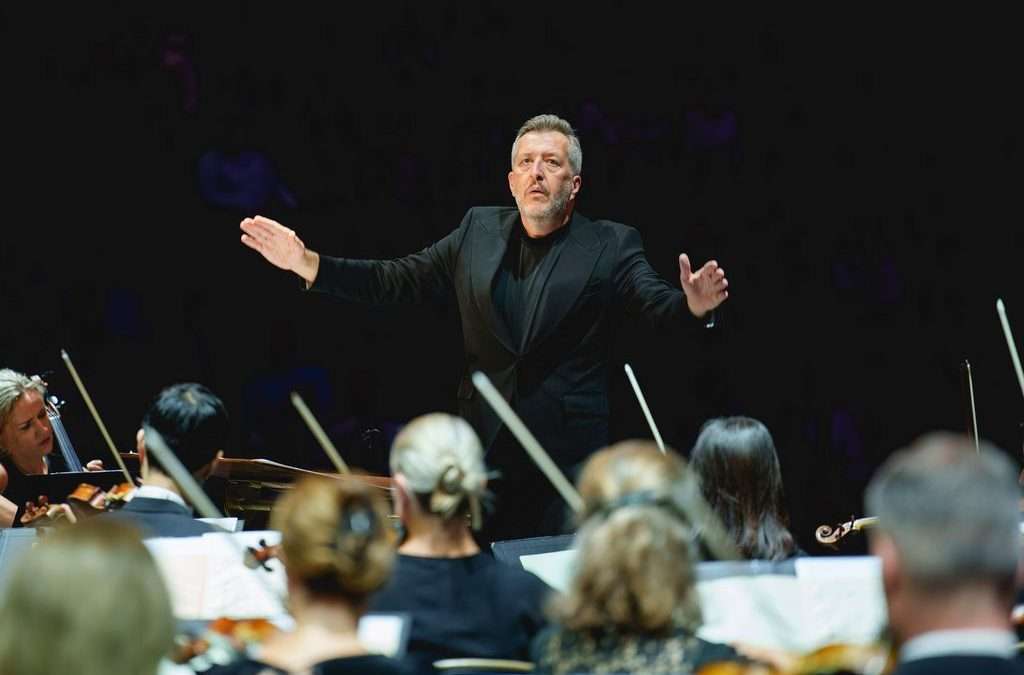
Having worked across the board with orchestras in London (and elsewhere), Thomas Adès tonight conducted the BBC Symphony Orchestra in what, for his ninth Prom as a conductor, was a typically imaginative programme that centred on concepts of nature and the elements.

A concept, moreover, whose primary focus was Breathing Forests – an organ concerto by the American composer Gabriella Smith (below). She herself has described this work as ‘‘a reflection on the complex relationship between humans, forests, climate change and fire’’; one that unfolds across three interconnected movements and whose evoking the fast-slow-fast archetype belies its overall ingenuity. The opening Grow picks up on Ligeti’s ‘op-art’ pieces of the late 1960s as it pulsates gently if insistently into life, then the central Breathe draws from the interplay of soloist and orchestra a variety of methodically evolving textures; given emotional impetus in the final Burn as it builds to a climax which spatially engulfs the whole ambience, though its continuation towards a clinching apotheosis sounded just a little gratuitous in this context.

What was never in doubt was the sheer dexterity of James McVinnie (below) in conveying the power and poetry of the solo part, to which the BBCSO’s contribution was scarcely less visceral. As musical representation of the natural world in time of crisis, this piece more than left its mark.

Adès as composer was featured after the interval with Five Spells from ‘The Tempest’, a suite drawn retrospectively from his eponymous opera. This ranges widely over the parent work – beginning, not unreasonably, with its Overture such as depicts the play’s opening storm in guardedly elemental terms. From there it heads into Ariel and Prospero, akin to a scherzo where the contrasting characters of the two protagonists are vividly played off against each other. A more nuanced juxtaposition is evident from Ferdinand and Miranda, its inherently amorous nature conveyed with due reticence, then The Feast affords a culmination of sorts with its stealthy interplay of character-imbued motifs. The end comes, naturally enough, in Prospero’s Farewell – Caliban with the music evanescing in the most equivocal of terms.

The programme was framed with music by Sibelius – opening with The Sawn of Tuonela as emphasized the music’s hieratic poise and fatalistic aura, as did those eloquent contributions from cor anglais and cello. Maybe Adès will one day tackle the whole Lemminkäinen Suite?

The First Suite from Sibelius’s compendious score for The Tempest opens with the searing evocation The Oak Tree which was a little underwhelming here, though there was nothing amiss in the characterful Humoreske or in Caliban’s Song with its telling bizarrerie. The Harvesters is a reminder of Sibelius’s innate gift for light music at all stages in his career, as also the animated Canon and insinuating Scene; to which the plangent Intrada/Berceuse then the ominous Interlude/Ariel’s Song provide startling contrasts. The truncated Prelude follows on seamlessly through to its decidedly abrupt end. Right through this sequence, the BBCSO was always attuned expressively and, while a sense of the music as teetering on the edge of some greater catastrophe was minimal, there was no denying Adès’s insight overall.

Click on the artist names to read more about organist James McVinnie, the BBC Symphony Orchestra and conductor Thomas Adès. Click also for more on Thomas Adès as a composer and Gabriella Smith, and the BBC Proms

Published post no.2,648 – Friday 5 September 2025

In concert – Soloists, London Philharmonic Choir, BBC Symphony Chorus & Orchestra / Sir Mark Elder @ BBC Proms: Delius: A Mass of Life

Jennifer Davis (soprano), Claudia Huckle (mezzo-soprano), David Butt Philip (tenor), Roderick Williams (baritone), BBC Symphony Chorus, London Philharmonic Choir, BBC Symphony Orchestra / Sir Mark Elder

Delius Eine Messe des Lebens (A Mass of Life) (1898; 1904-05)

Royal Albert Hall, London
Monday 18 August 2025

Reviewed by Richard Whitehouse Photos (c) BBC / Chris Christodoulou

There could be few venues better suited to Delius’s A Mass of Life, in its conceptual ambition and emotional opulence, than the Royal Albert Hall and this evening’s performance, only the third at these concerts and the first in 37 years, undoubtedly made the most of these qualities.

Despite the tragedy of his ultimate breakdown and ensuing incapacitation, Friedrich Nietzsche was considered a liberator in terms of a guiding philosophy with its emphasis on free will and rejection of conventional mores. Such appeal could hardly have been greater than on Frederick Delius, his largest concert work setting substantial extracts from Also sprach Zarathustra in a way that feels never judgemental and is only rarely overreaching. Much of the time its music has a detached and meditative aura whose inward intensity needs to be sustained accordingly.

That this account did so was owing to Sir Mark Elder, his advocacy already manifest in the finest modern recording (LAWO) as came across just as strongly and often more so here. Certainly, the longest sections were effortlessly paced – whether that beguiling interplay of longing and anticipation in In dein Auge which becomes the still (while never static) centre of Part One, or that extended sequence of Part Two taking in the scenic evocation as is Lasst vom Tanzen ab then the pantheist contemplation of Heisser Mittag schläft which is surely the expressive highpoint. Not that the dramatic openings of each part were under-characterized – the driving energy of O du mein Wille! setting the course for one as vividly as did the rousing Herauf! Nun herauf, with its orchestral prelude Auf den Bergen meltingly rendered, for the other.

This may be regarded mainly as a choral work, but the importance of its vocal parts is never to be gainsaid. Above all, that of the baritone who assumes the role of Zarathustra in his gradual incline to enlightenment and in which Roderick Williams (above) was consistently at his best – hence the infectious Erhebt eure Herzen and assertive Wehe mir! then, subsequently, the alluring eloquence of Süsse Leier! and will to action of Gottes Weh ist tiefer. If this is the solo role as brings focus or unity to the whole, the others afford textural and expressive enhancements aplenty – Jennifer Davis as capricious and Claudia Huckle as confiding as David Butt Philip was assertive in their respective contributions. All three singers brought out the youthfulness or naivety which are crucial to this work’s underlying journey from innocence to experience.

Any doubt a relative disparity in numbers of female and male singers would be detrimental to choral balance was groundless – Elder drawing a vividness but also delicacy of response from those combined BBC Symphony and London Philharmonic forces, while the BBC Symphony Orchestra was rarely less than galvanized whether in complex tuttis or the artless writing for solo woodwind that informs the latter stages. Delius’s orchestration rarely ‘plays itself’ but it conveys a lustre and translucency which could not be mistaken for that of another composer.

A near-capacity audience seemed as attentive to this as it was affected by the final Kommt! Lasst uns jetzt wandeln!, with its build-up to an ecstatic apotheosis then swift dispersal into silence: setting the seal on a memorable interpretation of this all-encompassing masterpiece.

You can listen back to this Prom concert on BBC Sounds until Sunday 12 October – or listen to the recent recording from Sir Mark Elder, with soloists, the Collegium Musicum Choir, Edvard Grieg Kor, Bergen Philharmonic Choir and Orchestra on Tidal below:

Click on the artist names to read more about soloists Jennifer Davis, Claude Huckle, David Butt Philip and Roderick Williams, the London Philharmonic Choir, BBC Symphony Chorus and BBC Symphony Orchestra, and conductor Sir Mark Elder. Click also for more on the Delius Society and the BBC Proms

Published post no.2,632 – Wednesday 20 August 2025

On Record – Sarah Leonard, Xue Wei, BBCSO & BBCSSO / Martyn Brabbins – Naresh Sohal: Lila & Violin Concerto (Heritage Records)

Naresh Sohal
Lila (1996)
Violin Concerto (1986)

Sarah Leonard (soprano), BBC Symphony Orchestra / Martyn Brabbins (Lila)
Xue Wei (violin), BBC Scottish Symphony Orchestra / Martyn Brabbins (Violin Concerto)

Heritage HTGCD133 78’40”
Remastering Paul Arden-Taylor

Live performances at BBC Broadcasting House, Glasgow on 24th October 1992 (Violin Concerto); Royal Festival Hall, London on 13th October 1996 (Lila)

Reviewed by Richard Whitehouse

What’s the story?

Heritage follows up its earlier release of Naresh Sohal with this coupling of major orchestral works, both of them heard in their premiere performances.

What’s the music like?

By the 1990s, Sohal was a well-respected if not regularly played figure. Both these works demonstrate his compositional versatility while being wholly characteristic of his maturity. They were also written before and after his move from Edinburgh to London; having spent more than a decade in the Scottish capital, during which period he embarked on numerous multi-media pieces, he subsequently found himself drawn anew to the Punjabi and Bengali writers whose work frequently informed his compositions over the ensuing quarter-century.

Written a decade apart, these works could hardly be more different in their nominal concerns. At just under half an hour, the Violin Concerto may appear to be firmly within the lineage of such pieces from the Classical and early Romantic eras yet its three movements are hardly, if at all, beholden to precedent. That each is faster as to its underlying pulse than the one before, what one might loosely call an ‘Andante-Allegretto-Allegro’ progression, is less notable than the transformation of ideas and texture from one to the other; resulting in an overall sequence as convinces in its formal discipline and beguiles in its expressive immediacy. Its inhabiting a neo-Romantic world (with significant precursors by David Blake and H. K. Gruber) does not detract from the individuality and sheer attractiveness of Sohal’s contribution to this medium.

By contrast Lila, it title a Sanskrit term for the play of Nature, is the representation in music of the seven stages of development, in yogic philosophy, from the earthbound to the cosmic. That each of these can be linked to a specific colour, sound and elemental force might imply a multi-media presentation, and one as integrated music with dance and lighting was initially planned, but the work succeeds admirably on its own terms as it traverses seven continuous while increasingly shorter sections with its transformation of salient motifs never less than audible. There is no ultimate climax, yet the passing from ‘Consciousness’ to ‘Yoga’ could   be heard as a culmination; after which – this final section is graced with a soaring vocalise, here the late Sarah Leonard in what was a no doubt unintentional but appropriate memorial.

Does it all work?

Yes, once one has grasped the basis of Sohal’s compositional thinking via the essence of what   he was seeking to convey. It helps that both these performances are fully attuned to his idiom – Xue Wei evincing no indecision or uncertainty in the Violin Concerto, and Martyn Brabbins (who replaced an indisposed Andrew Davis for the first rendition of Lila) securing committed playing from the BBC Symphony and the BBC Scottish Symphony orchestras. Any future performances could hardly hope for more persuasive guides when approaching these pieces.

Is it recommended?

Very much so. Paul Arden-Taylor has once again done a fine job in remastering the original broadcasts while Suddhaseel Sen’s annotations, with a biographical note by Janet Swinney, provide all the relevant background. Further releases from this source will hopefully follow.

Listen / Buy

You can explore purchase options at the Heritage Records website

For more on the artists featured, click on the names to read more about Sarah Leonard, Xue Wei, the BBC Symphony Orchestra, BBC Scottish Symphony Orchestra and conductor Martyn Brabbins, and composer Naresh Sohal

Published post no.2,630 – Monday 18 August 2025