In the last week we heard the sad news of the death of the great Cornish baritone Benjamin Luxon, at the age of 87.
A much-loved singer, Luxon excelled in the opera house and the recital room – not to mention as a soloist in many important recordings of choral and vocal works. The playlist compiled below is packed with English music, with cycles from Vaughan Williams (Songs of Travel) and Stanford (Songs of the Sea).
Luxon took on the title role in the first recording of Benjamin Britten‘s TV opera Owen Wingrave in 1971, an excerpt of which you can also hear below:
You can also hear Benjamin Luxon’s Desert Island Discs on BBC Radio 4
Britten Gloriana – Symphonic Suite Op.53a (1953) Frances-Hoad Cello Concerto ‘Earth, Sea, Air’ (2022) [Proms Premiere] Elgar Symphony no.2 in E flat major Op.63 (1909-11)
Laura van der Heijden (cello), BBC Scottish Symphony Orchestra / Ryan Wigglesworth
Royal Albert Hall, London Friday 26 July 2024
reviewed by Richard Whitehouse
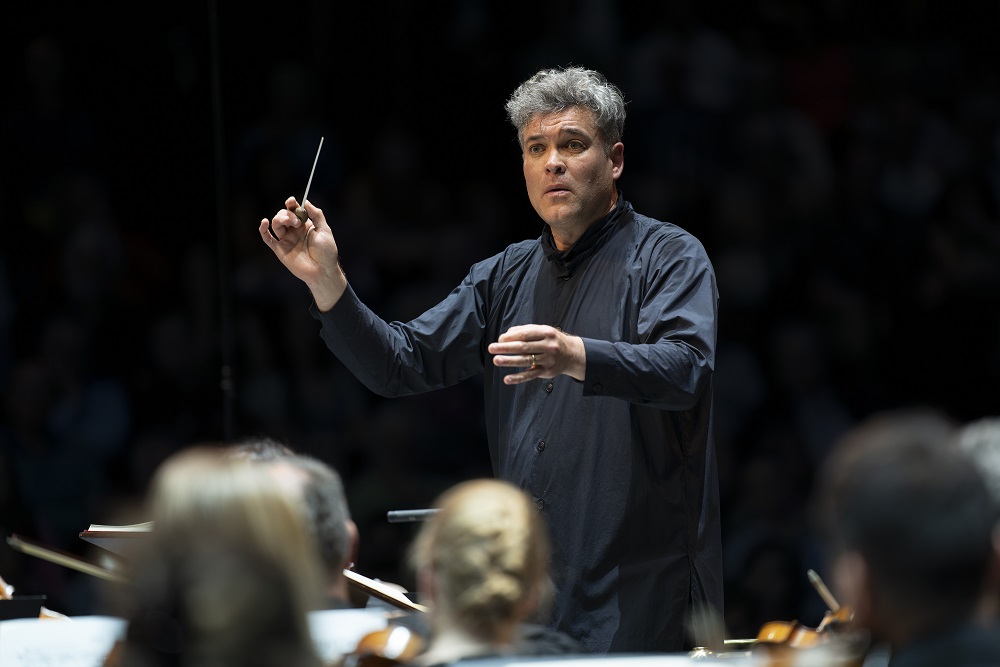
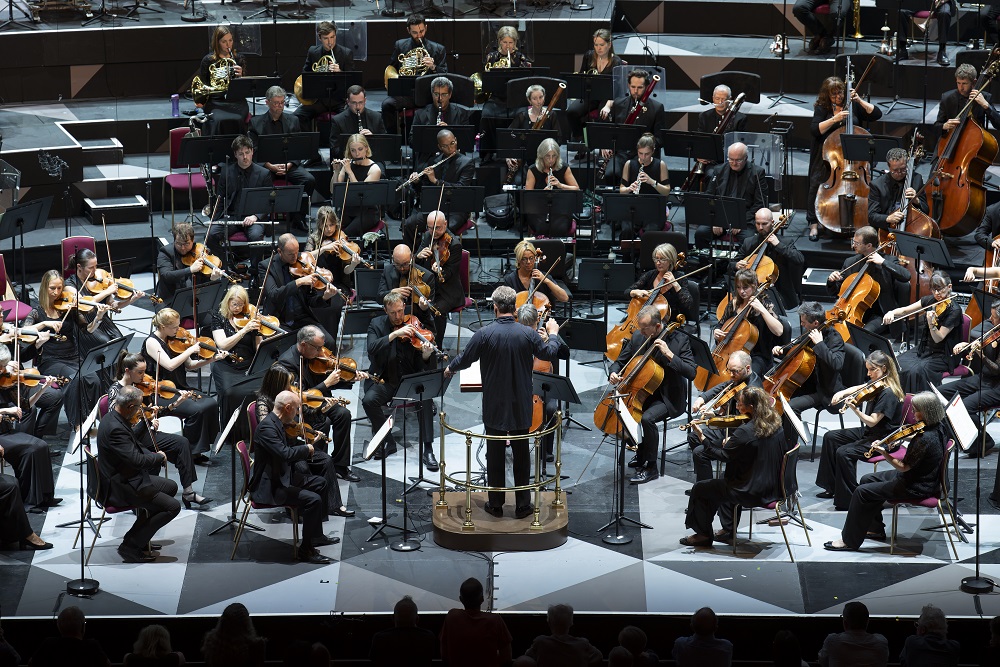
He might not be the only composer-conductor of his generation, but Ryan Wigglesworth has rapidly established himself among the best – as this concert with the BBC Scottish Symphony Orchestra, whose chief conductor he has been over these past two seasons, amply confirmed.
Other than Peter Grimes, the coolly received Gloriana was his only opera from which Britten extracted a concert suite. The vaunting syncopation of Tournament then wrenching fatalism of Gloriana moritura make for a telling framework, with this account at its most perceptive in the wistful poise of the Lute Song – the oboe being an eloquent replacement for the tenor thanks to Stella McCracken – then the evocative sequence of Courtly Dances where Britten effortlessly bridges the historical and the aesthetic divide between the eras of two Elizabeths.
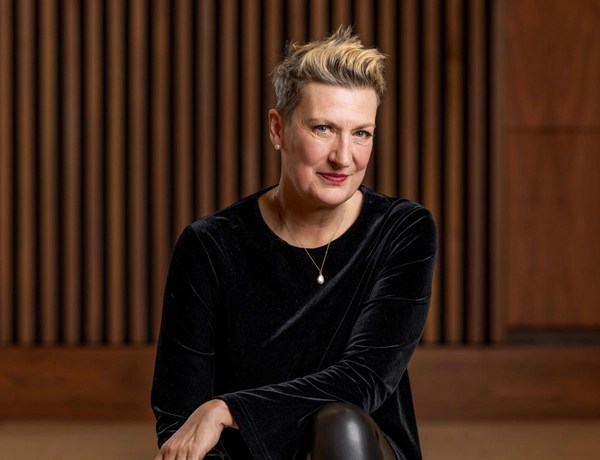
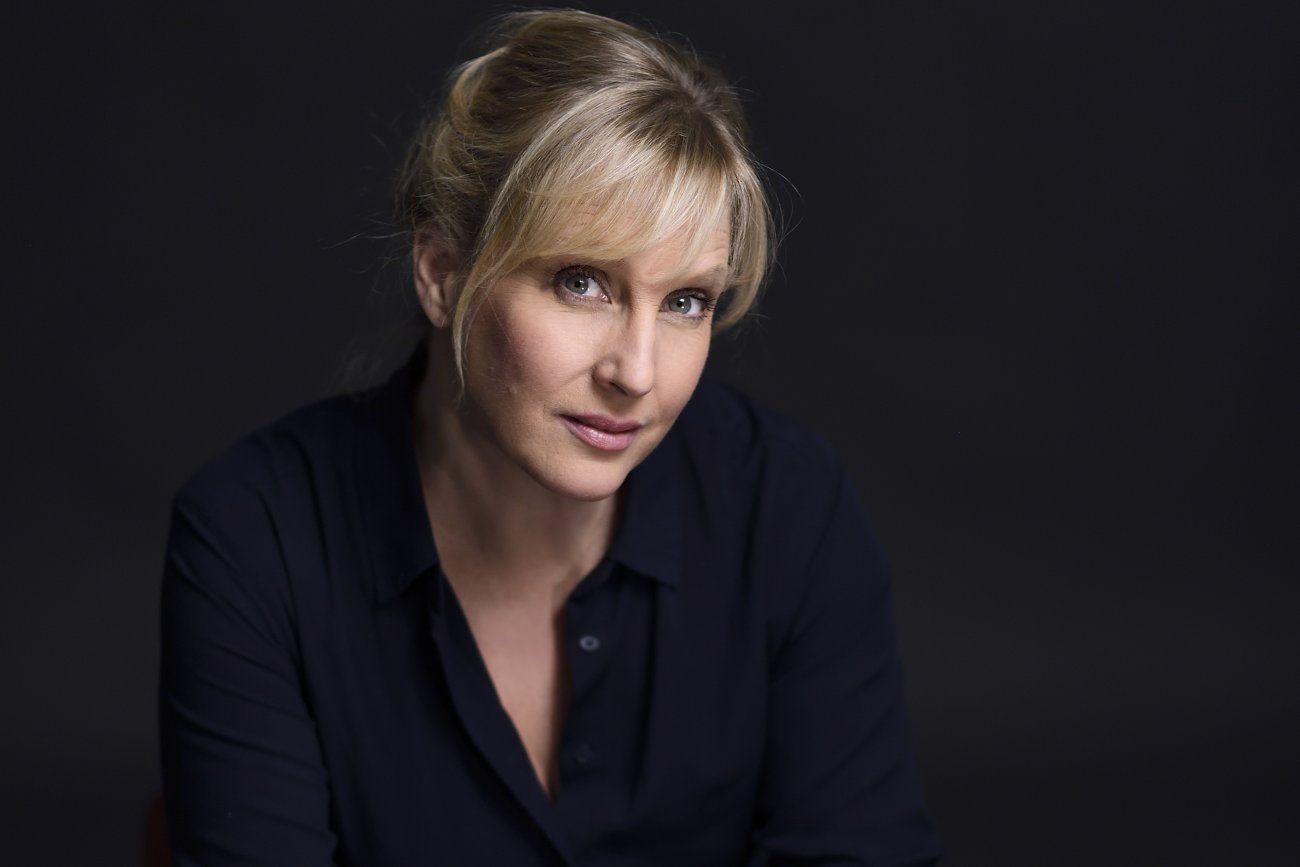
Next a first Proms hearing (just over a year after its Glasgow premiere) for the Cello Concerto by Cheryl Frances-Hoad. Drawing inspiration from recent research into diverse aspects of the natural world, the three continuous movements provide an arresting vantage on an outwardly traditional form. Hence the trajectory of swifts in flight, carbon-absorbing algae over oceanic expanses and gravitational force of volcanic activity each influencing the musical content of a rhythmically impulsive Allegro, harmonically diaphanous Larghetto and melodically soaring Presto giocoso; the whole afforded unity through its composer’s motivic resourcefulness and the engaging commitment of Laura van der Heijden (above) in her realizing of its solo part. She then responded to deserved applause with a limpid reading of Pablo Casals’ The Song of the Birds.
Elgar is a composer evidently close to Wigglesworth’s heart and this evening’s account of his Second Symphony did not disappoint. Launched a little too circumspectly, the initial Allegro duly found a persuasive balance between bounding energy and that musing uncertainty to the fore in the otherworldly processional near its centre. Its overall extroversion was countered by the Larghetto – circumstantial association with the death of Edward VII having tempted many into a funereal pacing but not Wigglesworth, whose handling of its cumulative halves brought sustained emotional intensity framed by the stark lamentation with which it begins and ends.
One of Elgar’s most formally subtle and expressively audacious movements, the scherzo had the requisite impetuousness and nonchalance, thrown into relief by the mechanistic violence towards its core and unnerving energy at its close. Moderate in tempo and not overly majestic in outlook the finale might have been thought anti-climactic, but Wigglesworth’s keen sense of its long-term unfolding emerged in the searching ambivalence of its development and the understated grandeur of a peroration which did not require reinforcing with an organ pedal. Those closing pages could have yielded even greater pathos, but their suffused fatalism was wholly in accord with the conductor’s conception of this movement, as of the work overall.
Just over a year before, Wigglesworth presided over an inspirational account in Birmingham of The Dream of Gerontius. Tonight’s performance of the Second Symphony might not have been quite its equal, but it more than confirmed him as an Elgar interpreter of genuine stature.

Mary Bevan (soprano), City of Birmingham Symphony Orchestra / Edward Gardner
Schubert Rosamunde D797 – No. 3b, Romanze (1823) Der Erlkönig D328 (1815, orch. Berlioz 1860) Die Forelle D550 (1816, orch. Britten 1942) Im Abendrot D799 (1825, orch. Reger 1914) Geheimes D719 (1821, orch. Brahms, 1862) Symphony no.9 in C major D944 ‘Great’ (1825-6, rev. 1828)
Symphony Hall, Birmingham Wednesday 17 May 2024
Reviewed by Richard Whitehouse Pictures by Benjamin Ealovega (Ed Gardner), Victoria Cadisch (Mary Bevan)
July concerts no longer a consistent fixture in the City of Birmingham Symphony Orchestra’s schedule, it made sense to end the current season with the intended programme for the fourth and final volume of this orchestra’s Schubert cycle with former chief guest conductor Edward Gardner.
If not his final such project, the ‘Great’ was the final symphony that Schubert finished and the culminating orchestral work of his last decade. Now, as almost two centuries ago, it is not an easy work to being off – but this account hit the ground running with a flowing yet purposeful introduction that elided seamlessly with the initial Allegro. Gardner kept momentum on a sure yet flexible rein over those impetuous and capricious themes of its exposition; underlining the subtly eddying tension of its development and a propulsive coda whose link-up with the tempo of that introduction was marred only by the too emphatic final gesture. Respectively plaintive or consoling, the Andante’s alternate episodes were brought into eloquent accord – the fanfare -riven anguish at its climax then the stark fatalism towards its close being especial highlights.
The essential link between the scherzos of Beethoven and Bruckner, the third movement had the right buoyancy but also a suavity in keeping with the Viennese character of its dance-like themes, and complemented by those of its trio whose lilting elegance were tinged by wistful regret. Launched with a commanding call-to-attention, the Finale did not lack for vigour but, unlike so many performances, Gardner was mindful not to rush either here or in the capering second theme whose relentless string accompaniment was vividly rendered. The development more than fulfilled its purpose as an extended transition into the reprise, then the coda opened with a frisson of anticipation such as underpinned the closing pages as they powered towards the decisive but never headlong close to what was a convincing and engrossing performance.
Regarding repeats, Gardner observed that of the first movement’s exposition but not those in the second half during either scherzo or trio, and that of the finale’s exposition. This at least made matters easier for the players, and left options open for their inclusion in the recording.
That forthcoming release on Chandos will hopefully find room for the five songs that formed the first half of this concert, with each of them arranged by a different composer. The pensive Romanze from Schubert’s incidental music to Rosamunde was heard in the composer’s own orchestration, with the compact psychodrama of Der Erlkōnig in a resourceful and nowadays overlooked orchestration by Berlioz. The looping but not always ingratiating playfulness of Die Forelle was expertly attended to by Britten, while the pensive soulfulness of Im Abendrot summoned an appropriate response from Reger; the sombre resignation of Geheimnis making for a welcome encore in its orchestration by Brahms. Throughout the selection, Mary Bevan’s veracity of emotional response and her clarity of enunciation were qualities worth savouring.
This programme may have concluded the Schubert cycle by Gardner and the CBSO, though hopefully it will not see of this partnership in recorded terms – the symphonies of Schumann, and maybe Brahms, being well worth considering as additions to the orchestra’s discography.
Composer Unsuk Chin and cellist Alban Gerhardt are featured musicians at the 75th Aldeburgh Festival this year. They have been linked in music since 2009, when Alban was the soloist in the premiere of Unsuk’s Cello Concerto at the BBC Proms in 2009. They talk to Arcana about how the piece has evolved and their hopes for this year’s festival.
by Ben Hogwood
The 75th Aldeburgh Festival of Music and the Arts is upon us – and Arcana is in the very fortunate position of talking simultaneously with two of its Featured Musicians, Korean composer Unsuk Chin and German cellist Alban Gerhardt. Unsuk is checking in from her Berlin residence, where she is deeply ensconced in composition work – of which more later. Gerhardt, as is often the case, is touring – and is about to join us from his hotel lobby in Spain, where he played the Lalo concerto the previous night.
The two have a strong musical bond, cemented by the Cello Concerto Unsuk composed for Gerhardt, first performed at the Proms in 2009 with the BBC Scottish Symphony Orchestra. Gerhardt will bring it to Aldeburgh in 2024 with the same orchestra, under Ryan Wigglesworth, on 20 June.
Firstly, however, we welcome Unsuk to the chat. Her youthful countenance is complemented by an intense focus on her music – which comes to the fore as soon as we begin to discuss Alaraph, a quarter-hour piece for orchestra receiving its first UK performance at Aldeburgh this season. Subtitled Ritus des Herzschlags (Rite of Heartbeat), it is a powerful and dramatic piece, in which Unsuk is drawn to the concept of so called ‘heartbeat stars’, that have a regular pulsation.
“I’m very interested in science”, she says, “and I was very interested in the different types of stars. These heartbeat stars have a certain rhythm of changing the brightness, and immediately I imagined a certain type of rhythm where I could compose a piece with this idea. The second idea in Alaraph came from Korean traditional music. We have very vivid, dynamic folk music, and I was always very impressed by its rhythms and melodies, and I wanted to bring them all into one piece. Lots of percussion instruments will be needed there!”
In spite of the large percussion section, the piece ends quietly, which if anything heightens the drama. “The piece is a kind of ritual,” she explains, “and the six percussionists play a very big role. The sound is moving from left to right and right to left, and at the end of the piece they repeat the cymbal sound. Then they should stand and show the cymbals, as a kind of ritual.”
On a much smaller scale, we will hear a group of Chin’s Piano Etudes, in concerts from Joseph Havlat and Rolf Hind. Talking about the Etudes almost inevitably draws parallels with Unsuk’s teacher György Ligeti, whose own Etudes for piano have proved revelatory in the course of the instrument’s recent development. Were they intimidating when she started to write in the form? “When I studied with Ligeti he had just finished the first cycle of six etudes, and I was at the premiere of those pieces”, she says. “On the other hand, I have played the piano since I was four, so it was for me the main instrument. I certainly got some influence from him in writing piano pieces, but even if he had not written piano etudes, I would have written my etudes for sure!”
At this point Alban joins the call, and Unsuk greets him enthusiastically. “Your hairstyle is new!”, she exclaims, but he shakes his head. “No, just less hair!”, he says, smiling. Gerhardt is being modest, for he too looks bright-eyed and in good spirits. Talk inevitably turns to the Cello Concerto Unsuk wrote for him, and they recall their first meeting. “We met first in 1999 in Helsinki”, she says. “It took a couple of years, but then I had some idea of how it would be very nice to write a cello concerto for him. That was the beginning, but then he had to wait almost seven years while I got the piece ready!”
Gerhardt was not impatient for the piece, however. “I am glad you mentioned that, because it proved to me that you are not slow or lazy, but very respectful for the genre of the cello concerto. I remember at first that you were very hesitant, and that’s a wonderful quality, because these days it’s like everybody should be writing a cello concerto. One of the most difficult tasks nowadays, with a big orchestra, is that you want to use it as a composer. But if you use it, then you lose the cello. You were aware of that huge challenge, and you took your time. It got postponed a few times, and at the Proms too, but I’m so happy – because this piece works! The truth is that it was performed in Berlin by another cellist, Alisa Weilerstein, which is fantastic. Which other modern cello concerto can you say that about, that it was performed in the same city at 10 years difference by a top-class cellist? I’m very happy about that!”
Chin smiles in gratitude. “You are always supporting me!” she laughs. “The first time we met was through Lisa Batiashvili”, recalls Gerhardt, “and she is a close friend but also grew up together with Unsuk’s husband, Maris Gothóni. I knew about Maris first, and then I met Unsuk and was shocked by her charisma and aura, and then when I heard the Violin Concerto I thought, “she needs to write a cello concerto!”
The concerto makes some fearsome technical demands, wasting no time in pitching the soloist right to the core of the action – an aspect that Gerhardt applauds. “Actually, the beginning is among the easiest bits of the whole piece! It’s not easy at all, but compared to what comes later, I’m not afraid of the beginning. I’m happy to start right away because if you sit there forever, you start thinking and getting nervous, which is not a good thing.”
“For me the working process was very interesting”, Chin interjects, “because often the artist and composer will have conversations and contacts, but with us it was not like that. I just wrote the piece to the end, and I delivered, and he delivered his playing. It was extremely professional, and there was not a need to change anything because of his technique. I wrote what I wanted, and he played it at the premiere by memory. I couldn’t believe that a human being could do that!”
At this point, Gerhardt has a confession to make. “This is the biggest shame of my life, because I was big headed, and I got lost three times – I was not happy. The most beautiful and difficult part in the last movement, which is like 80 seconds, is very wittily written and difficult to play. It is probably the 80 seconds I have practised most in my life, and I completely missed them in the world premiere. I’m so grateful that I have had 30, 40 more times now to play it. For me that is the biggest thing. I have not played so many world premieres, but each one is the worst performance – it always gets better. You need to give it a chance to grow – not with the memory slips, but the piece settles. With this piece the more I play it the more beauty and intensity I discover, and the more I understand it. There is so much to understand that you cannot grasp it all at first sight.”
He is relishing bringing the piece to the Aldeburgh Festival. “I am very happy to play it there, after 15 years and having premiered it with the same orchestra. It will be a completely different performance, and I would bet my life it will be a much better one!”
As well as the concerto Alban will be teaming up with regular recital partner, pianist Steven Osborne, in a recreation of a legendary recital given by Mstislav Rostropovich and festival founder Benjamin Britten (both above) in July 1961, where the world premiere of Britten’s Cello Sonata took place. Gerhardt considers the rapport both performers have in that recital. “Britten was a fantastic pianist and a wonderful musician, besides being a great composer. I wouldn’t say Steven and I have the same rapport because none of us is as creative as these two guys. Rostropovich was a composer himself, not a great composer, but he wrote some quite witty pieces, and conducted and played the piano. He was really a complete musician, although I don’t agree with everything he did interpretation-wise – which is perhaps bad taste on my part – but they were two giants of music! I think Steven and I understand each other well because we are closer in age and Western, whereas the Russian and the Brit – that’s quite a mix!”
He considers the concert further. “You have no idea how brave I actually am because two nights before I am playing Dvořák in Chicago, and I arrive in the middle of the night at 1am the day of the recital. I’m already very scared of that day!” We agree that Rostropovich would probably be in favour. “Yes, he would approve of doing something stupid like that!”
Both Unsuk and Alban are intensely honoured by their roles this year. “I heard lots of things about Aldeburgh and Benjamin Britten, who I really admire as a composer”, says Chin, “and it’s a really great honour to be played at the festival”. Sadly she won’t be attending in person, due to the composition of her opera Die dunkle Seite des Mondes (The Dark Side of the Moon) getting to the stage where it can’t be left. “It should be finished by the end of this year!” she confirms. “I’m not coming to Aldeburgh, then!” jokes Alban on hearing the news. “For me it’s an honour, but it is also an honour for the festival to have Unsuk, because she is one of the two or three best living composers. Anybody should be honoured to play her music.”
He recalls his first visit to the Suffolk town. “I think I was first there 20 years ago. A few months ago I went to the Red House for the first time, and saw the manuscript of Britten’s Cello Suite no.1, and it was beautiful to see the handwriting. It had a lot of the fingerings and bowings of Rostropovich on it, and I didn’t like that because I wanted to know what Britten actually said.”
He applies the same argument to the newer commission. “That’s why when we made an edition of Unsuk’s concerto I was very hesitant of putting too much of me in there, because I want the next performer to come up with their own ideas. For example, some of the metronome markings of Unsuk I cannot play, but I like that! The question is – should we change them to what I could do? I said no, because it’s good to know that she had that in mind, and the next player should try to get to it. Metronome markings are not the rule of law, but it gives us an idea of what the composer had at some point in their mind. I would hate if people came and took my interpretation as the one to do. The one to do is in the score, and what was in Unsuk’s head. I don’t think it helps much to ask her how to play it!”
Unsuk nods in agreement. “I think you said once it’s like a child you give birth to”, says Gerhardt, “but then it grows, maybe in a direction you’re not happy with!” The only few things you told me”, he recalls, “were about some slides in the first movement, which happened by accident. The great thing is that we have these scores, which are like a protocol, which give us an idea of what to do and then we do it. Every interpretation should by definition be different, if each one is the same then something went wrong. We become in a way an assistant to the composer ourselves, and if the interpretation is always presented the same then that is a job badly done. We have to be different!”
Playing solo Britten at Aldeburgh, as Gerhardt will do with the Cello Suite no.1, presents a special challenge. “It was scary when I did it the first time”, he admits. “but now the scary part is out I’m just going to enjoy it. András Schiff told me once that the older he gets the more nervous he gets. I find the older I get, the less I care about other people and what they think. I want to transmit what I feel about the music, and the older I get the more I dare to really do what I want, and not follow rules or guidelines. I take Gustav Mahler as an example, and where he reduced the Adagietto of his Fifth Symphony from nine minutes to seven minutes when conducting. Less is more!” As a listener, it is good to hear of artistic development in this way. “As a listener, I don’t want to be bored”, says Gerhardt. I hate it when people celebrate something where there is nothing to celebrate, like a dog stopping at every tree!”
Unsuk, meanwhile, will be totally immersed in competing her new opera. “I am writing the libretto myself as well”, she says, “because I created the story. It is based on the relationship between an Austrian physician Wolfgang Pauli and Karl Gustav Jung. It is a very complex story, and I can’t digest it in pure texts. It is about a man who is a genius but who has a very complicated private life and very interesting, wonderful dream every night. He is suffering, and therefore wants to be helped – so goes to Karl Gustav Jung and they start analysing Pauli’s dream. I took this biography as the base and put some fiction in there to write a story like a new version of Faust. I’m writing the music and the libretto myself, in German.”
The opera is due to be premiered in May 2025, at Hamburg State Opera, conducted by Kent Nagano, and staged by the English / Irish team Dead Centre. In the meantime a much smaller piece, Nulla est finis, will act as a companion to Thomas Tallis’ great 40-part motet Spem in alium, in a festival performance from Tenebrae at Ely Cathedral. “It is very small”, she says modestly. “It is not a piece, more a small prelude to the Tallis piece.” Has she listened to much of his music previously? “Not much, but I knew this piece. The commission came from Sweden, and they wanted a small prelude to Spem in alium, so I thought it would be nice to compose a kind of entrance where the choir are whispering, and slowly the tones come in and it goes to Spem in alium.”
Beyond the festival, Gerhardt has a typically busy year – but first a holiday. “I only think up to June”, he says, “and then I think I have three weeks free!” There are recording plans afoot with Hyperion, which remain under wraps for now. The Dvořák concerto, which he is performing in Chicago, would be a wonderful contender. “My view of it has changed, because I had a look at the facsimile of the piece and a lot of new ideas popped out, so it will be quite different. I think it’s more like what Dvořák had in mind, and I have to tell conductors off sometimes now! I find the same with Brahms symphonies, where people do these same, silly rubatos, and they are lacking in inspiration, because they cannot come up with their own!”
Finally, the question has to be asked – might there be a Cello Concerto no.2 from Unsuk Chin? She laughs, a little nervously! “At the moment there is no plan, but you never say never!” she says. “I would never push for a second one,” says Alban, “because the first one is so great, and I’ve never played it that I’m 100% happy with myself. If any other cellist was to ask for a second one, I would urge them to play the first one five or ten times, and then we can talk! For me that is one of the reasons why there are so few concertos added to the repertoire since Dutilleux. There is so much one can do with this piece, so much fine tuning one can do. We as performers should strive for higher, not for perfection necessarily but for musical expression. I don’t think the world needs number two, we should be very happy and blessed that there is a number one!”
Ian Bostridge (tenor), City of Birmingham Symphony Orchestra / Gergely Madaras (above)
Thorvaldsdottir Dreaming (2008) Britten Les Illuminations Op.18 (1939) Tchaikovsky Symphony no.1 in G minor Op.13 ‘Winter Daydreams’ (1866, rev. 1883)
Symphony Hall, Birmingham Wednesday 17 April 2024
Reviewed by Richard Whitehouse Picture of Gergely Madaras (c) Hannah Fathers
This evening’s concert with the City of Birmingham Symphony Orchestra comprised what was an unusually cohesive programme centred on the concept of ‘dreams’, assembled and directed with consistent empathy and insight by the Hungarian conductor Gergely Madaras.
Dreaming was the title as well as the watchword of the piece by Anna Thorvaldsdottir which opened proceedings. Her first major work for orchestra is already characteristic in its eliding between evocations arcadian and desolate, with an undeniable sense of the ominous coming through as the final stages take on an extemporized quality; musicians gradually exiting the sonic frame with just the capricious asides of a cellist remaining. Eduardo Vassallo made the most of this brief spotlight, and the CBSO made its collective presence felt to striking effect.
Arthur Rimbaud’s brief but meteoric spell as a poet in the early 1870s had belated if decisive impact on numerous composers and none more than Britten, his song-cycle Les Illuminations among his finest achievements in any medium. Having sung it many times, Ian Bostridge (above) still manages to point up the growing anticipation of ‘Fanfare’ or breathless excitement of Villes; his wide-eyed wonder in Phrase then graceful musing in Antique matched by the resolute irony of Marine or glancing wit of Royauté. Madaras drew languorous playing from the CBSO strings in Interlude and brought out the ecstatic longing of Being Beauteous, before the fervid imagining of Parade brought this sequence full circle. It remained for Départ to offer a fulfilled exit as poet – and composer – resignedly bids farewell to the realm of dreams.
This gripping account should not have needed Bostridge to address members of the audience after the fourth song, asking they refrain taking pictures on their mobiles while the music was in progress. An overhaul of the management’s current laissez-faire approach might be in order.
After the interval, a comparatively rare outing for Tchaikovsky’s First Symphony. The ‘Winter Daydreams’ of its subtitle implies an unforced though rarely contrary take on formal precepts, as in an opening movement (oddly marked Allegro tranquillo) whose often portentous pauses were well integrated by Madaras into the cumulative symphonic flow. The CBSO woodwind came into own with the Adagio – its oboe melody among its composer’s most affecting, and not least when it returns at the movement’s climax in a mood of expansive if fateful grandeur.
Partly drawn from an earlier piano sonata, the Scherzo exudes a pert animation that Madaras judged to a nicety, as he did the wistful ruminations of its trio. Much the hardest movement to make cohere, the Finale unfolded persuasively from its sombre introduction to a celebratory Allegro replete with fugal episodes; the ensuing build-up (its effect not lost on Shostakovich) to the resounding restatement of its main theme duly capped by an apotheosis whose overkill was (rightly) kept well within limits, thereby setting the seal on this persuasive performance. For imaginative programming and convincing execution, Madaras is at the forefront among conductors of his generation – his rapport with the CBSO evident throughout. This should be equally true when Markus Stenz returns next week for a pairing of Schumann and Bruckner.