In concert – Alina Ibragimova, CBSO / Dinis Sousa: Sibelius, Dvořák & Arvo Pärt

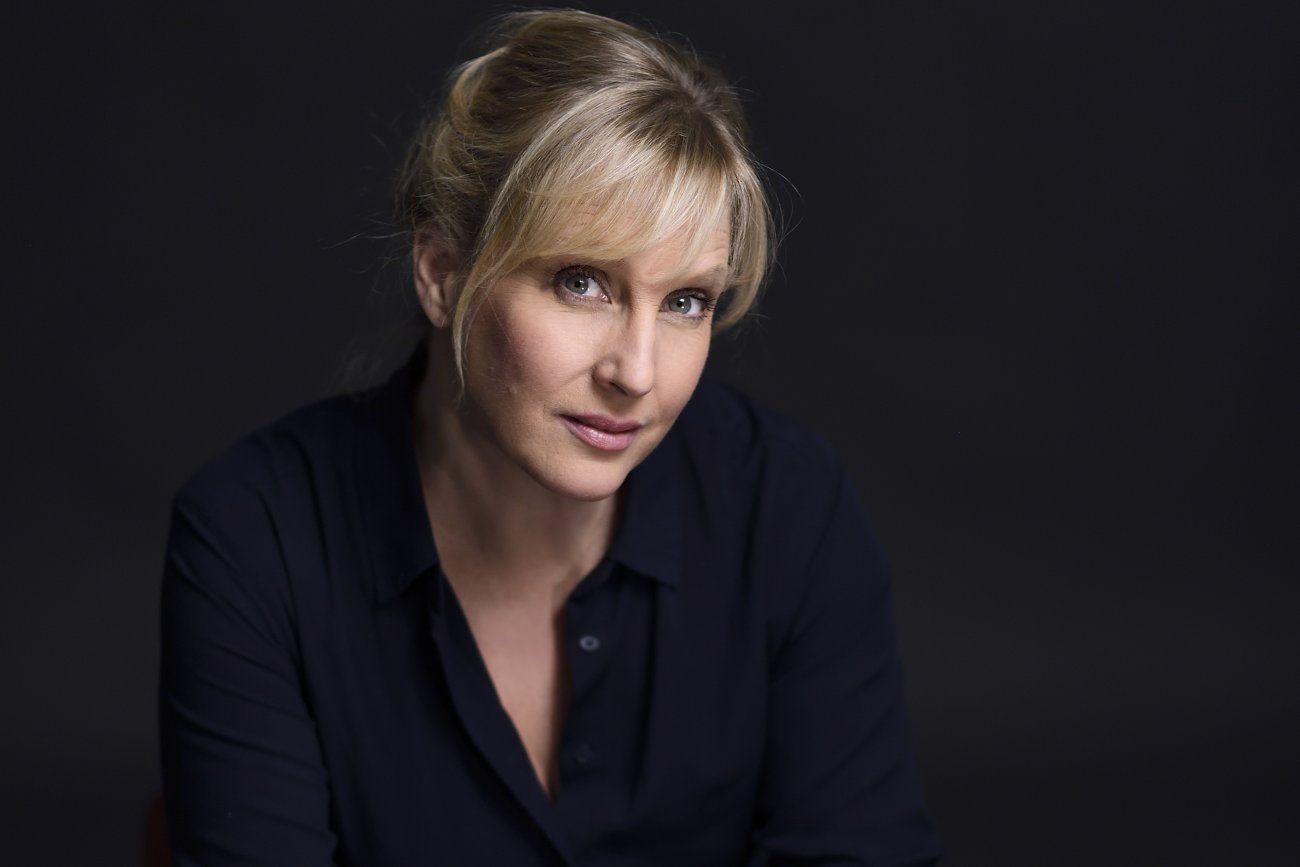
Alina Ibragimova (violin, above), City of Birmingham Symphony Orchestra / Dinis Sousa (below)

Pärt Our Garden (1959, rev. 2003)
Sibelius Violin Concerto in D minor Op.47 (1903-04, rev. 1905)
Dvořák Symphony no.8 in G major Op.88/B163 (1889)

Symphony Hall, Birmingham
Thursday 3 April 2025

Reviewed by Richard Whitehouse Picture of Alina Ibragimova (c) Joss McKinley; Dinis Sousa (c)

In what was an auspicious first appearance with the City of Birmingham Symphony Orchestra, Dinis Sousa presided over an appealing programme that featured repertoire staples by Sibelius and Dvořák alongside welcome revival of an uncharacteristic early choral piece by Arvo Pärt.

Uncharacteristic but highly enjoyable, Our Garden seems relatively untypical of the Estonian composer even in his mid-twenties – its winning an award at a Soviet-sponsored competition in 1962 bringing plaudits at a time when Pärt’s was very much an ‘unofficial’ presence on the new-music scene. Six decades on this can be enjoyed simply for what it is – an unpretentious celebration of youthful endeavour whose unaffected setting of four not overly polemical texts is as cohesive as it is sincere. Certainly, the CBSO Youth Chorus did justice to writing whose rhythmic unison was offset with some deft harmonic twists and enhanced by the resourceful contribution of a sizable orchestra. An obvious candidate for inclusion in music quizzes, Our Garden is never less than effective on its own terms and made for an attractive curtain-raiser.

Geographical proximity aside, there was little connection between Pärt’s cantata or Sibelius’s Violin Concerto, and while a performance of the latter rarely fails to impress it rarely catches fire as it did here. Alina Ibragimova has given some memorable performances in Birmingham over recent seasons, but this account got to the heart of a piece that, for all its indebtedness to Romantic-era virtuosity, is no less original in form or content than its composer’s symphonies and tone poems of this period. Most notable were Ibragimova’s fusing of the first movement’s central cadenza with developmental impetus, her building of cumulative momentum over the course of the Adagio or a final Allegro which, though this may all but have eschewed the ‘ma non tanto’ marking, exuded a drive and panache maintained through to the scintillating close.

A first-rate accompanist, Sousa (above) brought out much of interest from the orchestral texture – not least its writing for low woodwind and horns which frequently underpins the soloist in a way that could only be Sibelius. Such attention to detail was equally evident in his performance of Dvořák’s Eighth Symphony – music easy to take for granted in its warmth and affability, yet whose opening Allegro is a masterclass in formal innovation as benefitted from the incisive if never overdriven energy Sousa brought to this movement as a whole and its coda in particular.

Even finer was the Adagio, its pathos shot through with an ominous import which came to the surface at its brief if forceful climaxes and so confirmed this as music of rare eloquence. The intermezzo’s twin themes unfolded with an ideal lilt that made its boisterous pay-off the more fitting, while the finale made the most of Dvořák’s putting his trenchant folk-dance through a set of variations whose rapidly growing excitement could always be sensed even as the music subsided towards virtual stasis, from where the peroration made for a truly uproarious QED.

Those expecting Finlandia at the start of the second half (as indicated in this season’s guide) were disappointed, but Sousa did offer the second (in G) of Dvořák’s Legends as an apposite encore – its fluid interplay of poise and humour the ideal way to end this memorable concert.

For details on the 2024-25 season A Season of Joy, head to the City of Birmingham Symphony Orchestra website. Click on the names to read more about conductor Dinis Sousa, violinist Alina Ibragimova and the CBSO Youth Chorus

Published post no.2,496 – Sunday 6 April 2025
In concert – Dame Sarah Connolly, CBSO Choruses, CBSO / Sofi Jeannin: The Music Makers

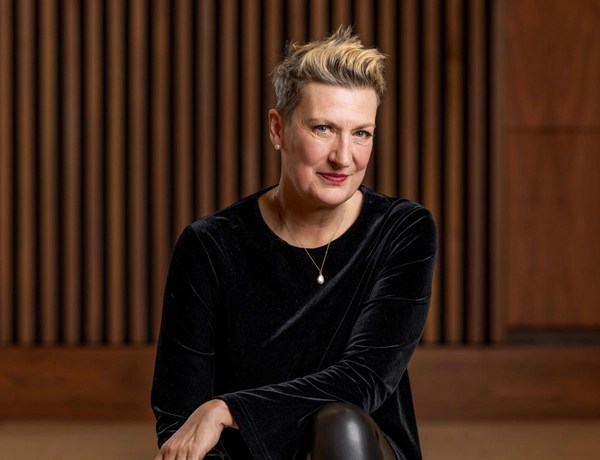
Dame Sarah Connolly (mezzo-soprano), CBSO Children’s Chorus, CBSO Youth Chorus, CBSO Chorus, City of Birmingham Symphony Orchestra / Sofi Jeannin

Weir Music, Untangled (1992)
Muhly Friday Afternoons (2015, orch. 2019) [UK Premiere]
Britten The Young Person’s Guide to the Orchestra Op.34 (1945)
Elgar The Music Makers Op.69 (1912)

Symphony Hall, Birmingham
Wednesday 20 November 2024

Reviewed by Richard Whitehouse Pictures (c) Andrew Crowley (Dame Sarah Connolly), (c) Radio France / Christophe Abramowitz (Sofi Jeannin)

Under the capable direction of Swedish-born Sofi Jeannin (below), the City of Birmingham Symphony Orchestra tonight took on a varied if cohesive programme featuring two composers with direct links to the city, one of whose works had been performed for the first time here 112 years ago.

Although he might not be so associated with Birmingham, Nico Muhly is hardly an unknown quantity. Friday Afternoons proved a diverting and enjoyable traversal across eight traditional poems – directly yet unaffectedly recalling Britten in their simplicity of choral writing with, in this instance, a resourceful and often evocative orchestration that brought out subtle and quite unexpected nuances from these texts. Qualities that the combined CBSO Youth and Children’s Choruses responded to with alacrity, doubtless owing to the astute guidance of Julian Wilkins.

Beforehand, the orchestra made no less favourable a response in Music, Untangled by Judith Weir, former Master of the Queen’s Music and composer-in-association to the CBSO during 1995-98. Written for the Boston Symphony, this not unreasonably American-sounding piece takes extracts from melodies emanating from the Western isles of Weir’s native Scotland as the basis for a compact if eventful piece where said melodies are gradually fined down from sonic diversity to a single strand through a process of ‘less is more’ typical of this composer.

Closing the first half, what had started out as Britten’s ‘Variations and Fugue on a Theme of Purcell’ received an engaging performance at its best in those variations highlighting specific instruments – in the course of which the excellence of the individual CBSO sections came to the fore. Presentation of the theme itself was a little on the portentous side, a quality which re -surfaced in a fugue whose clarity of texture seemed at the expense of that exuberance when Britten puts his orchestra back-together. An enjoyable take on a timeless masterpiece even so.

Despite its high-profile launch at the 1912 Triennial Festival, Elgar’s The Music Makers has struggled to find general favour – his setting of Arthur O’Shaughnessy’s Ode intensifying the text’s ambivalence and introspection via a wealth of self-quotation such as renders several of his most acclaimed pieces from an unlikely or even disturbing perspective. Together with its near-contemporary work, the symphonic study Falstaff, this is Elgar at his most searching as well as confessional – qualities such as the encroaching ‘Great War’ would duly exacerbate.

Despite its modest (35-minute) duration, The Music Makers is a difficult work to pace and to make cohere and, while Jeannin (an experienced choral conductor) did not wholly succeed in these respects, there was no doubt as to her insight into its content or defining of its emotions. Prepared by Simon Halsey (who first ‘gave’ this work with Simon Rattle some 40 years ago), the CBSO Chorus lacked little in conviction or finesse – and, if Dame Sarah Connolly was not quite at her most assured, the sheer eloquence and conviction of her singing could never be denied.

A fine account, then, of a work still in need of such advocacy for its inherent greatness to be acknowledged. Interesting also that audience response was warm if undeniably muted – as if to confirm, on this occasion at least, the music’s ‘message’ had got through to those listening.

For details on the 2024-25 season A Season of Joy, head to the City of Birmingham Symphony Orchestra website. Click on the names to read more about soloist Dame Sarah Connolly, conductor Sofi Jeannin and composers Nico Muhly and Dame Judith Weir

Published post no.2,372 – Sunday 24 November 2024

In concert – Elizabeth Llewellyn, CBSO Youth Chorus & Orchestra / Jérémie Rhorer: Debussy, Ravel & Stravinsky

Elizabeth Llewellyn (soprano, below), CBSO Youth Chorus (chorus-master, Julian Wilkins), City of Birmingham Symphony Orchestra / Jérémie Rhorer

Debussy Nocturnes L98 (1899)
Ravel Shéhêrazade M41 (1903)
Debussy Prélude à l’après-midi d’un faune L86 (1894)
Stravinsky Symphony in Three Movements (1945)

Symphony Hall, Birmingham
Thursday 9 May 2024

Reviewed by Richard Whitehouse Picture of Jérémie Rhorer (c) Caroline Doutre, Elizabeth Llewellyn (c) Frances Marshall

Programmes featuring no Austro-German content are rarer than might be thought these days, so making this evening’s concert from the City of Birmingham Symphony Orchestra with the highly regarded conductor Jérémie Rhorer not only more unexpected but also more welcome.

There could be few more understated openings to such a programme than the Nocturnes that Debussy completed near the start of the 20th century, when the ‘impressionist’ tag randomly applied to his music was at its most relevant. Without denying its essentially rarified quality, Rhorer brought out the ominous undercurrents in Nuages, its emotional eddying abetted by Rachel Pankhurst’s soulful cor anglais while duly complemented by those fervid imaginings of Fêtes, where the central processional felt tangible in its implacability. Nor was there any undue reticence in Sirènes, the CBSO Youth Chorus here repeating its contribution from a couple of seasons ago with a response whose androgynous sound-world did not preclude an expressive poise coming to the fore through the remote ecstasy of this piece’s closing pages.

Among the most potent expressions from its composer’s early maturity, Ravel’s Shéhêrazade made for a natural follow-on. Less a cycle than a sequence of songs, it tends to be dominated by its initial Asie, which made Elizabeth Llewellyn’s performance the more admirable. Not that she ever under-characterized the images of wonder and terror such as pervade the poem’s ‘‘outdated language and cultural depictions’’ (to quote the rider in tonight’s programme), but these were harnessed to a cumulative build-up of intensity that held good over the capricious elegance of La Flûte enchantée, as enhanced by the artful finesse of flautist Marie-Christine Zupancic, then on to the sensuous ambiguity of L’Indifférent with its predictably equivocal close. Rhorer secured playing of subtlety and refinement throughout this memorable reading.

A suitably enervated if never flaccid account of Debussy’s Prélude à l’après-midi d’un faune launched the second half. Distinguished once more by Zupancic’s playing as well as an airily euphonious response by CBSO woodwind, Rhorer teased out the purpose behind any inertia.

Although it could not have made other than a jarring impression in this context, Stravinsky’s Symphony in Three Movements provided an instructive contrast (Roussel’s Third Symphony would have been more apposite – maybe another time?) in its presaging of rhythmic tensility over harmonic langour. Rhorer had the measure of the opening’s movement’s animation, for the most part simmering rather than overt (and some not quite spot-on entries a reminder that this music remains a stern test of technical accuracy), but the highlight was a central Andante whose alternating between the whimsical and beatific confirmed the film-world’s loss as the concert-hall’s gain. The transition into the finale saw a frisson of expectancy, duly confirmed by its remorseless progress toward what is the most visceral outcome in latter-day Stravinsky.

A fine showing, then, from the CBSO and a notable appearance by Rhorer who will hopefully return soon. Next week sees a welcome reappearance by Joshua Weilerstein, major works by Bernstein and Dvořák being set in relief with shorter pieces by Pavel Haas and Caroline Shaw.

Click on the link to read more on the current CBSO concert season, and on the names for more on soprano Elizabeth Llewellyn, conductor Jérémie Rhorer and the CBSO Youth Chorus

Published post no.2,177 – Monday 13 May 2024

In concert – Vilde Frang, CBSO Chorus and Orchestra / Mirga Gražinytė-Tyla – Elgar: Violin Concerto; The Panufniks & Schumann

Vilde Frang (violin), City of Birmingham Symphony Orchestra / Mirga Gražinytė-Tyla

Elgar Violin Concerto in B minor Op.61 (1909-10)
Andrzej & Roxanna Panufnik Five Polish Folk Songs (1940, rec. 1945, rev, 1959, orch. 2022) [CBSO Centenary Commission: World Premiere]
Schumann Symphony no.1 in B flat major Op.38 ‘Spring’ (1841)

Symphony Hall, Birmingham
Wednesday 8 March 2023

Reviewed by Richard Whitehouse

The relationship between Elgar and Schumann is a fascinating one, aspects of which surfaced in this coupling of the former’s Violin Concerto with the latter’s First Symphony; the City of Birmingham Symphony Orchestra joined by principal guest conductor Mirga Gražinytė-Tyla.

As with Sibelius not long before, Elgar was an able violinist whose solitary concerto for his instrument makes no technical concessions. There is also a symphonic dimension as seemed uppermost in the thoughts of Vilde Frang, her formidable technique (rightly) geared towards the work’s conveying emotions within an expansive while methodical framework. This was evident in the opening Allegro, the impetus of its initial tutti maintained by flexible handling of contrasted themes on to a climactic development whose intricacy was abetted by the clarity of the orchestral playing. Even finer was a central Andante whose main melodies, among the composer’s most affecting, were never indulged across the course of a movement where the expressive profile remains teasingly intangible right through to those soulful concluding bars.

Maybe the balance between display and insight slipped in the final Allegro molto, with Frang losing focus slightly during its more extrovert passages. Once the accompanied cadenza was underway, however, there was no doubting the rapport of soloist and orchestra as earlier ideas are recalled and speculatively transformed in what comes near to being a confession of intent. Nor was the sudden re-emergence of that earlier energy at all underplayed as the coda heads to its affirmative resolution: one whose conviction duly set the seal on a memorable reading.

After the interval, an additional item in the guise of Five Polish Folksongs written by Andrzej Panufnik after the outbreak of war, reconstructed at its close and orchestrated by his daughter Roxanna so the stark originals for children’s or female voices – with pairs of flutes, clarinets and bass clarinet – were cushioned by these richer orchestral textures. The CBSO Youth and Children’s choruses (finely prepared by Julian Wilkins) gave their all in what were appealing yet at times overly diffuse arrangements of settings that are best heard in their original guise.

So to Schumann’s ‘Spring’ Symphony, a piece whose encapsulating mid-Romantic sentiment seemed uppermost in MG-T’s insightful and, for the most part, convincing account. Evocative fanfares launched the opening Allegro in fine style, the often fitful momentum of its lengthy development vividly maintained through to a sparkling coda. Arguably too slow for its ‘song without words’ format, the Larghetto yet exuded undeniable pathos and made a spellbinding transition into the Scherzo. A (too?) leisurely take on its first trio took the listener unawares, but the winsome closing bars prepared well for a final Allegro whose animated progress was enlivened by delectable woodwind and horn playing on the way to its decisive close. Should MG-T return in future seasons, further Schumann symphonies would be more than welcome.

The CBSO returns next week in a rare UK hearing of Weinberg’s First Sinfonietta, alongside Schumann’s Piano Concerto with Kirill Gerstein and an extended selection from Prokofiev’s Romeo and Juliet – this latter and the Elgar also featuring in a Barbican concert the next day.

You can read all about the 2022/23 season and book tickets at the CBSO website, and click here for the Romeo and Juliet concert, repeated at the Barbican here. Click on the artist names for more on Vilde Frang and Mirga Gražinytė-Tyla, or composer Roxanna Panufnik

In concert – Kate Trethewey, CBSO Youth Chorus, CBSO / Martyn Brabbins: Vaughan Williams at 150: Scott of the Antarctic

Vaughan Williams
Scott of the Antarctic (1948)
Directed by Charles Frend
Music by Ralph Vaughan Williams
Presented by Big Screen Live

Kate Trethewey (soprano), CBSO Youth Chorus, City of Birmingham Symphony Orchestra / Martyn Brabbins

Symphony Hall, Birmingham
Friday 11 November 2022

Reviewed by Richard Whitehouse

The City of Birmingham Symphony Orchestra’s commemoration of the 150th anniversary of Vaughan Williams’s birth concluding this evening in a showing, with live orchestral accompaniment, of Scott of the Antarctic which proved to be the composer’s most ambitious cinema project.

Directed by Charles Frend (who presided over several UK films in the 1940s and ‘50s, before having an equally prominent role in television) and released in November 1948, the film was a commercial success not least owing to the expressive scope and richness of its music. This extended to some 80 minutes, but Vaughan Williams was more than happy for it to be edited as required and was so in accord with Ernest Irving (director of music at Ealing Studios) that he dedicated to him his Sinfonia Antartica, evolved from the original score, four years later.

It was this close synchronization between image and music that Tommy Pearson (director of Big Screen Live) was intent on capturing when he prepared the film for concert presentation (and the background to which was described in entertaining detail in the programme for these concerts). Suffice to add while the overhauled soundtrack, consisting of dialogue and sound-effects, was all too evidently recorded in mono so that it is easily obscured by the music, the visual component has an opulence and immediacy as transcends its more than seven decades.

Occupying a space equivalent to the lower half of the organ in Symphony Hall, the screen was less dominant in a venue of this size than it would have been even in larger cinemas, but any wider or wrap-round treatment would doubtless have raised many technical obstacles and the print had, in any case, a clarity evident from the rear of the stalls. Much the same could also be said of the orchestra’s contribution, even if its seating on a level platform meant certain of those more intricate details and textures seemed less prominent than under concert conditions.

There can be little but praise for Martyn Brabbins’s direction. A Vaughan Williams exponent of stature (the latest instalment in his traversal of the symphonies has recently been issued on Hyperion), he has an instinctive feel for the emotional highs and lows of this music along with its myriad instrumental subtleties. That divide between what was retained for the soundtrack and what became the composer’s Seventh Symphony is greater than is often supposed, yet the degree to which the former effects and enhances one’s experience of the film is considerable.

This is not the place for any detailed overview of the film itself, though it is notable just how restrained and even absent is the music from the latter stages when Robert Scott and his team head towards oblivion the further they seem to be heading on their return journey. This might have been more to do with Frend or even Irving, but the resulting psychological dimension – beholden neither to inter-war expressionism nor wartime realism – was ostensibly new in a cinematic epic of this kind and makes the film historically as well as artistically significant.

The singing of Katie Tretheway and the CBSO Youth Chorus left nothing to be desired, but many attendees having stocked up on liquid refreshment beforehand saw a steady coming and going over much of the two hours: something that would not be tolerated in a concert, so why here?

You can read all about the 2022/23 season and book tickets at the CBSO website. For more information on the artists, click on the names of Kate Trethewey, Martyn Brabbins and the CBSO Youth Chorus