

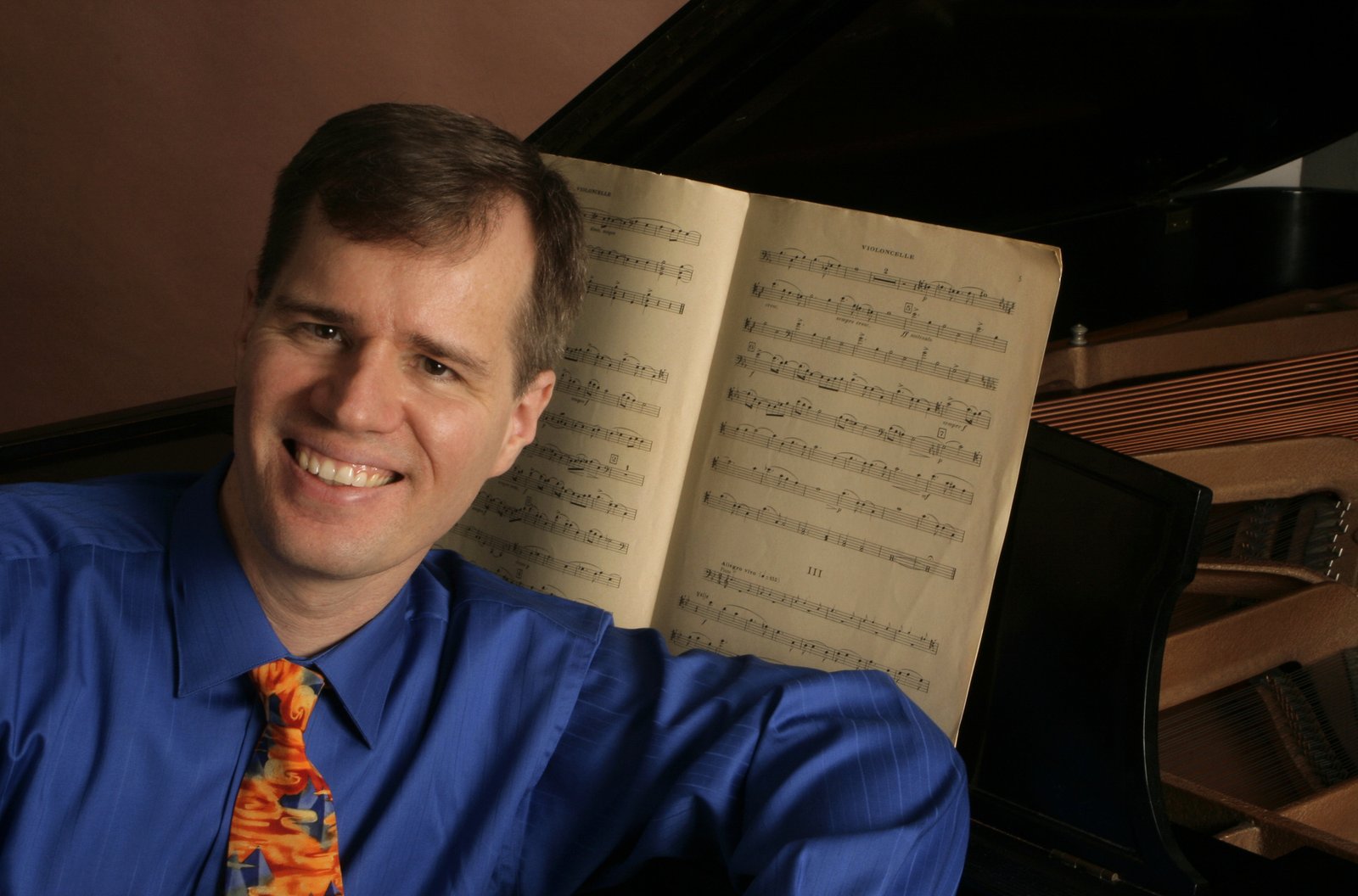
Leila Josefowicz (violin, above), John Novacek (piano, below)
Debussy Violin Sonata in G minor L140 (1916-17)
Szymanowski 3 Myths Op.30 (1915)
Bray Mriya (2023) [Wigmore Hall commission: World premiere]
Stravinsky Divertimento from Le Baiser de la fée (1928, arr. 1934, rev. 1949)
Wigmore Hall, London
Saturday 21 September 2024
Reviewed by Richard Whitehouse
Long among the more adventurous violinists from her generation, this latest Wigmore recital found Leila Josefowicz focussing on music traversing the boundary between Impressionism and neo-Classicism, together with a recent piece such as conveyed a meaningful relevance.
It might not be such a good idea to launch a recital with Debussy’s Violin Sonata, as this last and conceptually most fluid of its composer’s late chamber works is essentially a culmination rather than starting-point. Having rather harried its opening Allegro, Josefowicz brought keen imagination to its Intermède which none the less lacked that fantasy and lightness intended. Most convincing was its finale, the headlong succession of ideas deftly propelled to a payoff not merely decisive but of all-round conclusiveness – whatever Debussy may have intended.
Whereas this piece was admired but initially found relatively few exponents, Szymanowski’s Myths was early recognized as a milestone in its medium and has latterly regained that initial eminence. Josefowicz duly recognized these innovative qualities with an impulsive yet never wayward take on La fontaine d’Arethuse, its capriciousness finding an ideal complement in the simmering emotion and alluring poise of Narcisse – self-aware rather self-regarding as to expression – or increasingly recalcitrant playfulness of Dryades et Pan with its teasingly delayed – even almost avoided – close. Just occasionally, Josefowicz’s snatching at a rhythmic gesture denied the music its high-flown eloquence but, overall, this proved a perceptive and involving account where her interaction with John Novacek’s attentive pianism was absolute.
Those who hear the Szymanowski as a ‘sonata malgré-lui’ might feel likewise about Mriya by Charlotte Bray, which tonight had its first hearing. Its Ukrainian title variously implying ‘dream, vision, ambition and vow’, this four-movement work charted a course of terror but also resolve. The first of these infused its disparate while distinctive ideas with a momentum as merged directly into the feline capering of its successor; after which, a slower movement offered a measure of sustained if hardly serene calm, before the finale once again marshalled its disjunct gestures towards a culmination which was pointedly withheld. A symbol, perhaps, of the Ukrainian people’s struggle as is far from reaching closure let alone victory? Whatever the case, this is absorbing and deeply felt music that received a suitably committed response.
From here to Stravinsky’s Divertimento from The Fairy’s Kiss was some conceptual leap. One of several such adaptations its composer made during its career as a duo-recitalist with Samuel Dushkin, this takes in most of the ballet’s initial two-thirds – the Sinfonia by turns pensive and restive, while the rumbustious Danses suisses was irresistibly despatched. The Scherzo exuded a capering charm and the Pas de Deux moved effortlessly from its soulful Adagio, via nimble Variation, to an initially dextrous then increasingly uproarious Coda.
This recital ended in a wholly different aesthetic world from which it began, but Josefowicz’s acuity could not be gainsaid. ‘Uproarious’ was also the watchword of the encore – Novacek’s Intoxication Rag, arranged by Itzhak Perlman no less and rendered with appropriate abandon.
For more on the Autumn season visit the Wigmore Hall website – and for more on the artists, click on the names Leila Josefowicz and John Novacek
Published post no.2,309 – Sunday 22 September 2024

 Arcana.fm