
In concert – Roderick Williams, CBSO Chorus, CBSO / Michael Seal: Vaughan Williams at 150: 5 Mystical Songs, Symphony no.5

Vaughan Williams
The Wasps – Overture (1909); Towards the Unknown Region (1906-07); Five Mystical Songs (1906-11); Symphony no.5 in D major (1938-43)

Roderick Williams (baritone, above), CBSO Chorus, City of Birmingham Symphony Orchestra / Michael Seal

Symphony Hall, Birmingham
Thursday 10 November 2022

Reviewed by Richard Whitehouse

The City of Birmingham Symphony Orchestra’s mini-series devoted to Vaughan Williams continued this evening with the overture from his music to Aristophenes’ satire The Wasps, paced by Michael Seal (below) so its animated and soulful themes complemented each other perfectly.

Judicious was no less true of this first half with its overview of the composer’s music across the first decade of the last century. Its premiere at the Leeds Festival bringing a first taste of national acclaim, his ‘song for chorus and orchestra’ Toward the Unknown Region sets Walt Whitman with assurance and imagination in its evocative opening section, and if the ensuing peroration feels a little contrived – the journey proving more memorable than the destination – that was no fault of the CBSO Chorus whose contribution was sensitively attuned throughout.

As it was with those Five Mystical Songs in which the composer gave full vent to his love for the Metaphysical poets and George Herbert in particular. A curiously hybrid conception, the chorus is very much secondary to the baritone soloist throughout much of the first three songs – a congregational presence in the processional Easter and then underpinning the emotional intimacy of I Got Me Flowers or confiding profundity of Love Bade Me Welcome, before falling silent in The Call. Roderick Williams was eloquence itself in this latter setting and a forthright presence in the preceding, before sitting out the Antiphon with its pealing bells and mounting exultation. Williams has recently given the rarely heard version of these songs with piano but hearing them with such burnished splendour as here was its own justification.
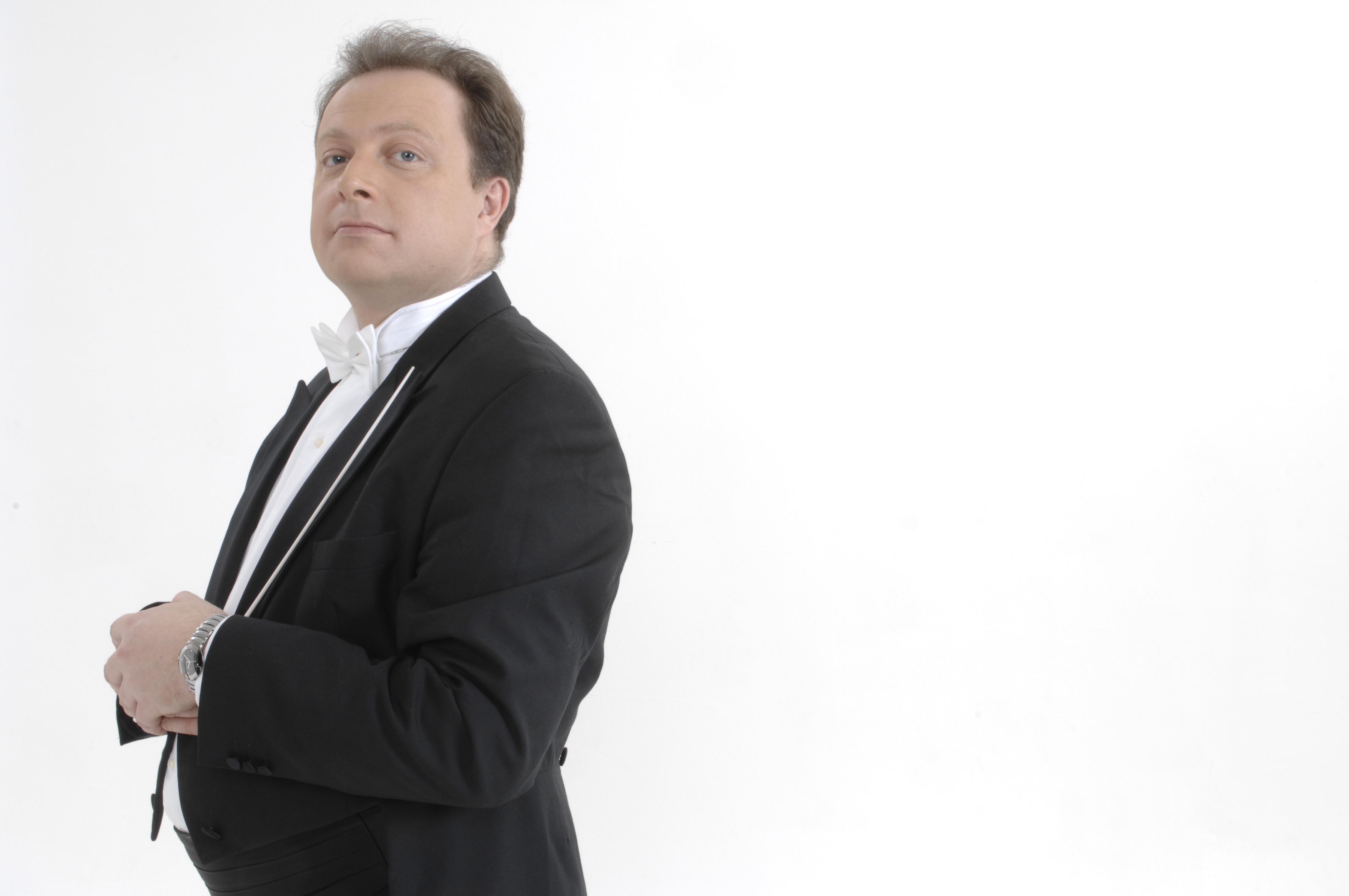
Is the Fifth Symphony unduly exposed nowadays? The composer’s most characteristic and culturally significant such piece might risk palling with too much repetition, but there was no chance of that here. Seal (above) set a flowing if not too swift tempo for the Preludio, pointing up the radiant tonal contrast between its themes – the second of them capping the movement to thrilling effect towards its close. Its rhythmic pitfalls ably negotiated, the Scherzo had the requisite deftness and mystery while taking on a degree of malevolence over its later stages. The Romanza then emerged surely yet unforcedly through glowing chorales and plaintive soliloquy (CBSO woodwind at its most felicitous) to a heartfelt culmination before subsiding into a hardly less enveloping serenity – its inspiration in John Bunyan tacitly acknowledged.

Enough had wisely been kept in reserve for the final Passacaglia – its initial stages evincing an almost nonchalant gaiety as only clouded towards its centre with the recollection of earlier ideas. By making it the work’s emotional highpoint, moreover, Seal ensured that the epilogue capped not just this movement but the work overall – its transcendence (hopefully) speaking as directly to listeners today as those at the premiere almost 80 years ago. Certainly, it would be a real misfortune were this music ever to be viewed solely from the perspective of the past.

An absorbing performance, then, that reaffirmed the greatness of this music to an enthusiastic audience. Vaughan Williams at 50 concludes tomorrow evening with the CBSO providing a live soundtrack to the composer’s most ambitious cinematic project – Scott of the Antarctic.

You can read all about the 2022/23 season and book tickets at the CBSO website. For more information on Scott of the Antarctic, click here – and click on the artist names for more on Roderick Williams, the CBSO Chorus and Michael Seal
In concert – Alexandra Lowe, Benson Wilson, City of Birmingham Choir, CBSO / Adrian Lucas: Vaughan Williams at 150: A Sea Symphony

Vaughan Williams
Benedicite (1929); Fantasia on Greensleeves (arr. Ralph Greeves) (1934); A Sea Symphony (Symphony No. 1) (1903-09)

Alexandra Lowe (soprano), Benson Wilson (baritone), City of Birmingham Choir, City of Birmingham Symphony Orchestra / Adrian Lucas

Symphony Hall, Birmingham
Sunday 6 November 2022 [3pm]

Reviewed by Richard Whitehouse

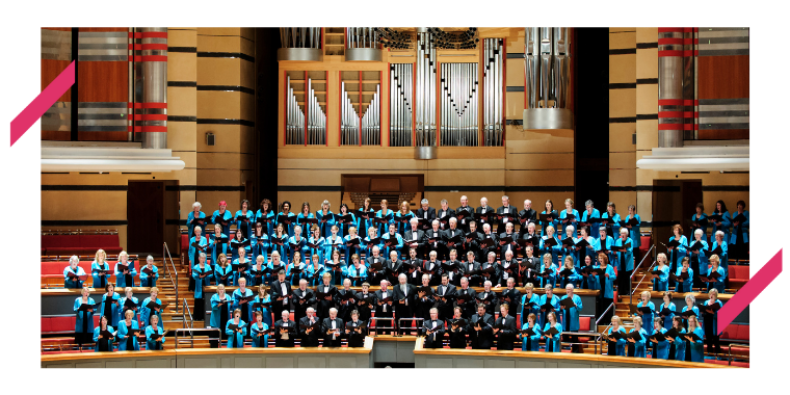
It may have been celebrated a year late, but this concert marking the centenary of the City of Birmingham Choir tied in with the 150th anniversary of the birth of Vaughan Williams and saw this choir joining forces with the City of Birmingham Symphony Orchestra in appropriate fashion.

Even when it had all but fallen out of the concert repertoire, A Sea Symphony yet remained a favourite of choral societies around the country such that the CBC has given its fair share of performances over the decades. On this occasion Adrian Lucas (musical director of the choir these past two decades) presided over an account whose shortcomings (notably an occasional misbalance between choir and orchestra in those more densely scored passages) were more than outweighed by the conviction with which the composer’s essential vision was realized.

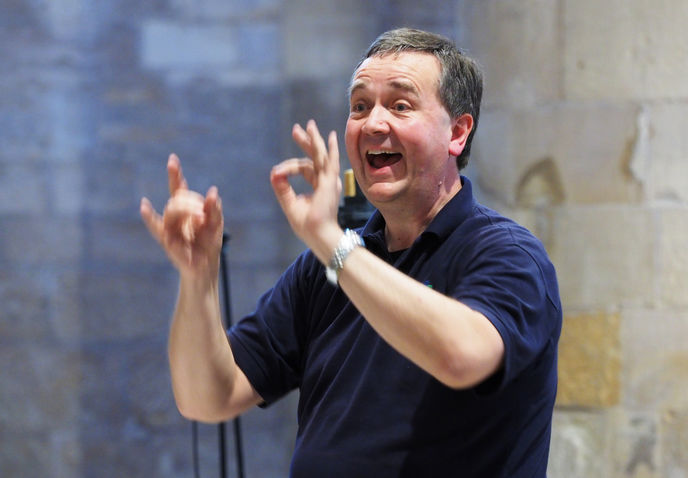
Certainly, the surging choral paragraph which launches A Song for all Seas, all Ships was powerfully conveyed with its subsequent sections introducing the soloists – Benson Wilson’s baritone ardent and mellifluous while just a little strained in its upper register, and Alexandra Lowe’s soprano such as rang out imperiously towards the centre of this opening movement. Momentum can easily falter in the latter stages, but Lucas (below) ensured its apotheosis provided an emotional counterweight to the beginning and never risked outweighing its rapt conclusion. Wilson came into his own with On the Beach at Night, Alone, its ruminative if often uneasy calm notably in evidence and with the more animated central section paced unerringly up to its fervent choral climax – after which, those brooding final pages yielded an evocative poise.

OLYMPUS DIGITAL CAMERA

As the symphony’s scherzo The Waves can feel overly contrived in context, but Lucas duly made the most of its rousing outer sections – the CBC in command of its textural intricacies – and convincingly integrated the Parry-like nobility of its ‘big tune’ into its evolving structure. Everything then came together in The Explorers, a finale which is also this work’s longest movement and features its finest music. By turns serene and speculative, the initial sections built assuredly to a rousing peroration from where the soloists’ impulsive re-emergence was the more telling. Lucas again ensured the culmination had the requisite grandeur without pre-empting the epilogue; at one with some of Walt Whitman’s most affecting lines in conveying that all-encompassing vastness as was a hallmark of Vaughan Williams’s endings henceforth.

The relatively short first half brought a welcome revival for Benedicite – its origins as a test-piece for competition likely telling against the qualities of a piece that, while it may break no new ground in its composer’s output, denotes his maturity in its vigorously wrought opening section, before a limpid setting of the 17th-century poet John Austin that brought an eloquent response from Lowe that itself preceded an energetic close. The once ubiquitous Fantasia on Greensleeves made for an appealing and by no means cloying interlude prior to the interval. All in all, this was a worthy commemoration of the respective anniversaries. The CBC can be heard in Handel’s Messiah early next month, and the CBSO continues its Vaughan Williams at 150 series next week with programmes conducted by Michael Seal and Martyn Brabbins.

You can read all about the 2022/23 season and book tickets at the CBSO website. For more information on the artists, click on the names of Adrian Lucas, Alexandra Lowe, Benson Wilson and the City of Birmingham Choir

In concert – Oliver Janes, CBSO / Ryan Bancroft: Adams, Mozart & Rachmaninoff

Adams The Chairman Dances (1985)
Mozart Clarinet Concerto in A major K622 (1791)
Rachmaninoff Symphonic Dances Op.45 (1940)

Oliver Janes (clarinet), City of Birmingham Symphony Orchestra / Ryan Bancroft

Symphony Hall, Birmingham
Wednesday 2 November 2022 [2.15pm]

Reviewed by Richard Whitehouse

Back from its successful US tour (the first such in almost a quarter of a century), the City of Birmingham Symphony Orchestra this afternoon returned to Symphony Hall for what was a programme of contrasts in which an element of dance seldom lurked far beneath the surface.

Although it is often considered emblematic of his opera Nixon in China, John Adams wrote The Chairman Dances well before completing the larger work – this ‘Foxtrot for Orchestra’ encapsulating much of its atmosphere without being intrinsic to its content. Capricious while shot through with a tellingly distanced nostalgia, this remains among Adams’s most effective concert pieces and Ryan Bancroft secured a fine account whose meticulous attention to detail was not without corresponding panache – down to its percussive ‘winding down’ at the close.

It is (nearly) always welcome when an orchestra’s section leader takes the platform as soloist, as was proven with Oliver Janes in Mozart’s Clarinet Concerto – easily the most popular such piece in its repertoire yet one that can easily seem bland or even characterless in performance. There was little chance of that here – not least with a swift and purposeful take on the opening Allegro that left relatively little room for lingering over incidental detail, even if something of its underlying elegance was sacrificed with Janes’s powers of articulation pressed to the limit.

This approach paid dividends in the remaining movements, not least an Adagio whose limpid eloquence was conveyed without trace of indulgence or wanton sentiment. The final Allegro, too, had a winning buoyancy – Janes evincing a deftness and spontaneity to which the CBSO responded in kind, and with a surge of energy towards the closing chords. It set the seal on an appealing rendition which, perhaps surprisingly, Janes will not repeat at tomorrow evening’s concert from Warwick Arts Centre – when that by Gerald Finzi will be the concerto on offer.

Soon to take the reins at the Royal Stockholm Philharmonic, Bancroft is evidently a conductor on a roll as was confirmed by his take on Rachmaninoff’s Symphonic Dances. A triptych that abounds in felicitous detail (as is often belied, if not actually concealed, by the score’s lack of expression markings), it needs flexible direction for each movement to cohere, and Bancroft had their measure. The first exuded a suspenseful energy that, in its central section, took on a winsome pathos embodied by its alto saxophone melody (affectingly played by Kyle Horch).

Even more persuasive was the sardonic central dance, its waltz motion underpinning some of the composer’s most astringent harmonies as were pointedly emphasized here. If the charged outer sections of the final dance lacked the ultimate in exhilaration, the quality of the CBSO’s response was never in doubt. In the slower middle episode, moreover, Bancroft’s deliberation ideally clarified those frequently dense textures whose expressive poise is achieved, uniquely for Rachmaninoff, without recourse to an actual melody. A sign of things to come, perhaps?

Bancroft will hopefully be returning next season, but the present one continues with events to mark the 150th anniversary of Vaughan Williams’s birth – including two of his symphonies and the film Scott of the Antarctic, for which the CBSO is contributing live accompaniment.

You can read all about the 2022/23 season and book tickets at the CBSO website. For more information on the artists, click on the names of Ryan Bancroft and Oliver Janes

In concert – Sheku Kanneh-Mason, Marie-Christine Zupancic, CBSO / Mirga Gražinytė-Tyla: Vaughan Williams, Haydn, Elgar, Weinberg & Britten

Vaughan Williams Fantasia on a Theme of Thomas Tallis (1910)
Haydn Cello Concerto no.1 in C major Hob.VIIb/1 (c1761)
Elgar Sospiri Op.70 (1914)
Weinberg Flute Concerto no.1 Op.75 (1961)
Britten The Young Person’s Guide to the Orchestra Op.34 (1945)

Sheku Kanneh-Mason (cello), Marie-Christine Zupancic (flute), City of Birmingham Symphony Orchestra / Mirga Gražinytė-Tyla

Symphony Hall, Birmingham
Wednesday 6 October 2022

Reviewed by Richard Whitehouse

Shortly to embark on its first tour of the United States in almost a quarter-century, the City of Birmingham Symphony Orchestra tonight played some of the pieces to be included there – a diverse selection that amounted to a cohesive and well-balanced programme on its own terms.

Opening the concert was one of those pieces heard on the CBSO’s album The British Project, and while this orchestra has performed Vaughan Williams’s Fantasia on a Theme of Thomas Tallis often, Mirga Gražinyte-Tyla relatively swift traversal compelled attention. The opening stages felt a little detached – the offstage ‘orchestra’, placed offstage-left, more a background presence than active participant – but the string quartet contribution was eloquently rendered while the approach to the main climax was as unerringly judged as that resonant final chord.

Sheku Kanneh-Mason has been playing Haydn’s cello concertos extensively, so there was no doubting the control and insight brought to the C major work – earliest of the pair and poised between the Baroque and Classical eras in its combining formal lucidity with melodic poise. Kanneh-Mason was mindful of the opening movement’s Moderato indication, maintaining a steady and never headlong tempo that allowed his tonal finesse and elegance of phrasing full rein. The Adagio could have had greater inward intensity, but not that stealthy transition into the return of the main theme, and the final Allegro had wit and incisiveness aplenty. A much-reduced CBSO was responsive in support – Kanneh-Mason offering an unlikely yet appealing pizzicato take on Bacharach’s I Say a Little Prayer (found on his new album Song) as encore.

There cannot have been many times when Elgar’s Sospiri began the second half, but it did so this evening to enticing effect. MG-T drew out its pathos without no trace of affectation, and if the organ part was missing, the strings’ burnished eloquence was more than compensation.

After last week’s public premiere of his Jewish Rhapsody, MG-T turned to (relatively) more familiar Weinberg with his First Flute Concerto. It also proved an ideal showcase for Marie-Christine Zupancic, longstanding section-leader of the CBSO, to demonstrate her prowess as soloist – whether in the energetic interplay of the initial Allegro, deftly understated threnody of the Adagio, or whimsical humour of an Allegro that anticipates Weinberg finales to come. The strings responded with alacrity to a piece now taking its place in a still-limited repertoire.

Britten‘s The Young Person’s Guide to the Orchestra has not been out of the repertoire in 77 years and it remains not just the finest educational work of its kind but an impressive showpiece in its own right. With the CBSO heard at full strength for the only time tonight, MG-T directed a performance which only fell short in the rather stolid rendering of the theme at the start. The traversal through the four orchestral sections threw up various distinctive cameos, while the closing fugue duly put the orchestra back together for what was an exhilarating apotheosis.

This was not quite the end, MG-T introducing the encore to feature on tour – Thomas Adès’s O Albion (from his quartet Arcadiana), here suitably evocative even if the irony of playing so -named a piece to a Birmingham audience can hardly have been lost on most of those present.

You can read all about the 2022/23 season and book tickets at the CBSO website. For more information on the artists, click on the names of Mirga Gražinyte-Tyla, Sheku Kanneh-Mason, Marie-Christine Zupancic for more information, and head to the website of Mieczyslaw Weinberg for more information on the composer.

In concert – CBSO / Mirga Gražinytė-Tyla: The Sea – Britten, Adès, Weinberg & Debussy

Britten Four Sea Interludes from Peter Grimes, Op. 33a (1945)
Adès The Exterminating Angel Symphony (2020)
Weinberg Jewish Rhapsody, Op. 36 No. 2 (1947) [First public performance]
Debussy La mer (1905)

City of Birmingham Symphony Orchestra / Mirga Gražinytė-Tyla

Symphony Hall, Birmingham
Wednesday 28 September 2022

Reviewed by Richard Whitehouse

This afternoon concert by the City of Birmingham Symphony Orchestra found Mirga Gražinytė-Tyla at the helm for her first concert as the orchestra’s principal guest conductor in what was a varied programme featuring music of (more or less) Jewish emphasis framed by evocations of the sea.

The Four Sea Interludes that Britten extracted from his opera Peter Grimes invariably makes a worthwhile concert-opener, not least with Dawn as hauntingly poised as this. MG-T drove Sunday Morning hard, so that the cross-rhythmic interplay between wind and strings came close to decoupling, but there was no lack of atmosphere either here or in Moonlight where a sense of emotional disintegration was almost tangible. Storm was as relentless and, in its latter stages, imploring as the music requires – hurtling forth toward a close of brutal finality.

Next, a revival of The Exterminating Angel Symphony as derived from the eponymous opera by Thomas Adès, commissioned and premiered by the CBSO last August. As previously, its four sections feel more a symphonic suite than symphony per se – the whole still amounting to more than the sum of its constituent parts. MG-T secured a virtuoso response – whether in the encroaching expressive ambivalence of Entrances, or relentless build-up and malevolent aura of March. Berceuse remains uninvolving in emotional content despite the allure of its scoring, while Waltzes provides a suavely ingenious finale in its inexorable motion towards catastrophe. It would be hard to imagine a more committed or convincing account, such that the composer – making one of his rare appearances as a non-performer – looked well pleased.

After the interval, MG-T continued her advocacy of Mieczysław Weinberg in what was billed as a ‘first public performance’ for his Jewish Rhapsody. One of various pieces at a time when Soviet composers attempted (inevitably unsuccessfully) to placate officialdom with music of an outwardly populist nature, it forms the middle part of a Festive Scenes trilogy only recently located in its entirety. Beginning with an affecting melody for flutes it proceeds, via solos for clarinet and violin, to sombrely eloquent music (a little akin to that of Kodály’s folk-inspired works from the 1930s) which gains in energy until breaking out in dance-music of decidedly manic cast – a recall of the initial melody on flute then oboe leading to the headlong pay-off. Superbly rendered by the CBSO, this is no mean discovery and warrants repeated hearings.

Finally, to La mer – a piece of which this orchestra has given many memorable performances over the decades, and which did not disappoint here. If the opening stages of From Dawn to Midday on the Sea were a little tentative, the theme for divided cellos was finely articulated and the apotheosis powerfully wrought. Play of the Waves had no lack of capriciousness or delicacy, while Dialogue of the Wind and the Sea duly contrasted those visceral and poetic elements towards a peroration that never lost sight of the essential pathos within its triumph. An impressive close, then, to a concert such as gave notice of the continued rapport between orchestra and conductor. MG-T returns next week for an equally diverse selection with Sheku Kanneh-Mason in Haydn and the CBSO’s own Marie-Christine Zupancic in more Weinberg.

You can read all about the 2022/23 season and book tickets at the CBSO website. You can visit Mirga Gražinyte-Tyla‘s website here – and for further information on Weinberg or Adès, click on the composer names