
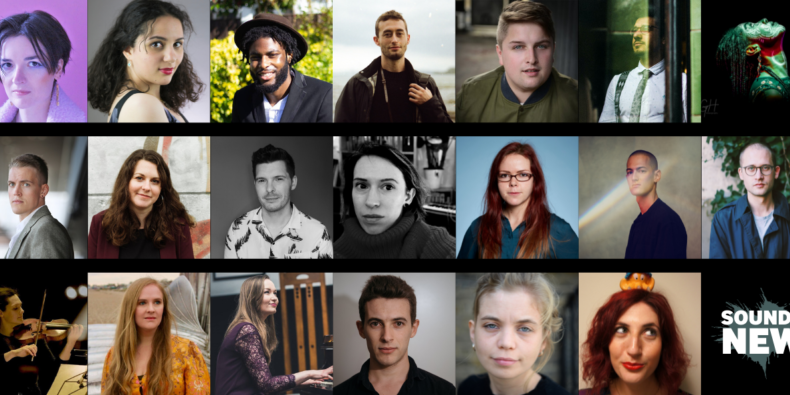
In concert – CBSO / Clark Rundell: Sounds New

Graves Fanfare
Osborn The Biggest Thing I’ve Ever Squashed
Sweeney Glisk
Zisso A Standing-stonea
Knibbs Strings Bilateral
Maunders In The Land Of Hypocrisy
Morgan-Williams Parti Di-ffinau
Latimer Bellwether
Werner Crossingsb
Crayton Encore
Singh Lament for the Earthc
Baker The Radiance of the Spirit
Järventausta Bourrée
Arakelyan Prelude and Allegro
Nobuto Egress
James Come Show Them the Riverd
Slater Unravelling the crimson sky
Dearden Anthem
Appleby Sonnet 43
Taylor-West Turning Points*

aYfat Soul Zisso, bHéloïse Werner, Bethan Lloyd, dMillicent B James (voices), cSimmy Singh (voice / violin), City of Birmingham Symphony Orchestra / Clark Rundell

Symphony Hall, Birmingham
Sunday 29 January 2023 2.30pm

Reviewed by Richard Whitehouse Photos courtesy of (and with thanks to) Aphra Hiscock and Jenny Bestwick

It might have been one of the few positive outcomes to come out of the pandemic, but the decision to programme these 20 pieces by young composers – commissioned by the City of Birmingham Symphony Orchestra as part of its Centenary Commissions – in a single concert rather than across several seasons, as originally intended, paid dividends in terms of highlighting what was an important strand of the orchestra’s activities and so enabled an overview of present-day creativity that would have been impossible within a more generalized context.
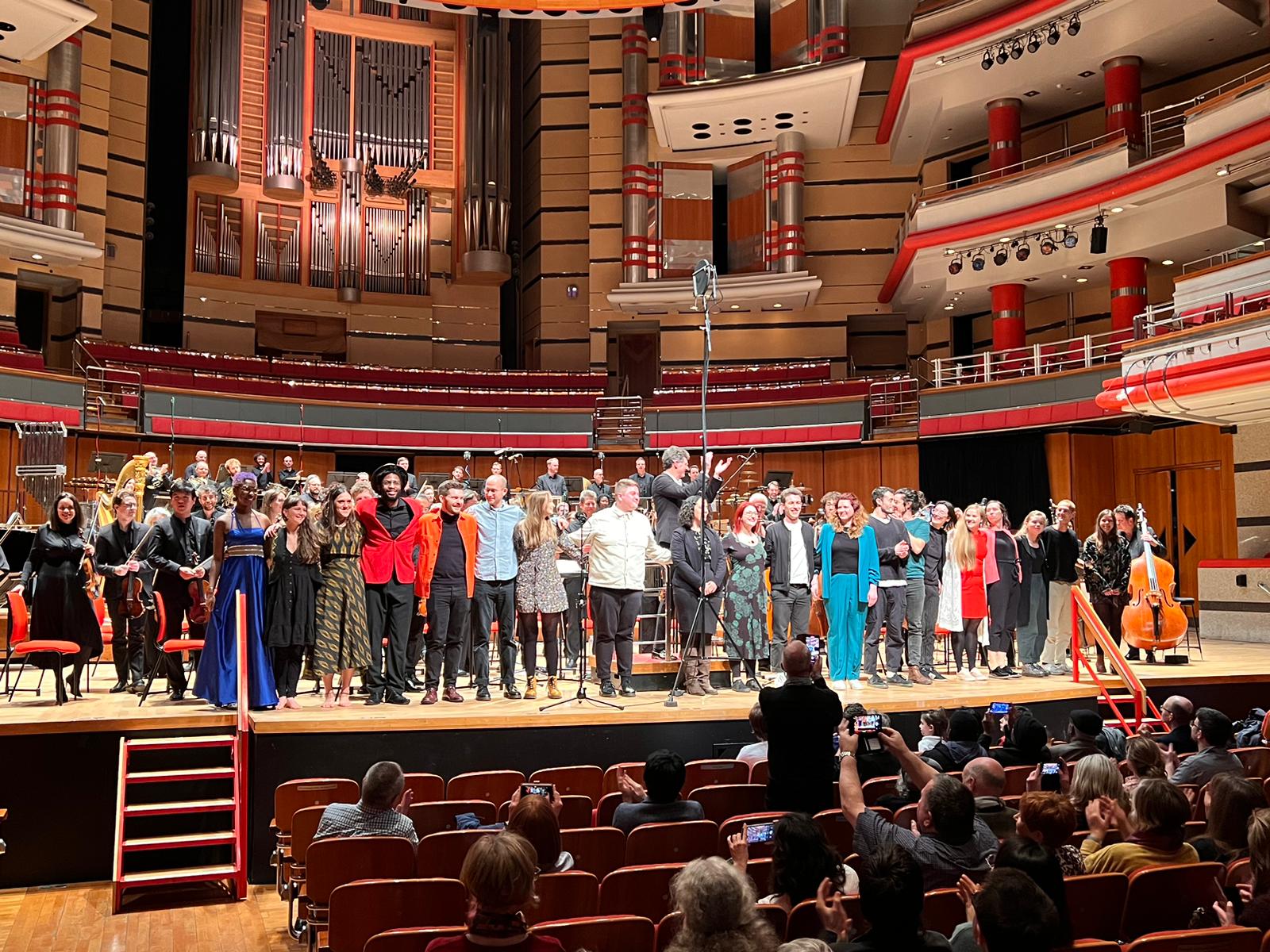
Just how the running-order was determined was unclear, but the various juxtapositions were almost always to the advantage of each piece. Benjamin Graves grasped the nettle with music all about becoming rather than being, and Laurence Osborn implied more than even anarchic humour in intricately enveloping textures. Aileen Sweeney favoured an unabashed cinematic outlook, while Yfat Soul Zisso took centre-stage for her demonstrative take on a relatively circumspect poem by Howard Skempton. Chloe Knibbs drew a halting eloquence from the interweaving string sections, in contrast to the vividly gesticulating essence that doubtless reflected the convictions of Florence Anne Maunders. There was an appealingly whimsical quality to the writing of Bethan Morgan-Williams, then a ruminative aspect to that by Ryan Latimer veering towards the hymnic. Héloïse Werner favoured a gestural approach whose vocalise brought continuity almost despite itself, before Stephane Crayton rounded off the first half with music whose brooding understatement seemed an ironic comment on its title.
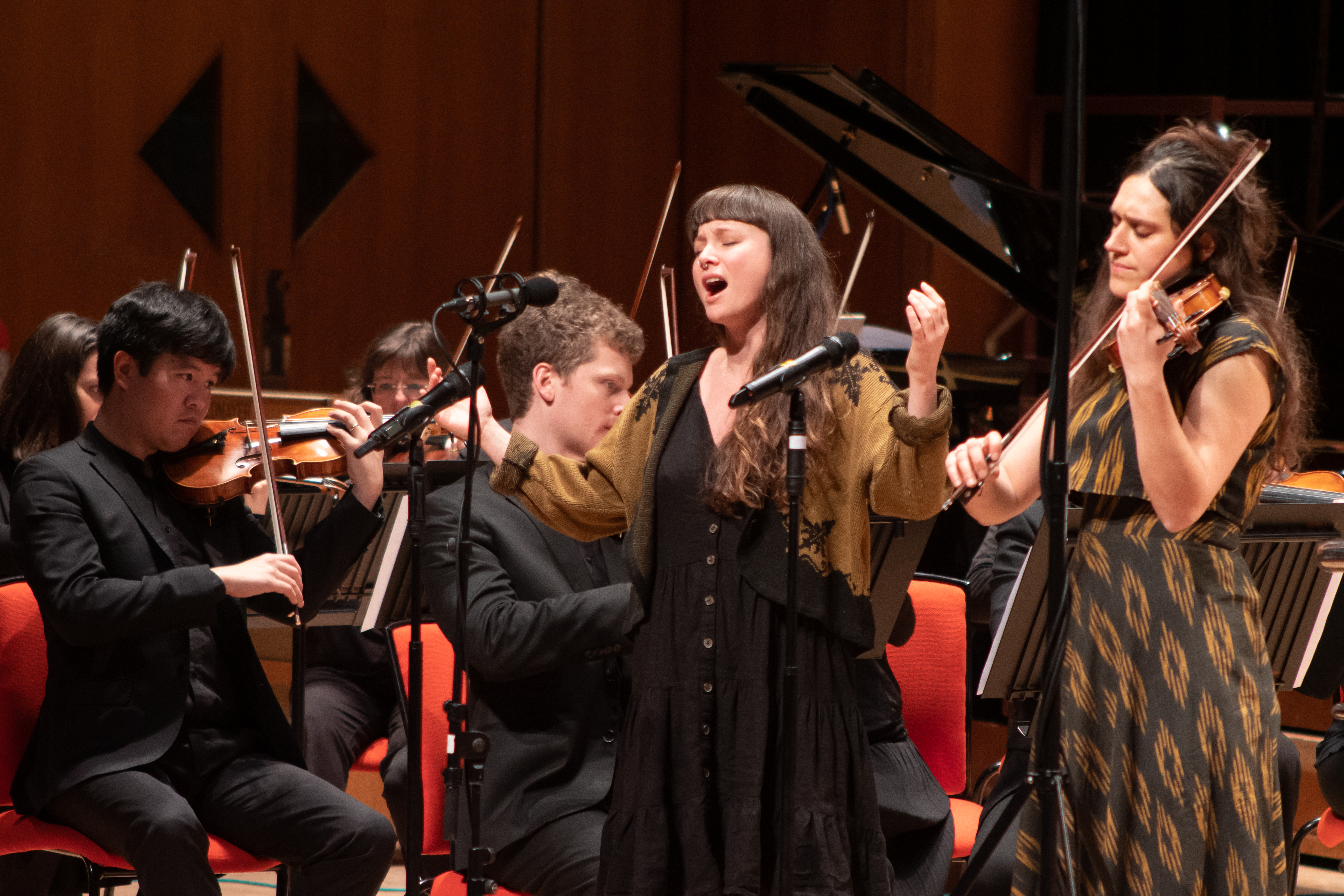
Playing violin alongside Bethan Lloyd’s impulsive vocal, Simmy Singh offered a lament of insinuating elegance, then Tyriq Baker focussed on the strings for a study of no mean pathos. Joel Järventausta must have been pleased with the performance of and response to his deftly ominous piece, as too Kristina Arakelyan by the rendering of her diptych with its evocative writing for cor anglais. Ben Nobuto fairly revelled in his capricious portrayal of the concept of ‘exiting’, whereas Millicent B James provided an undeniably charismatic rendition of her text-based setting. Angela Elizabeth Slater intrigued the ear with her fastidiously oscillating textures, while Nathan James Dearden teased out those competing implications from the title of his piece with a tellingly sardonic touch, before Anna Appleby pitched her instrumental take on verse by Elizabeth Barrett at a thoughtfully oblique remove. Ironic that the closing piece was the only one to have been heard before the pandemic, but Liam Taylor-West duly pulled out the stops with music whose scintillating orchestration more than deserved revival.
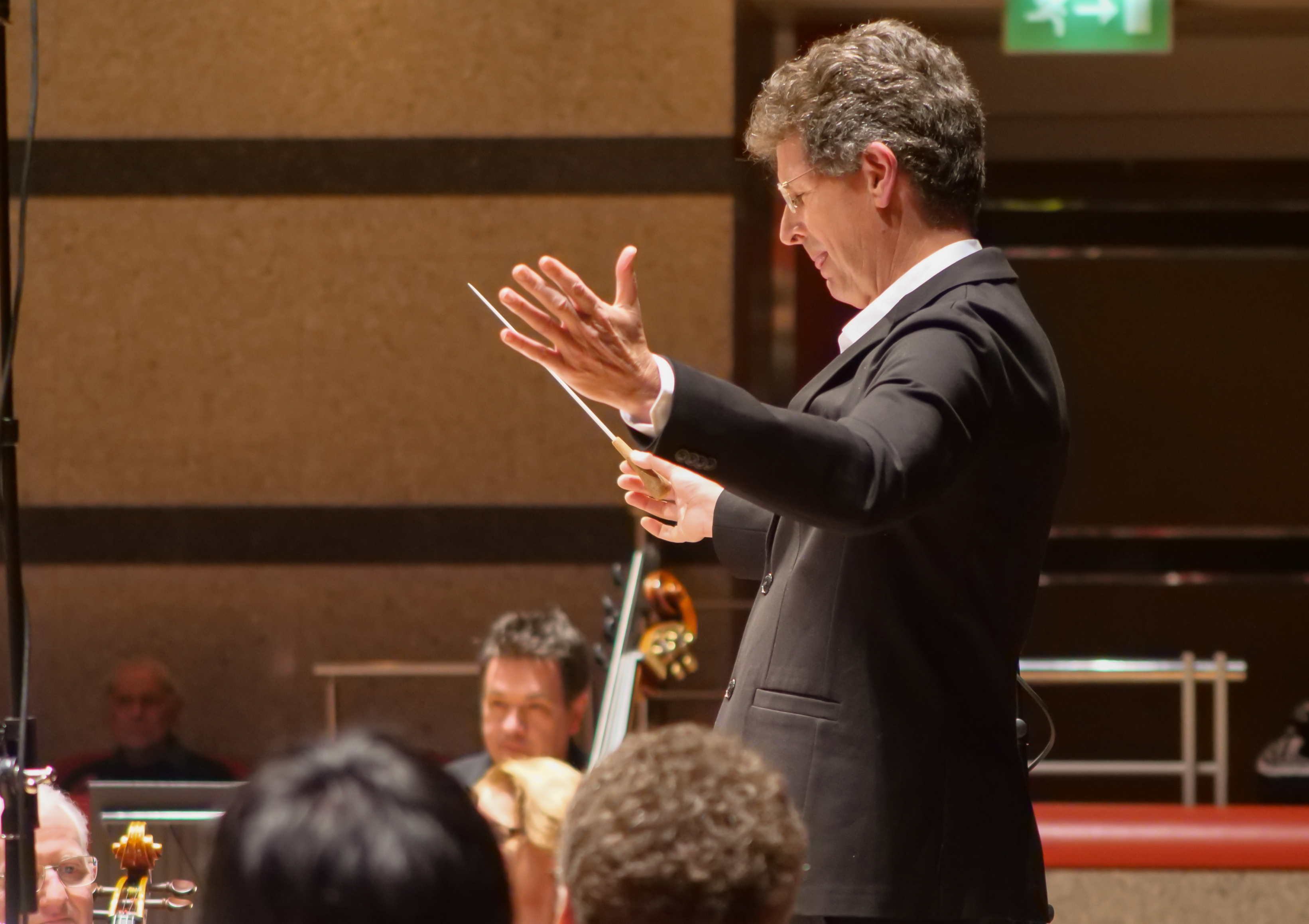
Throughout this programme, the CBSO gave its collective all over what was a considerable range of idioms – abetted by the assured conducting of Clark Rundell (above), who also introduced each half as well as providing continuity between items whenever necessary. Good to hear that the concert was being recorded by NMC Records for later digital release (with maybe an issue on CD too?), and all due credit to The John Feeney Charitable Trust for continuing to fund the orchestra almost seven decades after its first commission. The story continues…

You can read all about the 2022/23 season and book tickets at the CBSO website

In concert – Cédric Tiberghien, CBSO / Eduardo Strausser: Beethoven ‘Emperor’ Concerto & Prokofiev Symphony no.5

Wagner Lohengrin – Prelude to Act One (1846)
Beethoven Piano Concerto no.5 in E flat major Op. 73 ‘Emperor’ (1809)
Prokofiev Symphony no.5 in B flat major Op. 100 (1944)

Cédric Tiberghien (piano), City of Birmingham Symphony Orchestra / Eduardo Strausser

Symphony Hall, Birmingham
Wednesday 25 January 2023 2.15pm

Reviewed by Richard Whitehouse Picture of Eduardo Strausser (c) Peter Wallis

Is there a more evocative way to begin a concert than the Prelude to Wagner’s Lohengrin? The opera itself may fail (for the most part) to live up to the precedent set, but the quality of this piece has never been in doubt – with composers as distinct as Berlioz and Verdi having been captivated by its almost tangible atmosphere and counterpoint redolent of Palestrina in its supple inevitability. Under the assured direction of Eduardo Strausser, it made a fitting curtain-raiser to this afternoon’s concert by the City of Birmingham Symphony Orchestra.

It also provided a telling foil to Beethoven’s Fifth Piano Concerto that followed in the first half. Still the most popular of its composer’s such pieces, it is also nowadays the hardest to bring off – particularly the initial Allegro with its unabashed emotional rhetoric and overtly symphonic conception. Playing down the former aspect and rationalizing the latter, Cédric Tiberghien opted for a tensile and unaffected traversal which emphasized cohesion at the expense of grandeur – underlining just why Beethoven never again completed a concerto.

There was little to fault in Tiberghien’s take on the Adagio (save for a few errors to remind one that Beethoven’s slower music is by no means easier to play), and if the transition into the finale was less than spellbinding, that latter movement for the most part brought out the best in the rapport between pianist and conductor. The CBSO responded with the necessary rhythmic agility, and Tiberghien responded to the applause with excerpts from the Eroica Variations he has recently recorded as part of an edition of Beethoven’s works in this genre.

The engaging director of last year’s Viennese New Year concert, Strausser (above) clearly enjoys a rapport with this orchestra as was a hallmark of Prokofiev’s Fifth Symphony following the interval. Itself the most often heard of a diverse and often diffuse cycle (the ‘Classical’ more often encountered on recording than in concert), it presents notable difficulties of balance and pacing – notably the initial Andante, whose accumulating momentum needs careful handling so as not to congeal. Strausser duly had its measure, maintaining focus through to a seismic peroration – the impact from which carried over into a scherzo whose outer sections seemed more than unusually acerbic. Nor did this preclude a more genial response in the trio, its main theme held over from Romeo and Juliet and as captivating a melody as any by this composer.

That the Adagio is the emotional heart of this work only increases the need to prevent it from dragging, and Strausser’s sense of proportion ensured that the sense of dread made explicit at its climax was balanced by the serene eloquence towards its close. Heading (rightly) straight into finale, he steered a secure course through a movement whose poise is constantly being undercut by disruptive elements as take control in the coda – the composer’s perspective on imminent Soviet victory in the ‘Great Patriotic War’ remaining ambivalent even at the close.

A fine reading of a work whose stature is still questioned (and a reminder that Prokofiev’s Second Symphony still awaits its CBSO debut). Chief Conductor-designate Kazuki Yamada returns next week for an unlikely though appealing double-bill of Tchaikovsky and Holst.

You can read all about the 2022/23 season and book tickets at the CBSO website – and head to this page for the Tchaikovsky and Holst programme. Click on the artist names for more on Eduardo Strausser and Cédric Tiberghien

In concert – CBSO / Gergely Madaras: Mahler Symphony no.1

Mahler Blumine (1884)
Larcher Symphony no.3 ‘A Line above the Sky’ (2018-19) [CBSO Centenary Commission: UK Premiere]
Mahler Symphony no.1 in D major (1887-88. rev. 1898)

City of Birmingham Symphony Orchestra / Gergely Madaras

Symphony Hall, Birmingham
Thursday 12 January 2023

Reviewed by Richard Whitehouse Pictures below (c) Hannah Fathers

Following on its customary Viennese New Year concert, the City of Birmingham Symphony Orchestra continued 2023 with this coupling of Austrian symphonies – Mahler’s first such effort being juxtaposed with one of the most substantial among the orchestra’s Centenary Commissions.

Chamber and vocal pieces having established his name, Thomas Larcher has since tackled the symphonic genre with a vengeance – his Third Symphony, inspired by the ultimately tragic exploits of mountaineer Tom Ballard, considering notions of the elevated and sublime across two (more or less) continuous movements as articulated by an orchestra awash with untuned percussion plus an arresting ‘keyboard’ section of piano, celesta, cimbalom and accordion. The timbral and textural range was accordingly wide, though the tendency to veer between passages of amorphous pitch and those where an insipid modality too often failed to afford resolution or fulfilment – whether in those abrupt contrasts of the initial movement or more cumulative unfolding of its successor – meant the whole felt less than the sum of its parts.

Not in doubt was the excellence of the performance, the CBSO audibly attuned to the many expressive nuances of Larcher’s writing with Gergely Madaras (above) securing a traversal which endowed the piece with a logic and cohesion as might otherwise have been more apparent than real. Already performed in Brno, Bregenz, Amsterdam and Valladolid, this marks a further intriguing stage in its composer’s symphonic odyssey and certainly asks the right questions even if the answers seem, at least on a first hearing, to be less than convincing.

Much the same was doubtless levelled at Mahler’s ‘Symphonic Poem in Two Parts’ on its Budapest premiere in 1889 and while what had become his First Symphony almost a decade later does away with even a vestigial programme, it remains a difficult piece to make cohere. Madaras succeeded admirably for the most part – adroitly negotiating the first movement’s quirky unfolding from shimmering miasma, via folk-like geniality, to ecstatic arrival; then imbuing the scherzo with an appealing rusticity, though not even such subtle inflections of phrasing could make the trio sound less mundane than it is. As so often, the highlight was a ‘funeral march’ whose gaunt double-bass melody (eloquently rendered by Anthony Alcock) launched a movement whose intermingled irony and pathos was judiciously characterized.

Madaras duly had the measure of an infernal finale whose martial opening stage brought a visceral response from the CBSO (above), its strings heard to enticing effect in the languorous (but not too cloying) melody that follows. The central climax was finely prepared, and if more might have been made of that otherworldly passage where the main motifs are recalled as though through the ether, the approach to the peroration was vividly sustained – standing horns and trombones adding to the impact of the closing pages in their unabashed overkill.

It was astute programming to open with Blumine, salvaged by Mahler from earlier incidental music as second movement in early hearings of this symphony only to be excised thereafter. With trumpeter Jason Lewis heard to enticing effect, it here made for an atmospheric entrée.

You can read all about the 2022/23 season and book tickets at the CBSO website. Click on the artist names for more on conductor Gergely Madaras and composer Thomas Larcher

In concert – Eugene Tzikindelean, CBSO / Alpesh Chauhan: Brahms, Nielsen & Shostakovich

Brahms Tragic Overture Op. 81 (1880)
Nielsen Violin Concerto DF61 (1911)
Shostakovich Symphony no.5 in D minor Op.47 (1937)

Eugene Tzikindelean (violin), City of Birmingham Symphony Orchestra / Alpesh Chauhan

Symphony Hall, Birmingham
Wednesday 7 December 2022 [2.15pm]

Reviewed by Richard Whitehouse

A gratifyingly large house greeted this afternoon concert given by the City of Birmingham Symphony Orchestra with its former assistant conductor Alpesh Chauhan, taking in works long established in the repertoire and a concerto which remains on or about its periphery.

Tackling Brahms’s Tragic Overture depends on whether one sees it as an overture pure if not so simple, or as a tone poem with its ‘programme’ subsumed into the music’s inner workings. Chauhan favoured a viable mid-way course, his steady if never flaccid approach keeping its sonata design firmly in view but with enough expressive license to bring out the pathos in its second main theme and, especially, that spellbinding transition to its reprise when a wistful vulnerability steals over the music as if denying the implacable fatalism otherwise dominant.

CBSO leader Eugene Tzikindelean then took the stage as soloist. A bold if unexpected choice for such an appearance, Nielsen’s Violin Concerto has never quite received its due outside of Denmark but that it makes a cogent impression was never in doubt in a reading as insightful as this. Its Praeludium keenly yet sensitively rendered, Tzikindelean despatched the ensuing Allegro with the right chivalrousness and suavity. A broken string in the development caused only minimal delay as he produced its replacement then restrung his instrument with alacrity.

Its self-sufficient halves make sustaining an overall trajectory the crucial factor in this piece and Tzikindelean succeeded admirably, drawing inward rapture from the second movement’s lengthy Poco adagio before steering a never too hasty course through its lightly ironic Rondo. Tzikindelean responded to the enthusiastic response with the opening ‘Country Musicians’ section from Enescu’s Impressions d’Enfance as a delectable encore: maybe we can expect that composer’s Caprice Roumain or Pascal Bentoiu’s Violin Concerto on a future occasion?

Throughout this performance, Chauhan proved steadfast and attentive in support, then came into his own after the interval with an impressive take on Shostakovich’s Fifth Symphony. If the earlier stages of the Moderato seemed a little reined-in, the development accumulated the requisite intensity on the way to a powerfully conceived reprise, then a coda of aching regret. Steadier and less capricious than usual, the ensuing Allegretto yielded a keen impetus and, in its trio, a deftly ‘knowing’ contribution from Tzikindelean having retaken the leader’s chair.

It was the Largo that proved the highlight of this performance. Chauhan sustained its heartfelt interplay of themes with unforced rightness, CBSO woodwind heard to advantage in its rapt central episode before a climax of wrenching eloquence that subsided into expectant stillness. Launched (almost) attacca, the final Allegro unfolded with due emphasis on its ‘non troppo’ marking; its calculated aggression pointedly undercut by musing circumspection, before the heady ascent towards an apotheosis which was more than usually defiant in its equivocation.

A performance that provided ample indication of Chauhan’s emergence as a conductor of the front rank. Hopefully he will be returning to the CBSO soon, the latter’s activities continuing with the customary Christmas and Viennese New Year concerts with which to see out 2022

You can read all about the 2022/23 season and book tickets at the CBSO website. Click on the artist names for more on Alpesh Chauhan and Eugene Tzikindelean

In concert – Simon Höfele, CBSO / Kevin John Edusei: Street Music – Stravinsky, Ellington, Zimmermann & Rota

Rota La Strada – Suite (1954, rev. 1966)
Zimmermann Trumpet Concerto ‘Nobody Knows de Trouble I See’ (1954)
Ellington (orch. Henderson) Harlem (1950-51)
Stravinsky Petrushka (1910-11, rev. 1947)

Simon Höfele (trumpet), City of Birmingham Symphony Orchestra / Kevin John Edusei

Symphony Hall, Birmingham
Thursday 1 December 2022

Reviewed by Richard Whitehouse

Tonight’s concert by the City of Birmingham Symphony Orchestra was one with a difference, Kevin John Edusei directing a programme which avoided the Austro-German mainstream with a vengeance as it surveyed music with a distinctly ‘alternative’ outlook.

Federico Fellini’s La Strada accords with the realism of post-war Italian film, yet its acutely emotional undertow makes it equally prophetic and Nino Rota’s score embodies both aspects with its heady dance-music but also a plangent inwardness in those passages for solo violin (eloquently rendered here by Philip Brett) where the tragic relationship between Gelsomina and Zampanò is made explicit. The suite Rota subsequently derived from the music’s later incarnation as a ballet remains among the most significant of his output for the concert hall.

While Rota looks to popular idioms, Bernd Alois Zimmermann utilizes jazz in his Trumpet Concerto, its (later appended) subtitle denoting the spiritual as underpins much of its content and comes to the fore at crucial junctures. The subtly varied orchestration – with saxophones, Hammond organ and ‘rhythm section’ featuring electric guitar – is complemented by that for the soloist with its range of mutes and a virtuosity new to the classical domain which Simon Höfele despatched with alacrity born of conviction. The respectively brooding and headlong initial sections created an expectancy fulfilled by a climactic episode which was taken a little too fast for its layering of jazz rhythms to come through unimpeded, though the final section lacked nothing in evocative power as it subsided edgily towards a close of muted anguish.

Duke Ellington’s Harlem may now have become relatively familiar in concert, but few such performances can have conveyed the sheer panache as was evident here. Edusei traversed the numerous brief sections of this ‘Tone Parallel’ (commissioned but never conducted by Arturo Toscanini) with innate appreciation of their musical as well as scenic potency that culminates with a rhythmic energy whose effect was undeniably visceral. A little audience participation, moreover, did not go amiss in the final pages where the orchestra duly gave its collective all.

From social, via racial and cultural to psychological alienation. Stravinsky may have intended Petrushka as a vehicle primarily for balletic or orchestral display, but the inner two of its four tableaux, defining the contrasting psyches of Petrushka and the Moor as they compete for the attentions of the Ballerina, provide acute character portraits delineated here with needle-sharp clarity (not least by pianist James Keefe – his crucial obligato contribution vividly embedded within the orchestral texture). Nor did the outer tableaux lack for atmosphere – the sights and sounds of St Petersburg’s Shrovetide Fair palpably in evidence, Edusei securing more poise and pathos than was usual from the relatively utilitarian orchestration as Stravinsky revised it. The closing stages of Petrushka’s death and apparition felt spine-tingling in their immediacy.

This resourceful reading concluded what is sure to prove a highlight of the orchestra’s current season. Other concerts might attract larger attendances, but the attentiveness of those younger listeners present confirmed this as precisely the kind of event the CBSO should be presenting.

You can read all about the 2022/23 season and book tickets at the CBSO website. Click on the artist names for more on Simon Höfele and Kevin John Edusei