In concert – CBSO Winds / Nicholas Daniel: Anna Clyne ‘Overflow’ & Mozart ‘Gran Partita’

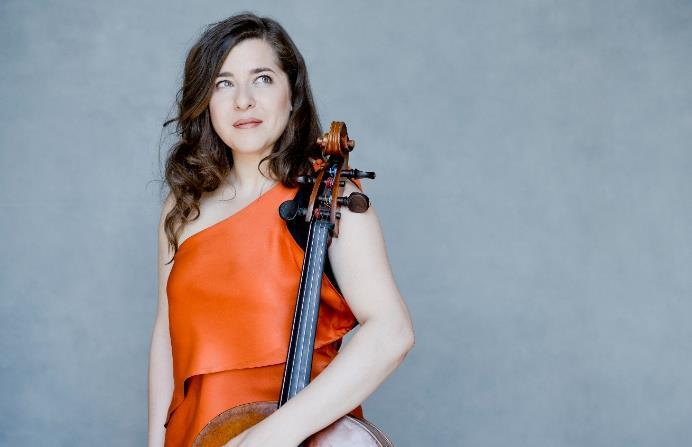
CBSO Winds / Nicholas Daniel (oboe, above)

Clyne Overflow (2020)
Mozart Serenade no.10 in B flat major K361 ‘Gran Partita’ (1781)

Town Hall, Birmingham
Sunday 26 January 2025 (3pm)

Reviewed by Richard Whitehouse

An interesting and worthwhile strand in the City of Birmingham Symphony Orchestra’s current season is the series of Sunday afternoon programmes focussing on each of the orchestra’s sections. Last November brought the strings for a perceptive account of Bach’s Goldberg Variations, as arranged by Dmitry Sitkovetsky and the present recital duly centred upon the woodwind in what was dominated – not unreasonably so – by a performance of Mozart’s epic Gran Partita.

Still the finest and probably longest work ever composed for wind ensemble, it also remains the canniest example of ‘functional’ music raised to a level such as transcends its immediate purpose. Not the least of its virtues is the way in which its orchestration – comprising pairs of oboes, clarinets, basset horns and bassoons along with four horns and double-bass – suggests timbral and textural possibilities as profound as they are far-reaching. Put another way, this is ‘Harmoniemusik’ which makes of a localized and even provincial genre something universal.

Such a quality was rarely less than present in this performance. Right from its trenchant yet never portentous introduction, the opening Allegro found an enticing balance between poise and impulsiveness matched by that between tutti and ensemble passages. The first Menuetto was notable for the winsome elegance of its second trio, then the ensuing Adagio yielded no mean pathos without risk of sentimentality at a flowing tempo abetted by that effortlessness of dialogue which proved a hallmark of this movement as of the performance taken overall.

Although less overtly characterful than its predecessor, the second Menuetto did not lack for personality and while the Romanze feels the least essential part of the overall conception, it still made for a pertinent entrée into the Tema con variazioni. This longest and most varied movement also encapsulates the work overall in its expressive contrasts which were to the fore here – the last variation preparing unerringly for a final Allegro whose relative brevity was belied by a drive, even forcefulness that propelled the whole work to its decisive close.

It was a testament to the excellence of these musicians that one never suspected the absence of any guiding hand, for all that guest first oboist Nicholas Daniel could be seen encouraging the players whenever his part permitted. Neither was there any sense of the latter being other than integral to the overall ensemble, such was the underlying felicity and finesse with which it conveyed the depths of what must surely rank among its composer’s greatest achievements. Not a bad way, moreover, for the CBSO’s woodwind to savour its occasion ‘in the spotlight’.

The programme had commenced just over an hour earlier with Overflow, a short but eventful piece where Anna Clyne draws inspiration from Emily Dickinson’s poetry (and, in turn, that by Jelaluddin Rumi) in music which treads an audibly viable balance between the ruminative and capricious. It made an understated showcase for the CBSO woodwind, whose brass and percussion colleagues are heard in the next of these recitals when Alpesh Chauhan directs a varied programme climaxing in Pictures at an Exhibition arranged by the late Elgar Howarth.

List of players: Marie-Christine Zupancic and Veronika Klirova (flutes), Nicholas Daniel and Emmet Byrne (oboes), Oliver Janes and Joanna Paton (clarinets), Anthony Pike and Steve Morris (basset horns), Nikolaj Henriques and Tony Liu (bassoons), Elspeth Dutch and Neil Shewan (horns), Julian Atkinson (double bass)

For details on the upcoming CBSO Brass & Percussion concert, heard to the City of Birmingham Symphony Orchestra website. Click on the names for more on Nicholas Daniel and composer Anna Clyne

Published post no.2,426 – Wednesday 29 January 2025

News – The CBSO announce a two-year extension for music director Kazuki Yamada

The following text comes from a City of Birmingham Symphony Orchestra press release:

The City of Birmingham Symphony Orchestra (CBSO) today announces a two-year contract extension for Music Director, Kazuki Yamada – reflecting his ever-deepening relationship with the orchestra and increasing involvement in creative decision making. The extension means that Yamada will remain as Music Director until the end of the 2028 – 2029 Season. 

In this season alone, he will have conducted more than 20 concerts in Birmingham, ranging from performances of landmark classical works, including an exploration of Ninth Symphonies by Mahler, Bruckner, Dvořák, and Beethoven. He appears twice with the CBSO Youth Orchestra and takes to the podium for the CBSO’s annual Schools’ concerts.

Last summer, Yamada played a pivotal role in bringing free live music to thousands across Birmingham during the CBSO In the City event – including performances on a tram, at New Street Station, and within the bustling Bullring shopping centre. Yamada’s role with the Orchestra extends far beyond Birmingham and this spring, he will take the Orchestra on tour to both Europe and Japan.

CBSO: Beethoven’s 9th Symphony.

Kazuki Yamada, Music Director, CBSO, says: “I am extremely happy to be renewing my contract with the City of Birmingham Symphony Orchestra. Over the past few years, I have developed such a strong connection with the orchestra, and it has been a true privilege to build on the special relationship I have with these talented musicians. The CBSO is a super happy, positive, and motivated orchestra, and I have always been inspired by their passion and dedication. There’s so much potential for us to explore together, and I’m excited about the possibilities which lie ahead. 

I love the audiences and people of Birmingham as I fully immerse myself in the culture of Birmingham as a Brummie conductor! To continue my time with the orchestra feels like a wonderful affirmation of the trust and mutual respect we’ve built, and I can’t wait to see what we will achieve together moving forward.”

The news of Kazuki’s extension follows the announcement of Catherine Arlidge MBE being appointed into the role of Director of Artistic Planning at the CBSO last month, further strengthening the Orchestra’s artistic team.

Simon Halsey CBE, who has served as Chorus Director with the CBSO since 1982, will also take on the new role of Director, CBSO Chorus later this year. In his new role, Simon will focus his work on CBSO Chorus, working closely with leaders of Children’s & Youth Choruses, and SO Vocal, to programme an incredible season of choral music.

Simon will hold the new position for two seasons, while the organisation recruits a new Director, CBSO Chorus, to begin in the 2027/28 season. Once a new Director is appointed, Simon will take on an honorary title with continued commitment to the organisation. This marks the beginning of a new chapter in his longstanding partnership with the Orchestra, which will continue for many years to come – including his 50th anniversary in 2032.

Simon Halsey CBE, Chorus Director, CBSO, says: “As I enter my 43rd year as Chorus Director of the CBSO, I continue to be thankful for the extraordinary family of singers and players, adult and youth, that strive for the very best in our large and excitingly diverse city.

An informal calculation suggests that I’ve heard over ten thousand choral auditions and taken some three thousand rehearsals on behalf of our inspiring music directors!
We have formed children’s, youth and community choirs in addition to the CBSO Chorus. And we’ve helped train 50 postgraduate choral conductors in association with the University of Birmingham.

I am beyond thrilled to extend my relationship with our choirs and orchestra in the long-term and grateful that the organisation – my musical family – will allow me to share more widely the responsibilities as the years pass; allowing me to be an active part of the organisation for 50 years.”

Emma Stenning, Chief Executive, CBSO, says: “I am thrilled that the brilliant Kazuki Yamada will remain Music Director of the CBSO until August 2029. 

From working with students at our incredible school, the Shireland CBSO Academy, to leading the Orchestra at the BBC Proms, he is truly at the heart of our music making.

More than that, he is totally committed to Birmingham, as a city of immense cultural breadth and creative opportunity.  That he can delight audiences at Symphony Hall with performances of such emotion, depth and joy, jump on a tram to bring free music to commuters, or don a Halloween costume to lead us in a night of spooky adventure at the Hockley Social Club, he entirely embodies everything that CBSO hopes to be, and we are privileged to extend our relationship with him in this way.

Simon Halsey’s work with the CBSO Chorus is already the stuff of legend. Planning through towards celebrating a remarkable half century with him in 2032 has reminded all of us of the brilliance, creativity and absolute class of his creative leadership, and we all greatly look forward to the exciting work that is to come.

Along with Cath’s step out of the orchestra into her new Director of Artistic Planning role, the CBSO’s creative leadership shows exceptional strength, and I look forward to us working together over the coming years to bring great music to Birmingham, the West Midlands and beyond.”

Pictures of Kazuki Yamada (c) Hannah Fathers (top) and Andrew Fox

Published post no.2,425 – Wednesday 29 January 2025

Playlist – Sir Simon Rattle @ 70

by Ben Hogwood

Last week the British conductor Sir Simon Rattle celebrated his 70th birthday. Since the 1980s Rattle has played a hugely important part in classical music in the UK, with important conducting posts at the City of Birmingham Symphony Orchestra, Berliner Philharmoniker and London Symphony Orchestra. In 2023 he returned once more to Germany, as principal conductor for the Bavarian Radio Symphony Orchestra.

In that time, Rattle has made a huge range of recordings, from Haydn to Adès via Beethoven, Grainger and Schoenberg. Resisting temptation to compile a playlist of snippets, I have opted for a small number of heavyweight recordings, including AdèsAsyla, Schoenberg‘s Chamber Symphony no.1 and Stravinsky‘s Le Sacre du Printemps, his first recording on starting with the LSO in 2017. Topping the bill, however, is his CBSO recording of Mahler‘s Second Symphony, the Resurrection, the piece with which he opened Birmingham’s Symphony Hall in 1991. You can listen to the playlist on Tidal below:

Published post no.2,424 – Monday 27 January 2025

In concert – Benjamin Grosvenor, CBSO / Robert Treviño: Mozart ‘Prague’ Symphony, Mendelssohn Piano Concerto no.1 & Brahms Symphony no.1

Benjamin Grosvenor (piano, below), City of Birmingham Symphony Orchestra / Robert Treviño (above)

Mozart Symphony no.38 in D major K504 ‘Prague’ (1786)
Mendelssohn Piano Concerto no.1 in G minor Op.25 (1830-31)
Brahms Symphony no.1 in C minor Op.68 (1868-76)

Symphony Hall, Birmingham
Thursday 23 January 2025 (2.15pm)

Reviewed by Richard Whitehouse Picture of Benjamin Grosvenor (c) Jenny Bestwick

Having worked with the City of Birmingham Symphony Orchestra on numerous occasions, Robert Treviño was well placed to take on a programme which was pretty demanding for all that its constituents were hardly unfamiliar – its two symphonies repertoire works to the core.

His cycle of Beethoven symphonies (Ondine) among the best of recent years, it was perhaps surprising to find Treviño boxing himself in interpretively with Mozart’s Prague symphony. If the first movement’s Adagio introduction was imposingly wrought, the main Allegro was taken at too consistently headlong a tempo for its intricacy of textures and its range of expression fully to register, though the CBSO admirably stayed the course. Nor was the central Andante wholly successful, the pervasiveness of its five-note motif not matched by the diversity of emotional responses to which this is put, with the development sounding harried rather than impetuous. Best was a final Presto that was a sizable-enough counterpart (first- and second-half repeats taken) to what went before, and its élan maintained through to the effervescent closing bars.

Fresh from having taken on Busoni’s epic Piano Concerto (most notably at last year’s Proms), Benjamin Grosvenor (above) met the very different challenge of Mendelssohn’s First Piano Concerto with comparable conviction. Written quickly but with nothing left to chance, this takes up the precedent of Weber’s Konzertstück (which, completed barely a decade earlier, had featured at Mendelssohn’s public debut) by eliding its individual movements into a succinct and cohesive whole. Vividly as Grosvenor projected its opening Molto allegro – no lack of ‘con fuoco’ – he came into his own with an Andante whose dialogue of piano and lower strings was meltingly rendered, then a final Presto both dextrous and exhilarating. The CBSO made a fine recording with Stephen Hough a quarter-century ago (Hyperion) and this was at the very least its equal.

Even so, it was Brahms’s First Symphony as proved the highlight of this afternoon’s concert. Whereas his Mozart had felt unduly beholden to ‘authentic’ concepts, Treviño was entirely his own man here – not least the opening movement whose implacable introduction linked effortlessly into an Allegro trenchantly characterized and with a cumulative impetus such as carried over into the fatalistic coda. Its eloquence never laboured, the Andante featured some felicitous woodwind and a poised contribution from guest leader Nathaniel Anderson-Frank.

Having had the measure of what feels more intermezzo than scherzo, pensive and playful by turns, Treviño steered a secure and always purposeful course through the lengthy finale. Its introductory Adagio preparing stealthily for a fervent if not over-bearing take on its majestic ‘alpine’ melody, the main Allegro was unerringly paced so that its formal elaboration never risked being discursive. Nor was the CBSO found wanting in a peroration that endowed the main motivic ideas with a resolution the more powerful for having been so acutely gauged.

There can be few seasons when Brahms’s First Symphony does not feature in this orchestra’s schedule, but Treviño’s was surely among the most impressive in recent memory; confirming demonstrable rapport between him and the CBSO one hopes will be renewed before too long.

For details on the 2024-25 season A Season of Joy, head to the City of Birmingham Symphony Orchestra website. Click on the names to read more about pianist Benjamin Grosvenor and conductor Robert Treviño

Published post no.2,423 – Sunday 26 January 2025

In concert – Martin Helmchen, CBSO / Kazuki Yamada: Mozart Piano Concerto no.26 & Bruckner Symphony no.9

Martin Helmchen (piano, below), City of Birmingham Symphony Orchestra / Kazuki Yamada (above)

Mozart Piano Concerto no.26 in D major K537 (1788)
Bruckner Symphony no.9 in D minor WAB109 (1887-96, ed. Nowak)

Symphony Hall, Birmingham
Thursday 12 December 2024

Reviewed by Richard Whitehouse Pictures (c) Beki Smith (Kazuki Yamada), Giorgia Bertazzi (Martin Helmchen)

This last concert before its Christmas and New Year festivities found the City of Birmingham Symphony Orchestra back with music director Kazuki Yamada for a coupling of Mozart and Bruckner that worked well as a programme over and above its D major-D minor framework.

Lauded for decades after his death, Mozart’s Piano Concerto no.26 was then dismissed as one of his few mature failures through a steely brilliance concealing little, if any, more personal expression. While it may lack the pathos or ambivalence that inform its dozen predecessors, its extrovert nature is complemented by a poise to which Martin Helmchen was well attuned. The martial undertow of its opening Allegro was offset by its winsome second theme and by the harmonic freedom of one of Mozart’s most capricious developments, then the Larghetto had a lilting charm cannily offset by the suavity of the closing Allegretto. That the autograph omits much of its piano’s left-hand part has led others to extemporize their own completion, but Helmchen restricted himself to cadenzas that were inventive and never less than apposite.

Yamada and the CBSO were unwavering in support, making for a performance that certainly presented this work to best advantage and reaffirmed Helmchen’s credentials as a Mozartian. Hopefully this soloist’s and conductor’s first Birmingham collaboration will not be their last.

Birmingham audiences had not so far encountered Yamada in Bruckner but, on the basis of his Ninth Symphony, here is a composer for whom he has real affinity. Not that this performance had it all its own way – the first movement, if not lacking either solemnity or mystery, did not quite cohere across its monumental span. Each thematic element was potently characterized, but their underlying follow-through felt less than inevitable such that the development lacked something of the centripetal force needed for a properly seismic impact, though the coda built with due remorselessness to a baleful close. If the Scherzo’s buoyant outer sections eschewed the ultimate violence, Yamada judged almost ideally the contrasting tempo for its trio – which latter emphasized a spectral or even sardonic humour which is surely unique in this composer.

In the absence of a finale (though such a movement was well on its way towards completion, as numerous realizations attest), the Adagio represents this work’s nominal culmination. Here orchestra and conductor gave of their interpretative best. Once again, the issue is how to fuse its almost disparate components into a sustained while cumulative totality and Yamada faced this challenge head on – the music exuding gravitas but with enough flexibility of motion to encompass its textural and emotional extremes right through to an apotheosis numbing in its unrelieved dissonance. Not that it pre-empted the coda’s benedictive quality from endowing closure on this movement as on the work as a ‘whole’, woodwind and strings gradually being drawn into the timbre of horns and Wagner tubas as these resounded eloquently into silence.

It hardly needs to be added that the CBSO’s playing abetted this impression, while Yamada’s placing of the double-bases in a row at the rear of the platform audibly galvanized the music-making and so set the seal on a performance which will doubtless linger long in the memory.

For details on the 2024-25 season A Season of Joy, head to the City of Birmingham Symphony Orchestra website. Click on the names to read more about pianist Martin Helmchen – and the orchestra’s principal conductor Kazuki Yamada

Published post no.2,394 – Sunday 15 December 2024