Playlist – Sound of Mind 3: Orchestral

Today’s playlist of music for the mind has an orchestral theme, which will hopefully bring you some colour if you’re stuck indoors.

This one features Aaron Copland‘s brightly-scored ballet music Appalachian Spring, the first movement of Rachmaninov‘s Second Piano Concerto, Elgar‘s Sospiri, shorter works by Grieg and Debussy, and Vaughan Williams‘ timeless Fantasia on a theme of Thomas Tallis:

I hope you enjoy it – and stay tuned for some uplifting Friday vibes tomorrow!

Ben Hogwood

Wigmore Mondays – Ruby Hughes, Natalie Clein & Julius Drake: Works for soprano, cello & piano

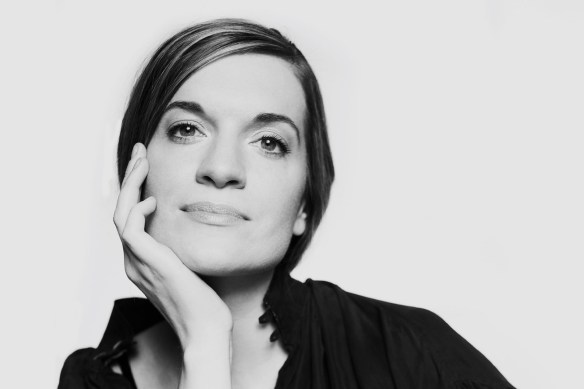
Ruby Hughes (soprano, above), Natalie Clein (cello), Julius Drake (piano, both below)

Wigmore Hall, Monday 9 March 2020 (lunchtime)

You can listen to this concert on the BBC Sounds app here (opens in a new window)

Review and guide by Ben Hogwood

A fascinating hour of music for three instruments not often linked – soprano, cello and piano. Its imaginative programme comprised music by six composers from three different centuries using four languages! It made for a very satisfying whole.

Kodály’s single-movement Sonatina for cello and piano (1:41 on the radio broadcast) began the program. This is a work with which Natalie Clein and Julius Drake are very familiar, having recorded it for Hyperion in 2009, and they immediately found its expressive core. The Sonatina was initially intended for a Sonata the composer finished in 1909, but it happened to work particularly well on its own, and was completed later. Its colourful music – which has parallels to Debussy’s own Cello Sonata – is rich in melodic and harmonic content. Free in form, it speaks directly of the composer’s Hungarian heartlands. Clein’s tone was sumptuous in this performance and Drake’s piano exemplary, the two plotting a convincing course for the work.

This was followed without a break by three of John Tavener’s 6 Akhmatova Songs, written for soprano Patricia Rozario and cellist Steven Isserlis in 1993. In effect the cello is singing here too, its wordless line providing an otherworldly introduction for the third song of the six, Boris Pasternak (10:45). Clein’s rich sound was the ideal foil for the clarity of Ruby Hughes’ soprano. Couplet (12:48) was immediately more agitated, the gruff cello adopting a more questioning slant as it helped describe the poet’s suspicion about praise of her own work. Hughes, too, was more penetrating in her delivery. Finally Dante (14:23) grew outwards from the start, its expressive line shared between singer and instrumentalist.

Deborah Pritchard’s short but powerful Storm Song (16:46), a setting of text by Jeanette Winterson, was the last part of this unbroken first sequence. Premiered almost exactly three years ago, it was led by Hughes’ wide ranging but beautifully shaped melodic lines, soaring above the sinuous cello and piano as they descended into a powerful maelstrom at the song’s heart.

Debussy’s Chansons de Bilitis were next, three heady settings of words by Pierre Louÿs, initially claimed to be erotic works from Ancient Greece. They were in fact the poet’s own construction, a fact Debussy presumably knew. La flûte de Pan (23:02) immediately transported the listener to a sultry outdoor setting and a lovers’ tryst, given appropriately chromatic settings by the composer. Julius Drake provided a rich tapestry in Debussy’s piano writing, and the humid setting was enhanced by the slow, tolling bells of the introduction to La chevelure (25:50) Hughes, now lower in her range, cast the spell. Le tombeau des naïades (29:16) closed this deliberately elusive trio, and we were left feeling as though we were all in on a rendezvous that was not supposed to be happening!

On the palmy beach is a commission from Kings Place for Judith Weir, completed in 2019 for these three performers and watched here by the composer herself. A cycle of four themed songs, it takes encounters with the sea and its inhabitants as inspiration, setting four very different poems by Wallace Stevens, Kathleen Jamie, Norman McCaig and Emily Dickinson. Weir has blogged on how she initially intended to keep the two instruments in step with each other, but how it became ‘much more alluring to liberate the cello’. Presumably for copyright reasons, the text for only one of the four poems (the Dickinson) could be printed, which made the text more difficult to follow in spite of Hughes’ wonderful singing. Yet there was a great deal of communication through the music, for which Clein and Drake were equally responsible.

Clein soared towards the heights in the prologue to the setting of Stevens’ Fabliau of Florida (34:30), where foam and cloud are one, and gave a full-throated epilogue too. Weir’s use of the cello to depict a jellyfish in Jamie’s The Glass-hulled boat (38:23) was uncanny, humorous and strangely touching, the agile lines dovetailing with Hughes’ own words. Norman McCaig’s Basking Shark (42:08) was next, the broad cello line a counterpoint to Hughes’s vivid storytelling and only latterly joined by the piano. Finally the setting of Dickinson’s I started Early – Took my Dog – (656) (46:13) was compelling, the sea toying with the author before ultimately opting not to catch her up.

To conclude a unique concert we heard Schubert’s Auf dem Strom (50:57), written for Beethoven’s memorial a year after his death in 1828 and containing a quotation from the Eroica Symphony. Setting the poetry of Ludwig Rellstab, it was written for soprano with horn and piano accompaniment, the composer later adding an obbligato cello was just as valid instead of the horn. This was to our advantage, for it enabled Natalie Clein to project the phrases beautifully, setting the scene for Hughes’ subtly wrought grief. With eloquent playing from Drake, this felt rather like the slow movement of a Schubert piano trio, but with words – expressive and touching.

Repertoire

This concert contained the following music (with timings on the BBC Sounds broadcast in brackets):

Kodály Sonatina for cello and piano (1922, published 1969)
Tavener Akhmatova Songs (1993) (excerpts) (10:45)
Pritchard Storm Song (2017) (16:46)
Debussy Chansons de Bilitis (1897-8) (23:02)
Weir On The Palmy Beach (2019) (34:30)
Schubert Auf dem Strom D943 (1828) (50:57)

Further listening & viewing

The works by Deborah Pritchard and Judith Weir have not been recorded yet, but you can hear available recordings of the works by Kodály, Tavener, Debussy and Schubert on the following Spotify playlist:

References to Natalie Clein and Julius Drake’s Kodály recordings of 2009 were unfortunately missed from the Wigmore Hall program. You can hear preview clips of their collection, including the Sonatina on the Hyperion website

The most recent collection of music by Judith Weir comes highly recommended. Airs from Another Planet is a collection of songs and chamber music, released on the enterprising Delphian label:

Meanwhile the music of John Tavener continues to enchant in a lasting way. While awareness of the composer centres all too often around his piece for cello and orchestra, The Protecting Veil, this collection of works for cello from RCA – nominated for the Mercury Music Prize in 1997 – has aged very well. It includes all six of the Akhmatova Songs, performed by dedicatees Patricia Rozario and Steven Isserlis:

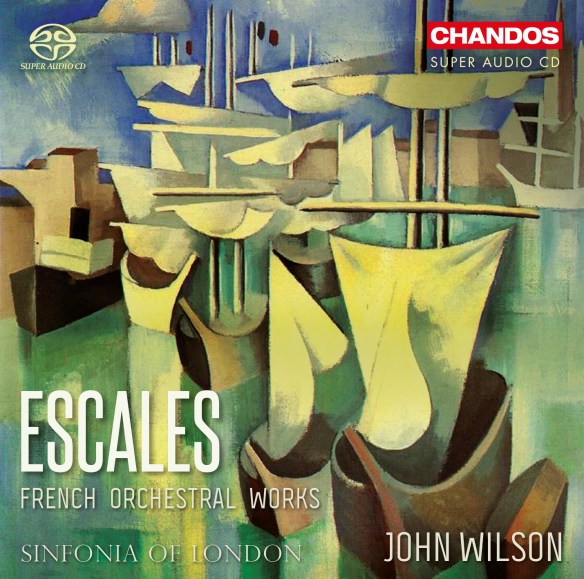
On record – Sinfonia of London / John Wilson – Escales: French Orchestral Works (Chandos)

Escales – French Orchestral Works

Chabrier España (1883)
Duruflé Trois Danses (1932)
Saint-Saëns Le Rouet d’Omphale Op.31 (1871)
Debussy Prélude a l’apres-midi d’un faune (1891-94)
Ibert Escales (1922)
Massenet Meditation from Thaïs (1894)
Ravel Rapsodie espagnole (1907-08)

Adam Walker (Debussy), Andrew Haveron (Massenet), Sinfonia of London / John Wilson

Chandos CHAN 5252 [78’19”]

Producer Brian Pidgeon
Engineer Ralph Couzens

Recorded 6-7 September 2019 (Trois Danses nos.1 & 3), 16-18 January 2019 (other works), Church of St. Augustine, Kilburn, London

Written by Ben Hogwood

What’s the story?

The Sinfonia of London, an orchestra from the 20th century given a new lease of life by conductor John Wilson, makes its second release for Chandos.

In fact we could term it as a series of Sinfonia of London buses, for you wait two decades and then two come along at once! The orchestra’s renaissance began with a stunning account of Korngold’s Symphony in F sharp last year, but now they turn their attention to France, and an imaginatively chosen program celebrating the elusive but immediately recognisable French orchestral sound.

What’s the music like?

A complete pleasure. Although irresistibly French, the music in the collection does remind us of the close bond between France and Spain, thanks to classics of the repertoire from Chabrier and Ravel and a relative rarity from Ibert.

Chabrier‘s España begins the collection and it is an absolute delight, a feel good piece given even more of a lift in this brilliant account. Wilson’s instincts for the stage come to the fore immediately, the bouncy rhythms and cheeky asides proving irresistible when presented with this much colour and warmth.

At the other end Ravel’s Rapsodie Espagnole is no less characterful. The atmospheric Prélude à la nuit ghosts in from silence, Wilson delighting in the orchestral textures and Ravel’s masterly sense of line. The persuasive rhythms of the Feria are expertly judged, the silky strings giving way as the music surges forward with terrific momentum.

Between these two gateposts are works of colour and élan. It is so good to see the inclusion of relative rarities in Duruflé’s Trois Danses, one of only two completed orchestral works in his output, and Ibert’s underrated Escales (Ports of Call) which gives the collection its name. The Duruflé sparkles in Wilson’s hands, violins caressing the longer melodies of the Divertissement, first dance of the three. Much of the composer’s relatively small output is for organ, which he effectively uses as his orchestra, but a persuasive Danse lente and thrilling Tambourin give us further proof of his prowess with large forces, harnessing the influence of Dukas. The latter features a particularly enticing saxophone solo, the recording indulging the colour and scope of Duruflé’s writing.

The Ibert, meanwhile, is a treat. Just over a minute into Escales‘ first movement, Palermo, there is what can only be described as a murmuration of violins, the music fluttering upwards in a bold sweep. Meanwhile Wilson secures a terrific drive to the description of the third ‘port’, Valencia, which ends with a flourish.

Before Escales comes a fresh faced account of Debussy’s Prélude a l’apres-midi d’un faune, the piece that effectively changed the face of music on the eve of the 20th century. Wilson and his charges capture the sense of newness, but also the enchanting and harmonies, with seductive playing from flautist Adam Walker. By contrast the Méditation from Thaïs, Massenet’s most famous orchestral excerpt, is more conventional. It could have felt misplaced here in terms of mood and musical language, but orchestra leader Andrew Haveron invests it with plenty of affection and never overdoes the romantically inclined melodies.

The packed release also finds room for a symphonic poem by Saint-Saëns. Le Rouet d’Omphale (The Spinning Wheel of Omphale) is a relatively early work and a great example of the composer’s melodic flair and ability for musical programming in thrall to Liszt. Wilson has its measure fully, pacing the music’s build ideally in arguably the finest modern recording since Charles Dutoit’s classic account with the Philharmonia in 1980.

Does it all work?

Yes. This is a brilliantly played and really well-chosen program, suiting both the curious listener and the familiar Francophile. What comes through most of all is the sheer enthusiasm and flair of the players, galvanized by Wilson in accounts that are both instinctive and incredibly well prepared.

From the opening notes of España it is immediately clear how this collection is going to go, and with the changes in mood suitably well planned and ordered – save arguably the Massenet – it is a listening experience you will want to return to often.

Is it recommended?

Wholeheartedly. This is music making as it should be, celebrating great orchestral music packed full of good tunes, instrumental colour and the ability to paint vivid pictures of its subjects. Wilson and his charges should be congratulated for an achievement which will surely land them with a glut of awards in the next few months – and only heightens the anticipation for their third release on Chandos, later this month, when they will return to Korngold for the Violin Concerto and String Sextet. In the meantime, make the most of this wonderful set of French fancies!

Listen

Buy

You can listen to clips from this disc and purchase a copy at the Chandos website here

Wigmore Mondays – Lucie Horsch & Thomas Dunford: Music for Recorder and Lute

Lucie Horsch (recorder, above), Thomas Dunford (lute, below)

Wigmore Hall, Monday 10 February 2020 (lunchtime)

You can listen to this concert on the BBC Sounds app here (opens in a new window)

Review and guide by Ben Hogwood

The recorder does not appear to have great appeal or exposure to the concert-going public, yet with a few more concerts like this from Lucie Horsch and Thomas Dunford could change that perception very quickly indeed.

The Dutch player Horsch is still only 20, but she demonstrated incredible virtuosity and command of the four or five different instruments she called upon in this recital. Not only that but her musical instincts were extremely sound, her communication with equally stylish lute player Thomas Dunford borne of friendship and a shared enjoyment of the music. It said much that when the solo pieces were being performed, the instrumentalist not involved listened closely and often smiled in response to the phrases they heard.

The well-planned concert was packed with music from the 16th, 17th and 18th centuries, with a brief excursion to the 20th for a brave and brilliantly realised arrangement of Debussy’s Syrinx. That appeared fourth in a list of 11 pieces from no fewer than 10 composers, performed in four logical blocks.

Horsch and Dunford started together with the Sonata Seconda in stil moderno by Venetian composer Dario Castello (from 1:58 on the broadcast link). If you listen you will hear the purity of the recorder’s tone, on a soprano instrument, and the mottled sound of the lute which complements it ideally. It may sound as though Dunford is playing with a very relaxed air, but watching him confirmed there is a lot of work going on behind the scenes for the part to sound so instinctive. As the sonata unfolds here Horsch demonstrates her bravura in the faster music.

Dowland’s Preludium (7:31) follows, a subdued, slightly downcast piece for lute that works well as an introduction for Horsch’s own arrangement of the famous song Flow, my tears (12:19). Here the two communicated beautifully, even with the vocal line slightly tampered by the recorder’s limitations on producing vibrato.

This is followed by the Suite no.5 in F from the French composer Charles Dieupart, a set of six dance movements prefaced by an Ouverture (16:35). The dances are an Allemande (17:46) with an attractive lilt, then a lively and spiky Courante (20:54); both are countered by a slower Sarabande (22:11). Then comes a Gavotte with a spring in its step (24:24), a Menuet en rondeau (25:19) and finally a lively Gigue (26:46), where Dunford’s lute strumming gives a good snap to the rhythms.

We then jump forward over 200 years for Horsch’s own arrangement of Debussy’s famous solo flute piece Syrinx (28:48). This is a remarkable performance, given the definition Lucie gets from the very difficult lower notes on her recorder. Here the subdued but sonorous tones take on an exotic and faintly South American air.

She turns to a slightly smaller instrument for the Philidor, a Sonata in D minor with four movements. It begins with a slower introduction (32:16), an intricate fast movement with the players swapping melodies (34:33), an elegant Courante (35:37) and a much more deliberate Les notes égales et détachez (36:45), which blossoms into a lively fast section.

For the next sequence of three pieces we get an idea of how far the performers have looked for this programme, with a really nice blend of moods and colours. Les Voix Humaines (40:26), an arrangement of a piece for solo viol by Marin Marais, is subdued but stylish in Dunford’s solo lute performance. That blends into the enchantment of François Couperin’s nightingale, strongly evoked by Horsch in Le rossignol-en-amour (44:00). Horsch then gives a short but moving dance from Dutch composer Jacob van Eyck (46:35). Recercadas by Diego Ortiz (48:47) is a florid response, with the lute strummed like a guitar. Then comes the remarkably modern sounding world of Joan Ambrosio Dalza’s Calate ala spagnola (51:30), with repeated notes anticipating tremolos in much later guitar music, brilliantly played by Dunford before the music fades away.

Finally the Marais Couplets de folies (54:48), a set of variations on the famous tune La Folia. Dunford’s lute sets out the theme before the recorder enters. Its lines grow in difficulty, and there were some eye-popping moments of virtuoso brilliance from Lucie Horsch here. With the two performers sat together they still cut a relaxed presence, as though both were performing in your own front room. An unnamed encore, unfortunately dropping off the end of the broadcast, encapsulated the bright and instinctive music of the previous hour.

Repertoire

This concert contained the following music (with timings on the BBC Sounds broadcast in brackets):

Castello Sonata Seconda in stil modern (published 1629) (1:58)
Dowland Preludium (7:31); Flow my tears (12:19) (both 1600)
Dieupart Suite No. 5 in F major (publ. 1701) (16:35)
Debussy Syrinx (1913) (28:48)
Philidor Sonata in D minor (publ. 1712) (32:16)
Marais Les Voix Humaines (publ. 1701) (40:26)
François Couperin Le rossignol-en-amour (publ. 1722) (44:00)
van Eyck Lavolette (publ. 1646) (46:35)
Ortiz Recercadas (unknown, 16th century) (48:47)
Dalza Calate ala spagnola (unknown, 16th century) (51:30)
Marais Suite in D minor – Couplets de folies (Les folies d’Espagne) (publ. 1701) (54:48)

Further listening & viewing

The music from this concert can be heard in the playlist below, with some of the repertoire appearing on Horsch and Dunford’s most recent release Baroque Journey. The original versions of Dowland’s Flow, my tears and Marais’ Le Voix Humaines are included.

Baroque Journey is itself a very enjoyable listen, showing off the complementary talents of both of the soloists in this concert:

Meanwhile the music of Charles Dieupart can be explored in the company of Henry Purcell, both composers’ music for recorder making up this album from Hugo Reyne and La Simphonie Du Marais:

Finally a link to the remarkable music of Marin Marais and the second book of his Pièces De Viole, played by the masterful Jordi Savall:

In concert – Martin Fröst & Roland Pöntinen at Wigmore Hall

Martin Fröst (clarinet), Roland Pöntinen (piano)

Wigmore Hall, Monday 16 December 2019

Review and guide by Ben Hogwood

A concert that was relatively short on music but extremely high on musicianship and virtuosity. Martin Fröst is one of the finest clarinettists at work today, and fellow-Swede Roland Pöntinen, with whom he has enjoyed a musical partnership for 25 years, is an extremely highly respected pianist either in a solo capacity or here as a chamber music ally. Both delighted their young Wigmore Hall audience – yes, that can be a thing at this venue’s concerts! – who were on their feet at the end.

The two gave us ‘French Beauties and Swedish Beasts’, a concert based on their first disc for BIS made 25 years ago. The beauties were first, in the shape of Debussy and Poulenc. The former’s Première rapsodie was written as a competition piece for the Paris Conservatoire, and later orchestrated in a form revealing its stylistic parallels with the composer’s ballet Jeux. There was a balletic feel to this interpretation too, Fröst’s languorous tone complemented by the stop-start rhythms of Pöntinen’s piano part. Initially the music was happy to indulge in its warm, lush surroundings but gradually it grew more agitated until Fröst’s final, bluesy solo.

Poulenc’s Clarinet Sonata, a late work, is dedicated to the composer Arthur Honegger and received its first performance in the hands of no less a duo than Benny Goodman and Leonard Bernstein. It is difficult to imagine a better account than here, with Fröst’s tone in the quieter and reflective passages simply sublime, layered with emotion. This was complemented by a sparky finale, where the music flew out of the gate like a horse let into an open field. The performers finished each other’s musical sentences in a performance of wit, charm and sensitivity.

The first of the ‘Swedish Beasts’ followed, a piece from Anders Hillborg written for the partnership before his breakthrough work, the Clarinet Concerto which Fröst recorded some seven years later. This was a piece of two extremes, flitting between reflective slow phrases and sharp retorts where the clarinet used the outer limits of its register. It was effective and a concentrated piece showing off Fröst’s technical prowess.

The second Swedish Beast was much more benign, but Roland Pöntinen’s own Mercury Dream showed an affinity with the blues. Nocturnal New York seemed to be its focus, especially in the easily paced piano introduction and postlude, but when Fröst joined the music became more animated.

Prior to that the pianist (above) gave us two substantial chunks from Ravel’s Miroirs. His account of Une barque sur l’océan was highly pictorial, and his Alborada del gracioso had swagger, even if some of the initial phrases were clipped. Pöntinen has not yet recorded Ravel and it would be interesting to set alongside his many BIS recordings of earlier music.

The partnership finished with Chausson’s Andante and Allegro, a discovery from the composer’s Bayreuth period in his mid-twenties, before Wagner’s spell exerted itself on his music. This was an enjoyable piece, full of melodic grace in the flowing Andante before turning slightly darker for the passionate Allegro.

We had two superb encores from the duo, playing pieces Fröst has previously given with orchestra. BrahmsHungarian Dance no.1 in G minor surged forward passionately, while Göran Fröst, the clarinettist’s brother, contributed the hugely entertaining Klezmer Dance no.2, full of good tunes and musical banter between clarinet and piano. Given the technical expertise on show, the standing ovation that followed was inevitable.

Repertoire

This concert contained the following music:

Debussy Première rapsodie (1909-10)
Poulenc Clarinet Sonata (1962)
Hillborg Tampere Raw (1991)
Ravel Miroirs: Une barque sur l’océan; Alborada del gracioso (1904-5)
Pöntinen Mercury Dream (1994)
Chausson Andante and Allegro (1881)

Encores
Brahms Hungarian Dance no.1 in G minor ()
Göran Fröst Klezmer Dance no.2

Further listening

You can hear the music from this concert on the Spotify playlist below:

You can hear the album French Beauties and Swedish Beasts in its entirety on Spotify below. Alongside the items from this concert it includes the rather wonderful Saint-Saëns Clarinet Sonata:

Meanwhile Anders Hillborg’s Clarinet Concerto Peacock Tales’ written for Fröst, can be heard in its premiere recording here: