In concert – Eugene Tzikindelean, CBSO / Kazuki Yamada: Dai Fujikura, Walton & Berlioz

Eugene Tzikindelean (violin), City of Birmingham Symphony Orchestra / Kazuki Yamada

Fujikura Wavering World (2022) [CBSO co-commission: UK premiere]
Walton Violin Concerto in B minor (1938-9, rev. 1943)
Berlioz Symphonie Fantastique, Op. 14 (1830)

Symphony Hall, Birmingham
Wednesday 17th January 2024

Reviewed by Richard Whitehouse. Photos (c) Beki Smith

Tonight’s concert by the City of Birmingham Symphony Orchestra brought a varied trilogy of works, one which started with a first UK hearing (following its premiere in Seattle almost two years ago) of Wavering World by the Japanese-born and British-based composer Dai Fujikura.

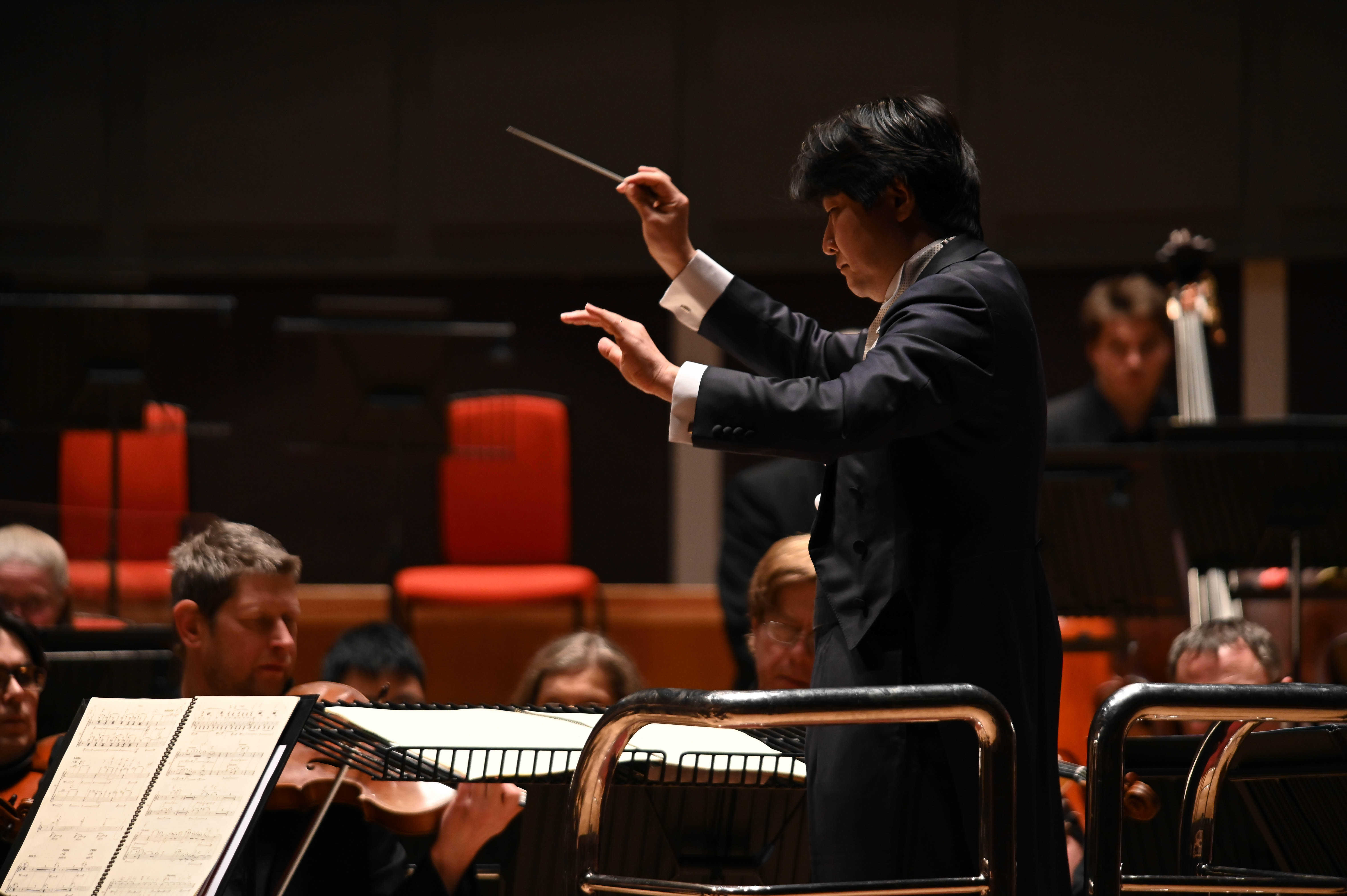
In his programme note, Fujikura remarks on how little he knew of his traditional culture until having left Japan, and this piece draws upon the myth surrounding creation for an eventful if always cohesive journey through the emergence of the heavenly world, the human world and the underworld. This is achieved by separating the orchestra into stratified layers that do not succeed each other as merge into diverse and intricate textures where these sizable forces are imaginatively deployed; the music gradually moving away from its earlier austerity toward a luxuriance whose salient motifs are recognizable despite their transformation. Directing with unerring focus, Kazuki Yamada secured a vivid rendition which also served as a reminder that Fujikura is less often heard than might be in his country of residence these past three decades.

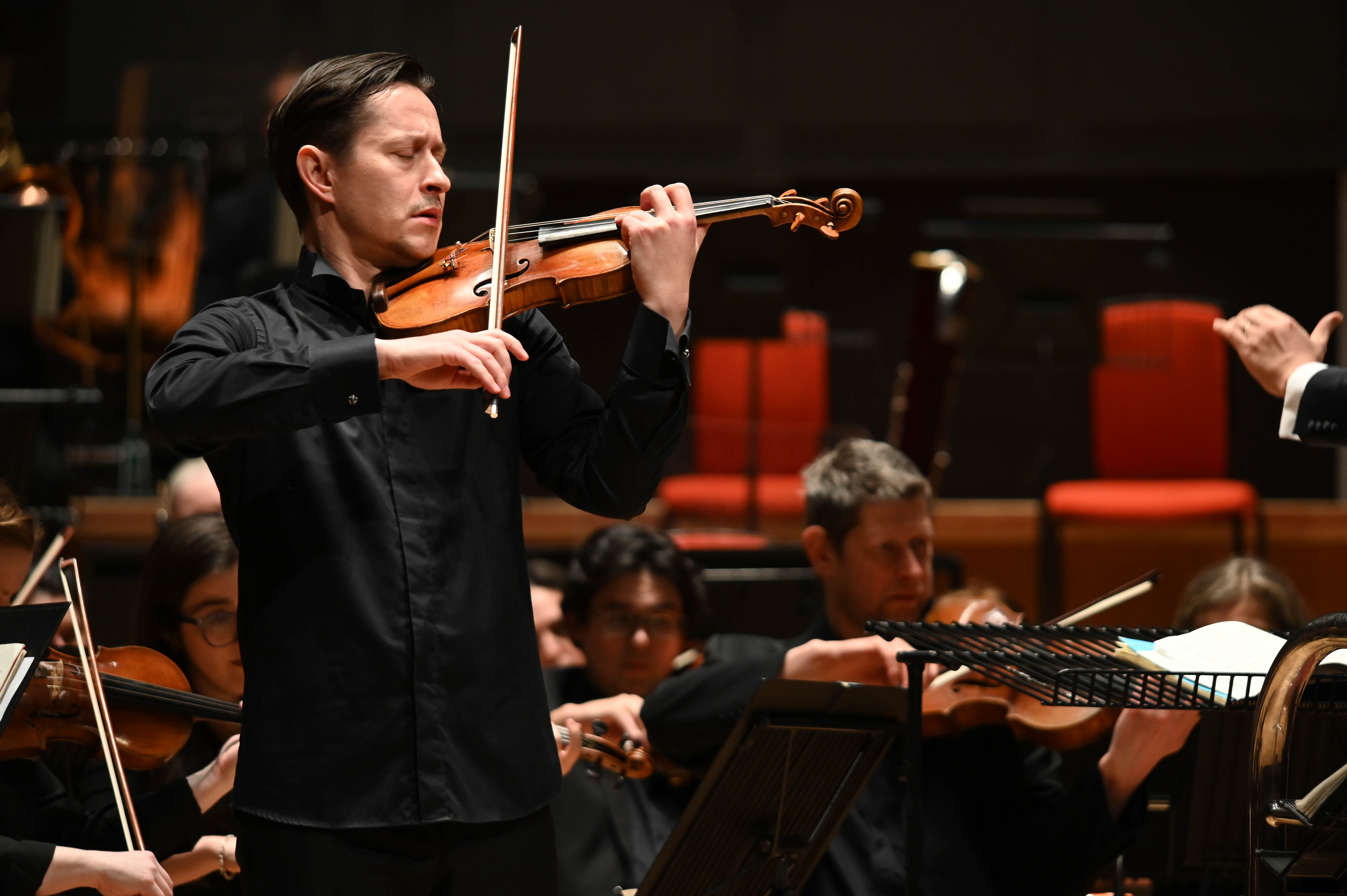
The fortunes of Walton’s Violin Concerto have lessened this past quarter-century, so Eugene Tzikindelean’s advocacy was its own justification. He had the measure of the initial Andante’s alternation between languor and agitation, ingenuity of thematic transformation offsetting any lack of originality in its themes, then gave of his best during a central Presto whose technical fireworks are tellingly balanced by yearning lyricism. If the final Vivace was less convincing, this might have reflected on the actual music – Walton putting his ideas through their audibly Prokofievian paces before evoking Elgar in a lengthy accompanied cadenza then gratuitously affirmative coda. The CBSO gave stalwart support, just over 50 years since it accompanied Yehudi Menuhin and the composer in a performance commemorating Walton’s 70th birthday.

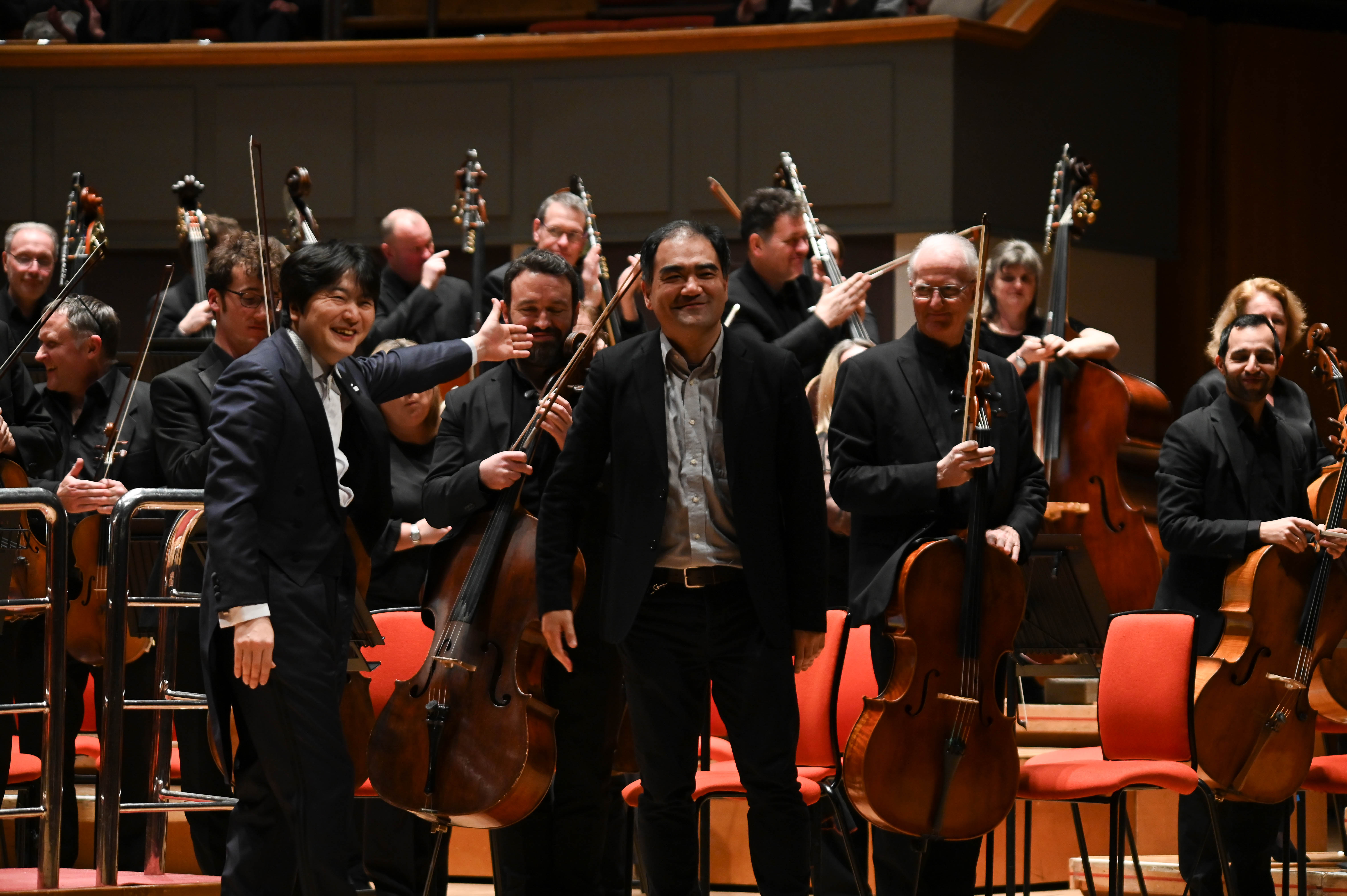
After the interval, Yamada (above) presided over a ‘no holds barred’ reading of Berlioz’s Fantastic Symphony. The latter-day tendency is to stress its symphonic cogency, but there was little of this in a Daydreams and Passions veering impulsively, even recklessly, between despondency and elation. The waltz element of A Ball was nudged out of shape, but its darker undertones were well judged, with the lengthy build-up then lingering subsidence of Scene in the Fields enhanced by Rachael Pankhurst’s plangent cor anglais and ominous timpani toward the close.

This was hardly the first performance to head off seemingly at a tangent, but March to the Scaffold (shorn of its first-half repeat, as had been the opening movement) quickly became   a parade-ground romp in which the fateful fall of the guillotine went for relatively little. Nor was Dream of a Witches’ Sabbath without its Disney-like element of overkill, though here Yamada ensured a stealthy accumulation through its reiterations of the Dies irae plainchant and fugal episode to a peroration whose thunderous power seemed nothing if not conclusive.

An Episode in the life of an Artist, indeed, as demonstrably left its mark on the enthusiastic audience. Yamada and the CBSO will be doing it all again on April 10th, but next week sees the more Classical appeal of Mozart and Beethoven in the company of Maxim Emelyanychev.

Click on the link to read more on the current CBSO concert season, and on the names for more on violinist Eugene Tzikindelean, conductor Kazuki Yamada and composer Dai Fujikara

Published post no.2,063 – Sunday 21 January 2024

In concert – Birmingham Contemporary Music Group: Blossoming In Birmingham

Oliver Janes (clarinet), Philip Brett, Stefano Mengoli (violins), David BaMaung (viola), Arthur Boutillier (cello), Birmingham Contemporary Music Group / Otis Lineham, Kazuki Yamada (conductors)

Illean Januaries (2017)
Fujikura Perpetual Spring (2017)
Ligeti String Quartet no.2 (1968)
Hosokawa Blossoming (2007)
Fujikura Secret Forest (2008)

BCMG NEXT [George Blakesley (clarinet), Anna Vaughan (violin), Alma Orr-Ewing (viola), Finley Spathaky (cello), Rob Hao (piano)

Fujikura Scion Stems (2010)
Illean Février (2019)
Fujikura Halcyon (2011)

CBSO Centre, Birmingham
Saturday 29 April 2023 (7pm and 9pm)

Reviewed by Richard Whitehouse

Spring may have arrived tardily this year, but Birmingham Contemporary Music Group was certainly in full bloom with this judiciously balanced and absorbing programme that featured one post-war classic and two pieces by one of the leading composers from the present time.

First, though, the welcome opportunity to hear a work by Lisa Illean, whose understated and fastidiously realized music conceals more than is evident on initial hearing. Such is true of Januaries, inspired by memories of holidays in Queensland together with descriptions of the Australian landscape. Its innate subtlety finding a direct parallel in this composer’s drawing of often ethereal yet always evocative timbres and textures from her 12-strong ensemble; and throughout which BCMG responded with due commitment to the direction of Otis Lineham.

The first of two pieces this evening by Dai Fujikura, Perpetual Spring drew inspiration from the Japanese Garden in Portland (US), notably the idea of growth as a process both ongoing and inexorable. Heard from this vantage, the clarinet represented a conceptual and expressive focal point; around which the string quartet weaved its dense if never claustrophobic texture with audible dexterity. Here, too, the music implied considerably more than was ever stated – no doubt in accord with the ‘‘power of ‘quiet’ nature’’ its composer took as his starting-point.

Although it now tends to be overshadowed by its predecessor, Ligeti’s Second String Quartet remains one of his most significant works – its five movements a compendium of his musical practice during the late 1960s, but with a formal and expressive focus that amply sustains the 20-minute whole. It was a measure of this account that a cumulative impetus carried through not merely to the explosive fourth movement, but also a finale whose textural mirage took in allusions to what went before: the music not so much ceasing as dispersing beyond earshot.

The string quartet was also Toshio Hosokawa’s chosen medium for Blossoming. Taking the image (and most probably its mythical association) of a lotus as its starting-point, the piece opened out in music typical of this composer for its unforced elegance and felicitous aura.

Considerably more engrossing an all-round experience, Fujikura’s Secret Forest is among the most impressive of his ensemble works and not least for its visceral conception. Placed centre-stage, the string nonet was balanced with groups of woodwind and brass either side, and above the auditorium. It was the ensuing interplay between the spatially arrayed sound-sources, strings intense in their eloquence and winds hieratic in their intangibility, that the conductor shaped over its course – not forgetting the solo bassoon, seated in the auditorium, who became a human figure plotting a course through this sonic landscape. The piece was directed with conviction by Kazuki Yamada and promises much for the Fujikura commission Wavering World, which he will premiere with the CBSO in Symphony Hall on January 17th.

A pity not more punters remained for the post-concert performance by musicians of BCMG NEXT, which featured two more works by Fujikura. Scion Stems took string trio as the basis for a wide-ranging discussion of textures made even more immediate by its brevity, whereas Halcyon pursued a more circumspect yet never disengaged interplay between clarinet and string trio. In between, Février found Illean’s writing at its most sensuous in its sequence of exchanges between clarinet, cello and piano to which these players likewise did full justice. The current NEXT line-up performs its final concert on June 11th, while BCMG itself returns to Birmingham Town Hall on May 12th for its TREE Concert featuring a new commission by Christian Mason alongside one of the most impressive compositions by Helmut Lachenmann

For more on future BCMG events, click on the link to visit their website. For more information on the composers featured, click on the names to read about Dai Fujikura, Lisa Illean and Toshio Hosokawa, while you can read about the conductors by clicking on Kazuki Yamada and Otis Lineham