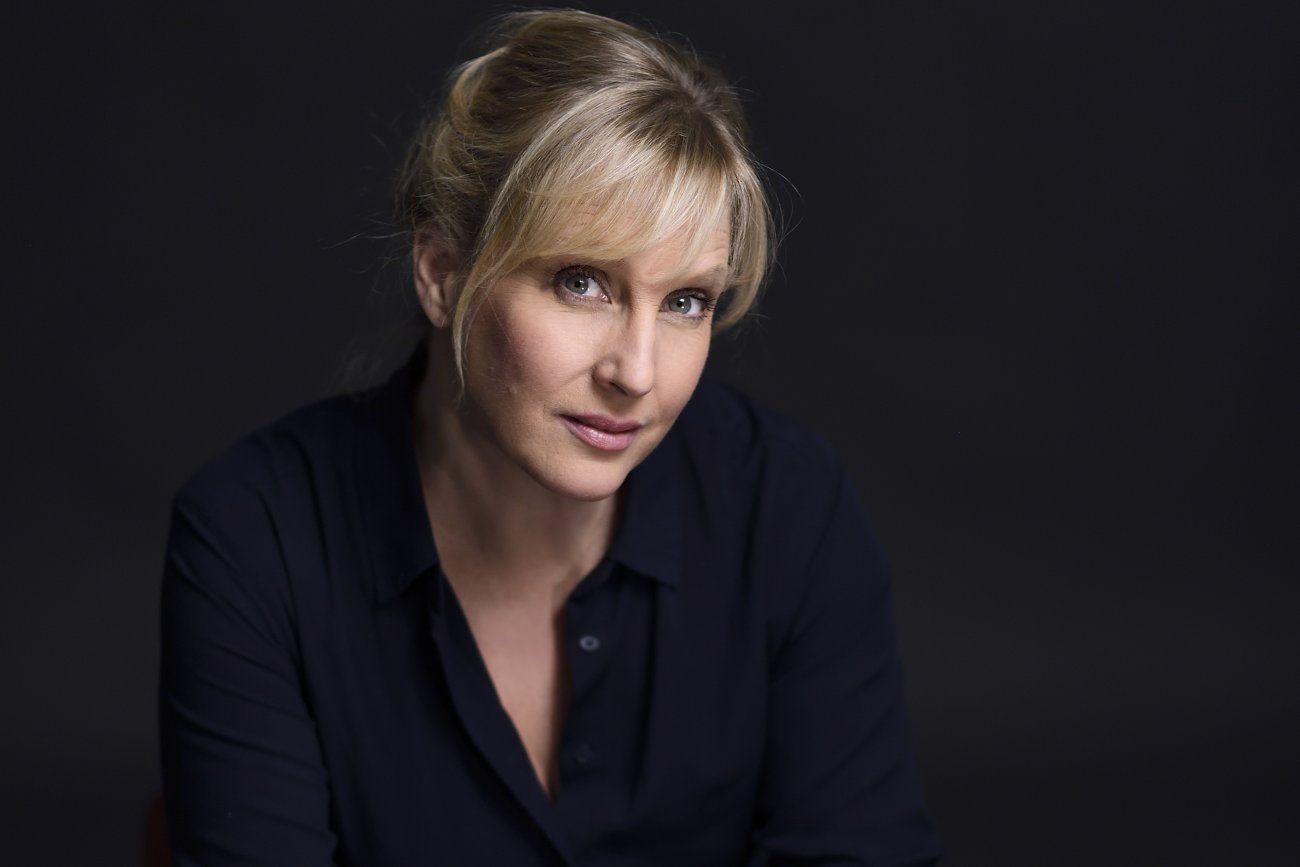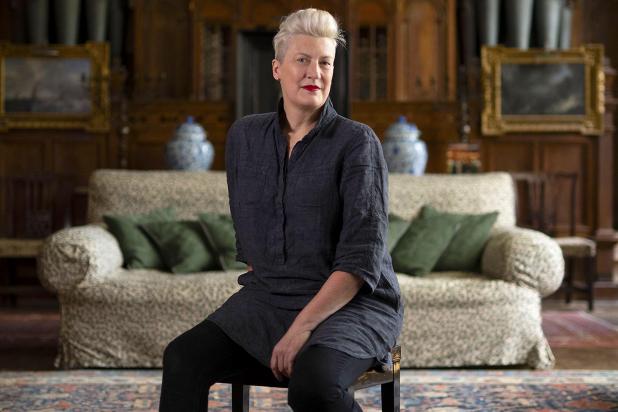
In concert – Three Choirs Festival: Three Choirs Festival Chorus, Philharmonia Orchestra / Adrian Partington – Howells Hymnus Paradisi & Bliss Mary of Magdala

Rebecca Hardwick (soprano), Dame Sarah Connolly (mezzo-soprano), Michael Bell (tenor), Malachy Frame (baritone), Three Choirs Festival Chorus, Philharmonia Orchestra / Adrian Partington

Howells Paradise Rondel (1925)
Bliss Mary of Magdala (1962)
Howells Hymnus Paradisi (1936-38)

Hereford Cathedral
Wednesday 30 July 2025

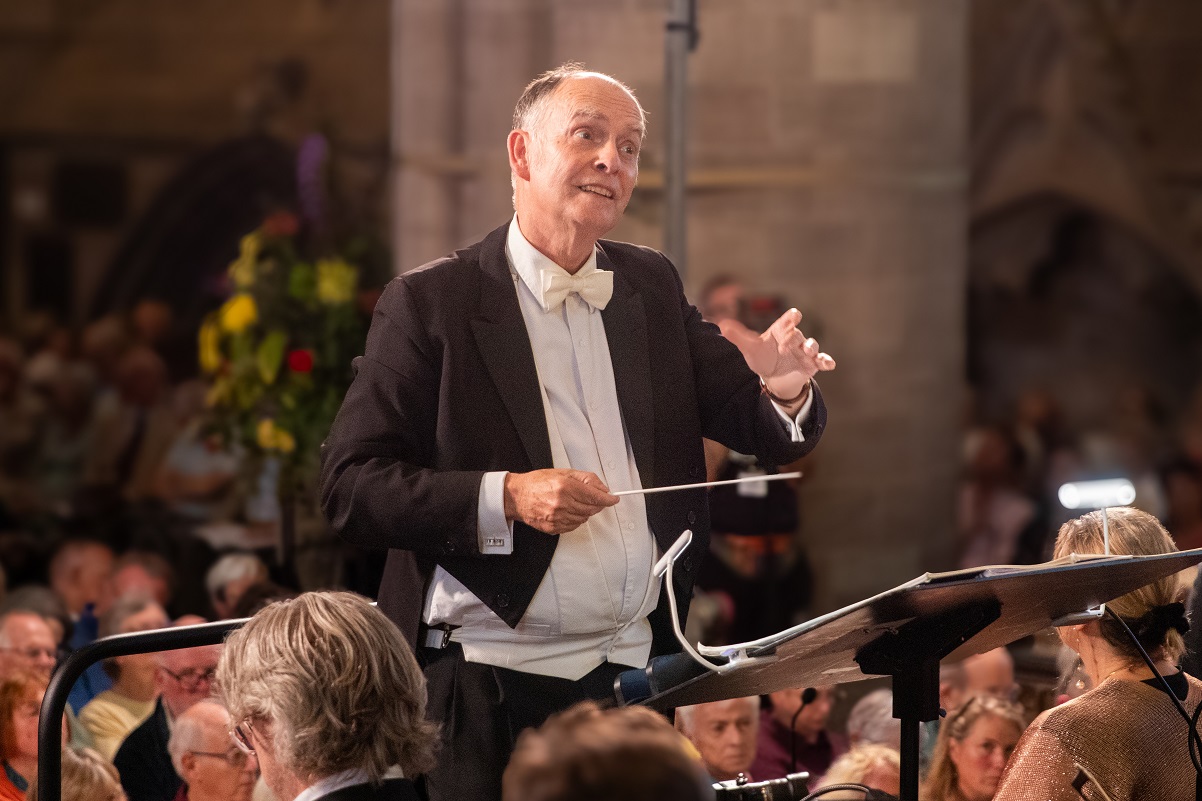
Reviewed by Richard Whitehouse Photos (c) Dale Hodgetts (Dame Sarah Connolly, Festival Chorus), James O’Driscoll (Hereford Cathedral, Rebecca Hardwick, Adrian Partington)

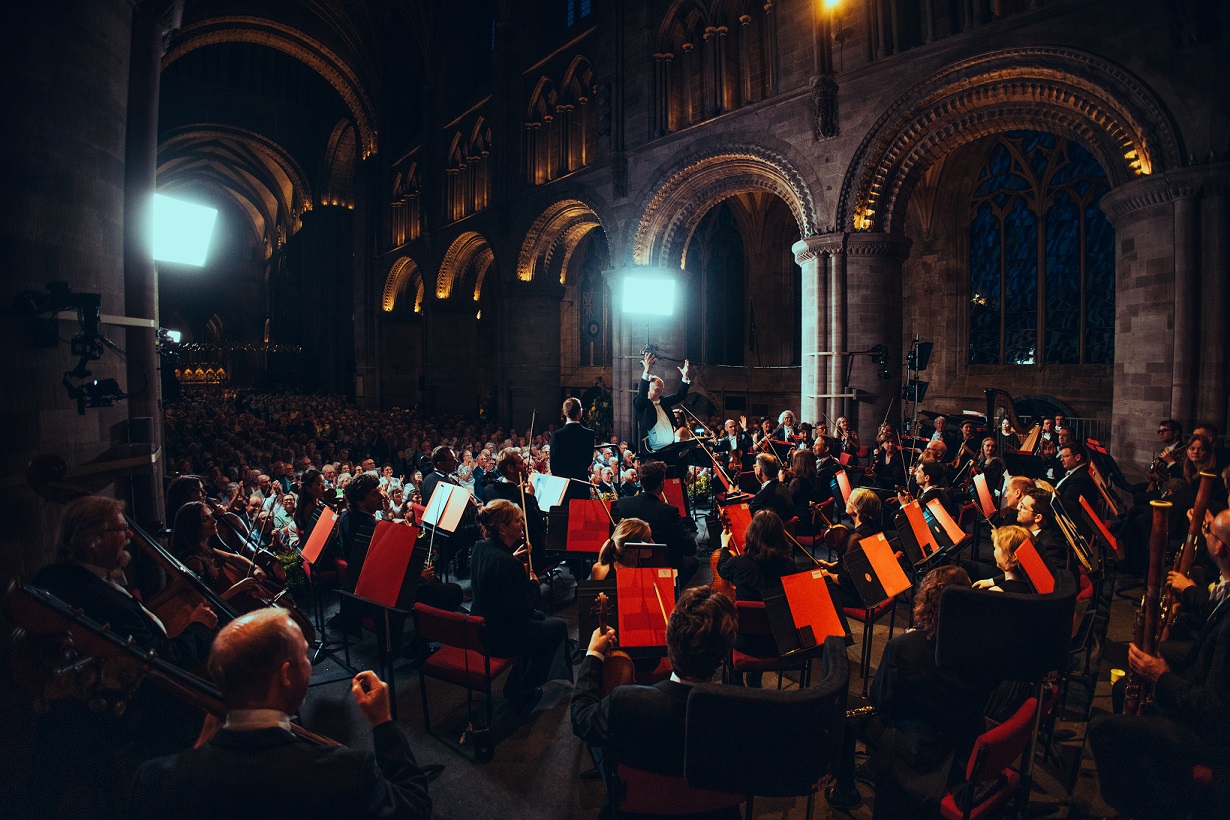
Interesting that all three works comprising this concert were premiered at the Three Choirs in Gloucester or Worcester but they were, for the most part, admirably suited to the less opulent while always spacious ambience of Hereford Cathedral in what was a welcome retrospective.

Upsurge of Arthur Bliss performances in this fiftieth anniversary of his death continued with Mary of Magdala, essentially a cantata albeit with an element of operatic scena in the intense characterization of its title-role. Compiled by Christopher Hassall (the last collaboration with Bliss before his untimely death), its text finds Mary approaching the sepulchre where Christ’s body has been placed after crucifixion only to find it gone – Christ having assumed the guise of a gardener who bestows his blessing upon this most maligned yet most loyal of his circle.
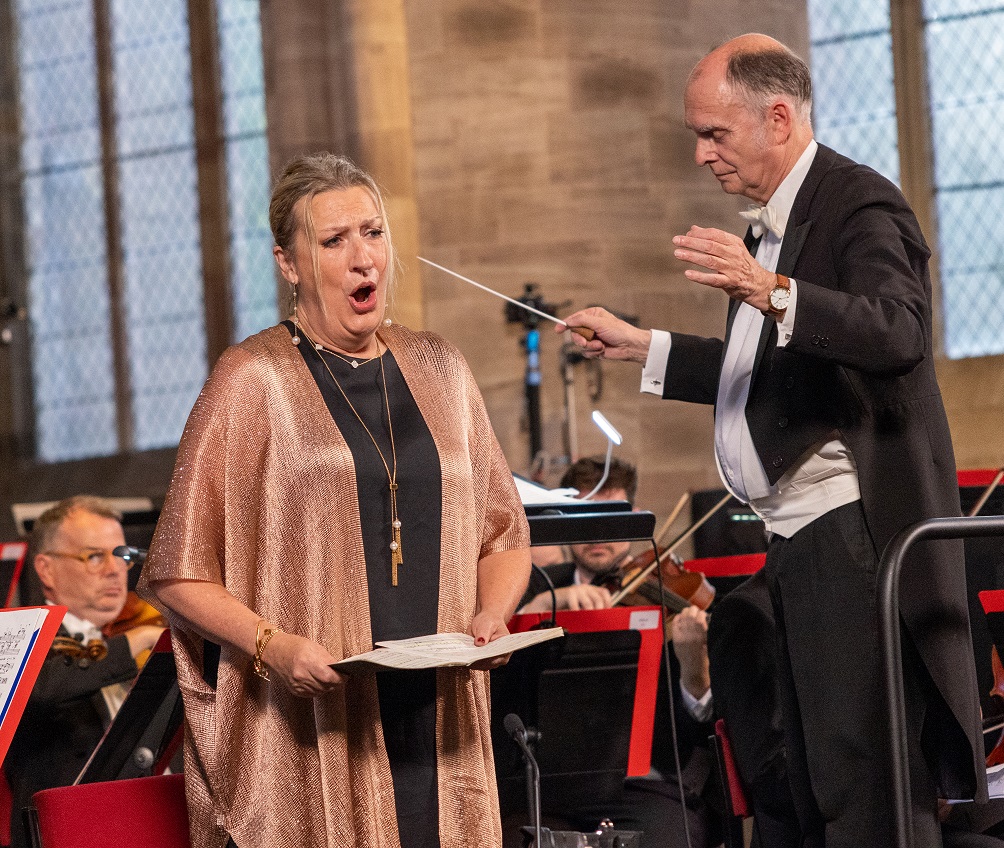
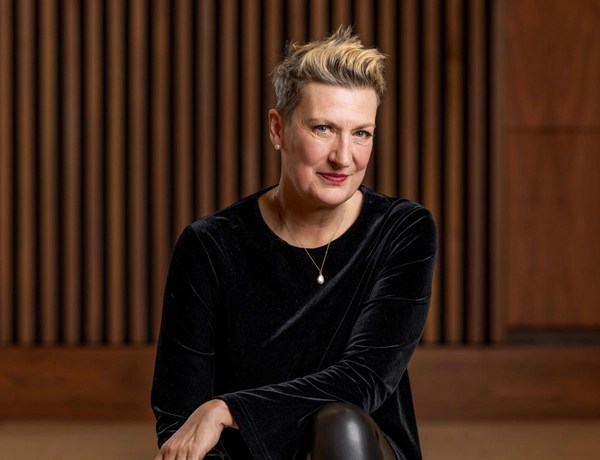
The main part was given by Dame Sarah Connolly (above) with her customary fervour and insight, not least in the final stages after recognition when the music exudes a radiant gentleness rarely, if ever, encountered in Bliss hitherto. Malachy Frame drew an understated strength from the brief yet crucial role of Christus, but excessively large choral numbers rather compromised the relative intimacy of the music. Not that it seriously undermined the conviction of a timely revival for what is one of the least known though inherently personal among the composer’s later works.
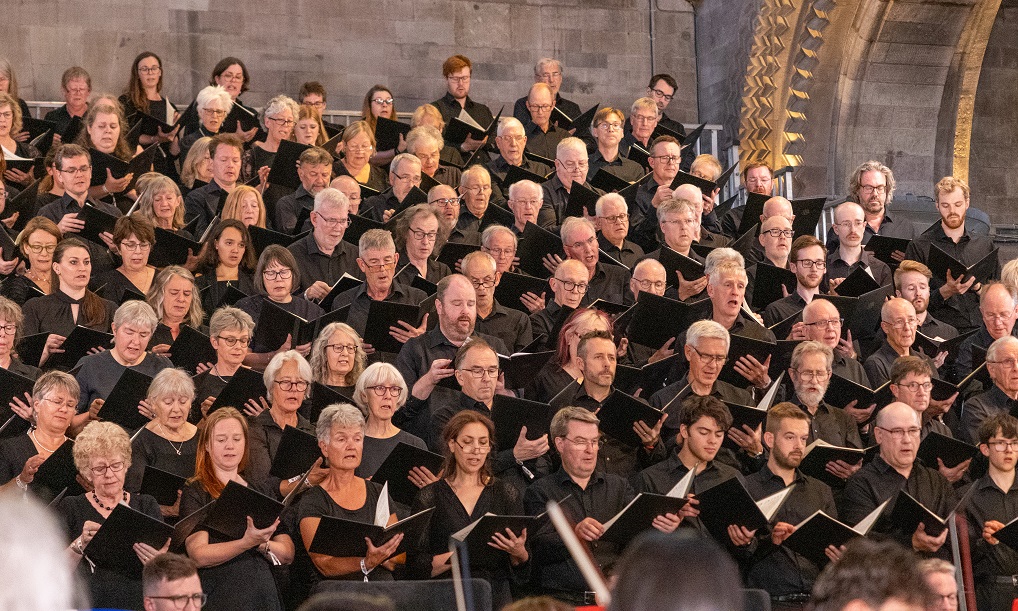
It stayed under-wraps for over a decade after completion, but Hymnus Paradisi has long been the best known of Herbert Howells’s larger pieces and something like a ‘sacred text’ in Three Choirs culture. Written after the death of the composer’s son, it is avowedly music within the English choral tradition; not least that Gerontius-like aura of a Preludio (actually written last) whose yearning theme pervades what follows. The Requiem aeternam further intensifies such introspection, and if a setting of Psalm 23 tends towards the discursive, even generalized, that of Psalm 121 has a rapture that builds on an effervescent Sanctus in what is the most arresting section. A ruminative setting from The Burial Service precedes the impulsiveness of that from Salisbury Diurnal, with the return of the Requiem aeternam bringing about a fatalistic repose.
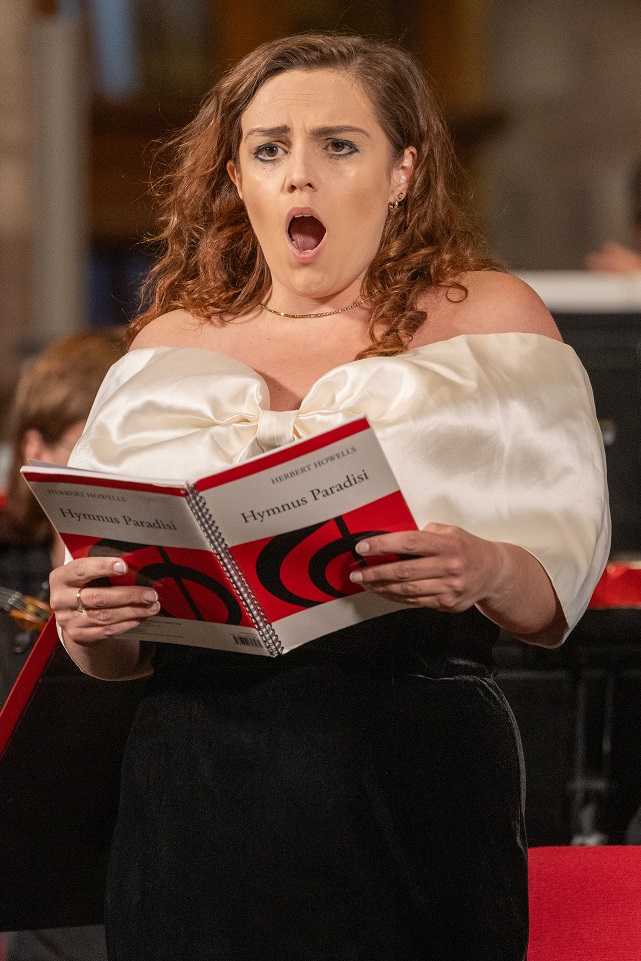
Something of a staple at these festivals it might be, Hymnus Paradisi is never an easy work to sustain in performance and tonight’s was a notable though not unqualified success. The vocal parts were well taken, Rebecca Hardwick’s occasional shrillness ostensibly a price to be paid for surmounting those often dense choral textures and Michael Bell making up for in accuracy what he lacked in personality. The sizable orchestral forces of the Philharmonia proved more than equal to the task, not just of balancing but in opening-out the expressive power of choral writing where the Three Choirs Festival Chorus was wholly in its element. Adrian Partington secured an interpretive focus that gained in conviction as the performance unfolded, making for an account which underlined the strengths yet also the weaknesses of this singular work.
It was the earlier and uninhibited Howells which ushered in proceedings. With its translucent orchestration and, at times, almost concertante-like piano part, Paradise Rondel makes for as irresistible a curtain-raiser as it no doubt was evoking that Cotswold hamlet of a century ago.

Published post no.2,615 – Sunday 3 August 2025
In concert – Dame Sarah Connolly, CBSO Choruses, CBSO / Sofi Jeannin: The Music Makers

Dame Sarah Connolly (mezzo-soprano), CBSO Children’s Chorus, CBSO Youth Chorus, CBSO Chorus, City of Birmingham Symphony Orchestra / Sofi Jeannin

Weir Music, Untangled (1992)
Muhly Friday Afternoons (2015, orch. 2019) [UK Premiere]
Britten The Young Person’s Guide to the Orchestra Op.34 (1945)
Elgar The Music Makers Op.69 (1912)

Symphony Hall, Birmingham
Wednesday 20 November 2024

Reviewed by Richard Whitehouse Pictures (c) Andrew Crowley (Dame Sarah Connolly), (c) Radio France / Christophe Abramowitz (Sofi Jeannin)

Under the capable direction of Swedish-born Sofi Jeannin (below), the City of Birmingham Symphony Orchestra tonight took on a varied if cohesive programme featuring two composers with direct links to the city, one of whose works had been performed for the first time here 112 years ago.

Although he might not be so associated with Birmingham, Nico Muhly is hardly an unknown quantity. Friday Afternoons proved a diverting and enjoyable traversal across eight traditional poems – directly yet unaffectedly recalling Britten in their simplicity of choral writing with, in this instance, a resourceful and often evocative orchestration that brought out subtle and quite unexpected nuances from these texts. Qualities that the combined CBSO Youth and Children’s Choruses responded to with alacrity, doubtless owing to the astute guidance of Julian Wilkins.

Beforehand, the orchestra made no less favourable a response in Music, Untangled by Judith Weir, former Master of the Queen’s Music and composer-in-association to the CBSO during 1995-98. Written for the Boston Symphony, this not unreasonably American-sounding piece takes extracts from melodies emanating from the Western isles of Weir’s native Scotland as the basis for a compact if eventful piece where said melodies are gradually fined down from sonic diversity to a single strand through a process of ‘less is more’ typical of this composer.

Closing the first half, what had started out as Britten’s ‘Variations and Fugue on a Theme of Purcell’ received an engaging performance at its best in those variations highlighting specific instruments – in the course of which the excellence of the individual CBSO sections came to the fore. Presentation of the theme itself was a little on the portentous side, a quality which re -surfaced in a fugue whose clarity of texture seemed at the expense of that exuberance when Britten puts his orchestra back-together. An enjoyable take on a timeless masterpiece even so.

Despite its high-profile launch at the 1912 Triennial Festival, Elgar’s The Music Makers has struggled to find general favour – his setting of Arthur O’Shaughnessy’s Ode intensifying the text’s ambivalence and introspection via a wealth of self-quotation such as renders several of his most acclaimed pieces from an unlikely or even disturbing perspective. Together with its near-contemporary work, the symphonic study Falstaff, this is Elgar at his most searching as well as confessional – qualities such as the encroaching ‘Great War’ would duly exacerbate.

Despite its modest (35-minute) duration, The Music Makers is a difficult work to pace and to make cohere and, while Jeannin (an experienced choral conductor) did not wholly succeed in these respects, there was no doubt as to her insight into its content or defining of its emotions. Prepared by Simon Halsey (who first ‘gave’ this work with Simon Rattle some 40 years ago), the CBSO Chorus lacked little in conviction or finesse – and, if Dame Sarah Connolly was not quite at her most assured, the sheer eloquence and conviction of her singing could never be denied.

A fine account, then, of a work still in need of such advocacy for its inherent greatness to be acknowledged. Interesting also that audience response was warm if undeniably muted – as if to confirm, on this occasion at least, the music’s ‘message’ had got through to those listening.

For details on the 2024-25 season A Season of Joy, head to the City of Birmingham Symphony Orchestra website. Click on the names to read more about soloist Dame Sarah Connolly, conductor Sofi Jeannin and composers Nico Muhly and Dame Judith Weir

Published post no.2,372 – Sunday 24 November 2024

BBC Proms #49 – Louise Alder, Dame Sarah Connolly, CBSO Chorus, London Symphony Chorus, London Symphony Orchestra / Sir Simon Rattle – Mahler ‘Resurrection’ Symphony

Prom 49 – Louise Alder, Dame Sarah Connolly, CBSO Chorus, London Symphony Chorus, London Symphony Orchestra / Sir Simon Rattle

Birtwistle Donum Simoni MMXVIII (2018)
Mahler Symphony no.2 in C minor ‘Resurrection’ (1888-1894)

Royal Albert Hall, London
Wednesday 24 August 2022

Reviewed by Ben Hogwood Photos (c) Chris Christodoulou

“A symphony must be like the world. It must contain everything.”

The words of Gustav Mahler were never more appropriate than in the context of this exceptional BBC Proms concert, as Sir Simon Rattle and assembled forces from London and Birmingham threw body and soul into a spectacular performance of the composer’s Symphony no.2.

This, Mahler’s ‘Resurrection’ symphony, puts its listener through the emotional wringer on a journey inhabiting life and death itself. The work has become a calling card for Rattle, too – he marked the opening of Birmingham’s Symphony Hall with a memorable performance in 1991, and took his leave of the CBSO with the same piece. Here, as he prepares to step down as Music Director of the London Symphony Orchestra, he was marking the turning of a page through a move to pastures new in Bavaria, where he will become Chief Conductor of the Symphonieorchester des Bayerischen Rundfunks and the Bavarian Radio Chorus.

The pastures were a standout feature of this performance – but we began in turmoil, the huge first movement funeral march rumbling into gear with lines hewn from granite in the lower strings. Rattle pushes this movement forward much more than he once did, keeping a firm hand on the tiller, but with immediate and full immersion in Mahler’s thoughts. As the first movement took shape the horrors of death revealed themselves – along with hopes of sunnier climes through some beautifully shaded rustic scenes. Yet the chill winds kept returning, ultimately sweeping these away as the movement closed in their bleak acceptance.

Many accounts of the ‘Resurrection’ lose their focus at this point, but not this one. Instead we had a balletic triple time Ländler, danced with grace as the feather-light strings had their charming way. The main theme swelled like a newly budding flower, and although ghoulish reminders of the first movement persisted, this was the abiding impression. As Rattle pressed on without a break, however, the reveries were abruptly quashed by the hammer and tongs of the third movement Scherzo. Here the music twisted and turned sharply, the LSO responding to its conductor with peerless virtuosity in music of fire and brimstone. Percussion, wind and brass were superb.

Then, as the music teetered on the point of collapse, it was time to be borne away with the consoling tones of Dame Sarah Connolly (above, right). A consummate Mahlerian, she sang with compelling strength and grace, a powerful stage presence in league with Rattle, who presided over accompaniment of the greatest clarity. Connolly’s Urlicht was beautifully judged, taking us ever nearer to the wondrous entry of the choir.

Now time stood still. The audience, especially in the arena, were rooted to the spot at the massed choirs of the CBSO Chorus and London Symphony Chorus, singing as one in magically hushed tones. As the finale took shape it was by turns earth-moving and tender. Scenes flashed before the eyes, and an especially vivid episode from brass and percussion in the gallery observed a village-band intimacy. Here the Royal Albert Hall was utilised to its full potential, managing the wide scope of Mahler’s vision to perfection.

At the centre of this apocalyptic finale, percussion depicted the rising of the dead and the release of their chains, Rattle intentionally dragging his feet here to heighten the seismic impact. And then we were free, the resurrection itself met with blazing colours all around as the choirs sang Friedrich Klopstock’s text ‘Aufersteh’n, ja aufersteh’n wirst di’ (‘Rise again, yea rise again, shalt thou’) as though their lives depended on it. Was it fanciful to suggest three years’ worth of pent-up emotion being released at this point? Probably not, when you consider the day-to-day roles of the choral singers themselves – carers, key workers, parents and children alike – with all finding the time and the need to bring us this music of the utmost quality.

Great credit should go to chorus director Simon Halsey for securing such discipline and humanity in the texts, and to soprano Louise Alder (both above with Dame Sarah Connolly and Sir Simon Rattle). Alder sang above the masses with perfectly judged dynamics and phrasing, like Connolly fully aware of the scope of her role. Organist Richard Gowers added the icing on the cake, underpinning the throng with ideally judged balance.

This was a performance to talk about for years to come, a throwing-open of the doors to proclaim that music can – really – triumph over pretty much anything, the ‘Resurrection’ symphony, clearing everything in its path.

As an upbeat to the symphony we heard a short gift to Rattle from Sir Harrison Birtwistle, to whose memory the Prom was dedicated.  Donum Simoni MMXVIII was typical of its composer, a spiky and even snarky postcard firing out missives from the (superb) percussion section against barbed comments from wind and brass. Lasting barely four minutes, it served its function well – but for tonight, as Mahler would have wished, the symphony was everything.

You can listen to Sir Simon Rattle’s recording of Mahler’s ‘Resurrection’ symphony on Spotify below, where the CBSO Chorus and Symphony Orchestra are joined by soloists Arleen Auger and Dame Janet Baker:

In concert – Dame Sarah Connolly, CBSO / Gustavo Gimeno: Humperdinck, Chausson & Tchaikovsky

gustavo-gimeno

Humperdinck Hänsel und Gretel – Prelude (1891-2)
Chausson
Poème de l’amour et de la mer Op.19 (1882-92)
Tchaikovsky
Symphony no.6 in B minor Op.74 ‘Pathétique’ (1893)

Dame Sarah Connolly (mezzo-soprano, below), City of Birmingham Symphony Orchestra / Gustavo Gimeno

Symphony Hall, Birmingham
Thursday 23 September 2021

Written by Richard Whitehouse

This afternoon’s programme (repeated from yesterday) by the City of Birmingham Symphony Orchestra saw a welcome reappearance from Dame Sarah Connolly for a relatively rare hearing, at least in the UK, of Ernest Chausson’s probable masterpiece Poème de l’amour et de la mer.

Often described as a song-cycle, Poème is closer to a scena with its unfolding over two large parts separated by an orchestral interlude. Drawing on texts by Maurice Bouchor, these evoke what is ostensibly the protagonist’s ill-fated affair but whose deeper resonance suggests more that disillusion afforded when revisiting the past. Such a trajectory could easily have resulted in indulgence or even self-pity, avoided through Chausson’s unerring formal control over his subject-matter as well as a thematic resourcefulness sustained across the near half-hour span.

Following in a distinguished lineage of mezzos (among them Dame Janet Baker), Connolly brought out the playfulness of La fleur des eaux as it conveys the burgeoning of love against a heady seascape – doubt only creeping in towards the close as the passing of a year is contemplated. This is represented by the Interlude in which first appears a theme dominant by the close, and while the opening of La mort de l’amour brings a renewed anticipation of arrival, the anguish occasioned by forgetfulness is transmuted into a brooding fatalism – the composer drawing on an earlier song for this sombre final stage. Connolly’s eloquence came into its own here, abetted by a soulful response from cellist Eduardo Vassallo among an orchestral response abounding in soloistic finesse. A powerful reading of a still underestimated piece.

Chausson lived a further six years after its premiere in 1893, whereas Tchaikovsky lived just nine days after the premiere that year of his Pathétique before his still-contested demise. Here again, there was no undue emoting thanks to Gustavo Gimeno’s firm grip over the complex formal and emotional trajectory of the first movement – not least its explosive development culminating in an anguished yet also consoling reprise. The ensuing intermezzo had charm but also a purposeful underlying tread – not least in its wistful trio, then the scherzo amassed no mean impetus through to an explosive second half whose orchestral response evinced no mean virtuosity. Heading straight into the finale, Gimeno sustained expressive tension right through to the closing bars as here faded into a silence born of resignation rather than defeat.

The close of that year brought the premiere of Humperdinck’s ‘fairy-tale’ opera Hänsel und Gretel – then, as now, the work by which this undervalued composer is best remembered and whose prelude encapsulates the essence, though not the totality, of the drama while proving equally effective as a concert-overture. Gimeno paced this unerringly, thereby allowing its animated central phase to merge unobtrusively out of then back into the confiding warmth either side. At least one major work written in 1893 can be said to have a ‘happy ending’.

Next week’s concert brings pieces from very different eras – Brahms’s First Symphony and Rachmaninov’s Third Piano Concerto being preceded by another of the CBSO’s Centenary Commissions, an evidently celebratory overture by Mark-Anthony Turnage called Go For It.

For more information on next week’s concert, click here for tickets. You can find information on the new CBSO season here, and for more on Symphonic Sessions click here

BBC Proms – Dame Sarah Connolly, BBC SO / Brabbins: Berlioz, Payne & Beethoven

sarah-connolly

Dame Sarah Connolly (mezzo-soprano, above), BBC Symphony Orchestra / Martyn Brabbins (below)

Payne Spring’s Shining Wake (1980-81) (Proms premiere)
Berlioz Les nuits d’été Op.7 (1840-41, orch. 1856)
Beethoven
Symphony no.6 in F major Op.68 ‘Pastoral’ (1808)

Royal Albert Hall, London
Friday 13 August 2021

Written by Richard Whitehouse

A family bereavement meant that Sir Andrew Davis was unable to conduct this Prom, the baton having been taken up by Martyn Brabbins – whose currently in-demand status is a reflection not least of his broad range of musical sympathies and an inherent ability to ‘get things done’.

Not too many conductors would have taken on at relatively short notice a long-unheard piece by the late lamented Anthony Payne then render it with the familiarity of a repertoire staple. Seemingly unheard for 15 years, Spring’s Shining Wake was a breakthrough piece in several respects: the composer fashioning a ‘contemporary’ yet never esoteric idiom, unencumbered by stylistic precedent, as reflected his love of an earlier generation of English music. Delius’s In a Summer Garden is a focal-point in several respects, but what comes over most strongly in its modest scoring (seven wind, one percussionist and strings) is a sense of organic growth from the overtly static formal framework; textures diversifying and intensifying, yet without changing as to their essential features, in music exemplifying the ‘same yet different’ maxim.

From there to the limpid Romanticism of Berlioz’s song-cycle Les nuits d’été is nearer than might be imagined, this latter being notable for its range of expressive nuance despite (even because of) its pervasive restraint. Certainly, there was no uniformity of response from Dame Sarah Connolly – whose whimsical response to Villanelle contrasting with the wide-eyed fantasy of Le spectre de la rose, and becalmed rapture of Sur les lagunes thrown into relief by the fervent heartache of Absence then the spectral imaginings of Au cimetière; itself finding purposeful response in the animated L’île inconnue with its vouchsafing new imaginative realms. Coordination between soloist and orchestra is paramount throughout, and there was no lack of that in a reading as conveyed this music’s potent sensibilities with acute insight.

Nor was there anything routine about Beethoven’s Pastoral after the interval. Readers may remember a cycle of all nine symphonies which Brabbins (above) gave with the Salomon Orchestra just over a decade ago, and his purposeful if never inflexible take on the opening movement left room for its reflective asides and heady flights of fancy. This was no less evident in the Scene by the brook, with its emphasis on seamlessness of transition and unity of content – not least in the way those bird-calls of the coda were integrated into their textural context.

Unfolding with consistency of pulse, the remaining three movements yielded few surprises but no failings. A touch of blandness in the scherzo was duly countered with the immediacy   of the Thunderstorm and its nexus of accrued emotion whose dispersal makes possible the Shepherd’s Song – less cumulative in its eloquence than others have made it, perhaps, but whose inevitability of progress was sustained through to a close of serene poise; underlining the degree to which any trace of ego has been sublimated in the enveloping cosmic dance.

Some elegant and characterful playing from the woodwind of the BBC Symphony Orchestra was a highlight of this performance, a reminder that even a work with a Proms tally running to several dozen never need sound routine when approached with such unaffected reverence.

For further information on the music of Anthony Payne, visit the composer’s website. You can find more information on the BBC Proms at the festival’s homepage