In concert – Jess Gillam, CBSO / Eduardo Strausser: Villa-Lobos, John Williams, Rimsky-Korsakov & Stravinsky

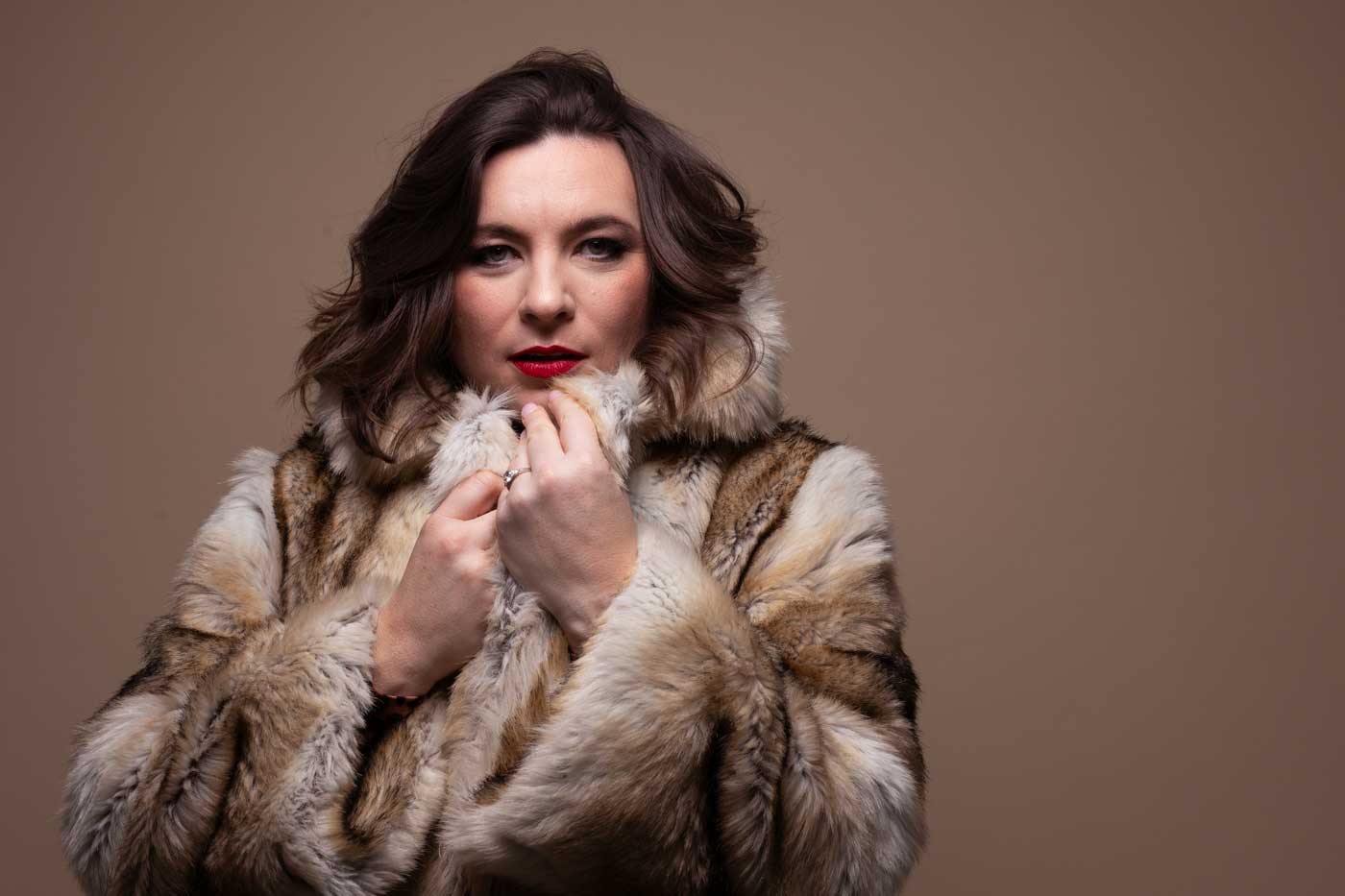
Jess Gillam (soprano & alto saxophone, above), City of Birmingham Symphony Orchestra / Eduardo Strausser

Rossini La Cenerentola (1817) – Overture
Villa-Lobos Fantasia for Saxophone, W490 (1948)
Rimsky-Korsakov arr. Glazunov/Steinberg Le Coq d’or – Suite (1908, arr. 1909)
Williams Escapades (2002)
Stravinsky L’Oiseau de feu – Suite (1910, arr. 1919)

Symphony Hall, Birmingham
Wednesday 31 January 2024

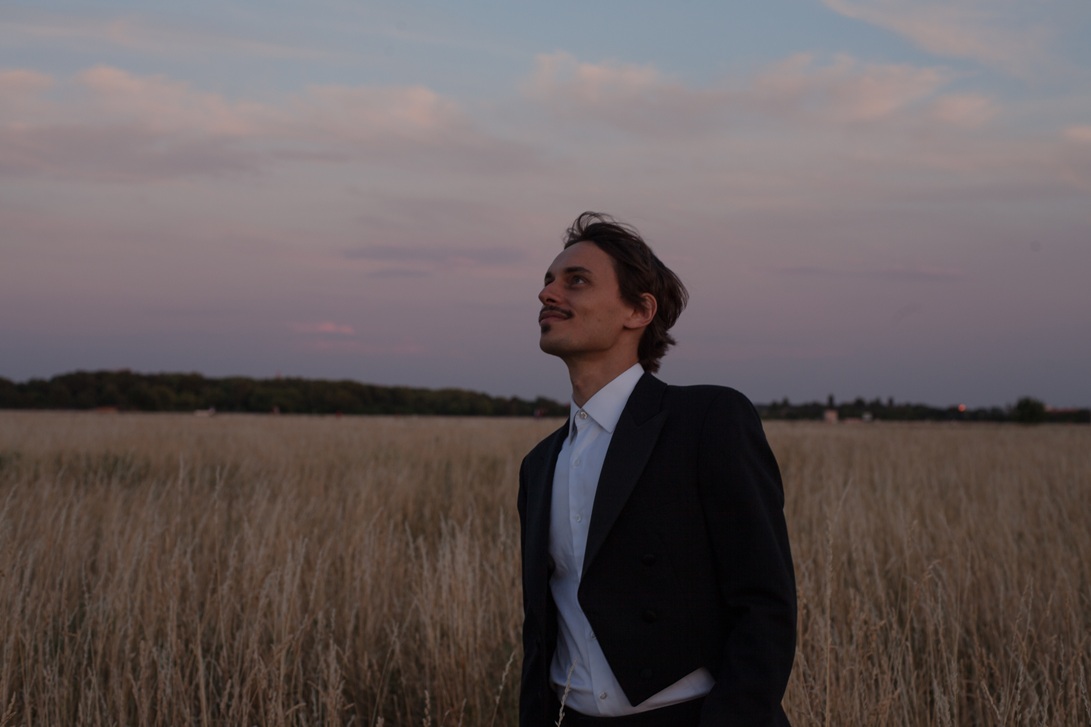
Reviewed by Richard Whitehouse. Photo (c) Robin Clewley

Brazilian conductor Eduardo Strausser made his welcome return to the City of Birmingham Symphony with a programme where three orchestral showpieces were heard alongside two pieces that gave full rein to the charismatic playing and persona of saxophonist Jess Gillam.

Although he featured the saxophone on numerous occasions, Heitor Villa-Lobos wrote just one concertante piece. His Fantasia makes a virtue out of brevity in the lively declamation of its opening movement then the motoric impetus of its finale. No slouch in either, Gillam sounded most involved (understandably so) in the central Lent – its initial melody for viola, soulfully rendered by Adam Römer, soon giving rise to an eloquent dialogue which (hardly for the first time) inferred, that in this most productive of composers, less can often be more.

More compelling overall was Escapades, a concerto drawn from his soundtrack to the Steven Spielberg film Catch Me if You Can by John Williams. A movie as promises rather more than it delivers, this features one of the most appealing of its composer’s latter-day scores with its evoking US culture in the early 1960s that the present work encapsulates to perfection. From the ominous while humorous expectancy as conjured by Closing In, via the lightly applied pathos of Reflections to the coursing energy of Joy Ride – this is Williams at something near his best and Gillam responded accordingly. A pity the contributions of double bass and vibraphone was not as prominent aurally as it was visually (maybe they should have been given more to do?), but this hardly affected the scintillating immediacy of what was heard.

Having opened proceedings with an account of the overture to Rossini’s Cinderella as deft and as scintillating as could be wished, Strausser ended the first half with a (surprisingly?) rare outing for the whole suite from Rimsky-Korsakov’s final opera The Golden Cockerel. For all the controversy aroused by its scenario, this is otherwise an archetypal example of its composer relying on technique rather than inspiration. Most of the best music can be found   in a suite made posthumously by Glazunov and Maximilian Steinberg that provides a telling portrait of Tsar Dodon – whether mired in the superstitious inertia of his palace, hapless (and helpless) on the battlefield, serenaded by the alluring Queen of Shemakha, or exuberant at his intended wedding before meeting his ‘lamentable end’ to the crowing of that pesky cockerel.

The CBSO despatched what is effectively a ‘concerto for orchestra’ before its time with real aplomb, then sounded no less committed in the second of those suites Stravinsky drew from his highly Rimskian ballet The Firebird. Here the sombre aura of its Introduction segued effortlessly into Appearance… and Dance of the Firebird, the latter exuding an infectious lilt, before a plaintive take on the Princesses’ Khorovod. Others have found greater abandon in the Infernal Dance, but the clarity and articulation conveyed here were beyond reproach. Strausser then steered a secure course through the Lullaby, its folk-derived bassoon melody plaintively intoned by Nikolaj Henriques, into a Finale whose hymnic jubilation set the seal on an evening where the absence of any Austro-German element proved its own justification.

Click on the link to read more on the current CBSO concert season, and on the names for more on saxophonist Jess Gillam, conductor Eduard Strausser and composer John Williams

Published post no.2,075 – Friday 2 February 2024

In concert – Cédric Tiberghien, CBSO / Eduardo Strausser: Beethoven ‘Emperor’ Concerto & Prokofiev Symphony no.5

Wagner Lohengrin – Prelude to Act One (1846)
Beethoven Piano Concerto no.5 in E flat major Op. 73 ‘Emperor’ (1809)
Prokofiev Symphony no.5 in B flat major Op. 100 (1944)

Cédric Tiberghien (piano), City of Birmingham Symphony Orchestra / Eduardo Strausser

Symphony Hall, Birmingham
Wednesday 25 January 2023 2.15pm

Reviewed by Richard Whitehouse Picture of Eduardo Strausser (c) Peter Wallis

Is there a more evocative way to begin a concert than the Prelude to Wagner’s Lohengrin? The opera itself may fail (for the most part) to live up to the precedent set, but the quality of this piece has never been in doubt – with composers as distinct as Berlioz and Verdi having been captivated by its almost tangible atmosphere and counterpoint redolent of Palestrina in its supple inevitability. Under the assured direction of Eduardo Strausser, it made a fitting curtain-raiser to this afternoon’s concert by the City of Birmingham Symphony Orchestra.

It also provided a telling foil to Beethoven’s Fifth Piano Concerto that followed in the first half. Still the most popular of its composer’s such pieces, it is also nowadays the hardest to bring off – particularly the initial Allegro with its unabashed emotional rhetoric and overtly symphonic conception. Playing down the former aspect and rationalizing the latter, Cédric Tiberghien opted for a tensile and unaffected traversal which emphasized cohesion at the expense of grandeur – underlining just why Beethoven never again completed a concerto.

There was little to fault in Tiberghien’s take on the Adagio (save for a few errors to remind one that Beethoven’s slower music is by no means easier to play), and if the transition into the finale was less than spellbinding, that latter movement for the most part brought out the best in the rapport between pianist and conductor. The CBSO responded with the necessary rhythmic agility, and Tiberghien responded to the applause with excerpts from the Eroica Variations he has recently recorded as part of an edition of Beethoven’s works in this genre.

The engaging director of last year’s Viennese New Year concert, Strausser (above) clearly enjoys a rapport with this orchestra as was a hallmark of Prokofiev’s Fifth Symphony following the interval. Itself the most often heard of a diverse and often diffuse cycle (the ‘Classical’ more often encountered on recording than in concert), it presents notable difficulties of balance and pacing – notably the initial Andante, whose accumulating momentum needs careful handling so as not to congeal. Strausser duly had its measure, maintaining focus through to a seismic peroration – the impact from which carried over into a scherzo whose outer sections seemed more than unusually acerbic. Nor did this preclude a more genial response in the trio, its main theme held over from Romeo and Juliet and as captivating a melody as any by this composer.

That the Adagio is the emotional heart of this work only increases the need to prevent it from dragging, and Strausser’s sense of proportion ensured that the sense of dread made explicit at its climax was balanced by the serene eloquence towards its close. Heading (rightly) straight into finale, he steered a secure course through a movement whose poise is constantly being undercut by disruptive elements as take control in the coda – the composer’s perspective on imminent Soviet victory in the ‘Great Patriotic War’ remaining ambivalent even at the close.

A fine reading of a work whose stature is still questioned (and a reminder that Prokofiev’s Second Symphony still awaits its CBSO debut). Chief Conductor-designate Kazuki Yamada returns next week for an unlikely though appealing double-bill of Tchaikovsky and Holst.

You can read all about the 2022/23 season and book tickets at the CBSO website – and head to this page for the Tchaikovsky and Holst programme. Click on the artist names for more on Eduardo Strausser and Cédric Tiberghien

In concert – CBSO / Eduardo Strausser – Viennese New Year

cbso-viennese-new-year

Johann Strauss II Die Fledermaus (1874) – Overture; Tritsch-Tratsch, Op. 214 (1858)
Johann Strauss II / Josef Strauss Pizzicato Polka, Op. 335 (1869)
Lehár Die lustige Witwe (1905) – Vilja
Johann Strauss II Vergnügungszug, Op. 281 (1863-4); Im Krapfenwald’l, Op. 336 (1869); Frühlingsstimmen, Op. 410 (1882); Die Zigeunerbaron (1885) – Einzegsmarsch
Lehár Giuditta (1934) – Meine Lippen sie küssen so heiss
Johann Strauss II Wiener Bonbons, Op. 307 (1866)
Josef Strauss Feuerfest!, Op. 269 (1869)
Johann Strauss II Die Fledermaus (1874) – Mein Herr Marquis; Unter Donner und Blitz, Op. 324 (1868); An der schönen, blauen Donau, Op. 314 (1866)
Johann Strauss I Radetzky Marsch, Op. 228 (1848)

Jennifer France (soprano), City of Birmingham Symphony Orchestra / Eduardo Strausser

Symphony Hall, Birmingham
Sunday 9 January 2022

Written by Richard Whitehouse

The global reach of the Vienna Philharmonic’s annual event, not to mention the world-wide jamborees masterminded by André Rieu, may have rendered the Viennese New Year concert  from a wholly new perspective, but its content and purpose remain essentially the same – as was evident in this concert by the City of Birmingham Symphony Orchestra, which has long emerged from its Christmas break with such a programme as was performed this afternoon; a smattering of novelties complementing the evergreens whose absence would be unthinkable.

His introductions may have been intermittent, but Brazilian conductor Eduardo Strausser was an engaging exponent of Johann Strauss II’s music – not least the overture to his operetta The Bat that, after a halting start, unfolded with a sure sense of where this ingenious medley of its main items was headed. The rhythmic verve of the Tritsch-Tratsch polka was exactly caught, as also the nonchalance of the Pizzicato polka (in collaboration with Josef Strauss, too often neglected next to his famous sibling). Jennifer France joined the CBSO for a winning take on the ‘Vilja’ aria from Franz Lehár’s The Merry Widow, hearing it in English a reminder of this operetta’s massive success on both sides of the Atlantic. Following the heady élan of Strauss’s Excursion Train polka then the rustic charm of his In Krapfen’s Woods polka – its plethora of birdcalls effortlessly dispatched by the orchestra’s percussion – she returned for the Voices of Spring waltz, heard in its unexpected while effective vocal guise with verse by Robert Genée which made for a concert aria such as brought this first half to its close in impressive fashion.

The Entrance March from Strauss’s operetta The Gypsy Baron provided a suitably rousing entrée into the second half, Jennifer France duly raising the stakes with her sensual reading of the aria My lips give so fiery a kiss from Léhar’s musical comedy Giuditta, then Strausser drew unexpected pathos from Strauss’s Vienna Bonbons waltz – its title belying the music’s elegance and subtlety; quite a contrast, indeed, with Josef Strauss’s roof-raising Anvil polka-française (and a favourite of this writer since first encountering it on an anthology from the Hollywood Bowl Symphony Orchestra decades ago). The scintillating repartee of My lord marquis (aka Adele’s Laughing Song) from The Bat enabled Jennifer France to bow out in fine style, then it was on to the rip-roaring swagger of the Thunder and Lightning polka that once more kept the percussion section fully occupied.

The advertised programme came to an end with On the Beautiful Blue Danube waltz – a piece which never quite measures up to its evocative opening, even though Strausser drew enticements aplenty from the CBSO players. There followed the inevitable encore of Johann Strauss I’s Radetzky March, early regarded as having immortalized the Field Marshal who, as a master tactician (and putative war criminal) helped to maintain the Habsburg Empire’s dominance longer than might otherwise have been the case. Not an issue for those who clapped along to Strausser’s alert prompting, rounding off in fine style the start to this second half of the CBSO’s season which continues this Thursday with Ryan Bancroft for a programme featuring Coleridge-Taylor, Mendelssohn and Sibelius.

For more information on the forthcoming Ryan Bancroft concert, you can visit the orchestra’s website. Meanwhile click on the links for information on Eduardo Strasser and Jennifer France.