
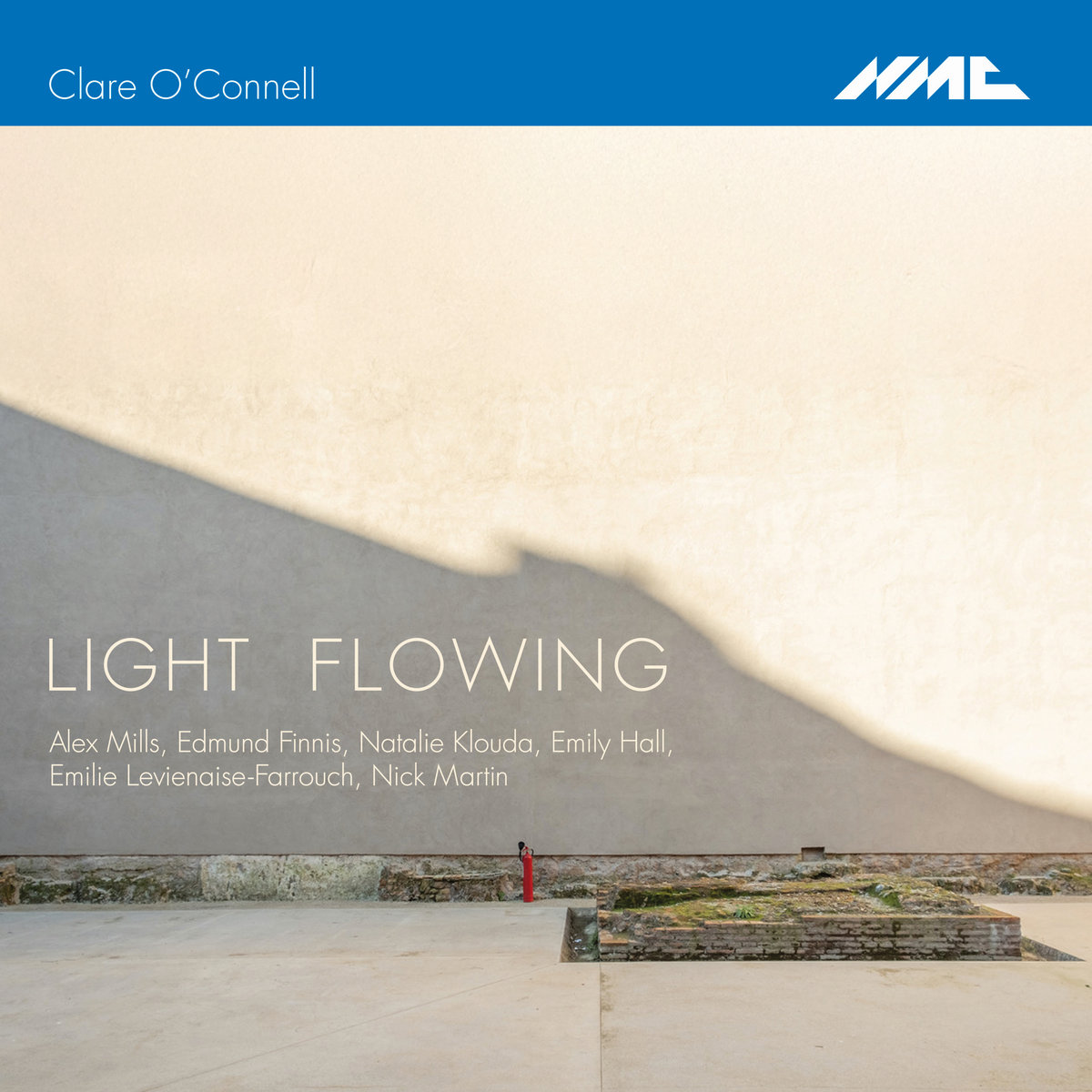
by Ben Hogwood
What’s the story?
Cellist Clare O’Connell releases the Light Flowing album, which, in the words of the press release, is “inspired and tied together conceptually by ideas of light, depth, simplicity, the search for a perfect line, and capturing an otherworldly beauty that these carefully chosen composers represent within their different sound worlds.”
She looked for an ‘introverted introspective simplicity’, which is found through new compositions from five composers.
What’s the music like?
The music here is rather bewitching, in the best examples drawing the listener into a spell, with O’Connell playing beautifully.
Edmund Finnis contributes two examples, beginning with the Three Solos, expressive miniatures that O’Connell inhabits easily, especially the playful second solo with its pizzicato. Finnis allows for expansive thought in the outer two movements.
Meanwhile Emilie Levienaise-Farrouch contributes the imaginative four-part suite Opened, its movements based on the pitch of each of the cello’s four strings. Although it starts from the lowest ‘C’ string and works up, the pitches are closely linked and longer, sustained drones are used. The colours are subtly shaded, the musical motifs rich in thought and execution.
Natalie Klouda’s Uhteare is an excellent piece, packing a strong emotional punch but also falling naturally under the scope of the instrument, with a terrific end – O’Connell’s tone in the high register as sure and pure as it could be.
Emily Hall’s You Sail To The Sky is a meditative space, while Nick Martin’s two Vocalises find a hypnotic and compelling train of thought. The first floats down with delicate harmonics like a feather falling slowly through the sky, while the second floats most attractively, O’Connell’s cello ideal for its songlike profile. Prayerful, and lost in thought towards the end in contemplation, it disappears beyond the horizon.
Zenith introduces a timely change of sonorities, introducing the harp of Eleanor Turner, which has a more Japanese feel. An engaging discourse between the two instruments, it grabs the listener especially towards the end where O’Connell’s cello climbs higher. Then the sound descends to the depths as Marianne Schofield’s grainy double bass winds through a shadowy encounter as the first of three Figures Of Eight, Finnis writing a slight but compelling second movement drawing in the listener’s ear. The two instruments circle each other with pizzicato figures that get more insistent but stay largely quiet in the second movement, while the third has a richer, mellow sound
Does it all work?
It does, a thoughtfully planned recital executed with no little technical expertise.
Is it recommended?
Yes. The literature for solo cello is a rich body of work, right back to Bach in the 18th century, but this wide range of works illustrates how, with imagination, it is still possible for composers to explore new paths. Clare O’Connell proves a compelling communicator in bringing the pieces to life.
Listen / Buy
Published post no.2,597 – Thursday 17 July 2025
 Arcana.fm