published by Ben Hogwood, with text appropriated from the press release
Rival Consoles returns with genre-blurring new piece Gaivotas, a first taster from his forthcoming ninth studio album, written during an experimental residency in Portugal last year.
“This music feels like one of the most intuitive things I have ever written”, says Ryan Lee West, the man behind the pseudonym. “The momentum that the piece establishes in the first breath pushes forward right until the very end and many of the ideas were created in a first-take moment that were exciting and liberating.”
The powerful accompanying video was directed by Vincent Duluc-David and shot in Kyrgyzstan, where we follow the life of a group of teenagers as one of them mysteriously disappears. You can watch below:
West will be touring as special guest with Kiasmos for select European shows in September, and returns to North America for Slingshot Festival and four headline shows in the Northwest in October.
A new album from Masayoshi Fujita, whose exploits with the vibraphone and marimba have seen him explore new sounds in music inspired by nature.
Fujita returned to his native Japan from Berlin in 2020, locating with his family in the mountains of Kami-cho, Hyōgo – where he turned an old kindergarten into a recording studio. The first album released on his return, Bird Ambience, put Arcana under its spell with its enchanting and expressive writing.
To his well-known mix of marimba, vibraphone and synthesizer, Fujita now adds vocals from Moor Mother and Hatis Noit, with guest contributions on saxophone (Osamu Fujita) and shō (Mattias Hållsten).
What’s the music like?
Listening to Fujita’s music is akin to glimpsing a rare bird in bright evening sunshine. His compositions are notable for their rare beauty, and on Migratory he captures the climate of late summer sunshine. It’s easy to imagine where these works were composed, with a great deal of light and space but also brightness that makes the music glint at the edges.
Pale Purple is an especially beautiful composition, with soft drones and half-conscious thoughts on the marimba given wonderful colours by the shō. Moor Mother excels on Our Mother’s Lights, where the brightly coloured textures shimmer in response to the voice. There are lovely, soft tones on the restful Desonata, while the tone painting on In A Sunny Meadow is uncanny, and rather beautiful. Valley, meanwhile, is a mere breath of wind, drawing the listener in with its subtle bass sounds.
Does it all work?
It does. Fujita writes fluently and gracefully, the bright tones of his music lifting the mood.
Is it recommended?
Yes. If you’ve been following Fujita’s career you will not be surprised to learn that his masterful way of writing for vibraphone and marimba remains unchanged, but the addition of extra instruments here mean the music blossoms, extra colours added to his spectrum.
For fans of… Terry Riley, Laraaji, Bing & Ruth, Harold Budd
Listen and Buy
Published post no.2,301 – Saturday 14 September 2024
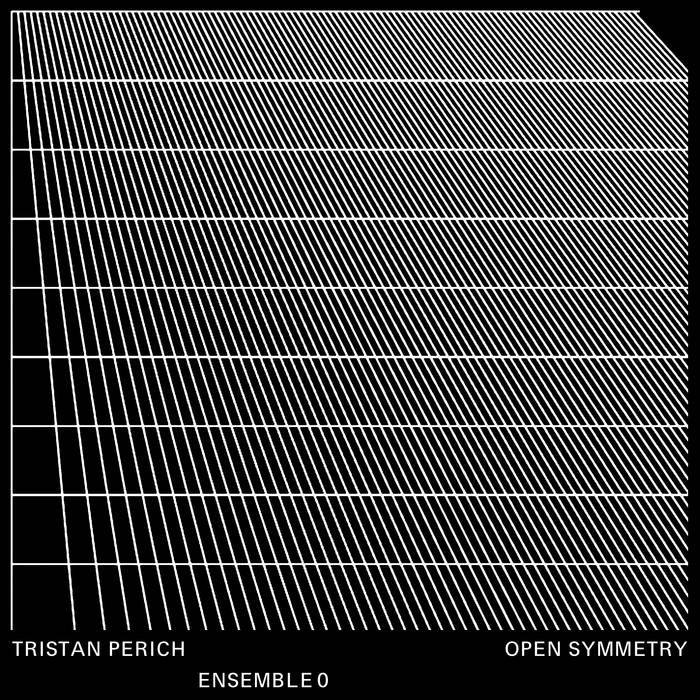
Open Symmetry is the first release on Erased Tapes from New York-based composer Tristan Perich.
As the commentary for the album describes, ‘Open Symmetry pares the ensemble down to just three musicians playing the resonant metal bars of three vibraphone accompanied with a glistening ensemble of 20 speakers, each playing their own separate musical part of the composition.”
Open Symmetry was the result of a meet-up in 2014 between Perich and Ensemble 0‘s Stéphane Garin, who commissioned the piece. Writing for three vibraphone and 1-bit electronics, Perich soon realised it would be a large-scale piece, and the piece occupied him until its premiere in 2019. This is the first recording.
What’s the music like?
Hypnotic is an oft-used word in musical descriptions, but it applies perfectly to the effect this epic piece has on its listener.
Perich’s treble-rich writing creates a rarefied atmosphere, and as the scope of the piece becomes clear there is a sense of assurance, the listener able to kick back and enjoy the piece on two levels.
The first and most immediate level is the short term, and the energetic loops Perich packs together for the vibraphones. Then, as the sections unfold, there is a long-term contentment, the music progressing naturally through each stage without losing any of its momentum.
After a bright introduction, Section 2 is where the pulsing qualities of the music really take hold, before Section 3 opens out beautifully into oscillating figures. Section 4 pulses with warmth and light, initially slow but ultimately powering through. Section 5 becomes like a shower of silvery rain, before Section 6 adopts a more percussive profile of chimes.
A buildup of energy ensues, emphatically released in Section 7 with a thrilling flurry of staccato chords that power to an ecstatic finish.
Does it all work?
It does. Perich writes with impressive conviction and creates vivid colours through motifs that dance in the half light.
Is it recommended?
Yes, enthusiastically. This is a highly impressive achievement, a substantial piece of minimalist music that is both original and effective. Like a long session of bell ringing, Open Symmetry will leave its listeners transfixed.
For fans of… Philip Glass, Steve Reich, Terry Riley
‘Emotional rave’ is the slogan Ólafur Arnalds and Janus Rasmussen have applied to their second outing as Kiasmos. Due no doubt to intensive work schedules and popularity, it arrives ten years after their self-titled first long player together.
It is more of a widescreen affair than the self-titled debut, and included a trip to Ólafur’s studio in Bali in 2021. There the duo stayed for a month, writing and recording several tracks.
What’s the music like?
An absolute state of bliss is achieved as the first track arrives on the breeze, Grown becoming a beautiful blend of atmospherics and a stately chord progression. Sailed presents a relaxing middle ground, a languid melody, but offset by a busy drum track that keeps everything moving.
From there the songs follow a relatively familiar pattern, whereby a swell of cinematic, quasi-orchestral music is followed by a dip, where the drum track retreats and mottled piano takes centre stage, before the build up begins again and the drums return in a busier state. This happens to rich effect with the strings in Laced and Bound, and powerfully so on Squared.
Flown has a really nice piano / harp motif, while Dazed is a beauty, infused with Balinese percussion and the echoes of a sunrise, together with upright piano.
Does it all work?
It does – though at times the music sticks too rigidly to a familiar format and structure. That is potentially good for fans, though for this particular listener it led to a wish for more experimentation, knowing what the two artists are capable of.
Is it recommended?
It is – especially if you have the first Kiasmos album and are familiar with the solo works of the two artists. This is ideal music for taking the emotional weight off a day, or providing valuable time out – and the feeling persists that any sequel collaboration could really take off with a more instinctive approach.
For fans of… Nils Frahm, Max Richter, Rival Consoles
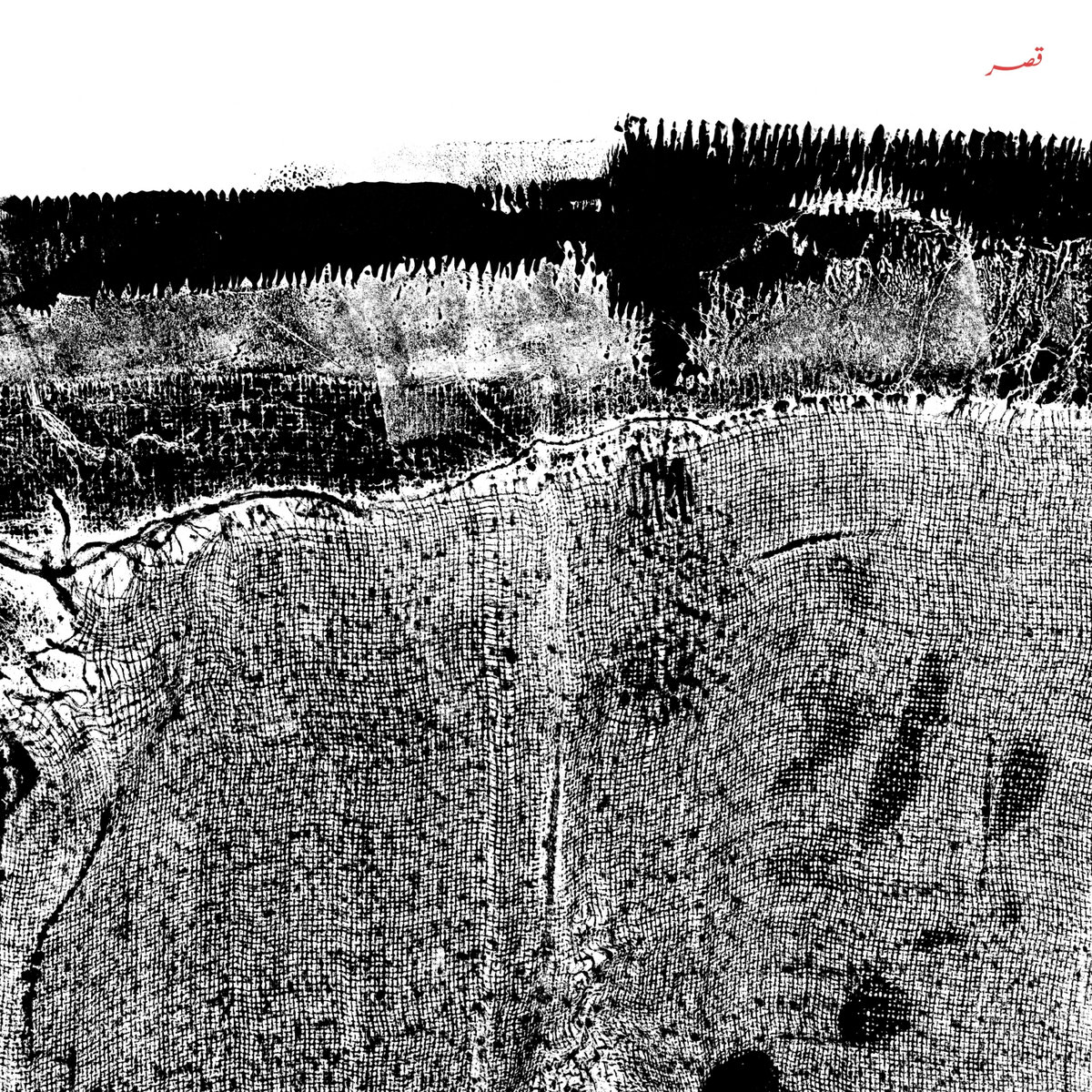
This is the first music on Erased Tapes from American artist Sheherazaad, a native to the Bay Area who brought together a number of musicians in New York to record this mini-album.
Sheher has North and South Indian heritage, and became disorientated by moving between the two and America, though when she settled in New York for study she discovered the city’s South Asian arts community and an electronic culture emanating from the UK, which brought her into contact with Arooj Aftab – who produced this record. Singing in Urdu, she was joined by musicians including Basma Edrees (Egypt), Gilbert Mansour (Lebanon), and Firas Zreik (Palestine). The result, Qasr, translates to ‘castle’, or ‘fortress’, and is a deeply personal document of Sheherazaad’s own unique origins.
What’s the music like?
Compelling. There is an outdoor feel to this music, as though recorded barefoot in the very places Sheher sings about.
The first song, Mashoor, features the guitar of Ria Modak – and it proves the ideal foil for the voice, both low in pitch but conversing intimately. Dhund Lo Mujhe brings a burst of energy, though not necessarily positive, for the outbursts of the fiddle are there to help portray ‘a very specific insanity, that of the immigrant experience’. Sheher’s inflections and the pizzicato play off against each other before the voice soars, its vibrato inspiring the fiddle to greater heights.
Koshish(Try) is conversational, the reverberant acoustic capturing the Californian heat, while Khatam (Finished) travels back through time to the accompaniment of rich improvisation on the sustained piano. The final Lehya, the most substantial of the five songs, takes us to a mythical city, its nocturnal beginning the basis for growth to all sorts of colourful shades, before the closing chant, a soft but moving call for freedom.
Does it all work?
It does – though the levels of intensity mean that for full appreciation you need to listen in an environment where you can give Sheherazaad’s music the level of attention it deserves.
Is it recommended?
Yes. This is an artist with a huge amount to say, and the feeling is that on this mini album she is just dipping her toe in the water. There is a whole lot more to come from this explosive and original talent.
For fans of… Khruangbin, William Onyeabor, Shida Shahabi




 Arcana.fm