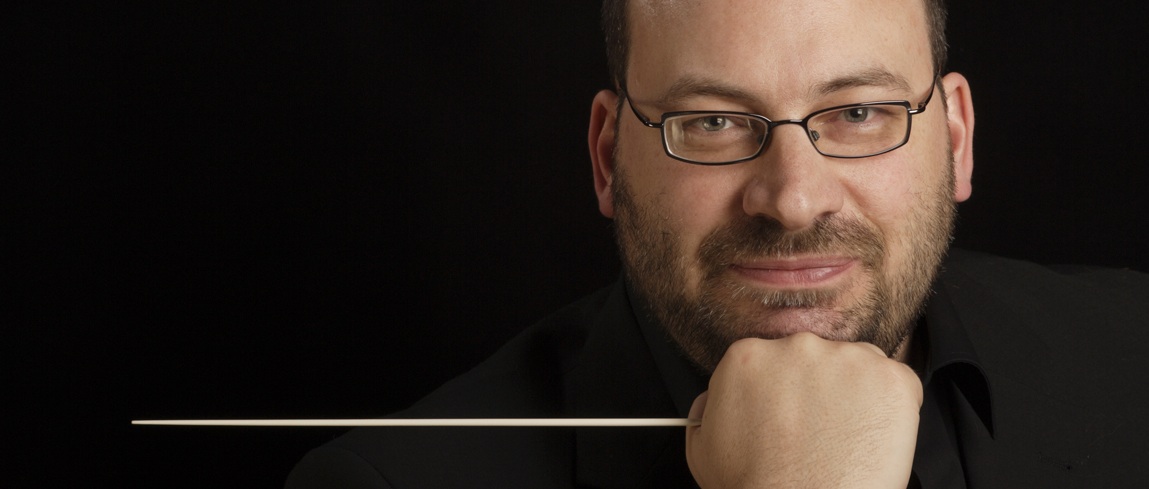
In concert – April Fredrick, English Symphony Orchestra / Kenneth Woods – The Journey Home: Haydn, David Matthews, Barber & Mozart

Haydn Symphony No. 45 in F sharp minor, Hob.I:45 ‘Farewell’ (1772)
David Matthews Le Lac Op.146 (2018)
Barber Knoxville: Summer of 1915 Op.24 (1947)
Mozart Symphony no.36 in C major K425 ‘Linz’

April Fredrick (soprano), English Symphony Orchestra / Kenneth Woods

Great Malvern Priory, Malvern
Wednesday 23 November 2022

Reviewed by Richard Whitehouse

The English Symphony Orchestra’s season really hit its stride this evening with a programme featuring two major vocal works of the 20th and 21st centuries, heard alongside two notable while very different symphonies from near the start and towards the end of the Classical era.

As Kenneth Woods indicated, Haydn’s ‘Farewell’ Symphony would have been determinedly avant-garde to early listeners, and much of that innovative quality came over here. Not least in the initial Allegro, its jagged course and disjunctive tonal shifts only nominally countered by the Adagio’s increasingly fraught introspection. With its stark alternations in motion and phrasing, the Menuetto proved a telling foil to a finale where a turbulent Presto precedes an Adagio whose eloquence was sustained as the music subsides and musicians vacate the stage.

Whether or not this symphony would have been better placed at the end of this concert, it set up productive contrast with David Matthews’s Le Lac. Remembered more as statesman than poet, Alphonse de Lamartine was a crucial figure in French literature of the early Romantic period – his lengthy 1820 poem a remembrance of lost love comparable to verse by Shelley and Heine, and one whose slowly intensifying rapture is to the fore in this evocative scena. Two orchestral interludes aside, its formal and emotional progress is essentially determined by the vocal line; with which April Fredrick was at one in conveying the wistfulness but also anguish inherent of this music. The fastidious textures were no less finely delineated by the ESO, Woods sustaining a cohesive overall trajectory from earlier promise to ultimate loss.

Evidently it was Fredrick who had suggested juxtaposing this piece with Barber’s Knoxville: Summer of 1915, which pairing succeeded admirably in terms of underlining conceptual and expressive links between them. Its sense of loss may be psychological rather than personal, but an emotional force comes over tangibly for all this music’s overt restraint: James Agee’s poetic reportage summoning a response the more affecting for its restraint and in whose vocal part Fredrick was never less than attuned. Woods brought no mean sensitivity or character to orchestral writing such as eschews the rhetoric found in many of Barber’s earlier scores and so foreshadows the subtlety of those two decades hence. This is a work with few significant precursors or successors, and the present reading made the most of its singular atmosphere.

The evening concluded with the relative extroversion of Mozart’s ‘Linz’ Symphony – a piece whose having been written in four days doubtless occasioned its technical brilliance, yet also a formulaic quality to its actual substance. Not, however, in an Andante whose gentle pathos was to the fore, or a Menuetto whose brevity belies its resourceful use of woodwind. Woods found a winning effervescence in the initial Allegro, and if the second-half repeat in the final Presto may be one such too far, this music’s Haydnesque wit was never less than appealing.

It set the seal on a well-conceived and finely executed concert that, in pivoting between the established and unfamiliar (not only between but also within works) typifies thr resourceful approach to programming with which Woods and the ESO have now become synonymous.

For more information on the artists in this concert, click on the links to read about April Fredrick, Kenneth Woods and the English Symphony Orchestra. For more on composer David Matthews, click here

In Concert – Pavel Haas Quartet @ Wigmore Hall: Haydn, Prokofiev & Haas

Pavel Haas Quartet [Veronika Jarůšková, Marek Zwiebel (violins), Karel Untermüller (viola), Peter Jarůšek (cello)

Haydn String Quartet in G major Op.76/1 (1979)
Prokofiev String Quartet no.2 in F major Op.92 (1941)
Haas String Quartet no.2 Op.7 ‘From The Monkey Mountains’ (1925)

Wigmore Hall, London
Thursday 24 November 2022

Reviewed by Ben Hogwood

The Pavel Haas Quartet often cause a stir on their visits to the Wigmore Hall, and this concert was no exception for the Czech ensemble.

Many of Haydn’s mature string quartets begin with a trio of chords effectively designed to hush the audience and guide their ears towards the performance getting underway. The first in his crowning set of six quartets published as Op.76 is no exception, though in this red blooded account the Pavel Haas Quartet pinned the audience back in their seats, such was the vigour with which this performance began.

There were some ragged edges to their interpretation, and less evidence of the genial Haydn that makes himself known with the conversational melody of the first movement. We did however get more exposure to his experimental side, through an interpretation pointing the music forward towards middle period Beethoven. The quickstep third movement, very much a scherzo rather than a minuet, pointed up Haydn’s daring harmonic excursions and dalliances, as did the finale, based mostly in the minor key and featuring a number of brisk about-turns. Stemming the tide was the second movement Adagio, a reverent account with a solemn air to its central section in particular.

There followed a superbly played account of Prokofiev’s String Quartet no.2. This attractive work is not often heard in concert, which is a shame for it has a good deal of spice and charm through its investment in folk tunes from the Northern Caucausian region, where the composer was evacuated in 1941. Encouraged by his new neighbours, Prokofiev achieved a very satisfying blend of the original tunes with spiky good humour and scrunched up harmonic dissonances, always in thrall to the highly melodic content.

The first movement revelled in the abundance of good tunes, bringing the Pavel Haas Quartet’s Slavonic instincts into play. The mood softened for a heartfelt cello solo from Peter Jarůšek, setting a thoughtful and delicately nostalgic tone for the Adagio. Here more time was taken for reflection, with a noticeable chill running through Prokofiev’s writing.

Within the folk references it is possible to discern the worrisome mood of the time, with World War Two underway. The third movement however felt like a show of resolution in the face of this threat, laced with humour that in this performance could have been exploited to greater effect. It was however a fine performance, with terrific ensemble playing.

The main event of the concert was undoubtedly a performance of music from the quartet’s namesake. Pavel Haas, born in Moravia, studied with Janáček between 1920 and 1922, completing his String Quartet no.2 three years later. Tragically in 1941 he was deported to the Theresienstadt concentration camp, and died in Auschwitz three years later. Much of his work lay in neglect but has in the last thirty years enjoyed an extremely welcome renaissance, led by a number of enterprising recordings made in the 1990s, not least that of this work for Decca’s Entartete Musik imprint in the 1990s by the Hawthorne String Quartet. Since then the second quartet has gone on to gain a welcome foothold in the concert hall.

It would be difficult to contemplate a better performance than this one from the Pavel Haas Quartet. Led assertively by Veronika Jarůšková, they showed what an assured and imaginative piece it is, a travelogue giving the listener a tour of the sights and sounds of the famous Monkey Mountain range in Moravia.

The musical language is a curious but highly engaging hybrid of influences, drawing on the music of Dvořák and Smetana but in compressed melodic pockets of heightened intensity. Janáček, too, is an influential voice, but Haas’s unusual phrasing and distinctive rhythms make for a unique and enjoyable style.

The Pavel Haas Quartet enjoyed it greatly, the first two movements (Landscape and Coach, Coachman and Horse) enjoying the rarefied outdoor air and some crisply secured dance rhythms. The third movement, subtitled The Moon and I, was much colder to the touch, the muted strings taking time for introspection and creating some striking colours along the way. Their beautifully poised playing set up a riotous Wild Night finale where they were joined by percussionist Owen Gunnell (above), whose battery of instruments were expertly marshalled to bring the sounds of 1920s jazz into the fray.

The riotous closing pages brought the swaying Moravian dances and jazz rhythms to the foundations of the Wigmore Hall, brilliantly played and ideally balanced. So good was this section that the five performers gave us a quick reprisal as an encore, reminding us in the process of the fiercely original writing from a composer whose resurgence is to be greatly welcomed.  

In concert – Sheku Kanneh-Mason, Marie-Christine Zupancic, CBSO / Mirga Gražinytė-Tyla: Vaughan Williams, Haydn, Elgar, Weinberg & Britten

Vaughan Williams Fantasia on a Theme of Thomas Tallis (1910)
Haydn Cello Concerto no.1 in C major Hob.VIIb/1 (c1761)
Elgar Sospiri Op.70 (1914)
Weinberg Flute Concerto no.1 Op.75 (1961)
Britten The Young Person’s Guide to the Orchestra Op.34 (1945)

Sheku Kanneh-Mason (cello), Marie-Christine Zupancic (flute), City of Birmingham Symphony Orchestra / Mirga Gražinytė-Tyla

Symphony Hall, Birmingham
Wednesday 6 October 2022

Reviewed by Richard Whitehouse

Shortly to embark on its first tour of the United States in almost a quarter-century, the City of Birmingham Symphony Orchestra tonight played some of the pieces to be included there – a diverse selection that amounted to a cohesive and well-balanced programme on its own terms.

Opening the concert was one of those pieces heard on the CBSO’s album The British Project, and while this orchestra has performed Vaughan Williams’s Fantasia on a Theme of Thomas Tallis often, Mirga Gražinyte-Tyla relatively swift traversal compelled attention. The opening stages felt a little detached – the offstage ‘orchestra’, placed offstage-left, more a background presence than active participant – but the string quartet contribution was eloquently rendered while the approach to the main climax was as unerringly judged as that resonant final chord.

Sheku Kanneh-Mason has been playing Haydn’s cello concertos extensively, so there was no doubting the control and insight brought to the C major work – earliest of the pair and poised between the Baroque and Classical eras in its combining formal lucidity with melodic poise. Kanneh-Mason was mindful of the opening movement’s Moderato indication, maintaining a steady and never headlong tempo that allowed his tonal finesse and elegance of phrasing full rein. The Adagio could have had greater inward intensity, but not that stealthy transition into the return of the main theme, and the final Allegro had wit and incisiveness aplenty. A much-reduced CBSO was responsive in support – Kanneh-Mason offering an unlikely yet appealing pizzicato take on Bacharach’s I Say a Little Prayer (found on his new album Song) as encore.

There cannot have been many times when Elgar’s Sospiri began the second half, but it did so this evening to enticing effect. MG-T drew out its pathos without no trace of affectation, and if the organ part was missing, the strings’ burnished eloquence was more than compensation.

After last week’s public premiere of his Jewish Rhapsody, MG-T turned to (relatively) more familiar Weinberg with his First Flute Concerto. It also proved an ideal showcase for Marie-Christine Zupancic, longstanding section-leader of the CBSO, to demonstrate her prowess as soloist – whether in the energetic interplay of the initial Allegro, deftly understated threnody of the Adagio, or whimsical humour of an Allegro that anticipates Weinberg finales to come. The strings responded with alacrity to a piece now taking its place in a still-limited repertoire.

Britten‘s The Young Person’s Guide to the Orchestra has not been out of the repertoire in 77 years and it remains not just the finest educational work of its kind but an impressive showpiece in its own right. With the CBSO heard at full strength for the only time tonight, MG-T directed a performance which only fell short in the rather stolid rendering of the theme at the start. The traversal through the four orchestral sections threw up various distinctive cameos, while the closing fugue duly put the orchestra back together for what was an exhilarating apotheosis.

This was not quite the end, MG-T introducing the encore to feature on tour – Thomas Adès’s O Albion (from his quartet Arcadiana), here suitably evocative even if the irony of playing so -named a piece to a Birmingham audience can hardly have been lost on most of those present.

You can read all about the 2022/23 season and book tickets at the CBSO website. For more information on the artists, click on the names of Mirga Gražinyte-Tyla, Sheku Kanneh-Mason, Marie-Christine Zupancic for more information, and head to the website of Mieczyslaw Weinberg for more information on the composer.

In Concert – Soloists, Choir and Orchestra of the Age of Enlightenment / John Butt: Haydn: ‘Nelson’ Mass and ‘Trauer’ Symphony

Haydn
Symphony no.44 in E minor Hob.I:44 ‘Trauer’ (1772)
‘Ganz Erbarmen’ from The Seven Last Words of our Saviour on the Cross Hob.XX:2/2 (1786, choral version 1796)
Missa in angustiis (‘Nelson’ Mass), Hob.XXII:11 (1798)

Sofie Ticciati (soprano), Bethany Horak-Hallett (mezzo-soprano), Hugo Hymas (tenor), Robert Davies (bass), Choir and Orchestra of the Age of Enlightenment / John Butt

Hall One, Kings Place, Friday 30 September 2022

Reviewed by Ben Hogwood

Full marks should go to the OAE and Kings Place planning teams for this concert. Somehow they anticipated that what was required on the last day of September 2022 was a ‘mass in time of fear’ – and in doing so unwitting delivered the ideal response at the end of a week of great political uncertainty. The subtitle was given by Haydn to a substantial work better known as the Nelson Mass, so called because it was performed in the presence of Nelson and Lady Hamilton when they visited the composer at Eisenstadt in 1800.

First, though, we heard a work from the composer’s Sturm und Drang period. His Symphony no.44, the only one of his 104 in the key of E minor, has the nickname Trauer on account of the performance of its slow movement at Haydn’s funeral. It falls in the middle of a particularly rich vein of creativity in the Haydn symphony, where he was exploring less common key centres and instrumental possibilities. This performance was given by just 17 players but they gave a sound that could have been made by an orchestra double the size. They caught the dark undertones of its lean and jagged first movement, reminding us of how dramatic Haydn symphonies can be. John Butt was an embodiment of the vigorous performance, drawing the wit and dance rhythms from the Menuetto but also enjoying the relative sweetness of the trio section, with outstanding high horn playing from Ursula Paludan Monberg. The muted Adagio was beautifully done, finding the serene corners of the major key, while the finale had terrific drive, the strings digging in with gritty staccato.

A curious inclusion followed, the second movement of the choral version of Seven Last Words of our Saviour on the Cross. Concentrating on Christ’s promise to his fellow crucified prisoners that they too would see paradise, Haydn offers a vision of redemption that the four vocal soloists portrayed after a period of initial solemnity. The choir, positioned around the balcony, sang down to the audience and were ideally balanced by Butt, who was always cajoling them on to more.

He did likewise in an outstanding performance of the Nelson Mass, which was compelling from first note to last. Described by no less than Haydn scholar HC Robbins Landon as ‘arguably his greatest composition’, it began with a dramatic Kyrie, laying an immediate sense of occasion. With brass and timpani alongside the 17-strong chorus on the balcony, there was fear and tumult in the music, which reached an apex in the Benedictus, an extraordinary passage of writing for the time. Soprano Sofie Ticciati was a subtly commanding presence, especially in this section, and she had sterling harmonic support from fine mezzo-soprano Bethany Horak-Hallett, who came into her own with a terrific solo at the start of the Agnus Dei. Hugo Hymas and Robert Davies were excellent too, the latter’s burnished bass tones matching the sweet violins in the Qui tollis section of the Gloria.

The choir sang with composure but with great passion, too, mirroring the input of their conductor, who had the measure of the Kings Place acoustic. This gave the big numbers – Gloria, Credo and Agnus Dei especially – the reverberation they needed at the end to follow their emphatic conclusions. By the end of the latter movement the darkness was completely vanquished, Haydn’s firm beliefs given their surest possible foundation. This was an outstanding concert, and a memorable contribution to the Voices Unwrapped series at Kings Place. Here the voices were not just unwrapped, they were ringing in the venue’s recesses long after the audience had departed.

In concert – Daniel Rowland, English Symphony Orchestra / Kenneth Woods: Poulenc, Philip Sawyers & Mozart

daniel-rowland

Poulenc Sinfonietta FP141 (1947)
Sawyers Viola Concerto (2020) [World Premiere]
Mozart Symphony No. 40 in G minor K550 (1788)

Daniel Rowland (violin), English Symphony Orchestra / Kenneth Woods

The Priory, Great Malvern
Saturday 5 March 2022

Written by Richard Whitehouse

Having relocated from Hereford to Great Malvern, the English Symphony Orchestra’s second concert this weekend followed a broadly similar format with, once again, a first public hearing for a recent concerto by its former Composer-in-Association and now its Composer Laureate.

First, though, a welcome revival for the Sinfonietta that Poulenc wrote for the founding of the BBC’s Third Programme (later Radio Three). The composer wrote little music for orchestra outside a concertante or theatrical context, making this piece from his maturity more valuable. Poulenc’s aesthetic may have been avowedly non-symphonic, but there is no lack of formal focus in an opening Allegro as was suitably impetuous here; nor of capering wit in a scherzo that only marginally outstays its welcome. Not so the Andante, whose fusion of ingratiating charm and restive pathos is almost a character portrait. A showcase, too, for woodwind such as the players seized upon gratefully – the orchestra entering into the spirit of the final Rondo with an abandon neatly offset by the introspective closing pages with their equivocal pay-off.

Not wishing to invoke the joke about buses, but Philip Sawyers had directly followed up the Double Concerto heard yesterday with a Viola Concerto for Daniel Rowland. The outward three-movement trajectory is retained, but the musical content is appreciably different – not least in the moderately paced Allegro whose substantial initial tutti outlines numerous ideas explored extensively if understatedly over what follows. Nor does the absence of a cadenza sell short a viola part whose plangent tones are enhanced with the translucent orchestration.

Almost inevitably less immediate than the corresponding movement of its predecessor, the central Andante is absorbing in its meditative soliloquy for the soloist – often in the company of solo wind and whose haunting demeanour is countered though never quite dispelled by the final Allegro. Here the lively refrain provides an outlet such as Rowlands, clearly as adept a violist as he is a violinist, despatched with no mean virtuosity. Once again, it was a sense of the whole work brought formally and expressively full circle as gave the coda its conviction.

Continuing their reverse traversal of Mozart’s final three symphonies, the ESO and Kenneth Woods (above) tonight gave the 40th – most dramatic of the trilogy and whose innovations are easy to take for granted, but whose opening Allegro is never less than compulsive when the trade-off between its indelible main theme and tensile accompaniment was so intently maintained through to the fatalistic coda. The Andante can often feel flaccid but not when directed with such attention to its lilting gait and expressive intensity, while the Menuetto had a rhythmic trenchancy and harmonic acerbity offset by its trio’s repose. The final Allegro unfolded at an ideal tempo – its second-half repeat vindicated by an altered emphasis on the development’s visceral opening sequence, with a heady ratcheting-up of emotion in those very closing bars.

Impressive music-making, and just what was needed in what are suddenly dangerous times. Reason enough, therefore, for having begun this concert (as on the previous night) with the Ukrainian national anthem: an opportunity, however brief, for some much-needed reflection.

For further information on the ESO’s 2021/22 season click here, and for more on composer Philip Sawyers click here Meanwhile for more information on the artists, click on the names to access the websites of Daniel Rowland and Kenneth Woods. Meanwhile for more on musical events at Great Malvern Priory, click here