In concert – Ryan Wang, CBSO / Pierre Bleuse: Ravel, Liszt & Bartók

Ryan Wang (piano), City of Birmingham Symphony Orchestra / Pierre Bleuse

Ravel Ma mère l’Oye – ballet (1910-11); Rapsodie Espagole ((1907-08)
Liszt Piano Concerto no.1 in E flat major S124 (1849, rev. 1855)
Bartók The Miraculous Mandarin BB82 – suite (1918-24)

Symphony Hall, Birmingham
Thursday 4 December 2025

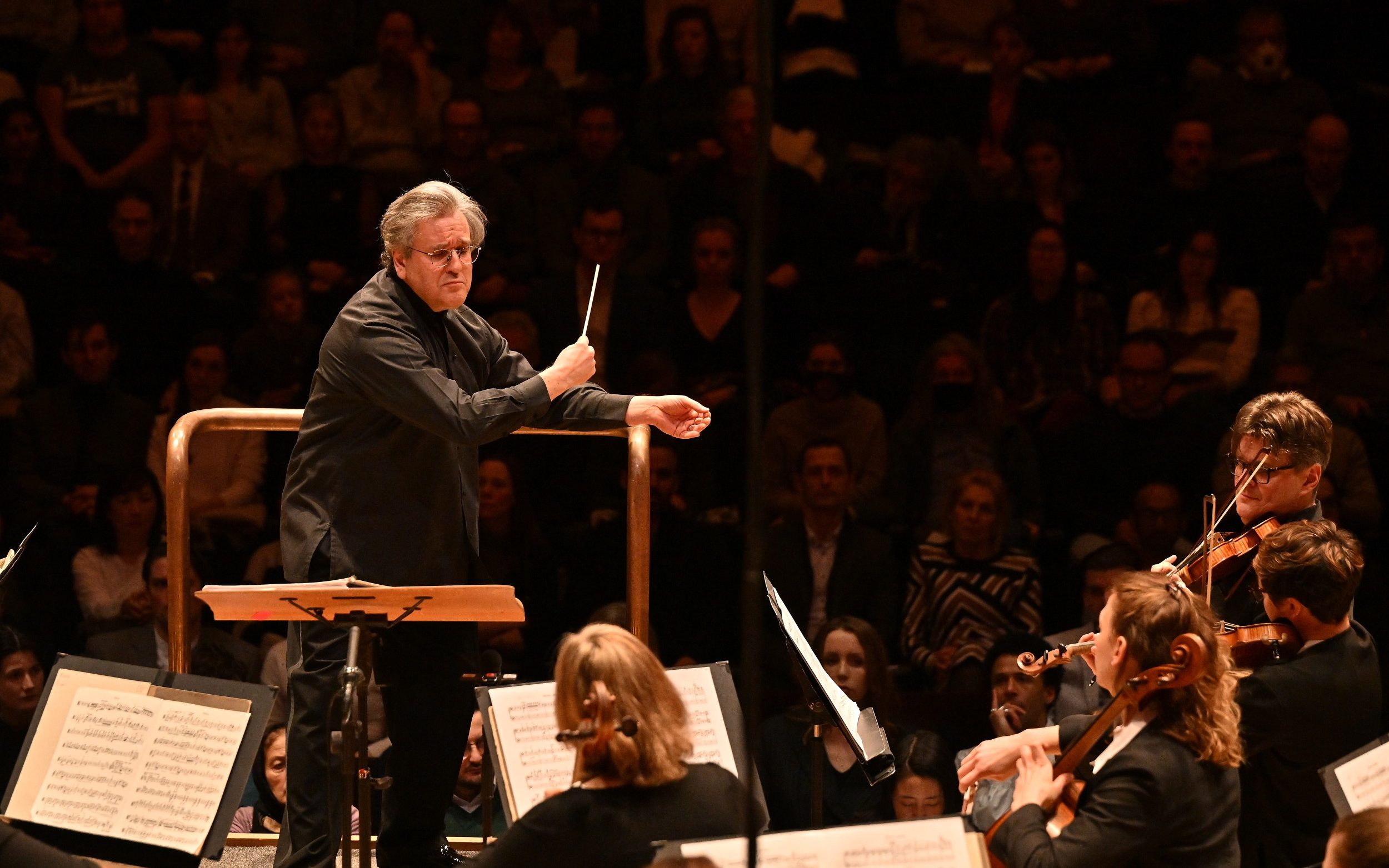
Reviewed by Richard Whitehouse Photo of Pierre Bleuse (c) Marine Pierrot Detry

His marking the centenaries of Berio and Boulez at this year’s Proms confirmed Pierre Bleuse (music director of the Ensemble Intercontemporain) as a conducting force to be reckoned with, duly reaffirmed by this afternoon’s concert with the City of Birmingham Symphony Orchestra.
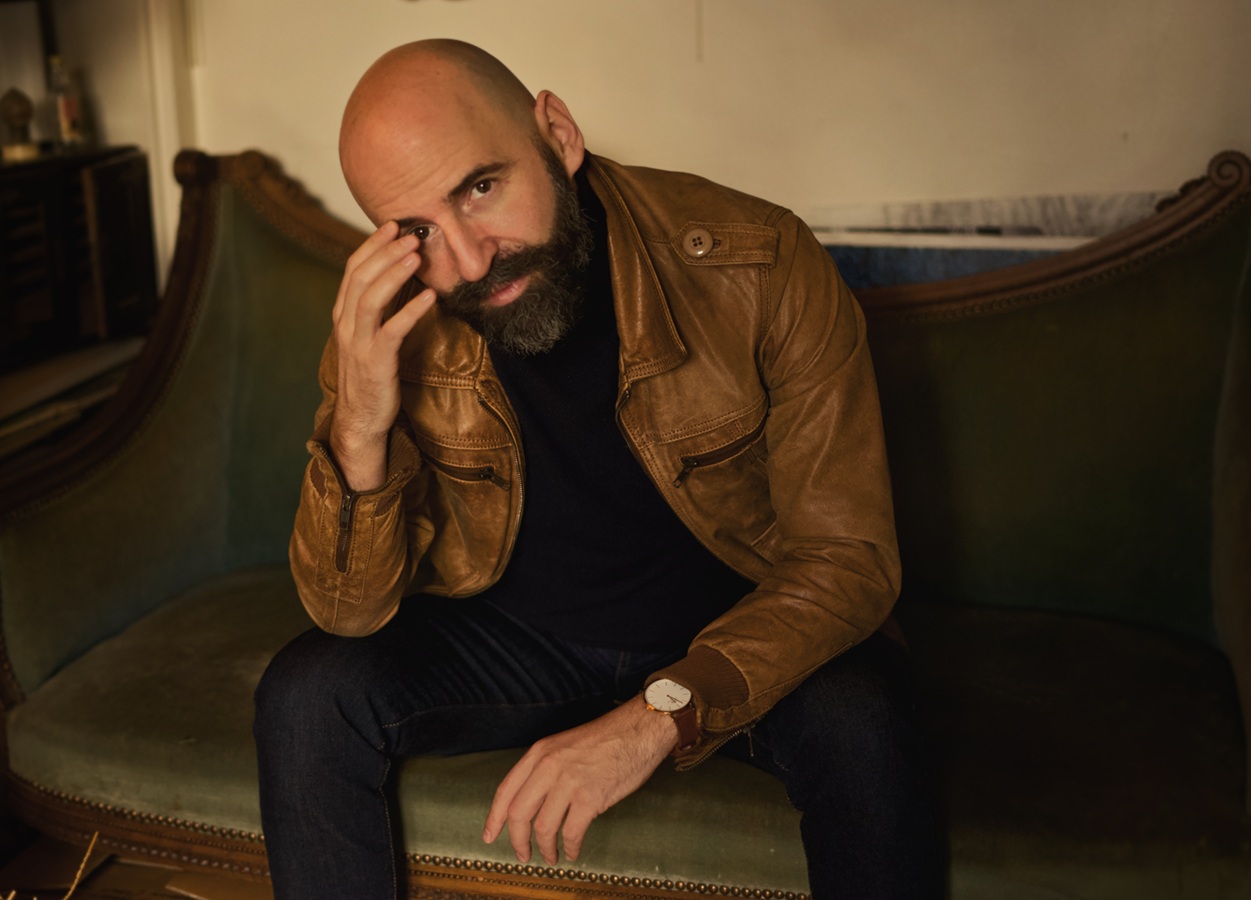
The CBSO has an association with the ballet incarnation of Ravel’s Mother Goose stretching to Simon Rattle and beyond to Louis Frémaux. After an evocative Prelude then a winningly nonchalant Spinning-Wheel Dance, Bleuse (above) brought out the plaintiveness in Pavane of the Sleeping Beauty’ then the subtly nuanced humour in Conversation of Beauty and the Beast; pointing up the piquancy of Tom Thumb then the whimsicality of Laideronnette, Empress of the Pagodas. Interpretively as well as musically, the best was saved until last – the deftest of transitions leading into a Fairy Garden of artless eloquence. Throughout this memorable performance, woodwind playing was consistently beguiling – not least during that approach to an apotheosis such as benefitted from Bleuse’s refusal to overstate its emotional rhetoric.

Nothing wrong with an all-Ravel first half, even if Rapsodie Espagnole may not have been the ideal continuation. Yet that sultry aura exuded by Prélude à la nuit felt almost tangible, as was the ominous unease of Malagueña and the rarefied elegance of Habanera, before the mounting excitement of Feria carried all before it. Bleuse successfully brought out the nostalgic resonances at the centre of this finale, and even if the closing bars lacked a degree of visceral excitement, the sense of a cohesive or cumulative whole could hardly be denied.
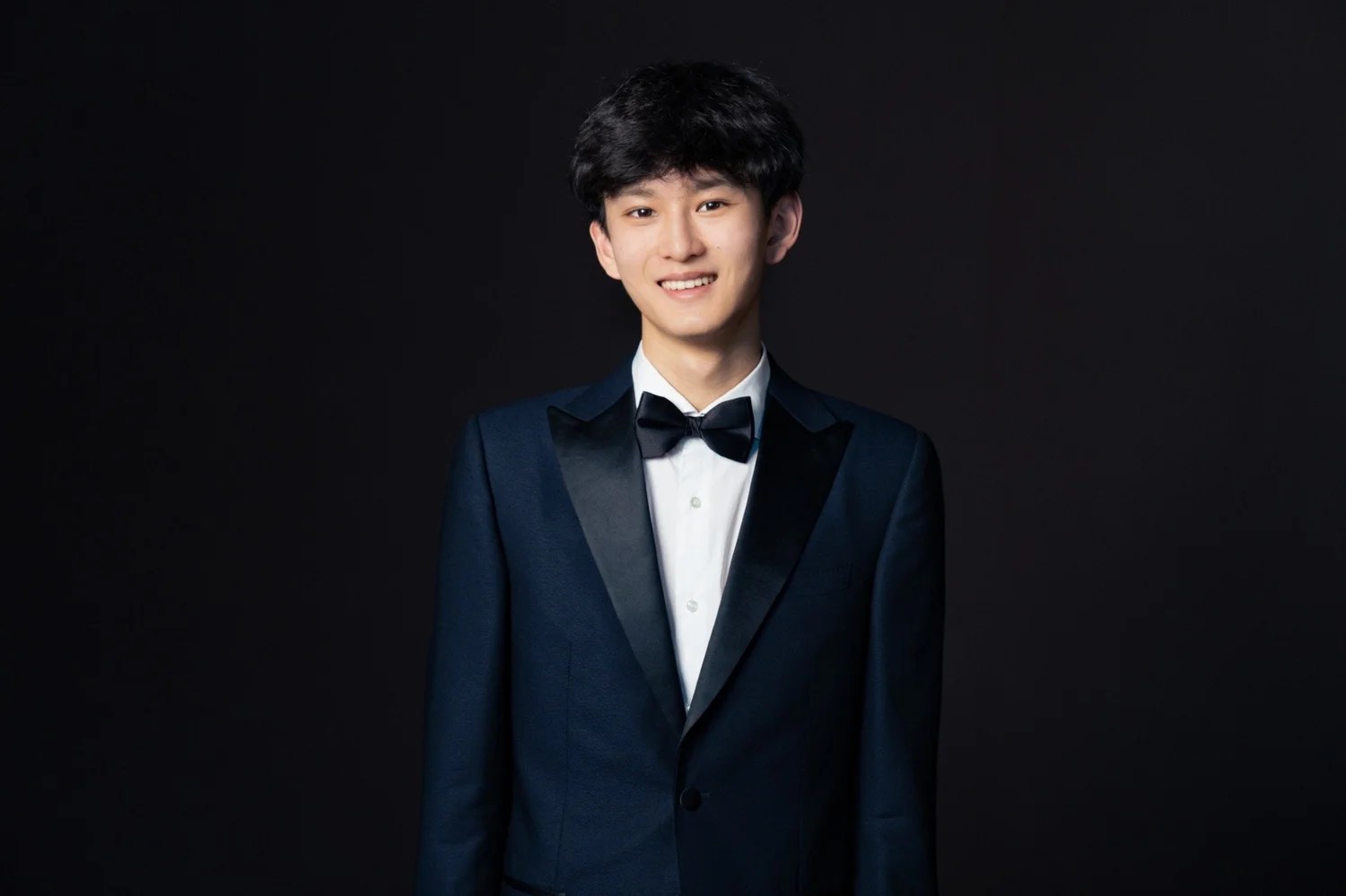
After the interval, a welcome hearing (less frequent these days than might be imagined) for Liszt’s First Piano Concerto. Executed with the right panache and an absence of histrionics, its formal succinctness and cyclical ingenuity are its own justification; not least as rendered with such attention to detail or expressive impetus by Ryan Wang (above). The winner of last year’s BBC Young Musician competition, he evidently has technique to spare while being equally capable of a delicacy and understatement ideally suited to the pensive ‘slow movement’ or the teasingly playful ‘scherzo’. The opening section was enhanced by a poetic contribution from clarinettist Oliver Janes, while the ‘finale’ headed to an exhilarating peroration. Wang duly acknowledged the applause with his leonine rendering of Chopin’s ‘Heroic’ Polonaise.

The programme ended with the suite from Bartók’s pantomime The Miraculous Mandarin. This is music which all too easily descends into overkill, but Bleuse kept a firm grip on its progress from the frenetic opening evocation of urban traffic, via its mounting anticipation with the arrival of the three ‘clients’, through to a bewitchingly shaped encounter between the mandarin and the woman. Nor was there any absence of virtuosity in a climactic chase-sequence, even while the emphasis on its rallentando markings proved a little too intrusive.

Most surprising, however, was a relatively prolonged silence after its explosive ending. Was the audience nonplussed by its once-infamous scenario, or was it unaware of this supposedly familiar music? Whatever, the performance assuredly seal the seal on an impressive concert.

For more information on the 2025-26 season head to the City of Birmingham Symphony Orchestra website. Click on the names to read more about soloist Ryan Wang and conductor Pierre Bleuse

Published post no.2,740 – Sunday 7 December 2025

In concert – Summer Music in City Churches: Tier3 Trio @ St Giles Cripplegate

Tier3 Trio [Joseph Wolfe (violin), Jonathan Ayling (cello), Daniel Grimwood (piano)]

Liszt arr. Saint-Saëns Orpheus
Tchaikovsky arr. Grimwood Andante non troppo (second movement of Piano Concerto no.2 in G major Op.44) (1880)
Arensky Piano Trio no.1 in D minor Op.32 (1894)

St Giles Cripplegate, London
Thursday 13 June 2024, 1pm

Reviewed by Ben Hogwood

‘Love’s Labours’ is the title of this year’s Summer Music in City Churches festival, based opposite the Barbican Hall in St Giles Cripplegate. The ten day-long enterprise is proving ample consolation for the much-missed City of London Festival, which once captivated audiences in the Square Mile for three weeks and offers music of equal range and imagination.

For the second year in succession the Tier3 Trio visited for a lunchtime recital, following up last year’s tempestuous Tchaikovsky Piano Trio with an attractive programme subtitled From Russia with Love. They began with a curiosity, playing Saint-Saëns’ little-known arrangement of Liszt’s symphonic poem Orpheus for piano trio. A highly effective transcription, it retained its dramatic thread in this fine performance, notable for its attention to detail and well-balanced lines when reproducing Liszt’s slow-burning music. Pianist Daniel Grimwood successfully evoked Orpheus’ lyre, while Jonathan Ayling’s burnished cello sound probed in counterpoint to Joseph Wolfe’s violin.

Tier3 was formed during lockdown, and in the same period when he was performing Tchaikovsky’s Piano Concerto no.2 in Germany, Grimwood realised the suitability of the work’s slow movement for trio. He rightly complemented ‘the extent to which Tchaikovsky was an experimenter in form’, a trait found in many works but at its inventive peak in the second concerto, whose slow movement is in effect a piano trio with orchestra. Here the arrangement was just right – balanced, elegant and fiercely dramatic towards the end. Clarity of line was secured through sensitive pedalling from Grimwood, the trio using the resonant acoustic to their advantage, while the individual cadenzas were brilliantly played.

These two notable curiosities linked beautifully into one of the best-known works of Anton Arensky, his Piano Trio no.1 in D minor. Arensky is not a well-known composer, fulfilling in part an unkind prophecy from his teacher, Rimsky-Korsakov. However that does not mean his music is without merit – far from it, as in his brief life of 45 years he wrote two symphonies, four orchestral suites, a substantial output of piano and high quality chamber music, of which the first piano trio is the pick.

Dedicated to the cellist Karl Davidov, it is equal parts elegy, drama and ballet – with a powerful first movement setting the tone. The balletic second movement Scherzo demands much of the piano, but Grimwood was its equal, sparkling passagework from the right hand dressed with twinkling figures for cello and piano. The emotional centre of the trio was in the slow movement, with a heartfelt tribute to Davidov in Ayling’s first solo, while the finale rounded everything up in a highly satisfying payoff, a return to the first movement’s profound theme capped with an emphatic closing section.

These were very fine performances from a trio at the top of their game, navigating the resonant acoustic of St Giles with power and precision. On this evidence, Rimsky-Korsakov would have had to eat his words!

You can read more about Summer Music in City Churches at the festival website – and you can listen to a Spotify playlist below, containing the music heard in this concert – with the original version of the Tchaikovsky:

Published post no.2,209 – Friday 14 June 2024

In concert – London Symphony Orchestra / Sir Antonio Pappano: Richard Strauss, Coleridge-Taylor & Liszt

Roman Simovic (violin), London Symphony Orchestra / Sir Antonio Pappano

Coleridge-Taylor Ballade in A minor Op.33 (1898)
Liszt Die Ideale S106 (1856-7)
Richard Strauss Ein Heldenleben Op. 40 (1898)

Barbican Hall, London
Sunday 12 February 2023

Reviewed by Richard Whitehouse

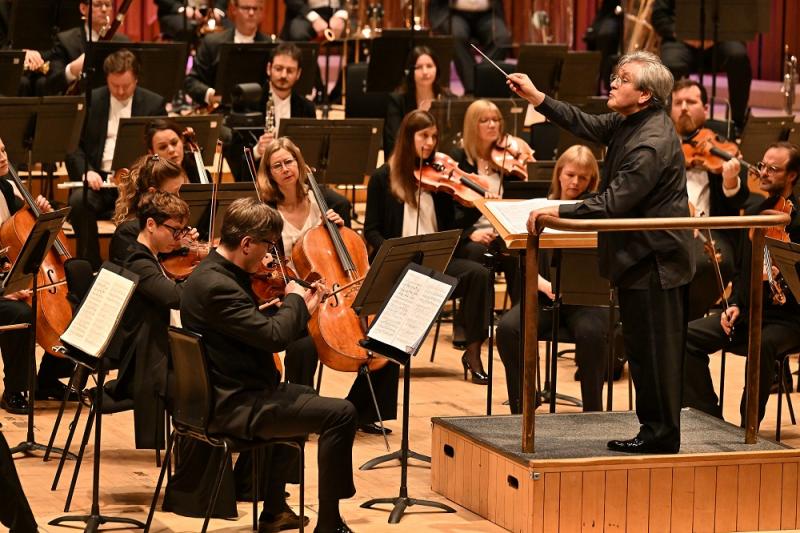
It may have been his only concert this season with the orchestra of which he becomes Chief Conductor next year, but the rapport between Sir Antonio Pappano and the London Symphony Orchestra was audibly sustained through the whole of what proved a judiciously programmed concert.

Whether or not his Ballade (as commissioned for and premiered at a Three Choirs Festival in Gloucester) was inspired by music from a nearby street organist, Samuel Coleridge-Taylor’s work confirms the melodic fecundity and orchestral panache of his maturity. Its languorous slower episodes, framed by swifter sections of mounting energy, might not generate a more cumulative momentum, but the emotional immediacy of this piece overall is never less than appealing – certainly in a performance as vividly and precisely executed as that given tonight.

Pappano gave a memorable account of Liszt’s Eine Faust Symphonie four seasons ago, and it is good to see him exploring the mostly neglected orchestral output of this still misunderstood figure. The 12th of his symphonic poems, Die Ideale was written for the unveiling of a statue of Goethe and Schiller – a poem by the latter furnishing the conceptual basis of a piece which avoids programmatic or psychological excess for mostly lyrical and understated material; one whose deftly modified sonata design may well have been in Wagner’s mind when envisaging the symphony of the future. Pappano steered a cohesive course, building assuredly towards a triumphal if never bombastic apotheosis whose chordal writing for timpani (picked up on by Bruckner in his First Symphony nine years later) is merely its most striking musical attribute.

This conductor has made a fine recording of Richard Strauss’s Ein Heldenleben with Orchestra dell’ Accademia Nazionale di Santa Cecilia, and a similar combination of formal clarity alongside expressive intensity was evident here. Surging forward without indulgence, The Hero found due contrast in the sniping pettiness of The Hero’s Adversaries – consummately rendered by the LSO woodwind – then leader Roman Simovic took centre-stage for an unusually focussed take on The Hero’s Companion as culminated in rapturous euphony. Pappano’s underlying tempo for The Hero at Battle was a little too headlong, though never to the detriment of its textural density in what emerged as a purposeful development of the work’s myriad motifs; heading into a powerfully wrought climax at the beginning of The Hero’s Works of Peace.

It is in this penultimate section that the work’s pivoting between tone poem and symphony is most finely drawn, and Pappano duly underlined the numerous allusions to Strauss’s earlier pieces with due awareness of their place within the intricately conceived whole. Nor was the fateful transition into The Hero’s Resignation and Fulfilment uncharacterized, making this finale a culmination of the overall design and consummation of its intrinsic content. Whether or not the evocation of domestic bliss, there could be little doubt as to the music’s sincerity.

Contrary to latter-day presumptions, moreover, there was no evidence of the work’s revised ending as somehow tacked-on to what went before – Pappano drawing a Nietzschean ‘oneness’ from those closing bars which set the seal on a persuasive reading, and a memorable concert.

You can find out more about the 2022/23 season and book tickets at the London Symphony Orchestra website. Click on the artist names for more on Sir Antonio Pappano and Roman Simovic, while you can also read more about the Samuel Coleridge-Taylor Foundation

Online concert – Steven Isserlis & Connie Shih mark the centenary of Saint-Saëns @ Wigmore Hall

steven-isserlis

Saint-Saëns Cello Sonata no.1 in C minor Op.32 (1872)
Liszt Romance oubliée S132 (1880)
Fauré Romance Op.69 (1894)
Saint-Saëns Romance in F major Op.36 (1874)
Bizet arr. Hollman Carmen fantaisie (not known)
Willaume La noce bretonne Op.14 (pub. 1924)
Holmès arr. Isserlis Noël d’Irlande (1897)
Hahn 2 improvisations sur des airs irlandais (1894 rev. 1911)
Saint-Saëns Cello Sonata no.2 in F major Op.123 (1905)

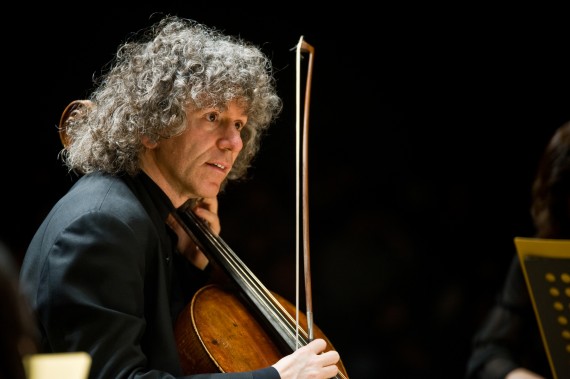
Steven Isserlis (cello, above), Connie Shih (piano, below)

Wigmore Hall, London
Thursday 16 December 2021

Written by Ben Hogwood

This well-devised program to mark the centenary of the death of Saint-Saëns was put together by cellist Steven Isserlis and his regular partner, pianist Connie Shih. They presented the composer’s two cello sonatas, the first of which was recorded by Isserlis back in 1992, in an intriguing historical context.

There is no room for shrinking violets in the first movement of the Cello Sonata no.1 in C minor Op.32, a relatively early work, and both performers threw themselves headlong into the music. Saint-Saëns was a virtuoso pianist, and on occasion his writing for the instrument is as demanding if not more so than the instrument it is ‘accompanying’. Here however the two were on equal terms, with plenty of cut and thrust in a dramatic first movement. The C minor casting and stormy start draw parallels with Beethoven, and these were built upon in the players’ compelling dialogue. The improvisatory slow movement was ideally poised, with an air of mystery in its central section where the cello was in its lowest register, complemented by twinkling figures from the piano. The Allegro moderato third movement returned us to powerful, passionate music, Isserlis’ double stopping passages immaculately delivered and Shih finding the necessary definition and phrasing in a superbly played piano part.

A full 32 years elapsed between the first sonata and its sequel, the Cello Sonata no.2 in F major Op.123. By this time the 70 year-old composer’s style had developed considerably. It is a substantial piece, running over 35 minutes, and is perhaps less-performed on that basis, not to mention the demands made on the performers. Isserlis and Shih showed what a fine work it is, however, in a performance that was gripping from the off, full of passion but also finding the more elusive statements in the quieter music, where Saint-Saëns could be found writing subtle but far-reaching sleights of harmony.

A joyous opening paragraph surged forward with considerable energy, powering an impressive and flowing first movement, Shih harnessing the power of the piano but continuing to hold a sensitive balance. She led off a capricious scherzo, whose variations were brilliantly characterized, from a limpid third variation (marked Tranquille) to a rippling Molto allegro that followed.

The heart of the piece, however, lies in the substantial Romance, a dreamy slow movement with a beautiful melody and a profound middle section turning towards the minor key. Both played with poise and affection, finding the centre of music the audience could fully lose themselves in. The last movement, which the composer promised ‘will wake anyone who’s slept through the rest of the piece’, was terrific, working from its deceptively innocuous opening phrase to throw off the shackles and end in celebratory mood. Isserlis was typically generous with his expression, with Shih deserving credit for her technical command and shapely melodic phrasing. The octaves towards the end were especially well-handled.

While the two sonatas were the main works of the concert, the complementary pieces were no less involving, providing an ideal foil. Firstly we heard from Saint-Saëns’ close friend Liszt, one of his few works for cello and piano. The Romance oubliée began with a recitative, with beautiful tone in the held notes from the cello, setting the (intense) mood. Then another great friend (and pupil), Fauré – whose Romance uses the whole range of the cello, starting in the mysterious depths and ending in the rarefied upper register. Saint-Saens’ own warm-hearted Romance in F major Op.36 was affectionately recounted, before the showstopping Carmen fantasie from Saint-Saëns’ friend and regular recital partner, Joseph Hollman. This was a showstopper, with quickfire dances and a pizzicato Habanera, stylishly done by Isserlis.

Shorter pieces followed from Gabriel Willaume, Reynaldo Hahn and Augusta Holmès, each with fascinating connections to the composer. Willaume’s La noce bretonne (The Breton wedding) was rather moving, its distant drone growing in feeling and power before passing by and disappearing again. Hahn’s 2 improvisations were songlike and affecting in their simplicity, a soulful Willow Tree especially, before an arrangement by Isserlis of Holmès song Noël d’Irlande, its pentatonic language easy to absorb.

This was a very fine concert, with playing of an exceptionally high standard by both artists, but crucially with the involvement that told us how Saint-Saëns, in particular, could combine virtuosity with deep feeling, contrary to some opinion. It is hard to imagine how his centenary could have been better observed – and it ended with a perfectly weighted account of The Swan, one of his most famous shorter pieces – taken as it is from Carnival of the Animals. Isserlis needed only to introduce it with a wave of the hand.

You can watch this concert on the Wigmore Hall website for the next 28 days – and you can hear most of the music played by Isserlis and Shih on the Spotify playlist below, with some of the recordings drawn from their recent album Music from Proust’s Salons. That disc can be heard (and purchased) from the BIS website

Wigmore Mondays – István Várdai & Sunwook Kim play Falla, Schubert & Kodály

István Várdai (cello, above) & Sunwook Kim (piano, below)

Falla Suite populaire espagnole (1914) (2:07 – 16:05 on the broadcast link below)
Schubert Arpeggione Sonata in A minor D821 (1824) (18:00 – 44:40)
Kodály Hungarian Rondo (1917) (46:46 – 56:28)

Wigmore Hall, London
Monday 15 July 2019

To hear the BBC broadcast through BBC Sounds, please follow this link

Commentary and Review by Ben Hogwood

The cello has always been one of the instruments closest to a pure imitation of the voice. Its range and its ability to phrase are both qualities that make it ideal for arrangements of songs.

Spanish composer Manuel de Falla may have collected and published his Siete canciones populares españolas (Seven Spanish Folksongs) for voice and piano, but they were soon arranged for violin and piano, then for cello and piano by Maurice Maréchal. The instrumental arrangements removed the second song and changed the order to make an effective concert suite. In this slightly understated but effective beginning from cellist István Várdai and pianist Sunwook Kim the music is laid bare, just as Falla would no doubt have preferred.

The first song, El paño moruno (The Moorish Cloth) (2:07), is quite restless but nicely ornamented in this performance with a subtle swing to the rhythms. The second, Nana (4:43), is bittersweet, falling on the side of sorrow, while the rustic Cancíon (7:17) makes nice use of the cello’s glassy harmonics. Polo evokes a lovely, summery heat haze with its dreamy thrummed chords (8:48) topped by a really powerful melodic line from Várdai. The quieter, yearning thoughts of Asturiana (10:18) make a more subtle impression afterwards, before the lively and uplifting Jota (12:59) completes the set.

The arpeggione was an instrument from Schubert’s time that did not last for long. With six strings and frets like a guitar, it did not catch on as a repertoire instrument, and so the substantial Arpeggione Sonata Schubert wrote for the instrument was threatened with redundancy, before finally being published in 1867. The work transcribes ideally for the cello or viola with piano accompaniment, its melodies lying under the fingers with deceptive ease.

The first movement (from 18:00) is the largest of all, expanding to make the most of what seems like quite a plaintive initial idea (the first section repeated from 21:15). It is an elegant dialogue between cello and piano, where at times the two feel like dancers in and out of hold. Some more vigorous diversions aside, the music returns to the slightly downcast mood of the opening, pensive rather than outgoing. István Várdai really makes his cello sing in the higher register, while Sunwook Kim shows a delicate touch on the piano.

The slow movement (30:32) is short but meaningful, with a floated melody from the cello threatening to make it as substantial a length as the first movement, but then gliding effortlessly into the finale (35:04) Here Schubert’s dance writing reappears, enjoyably so in the more upbeat minor key diversion (36:37) but returning to the slightly troubled air we became aware of earlier, enjoying itself to an extent but never fully throwing off the melancholic shackles apparently dogging him from the rejection of his opera Alfonso und Estrella.

No such issues in the Kodály Hungarian Rondo, like the Falla celebrating its origins with feeling. This piece, written in 1917 not published until 1976, starts with what seems like an innocuous tune on the cello (46:46) but one that goes on to dominate, reappearing for both instruments and in various guises. Complementing it are a host of other folksy melodies, most with a distinctive Hungarian flavour in their rhythm or melodic profile. As the piece progresses so the energy levels rise, to an impressive set of flourishes near the end, played with great panache by the two soloists.

As a generous encore, cooling the temperature after the Kodály, we had Mendelssohn’s Song Without Words Op.107 – the only one he wrote directly for cello and piano (57:50). Várdai was playing a Stradivarius cello dating from 1673 that used to belong to none other than Jacqueline du Pré – and he brought out the instrument’s gorgeous tone, especially in the midrange, and abundantly in the Kodály. With Kim’s sensitive accompaniment, they made it an extremely enjoyable concert with which to close the Wigmore Hall’s 2018-19 lunchtime season. See you for more in September!

Further reading and listening

The music in this concert can be heard below. István Várdai has recorded the arrangement of the Falla suite, but not the pieces by Schubert or Kodály. The Mendelssohn is played by Jacqueline du Pré – possibly on the cello heard in this very concert! – accompanied by her mother Iris.

Várdai has, however, completed a disc of works for cello by the Hungarian composer that include one of the cellist’s ultimate tests, the Sonata for Solo Cello:

You can watch a video of Várdai playing Kodály’s Duo for Violin and Cello with violinist Gilles Apap, at the HarrisonParrott website:

Kodály’s music is colourful and passionate, staying very close to the composer’s roots. This selection of orchestral works serves as the ideal introduction to his tuneful music, conducted by conductors and fellow countrymen Ádám and Iván Fischer: