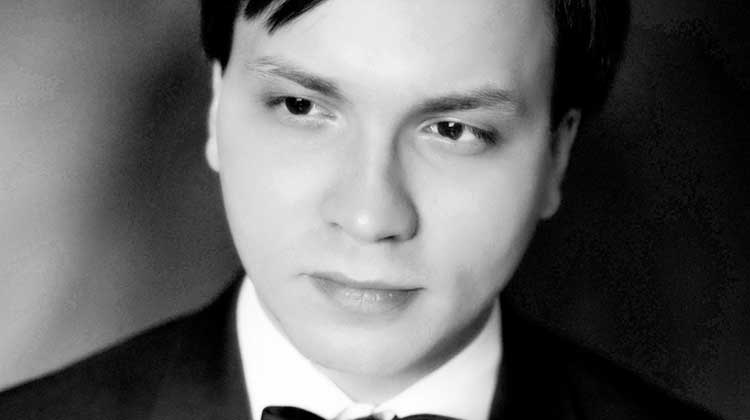
Wigmore Mondays – Alexei Ogrintchouk and friends play music for oboe and string trio

Picalexei-ogrintchouk

Picture used courtesy of the BBC

Alexei Ogrintchouk (oboe), Boris Brovtsyn (violin), Maxim Rysanov (viola) and Kristina Blaumane (cello) – Wigmore Hall, London, live on BBC Radio 3, 12 October 2015

Listening link (open in a new window):

http://www.bbc.co.uk/programmes/b06hjxlv

on the iPlayer until 18 November

Spotify

In case you cannot hear the broadcast, here is a Spotify playlist of the music in this concert, from available versions on Spotify. Alexei Ogrintchouk has recorded the Mozart, while available versions of the Haydn, Britten and Schubert pieces are also included.

What’s the music?

Attributed to Haydn: Divertissement in B flat, HII:B4 (not known) (10 minutes)

Britten: Phantasy Quartet, Op 2 (1932) (13 minutes)

Schubert: String Trio in B flat, D471 (1816) (8 minutes)

Mozart: Oboe Quartet in F, K370 (1781) (14 minutes)

What about the music?

Often in chamber music the strings get a lot of the glory, so it is good to report on a concert where the oboe is invited to take centre stage. The instrument is on occasion associated with sad music (Midsomer Murders use it a lot!) and it is perfect for autumnal listening, but it should be remembered that the oboe is also responsible for a lot of happy music too, as Mozart’s Oboe Quartet testifies.

This piece is a beauty, seemingly free of any constraints in its outer fast movements, while the inner slow movement is short yet poignant, set in the minor key. Mozart wrote it for the virtuoso Friedrich Ramm, and composed the oboe line to sit above that of the violin, thus using the higher register of the instrument a lot.

Britten uses a wider range of colour in his Phantasy, written as a competition piece when he was at the Royal College of Music. Thanks partly to the advocacy of the legendary oboist Leon Goossens, but also to his musical craft, the piece won its competition in Paris. Set over nearly 15 minutes, it has a dramatic profile, beginning as a march that seems to process in from nothing – started by the cello – until the sweep of lyrical oboe and punchy strings together is striking.

The first piece in the concert is a two movement Divertissement attributed to Haydn but, it is not wholly certain who actually wrote it. To my slightly untrained ears it sounds like it could be earlier than Haydn, but regardless of who the composer is the music is polite and attractive, the four instruments set in close dialogue.

Schubert’s single movement for String Trio is in the same key – B flat major – and has a similar profile, though does make the most of a striking descending motif throughout. Originally Schubert wanted this to be the first movement of a bigger piece, but after sketching some bars of the slow movement he stopped writing.

Performance verdict

Over the last few years Alexei Ogrintchouk has developed from a very promising musician to an oboist right at the top of his game – and that was evident throughout a highly enjoyable concert.

The peak was undoubtedly reached in the Mozart, where he met the virtuosic demands of the piece head on but without losing the airy, lyrical approach that makes the Oboe Quartet such a charmer. The performance of the Britten dug in much more firmly, the strings encouraged to project outwards, and this they did with impressive power when the march took hold. Britten’s genius in working with small forms was evident even at this point, and not a note was wasted in the performance.

Both the Haydn and Schubert performances charmed, the Schubert nicely placed so that the strings had a brief moment in the sun – which they enjoyed, with lightness and dexterity, clearly listening to each other.

What should I listen out for?

Attrib.Haydn

2:01 – this light hearted piece begins with an oboe-led melody, while the cello supplies a chugging pulse. The music is polite and attractive. At 5:13 a central section begins, based on the melody from the start.

7:50 – a slightly slower second movement, a courtly dance – in the form of a rondo, which essentially means the same theme recurs at regular intervals. The violin and viola assume greater importance in this movement. The theme itself makes a final appearance at 11:02.

Britten

14:25 – the beginning is almost imperceptible, a little phrase from the cello which is gradually joined by the other two stringed instruments. When the oboe joins at 15:07 the tone is songful, though the spiky accompaniment continues, leaving some tension until a firm statement of the main tune at 16:12. Then a different section takes over, with heavier string writing.

20:25 – the writing now has a softer, hazy hue, as the strings enjoy a slower and more obviously lyrical section. At 22:30 a higher melody from the oboe floats above the texture.

24:52 – the main march idea makes a reappearance, striding forward purposefully – until the music fades, as though it were walking over the horizon and out of earshot.

You can read more about the Britten Phantasy on a blog entry I made two years ago here

Schubert

29:52 – the Schubert String Trio, set in one movement, begins with an attractive melody led by the violin. There is a distinctive downward sweep that is heard from 30:40, and which becomes an important part of the piece. The three instruments stay closely aligned throughout. After developing his main tune, Schubert restates it at 35:22.

Mozart

40:04 – the oboe is already high in its register when the distinctive tune of the first movement is heard, top of an extremely light texture. The strings are busy in their accompaniment. Mozart then proceeds to manipulate his memorable tune through different methods of presentation, until a slight lull at 43:53 – and the return of the main tune at 44:57.

46:44 – A slight shadow falls over the music for the second movement Adagio, where the strings are softer and the oboe a little mournful if still beautiful in its first melody. At around 48:57 the oboe is left exposed in a kind of cadenza, leading up to the thoughtful end.

49:57 – once again the brightness in this music is evident as a light hearted theme sways between oboe and strings. The oboe enjoys the recurrences of its tune, with Mozart subtly varying the accompaniment each time before finishing on the high ‘F’ of the oboe at 54:00.

Further listening

If you enjoyed the sound of the oboe, then a logical next step is a couple of orchestral pieces, added to the bottom of the playlist, that use the instrument to its fullest capabilities:

First of all is Ravel’s subtle but gorgeous Le tombeau de Couperin, the oboe taking up the first theme in the Prélude and also enjoying prominence in the slow Menuet.

Then we have Vaughan Williams’ beautiful, autumnal Oboe Concerto, heard here in a new recording from the oboist Nicholas Daniel. The wistful quality perhaps gives away the fact this piece was written in the Second World War. Daniel’s disc is reviewed on Arcana here
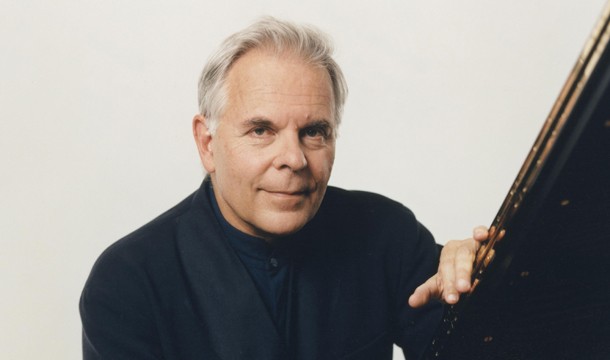
Steven Kovacevich at 75 – Berg and Schubert

Steven Kovacevich celebrates his upcoming 75th birthday with sonatas by Berg and Schubert at the Wigmore Hall

stephen-kovacevich

Steven Kovacevich (piano) – Wigmore Hall, London, live on BBC Radio 3, 13 July 2015

Listening link (opens in a new window):

http://www.bbc.co.uk/programmes/b061fqzz

on the iPlayer until 12 August

Spotify

In case you cannot hear the broadcast, here is a Spotify playlist of the music in this concert. Steven Kovacevich has recorded the Schubert but it does not appear to be available on Spotify, so is included here in a leading recording by Maurizio Pollini. The Berg, which he has not recorded, is performed by Mitsuko Uchida:

What’s the music?

Berg: Piano Sonata, Op.1 (1908) (10 minutes)

Schubert: Piano Sonata in A major, published as D959 (1828) (37 minutes)

What about the music?

Steven Kovacevich describes the Berg Piano Sonata as music ‘drawn toward the distant future but still tied to the immediate past’. When he finished the first movement of what he thought would be a larger work in 1908, his teacher and mentor Schoenberg encouraged him that if he had said all he needed to say musically, there was no need to carry on. It is a landmark piece as music begins to break with conventional tonality.

While the 22-year old Berg was starting out, the 30-year old Schubert was signing off. Aware that he had not long to live, the gravely ill composer completed a trio of three massive piano sonatas, some of the biggest works ever written for the instrument and still to this day some of the most remarkable music you can hear on the piano. The second of the three in A major is a remarkable piece, contrasting passages of serenity and acceptance with sudden outbursts of temper – as in the second movement, initially slow but unable to contain itself fully. These are pieces that keep on giving in their remarkable construction and memorable melodies.

Performance verdict

The insights Steven Kovacevich has given into piano music over the last 50 years cannot be underestimated, and the sheer weight of experience he brings with him is the result of a lifetime spent performing at the very highest level.

It is this experience that shines through, especially in a reading of the Schubert sonata that is not without its problems. I would have to digress for a moment and ask if there are many 75-year olds who could play such a piece without a score, and think there are very few. Small wonder, then, that Kovacevich has what seems to be a memory lapse in the final movement, and there are a number of minor slips elsewhere. These are still very much worth persevering with because his portrayal of the unfolding drama in the Schubert is special indeed – and in the second movement in any case it is as though Schubert writes in a lot of ‘wrong’ notes.

What should I listen out for?

Berg

2:00 – one of the most intriguing beginnings to a composer’s published output is surely the quizzical opening notes of the Berg sonata, which end up in its supposed ‘home key’ of B minor, but only by asking far more questions than they answer. There is an immediate impression of a new world forming, and the harmonic outlook is constantly changing in music of great density.

The opening theme, however – the first three notes, at least – is distinctive enough to be felt in the development it receives afterwards. The music builds to a weighty climax at 7:51, then scales the heights at 10:42. Berg writes in a single paragraph, the music subsiding to the quiet, thoughtful finish.

Schubert

14:30 – the opening of the sonata is thoroughly positive, a call to arms – though Stephen Kovacevich is slightly understated in this performance. There is a serenity and intimacy that sets the tone for much of the piece.

15:57 – Schubert’s second theme, a lovely moment of introspection but also restfulness. Barely a minute later however there is a lot more audible strife, and things become fraught – until the return of this second theme at 17:41. A crunching chord at 18:07 prepares us for…

18:15 – Kovacevich repeats the movement so far (18:11) as instructed by Schubert. This helps balance the structure of the whole first movement.

23:53 – a return to the material that dominated the opening exchanges – and then, after a protracted and angst-ridden piece, the second theme and a peaceful close at 28:40.

28:54 – the slow movement begins. As with Beethoven, time seems to stand still in Schubert’s late sonatas, and his thoughts are almost of another world. The music here is very subdued but not by any means hopeless.

31:01 – the right hand seems to develop a mind of its own, becoming faster and faster. In response the music moves to distant and rather twisted harmonies – as Kovacevich notes, sounding a prophetic note towards the music of Liszt here. Feelings of anger and frustration come to the boil. The music collapses in something of a heap, exhausted at the end.

35:07 – the Scherzo, a piece of music that sounds like a feather being blown around by the wind. The detached delivery from Kovacevich’s right hand is subtly mischievous.

37:14 – the contrasting trio section begins, but is a short diversion from the main theme itself, which returns again in humour at 38:24.

39:28 – Kovacevich runs straight into the fluid finale but stops himself at 41:12. Then he picks up again at 41:26. To listen to this movement in full it is recommended to forward to…

51:16 – where after applause Kovacevich very graciously gives a re-run of the finale. Listening carefully to the full theme, there is a similarity between this and Beethoven’s ‘Ode to Joy’ theme from the Choral Symphony. It is in the main beautifully played, with a magical moment at 57:01 when we hear the theme in F sharp major, a fair way from home! At 1:01:12, however, Schubert arrives at his destination.

Further listening

A natural port of call from the Berg Piano Sonata is Schoenberg’s early piano works, which also dice with removing tonality altogether. These are the quite substantial Three Piano Pieces of 1909 and the tiny sketches that make up the Six Little Piano Pieces. Then to complement the Schubert we have the small but perfectly formed late Allegretto in C minor and three more beefy piano pieces from the last year of the composer’s life, written in a similar vein to the famous Impromptus. Here they are, all played by Maurizio Pollini and tagged on to the end of the concert playlist:

For more concerts click here

The Gould Trio play Schubert at the Wigmore Hall

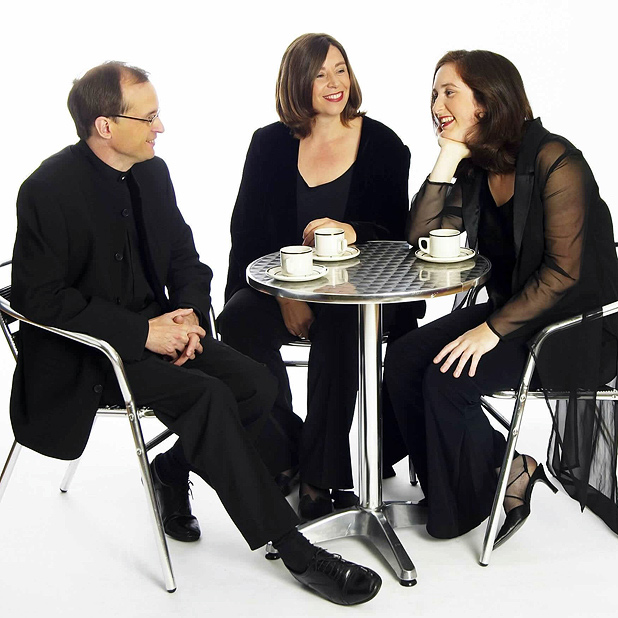
The Gould Piano Trio play Schubert at the Wigmore Hall

gould-piano-trio

The Gould Piano Trio (Lucy Gould (violin), Alice Neary (cello), Benjamin Frith (piano) – Wigmore Hall, London, live on BBC Radio 3, 15 June 2015

Listening link (opens in a new window):

http://www.bbc.co.uk/programmes/b05y61y9

on the iPlayer until 15 July

Spotify

In case you cannot hear the broadcast, I have put together a Spotify playlist of most of the music in this concert, including recordings the artists have made where possible. The playlist can be found here:

Meanwhile clips of the Gould Piano Trio playing the music of York Bowen on a recent release for Chandos can be found here

What’s the music?

York Bowen: Rhapsody Trio (1926) (13 minutes)

Schubert: Piano Trio no.1 (1827) (40 minutes)

What about the music?

A nicely balanced hour of chamber music, with one classic of the piano trio repertoire complemented by a very little-known work.

That said, the music of York Bowen has received a lot of exposure of late – too much, some would say! At its best though Bowen’s writing shows that his high regard from composers such as Camille Saint-Saëns was not misplaced. It is chamber music that seems to be the most consistent part of his output. This Rhapsody Trio – written in a single movement format popular with English composers in the early decades of the twentieth century – was premiered at the Savoy Hotel early in 1926 at the annual dinner of the Federation of British Music Industries.

Schubert’s two big works for piano trio are justly celebrated, being two of the best and most substantial pieces for the form. The first was written a year before the composer’s death, for the same trio that gave the first performance of Beethoven’s Archduke piano trio. Incidentally that work is set in the same key, B flat major, leading to the drawing of similarities between the two. The works are similar length, but Schubert imposes his own distinctive style here, writing music that seems on the face of it to be very optimistic – but which can on closer inspection have a few worrisome moments. There is no shortage of tunes, though, and in the slow movement especially Schubert brings his song-writing prowess to bear in some beautifully written duet work for violin and cello above the piano.

Performance verdict

Watching this performance from The Gould Trio it was immediately clear just how much enjoyment they took from the music. The Schubert was full of sleights of humour but was also very detailed, and pianist Benjamin Frith demonstrated an uncanny instinct for knowing when to hold back slightly in a phrase, or when to push on.

The first movement emphasised how gracefully Schubert writes for strings, even in the midst of a lot of bluster, while the song-based second movement lived up to its billing. The ‘Scherzo’ was witty and took time over the longer notes of his contrasting ‘trio’ section, while as the curious last movement wended its way through all sorts of different keys the trio always had a firm hand on the tiller.

Meanwhile the Bowen was given the conviction and passion his music needs, emerging as a really fine piece of music. The end in particular was extremely well done, thoughtful but holding the audience in the palm of its hand.

What should I listen out for?

Bowen

2:23 – the music begins as though emerging from a dream into the morning light. Held notes from the strings and some lazy thoughts from the piano are initially quite unfocused, but gradually the trio find their footing and a bold, louder passage ensues. At 4:34 a fetching melody can be heard on violin and cello in unison.

The music gradually picks up speed, the instruments now a lot more independent and the piano part more demanding. Although the comparisons are often between Bowen and Rachmaninov, I find the appealing unison passage from 9:30 to be like Fauré.

After another passionate section the music seems to be spent, but Bowen brings out a really atmospheric and rather affecting ending from around 14:00 onwards, all three instruments seemingly lost in thought.

Schubert

17:55 – Few chamber works begin with this much positivity! Here the Gould Piano Trio are at pains to stress this music can also be graceful – a lot of trios give the opening of the first movement too much oomph. Here though the tune shines through, and is nicely articulated by pianist Benjamin Frith at 18:49.

19:49 – Schubert’s light and songful second main tune appears on the cello. The trio repeat the first section of this movement at 21:49.

25:35 – Schubert now takes the music further from home, moving through a number of different keys as the main tune gets distorted and more worked up. Eventually this leads back to ‘home’, and the main tune in its original state, at 29:01, from the piano with soft accompaniment. Then at around 31:40 the music pulls back, leading through to an emphatic finish at 32:46.

33:12 – the second movement – marked Andante (at a walking pace) – begins with a cello solo and soft piano accompaniment. The cello is soon joined by the violin with the same melody. The atmosphere is relaxed and nocturnal. However there are shadows that occasionally fall over the music. A good example is at 36:11, where a minor chord introduces a much colder edge. Everything is suddenly less certain, and Schubert alternates between these moods – mostly touching on the positive, and especially so as the movement subsides to a gentle close (from 42:20)

42:55 – the third movement begins. This is a ‘Scherzo’ (normally a jokey kind of movement) and it begins here with an innocent sounding melody. Then Schubert develops a kind of melodic cell that gets passed between the three instruments. The humour – exploited by The Gould Trio – comes mostly in the stop-start nature of the music. The trio section – usually a contrast – begins at 46:14 and is graceful, with long notes in the strings. The scherzo section returns at 48:05.

50:09 – the last movement begins with a sweet tune from the violin, then moves onto a more obviously dance-based second tune (50:49) Schubert then takes the music on a tour of some pretty distant tonal centres, setting his tunes in increasingly playful formats but keeping in the spirit of the dance. Then as the end approaches Schubert keeps pretending to finish before moving off in contrary directions…until he finally does at 59:02, setting off on a quick coda.

Further listening

Two bits of further listening for you this week – if you particularly enjoyed the Schubert, then The Gould Trio have a recording of the second piano trio made at the Wigmore Hall. It can be heard on Spotify below, occupying the last four tracks:

Meanwhile the Gould Piano Trio’s most recent recording, to be reviewed shortly on Arcana, is a fascinating collection of works for piano trio by three British composers – Sir Peter Maxwell Davies, the recently knighted Sir James MacMillan and Sally Beamish. That disc can be heard on the Spotify link below:

For more concerts click here

Christoph Prégardien – The Darker Side of Love

The Darker Side of Love – Christoph Prégardien and Daniel Heide at the Wigmore Hall

christoph-pregardien

Christoph Prégardien (tenor), Daniel Heide (piano) – Wigmore Hall, London, live on BBC Radio 3, 18 May 2015

Listening link (opens in a new window):

http://www.bbc.co.uk/programmes/b05tpryp

on the iPlayer until 17 June

Spotify

In case you cannot hear the broadcast, I have put together a Spotify playlist of most of the music in this concert, including recordings the artists have made where possible. The playlist can be found here

What’s the music?

Schubert: An den Mond, D259; Schäfers Klagelied, D121

Schubert: Erster Verlust, D226

Schubert: Rastlose Liebe, D138

Schubert: Wandrers Nachtlied II, D768

Schubert: Willkommen und Abschied, D767 (17 minutes)

Schumann: Dichterliebe, Op.48 (30 minutes)

What about the music?

The relationship between Schubert and the poetry of Goethe was long-standing, beginning in October 1814 and yielding tens of songs. Many of them are darker utterances, and the collection here enjoys the composer’s ability to cast a nocturnal scene for voice and piano seemingly at will. It also celebrates his faster, galloping songs, the singer in the saddle for an action-packed horse ride, while the sheer simplicity of shorter songs such as Erster Verlust is pure and touching.

Schumann’s famous year of song reached its creative peak in May 1840, when he wrote the Liederkreis, published as Op.39, and Dichterliebe, where he sought inspiration once again from the poetry of Heinrich Heine. The quote in the Wigmore Hall program sums it up perfectly, Schumann describing the verses as ‘short, maliciously sentimental, and written in the folk style’. They evoke outdoor scenes but also inward and often crippling emotions, the singer – and possibly the listener! – an emotional liability by the end. Schumann rescues Dichterliebe, however, through the piano postludes he provides to Am leuchtenden Sommermorgen (One bright summer morning) and the closing song Die altern, bösen Lieder (The bad old songs), attempting and largely succeeding to restore stability.

Performance verdict

Christoph Prégardien has been singing these songs (or ‘Lieder’, as we should really call them!) for a long time – he recorded most of them a while back – but he still brings keen emotion to the stage.

The silence of Wigmore Hall during a song as tense as Schumann’s Ich hab’ im Traum geweinet (I wept in my dream), the ninth of Dichterliebe’s dozen, said it all. Here was a performer creating vivid pictures from Heine’s barbed text and Schumann’s equally frosty responses to the dark side.

In Schubert, too, the steely edge of even the most youthful Goethe setting could be glimpsed, brought out in an early song like An den Mond (To the Moon) by pianist Daniel Heide, stressing the notes Schubert brings in to challenge the happier times of the song.

Schubert’s horse-riding songs, Rastlose Liebe and Wilkommen und Abschied, were adrenalin-fuelled dashes into the country, while Schäfers Klaglied brilliantly evoked both the tempest and its subsequent rainbow.

Prégardien is an unfussy singer who communicates with his audience through subtle but meaningful expression, both visually and with the use of his hands. This somehow carries over to the listener too, either in the hall or at home, part of a masterclass in how to sing these songs.

What should I listen out for?

Schubert

1:50 – An den Mond (To the Moon) A calm and seemingly contented song to begin the selection – though there are some warning signs, chiefly in the piano part, to suggest all is not well.

5:27 – Schäfers Klagelied (Shepherd’s lament) A downcast and solemn song, with a vivid depiction of a storm in its central section from the piano (from 6:55), which also somehow describes the resultant rainbow (7:13) before a return to sadness.

8:58 – Erster Verlust (First loss) A song of striking simplicity and sadness, with an aching melody where the purity of Prégardien’s tone really comes through

11:22 – Rastlose Liebe (Restless love) A song that gallops out of the blocks with its rapid movement on the piano, and the breathless voice almost struggles to keep up. Meine signs off beautifully at 12:30.

12:47 – Wandrers Nachtlied II (Wanderer’s Nightsong II) Here we can feel the stillness of a summer evening, the conditions in which Goethe scribbled the verses for this poem as he stood outside in a garden. Prégardien’s higher notes are beautifully tailored.

15:18 – Willkommen und Abschied (Greeting and farewell) Another of Schubert’s quick dashes through the text, though at the end of each verse we have a pregnant pause. Prégardien cries out ‘ihr Götter’ (‘O gods!’) at 17:17. The text at the end translates as ‘what a joy to be loved’

Schumann

The words for Dichterliebe can be found here

21:12 – Im wunderschönen Monat Mai (In the wondrous month of May) A graceful song to begin the cycle, with some beautiful top notes (the translated words ‘blossom’ and ‘desire’) that Prégardien very subtly stresses through a pause.

22:54 – Aus meinen Tränen sprießen (From my tears will spring) The spring-like openness continues, in the same key.

23:51 – Die Rose, die Lilie, die Taube, die Sonne (Rose, lily, dove) A playful song, over in a flash!

24:23 – Wenn ich in deine Augen seh (When I look into your eyes) A tender love song, that tellingly moves to the purity C major to tell of how ‘when I kiss your lips, then I am wholly healed’. There is a yearning postlude on the piano.

26:12 – Ich will meine Seele tauchen (Let me bathe my soul) Another short love song, this time with a flowing, watery piano accompaniment.

27:08 – Im Rhein, im heiligen Strome (In the Rhine, the holy river) The singer adopts a much more imposing tone to evoke the grandeur of the Rhine and the great cathedral of Cologne, where hangs an image of ‘Our beloved Lady’ – which the singer equates to that of his own love. The piano postlude is reminiscent of a Baroque aria.

29:16 – Ich grolle nicht (I bear no grudge) The text turns darker, though the musical language is still generally positive. The tenor has a heavier tone here, the voice more of a baritone in its richness.

30:49 – Und wüßten’s die Blumen, die kleinen (If the little flowers only knew) The piano matches the tenor in this flowing, limpid song – spring like in its subject matter but ultimately sad and regretful at a broken heart. This leads straight into…

32:05 – Das ist ein Flöten und Geigen (What a fluting and fiddling) A proud song but once again with a darker centre.

33:29 – Hör’ ich das Liedchen klingen (When I hear the little song) This is Heine’s poetry at its coldest, and in this brief song it gets a suitably bare response from Schumann, who then attempts some consolation in the extended piano postlude, which in reality says just as much as the song does.

35:47 – Ein Jüngling liebt ein Mädchen (A boy loves a girl) A more positive mood now – but soon the poetry turns dark as well. Schumann keeps his tongue firmly in his cheek, allowing the tenor a bit of sardonic humour and the piano a grand finish

36:47 – Am leuchtenden Sommermorgen (One bright summer morning) A beautifully simple song – though now the mood of sadness is taking hold with greater certainty. Again we have a longer piano postlude, the pianist reflecting the text through music and trying to console.

39:38 – Ich hab’ im Traum geweinet (I wept in my dream) Schumann’s use of silence here is striking and altogether ominous. Prégardien gathers the power of the final verse, the texture sparse as can be, until the music stops abruptly.

42:25 – Allnächtlich im Traume (Nightly in my dreams) An elusive song – another dream but one the poet cannot really remember – which possibly explains why Schumann leaves the music sounding half-finished at the end.

43:54 – Aus alten Märchen winkt es (A white hand beckons) There is greater optimism in this song, using the upper register of the piano for the first time in a while, but once again Heine insists on an ending that takes away the potential for happiness. Schumann’s music rescues this in the postlude however!

46:39 – Die alten, bösen Lieder (The bad old songs) A bit of nostalgia to finish – though this is a purge, the poet casting all his ‘bad and bitter dreams’ away in a heavy coffin. Schumann responds with gallows humour, a song that is bold and defiant in its execution but which fades away to reflection. Once again we have a piano postlude, this one even more meaningful as it tries to draw the cycle to a soft conclusion. In the right performance however, like this one, a level of bitterness remains.

Encore

53:05 – SchumannMit Myrthen und Rosen (With myrtle and roses) (the last song from Liederkreis, Op.24) This has an effortless, upward curve to the melody. Prégardien’s gestures to the audience here were beautifully observed.

Further listening

With Christoph Prégardien demonstrating his almost unparalleled abilities in Schubert, here is a Spotify link to a recent recording of him singing the great Schubert song cycle Winterreise. Again this is music on the dark side, but is greatly inspired at that. Texts can be found http://www.recmusic.org/lieder/assemble_texts.html?SongCycleId=47″>here and the playlist is here

For more concerts click here

Alexei Grynyuk at the Wigmore Hall – Schubert’s last breath

alexei-grynyuk

Alexei Grynyuk, Wigmore Hall, 16 April 2015.

The last of Schubert’s 21 published piano sonatas is a remarkable piece of music, as in it we encounter one of those truly rare instances where time really does seem to stand still.
Alexei Grynyuk, completing a fine season of lunchtime recitals at the Wigmore Hall under the sponsorship of Lisa Peacock, gave the piece an eloquent and moving account, maintaining remarkable feats of concentration over the near-50 minutes in which Schubert’s last inspiration unfurled.

The opening movement seemed to go on for ever – but not in a bad way! From the off it was clear Grynyuk was going to let this music breathe, refusing to hurry in much the same way the great Sviatoslav Richter used to work with the sonata. Because of that the first movement alone clocked in at 28 minutes, but the disquiet it brought whenever the left hand was rumbling low in the piano register was palpable.

Eventually there was a form of resolution, but the questioning nature of the music returned in the slow movement and its less than comfortable modulations. As the sonata progressed so did Schubert’s willingness to cast his demons aside, and because of this Grynyuk ensured the third movement scherzo became ever sunnier as it progressed. Meanwhile the finale, despite some strife in its minor key exertions, ultimately strove for positivity.

This was a magnificent and clearly thought through performance, one where Alexei Grynyuk was ready to stand back, remove any showiness from his interpretation, and let Schubert’s music do the talking. Similar praise could be levelled at his performance of the Three Movements from Petrushka, arranged by Stravinsky from the ballet. A lot of pianists show off here but Grynyuk was careful to characterise, to bring forward the abundant selection of tunes and – crucially – not to play too loudly. His approach worked wonderfully well.

A Spotify playlist containing the works in concert can be accessed below. As Alexei Grynyuk has not yet recorded these works – though I understand this performance of the Schubert was recorded for future release – I have chosen versions by Maurizio Pollini: