In concert – Steven Isserlis and Friends – Fauré at the Wigmore Hall (2)

Steven Isserlis (cello) – with Joshua Bell, Irène Duval (violins), Blythe Teh Engstroem (viola), Jeremy Denk, Connie Shih (pianos)

Hahn Variations chantantes (1905)
Fauré Piano Quartet No. 2 in G minor, Op. 45 (1885-6)
Fauré Piano Quintet No. 1 in D minor, Op. 89 (1887-1905)

Wigmore Hall, London
Saturday 2 November 2024

Reviewed by Richard Whitehouse

If it did not get off to quite the start intended due to illness, this Wigmore series centred on Fauré’s chamber works certainly hit its stride with two such pieces from crucial junctures in their composer’s output.

Providing a degree of context was music by Reynaldo Hahn – remembered primarily for his operettas and songs, but whose chamber output is considerable. Hardly a defining statement, Variations chantantes sur un air ancien (its full title) draws on the aria ‘Beato chi può’ from Cavalli’s 1655 opera Xerses for what feels less a set of variations than a sequence of variants of unwavering restraint amply reflecting that blithe detachment of its theme. Steven Isserlis conveyed this in full measure, heard alongside some ingratiating pianism from Connie Shih.

Having achieved a successful balance between formal density and expressive eloquence in its predecessor, his Second Piano Quartet has Fauré laying even greater emphasis on the cyclical transformation of motifs which, hitherto associated with Liszt and Frank, is here imbued with a new cohesion. This is evident from an opening movement whose sonata design unfolds in a constant yet methodical state of change, Isserlis and Joshua Bell restlessly trading exchanges with Blythe Teh Engstroem a lyrical counter-balance and Jeremy Denk the deft anchor-point.

This approach served no less well the ensuing scherzo, with its engaging alternation between pizzicato and bowed playing as well as a tangible mordancy that never quite surfaces. Nor is it entirely absent from a slow movement whose vernal eloquence is informed by more than a little equivocation, and which only waylays continued motivic evolution in the finale. Here the music’s striving towards a decisive while hardly affirmative resolution seemed palpably in evidence, confirming this work to be a triumph of human resilience over existential odds.
If this work marks the culmination of Fauré’s earlier creative maturity, his First Piano Quintet effectively straddles its central phase given the near-on two decades between conception and completion. What had started out for four instruments in four movements ended up as five in three, yet there is nothing tentative about an initial movement whose pervasive introspection belies an emotional eddying no less subtle than the motivic intricacy these players uncovered, and in which the expressively effulgent playing of Irène Duval was an undoubted enrichment.

Less formally involved, the central Adagio prefigures the introspection of its composer’s last years – not least through a seamlessness of texture which, as here, never precludes variety of nuance. After this, the finale can seem less remarkable merely by fulfil its function within the overall scheme, but those thematic elements (of which one the songwriter Bart Howard was evidently aware) that evolve from the previous movements are assuredly realized on route to an apotheosis no less affecting for having delayed its resolution almost until the last moment.

Never neglected but rarely received with more than guarded admiration, Fauré’s late chamber works rely on an advocacy central to such music-making as was heard tonight. Hopefully this will prove no less evident throughout the remaining three programmes in this important series.

You can watch the concert below, thanks to the Wigmore Hall YouTube channel:

For more information on the Fauré series, visit the Wigmore Hall website – while you can also read Arcana’s interview with Steven Isserlis about the French composer

Published post no.2,352 – Monday 4 November 2024
In concert – Steven Isserlis and Friends – Fauré at the Wigmore Hall (1)

Steven Isserlis (cello), Joshua Bell, Irène Duval (violins), Blythe Teh Engstroem (viola), Jeremy Denk, Connie Shih (pianos)

Fauré Violin Sonata no.2 in E minor Op.108 (1916-7)
Saint-Saëns Piano Trio no.1 in F major Op.18 (1863)
Nadia Boulanger 3 pièces for cello and piano (1914)
Fauré Piano Quartet no.1 in C minor Op.15 (1876-9, rev. 1883)

Wigmore Hall, London
Friday 1 November 2024

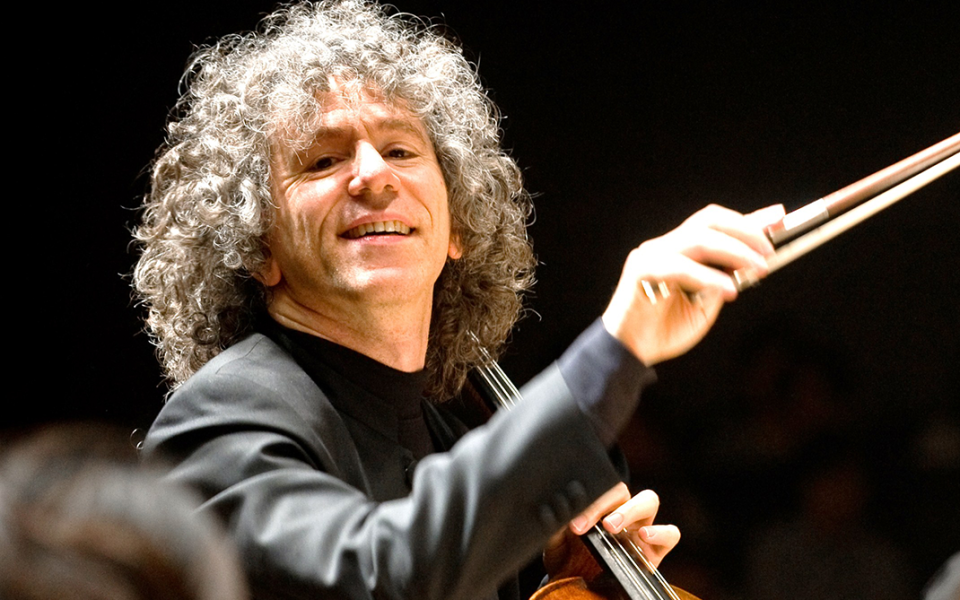
Reviewed from the online stream by Ben Hogwood Photo (c) Satoshi Aoyagi

As the saying goes, the best laid plans of mice and men often go awry. And so it was that this five-part festival at the Wigmore Hall, two years in the planning to mark 100 years since the death of Gabriel Fauré, was compromised by bad fortune that had violinist Joshua Bell suffering from sickness, unable to perform the first work on the programme.

Yet, as cellist and curator Steven Isserlis announced from the platform, there was a silver lining, thanks to Irène Duval – who stepped in to head the Violin Sonata no.2, programmed instead of its predecessor. Thus we heard the first chamber work of the French composer’s celebrated late period, dating from the middle of the First World War, when Fauré had lost his hearing and his son Philippe had been sent to the frontline. Not surprisingly the sonata is invested with concentrated feeling, brought straight to the surface by Duval’s searching tone and Connie Shih’s assertive piano, both fully inside the music. The first movement found brief consolation in its third principal theme, though this was a brief respite in music of passionate and occasionally fraught discourse. The second movement was initially bittersweet in these hands but more obvious serenity was achieved in the long melody of the second theme, beautifully phrased by Duval. The finale, where Fauré finds positivity in the face of his troubles, was sunlit in these hands, with a thoroughly convincing surge to the finish.

Rewinding just over 50 years, we heard music from Fauré’s teacher and long time friend Saint-Saëns – his first major chamber work. The Piano Trio no.1 is full of charm and good humour, and the trio of Shih, Duval and Isserlis enjoyed the cross rhythms of the first movement. Shih met the demands of the composer’s inevitably tricky piano part head on, with some sparkling passages in the right hand. The captivating second movement took us outside, evoking the French mountain regions with a memorable folk-derived theme, recounted by the strings in a solemn unison. Contrasting with this was the light-footed Scherzo, the players enjoying Saint-Saëns’ playful syncopations, and the confident finale, surging forward with a conviction confirming the composer would have many more such moments in his compositional career. The players’ enjoyment was abundantly clear.

After the interval came music from Fauré’s pupil Nadia Boulanger, usually renowned as a teacher but increasingly recognised as an accomplished composer. The 3 Pièces for cello and piano fully deserve their more frequent airings in concert halls today, for they are brilliantly written and full of originality. Isserlis enjoyed the singing high register of the Modéré, its melody gradually descending to ground like a butterfly. The two players enjoyed the canon of the second piece before the bold outlines of the quickstep third, a little prophetic of Debussy’s Cello Sonata a year later. Isserlis and Shih were brilliant throughout.

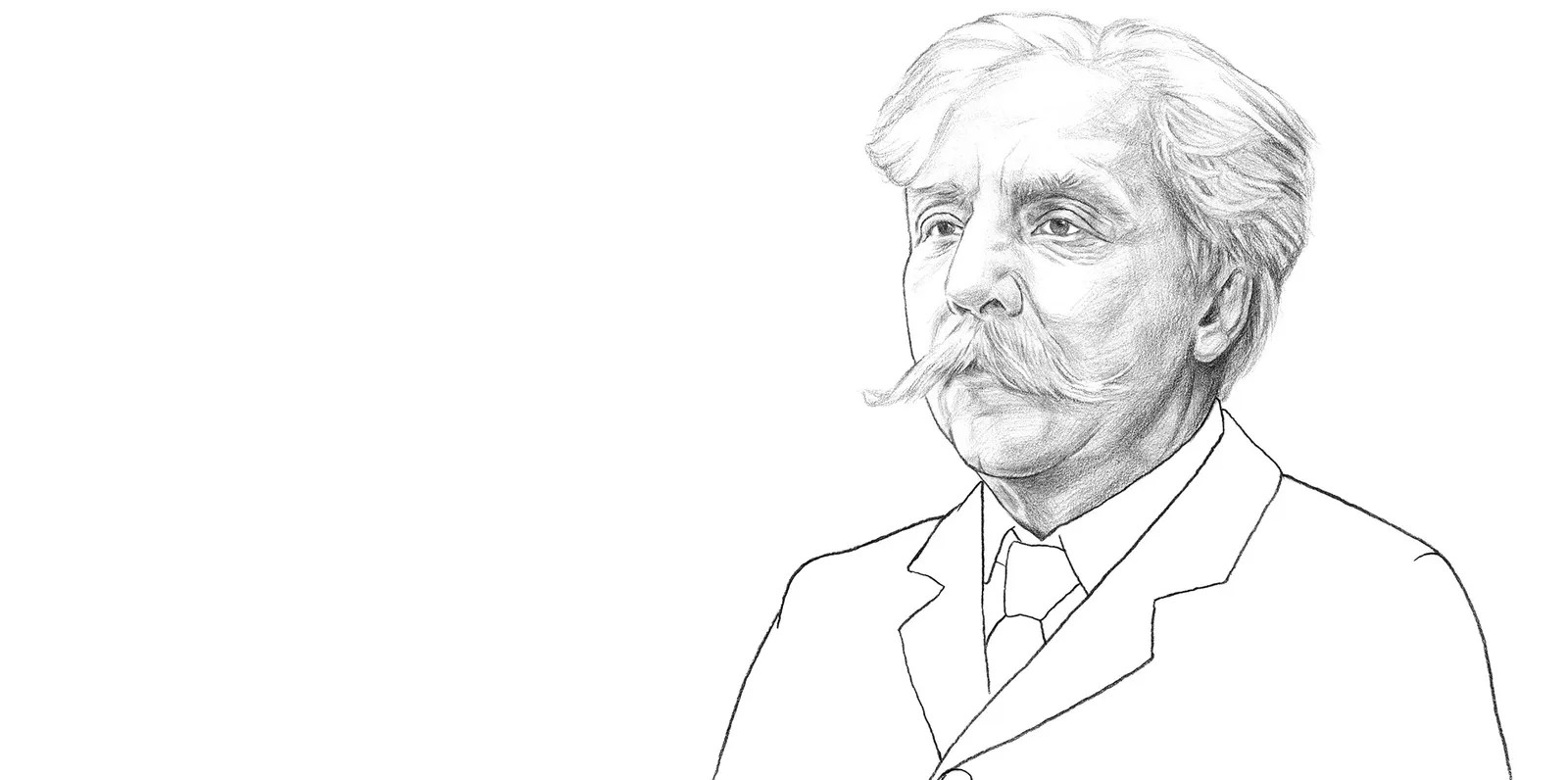
The Piano Quartet no.1 in C minor is one of Fauré’s (above) best-loved works, though it experienced a turbulent composition period in the wake of the dissolution of the composer’s engagement. This is however rarely evident in the music, constructed with elegance and control – though there is plenty of room for expression, as the four players found here.

The first principles of chamber music were on show from the start – for this quartet were playing as one, very much a team rather than a collection of soloists. Such a quality is of great importance in Fauré, his music often containing long and thrilling melodies such as that found at the outset, beautifully played.

Joshua Bell showed commendable energy in spite of his ill health, his sweeter violin tone complemented by Jeremy Denk’s authoritative piano playing, the burnished tone of Blythe Teh Engstroem’s viola and Isserlis’ cello, with lovingly phrased melodies as part of the all-important counterpoint. The syncopations of the second movement, one of Fauré’s calling cards, were deftly handled by the trio and brilliantly led by Denk, the players watching each other closely. Meanwhile the Adagio found time for contemplation, laden with sadness but with an enduring brightness led by Bell’s brighter tone.

The finale found renewed strength in its assertive unison themes, winning through to a thrilling and jubilant finish in spite of the occasional shadow cast in the quieter passages. The closing flourish put the seal on a wonderful first concert which bodes well for the series, providing – as Isserlis said – that the players stay in good health. Should they do so a whole series of treats await.

For more information on the Fauré series, visit the Wigmore Hall website – while you can also read Arcana’s interview with Steven Isserlis about the French composer

Published post no.2,350 – Saturday 2 November 2024

Talking Heads: Steven Isserlis

The cellist talks to The cellist talks to Ben Hogwood about his Wigmore Hall residency, celebrating the music of Fauré, and his new Boccherini album Music of the Angels.

For cellist Steven Isserlis, November 2024 is all about two composers. From the first day of the month he is taking up residence at London’s Wigmore Hall for a five-day exploration of the late chamber music of Gabriel Fauré, who died on 4 November 1924. He has given a valuable insight into his thoughts on the composer in an article just published for the Guardian newspaper, but was generous to spend some time answering specific questions about Fauré’s late music for Arcana.


Arcana: The Wigmore Hall concerts put Fauré (above) in context with his contemporaries
– how did you plan them? It’s especially good to see the music of Nadia
Boulanger, Saint-Saëns and Koechlin included.

Steven: Well, first came the idea of doing the complete (major) chamber music of Fauré for the centenary; then everything else had to be worked out around that. It took some time for the programmes to fall into place – and then I was amazed that the Wigmore said yes to all five of them!

How does Fauré’s writing for the cello develop through his works?

I don’t think of his cello writing as such developing – it’s more the musical content. His first work for cello was the Élégie, which is of course wonderful; but if you compare it to the most similar subsequent piece of his, the slow movement of the second sonata, you see how much more profound his music has become. Which is not to put down the Élégie – any more than saying that Beethoven’s last piano sonata in C minor, op 111, is on a higher level than the Pathétique sonata op 13, also in C minor, is a criticism of the Pathétique.

What are the challenges and ‘do nots’ of performing his music in an ensemble such as a piano quartet or quintet?

We just have to agree on our approach – but we do! I call our team – Joshua Bell, Irène Duval, Blythe Teh Engstroem, myself, Jeremy Denk, Connie Shih – Team Fauré. We’re all in love with his music!

Fauré’s late period has some similarities with that of Brahms. Would you say there is anything in common between their approach, late in life?

I suppose, in that there is a ‘new simplicity’; but I think there’s much more in common between late Fauré and late Beethoven. And not just because both men were profoundly deaf!

There is something very special about Fauré’s melodic writing, and the chromatic harmonies he uses. It must be a joy to play!

It is! So long as one understands the chromatic harmonies – one has to be absolutely sensitive to each change of tonal colour.

Would you say Fauré is a composer where repeated listening brings ever
greater rewards?

Well – yes, of course; but I’d say that of any great composer! But perhaps with Fauré’s late works in particular, familiarity with the style is especially helpful.


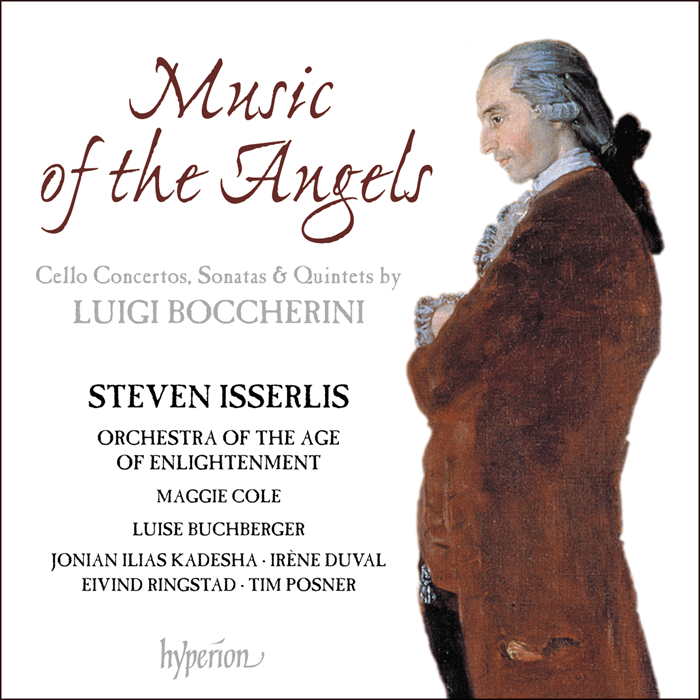
The other composer occupying Steven’s uppermost thoughts in the next month is Luigi Boccherini, with Hyperion releasing Music of the Angels, a generous anthology of the composer’s works for cello with members of the Orchestra of the Age of Enlightenment and harpsichordist Maggie Cole. The album explores the very different forms of Cello Concerto, Cello Sonata and String Quintet – where the composer adds an extra cello to the traditional string quartet line-up. Boccherini is a lesser-known light from the 18th century, and his cause has been close to Steven’s heart right through his recording career.

It’s great to see your Boccherini album. Was it most important for you to present the different types of work – concerto, quintet, sonata – in context?

Thank you! Again, the programme just worked out that way; but yes, I was happy to show different facets of Boccherini’s unique world.

You’ve been playing and recording the music of Boccherini for a good while – what was it that first attracted you to his music?

Well, my teacher Jane Cowan was a great Boccherini fan, which I’m sure influenced me. (She was also a great Fauré fan!) But I’ve always loved his elegance, the otherworldly beauty of his music, his gentle, kind musical soul.

At a guess, I think it might have been the Orchestra of the Age of Enlightenment’s first exposure to Boccherini. Did they enjoy it as much as you?

I think they MIGHT have done some of the symphonies; but I’m not sure. They were certainly lovely to work with – committed, enthusiastic and supportive.

You talk in your notes about the virtuosity Boccherini requires from his soloist – he must have been quite a player. Is it quite intimidating using such a high register of the cello to start with?

Yes! He’s among the most demanding composers for cello, because there’s nowhere one can hide. One can’t just add mounds of vibrato to mask the intonation, for instance. And one has to be able to shape the delicate curves of the music in a way that is naturally graceful; a challenge indeed.

Would you say his music is an ideal ‘next step’ for lovers of Haydn and Mozart?

I think that he’s very different from either Mozart or Haydn – roughly contemporaneous, yes, but another personality entirely. In a way, I think he’s more analogous to Domenico Scarlatti – not because they’re that similar, but because they were both Italians who spent much of their lives in Spain where, relatively cut off from the centre of European musical life, they created their entirely individual compositional worlds.

How does Boccherini’s cello writing contrast with that of Haydn?

Very different! Both can make the cello sing, true; but Haydn uses virtuosity for purposes of excitement, whereas Boccherini uses it much more subtly – usually for lightness and delicacy, frequently evoking birdsong.

With your Boccherini album set for release, are you inclined to record the Fauré trio, quartets and quintets?

Actually, yes; we were originally set to record straight after the festival; but we decided that that would be just too much. So nowthe plan is to record at least the late chamber works (which is the Fauré most in need of advocacy, I feel) next summer in the US. We hope…”

You can book the last remaining tickets for Steven Isserlis and friends’ Fauré residency at the Wigmore Hall website, and explore purchase options for the new Boccherini album Music of the Angels at the Hyperion website. The Wigmore Hall are streaming the Fauré concerts live from their YouTube site

Published post no.2,344 – Sunday 27 October 2024

Wigmore Hall news – A season-long celebration of Fauré begins this September

Véronique Gens (soprano), Fleur Barron (mezzo-soprano), Laurence Kilsby (tenor), Stéphane Degout (baritone), Susan Manoff (piano), Julius Drake (piano) – all performing on Friday 13 September 2024 at the Wigmore Hall

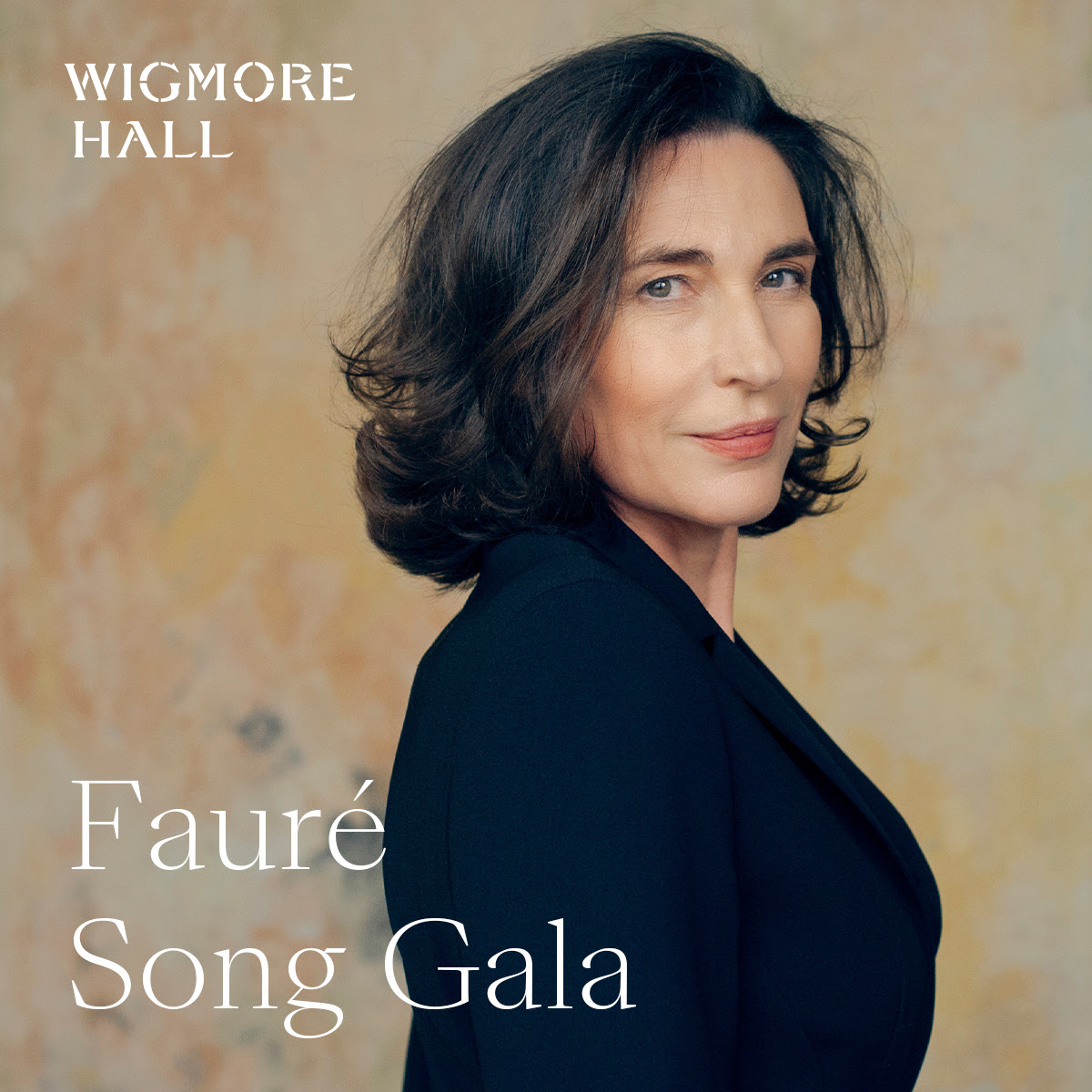
The Gabriel Fauré Centenary Celebrations open with a song gala involving some of Fauré’s finest contemporary interpreters, who explore the composer’s output at various stages, and all of whom share in the performance of his cycle La bonne chanson.

The concert will take place on Friday 13 Sep 2024, 7.30pm (click here for tickets) – and marks the start of a celebration which will cover the French composer’s celebrated chamber music.

You can read about the celebrations at the Wigmore Hall website, where you will find details of the five-day festival planned and curated by Steven Isserlis and friends, running from Friday 1 November to Tuesday 5 November. The programme will include all of Fauré’s chamber music, put in context of his friends and contemporaries. It will also give us the rare opportunity to hear both of the piano trios by his good friend Saint-Saëns.

Published post no.2,288 – Thursday 29 August 2024