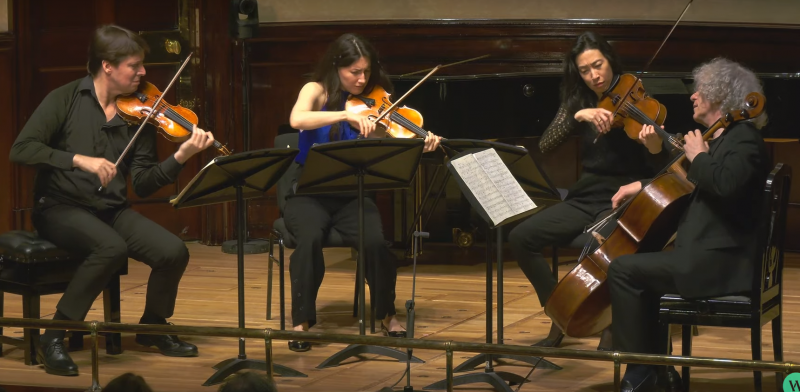
In concert – Steven Isserlis and Friends – Fauré at the Wigmore Hall (5)

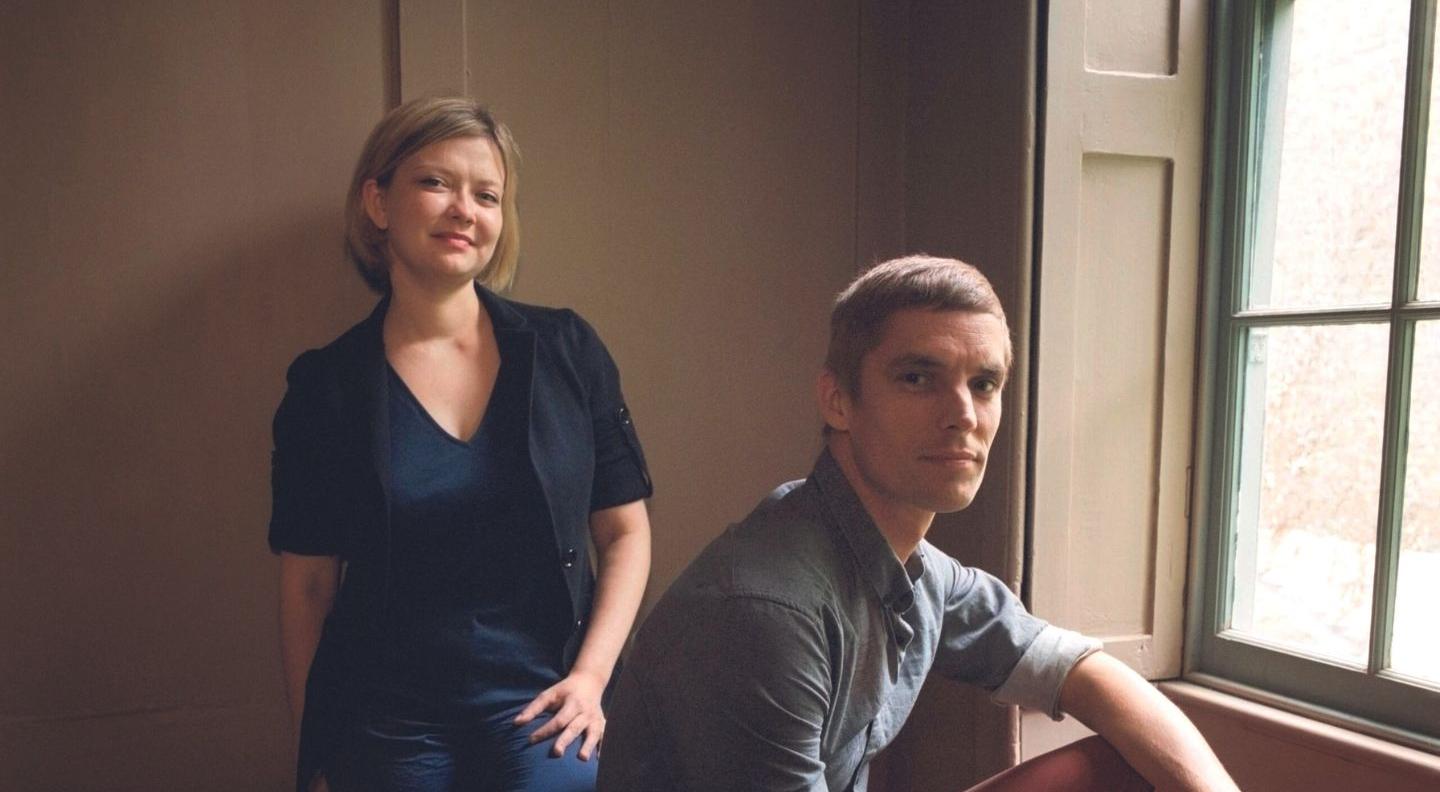
Steven Isserlis (cello) – with Joshua Bell, Irène Duval (violins), Blythe Teh Engstroem (viola), Connie Shih, Jeremy Denk (pianos)

Fauré Dolly Suite Op.56 (1894-6)
Enescu Pièce sur le nom de Fauré (1922)
Ravel arr. Garban Berceuse sur le nom de Garbriel Fauré M74 (1922)
Koechlin Hommage à Gabriel Fauré Op.73bis (1922)
Fauré Cello Sonata no.2 in G minor Op.117 (1921)
Fauré String Quartet in E minor Op.121 (1923-4)

Wigmore Hall, London
Tuesday 5 November 2024

Reviewed by Richard Whitehouse Picture (c) Wigmore Hall Trust

So to the final concert of this series, curated by cellist Steven Isserlis and centred on Fauré’s larger chamber works in the centenary of his death. The last of five concerts was rounded out in its coverage by including his most popular work for piano duet, along with miniatures from several pupils of one who was held in equal esteem as a teacher.

It is doubtless as easy to describe the Dolly Suite with patronizing charm as it is to play it so but, with Jeremy Denk and Connie Shih an alert if always sensitive partnership, there was no likelihood of this latter. A limpid take on the evergreen Berceuse was followed by no less a deft rendition of Mi-a-ou; the ineffable charm of Le jardin de Dolly made a telling foil to the skittish evocation (of a dog) that is Kitty-valse, then the searching poise of Tendresse created a delightful contrast with that affectionate send-up of Chabrier in Le pas espagnol.

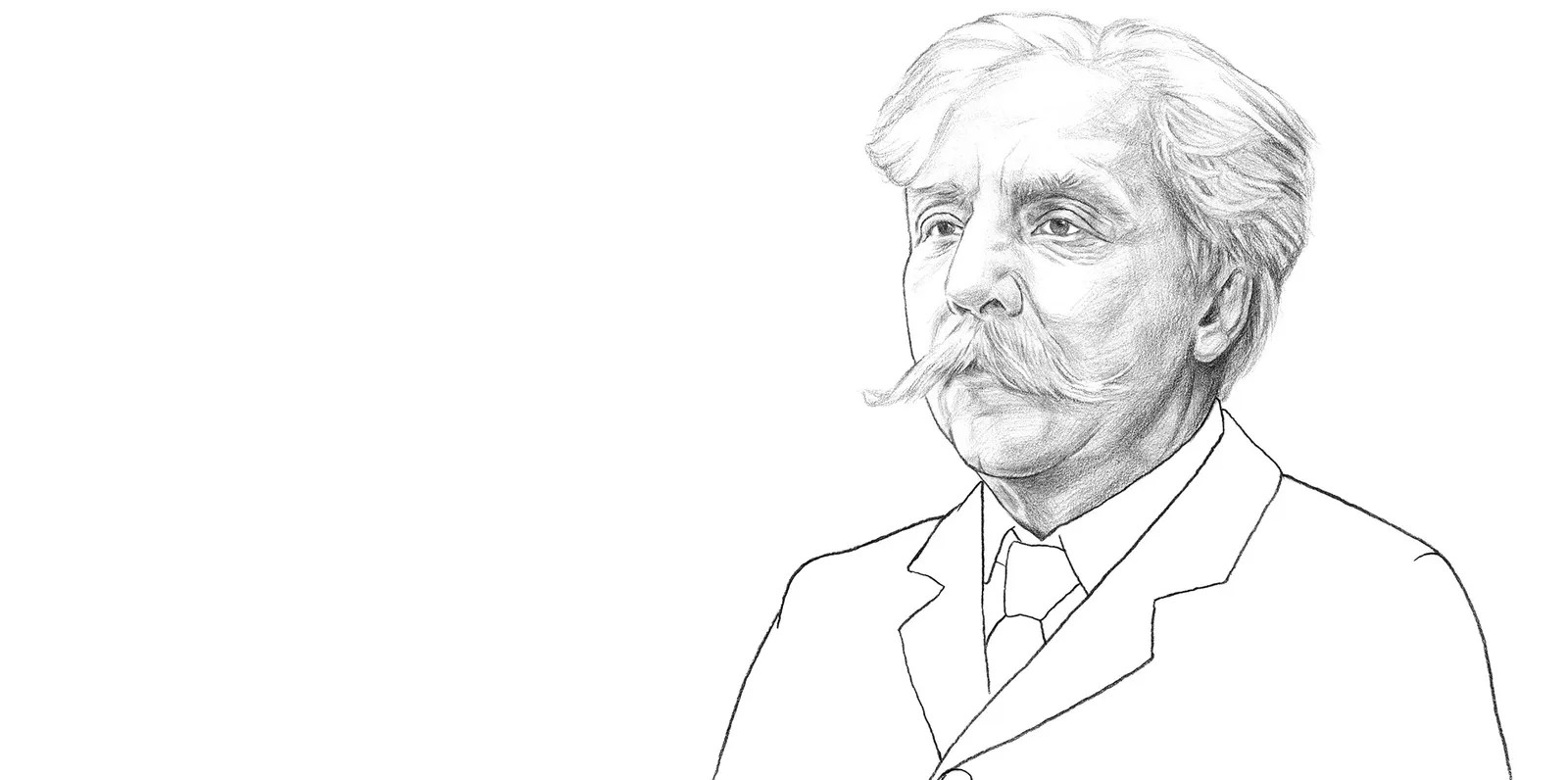
Quite why the journal Le Revue chose Fauré’s 77th year to publish an edition devoted to his music is unclear, but it did enable seven former students to express their admiration through miniatures that encapsulate his own idiom as surely as theirs. Hence the intricate texture and enfolding harmony of Enescu’s Pièce, the pert elegance of Ravel’s Berceuse arranged (from its violin-and-piano original by Lucien Garbon), then the gently inflected wit of Koechlin’s Hommage to remind one of the latter composer’s service to Fauré as sometime orchestrator.

These three items were engagingly played (and introduced) by Denk, and it seemed a pity the other four (by Aubert, Ladmirault, Roger-Ducasse and Schmitt) could not have been included – perhaps at the start of the second half – given the appositeness of the programme. This first half ended with the Second Cello Sonata which, while it resembles its predecessor in form, is appreciably more forthcoming as to expression. It is evidently a work that Steven Isserlis first played as a teenager, and there could be no mistaking his identity with the close-knit dialogue of its opening Allegro, pathos bordering on the elegiac of its central Andante that started out as music commemorating the centenary of Napoleon’s death, and effervescence of a finale as endows what is otherwise typical late Fauré with a genial humour never less than captivating.
After the interval, this series ended in the only way possible with the String Quartet that was Fauré’s last work. In his initial remarks, Isserlis mentioned how long it had taken for him to ‘get’ this piece and, indeed, its three movements each unfolds in a seamless polyphonic flow which can feel disconcerting even in the context of the composer’s other late chamber works. Whether or not they play it frequently, Joshua Bell, Irène Duval, Blythe Teh Engstroem and Isserlis audibly had its measure – their steady though always flowing tempo for its Allegro moderato ideally complemented by the luminous radiance of its Andante; before its Allegro elides elements of scherzo and finale in music whose dextrous pizzicato writing and gently cumulative intensity conveys an affirmation that speaks of a challenge, and a life, fulfilled.

As a work and as a performance, it set the seal in the only way possible on a series of concerts through which the quality and substance of Fauré’s chamber music could not have been more eloquently confirmed, which is just as should be expected from a retrospective of this nature.

You can watch the concert below, thanks to the Wigmore Hall YouTube channel:

For more information on the Fauré series, visit the Wigmore Hall website – while you can also read Arcana’s interview with Steven Isserlis about the French composer

Published post no.2,355 – Thursday 5 November 2024
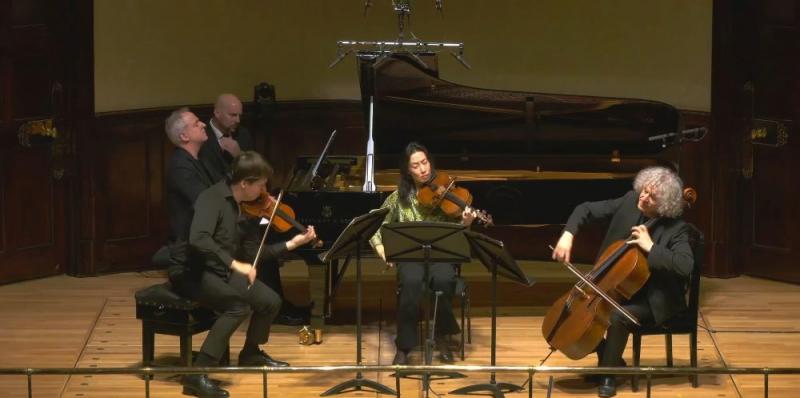
In concert – Steven Isserlis and Friends – Fauré at the Wigmore Hall (4)

Steven Isserlis (cello) – with Joshua Bell, Irène Duval (violins), Connie Shih, Jeremy Denk (pianos), Quatuor Agate [Adrien Jurkovic, Thomas Descamps (violins), Raphaël Pagnon (viola), Simon Iachemet (cello)]

Fauré Cello Sonata no.1 in D minor Op.109 (1917)
Enescu Violin Sonata no.2 in F minor Op.6 (1899)
Fauré Piano Trio in D minor Op.120 (1922-3)
Ravel String Quartet in F M35 (1902-03)

Wigmore Hall, London
Monday 4 November 2024

Reviewed by Richard Whitehouse Picture (c) Wigmore Hall Trust

Tonight’s instalment of the Wigmore Hall series focussing on Fauré’s larger chamber works was also the most cohesive in its alternating two of the composer’s late pieces with formative ones by Enescu and Ravel for what was a fascinating programme of echoes and anticipations.

While not necessarily the weakest of those works played in this series, Fauré’s First Cello Sonata is the least remarkable – the melodic content reduced to barest essentials such that its main motifs can verge on the anonymous. That said, its opening Allegro is a model of formal economy and expressive restraint, Steven Isserlis and Connie Shih being no less perceptive in the pensive musing of its central Andante or the urbanity of a final Allegro whose ‘commodo’ aspect was always evident. Less may not always be more, but it is rarely less than appealing.

Less often heard than its successor, Enescu’s Second Violin Sonata is no less significant. Its composer’s first masterpiece, much of the fascination lies in the degree to which its melodic ideas evolve across and between each of the three movements for a potent demonstration of motivic unity. This was something Irène Duval conveyed in ample measure, yet without ever neglecting that reticent or sometimes ominous quality characterizing much of its content – at least until the quixotic finale channels these diverse elements towards a resolution achieved almost despite itself. Throughout, Jeremy Denk’s pianism was a model of lucidity and poise in a performance which went all the way in confirming this work as one of the three greatest masterpieces by a teenager – the other two being written 74 years earlier, then 72 years later. (presumably Mendelssohn’s Octet and a piece to be confirmed! – ed)

Fascinating how much Enescu’s precocity resembles Fauré’s maturity in what was the latter composer’s penultimate work. Compact almost to a fault, the Piano Trio is dominated in all respects by a central Andantino whose melodic eloquence has intensified almost to the point of ecstasy by its close, not least as rendered by Joshua Bell, Isserlis and Denk in what was a near-ideal performance. Succinctness almost gets the better of the outer movements, though it would be churlish not to acknowledge the tensile energy of its opening movement and the exhilaration of a finale whose element of syncopation marks Fauré’s nearest approach to the jazz idiom. Interesting as it is to hear this piece with clarinet as was originally intended, its interplay of violin, cello and piano is no less inevitable than in the parallel work by Brahms.

The well-regarded Quatuor Agate duly took the stage for Ravel’s String Quartet, evidently a work for which Fauré expressed only muted enthusiasm. Superbly played though a little self-regarding interpretively, this account was at its best in its latter stages – the inward rapture of its slow movement in pointed contrast to the volatility and ultimate decisiveness of its finale. The opening movement at times verged on expressive inertia and the scherzo’s deft humour was rather self-conscious, but the overall conviction of this performance still came through. Seemingly the Agate will not be playing Fauré’s String Quartet which forms the culmination of tomorrow’s concert and of this series; one that also includes the Second Cello Sonata and music written in tribute to a composer whose greatness could hardly be doubted now as then.

You can watch the concert below, thanks to the Wigmore Hall YouTube channel:

For more information on the Fauré series, visit the Wigmore Hall website – while you can also read Arcana’s interview with Steven Isserlis about the French composer

Published post no.2,354 – Wednesday 5 November 2024

In Concert – Alina Ibragimova & Cédric Tiberghien @ Wigmore Hall: Janáček, Enescu, Barry & Beethoven

Alina Ibragimova (violin), Cédric Tiberghien (piano)

Janáček Violin Sonata in G sharp minor JW VII/7 (1913-15, rev. 1916-22)
Enescu Violin Sonata no.3 in A minor Op.25 ‘Dans le caractère populaire roumain’ (1926)
Barry Triorchic Blues (1990, rev. 1992)
Beethoven Violin Sonata no.9 in A major Op.47 ‘Kreutzer’ (1802-03)

Wigmore Hall, London
Saturday 28 September 2024

Reviewed by Richard Whitehouse

The duo of Alina Ibragimova and Cédric Tiberghien has offered some memorable recitals at Wigmore Hall during the past few seasons, with this evening’s typically diverse programme ranging over almost two centuries of compositions for the combination of violin and piano.

A first half of complementary opposites began with the Violin Sonata by Janáček. Ensuring cohesion across its four highly contrasted movements is no easy task, but the present artists succeeded admirably in this respect. Thus, the opening Con moto had an edgy ambivalence which was allayed in the Ballada – its relative repose and expressive warmth infused with a nostalgia as likely reflects the composer’s youth (and may indeed derive from one of those long-lost sonatas written while studying in Leipzig and Vienna 35 years earlier). Despite its marking, the Allegretto is a tensile scherzo whose frequently combative interplay was much in evidence here; the final Adagio then pivoting between stark plangency and a heightened eloquence which subsided into an ending whose muted regret was unmistakably to the fore.

Whatever the conceptual or aesthetic gulf between them, Enescu’s Third Sonata followed on with some inevitability. This was inspired by and recreates without quoting traditional music, as its subtitle duly indicates, and Ibragimova was alive to the musing inwardness of an initial Moderato whose ‘malinconico’ consistently undercuts any formal or expressive resolution up to a close where the songful and dance-like themes disperse into silence. The highlight was a central Andante of sustained though unforced intensity, its improvisatory aspect a stern test of coordination violinist and pianist met head-on. Almost as compelling, the final Allegro lacked a degree of inevitability in its unfolding – Tiberghien’s superbly articulated pianism less than implacable at the close, for all that Ibragimova conveyed its ominous ecstasy in full measure.

Beginning life as a test-piece for solo piano and adapted for numerous media, Triorchic Blues is Gerald Barry at his most uninhibited and would have made an ideal encore in this context – but its ever more scintillating opposition of instruments was not out of place after the interval.

This second half ended with the grandest of Beethoven’s violin sonatas, its ‘Kreutzer’ subtitle misleading yet indicative of this music’s inherent virtuosity. Ibragimova and Tiberghien made an impressive cycle of these works for the Wigmore’s own label, so it was surprising to find them at slightly below their best here. Not in the central Andante con variazioni, its judicious fusion of slow movement and scherzo rendered with unfailing poise and an acute sense of the profundity drawn out of so unassuming a theme. Yet, after its suitably arresting introduction, the first movement lacked drama – the duo playing down its rhetoric not least in a less than impulsive coda. The relentless tarantella-rhythm that underpins the finale felt similarly reined in with, again, too little of an emotional frisson as this music vividly reinforces the home-key.

What was never in doubt was their quality of playing individually and collectively, making one anticipate future recitals by these artists which will hopefully find them exploring more of that extraordinary corpus of music for violin and piano of the early and mid-20th century.

For more on the Autumn season visit the Wigmore Hall website. For more on the artists, click on the names Alina Ibragimova (violin), Cédric Tiberghien (piano), and click here for more on composer Gerald Barry

Published post no.2,316 – Sunday 22 September 2024

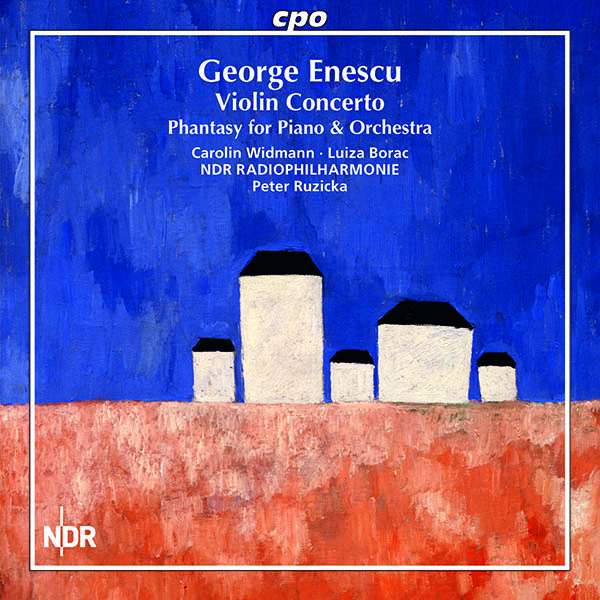
On record – Enescu: Violin Concerto & Phantasy (Carolin Widmann, Luiza Borac, NDR Radiophilharmonie / Peter Ruzicka) (CPO)

enescu

Enescu
Violin Concerto in A minor (1896)
Phantasy in D minor (1896/8)

Carolin Widmann (violin), Luiza Borac (piano), NDR Radiophilharmonie / Peter Ruzicka

Producer Elisabeth Kemper Engineer Daniel Kemper

CPO 555 487-2 [53’32”]

Recorded 25-28 May 2021 at Grosser Sendesaal, Landesfunkhaus, Hannover

Written by Richard Whitehouse

What’s the story?

CPO continues its coverage of little-known Enescu with this coupling of two pieces from the composer’s teenage years, persuasively rendered by leading performers and with a conductor second to none through his expanding the orchestral output of a still under-appreciated figure.

What’s the music like?

Although not his ‘breakthrough’ year, 1896 was a significant one for Enescu in terms of those compositions he at least attempted. He was not yet 15 when premiering the first movement of a Violin Concerto whose Andante was not played and its finale likely never written. Even so, the audience must have been surprised and even a little bemused at the audacity of a teenager who opened with an Allegro moderato rivalling those of the Brahms and Beethoven concertos in its scale and intent, and one whose technical display is secondary to its weight of argument.

Enescu having relocated to Paris after seven years in Vienna, evidence of competing aesthetic influences is not hard to discern – with Brahms the audible precursor of that Allegro, down to the climactic entry of the soloist after a lengthy opening tutti, then a (self-written) cadenza as serves a formal rather than virtuosic purpose. Despite being considerably longer than that of the Brahms, the Andante looks more to French antecedents – notably the Third Concerto of Saint-Saëns whose siciliano profile it utilizes, but not a tendency for pronounced expressive contrasts that is exemplified by the rhythmic impetus of its alternating episodes. Exactly why Enescu never completed this work is uncertain, yet if he felt its influences too obvious, such derivativeness need not be a barrier to appreciation or enjoyment of these movements today.

Enescu unlikely had any knowledge of the Violin Concerto that Busoni was writing at much this time, yet the former’s Phantasy has a tangible aura of the music his older contemporary was then writing. Witness the stealthy introduction as surges forth into the main movement, its alternation of genial assertiveness and ironic rumination itself a Busonian trait, as too the close-knit integration between soloist and orchestra or the subtle ambiguities of its harmonic writing. CPO’s booklet note gives 1898 as the date of composition which other sources give as two years earlier, but there is general agreement that its (only) performance took place at Bucharest in 1900. By then Enescu had written his first undoubted masterpieces, the Second Violin Sonata and Octet for strings, and no doubt felt the piece suffered through comparison.

Does it all work?

Yes, on its own terms. The rapidity with which Enescu evolved as a composer meant he soon left behind the influences as are audible here, which does not make either of these pieces any less worth hearing or merely for enthusiasts. Carolin Widmann is classy casting in the Violin Concerto, articulating its lengthy structures with no mean artistry, while the Enescu specialist Luiza Borac (most recently heard in in the torso of a Piano Concerto from the same period on Profil Hänssler) ensures a cohesion in the Phantasy without limiting its imaginative qualities.

Is it recommended?

Indeed, not least when the recording is unexceptionally fine and Volker Tarnow’s annotations are unfailingly informative. Hopefully CPO and Ruzicka will further their Enescu exploration with the Second and Third ‘School’ Symphonies or sundry orchestral pieces from this period.

Listen

Buy

You can discover more about this release and make a purchase at the Presto website.  For more information on the artists, click on the names for Carolin Widmann, Luiza Borac, Peter Ruzicka and the NDR Radiophilharmonie 

Enescu Festival 2019 – Peter Donohoe, Muntenia Philharmonic Orchestra Daniel Jinga: Bentoiu, Lipatti & Enescu Symphony no.5

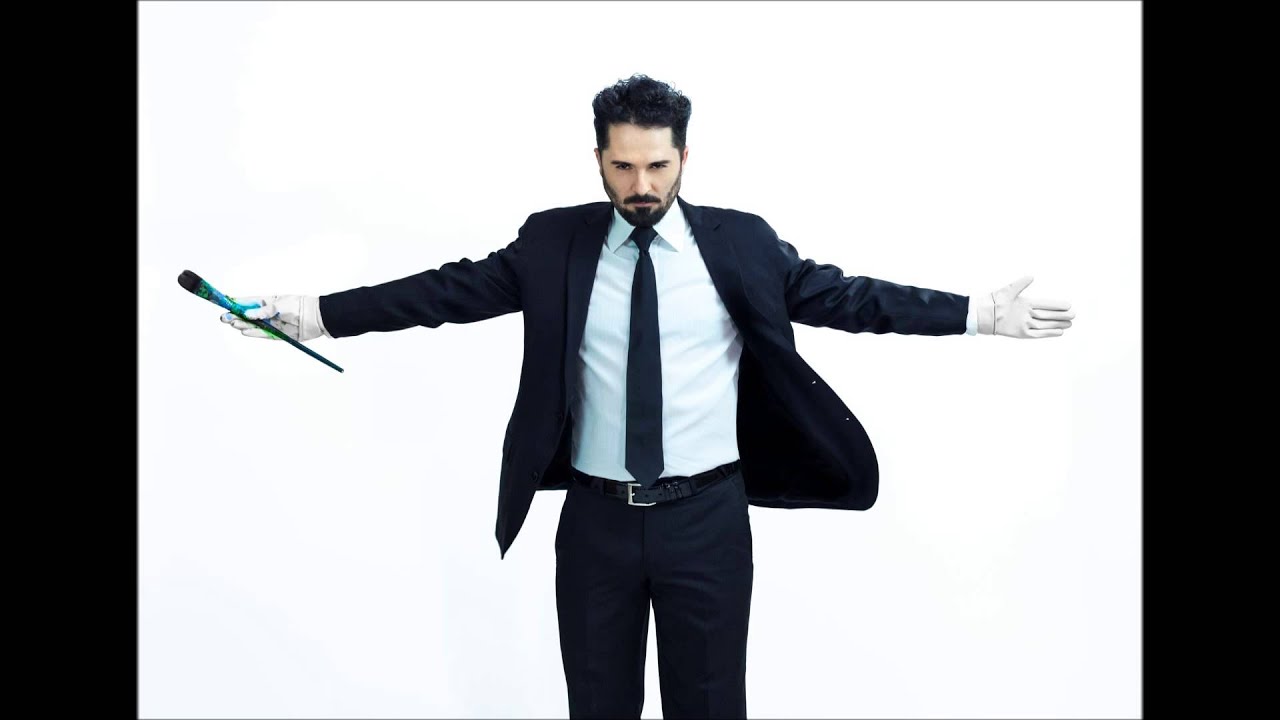
Andrei Lazăr (tenor), Peter Donohoe (piano), Acoustic Chorus (women’s voices), Muntenia Philharmonic Orchestra / Daniel Jinga (above)

Trade Unions’ Cultural Centre, Târgoviște, Romania
Friday 13 September

Bentoiu Suite ‘Ardelenească’, Op.6 (1955)
Lipatti Concertino ‘en style classique’ Op.3 (1936)
Enescu (compl. Bentoiu) Symphony no.5 in D major (1941)

Review by Richard Whitehouse
Photo credit (Peter Donohoe) Sussie Ahlburg

A welcome facet of the Enescu Festival, the Concerts in Other Cities schedule could easily be overlooked owing to distances involved in this sizable country. That said, a day in Târgoviște is eminently feasible. Just 50 miles and a 90-minute train journey from Bucharest, it features several historic buildings (notably the Chindia Tower) that can be visited prior to an evening concert – on this occasion, by the Muntenia Philharmonic Orchestra with principal conductor Daniel Jinga. A quick online perusal suggests the majority of their concerts are of a popular or ‘crossover’ nature, making their playing in this programme of unfamiliar and technically demanding compositions the more impressive – not least in as unsparing an acoustic as the main hall of Trade Unions’ Cultural Centre (a scaled-down version of London’s Barbican).

It may be a relatively early work, but the Transylvanian Suite finds Pascal Bentoiu utilizing folk elements within the context of an already distinctive idiom. Each of its four movements draws on music from a region of Transylvania, and Jinga secured a lively but always flexible response from his musicians for a piece in the lineage of Bartók’s Dance Suite or Enescu’s Romanian Rhapsodies. Surely the most significant post-war Romanian symphonist, Bentoiu had from the start an innate command of the orchestra as was scintillatingly in evidence here.

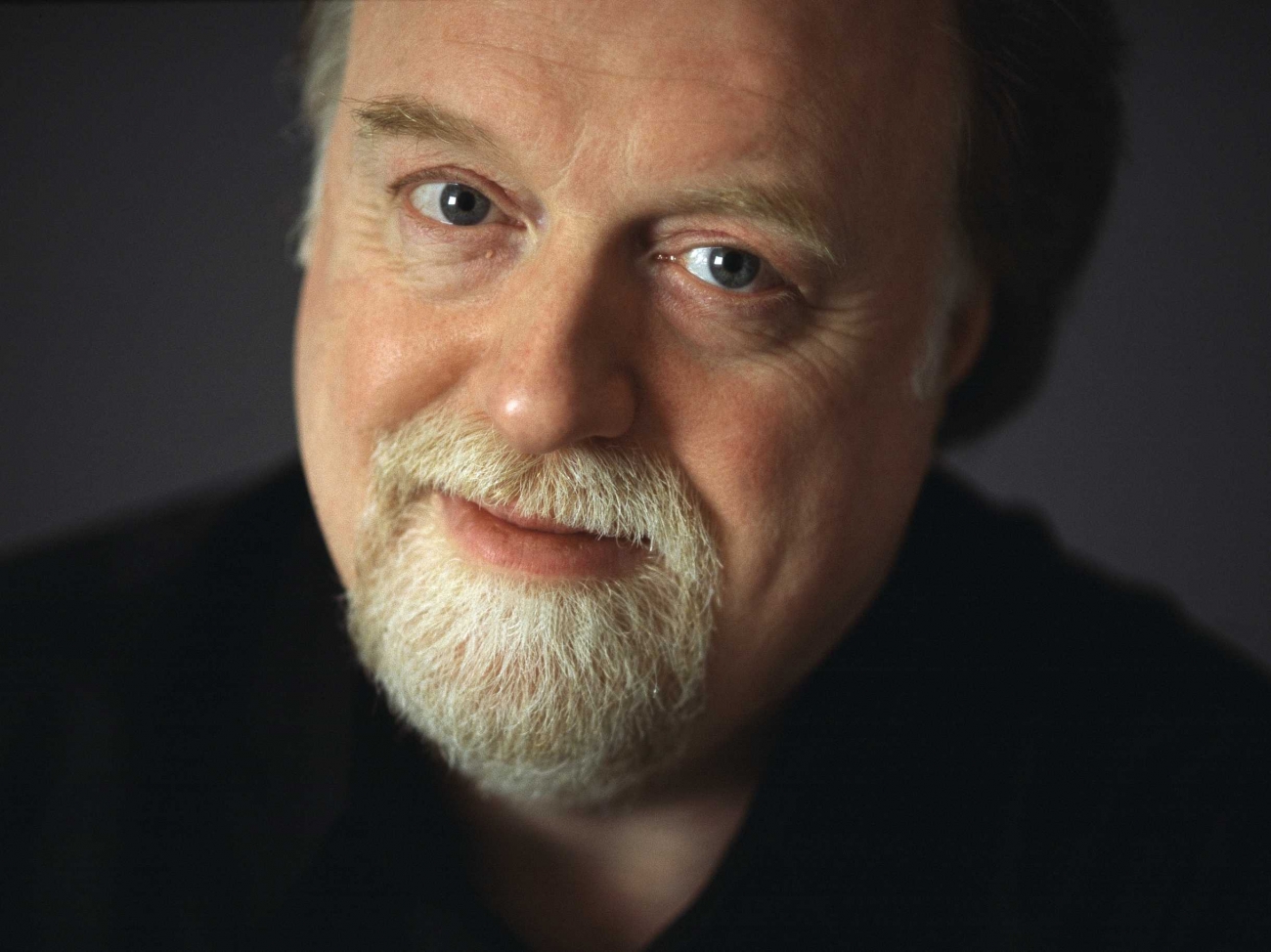
Peter Donohoe (above) then took the stage for Dinu Lipatti’s Concertino in the Classical Style. Most of Lipatti’s larger-scale pieces are from the period before his playing career took precedence, with this Concertino typical in its synthesis of folk melodies with a neo-classical idiom closer to Hindemith or Ravel than Stravinsky. Modest in their dimensions these may be, Donohoe rendered its four movements with deft insouciance and poise, as heard to advantage against the modest instrumentation which abounds in contrapuntal ingenuity and harmonic finesse.

Impressed with the response of the players as of a near-capacity audience, Donohoe returned for substantial encores of Mozart’s Sonata in A minor then Ravel’s Alborada del grazioso – both of which feature in Lipatti’s select discography and given here with engaging vitality.

The second half brought a rare hearing for Enescu’s Fifth Symphony. Substantially drafted over summer 1941 but left in abeyance with its first movement largely orchestrated, it was Bentoiu who undertook a full realization during 1995-6 of what he considered the composer’s requiem for himself.

The first movement centres upon that endlessly evolving melody which was made possible by Enescu’s conception of heterophonic texture – the music afforded its momentum via acutely differentiated timbral layers that coalesce into an unlikely but audible sonata design. Its successor recalls the folk-inflected poignancy of the Suite Villageoise, now with a fatalistic undertow that comes to the fore in the ensuing Vivace which brings the only rapid music of the whole work. Essentially an adjunct to the finale, this culminates with the finale’s gaunt opening theme – the latter movement then unfolding as a funeral march whose valediction is transcended in the setting of Mihai Eminescu’s poem Mai am un singur dor -emerging not as a contrives apotheosis but an organic culmination of all that has gone before.

A combination of the dry ambience with acoustic enhancement meant that Andrei Lazăr was balanced too forwardly against the orchestra, yet he sang with great eloquence (not least his unaffected parlando in the closing lines) – the women’s voices of the Acoustic Chorus adding an ethereal halo to those closing stages. Jinga instilled real forward motion into the opening movement, then brought out the wistfulness and anguish of its two successors. Whether here or in the radiant aura of the finale, his instinctive feel for this piece could hardly be gainsaid.

Make no mistake, this was an enterprising programme in which the Muntenia players was on occasion hard-pressed but rose to its challenges with commitment and enthusiasm. Hopefully orchestra and conductor will secure themselves a concert in Bucharest at the 2021 edition of the Enescu Festival, yet anyone visiting the capital two years hence should certainly consider spending a day in Târgoviște – a compact and appealing city, while hardly an inappropriate place for a first live encounter with the last as well as most elusive of Enescu’s symphonies.

Further listening

You can listen to Pascal Bentoiu’s completion of Enescu’s Symphony no.5 in a CPO recording released in 2014. Marius Vlad is the tenor soloist, with the NDR Chor and Deutsche Radio Philharmonie Saarbrücken-Kaiserslautern conducted by Marius Vlad: