On Record – Sarah Beth Briggs: Small Treasures (AVIE)

by Ben Hogwood

What’s the story?

Small Treasures presents a typically inventive programme compiled by pianist Sarah Beth Briggs. In it she presents works by a trio of inseparable Romantic composers, with late-ish Robert Schumann, lesser-heard Clara Schumann and very late Brahms, his final compositions for solo piano.

Complementing these are thoughts from two members of Les Six, Germaine Tailleferre and Francis Poulenc – with the bonus of a cheeky encore from Mozart.

What’s the music like?

In a word, lovely. Briggs is a strong communicator, and finds the personal heart of Schumann’s Waldszenen – which is actually quite a Christmassy set of pieces. She particularly enjoys the intimacy of character pieces like Einsame Blumen (Lonely Flowers) and the delicate but rather haunting Vogel als Prophet (The Prophet Bird), beautifully played here.

A tender account of Robert’s Arabeske is a welcome bonus, an intimate counterpart to the more extrovert Impromptu of Clara. Written in c1844, the piece floats freely on the air in Briggs’s hands. By contrast the Larghetto, first of the Quatre Pièces Fugitives, inhabits a more confidential world, one furthered by a restless ‘un poco agitato’. The Andante espressivo, easily the most substantial of the four, is more serene, and it is tempting to draw a link between this and the mood of Robert’s Traumerei, from Kinderszenen. The Scherzo with which the quartet finishes is charmingly elusive, with clarity the watchword of this interpretation,  

Poulenc’s Trois Novelettes are typically mischievous and elegant by turn, spicy harmonies and bittersweet melodies complementing each other, before Tailleferre’s Sicilienne, a charming triple-time excursion with a bittersweet edge.

The Brahms Op.119 pieces are serious but have plenty of air too, and the final majestic Rhapsody is grand but not over-imposing, Briggs resisting the temptation to go for volume over expression.

Does it all work?

It does – and the album is easy to listen to the whole way through, the lightness of the Mozart Eine Kleine Gigue complementing the Brahms at the end. Some of the classic recordings of the Brahms and Schumann pieces arguably find more angst, but these finely played accounts are a treat, especially in context.

Is it recommended?

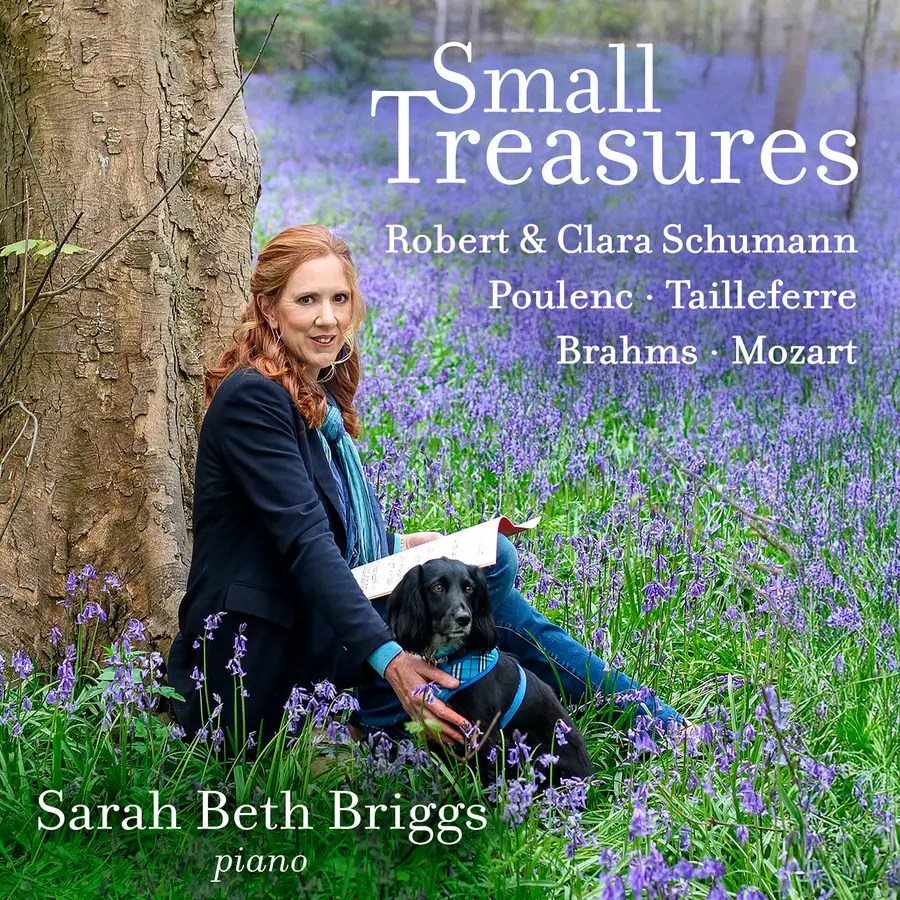
It is. Rather than visit a playlist on your go-to streaming service, you can just put this album on to create a very satisfying recital. Small Treasures, indeed – as is Sarah’s dog, who joins her on the album artwork!

Listen / Buy

You can listen to Small Treasures on Tidal here, while you can explore purchase options on the Presto website

Published post no.2,756 – Monday 22 December 2025

In concert – Jong-Gyung Park, Tonbridge Philharmonic Orchestra / Naomi Butcher – Tailleferre, Prokofiev & Rachmaninoff

tonbridge-philharmonic

Tailleferre Ouverture (1931)
Prokofiev
Romeo & Juliet Suite no.2 Op.64b (1936)
Rachmaninov
Piano Concerto no.2 in C minor Op.18 (1900-01)

Jong-Gyung Park (piano), Tonbridge Philharmonic Orchestra / Naomi Butcher

Chapel of St Augustine, Tonbridge School, Tonbridge
Saturday 19 February 2022

Written by Ben Hogwood

For the first concert of their 2022 season, the Tonbridge Philharmonic Orchestra and conductor Naomi Butcher focused on Russian Romantics, with red-blooded works from Prokofiev and Rachmaninov drawing a capacity audience to the Chapel of St Augustine.

They began with a rarity, the Ouverture of 1931 from Germaine Tailleferre, the only female member of the celebrated group of French composers known as Les Six. This attractive piece proved the ideal concert opener, a bustling five minutes of music with compact melodies and busy exchanges between the orchestral groups. Tailleferre’s skilful writing has echoes of contemporaries Ravel and Satie, even drawing a line back to Chabrier. There was plenty to admire and enjoy in the piece and in this bracing performance.

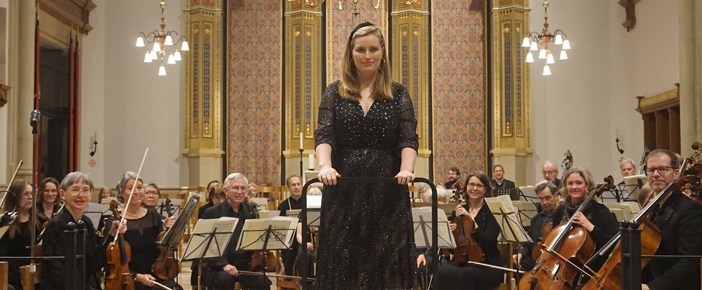
Prokofiev made three concert suites of his successful ballet Romeo & Juliet, the second of which is the most often performed. Containing six movements, it opens with the famous Dance of the Knights (known as The Montagues & Capulets in the suite) – and how refreshing to hear this in its proper context, rather than cueing up another episode of the BBC TV programme The Apprentice! The lower end of the orchestra was on fine form here, driving the music forward but never over-reaching, and Naomi Butcher (above) found just the right tempo. It was also heartening to hear the rich tones of Nicholas Hann’s tenor saxophone when the theme returned. Juliet as a Young Girl was next, taxing the strings with Prokofiev’s fiendishly difficult writing but drawing affectionate phrasing and a light touch nonetheless.

The heart of this performance lay in the two slow movements. Romeo and Juliet before parting featured a poignant flute solo from Lucy Freeman, before revealing Prokofiev’s rich orchestral palette. Ideally paced again by Butcher, the emotive phrasing brought out the best from the woodwind and brass, as well as the composer’s unique string colours. Romeo at Juliet’s grave, which closed out the suite, had an appropriately tragic undercurrent, deeply felt and lovingly phrased by the strings.

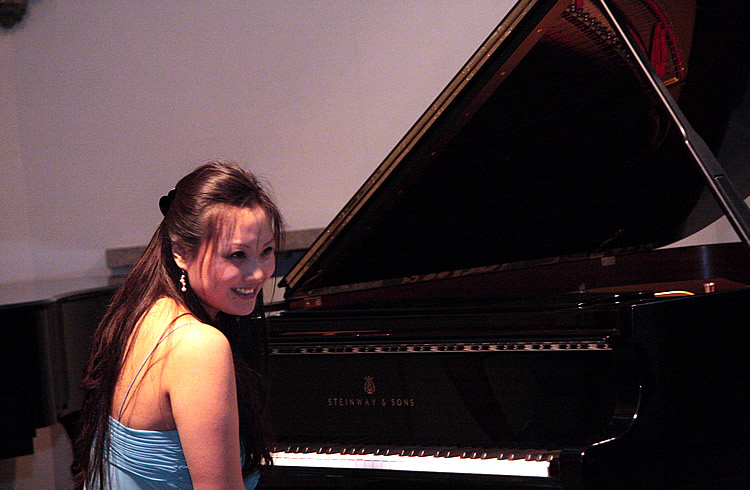
After the interval the Tonbridge Philharmonic Choir’s rehearsal pianist, Jong-Gyung Park (above), took a solo role for Rachmaninoff’s Piano Concerto no.2. As the detailed programme notes revealed, she has an illustrious background of worldwide musical experience, belying the modesty with which she took to the stage. This however was a commanding performance, Park taking the piece in her grip from those famous nine solo chords at the beginning. These were deliberately paced for dramatic effect, building the tension inexorably until the arrival of the strings who were ardent in their phrasing, the music surging forwards.

Technically Park was superb, but she was careful not to apply too much weight to her part or use the concerto as a vehicle for display, which so many pianists fall into the trap of doing. This ensured the passion essential to Rachmaninoff’s writing was always near the surface. Pianist and orchestra had a strong rapport, thanks to Naomi Butcher’s keen ear, and in the slow movement this yielded a soft-hearted performance that was not afraid to linger, making the most of the rich colours and some exquisitely phrased melodies from the pianist.

The transition to the finale was nicely done, rhythms stretched for a little while but settling into a punchy account that Park once again led from the front. This time a little acceleration went a long way, with pianist and orchestra quickly aligned. This was a tour de force performance from Jong-Gyung Park, whose love for this music shone through in an account of high class and fresh dexterity.

The Tonbridge Philharmonic will return to Tonbridge Parish Church for another imaginative program on Saturday 21 May, where music from Nielsen and Sibelius will be complemented by a rare performance of Nino Rota’s Double Bass Concerto. It promises to be an equally memorable night if the orchestra’s current form continues!

For further information on the Tonbridge Philharmonic Society click here