Arcana at the opera: Margot la Rouge & Le Villi @ Opera Holland Park

Margot la Rouge (1902)
Lyric Drama in One Act – music by Frederick Delius; Libretto by Rosenval
Sung in French with English surtitles

Margot – Anne Sophie Duprels (soprano), Sergeant Thibaud – Samuel Sakker (tenor), L’Artiste – Paul Carey Jones (bass-baritone), Lili Béguin – Sarah Minns (soprano), Nini – Laura Lolita Perešivana (soprano), La Patronne – Laura Woods (mezzo-soprano), Totor – David Woloszko (bass)

Le Villi (1883)
Opera-Ballet in Two Acts – music by Giacomo Puccini, Libretto by Ferdinando Fontana
Sung in Italian with English surtitles

Anna – Anne Sophie Duprels (soprano), Roberto – Peter Auty (tenor), Guglielmo – Stephen Gadd (baritone)

Martin Lloyd-Evans (director), takis (designer), Jake Wiltshire (lighting), Jami Read-Quarrel (movement)
Opera Holland Park Chorus, City of London Sinfonia / Francesco Cilluffo

Opera Holland Park, London
Thursday 21st July 2022 [7.30pm]

review by Richard Whitehouse Photos (c) Ali Wright

Delius and Puccini are unlikely operatic bedfellows (as anyone who recalls a near-disastrous ENO staging of Fennimore and Gerda with Gianni Schicchi three decades back will surely concur), but this double-bill by Opera Holland Park has an undeniable logic given both works started out as entries in the competition for one-act operas held on four occasions by Edoardo Sonzogno to encourage young talent (so gaining the upper hand against his established rival Ricordi). That neither proved successful at the time need not detract from the merits of either and if the concept of the one is, with hindsight, as uncharacteristic as that of the other appears immature, both contain more than enough worthwhile music along with arresting stagecraft to vindicate their revival in an imaginative production such as they receive on this occasion.

At the time he finished Margot la Rouge, Delius already had four operas behind him so was hardly unequipped for the task at hand. The challenge lay rather in adapting his increasingly personal, even metaphysical approach to the hard-hitting realism – not abetted by a libretto (written pseudonymously by Berthe Gaston-Danville) which reduces its characterization to stereotypes throughout. Yet the best of Delius’s music rises well above any one-dimensional sordidness – the plaintiveness of its prelude and mounting eloquence of its love scene (both refashioned as the Prelude and Idyll which was the composer’s final collaboration with Eric Fenby) equal to anything from his maturity. Had one or another of those earlier operas been acclaimed, the chances for Margot to reach the stage would have been appreciably greater.

The simple but effective revolving set favoured by Martin Lloyd-Evans presents this drama the more effectively for its unfussiness, enhanced by takis’s set designs and Jake Wiltshire’s resourceful lighting. Casting-wise the stage is dominated, as it needs to be, by Anne Sophie Duprels’s assumption of the title-role – emotionally guarded in its earlier sullenness, before ascending to heights of rapture once her identity becomes known. Samuel Sakker evinces the necessary ardency as Thibault and though Paul Carey Jones is a little too suave to convey the viciousness of The Artist, his commanding presence is never in doubt. Sarah Minns has just the right coquettishness as Lili, while there are telling cameos from Laura Lolita Perešvana, Laura Woods and, especially, David Woloszko among those (too?) numerous smaller roles.

Whereas Delius’s opera had to wait 82 years for its premiere, Puccini’s Le Villi hit the stage within a year of completion then was revived twice before the end of the decade – by which time, this ‘opera-ballet’ had expanded to two acts. Therein lies the problem, as Ferdinando Fontana’s modish libretto seems stretched beyond its effectiveness as drama, the threadbare nature in much of the latter scenario requiring a narrative element merely to hold it together. That said, there are various opportunities for characterizing the three protagonists of which Puccini made the most, with the central symphonic intermezzo L’abbandono e La tregenda (the latter still heard as an encore) confirming a new orchestral sophistication in Italian opera. Theatrically flawed as it may be, Le Villi is an auspicious and undeniable statement of intent.

Here, too, the Lloyd-Evans-takis-Wiltshire staging works to the advantage of this drama, yet without over-egging the supernatural shenanigans; credit, also, to Jami Reid-Quarrell for his utilizing the relatively restricted stage-space such that the dance element seems both alluring and more than compensates for the flailing narrative. Vocally, Anne Sophie Duprels has the measure of Anna as she traverses the gamut of emotions from diffidence, through heartbreak to revenge, with a continuity of expression not to be taken for granted. Peter Auty has made a speciality of high tenor roles, but his Roberto needs greater fervency and warmth to offset its shrillness. Not so Stephen Gadd, whose Guglielmo has a burnished humanity that commands attention on his (too few?) appearances and a clarity ideally suited to delivering the narrative.

The latter opera also gains from a typically lusty contribution by Opera Holland Park Chorus – and, in both works, the City of London Sinfonia responds with commitment to the dynamic direction of Francesco Cilluffo, who teases out the many dramatic nuances with alacrity. The orchestral reductions by Andreas Luca Beraldo have been judiciously gauged in both cases -that for Margot ironically closer to the orchestration undertaken by Eric Fenby in the absence of Delius’s score and which was soon mothballed once the original had been relocated. The relative unfamiliarity of these operas is a coup such as OHP has regularly delivered over the years, and one which is well worth the attention of more than just those drawn to rare opera.

Further performances take place on 29 July, 31 July [2pm], 2, 4 and 6 August. For more information visit the Opera Holland Park website

In concert – London Symphony Orchestra & Sir Antonio Pappano – Petrassi, Puccini & De Sabata

G. Gabrieli Canzoni – primi toni a 8; duodecimi toni a 8 (c1597)
Vivaldi Concerto for Four Violins in B minor RV580 / Op.3/10
Petrassi Concerto for Orchestra No. 5 (1954-5)
Puccini Capriccio sinfonico (1883)
De Sabata Juventus (1919)

Benjamin Gilmore, Julia Ungureanu, Julián Gil Rodríguez, Thomas Norris (violins), London Symphony Orchestra / Sir Antonio Pappano

Barbican Hall, London

Thursday 2 June 2022

Written by Richard Whitehouse

What better way to mark Queen Elizabeth II’s Platinum Jubilee than with two concerts providing a decent overview of Italian orchestral music with the London Symphony Orchestra and its chief conductor designate Sir Antonio Pappano. That relatively little of this music has managed to enter the standard repertoire only makes revivals such as these the more worthwhile.

Tonight’s programme began off-stage with two Canzoni by Giovanni Gabrieli played by LSO brass from the centre of the lower circle – Pappano facing the audience to conduct. Although a more spacious and terraced acoustic would have presented these to better advantage, their hieratic grandeur as well as intricately contrapuntal texture was an admirable foil to Vivaldi‘s Concerto for Four Violins which followed onstage. Published in his ground-breaking collection L’estro armonico, its bracing outer Allegros frame a brief while unpredictable Largo whose disjunctive contrasts of tempo and technique brought the best out of a quartet drawn from the LSO front desks and notably well-matched in temperament.

From the early 18th to mid-20th century was less of an aesthetic wrench than might be thought, the Fifth Concerto for Orchestra by Goffredo Petrassi embodying various of those facets as set out by his musical antecedents. Written for the Boston Symphony and long-serving director Charles Munch, this is arguably the most representative of its composer’s eight such works in its amalgam of technical virtuosity with that personal adaptation of serial thinking which Petrassi pursued during the post-war era. Moreover, its outwardly simple format of two movements each following a slow-fast trajectory belies a subtler and more organic evolution – such that an atmospheric prelude intensifies into a capricious scherzo whose provisional close makes possible what follows. Here, an increasingly restive intermezzo elides into a Dionysian toccata with brass and percussion to the fore – then a pensive epilogue returns the music to the inwardness from which it had emerged. A superb performance from the LSO, and a timely revival of this not so minor masterpiece.

His operas brought the orchestral component of Italian opera to a new level of sophistication, but Puccini wrote little for orchestra alone. Essentially his graduation exercise, Capriccio sinfonico is equally a ‘statement of intent’ with its unfolding from a sombre opening (later to be redeployed in Edgar), through an energetic central phase (its main idea familiar as the opening of La bohème), to a modified reprise of that first section which brings about a gently fatalistic close. Pappano duly guided the LSO through an assured reading of music known ‘by default’, making one regret that Puccini’s later focus on opera to the virtual exclusion of all else left no comparable orchestral work from his maturity.

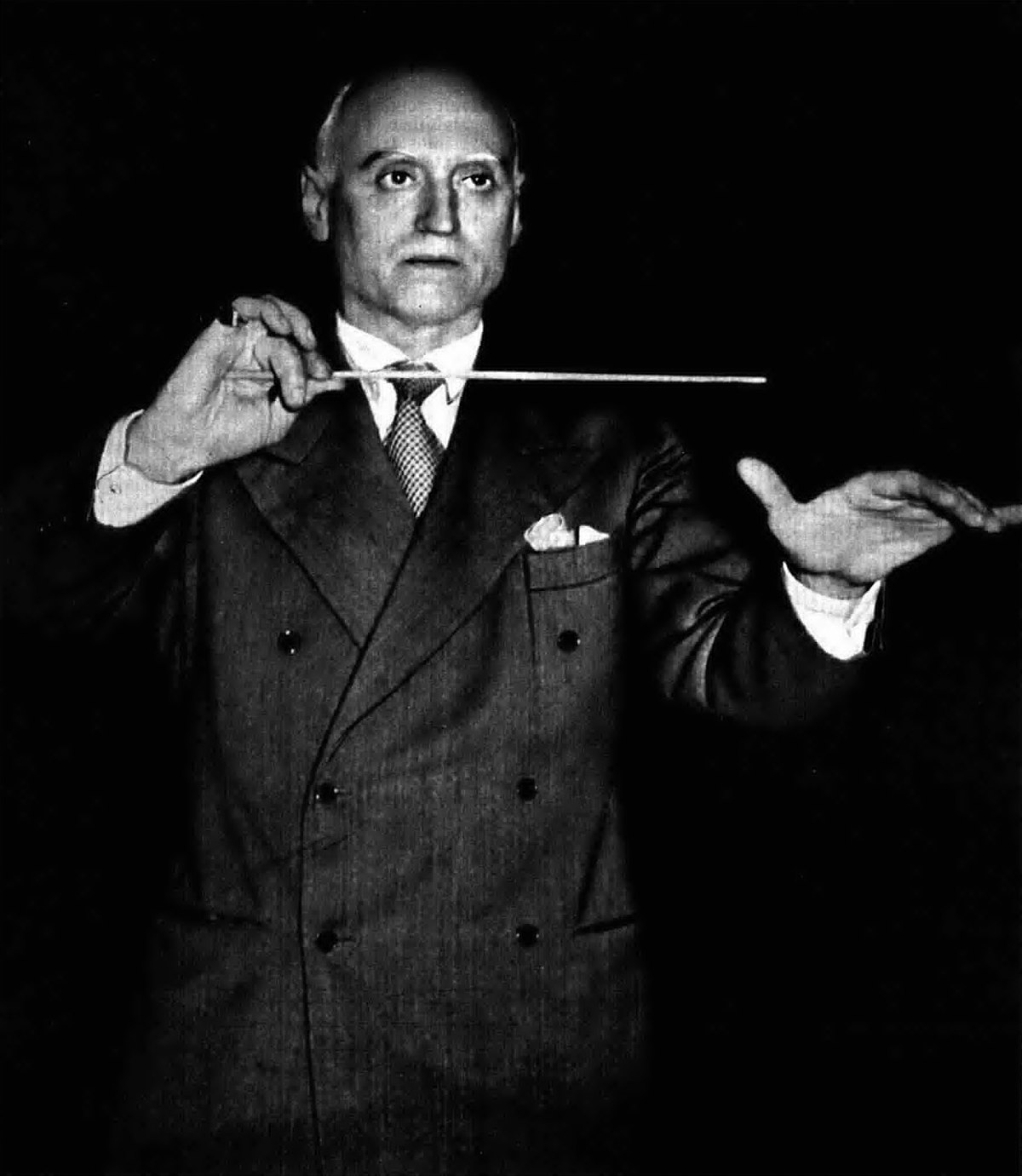
Much the same might be said of Victor de Sabata (above), whose international career as a conductor from his late thirties left him with little time or inclination to compose. A sequence of symphonic poems from around the early 1920s confirms sure mastery of the orchestra, and if Juventus is hardly the deepest of these, its dramatic flair and gestural immediacy are not to be gainsaid. Here, too, there is a three-part structure – the vaunting aspiration of youth becoming subsumed into the trials and setbacks which come with experience, before a revival of those earlier convictions ensures a close of blazing affirmation. Other composers might have invested such a sequence with a dialectical sense of change and attainment, but de Sabata is content to take these implications at face value – while investing his music with a greater subtlety and resourcefulness than it has often been credited for (not least by the writer of this evening’s programme note). This was certainly evident in Pappano’s take on a piece which could yet attract plaudits for other than its name.

As if mindful of the context in which this concert was heard, Pappano opened the second half with a rendering of the National Anthem – somewhat to the surprise of an audibly bemused audience, and presumably not to be repeated for Sunday’s follow-up programme that features Respighi and Dallapiccola at their (very different) communicative best.

To read more on the London Symphony Orchestra’s current season, visit their website

Online recommendation – Il trittico from the Royal Opera House

In the words of the Royal Opera House:

Contrast is the essence of Giacomo Puccini’s operatic triptych, Il trittico. The one-act works that form the trilogy – Il tabarro, Suor Angelica and Gianni Schicchi – range from gritty melodrama to life-affirming comedy. While each opera stands alone, the three come together to create a sense of a complete event, rich in textures and musical forms.

Director Richard Jones matches the eclectic range of Puccini’s music in a production of great verve and invention, moving from the grimy banks of the Seine to a children’s hospital and from there to a garish apartment in 1950s Italy.

Il trittico had its premiere at the Metropolitan Opera, New York, in December 1918. The trilogy was performed in full at Covent Garden in 1920 and again in 1965. Richard Jones’s acclaimed 2011 production was the first complete performance of Il trittico at Covent Garden in 46 years.

You can stream the operatic trilogy from the Royal Opera House website here, up until 19 June 2020.

Live review – BBC Scottish Symphony Orchestra: John Wilson’s Roman Festivals

BBC Scottish Symphony Orchestra / John Wilson (above)

City Halls, London
Thursday 29 November 2018

Donizetti Overture: Don Pasquale (1843)
Puccini Capriccio sinfonico (1883)
Respighi Feste romane (Roman Festivals) (1928); Fontane di Roma (Fountains of Rome) (1915-16); Pini di Roma (Pines of Rome) (1923-4)

Written by Ben Hogwood

If ever an antidote was needed for a blustery November evening, this was it. The BBC Scottish Symphony Orchestra and their Associate Guest Conductor John Wilson began with a sprightly overture – that written by Donizetti for his opera Don Pasquale, complete with romantic solo from cellist Rudi de Groote.

We then heard Puccini’s impressive student piece Capriccio sinfonico, where the orchestra dug in to its substantial outlines and memorable triple-time dance theme.

These two pieces served as effective preludes to the main action in this all-Italian concert – Respighi’s triptych of symphonic poems inspired by the centre of his life, Rome. All too often Respighi is held up as a brilliant orchestrator lacking in musical craft, but these performances under John Wilson utterly refuted those claims. This is music of wonderful colour and texture, certainly, but there are great melodies too, scored in such a way that future composers – among them surely John Williams and Jerry Goldsmith – would surely have fallen under the Italian’s spell.

Respighi himself knew how to use his influences for good. Stravinsky looms large, as do Debussy and Ravel – but nobody else could have written the gladiatorial opening to Roman Festivals, its fire and brimstone blowing the cobwebs away from all corners of City Halls.

The BBC Scottish brass were brilliant here, with Simon Johnson’s blowsy trombone solo in Epiphany and the off-stage trumpets in Circuses both highlights. Jubilee, the second movement of the four, painted vividly the downtrodden pilgrims on the highway, rising up as they glimpsed the Holy City in a shower of glistening colour.

The duet between lead violin and cello in The October Festival (Laura Samuel and de Groote again) was a beauty, while the finale built on its influences from Stravinsky’s Petrushka with music of athleticism and raw power, where pianists Lynda Cochrane and Julia Lynch also deserve a mention, their virtuosity underpinning the sound.

Fountains Of Rome was next, sensibly placed to provide a more restrained complement to the bombastic first poem. Here the wonder lay in four beautiful depictions of water, first heard undulating through The Fountain of Valle Giulia at dawn. The Triton Fountain at mid-morning was a thrilling scherzo in this performance, while the organ (Michael Bawtree) added extra colour and splendour to The Trevi Fountain at midday. Finally the magical, twinkling image of The Fountain of the Villa Medici showed off the slightly smaller orchestra in all its glory, the strings on top form with the notably tricky figures.

Pines of Rome is the most celebrated of the triptych, and though well known its emotional impact here was considerable. The busy, blustery Pines of the Villa Borghese set a colourful scene, but Wilson paced the Pines near a catacomb to perfection, shaping the apex of the Gregorian chant to spine-tingling effect, helped once again by the brilliant BBC Scottish brass section.

Clarinetist Yann Ghiro provided a solo of exceptional control during The Pines of the Janiculum Hill, where we heard the nightingale from afar – an innovative and controversial role for the gramophone in 1924, and even now making unsuspecting audience members sit up in surprise. Yet the whole evening was still to reach its apex, The Pines of the Via Appia, with what was quite simply the loudest orchestral playing I have ever heard. This was Respighi turned up to eleven, and when it shouldn’t have been possible for the music to get any louder or bigger it just kept going.

John Wilson ensured this was always a controlled ascent and never vulgar, so as the hairs stood up on the neck once again his orchestra reached a tumultuous finish, capping a wonderful evening of music. Now that’s what I call a concert!

Further listening

This concert was recorded for future broadcast on BBC Radio 3. John Wilson has not recorded any of the music in this concert, but you can hear a playlist of ‘Roman Festivals’:

Wigmore Mondays: Apollon Musagète Quartet play Grieg, Puccini & Sibelius

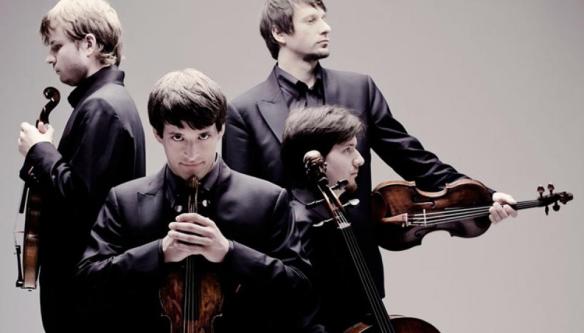
Apollon Musagète Quartet [Paweł Zalejski, Bartosz Zachłod (violins), Piotr Szumieł (viola), Piotr Skweres (cello)]

Sibelius Andante Festivo (1922) (1:55 – 6:00 on the broadcast link below)
Puccini I Crisantemi (1890) (6:25 – 13:45)
Grieg String Quartet in G minor Op.27 (1877) (16:00 – 52:46)

Wigmore Hall, London; Monday 29 January 2018

You can listen to the BBC Radio 3 broadcast by clicking here

Written by Ben Hogwood

This was a well thought out and brilliantly played concert from the Apollon Musagète Quartet, bringing together three composers not normally associated with the idiom of the string quartet, and making a very strong case for their efforts.

The Andante Festivo dates from a period when Sibelius was struggling, inspiration arriving at the Finnish composer’s house only fitfully. This piece was written on one such day, with the same luminous scoring that would characterise the Sixth Symphony. Here it was given an appropriate, ceremonial air – apt given that it was written for the 25th anniversary of the Säynätsalo sawmills. The full chords were deeply resonant here, hinting at a suitability realised by the composer’s later arrangement for string orchestra.

Puccini‘s I crisantemi is if anything more familiar in the composer’s arrangement for larger forces, but it was also very affecting here. The recurring harmonies have a strong, nostalgic tug at the heart strings, and again the Apollon Musagète were as one, skilfully putting deep feeling over sentimentality.

Grieg’s String Quartet in G minor is, in my opinion, a neglected masterpiece. That is a phrase you will of course read all too often in reviews, but in my defence I have no less a figure than the composer Franz Liszt to back me up!

“It is a long time since I have encountered a new composition, especially a string quartet, which has intrigued me as greatly as this distinctive and admirable work by Grieg.”

In this performance (from 16:00) on the broadcast link) the bold, solemn introduction quickly yielded to a fast movement that meant business and was already digging deep. Frequently the string writing is beefed up, and the impressive volume of this performance was balanced by a cleanliness of ensemble and attack. At 23:44, a brief pause between a big, sweeping statement and a very small response felt like the start of a new movement, so pronounced were the four players in their response.

From 28:56 the charming second movement Romanze made great appeal, with a lovely warm solo from cellist Piotr Skweres. The third movement Intermezzo (36:45) returned to the bold, assertive outlines of the first movement, resolutely sticking to a minor key – until, that is, its rustic second theme gave a jaunty alternative. This introduced a tension to the performance, as though Grieg himself was flitting between the two moods and unable to settle.

This battle of wills continued into the finale (from 43:59), the twisting lines of its brief introduction led by first violinist Paweł Zalejski until a nervy fast theme took hold. The quartet made much of Grieg’s daring harmonies, with some surprisingly bold dissonances, until finally the refuge of a major key was reached (from 51:46) Now the struggle – for performers as well as composer! – was more emphatically won, putting the seal on a really fine account of a piece that should be heard far more often.

As an encore the Apollon Musagète gave us a string quartet arrangement of Osvaldo Fresedo’s Vida mía (from 54:39), one of the Argentinian composer’s best-loved tangos.

Further listening

You can listen to recordings of the music from this concert on the Spotify playlist below:

Grieg’s String Quartet had a profound influence on Debussy, when he came to write his only work in the form sixteen years later. It is paired in a playlist here with Sibelius’ best known work in the form, his quartet known as Voces intimae: