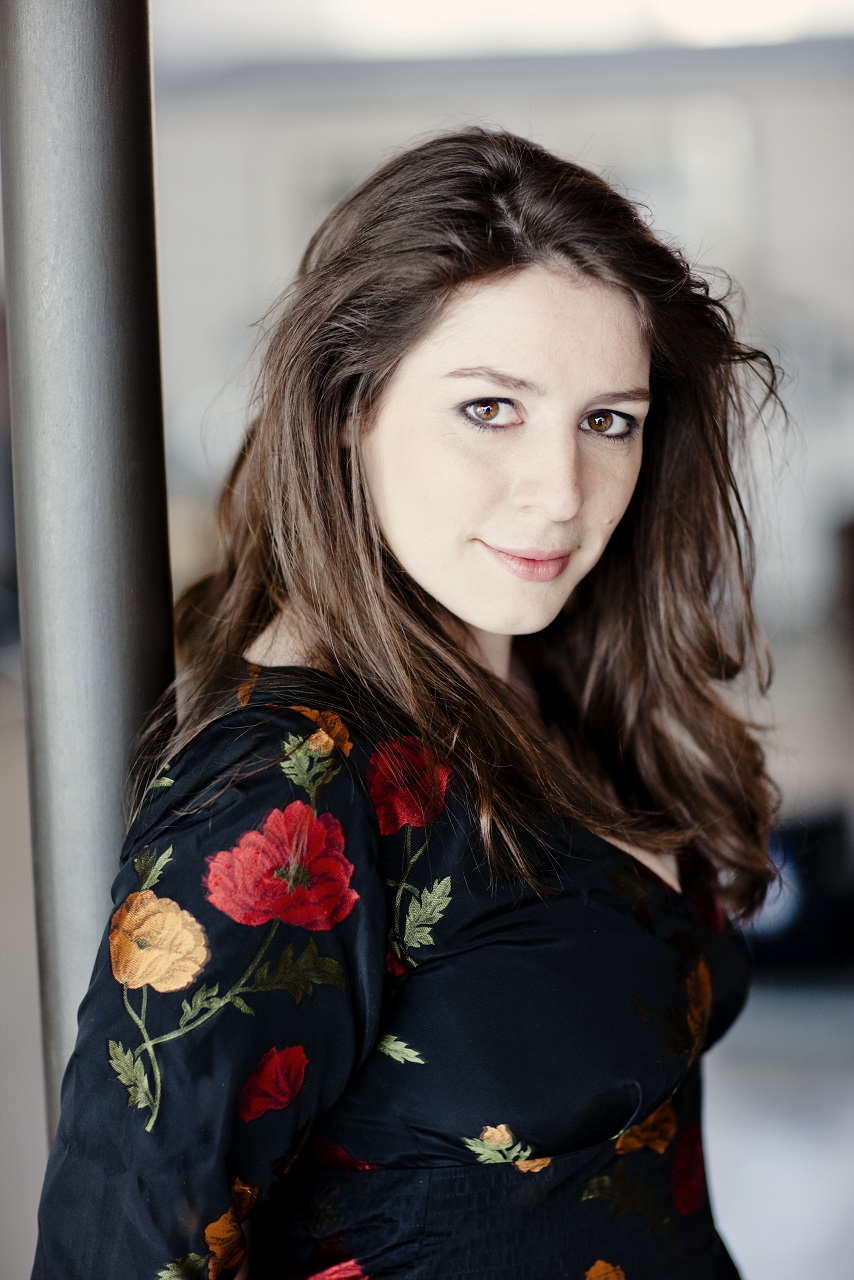
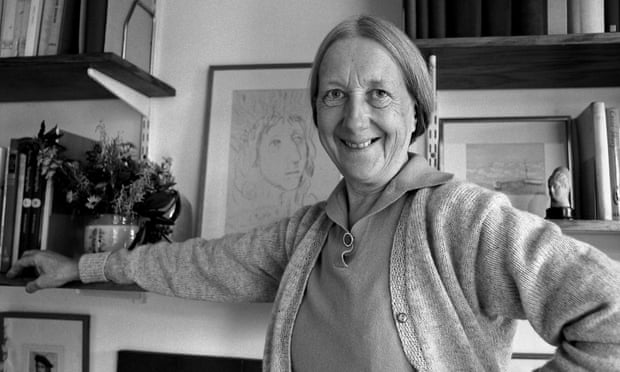
Elizabeth Watts (soprano, above), Julius Drake (piano, below)
Gustav Holst Calm is the morn Op. 16 No. 1 (1903-4), Persephone Op. 48 No. 1, Betelgeuse Op. 48 No. 12 (1929), The heart worships (1907), The Floral Bandit Op. 48 No. 6 (1929) Imogen Holst Weathers (1926), 4 Songs from Tottel’s Miscellany: Shall I thus ever long, As lawrell leaves (1944), 10 Appalachian Folk Songs: My dearest dear, The brisk young lover, I must and I will get married (1938, world première performances) Gustav Holst Hymns from the Rig Veda Op. 24 (1907-08)
Wigmore Hall, London, 3 January 2022
reviewed by Ben Hogwood from the online broadcast. Artist photos (c) Marco Borggreve
The songs of Gustav Holst have largely eluded British performers and concert audiences over the years, and a quick scan over retail sites reveals just the one recording in the last decade. The songs of Imogen Holst, meanwhile, are even more scarce, so it was doubly welcome that this imaginative recital from soprano Elizabeth Watts and pianist Julius Drake chose to pair works by father and daughter.
Holst senior was a composer capable of finding unusual stillness in music, as the Venus and Neptune movements from his orchestral suite The Planets testify. That talent extended to his songs, and we heard several examples where the composer took his time to set the scene, helped in extremely sympathetic performances from Watts and Drake.
Calm is the morn, a Tennyson setting, found a deep peace tinged with sorrow, though the high notes floated effortlessly by Watts were rather special. These contrasted vividly with the stately Betelgeuse, low in the range while contemplating the end of life – just as Neptune explored the boundaries of the living and the dead at the edge of the solar system. In theory Betelgeuse, with text by Holst’s good friend, the poet Humbert Wolfe, should be more effective with a male voice but Watts found the mysterious depths too. Drake’s tolling chords were the ideal foil, and indeed the pianist proved sensitive to every slight nuance in his scene setting, particularly the slow chorale figure of The heart worships. This was another setting that took its time but was all the more moving for it, with the soprano’s low range well controlled. The Floral Bandit, another Wolfe setting, flitted between quick piano figurations and a restless, high contour from the voice, deliberately uncertain in its direction. Meanwhile Watts’ fretful tones caught the urgency given to Persephone.
Holst was always a keen melodist, a quality that runs through Imogen’s music too. As her father did, she had a keen interest in folk melodies both from this country and further afield, and it was fascinating to compare Watts and Drake’s Anglo-American selection, sourced with help from the Benjamin Britten archive at the Red House, with the songs digitised for performance here.
Imogen’s writing celebrated the open air, its melodies often reaching for the sky. The first song Weathers revelled in its freedom, with a lovely pointed piano part to offset the folksy tune. Drake then enjoyed the trippy syncopations from the piano, combining with a bright soprano line for Shall I thus ever long, Watts keeping clarity in the quick moving words. The slightly elusive As lawrell leaves was next, before the three Appalachian folk settings, collected by Cecil Sharp, exhibited a powerful yearning quality. My Dearest dear kept the folk melody true but turned the melody beautifully. The brisk young lover could almost have been Gustav Holst himself, though Imogen’s piano parts felt more directly connected to the melody. There was an unexpectedly devastating beauty to the simple, sad, final verse, before I must and will get married took a lighter approach.
A rare performance of the complete set of Gustav Holst’s Hymns from the Rig Veda followed. It is remarkable to think these works were published in 1908, for they still sound forward looking today, written as they were after the composer made his own translations of the sacred texts.
Holst’s advanced harmonic thinking was distilled by Drake, while Watts took the longer and more complex melodic phrasing in her stride. The accumulating brightness of Ushas (Dawn) gave way to a stern Varuna I (Sky), where confession of sin was made and ultimately quashed. The sudden movements of Maruts (Stormclouds) came as something of a shock, with the flashing of sword blades, before Indra (God Of Storm and Battle) assumed a regal air with grand chords and a bold melody, strong as an ox under Watts’ delivery. Really impressive power from both in this song. Varuna II explored mysterious and ultimately deathly waters, the listener almost losing a harmonic centre, before Song of the Frogs charmed with its burbling activity. Vac (Speech) gave us another slow and concentrated song, while Creation was even more compelling with its haunting, mostly unaccompanied writing. Finally the wandering piano line for Faith found the soprano ‘rising in silent worship’.
This remarkable set of songs are not only harmonically adventurous but have words that are prescient for today’s climate and particularly the management of the Earth on which we live. Little did Holst know the way in which his work would be thought provoking nearly 115 years on. Watts recognised this, lending a lighter touch to her encore which was Imogen’s arrangement of Henry Carey‘s The Beau’s Lament, brightly sung.
This was a special concert, one of a kind – and a mention should be made for the quality of Wigmore Hall’s camera work, sensitive to both text and performers. Copyright restrictions may prevent them from doing so, but it would be wonderful to see Watts and Drake present this programme in recorded form, for they illuminated aspects of the Holst dynasty rarely glimpsed in the concert hall. Do watch it if you can.
Watch and listen
Sadly the Imogen Holst songs are not yet available in recorded form, but you can the selection from her father Gustav on the Spotify playlist below:
This is a playlist designed to look at the positive, to anticipate our emergence from what has been an incredibly difficult winter for many.
Although we are not out of it yet nature is doing its best, with green shoots making themselves known, birds and animals starting to flex their muscles, the nights drawing out a bit and the weather – hopefully – improving.
This selection offers a range of responses to spring from classical composers. We have the outright optimism of Schumann’s Spring Symphony, his first, alongside more mysterious responses to the season from Lili Boulanger and John Foulds. Spring doesn’t have to mean orchestral music, either – there are intimate thoughts from the piano works of Grieg, Sinding and Tchaikovsky, while rarely heard choral pieces from Holst and Moeran lend an exotic air.
We finish with two very different portrayals of spring, in the form of one of Johann Strauss II’s best-known waltzes, Voices of Spring, and an all too rarely heard tone poem by Frank Bridge, Enter Spring. There isn’t even room for Vivaldi’s Four Seasons!
Members of the English Sinfonia: Janice Graham (violin), Nick Bootiman (viola), Julia Graham (cello) Chris Hopkins (piano)
Vaughan Williams The Lark Ascending (1914) Bridge Miniatures – Book 2, H88 (1910) Coleridge-Taylor Piano Trio in E minor (1893) Holst String Trio in G minor (1894) Bax Piano Quartet in One Movement (1922)
St. John’s, Smith Square, London, 15 December 2020 (lunchtime)
Reviewed by Richard Whitehouse
Celebrating its 60th anniversary next year, the English Sinfonia will be remembered by older listeners for those valuable recordings of British music with Neville Dilkes (not least the first modern account of Moeran’s Symphony). Its current incarnation as ensemble-cum-chamber orchestra enables it to tackle a wide repertoire, and even though only the core personnel was featured in this afternoon’s concert, the works that were chosen offered a more than plausible overview of British chamber music composed across the late 19th and early 20th centuries.
Easy to forget that, long before his music assumed a more radical mindset, Frank Bridge was a composer of lighter fare. Hence those three sets of Miniatures for piano trio – classy salon music of which the second set moves from a soulful while never cloying Romance, via an infectious and decidedly scherzo-like Intermezzo, to a Saltarello with more than a hint of menace in its hectic dash. By comparison, the Piano Trio of Samuel Coleridge-Taylor tries a little too hard to impress. If this early piece is hardly the equal of such as the later Clarinet Quintet, its three compact movements are never less than eventful – whether in the vehement Allegro with its portentous opening, a Scherzo whose unremitting energy brings little respite, or Finale whose distinctive furiant rhythm sees the whole work through to a forthright close.
Unlike the above, Holst composed relatively few chamber pieces in his maturity. While his String Trio evinces little sense of what he went on to achieve, this does not lack for incident. Idiosyncratic, too, in that its compact and forthright opening movement is followed by one which, over twice as long, integrates a slow movement, scherzo and finale that add up to an unlikely if cohesive whole; the fugal intricacies of that final section a stern test of ensemble such as the present players despatched with evident resolve. Appreciably more characteristic is the Piano Quartet by Bax – its tensile single movement packing a wide range of ideas and moods into little more than 10 minutes; and following an essentially conflicted to triumphal trajectory recalling that of the combative First Symphony which immediately preceded it.
Opening this afternoon’s programme, Janice Graham gave an affecting account of The Lark Ascending in the version for violin and piano first heard in public exactly 100 years ago. Now the orchestral version has become ubiquitous, this chamber guise can feel almost a reduction, yet the lucidity of its formal layout becomes even more explicit, and the understated poise of its piano part – as rendered by Chris Hopkins – belies any doubts as to Vaughan Williams’s limitations when writing for the instrument. An eloquent start to an enterprising programme.
Holst
In the Bleak Midwinter H71 (1904)
Four Old English Carols H82 (1907)
Two Carols H91 (1907/16)
Christmas Day H109 (1910)a
Lullay my Liking H129 (1916)
This Have I Done for My True Love H128 (1916)
Of One that is so Fair and Bright H130 (1916)
Bring us in Good Ale H131 (1916)
Three Carols H133 (1916/17)a
A Dream of Christmas H139 (1917)a
Wassail Song H182 (c1931)
Scherzo H192 (1933, arr. Brasier)**
Four Organ Voluntaries HApp8-11 (1890/1, transc. John Wright)*
*John Wright (organ); **Richard Brasier, **Tom Bell (organ duet); Godwine Choir / Alex Davon Wetton, Edward Hughes with a Douglas Tang (organ); b Charlotte Evans (oboe); c Alison Moncrieff-Kelly (cello)
EM Records EMR CD0062 [82’42”]
Producer / Engineer Myles Eastwood
Recorded 13 & 14 July 2019 at St Jude-on-the-Hill, London; **22 August 2019 at Hereford Cathedral
Written by Richard Whitehouse
What’s the story?
EM Records continues its enterprising release schedule with this anthology of seemingly all Holst’s choral music written for or with Christmas in mind, along with first recorded outings of original pieces plus a transcription for organ that in themselves explain this album’s title.
What’s the music like?
As incrementally wide-ranging as might be expected from a composer whose never wore his distinctive personality on his sleeve. Earliest of the choral works is also the most famous – a setting of In the Bleak Midwinter that will be heard the Christian world over these next few weeks (no comment as to a preference between this and Harold Darke’s setting!). Intricately wrought in rhythm and texture, the Four Old English Carols exude a luminously Medieval atmosphere, as also the Two Carols with their modally evocative harmony. Most ambitious among these earlier items, Christmas Day alternates before superimposing its four carols in this heady and engaging medley – of which Holst’s subsequently dismissive view says more about his constantly changing stylistic preoccupations than any intrinsic failing of this work.
Almost all the latter choral pieces date from around the time of Holst’s move to Thaxted and the festival he initiated there. The call-and-response of Lullay my Liking retains its enduring charm, but how surprising I Saw Three Ships has not previously been recorded, its vivacity as appealing as the purposefulness of Personent hodie or gaiety of Masters in this Hall. Holst’s view that Of One that is so Fair and Bright ‘‘should be done simply like a good village choir’’ might give pause for thought, its rhythmic flow as exacting as the cumulative vocal weave of This Have I Done for My True Love or the accelerating part-writing of Bring us in Good Ale. There is an almost impressionistic allure to the little-known A Dream of Christmas, with the Wassail Song a reminder of the ribald element that often surfaces in this composer’s music.
Even Holst’s admirers are likely unfamiliar with his output for solo organ, if only because the four voluntaries in question have gone unheard since the teenage composer tried them out in his Cheltenham schooldays. Modest in scope, the first three are an intriguing parallel to what his contemporary Ives was coming up with across the Atlantic – thus the resolute March, the whimsical Allegretto Pastorale and the capering Postlude. Much more ambitious, the Funeral March is an animated processional whose opulent climaxes and quirky registrations admit of more personal traits. From Alpha to Omega – the Scherzo being the only movement realized of the symphony upon which Holst was working at his death, arranged here for organ duet by Richard Brasier such that its contrapuntal dexterity and fluid evolution are acutely conveyed.
Does it all work?
Absolutely. Holst was a master of many guises; his Christmas output is unfailingly evocative for all its technical demands. It helps that performances by the London-based Godwine Choir are so attentive to this music’s spirit, as are Brasier and Tom Bell in the Scherzo transcription.
Is it recommended?
Very much so. The Hampstead and Hereford venues are ideal acoustics, and the booklet note includes an overview of choral items by Chris Cope – Chairman of the Holst Society, whose extensive recording programme will result in much unfamiliar music being brought to light.
Listen and Buy
You can discover more about this release at the EM Records website, where you can hear clips from the recording and also purchase.
Erland Cooper is very much a ‘glass half-full’ musician. If anything, the glass is often full to overflowing as he has kept busy with creative projects through lockdown, up to and including a chance to finally realise the Barbican show he had planned for June.
Although he resides a long way from his native Orkney, both on a physical and spiritual level, Cooper finds solace and inspiration in his Hoxton studio. “It’s been an absolute safe haven”, he says gratefully. “When lockdown was very acute, I would still come over at 6-7am, before anyone was up, and not meet a soul. It’s obviously a bit different now, but it’s just been great, and I’ve been able to get under the fingernails of a few projects that I would perhaps not have had time for before.”
His third album, Hether Blether – the concluding part of an Orcadian trilogy begun by Solan Goose and continued by Sule Skerry – was released at the end of May. This was just as it was dawning that the UK tour, scheduled for September, was going to become a casualty of the restrictions brought about by the Coronavirus pandemic. He remains philosophical, however. “Live performance isn’t the be all and end all for me, it’s part of the journey, and literally part of the transportation to Orkney, when you’re up and down the country – in the Barbican Hall for instance. At the end of last year it came into realisation that there is a whole new enjoyment to bringing to the audience a room, a space, a ferry that takes you up to the North Sea and back again. That became a real process, but I’ve forgotten about it to a point. We were starting to put that into place, but that tour wasn’t until September anyway. Live music takes a lot out of me, and I tend to put it to the back of my mind until I’m ready to give it everything, so I hadn’t thought about it a great deal.”
In terms of the record, Erland had already let it out into the wider world. “You know a record is truly done when I play it to my close friends”, he says. “That’s when I feel like something’s done, and finished, but it’s taking it that bit further when you actually give it out to the world, and all of a sudden it’s getting reviewed – good or bad, it doesn’t matter – and it’s getting listened to. I got a message from someone who said they were trying to introduce music to my daughters, and trying to get them to sleep, a little bit earlier. Every night, about 15 minutes before they go to bed, they play one of my records back to back, and they said it sets the tone but it also gets them asking questions about classical music and electronic music. I just thought, you couldn’t plan that! There’s nothing you could try and do to plan that. So it really feels finished when it goes out the door.”
As with Solan Goose (air) and Sule Skerry (water), Hether Blether (land) is a deeply personal piece of work. “It finds some of the themes that we’re all feeling here during lockdown – those of community, ‘alone’ spaces, the people we spend our time with. Those are all feelings that are very much in this final record for me, personally. It is certainly a zeitgeist of it feeling like a good time to reflect and think about transportation, real or imagined. In a nutshell it was definitely surreal, but I also felt like it was important to just get it out. That was a good thing. Like a gannet!”
We agree on the importance of new music at this time, a source of positive energy. “I’ve really been enjoying the new records from Ghostpoet and Nadine Shah”, he says, “along with some classical releases, and going back to things I perhaps hadn’t heard before – Peter Gregson’s work, for example – and just going into things. Everyday when I come into the studio I listen to a new record, whether it’s a score by Alex Somers, or Julianna Barwick. It’s a constant, it’s a great thing.”
He was careful to control the noise around Hether Blether’s release in light of the pandemic, and found new positives from the experience. “When I was thinking about promoting the album I thought it was important not to shout about it, and just to have a break for a month or so. I think that was absolutely the right thing to do, and that’s the only thing I probably would have changed about the behind the scenes process. I quite enjoyed looking at it in a different way. It has been a great time for music, hasn’t it?”
We move on to discuss a mutual love, the Wigmore Hall – and its success in streaming live concerts, giving an indication of the live music we all miss. “That hall is very important to me”, he gushes. “I can’t wait to go back. I should take a little hip flask the next time I’m back there. I’ll do it very respectfully!”
Talk turns to a much wider space, and the video accompanying Skreevar, second single from Hether Blether. In it, Cooper dashes along the street in Orkney before jumping, fully clothed, into the North Sea. “I had a lot of e-mails from people saying ‘did you jump?’ and I had to say, ‘Did you watch the video to the end? Do you think a wee record label can afford to fake that?!’ We did one take, and that was it! I don’t know if I told you but when we did it I ran up to the edge three times. The first time was to judge how long it would take, the second time was so that Alex (Kozobolis), who was videoing could test running behind me, bearing in mind he had to do that with a camera and not fall in the sea as well, and then the third time.”
The shoot created quite a stir. “A couple of days before we did it we had to plan the tide, so we had that right. When we were practicing we had to stop traffic several times, and then there was a whole group of local folk who effectively started to egg me on, and then a bunch of tourists who were shouting like this sort of thing happens every day! Then, this really young couple were on the peer to the left, and they were oblivious to what was happening. They sat down where George Mackay Brown and I like to sit and reflect, and they must have sat down to have their supper and a glass of wine or something, after the second take. They got the fright of their lives when this six foot three, gangly bloke in a nice jacket jumps off the peer! They were just like, what? That was a highlight. It was very cold by the way, it didn’t look like it but it was!”
Watching it from the seclusion of a locked down living room is strangely liberating. “It was a great memory. I was saying to the guys at the time, I did it when I was 16-25, I’ll do it again when I’m middle aged, and then again when I’m 70. I’m only doing it once though, to get it right! It was only about a metre deep, so you would have reached the bottom. I’ll tell you what though, I’ll never forget that as long as I live! How often can you say that to yourself, really truly? That was what it was for, to create an adult memory as strong as a childhood one.”
Erland has already performed at the Barbican in a sense this year, taking over the Centre’s Instagram page for a week and projecting films made by Alex Kozobolis to his own albums across the estate. “That was so interesting for me. I don’t know if you ever used to develop film, where you effectively learn the virtue of patience – even just posting it off to the chemist. You don’t know what 35-40 pictures you’re going to get back, and there’s something about projecting digital footage that had come all the way from Orkney onto something as iconic as the Barbican Brutalist architecture. It felt like a slow development of film, and I really enjoyed that. I felt that Margaret Tait, the Orcadian experimental film maker, would be proud of that. Using the technology we have now, a portable projector, we were reframing work done by hand as a reference for true escapism. I know the question has come up for a lot of people, asking themselves where they truly want to live in the future, because of how limiting it is living in the city.” The duo enjoyed their endeavours. “It was really good for Alex as well, he really enjoyed the process, and I got to enjoy the process of curating some of his photos of the Barbican which again was a joy.”
Lockdown has brought with it a deep appreciation of the natural world for many people, and this is a key element of Erland’s music and life. “I think noticing that everyday joy and magic from nature has been so prominent up until now because of less noise pollution. It shouldn’t take a pandemic for people to value the great outdoors, but I’m glad people are taking notice. I think it’s like anything in life, if you take away the liberty, that’s when you truly value it. It’s very sad really. I hope it’s a wake-up call, a consistent driver for people.”
He has remained in close contact with his home island. “It’s been lovely. My folks were down in England, believe it or not, on a very rare potential holiday to Spain. I really feel for them, because they don’t really go away that much, and they’re both now retired so were really looking forward to it. There’s something about that generation when the pandemic first hit which was quite cavalier, which very swiftly changed because they’re very intelligent people! We agreed that going back to Orkney made sense, and so they drove through the night and got to the ferry crossing just before they closed – it was the last one for the night and before they closed for lockdown!”
Now their existence is completely independent from the mainland. “My dad said that lockdown for them isn’t much different from daily life. They have a cup of tea with the sunrise, and go for a walk or two a day. For them it was really good to get home. I’ve become friends with a few other people posting on Instagram, and I’ve been drawn to them. I’ve found it a great joy. I have one friend who is a wonderful artist, she sent me a little Orkney rescue package, some food, pieces of fudge and bits of art. I must admit I ate everything the day it arrived! I feel very connected with it. Also, you know very well that these records that I have been making are ultimately a tool for someone who isn’t there, and would go off with their books and tape recorders, and take snippets back with them, to try and capture an essence of it.”
Cooper has a number of musical irons in the fire. “I am using a different approach for the ambient ‘sister’ to Hether Blether, for as you know there has been an ambient companion to each of the albums so far, Sea Change and Murmuration. The final record that will be a companion to Hether Blether is called Landform. I’ve shared my work with Marta Salogni, the Italian producer. She’s a great lover of analogue production and recording, using tape machines as an instrument, which I enjoy too. Instead of throwing ideas around I thought I might put into three folders, titled, air, sea and land, and just put sounds into them, a whole collection of tones out of Hether Blether, drop them into the three folders and say there you go. It’s a bit like pick a card, any card – pick a few, and then break up the elements of the final record. It is about the community but it pulls together elements from the first two albums as well, so just putting the tones into three folders and asking her to pick what she wants when she wants, at no pace, and no urgency. That’s something I’ve started. I also have something else which is quite ambitious, but I will say no more at this stage!”
It was perhaps inevitable that Cooper would be busy, given his work ethic. “I think when you give something away, I just have this hunger to keep exploring the things that excited me the most during the process of creating and honing in on that. You’ll probably get a sense of what I mean. It’s a culmination of learning, developing and writing wrapped up together, so I’m working on that. “
The calm of the studio is helping creativity. “It is, and I’m very fortunate to have it. The lockdown is the only time I’ve ventured into watching movies there. I tend to just work in the studio but I’ve had a few 18-19 hour days in there. It’s not just a working environment, sometimes it can become like a cinema! I tell myself that I can only watch a film in there if it has an exceptional score.”
Erland Cooper performs with members of the London Contemporary Orchestra at the Barbican on Saturday 10 October, with images and video content from Alex Kozobolis. The concert can be seen either in person or online, with tickets available from the Barbican website.




 Interviewed by
  Cooper has a number of musical irons in the fire. “I am using a different approach for the ambient ‘sister’ to Hether Blether, for as you know there has been an ambient companion to each of the albums so far, Sea Change and Murmuration. The final record that will be a companion to Hether Blether is called Landform. I’ve shared my work with Marta Salogni, the Italian producer. She’s a great lover of analogue production and recording, using tape machines as an instrument, which I enjoy too. Instead of throwing ideas around I thought I might put into three folders, titled, air, sea and land, and just put sounds into them, a whole collection of tones out of Hether Blether, drop them into the three folders and say there you go. It’s a bit like pick a card, any card – pick a few, and then break up the elements of the final record. It is about the community but it pulls together elements from the first two albums as well, so just putting the tones into three folders and asking her to pick what she wants when she wants, at no pace, and no urgency. That’s something I’ve started. I also have something else which is quite ambitious, but I will say no more at this stage!”
 Arcana.fm