Talking Heads – Helen Grime

by Ben Hogwood

Helen Grime

In the classical music calendar, summer effectively begins with the start of the Aldeburgh Festival. This year’s model – the 76th running of the Suffolk festival – comes prefaced by a line from Shelley:

And, hark! Their sweet sad voices! ‘t is despair
Mingled with love and then dissolved in sound.

At the heart of this year’s festival are four featured artists – tenor Allan Clayton, violinist Leila Josefowicz and composers Daniel Kidane and Helen Grime. Scottish composer Grime, currently living in London, joined Arcana for a chat to talk about the range of her compositions in the festival this year, and the close link she enjoys with its audience and organisers.

Her first experiences of the festival date back to 2005, when she was on the Britten Pears Advanced Composition course. “I was studying on that and Colin Matthews was there, and I went back in 2006 to hear the performance of the piece I wrote while I was there. I also played in the chamber orchestra for the War Requiem on a course, and I played in Britten’s Nocturne as well, which was amazing. Those were the first experiences, and I also went to an opera writing course as a composer, which would probably have been 2006. Then in 2009 I wrote a piece called A Cold Spring, for chamber ensemble. It was a joint commission with Aldeburgh Music, the Birmingham Contemporary Music Group and the Sue Knussen Trust. The piece was in the same program as an Elliott Carter premiere (On Conversing With Paradise). He was there, and it was an amazing time.”

Carter is a composer Grime has always admired, and she had met him the previous year. “I was a fellow in the Tanglewood Music Center, and it was his 100th birthday year. They have a festival of contemporary music every year, and that year it was completely devoted to Elliot Carter’s music. As composers we had the opportunity to go to all the rehearsals and concerts, and it was a chance to immerse yourself in a composer’s work – lots of his chamber music but also the orchestral works. This was the time that I really dived into his music and were able to meet him and ask him questions. It was an incredible point in history to think back to really, and he had so many amazing things to say. He was able to go back in time and talk about his time studying in Paris with Nadia Boulanger, and moments in jazz bars, little things that maybe you haven’t read in a book. Hearing that directly from the composer is a fantastic experience!”

Helen lived in Edinburgh initially but moved to London for studying, and has stayed. Her music still carries parallels to her Scottish roots – and these are evident in Folk, premiered by soprano Claire Booth with the BBC Scottish Symphony Orchestra under Ryan Wigglesworth in Glasgow. “Scotland still feels like home”, she says, “and I’m so fond of that orchestra. I’ve worked with them a fair bit over the years, and it was wonderful to be able to work with them on the premier of Folk, with Ryan Wigglesworth, and of course, Claire.”

The piece will receive a second performance at the Aldeburgh Festival, with the Knussen Chamber Orchestra conducted by Wigglesworth. “I’m excited now for Ryan to do it again with a different with a different group. The piece is rooted in lots of folklore traditions. Zoe Gilbert, who wrote the libretto, is particularly influenced by Manx folklore, but the stories are rooted in different storytelling traditions from different places. She based the libretto on the stories in her book, Folk, so when you read them, you feel the resonance with stories we already know and have known since childhood. She’s subverted lots of roles, but there’s definitely that kind of connection with Scotland and folklore, so I wanted to have that connection in the music as well.”
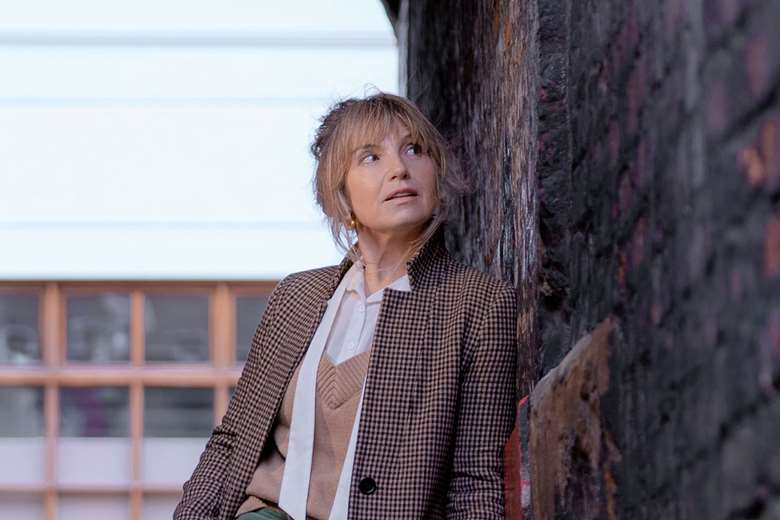
Arcana was fortunate to interview Claire Booth (above) just before the premiere of Folk, and Grime speaks warmly of her dedicatee. “She is a ball of energy! We’re very different in that way, but we get on very well. She is incredibly talented but also interested in many things. She found the book, and we both loved it, and so she approached Zoe. Obviously, I’ve known her work and singing for years. but we haven’t been working together until last year – although this project was brewing before Covid and then took a while to get it together. I don’t think it’s going to be the last time we work together, so I’m really excited about that. She’s an incredible talent but she brings such a personality to the piece, and she can just do anything. It’s very virtuosic, vocally. In Aldeburgh it will be with a small orchestra, so it will be interesting to hear that, in the Snape hall – but also with the surroundings, it’s made for that. When you’re there, and you’re amongst the reeds, it’s a magical place. You can see so far there, and whenever I’m there it always seems to be really clear skies. That time of dusk is particularly amazing.”

As a featured composer, Grime is presenting a varied body of work for the festival. “It is very satisfying. I’ve written a fair bit of music now, and I’m really happy with, for example, my Missa Brevis happening on the first Sunday. I’m really excited to hear that, as couldn’t go to the premiere in Edinburgh. To have these pieces happening in different locations around Aldeburgh is really special, with chamber music as well as bigger pieces. There is also another premiere, a piece I wrote during lockdown called Prayer which I wrote a while ago, which, again, I haven’t seen in a live performance. The Britten Pears Contemporary Ensemble are going to do that, a piece that I wrote during lockdown. It was recorded but not performed live, with the performers doing their bits separately, and Dame Sarah Connolly singing her bit. It’ll be great to be at an actual performance of that as well.”

Both of Grime’s string quartets will be performed in one recital, from the Heath and Fibonacci Quartets. They hold great personal significance for her. “It’s actually quite strange with the string quartets, because I wrote both of them partly while being pregnant. The first one was written in 2013, which was when I had my first son, so it’s weird that I then was writing another string quartet when I was pregnant with my second son! I was writing it at the beginning of lockdown, when we didn’t really know if things were going to be cancelled that summer. I was stressed out because I still had to meet the deadline, which was probably never going to actually happen – and it didn’t in the end, but I still needed to write the piece. For a lot of people that time they had lots of time to compose, but because everything was cancelled and you had a child who was then not at school, you suddenly didn’t have any time to work either, and there was no childcare of course. It was very intense, and I think the music is very intense, apart from the last movement, which is not intense in the same way and is much more of a release.”

Does it bring back vivid memories when she hears it? “Yeah, I can sort of remember how I felt, but it’s really difficult be in that moment. The Heath Quartet, who premiered and recorded that piece, I just love to hear them play, they made a brilliant recording of it and gave the most amazing premiere. So I can’t wait to hear them play it again, and to hear the other quartet with the Fibonacci Quartet, who I haven’t heard play before. It will be really exciting to hear the two pieces together and on the same program. They are sat between Beethoven and Britten, which I’m so happy about – hopefully they’ll somehow hold their own in amongst all of that! That concert is in Orford Church, so again a different venue which is so nice.”

It may seem an obvious question, but does Britten continue to be a constant presence at the festival? “Yes, and I think that’s the way it should be. I was in Aldeburgh last year, and Claire was there too, because she was coaching the young artists course. I paid my respects to Britten and Pears, at their graves. That line of history is so moving for me, and it’s something I hold close. I love Britten’s music, and it’s always going to be important to me, and that kind of continuation and line of British music is a beautiful thing. Having the opportunity to be a featured composer and to be surrounded by that is it’s a huge privilege.”
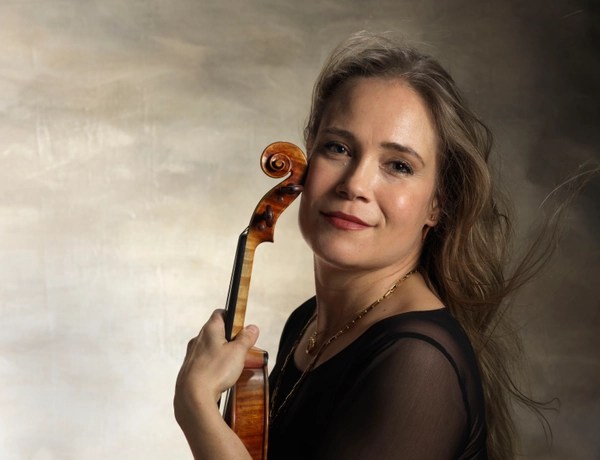
The featured artists and composers are chosen with typical care, placing Grime alongside violinist Leila Josefowicz (above), soloist in the composer’s Violin Concerto with the BBC Symphony Orchestra. “I’ve waited a long, long time for the UK premiere of concerto”, she says. “I wrote it for Malin Broman, an amazing Swedish violinist who used to be based in London and who premiered it in 2016, and then Leila took the piece on. She was supposed to be doing the UK premiere in 2020, but she’s played it a lot – in Amsterdam and in Finland. This does feel like the perfect moment, though, because Leila has that real connection with with Oliver Knussen. It’s kind of perfect that the premiere is happening in Aldeburgh. She’s an incredible artist, so the fact that we’re both featured artists is brilliant. I’m really, really excited about hearing Allan Clayton singing, and also Daniel Kidane’s pieces. We have quite a few shared concerts.”

Mention of Knussen leads us to talk about another highly influential composer, a clear influence on Grime both personally and professionally. “I have loved his music since the first time I heard it”, she says. “The first piece I heard was Ophelia Dances. My teacher at the time was Julian Anderson, and he introduced me to his music at the Royal College of Music. Every note is the right note, it’s just so beautifully crafted and exciting and powerful and enchanted.”

I was meant to meet him at the Britten Pears composer’s course, but when I was a fellow in Tanglewood he was out conducting, and he gave some masterclasses. He heard my music, and we got on well. Shortly after that, he conducted a short orchestral peace of mine called Virga, which I wrote as part of the London Symphony Orchestra scheme Sound Adventures, which is now known as the Panufnik Legacies. He was a real supporter of my music. I wrote Night Songs, which is also being done at Aldeburgh, for his 60th birthday celebrations in 2012. I really hold that dear, and I still listen to his music most weeks and days. A brilliant musician, composer, and supporter – and I think many musicians and composers feel the same way. My path would not have been the same at all without meeting Ollie.”

Looking ahead a little, Grime has an album of chamber works due for release on the Delphian label in August, a fascinating collection of works performed by The Hebrides Ensemble. “It’s coincidental to Aldeburgh, but great. The Hebrides Ensemble are one of those amazing groups who’ve been so supportive of me over the years, and they’ve given different performances. To have this portrait CD is fantastic, with a string sextet Into the Faded Air from 2007 right through to Braid Hills, a horn duo I wrote for St Mary’s Music School to celebrate their anniversary in 2022. I can’t wait for it to come out.”

Grime also acknowledges the passion and commitment of Delphian to composer albums such as this. “It’s really difficult to get these projects off the ground today, and very expensive, obviously. The commitment to new music in Delphian is absolutely brilliant, there was a wonderful CD the Hebrides Ensemble did a few years ago on Stuart MacRae, and there was a great collection of Judith Weir.”

With these projects coming to fruition, it is great to report Grime’s composition continues apace. “I’m coming to the end of my teaching turn at the moment, which means we get a bit of time for some holidays to compose. I’m writing a horn concerto at the moment, for Alec Frank-Gemmill and the Gothenburg Symphony Orchestra, so I’m completely immersed in all things horn at the moment! It’s a big piece, a big project, but I like that. I like to get my teeth into something. There are lots of various things on the horizon, too, but that’s the main thing. I’m more of a one piece at a time kind of person. Directly before this, I wrote a song cycle, Bright Travellers, which was premiered at the Leeds Lieder Festival earlier this year by Louise Alder and Joseph Middleton. I’ve been working with a lot of texts, and it’s been great in the last couple of years to work with living writers, that’s quite a new direction for me which is exciting!”

For more information on Helen Grime’s music at the Aldeburgh Festival, head to the Britten Pears Arts website
Arcana’s best of 2022

by Ben Hogwood

How has 2022 been for you? It has been a difficult year for so many, and I don’t know about you, but I find music takes on an even more important part of our lives when the going gets tough. This year we have been able to rely on a consistently strong line of releases, giving us extra resolve and relief from the day-to-day.

Arcana has reviewed a lot of music this year. What we tend to do on these pages is concentrate on music and artists that we know are likely to be good – and we assemble our thoughts on them so you can then make your own investigations. Classical music is usually our starting point, but from there we travel afar to the outer reaches of electronica, dance and contemporary music.

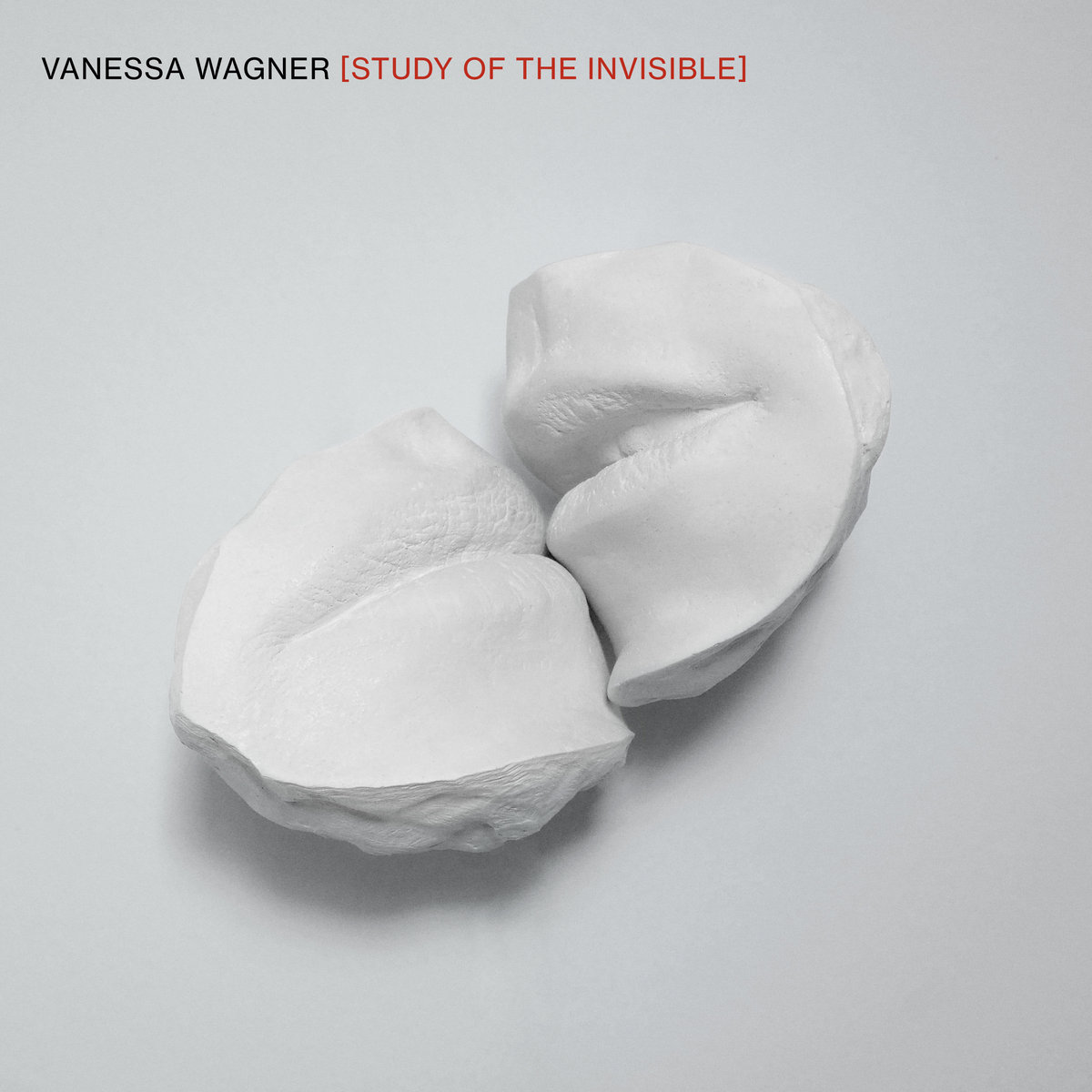
It was another strong year for electronic music of an ambient dimension. Switched On is the area of Arcana concentrating on new music in this area, and without putting too many musical names on these albums, we really enjoyed a good deal of slower stuff. Starting with a single instrument, Vanessa Wagner’s Study of the Invisible (above) made an understated but lasting impression, particularly with Caroline Shaw’s Gustave Le Grey at its heart. Vanessa plays with poise and expression, and this wonderfully curated selection worked so well.

Meanwhile long term favourite Erland Cooper charmed with his pure, still music written to soundtrack the Superbloom installation at the Tower Of London, Music For Growing Flowers (above). Speaking of earthy sounds, Sonic Cathedral gave us twilight wonders from Pye Corner Audio and, with a little more country in the mix, Sunset Dreams from Mark Peters.

At the hottest part of summer, Arthur King’s music was extremely evocative in Changing Landscapes – as was that of Deepchord, making a return to the long player from Detroit with Functional Designs. Steve Davis, meanwhile (yes, that Steve Davis!) was busy enhancing his reputation as part of the electronic trio Utopia Strong and their excellent album International Treasure

More studied electronica gems should also be shouted from the rooftops – we are lucky to have British artists of the calibre of Bibio, Gold Panda and Plaid, each returning with excellent new albums. Meanwhile Clarice Jensen took her cello as a starting point on new album Esthesis, making music of great colour and descriptive power to counter the onset of lockdown. Also facing the elements head-on was Daniel Avery, whose new album Ultra Truth was a powerful statement indeed:

There were some very strong releases on the classical side of things, as record companies dusted themselves down and started to include orchestral recordings again on their release schedules post-pandemic. Leading the way were the Sinfonia of London under John Wilson, a throwback to the golden age of orchestral recording in their challenging schedules for Chandos. With Hollywood, British and French music all covered, one in particular stood out, with the orchestral music of John Ireland given its rightful place in the spotlight:

Speaking of French music, a charmer from the Orchestre National des Pays de la Loire and Pascal Rophé proved the ideal hot weather soundtrack as it explored orchestral versions of Debussy keyboard works. Their accounts of the Petite Suite, La boîte à joujoux and Children’s Corner were full of colour and character.

This year saw the 150th anniversary of the birth of Ralph Vaughan Williams, one of the finest British composers of the 20th century. Somm Recordings made a memorable tribute by way of the undervalued string quartets, these lovely autumnal works given vibrant performances from the Tippett Quartet.

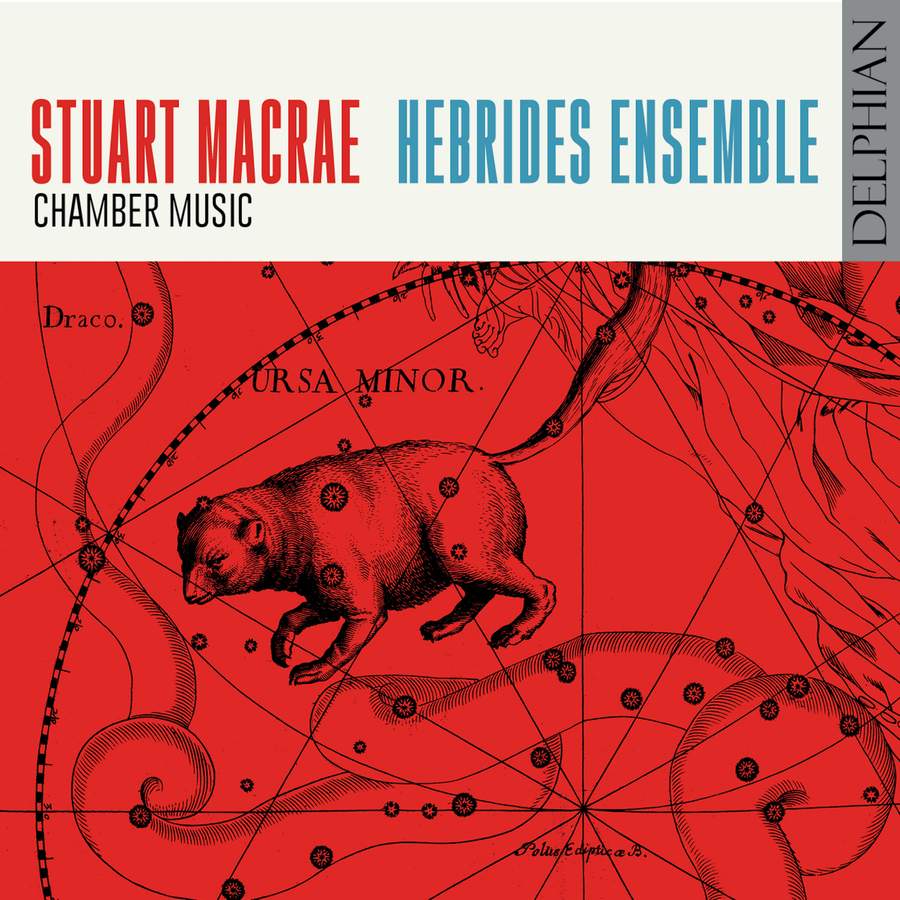
Contemporary classical music put in some very strong appearances this year, and few more than Stuart Macrae, showing off the quality of his chamber music on an album from the Hebrides Ensemble on the excellent Delphian label. We enjoyed a number of online and in-person concerts from the English Symphony Orchestra and Kenneth Woods, which were capped by an outstanding recording of Adrian Williams’ Symphony no.1, a commendable raising of the flag for new British music

During 2022 we made a couple of visits to the outskirts of jazz, in the company of super group Flocktheir excellent self titled debut – and a triumphant and experimental return from Szun Waves.

On the dancier side of things, Heavenly Recordings excelled themselves this year with no fewer than six collections of remixes! We loved the first two instalments, which acted as a prelude to the utterly essential third and fourth volumes which brought together remixes from the much missed Andrew Weatherall.

The Haçienda celebrated 40 years since its inception with a handsome package from Cherry Red, while the best DJ mix honour goes to Cinthie – her contribution to !K7’s DJ Kicks mix series really was a thing of pure dancefloor enjoyment. So, too, was a John Morales-edited compilation devoted to the art of Teddy Pendergrass, vocalist for Harold Melvin & The Blue Notes.

Cultured music for the discerning dancefloor came our way from Au Suisse, a welcome reunion for Morgan Geist and Kelley Polar, and also from Hot Chip, who further explored their emotions with an excellent and heartfelt eighth album. Moderat, returning after a long absence, went more for the jugular with the thrilling More D4ta

With all that said and done, what would an Arcana album of the year look like? Something like this…the most listened to long player of the year in these parts, Fleeting Future – a vibrant offering from Akusmi which channelled all sorts of intriguing influences into something wonderfully original:

We will have a few more reviews to come over this week – but for now, we thank all our readers for your visits and wish you a happy, peaceful and regenerative Christmas holiday season. Oh, and a Happy New Year for 2023!

On record – Hebrides Ensemble – Ursa Minor: Chamber Music by Stuart MacRae (Delphian)

macrae

Joshua Ellicott (tenor), Marcus Farnsworth (baritone) / Hebrides Ensemble / William Conway (cello)

Stuart MacRae
I am Prometheus (2018); Dark Liquid (2020); Ixion (2013); cladonia bellidiflora (2014, rev. 2020); Tol-Pedn (1999); Lento in memoriam Peter Maxwell Davies (2016); Ursa Minor (2020); fthinoporinos (2001); Diversion (The room behind the room behind the room) (2020); Parable (2013)

Delphian DCD34258 [76’46”]

Producer / Engineer Paul Baxter

Recorded 12-14 August 2021, Queen’s Hall, Edinburgh

Written by Richard Whitehouse

What’s the story?

A timely follow-up to the NMC release of 15 years ago, this Delphian collection surveys over two decades of Stuart MacRae’s output – indicative of a personal and incrementally evolving idiom such as reaffirms his status among the leading European composers of his generation.

What’s the music like?

Most substantial is Ixion, the luckless figure from Greek mythology represented in a sequence of eight ‘moments’ where the motifs heard at the start variously combine and evolve without any underlying progress – as befits the motion of an endlessly rotating wheel. A fine addition to the repertoire for clarinet trio, as is cladonia bellidiflora for the even more restricted one of violin and cello as it gradually fuses these instruments into an inextricable, lichen-like entity. Inspired by a Cornish headland and alluding to Byrd, the early Tol-Pedn conjures a seascape the more potent for its eschewal of mere realism, whereas the recent Ursa Minor evokes that constellation in comparable terms of incrementally accruing change – amply reinforcing the consistency of MacRae’s musical idiom whatever those developments that have taken place.

A further side of MacRae’s creativity is here conveyed by the shorter pieces. Emerging out of lockdown, Dark Liquid reimagines the valedictory bagatelle associated with Silvestrov, while Diversion has a capricious or even insouciant playfulness. Lento in memoriam Peter Maxwell Davies evokes that composer’s lesser-known piano miniatures in poignantly restrained terms, while fthinoporinos (Greek for ‘autumnal’) is a transcription of the second movement from MacRae’s Violin Concerto (recorded on NMCD115) and an eloquent memorial to Xenakis.

Framing this collection are two vocal works. I am Prometheus uses the composer’s own text to evoke the Titan, neither Man nor God but invested with those attributes – whether good or bad – of both, while he endures a punishment meted out for what MacRae aptly describes as ‘‘his exceptionalism’’. Unfolding from the anger of captivity to the hopelessness of solitude, its musical trajectory is as arresting as it is inevitable – which might also be said of Parable. This stark setting of Wilfred Owen’s poem is appreciably different from that of Britten in the ‘Offertorium’ of his War Requiem, not least in the way the vocal part threads its way through an ensemble where the range of gestures affords a graphic evocation of the biblical story and its fateful ‘distortion’: one whose outcome can only be the collapse into mindless repetition.

Does it all work?

Yes, through MacRae’s imaginative response to the subject-matter at hand as well as an acute sense of timbre and texture in whatever context. It helps when the performances are so finely attuned, a reminder of the close working association between this composer and the Hebrides Ensemble. The contributions from Joshua Ellicott and Marcus Farnsworth are no less ‘inside’ their respective pieces, while the recording is fully up to Delphian’s customary high standard. Nor are the annotations by Tim Ruthford-Johnson found wanting in perceptiveness or insight.

Is it recommended?

Indeed, in the hope further releases of MacRae’s music from this source will be forthcoming. Maybe one or other of the operas that have dominated the composer’s output in recent years will become available on DVD? In the meantime, this Delphian portrait is required listening.

Listen

Buy

For more information on the disc you can visit the Delphian website – and to buy visit the Presto website To read more on the artists, click on the names of Joshua Ellicott, Marcus Farnsworth, Hebrides Ensemble and William Conway. Meanwhile a site dedicated to Stuart MacRae can be accessed here

Talking Heads: Joseph Phibbs

joseph-phibbs

Interview with Ben Hogwood

This year in the Summer at Snape series, Britten Pears Arts has been presenting premieres of new arrangements of works by Benjamin Britten. The last in the series will be composer Joseph Phibbs’ arrangement of Britten’s landmark orchestral song cycle Our Hunting Fathers for the chamber forces of the Hebrides Ensemble and soprano Elizabeth Llewellyn. Described by Britten as ‘my real Op.1’, the piece represents the full flowering of his creative relationship with W.H. Auden, who supplied the texts for the three middle poems, writing his own new verse for the Prologue and Epilogue. It is also the first of Britten’s works to explore the theme of humans’ inhumanity, which ran as a thread throughout his life and music. Arcana was able to talk with Joseph about his arrangement, and about the meaningful relationship he has with the music of its composer.

BH: I understand you have a long-standing relationship with Britten’s music. Can you remember the first time you heard anything by him?

JP: I was around 13, and borrowed some cassettes of the String Quartets from my local library. The opening of No.1 immediately captivated me, the violins and viola sustaining a soft cluster of notes at the very top of their registers, with gentle cello pizzicato gestures beneath. The sound world had a disorientating effect, one that was totally alien as well as extraordinarily beautiful. My impressions were of wide landscapes bathed in a glowing, evening light, and it may indeed have been influenced by the impressions Britten had of America around the time he composed it.

A few months later, I heard the Dirge from the Serenade for tenor, horn and strings, which was riveting, and shortly after became obsessed with Peter Grimes, listening to it non-stop, before making a pilgrimage to The Red House when I was about 16.

I was incensed by a documentary that had just been made called J’accuse, which dismissed most of what Britten composed after 1945, and spoke at length to the curator about it, who kindly allowed me look around the Britten-Pears Library (perhaps to calm me down!). I remember picking up a stone from the drive way, in the hope that Britten’s shoe may have graced it 20 years earlier..

It all sounds crazy to me now (it probably was crazy), but my reverence for Britten has never really left me. He strikes me as an extraordinary and mysterious figure, a workaholic who was in some ways compelled to compose because his own irrepressible genius.

When I first heard Our Hunting Fathers it made an incredibly strong impression on me, and I found it emotionally very powerful. How did you respond on first hearing?

Of Britten’s mature works, it was one I knew less well. Having now rediscovered it, I can see how remarkable it is. Britten’s technique was fully formed when he composed it in 1936, at the age of 22, and although it’s his first mature work to include orchestra the scoring is both impeccably judged and extremely imaginative in ways that would have been unusual at the time. He himself regarded it as his first ‘real opus 1’, so clearly felt he had achieved something important. It’s also his first large-scale expression of pacifism. Fascism was on the rise throughout Europe at the time – the Spanish Civil War erupted while the piece was being composed – and Auden’s juxtaposition of ‘German’ and Jew’ (dogs in a hunting pack) at the close of The Dance of Death has a chilling prescience in light of how the world would look ten years later. In some respects it’s an atypical work for Britten, a reason why even some of his detractors have a soft spot for it.

How would you describe Britten’s ability at scoring for orchestra?

As mentioned above, there’s a certain glow to his sound, as well as a clarity and lightness of touch, which I’ve always loved. His music is the opposite of ‘dense’, and he disliked orchestral music that sounded heavy (famously so in the case of Brahms – though also in some Beethoven). He discovered new ways of approaching the orchestra throughout his life; the textures of Peter Grimes, for example, are completely different from those of A Midsummer Night’s Dream or Death in Venice. The melodic and harmonic aspects of his music are always perfectly aligned to his orchestration, and can’t really be divorced from it. For this reason, in this arrangement the original orchestral colour has been kept as possible, and elsewhere I’ve tried to imagine what Britten would have done were he scoring for a small ensemble.

What other Britten works do you particularly admire?

I drift in and out of pieces, and am at the moment re-familiarising myself with Rejoice in the Lamb, another early work. Death in Venice is my favourite opera, and Les Illuminations has always been high on my list. A Boy was Born, which predates Our Hunting Fathers, is to my mind one of the most extraordinary works in the repertoire, and the pinnacle of his choral writing from a technical angle. I discovered the cello suites through the superb Tim Hugh recordings around 15 years ago, and they became a big influence on my work. They are perhaps his most private, intimate pieces.

In recent years I’ve enjoyed getting to know his more obscure works better: Prelude and Fugue, for example, and The Journey of the Magi, both wonderful pieces. Occasionally pieces I haven’t listened to for several years suddenly come alive again through an unfamiliar recording, as with Noseda‘s live LSO recording of War Reqiuem, or Iona Brown‘s riveting take on Variations on a Theme of Frank Bridge.

How did the commission come about?

I was asked last year by Roger Wright at Britten Pears Arts – on Colin Matthew’s recommendation – to make this new arrangement, in part due to COVID restrictions. I discussed the instrumentation with William Conway, Artistic Director of the Hebrides Ensemble, and we decided on a scoring that would be compatible with the Sinfonietta Op.1, in the hope that these two pieces might be programmed together in the future. Boosey and Hawkes, who publish the work, granted permission, and it was then then a matter of gaining an overview of the whole piece, isolating particular sections that might be more challenging than others, and then working from beginning to end.

In Britten’s scoring for Our Hunting Fathers I felt I could detect the influence of in the idea of chamber-like passages in a work set for symphony orchestra. Was this something you were conscious of?

The chamber ensembles that emerge in parts of Mahler were clearly an influence, and his imagination had also been fired by Schoenberg, Berg, and Stravinsky, if not harmonically then in a more transparent, colouristic approach to scoring. It’s an unusual piece for the time in which it was written, when a denser approach to orchestral writing in England would have been more typical. I don’t know a work of Britten’s that is more fastidiously scored; every bar is packed full of instructions, and one has the impression he was setting out the full extent of his orchestral technique for the world to see. It left the audience – including Frank Bridge – fairly baffled after the premiere, and was savaged in most of the press. Though it was performed the following year, under Adrian Boult, it had to wait until 1950 before resurfacing.

Did you refer to other smaller-scale Britten works when you were doing the arrangement? I was thinking of the economical scoring in works like Curlew River or the Nocturne.

The Sinfonietta was my closest reference point, although some of the chamber operas, in particular The Turn of the Screw, were also in my mind. Every one of the 12 instruments were essential to do justice to the piece; without, for example, the strident, brassy quality of the horn, the moments of high drama would have been lost.

It must be quite something having the premiere at Snape, and to have your own work back in the live environment.

To have something of Britten’s performed which I’ve tampered with, in the concert hall he built, feels a bit daunting. I can only hope he’d be pleased that one of his most original and neglected works might reach a wider public, albeit in a new guise.

Has Britten been an influence on your own music? I’m thinking particularly of the string quartets.

His instrumentation and orchestration has probably had the biggest single influence. The way he reinvents old forms, such as the passacaglia – which he used many times – is also intriguing. But more than that, it’s his willingness to be emotionally direct which I find so appealing. His music has a spontaneity which I adore; there’s no struggle in order to enjoy it, since his technique is so impeccable. The music seems to move in a direction that it could only go, and in this sense there’s a mastery of judgement – of effortlessness and inevitability, as in Bach or Mozart – which is extremely seductive. His ability to enthral and yet not confuse is, for me, one of the hallmarks of his genius.

How would you describe your new Cello Sonata?

This is a joint commission between Wigmore Hall and Hatfield House Chamber Music Festival, which will host the premiere by Guy Johnston and Tom Poster at the end of September. I got to know Guy’s playing more intimately while composing the work, and have since become a huge fan. Tom, who I’ve worked with before, is also a superb musician, so I couldn’t hope to be better served. The work is written in memory of someone I’d worked with closely, who passed away in his early 50s, and this lends the piece an elegiac quality at times. It’s in several movements, some linked, and includes an arrangement of a 16th Century pavane, in a movement entitled Ghost Dance, as a link to Hatfield House, where Elizabeth I lived as a child.

Is it important for you to have a friendship / understanding with your performers in the way that Britten had with his?

In a few cases, such as my Clarinet Concerto or Letters from Warsaw, I’ve written for close friends whose playing I know well. In other cases, it’s important for me to have a clear grasp of the technical capabilities of the performers, assuming it’s a commissioned work. Aside from that, it’s a question of trying to ‘ find the right notes’, as Britten put it, and to that extent the process is a personal and sometimes chaotic one, involving a large number of ideas and sketches. I get nervous sharing drafts before the piece is finished, as a player’s response – whether positive, negative, or silent – can divert you from what you intended to do.

What else are you working on at the moment?

I’m writing some guitar miniatures for a superb young player, Alex Hart, as well as a set of pieces for Tom Kimura – a wonderful pianist who I studied with at The Purcell School. After that, I’m starting a string piece for the Britten Sinfonia, and also gathering ideas together for a Violin Concerto.

Joseph Phibbsarrangement of Britten’s orchestral song cycle Our Hunting Fathers for the chamber forces of the Hebrides Ensemble and soprano Elizabeth Llewellyn receives its world premiere at Snape Maltings on Tuesday 24 August. More information can be found here.