Throughout his career Pollini recorded for Deutsche Grammophon, leaving a succession of remarkable recordings ranging from a famous early collection of the Chopin Etudes through to pioneering modern collections, with a landmark LP of works by Schoenberg and a 20th century collection of Stravinsky, Webern, Boulez and Prokofiev. The playlist below is a personal selection of favourites and a memory from seeing Pollini play Schumann‘s Fantasie in C major at the Royal Festival Hall.
Jess Gillam (soprano & alto saxophone, above), City of Birmingham Symphony Orchestra / Eduardo Strausser
Rossini La Cenerentola (1817) – Overture Villa-Lobos Fantasia for Saxophone, W490 (1948) Rimsky-Korsakov arr. Glazunov/Steinberg Le Coq d’or – Suite (1908, arr. 1909) Williams Escapades (2002) Stravinsky L’Oiseau de feu – Suite (1910, arr. 1919)
Symphony Hall, Birmingham Wednesday 31 January 2024
Reviewed by Richard Whitehouse. Photo (c) Robin Clewley
Brazilian conductor Eduardo Strausser made his welcome return to the City of Birmingham Symphony with a programme where three orchestral showpieces were heard alongside two pieces that gave full rein to the charismatic playing and persona of saxophonist Jess Gillam.
Although he featured the saxophone on numerous occasions, Heitor Villa-Lobos wrote just one concertante piece. His Fantasia makes a virtue out of brevity in the lively declamation of its opening movement then the motoric impetus of its finale. No slouch in either, Gillam sounded most involved (understandably so) in the central Lent – its initial melody for viola, soulfully rendered by Adam Römer, soon giving rise to an eloquent dialogue which (hardly for the first time) inferred, that in this most productive of composers, less can often be more.
More compelling overall was Escapades, a concerto drawn from his soundtrack to the Steven Spielberg film Catch Me if You Can by John Williams. A movie as promises rather more than it delivers, this features one of the most appealing of its composer’s latter-day scores with its evoking US culture in the early 1960s that the present work encapsulates to perfection. From the ominous while humorous expectancy as conjured by Closing In, via the lightly applied pathos of Reflections to the coursing energy of Joy Ride – this is Williams at something near his best and Gillam responded accordingly. A pity the contributions of double bass and vibraphone was not as prominent aurally as it was visually (maybe they should have been given more to do?), but this hardly affected the scintillating immediacy of what was heard.
Having opened proceedings with an account of the overture to Rossini’s Cinderella as deft and as scintillating as could be wished, Strausser ended the first half with a (surprisingly?) rare outing for the whole suite from Rimsky-Korsakov’s final opera The Golden Cockerel. For all the controversy aroused by its scenario, this is otherwise an archetypal example of its composer relying on technique rather than inspiration. Most of the best music can be found in a suite made posthumously by Glazunov and Maximilian Steinberg that provides a telling portrait of Tsar Dodon – whether mired in the superstitious inertia of his palace, hapless (and helpless) on the battlefield, serenaded by the alluring Queen of Shemakha, or exuberant at his intended wedding before meeting his ‘lamentable end’ to the crowing of that pesky cockerel.
The CBSO despatched what is effectively a ‘concerto for orchestra’ before its time with real aplomb, then sounded no less committed in the second of those suites Stravinsky drew from his highly Rimskian ballet The Firebird. Here the sombre aura of its Introduction segued effortlessly into Appearance… and Dance of the Firebird, the latter exuding an infectious lilt, before a plaintive take on the Princesses’ Khorovod. Others have found greater abandon in the Infernal Dance, but the clarity and articulation conveyed here were beyond reproach. Strausser then steered a secure course through the Lullaby, its folk-derived bassoon melody plaintively intoned by Nikolaj Henriques, into a Finale whose hymnic jubilation set the seal on an evening where the absence of any Austro-German element proved its own justification.
Breathtaking music-making for an attentive audience including a sparkling Petrushka.
Marcus Roberts Trio [Marcus Roberts, Martin Jaffe, and Jason Marsalis] Philadelphia Orchestra / Yannick Nézet-Séguin
Stravinsky Petrushka (1910-11 rev.1947) Weill Symphony No. 2 (1933-34) Gershwin Rhapsody in Blue (1924)
Carnegie Hall, United States Tuesday 23 January 2024
Reviewed by Jon Jacob. Photo (c) Jon Jacob
For those of us from the UK more accustomed to perfunctory applause, the enthusiastic response from the audience welcomed conductor Yannick Nézet-Séguin to the stage ahead of Stravinsky‘s ballet Petrushka came as a bit of a surprise. The sound of the applause crinkled in the acoustics in a way I don’t remember hearing at the Cleveland concert. The capacity crowd was already psyched. Uplifting stuff before a single note was heard.
The Philadelphia Orchestra’s sound is incredible, generated by a powerful, carefully controlled machine that delivers both weight and delicacy. The band feels incredibly responsive, meaning the smallest of gestures can bring about a range of different colours and textures that illicit all manner of emotional responses. This receptiveness demands players at the top of their game. They are the elite.
There’s also a perceptible self-assurance in the sounds they produce. That promotes a sense of confidence in the listener, in turn elevating listening experience. Put simply if the first sounds you hear aren’t like anything you’ve heard before you’re going to listen more attentively, in the same way you’ll drive an expensive BMW differently simply because of the feel of the steering wheel and the smoothness of the ride.
In Petrushka the principal flute had a bright sweet sound, flanked by a delicate and precise piccolo. There were beautifully burbling and babbling clarinets. Trumpets sparkled with rapid articulation that was clear but avoided fussy-ness. A virtuosic piano line highlights that the material was originally conceived as a concert piece for piano – the demands Stravinsky makes on the pianist remain high and it’s a dazzling contribution from pianist Kiyoko Takeuti.
Elsewhere, the big string section brings phenomenal weight given the heft (no great surprises perhaps – 17 first violins, 14 seconds, 12 violas, 10 cellos and 8 basses). When the basses underpinned a sequence, it felt as though we were digging down into the foundations, great jabs slicing into the ground with a sharp-edged spade.
The WeillSecond Symphony opened the second half. A smaller number of players on stage but still the same detail, responsiveness and jaw-dropping spirit that elevates this band above so many others. At three movements it is a concise work, packed full of evocative tunes, inventive treatments, and tantalising textures. It undoubtedly entertains but does it move? I’m not entirely convinced, although age has mellowed me, so my conclusions are not as severe as those reported by Weill to a friend after the 1934 premiere who said the work had been dismissed as ‘banal, ‘disjointed’, and ‘empty’.
There were plenty of entertaining thrills and spills conjuring up nail-biting peril and jeopardy in the first movement. The Mahlerian second movement funeral march had some respite from the powerful grandeur on display in the sweet flute and trombone solos. It was a much prompter reading compared to some of the recordings I’ve listened to after the concert. Weill’s trademark melodies are evident in the final raucous movement.
Running to half an hour, Weill’s second symphony isn’t a long work, but given the stage move necessary to bring the piano and drum kit on for the final Rhapsody in Blue, the evening was feeling long. But the payoff was undoubtedly worth it. Hearing the music of New York, written in New York, here in New York was special. So too hearing the Marcus Roberts Trio with Philadelphia Orchestra.
Pianist Marcus Roberts treats the work’s piano sequences with far more improvisational zeal than the more familiar ‘straight’ recordings (you can get a sense of the material from this performance filmed in Geneva’s Victoria Hall
The familiar signpost orchestral sequences remain, but the energy is upped tenfold by the seeming flights of creative fancy the trio embarked upon. Excited applause rippled around the auditorium accordingly. The effect of this ‘directors cut’ was for competition to emerge between orchestra and trio. When the improvisations concluded and the orchestra kicked in, the well-known orchestral score sounded dull in comparison to the spectacle we had been treated to before. Was the kind of ‘Experiment in Modern Music’ Gershwin had in mind when the work was first premiered at the Aoliean Hall down the road a hundred years before?
The energy in the auditorium unexpectedly seemed to come with me as I made a ‘dash’ up the steep balcony steps for the exit. After I’d run for a subway train (conveniently located outside the concert hall), I sat down and immediately yawned. Heads turned.
“It was a long evening, wasn’t it?” said the man sat next to me. “It was. But I loved every single minute of it.” “The Weill was fantastic. I do think they packed in more than they needed to. And I’m sure the ensemble was off in the Petrushka.” He looked across the aisle to a couple who were listening to our exchange. “I thought so too,” said the woman. Then a man stood in the aisle, “No. It was the Weill that was the problem. I can’t stand Weill.”
I gently protested, jokingly telling them they were all wrong and they should take a long hard look at themselves and listen back to the broadcast when they got home. A surprisingly in-depth conversation ensued amongst the five of us. I missed my stop as a result.
“You know, you’d never have this kind of post-kind of conversation on the Tube in London”, I explained. “Oh we know,” replied the woman, “That’s what we do here.” It’s a lovely thing too.
Jon Jacob is a writer, digital content producer and strategist, authors the Thoroughly Good Classical Music Blog, and produces the Thoroughly Good Podcast.
Published post no.2,066 – Wednesday 24 January 2024
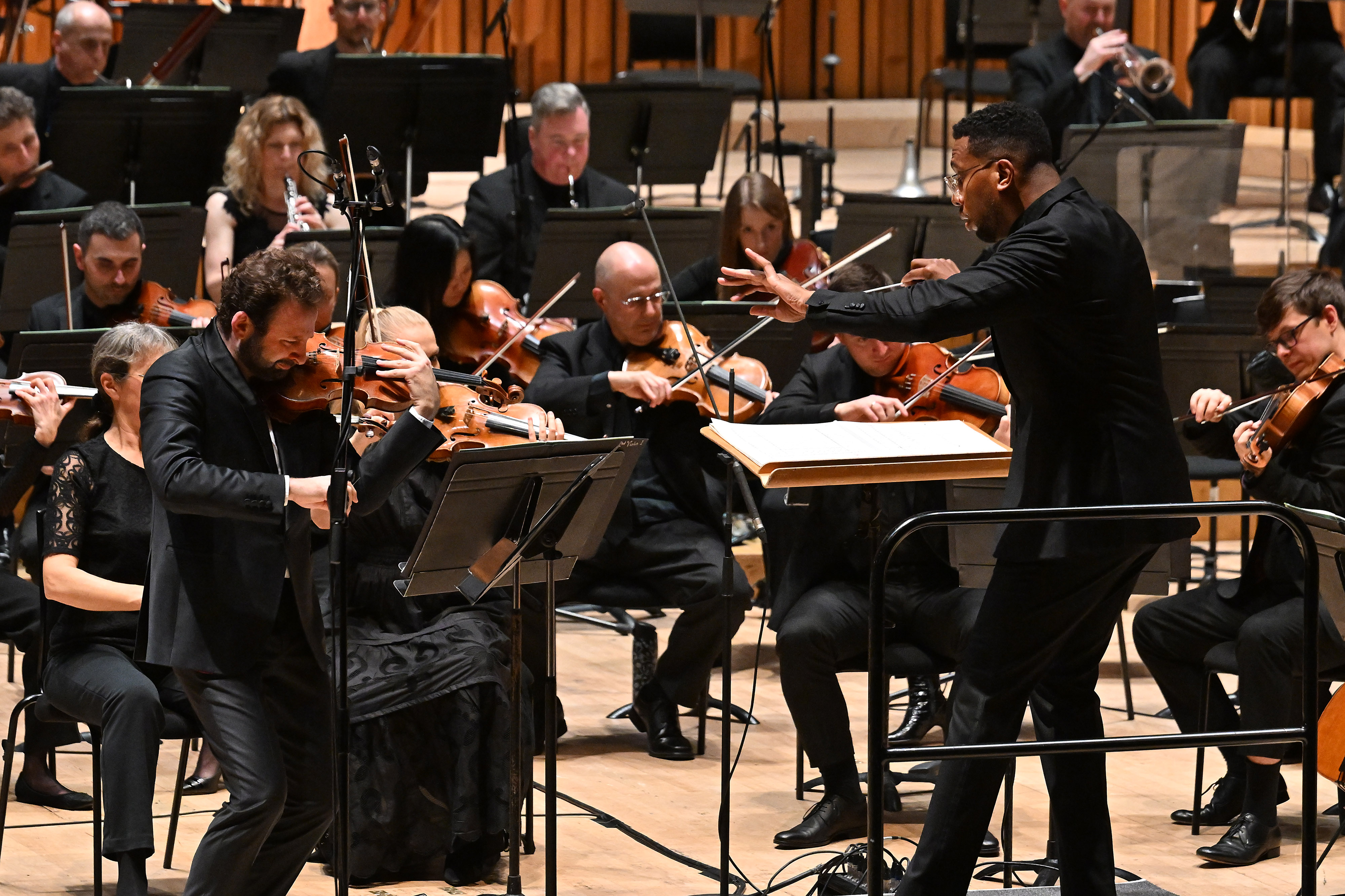
Ilya Gringolts (violin), BBC Symphony Orchestra / Roderick Cox
Debussy Prélude à l’après-midi d’un faune (1891-4) Wennäkoski Prosoidia (BBC co-commission: world premiere) Lyatoshinsky Grazhyna Stravinsky The Firebird – suite (1919)
Barbican Hall, London Friday 3 November 2023
Reviewed by Ben Hogwood. Pictures courtesy of BBC/Mark Allan
If the number of concertgoers whistling the Finale of Stravinsky’s Firebird down Silk Street to the tube was anything to go by, this typically creative BBC Symphony Orchestra program had made its mark.
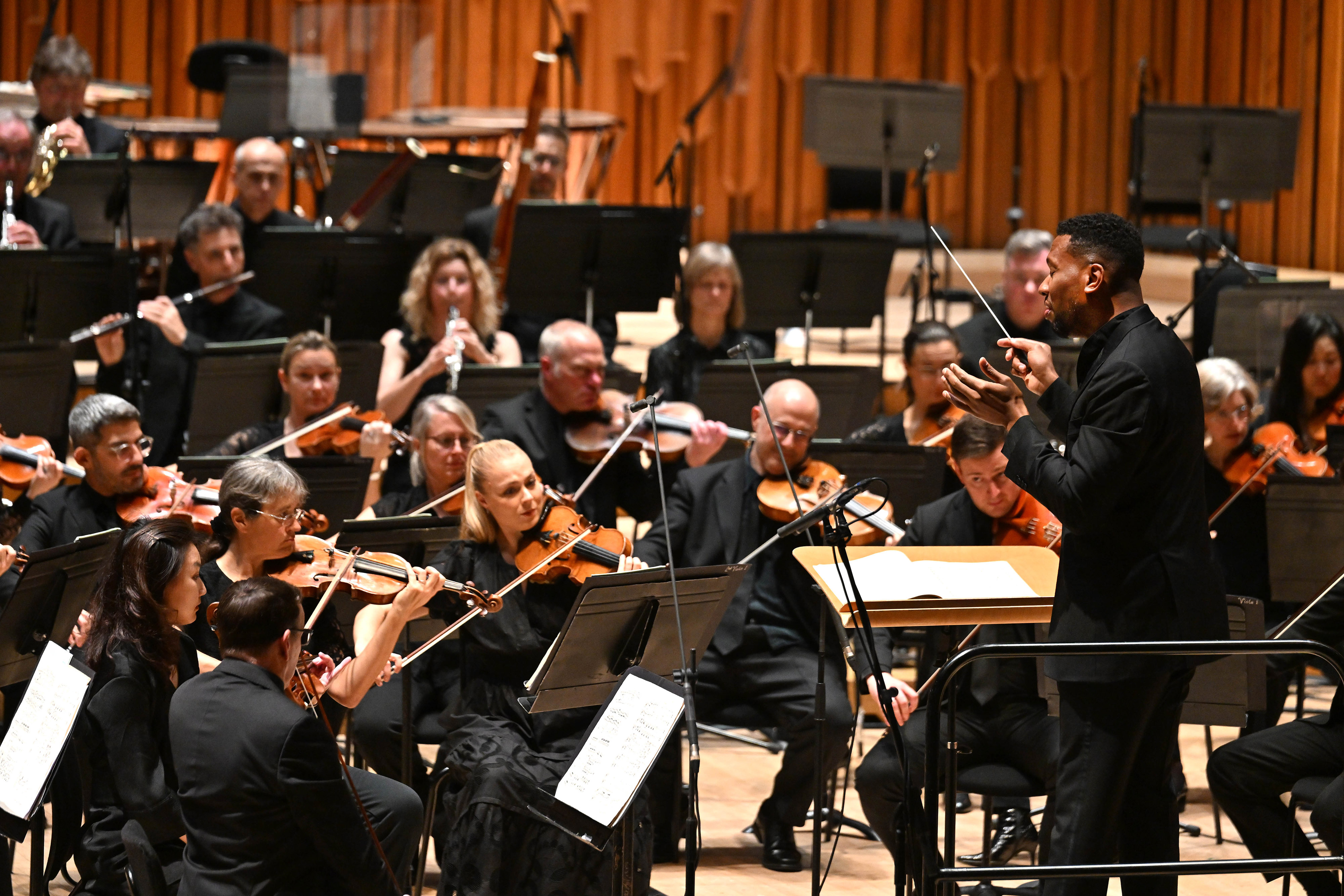
This was in spite of a late change of conductor, Roderick Cox replacing the indisposed Eva Ollikainen – yet the transition was seamless, Cox an alert and subtly commanding presence who clearly enjoyed making music with his new charges. All those qualities were evident in a hazy, sensuous account of Debussy’s Prélude à l’après-midi d’un faune, the temperature raised in spite of the autumnal weather outside. This is, as Paul Griffiths observed in the booklet notes, where Debussy’s ‘music begins here afresh. So does modern music generally.’ Daniel Pailthorpe’s flute solo set the tone, the BBC Symphony Orchestra revelling in alluring wind melodies and hazy, soft-focus strings. The sense of the new – even 120 years after completion – was tangible throughout.
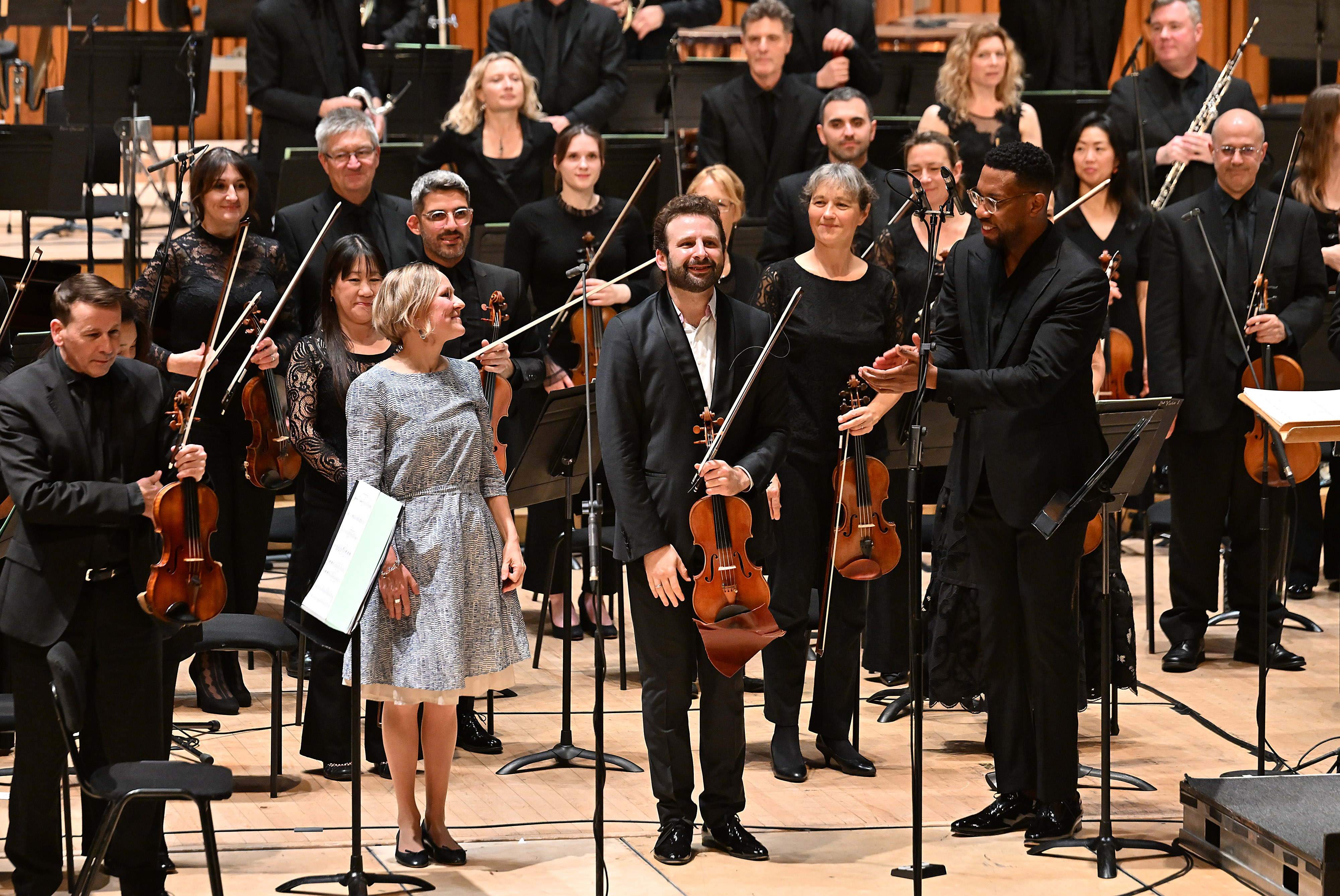
Lotta Wennäkoski’s Prosoidia was also new – still drying on the page in fact, as this was the world premiere of a co-commission from the BBC SO, Lahti SO and Norrlands Opera for violin and orchestra. Though not billed in the title as a violin concerto it assumed that function, though Ilya Gringolts (above) moved between his own solo statements and conversations as part of the orchestra. Throughout he showed impeccable technique and great expression. The orchestra’s role was headed by percussion and harp, with some exquisite shading especially in the quiet music. How refreshing to hear a composer confidently writing music that the audience strained to hear, the resultant effect all the more powerful for this restraint. Here Wennäkoski was reflecting linguistic instructions inspired by ‘prosody’ – the word referring to the musical properties of speech: rhythm, pitch, stress and pauses. Her focus gave the work a moving humanity, a concerto where wordless instrumental voices spoke with great intensity.
The second movement, Word Stress, had a primal savagery, the orchestral voices clamouring to be heard and on occasion drowning the violin. Here the influence of Bartók was palpable, Wennäkoski drawing perhaps on her studies in Budapest. A moving third movement followed, inspired by Ingmar Bergman’s film Cries and Whispers – and in particular a scene where the voices are replaced by the Sarabande from Bach’s Cello Suite no.5. Written in memory of the recently departed Kaija Saariaho, Wennäkoski’s teacher, it was an intimate discourse, recalling the equivalent passage in Berg’s Violin Concerto where the composer also quotes from Bach. Here the approach was less explicit but formed an engaging tableau, where the dynamic dimmed and textures became spare at the thoughtful close. A concerto with an appealing economy and frank musical language, Prosoidia deserves a regular place in the repertoire.
After the interval we heard music from Boris Lyatoshinsky, described in Martin Anderson’s composer profile as ‘the first explicitly Ukrainian composer of the modern age’. Grazhyna, a symphonic poem about a fictitious 15th century female Lithuanian chieftain, cast its eyes back to Liszt and Saint-Saëns in its orchestral narrative, but the modern harmonic language of 1955 spoke more of Myaskovsky and Shostakovich’s music for the stage, not to mention the lasting influence of Lyatoshinsky’s teacher Glière. Roderick Cox presided over a convincing interpretation, impressively grasping the piece in spite of what was surely limited preparation. From the brooding violas portraying the River Neman, we heard a plangent cor anglais lament from Max Spiers, then a high voltage tutti as the battle scene raged. Though short on distinctive melodies, Grazhyna was dramatic to the last as the river music returned, capping an atmospheric and compelling account.
This was also the case for Stravinsky’s 1919 suite from The Firebird, fashioned by the composer into a crowd-pleasing five movements, and creeping in stealthily on the lowest strings. This was an assured interpretation, Cox cajoling the well-drilled BBC SO through a thrilling Infernal Dance, having enjoyed the vivid colours of The Princesses’ Round Dance. The bassoon of Andrea de Flammineis excelled in the Berceuse, where Stravinsky’s ‘sweet and sour’ melodies were in evidence, before the bold as brass Finale that sent the audience home whistling. This was an impressive concert all round, showing the strength in depth the BBC Symphony Orchestra possess these days. Their ensemble, a winning combination of experience and raw talent, is enjoying a purple patch.
Rota La Strada – Suite (1954, rev. 1966) Zimmermann Trumpet Concerto ‘Nobody Knows de Trouble I See’ (1954) Ellington (orch. Henderson) Harlem (1950-51) Stravinsky Petrushka (1910-11, rev. 1947)
Simon Höfele (trumpet), City of Birmingham Symphony Orchestra / Kevin John Edusei
Symphony Hall, Birmingham Thursday 1 December 2022
Reviewed by Richard Whitehouse
Tonight’s concert by the City of Birmingham Symphony Orchestra was one with a difference, Kevin John Edusei directing a programme which avoided the Austro-German mainstream with a vengeance as it surveyed music with a distinctly ‘alternative’ outlook.
Federico Fellini’s La Strada accords with the realism of post-war Italian film, yet its acutely emotional undertow makes it equally prophetic and Nino Rota’s score embodies both aspects with its heady dance-music but also a plangent inwardness in those passages for solo violin (eloquently rendered here by Philip Brett) where the tragic relationship between Gelsomina and Zampanò is made explicit. The suite Rota subsequently derived from the music’s later incarnation as a ballet remains among the most significant of his output for the concert hall.
While Rota looks to popular idioms, Bernd Alois Zimmermann utilizes jazz in his Trumpet Concerto, its (later appended) subtitle denoting the spiritual as underpins much of its content and comes to the fore at crucial junctures. The subtly varied orchestration – with saxophones, Hammond organ and ‘rhythm section’ featuring electric guitar – is complemented by that for the soloist with its range of mutes and a virtuosity new to the classical domain which Simon Höfele despatched with alacrity born of conviction. The respectively brooding and headlong initial sections created an expectancy fulfilled by a climactic episode which was taken a little too fast for its layering of jazz rhythms to come through unimpeded, though the final section lacked nothing in evocative power as it subsided edgily towards a close of muted anguish.
Duke Ellington’s Harlem may now have become relatively familiar in concert, but few such performances can have conveyed the sheer panache as was evident here. Edusei traversed the numerous brief sections of this ‘Tone Parallel’ (commissioned but never conducted by Arturo Toscanini) with innate appreciation of their musical as well as scenic potency that culminates with a rhythmic energy whose effect was undeniably visceral. A little audience participation, moreover, did not go amiss in the final pages where the orchestra duly gave its collective all.
From social, via racial and cultural to psychological alienation. Stravinsky may have intended Petrushka as a vehicle primarily for balletic or orchestral display, but the inner two of its four tableaux, defining the contrasting psyches of Petrushka and the Moor as they compete for the attentions of the Ballerina, provide acute character portraits delineated here with needle-sharp clarity (not least by pianist James Keefe – his crucial obligato contribution vividly embedded within the orchestral texture). Nor did the outer tableaux lack for atmosphere – the sights and sounds of St Petersburg’s Shrovetide Fair palpably in evidence, Edusei securing more poise and pathos than was usual from the relatively utilitarian orchestration as Stravinsky revised it. The closing stages of Petrushka’s death and apparition felt spine-tingling in their immediacy.
This resourceful reading concluded what is sure to prove a highlight of the orchestra’s current season. Other concerts might attract larger attendances, but the attentiveness of those younger listeners present confirmed this as precisely the kind of event the CBSO should be presenting.




 Arcana.fm