In concert – Hyeyoon Park, CBSO / Alexander Shelley: Gershwin, Florence Price, Ravel & Stravinsky

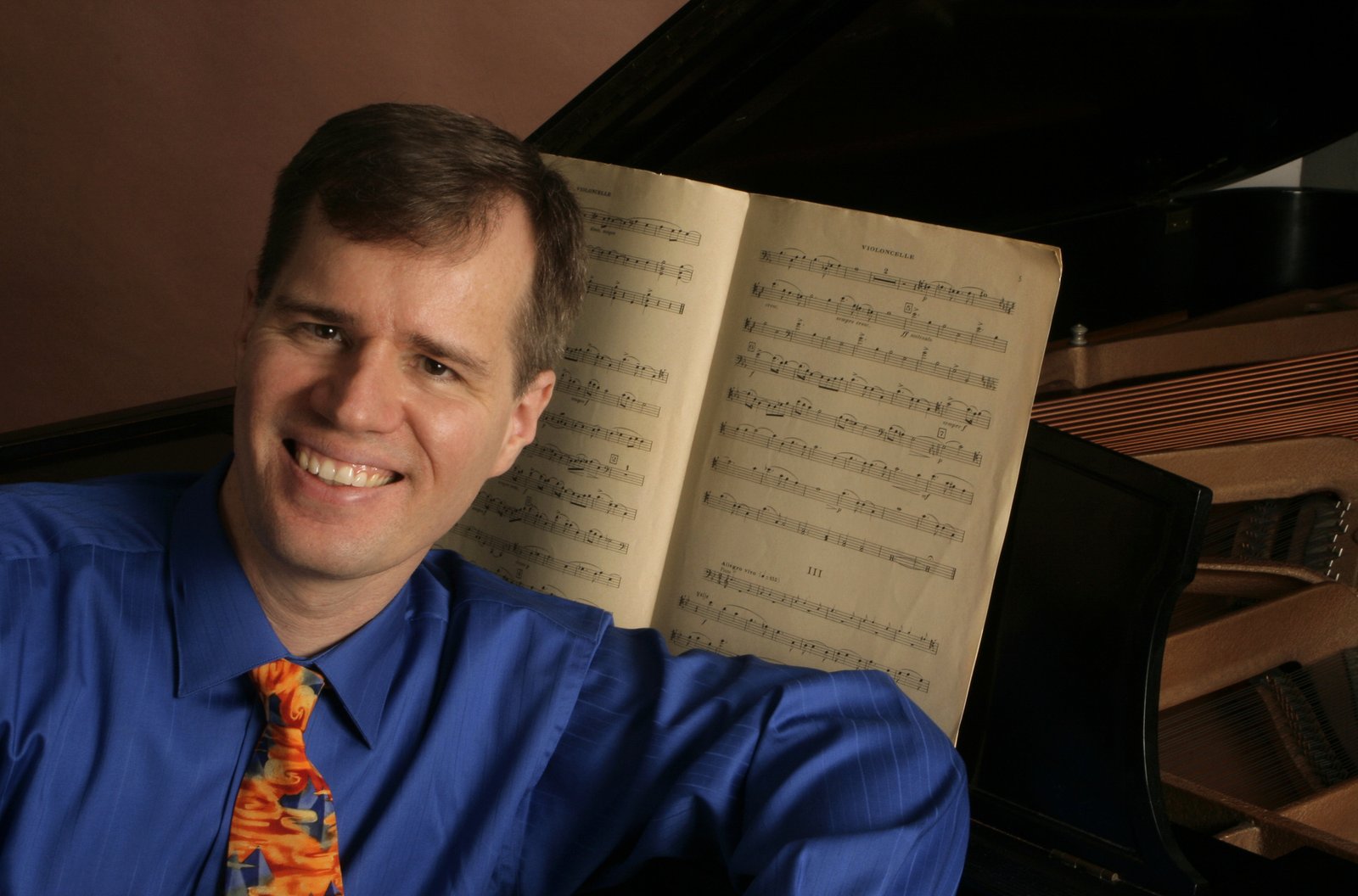
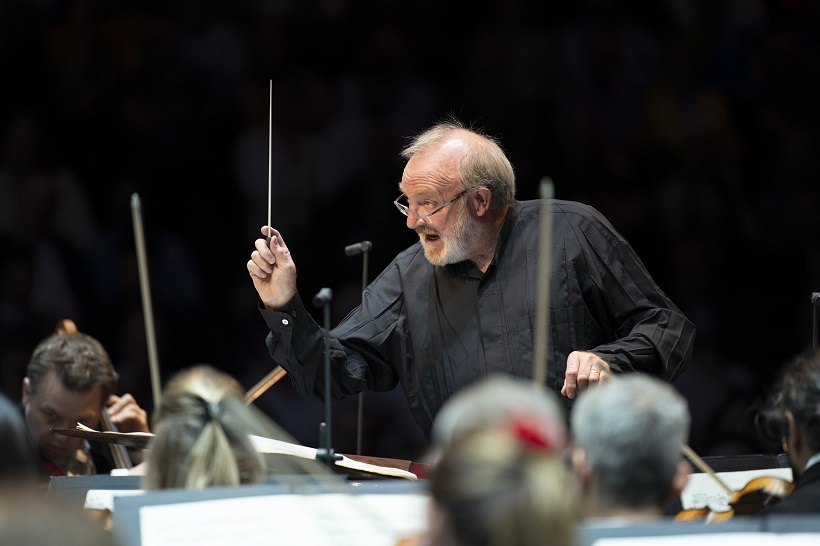
Hyeyoon Park (violin, above), City of Birmingham Symphony Orchestra / Alexander Shelley (below)

Gershwin An American in Paris (1928)
Price Violin Concerto no.2 in D minor (1952)
Price arr. Farrington Adoration (1951)
Ravel Le Tombeau de Couperin (1914-17, orch. 1919)
Stravinsky The Firebird – suite (1910, arr. 1919)

Symphony Hall, Birmingham
Thursday 20 February 2025 (2:15pm)

Reviewed by Richard Whitehouse

Although he holds major posts in Canada and Naples and has a longstanding association with the Royal Philharmonic, Alexander Shelley seems not previously to have conducted the City of Birmingham Symphony Orchestra, and this afternoon’s concert made one hope he will return soon.

An American in Paris was a tricky piece with which to open proceedings, but here succeeded well on its own terms. Somewhere between tone poem and symphonic rhapsody, Gershwin’s evocation of a compatriot (maybe himself?) not a little lost in the French capital was treated to a bracingly impulsive and most often perceptive reading. A slightly start-stop feel in those earlier stages ceased well before Jason Lewis’s eloquent though not unduly inflected take on its indelible trumpet melody, with the closing stages afforded a tangible sense of resolution.

Much interest has centred over this past decade on the music of Florence Price – the Chicago-based composer and pianist, much of whose output was thought lost prior to the rediscovery of a substantial cache of manuscripts in 2009. One of which was her Second Violin Concerto, among her last works and whose 15-minute single movement evinces a focus and continuity often lacking in her earlier symphonic pieces (not least a Piano Concerto which Birmingham heard a couple of seasons ago). Its rich-textured orchestration (but why four percussionists?) is an ideal backdrop for the soloist to elaborate its series of episodes commanding, ruminative then impetuous, and Hyeyoon Park made the most of her time in the spotlight for an account that presented this always enjoyable while ultimately unmemorable work to best advantage.

The concerto being short measure, Park continued with an ideal encore. Written for solo organ, Price’s Adoration was given in Iain Farrington’s arrangement that brought out its elegance and warmth, if also an unlikely resemblance to Albert Fitz’s ballad The Honeysuckle and the Bee.

After the interval, music by composers from whom Gershwin had sought composition lessons when in Paris. Orchestral forces duly scaled down, Ravel’s Le Tombeau de Couperin was at its best in a deftly propelled Forlane, the alternation of verses with refrains never outstaying its welcome, then a Menuet whose winsome poise – and delectable oboe playing from Hyun Jung Song – emphasized the ominous tone of its central section. The Prélude was a little too skittish, while a capering Rigaudon was spoiled by an excessive ritenuto on its final phrase.

Interesting how the 1919 suite from Stravinsky’s The Firebird has regained a popularity it long enjoyed before renditions of the complete ballet became the norm. Drawing palpable mystery from its ‘Introduction’, Shelley (above) secured a dextrous response in Dance of the Firebird then an alluring response from the woodwind in Khovorod of the Princesses. Contrast again with the Infernal Dance of King Kashchei, even if its later stages lacked a measure of adrenalin, then the Berceuse had a soulful contribution by Nikolaj Henriques and fastidiously shaded strings. Hardly less involving was the crescendo into the Finale, started by Zoe Tweed’s poetic horn solo and culminating in a peroration with no lack of spectacle. It made an imposing end to this varied and cohesive concert, one that confirmed Shelley as a conductor with whom to reckon.

For details on the 2024-25 season A Season of Joy, head to the City of Birmingham Symphony Orchestra website. Click on the names to read more about violinist Hyeyoon Park, and conductor Alexander Shelley, or for more on composer Florence Price

Published post no.2,453 – Saturday 22 February 2025

Playlist – Sir Simon Rattle @ 70

by Ben Hogwood

Last week the British conductor Sir Simon Rattle celebrated his 70th birthday. Since the 1980s Rattle has played a hugely important part in classical music in the UK, with important conducting posts at the City of Birmingham Symphony Orchestra, Berliner Philharmoniker and London Symphony Orchestra. In 2023 he returned once more to Germany, as principal conductor for the Bavarian Radio Symphony Orchestra.

In that time, Rattle has made a huge range of recordings, from Haydn to Adès via Beethoven, Grainger and Schoenberg. Resisting temptation to compile a playlist of snippets, I have opted for a small number of heavyweight recordings, including AdèsAsyla, Schoenberg‘s Chamber Symphony no.1 and Stravinsky‘s Le Sacre du Printemps, his first recording on starting with the LSO in 2017. Topping the bill, however, is his CBSO recording of Mahler‘s Second Symphony, the Resurrection, the piece with which he opened Birmingham’s Symphony Hall in 1991. You can listen to the playlist on Tidal below:

Published post no.2,424 – Monday 27 January 2025

In appreciation – Colin Tilney

by Ben Hogwood Image (c) Toronto Star via Getty Images

Over Christmas we heard the sad news that pioneering harpsichordist Colin Tilney had died, at the age of 91. A pupil of the legendary Gustav Leonhardt, Tilney specialized mostly on the harpsichord but could also be heard playing the fortepiano

The playlist below offers a selection of Tilney’s recordings, mostly of early music – but including a snippet of Stravinsky‘s The Rake’s Progress, conducted by the composer himself in 1964, with Tilney on harpsichord duties:

Published post no.2,407 – Friday 10 January 2025

In Concert – Leila Josefowicz & John Novacek @ Wigmore Hall: Debussy, Szymanowski, Bray & Stravinsky

Leila Josefowicz (violin, above), John Novacek (piano, below)

Debussy Violin Sonata in G minor L140 (1916-17)
Szymanowski 3 Myths Op.30 (1915)
Bray Mriya (2023) [Wigmore Hall commission: World premiere]
Stravinsky Divertimento from Le Baiser de la fée (1928, arr. 1934, rev. 1949)

Wigmore Hall, London
Saturday 21 September 2024

Reviewed by Richard Whitehouse

Long among the more adventurous violinists from her generation, this latest Wigmore recital found Leila Josefowicz focussing on music traversing the boundary between Impressionism and neo-Classicism, together with a recent piece such as conveyed a meaningful relevance.

It might not be such a good idea to launch a recital with Debussy’s Violin Sonata, as this last and conceptually most fluid of its composer’s late chamber works is essentially a culmination rather than starting-point. Having rather harried its opening Allegro, Josefowicz brought keen imagination to its Intermède which none the less lacked that fantasy and lightness intended. Most convincing was its finale, the headlong succession of ideas deftly propelled to a payoff not merely decisive but of all-round conclusiveness – whatever Debussy may have intended.

Whereas this piece was admired but initially found relatively few exponents, Szymanowski’s Myths was early recognized as a milestone in its medium and has latterly regained that initial eminence. Josefowicz duly recognized these innovative qualities with an impulsive yet never wayward take on La fontaine d’Arethuse, its capriciousness finding an ideal complement in the simmering emotion and alluring poise of Narcisse – self-aware rather self-regarding as to expression – or increasingly recalcitrant playfulness of Dryades et Pan with its teasingly delayed – even almost avoided – close. Just occasionally, Josefowicz’s snatching at a rhythmic gesture denied the music its high-flown eloquence but, overall, this proved a perceptive and involving account where her interaction with John Novacek’s attentive pianism was absolute.

Those who hear the Szymanowski as a ‘sonata malgré-lui’ might feel likewise about Mriya by Charlotte Bray, which tonight had its first hearing. Its Ukrainian title variously implying ‘dream, vision, ambition and vow’, this four-movement work charted a course of terror but also resolve. The first of these infused its disparate while distinctive ideas with a momentum as merged directly into the feline capering of its successor; after which, a slower movement offered a measure of sustained if hardly serene calm, before the finale once again marshalled its disjunct gestures towards a culmination which was pointedly withheld. A symbol, perhaps, of the Ukrainian people’s struggle as is far from reaching closure let alone victory? Whatever the case, this is absorbing and deeply felt music that received a suitably committed response.

From here to Stravinsky’s Divertimento from The Fairy’s Kiss was some conceptual leap. One of several such adaptations its composer made during its career as a duo-recitalist with Samuel Dushkin, this takes in most of the ballet’s initial two-thirds – the Sinfonia by turns pensive and restive, while the rumbustious Danses suisses was irresistibly despatched. The Scherzo exuded a capering charm and the Pas de Deux moved effortlessly from its soulful Adagio, via nimble Variation, to an initially dextrous then increasingly uproarious Coda.

This recital ended in a wholly different aesthetic world from which it began, but Josefowicz’s acuity could not be gainsaid. ‘Uproarious’ was also the watchword of the encore – Novacek’s Intoxication Rag, arranged by Itzhak Perlman no less and rendered with appropriate abandon.

For more on the Autumn season visit the Wigmore Hall website – and for more on the artists, click on the names Leila Josefowicz and John Novacek

Published post no.2,309 – Sunday 22 September 2024

Arcana at the Proms – Prom 53: Remembering Sir Andrew Davis

Stravinsky Symphony in Three Movements (1942-5)
Reich Jacob’s Ladder (2023) [BBC co-commission: UK premiere]
Tippett The Midsummer Marriage – Ritual Dances (1946-52)
Elgar Variations on an Original Theme ‘Enigma’ Op.36 (1898-9)

Synergy Vocals [Tara Bungard (soprano), Micaela Haslam (soprano/director), Will Wright, Ben Alden (tenors)], BBC Symphony Orchestra / Martyn Brabbins

Royal Albert Hall, London
Friday 30 August 2024

reviewed by Richard Whitehouse Photos (c) Andy Paradise

What should have been the 133rd concert that Sir Andrew Davis conducted at the Proms became a commemorative event after his untimely death in April but, with Martyn Brabbins presiding over a thoughtfully amended programme, the outcome could not have been more appropriate.

Proceeding unaltered, the first half began with Stravinsky’s Symphony in Three Movements in a performance redolent of Otto Klemperer in its deliberation if without that conductor’s heft – not least an opening movement whose rhythmic trenchancy felt a little dogged as it unfolded. Best was the Andante – its deadpan humour complemented by the beatific poise at its centre, then a transition of hushed expectancy to launch the finale. Here the closing build-up might have been more visceral, but the conclusiveness of that final chord could hardly be doubted.

Davis (above) was hardly known as proponent of Minimalism in general or Steve Reich in particular, thus his scheduling this first UK performance of the latter’s Jacob’s Ladder could be taken as significant. Playing just under 20 minutes, this is artfully structured as four short ‘expository’ sections followed by four longer ‘developmental’ ones. The former pitted its four vocalists – a telling number in this context of eight strings, six woodwind, two vibraphones and one piano – against an instrumental ensemble that took precedence in those latter sections; the final one brings them together in new-found accord. Dealing with scalic patterns in all their conceptual and metaphorical implications, the musical content typifies late Reich in ruminative elegance or subdued intensity which, if it offers no revelations, is yet satisfying in its stylistic deftness.

Schumann’s Second Symphony had been planned for a second half as now commenced with the Ritual Dances from Tippett’s The Midsummer Marriage – an opera, and composer, close to Davis’ heart. Unfailingly cohesive to the degree its series of elemental and seasonal dances interwove with their respective ‘transformations’ and ‘preparations’, this account was equally notable for its textural clarity even in those most contrapuntally intricate passages, along with a colouristic sense sustained up to the climactic return of its initial music for a magical envoi.

When Brabbins last conducted Elgar’s ‘Enigma’ Variations at the Proms, it was the final item in a 60th-birthday tribute that began with Pictured Within – a latter-day equivalent involving 14 different composers. Tonight’s account gave eloquent insight into what has become almost too familiar a work, evident from the outset in a ‘Theme’ of melting pathos. Highlights from those that followed included the soulfulness of ‘C.A.E.’, pensiveness of ‘R.P.A.’ or elegance of ‘Ysobel’ with its lilting viola from Sebastian Krunnies. ‘Nimrod’ started imperceptibly but built towards a nobly wrought apex, with the affectionate portrayed ‘Dorabella’ or searching evocation of ‘***(Romanza)’ no less affecting. The ‘E.D.U.’ finale moved confidently to an organ-clad peroration exuding what Elgar elsewhere termed a ‘‘massive hope for the future’’.

Just before this performance, Brabbins spoke for a capacity house in paying tribute to Davis with his dedication to music-making in the UK and beyond; something Sir Andrew brought to every one of his 132 appearances at the Proms, across 54 years of dedication to his cause.

You can get details about this year’s season at the BBC Proms website – and you can click on the names to read more about the BBC Symphony Orchestra, their conductor Martyn Brabbins, and an obituary of Sir Andrew Davis himself

Published post no.2,287 – Sunday 1 September 2024