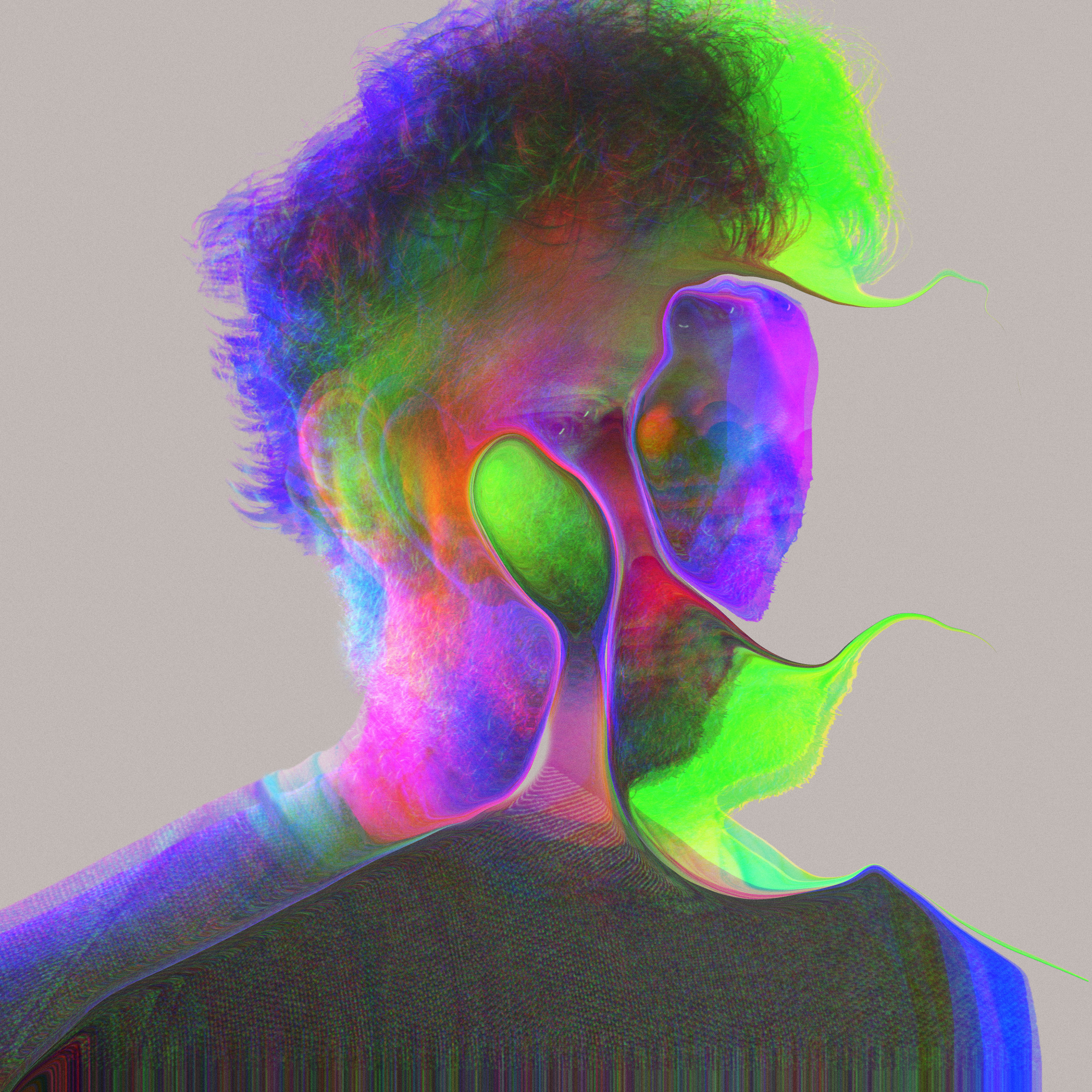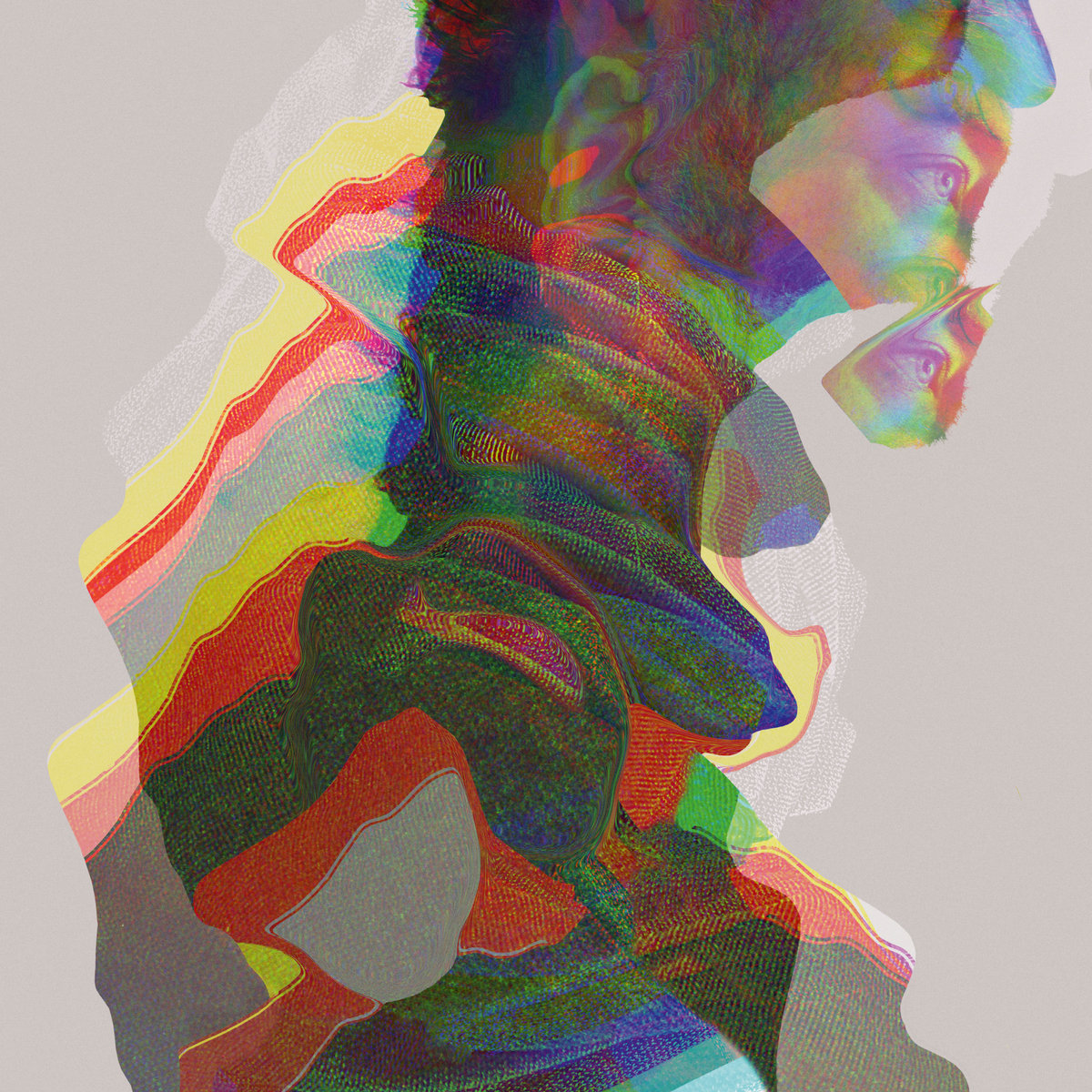
After several years of silence, Nathan Fake makes a powerful return with Evaporator, his first album on InFiné. Written in six weeks during the summer of 2024, the record distills two decades of exploration into a lucid, tactile form of daytime electronica — radiant, physical, and full of air. Emerging from the nocturnal pulse of Blizzards and Crystal Vision, Fake turns toward light and openness.
His analog synths and rhythmic architectures shimmer with space and energy, dissolving density into motion. Tracks like Bialystok and Slow Yamaha pulse with kinetic precision, while “Yucon” and “Aiwa” drift into dreamlike ambient clarity.
Built entirely on his ancient Cubase setup and recorded largely in single takes, Evaporator captures Fake at his most instinctive and human, while collaborations with Clark and Dextro deepen the sense of dialogue between sound and emotion, between control and surrender.
This marks not only a major comeback for one of the UK’s most singular electronic artists, but also the start of a new chapter: Fake will tour the album with a brand-new A/V live show created in collaboration with Berlin-based visual artist Infinite Vibes, expanding his luminous sound into a full sensory experience. The first few shows in Berlin, Paris, Milan and Roma have just been announced.
A luminous fusion of electronica, ambient undertones, and leftfield techno, Evaporator is Nathan Fake reconnecting with instinct, clarity, and daylight — and taking it back to the stage.
You can listen to Bialystock and The Ice House below:
Back in 2006, the French label InFiné started stitching unlikely threads between classical music and club culture, laying early groundwork for what would come to be called “new-classical”, a “new” that felt hybrid and forward-looking rather than the narrower “neo.” The wager was simple: treat the studio like an instrument and let composition, production, and performance bleed into each other.
By early 2007, kindred spirits at Erased Tapes were formalizing a similar impulse in the UK, crystallizing experiments that had flickered across ECM releases and artists like Aphex Twin, Philip Glass, and Brian Eno. The vision also nods to Glenn Gould, the Canadian pianist who famously embraced the studio’s power to do what the concert hall could not, a perfectionism that quietly rewired modern recording practice.
InFiné’s first catalog statement set the tone. Fresh from winning the Orléans International Piano Competition, Francesco Tristano recorded his first “non-classical” album for the sonic alchemy and folding in Autechre, Pascal Dusapin, Jeff Mills, and Tristano himself.
Two years later, in October 2008, the label staged a landmark at the Philharmonie de Paris: Detroit icon Carl Craig with the orchestra Les Siècles under François-Xavier Roth, Tristano’s arrangements, and the discreet touch of Berlin techno pioneer Moritz von Oswald — a bridge between symphonic muscle and machine pulse.
Since then, InFiné has kept walking that ridgeline with artists such as pianists Bruce Brubaker and Vanessa Wagner, cellist Gaspar Claus, percussionist Lucie Antunes, producers Rone, Arandel, Murcof, Labelle, and more recently Japan’s Kaito. In June 2021, Rone’s repertoire, arranged by Romain Allender, took over Lyon with a 90-piece orchestra and choir; the LOOPING project has since sold out philharmonic halls across France and Europe.
In 2019, the label launched a singular series with Paris’s Musée de la Musique, inviting contemporary musicians to “play” the museum’s historic instruments, not as relics, but as living tools. After albums devoted to Bach and to guitars, new chapters focused on harps and the oud are slated for 2025 and 2026. In 2024, InFiné also teamed with IRCAM on a program that fuses research and art: Murcof inaugurates the line with a 360° project spanning an album, ambisonic live performance, and soon, VR.
InFiné’s third and most recent collaboration with Musée de le Musique was for Mary Lattimore and Julianna Barwick’s upcoming project, continuing a shared mission to bridge historical instrumentation with contemporary innovation. “We were so lucky to have access to this experience. There was a lot of reverence, working with people with such warmth and enthusiasm, bringing these instruments into a modern context, literally taken off the shelves of the museum,” says Lattimore. “We wanted to honor the past while making music that we feel is a true expression of ourselves,” adds Barwick.
On October 10th, Vanessa Wagner released the Complete Piano Etudes of Philip Glass as a special 4-LP box set, a format that underscores its significance as a cornerstone for both the pianist and InFiné. Each Étude forms a distinct musical world, complete in itself. But heard as a whole, the cycle unfolds with remarkable depth: motifs and resonances weave through the pieces, revealing a vast emotional architecture where each work amplifies the others, enriching the collection’s overall meaning.
Nearly twenty years in, InFiné remains refreshingly uninterested in borders, geographic or stylistic. True to its roots yet restless by design, the label continues to operate as a laboratory where innovation serves listeners who like their music curious, porous, and resolutely modern.
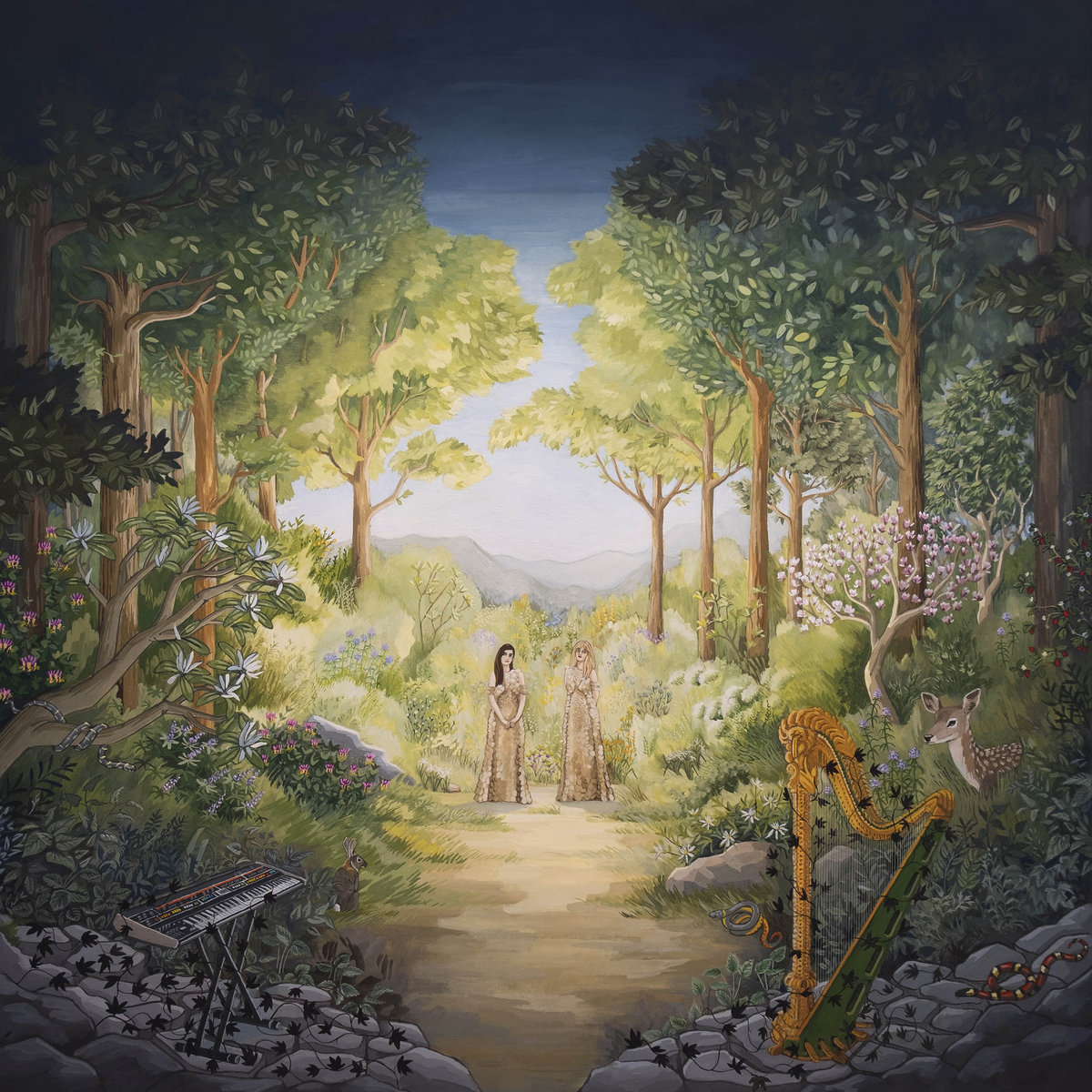
Julianna Barwick and Mary Lattimore have formed a formidable duo to release a new album, Tragic Magic, due out on 16 January 2026 via InFiné. Today they release the new single Melted Moon, one of “seven immersive, evocative songs” that make up the album. The press release details how, “together in freeform dialogue, voice and instrument, Barwick and Lattimore render a meditation on tragedy, wonder, and the restorative power of shared experience.”
The story continues: “Co-produced by Trevor Spencer (Fleet Foxes, Beach House), Tragic Magic came together in just nine days, a testament to the “musical telepathy,” as Barwick puts it, that has developed between the two artists over the years traveling the world as friends and tourmates. Sessions crossed improvisation with loose ideas they arrived in Paris with from Los Angeles, shortly after the January 2025 wildfires while still reeling for their community.
Barwick and Lattimore were given access to the extraordinary instrument collection of the Philharmonie de Paris’ Musée de la Musique in partnership with InFiné. The two artists embraced a divine setting, overwhelmed by the beauty and history at their fingertips. Lattimore selected three harps tracing the evolution of the instrument from 1728 to 1873, and Barwick chose several analog synthesizers that have shaped decades of exploratory music, including the Roland JUPITER and Sequential Circuits PROPHET-5, among other treasures.
“We were so lucky to have access to this experience. There was a lot of reverence, working with people with such warmth and enthusiasm, bringing these instruments into a modern context, literally taken off the shelves of the museum,” says Lattimore. “We wanted to honor the past while making music that we feel is a true expression of ourselves,” Barwick adds.
Today’s release of Melted Moon is accompanied by a video of Barwick and Lattimore performing the song live. Directed and edited by Joel Kazuo Knoernschild, the performance was filmed at Lou Lou’s Jungle Room at the Lafayette Hotel in San Diego this past April.”
The first single, Perpetual Adoration, is followed by the album’s closing track Melted Moon, a direct response to the Los Angeles wildfires in January 2025. The bold strokes of Lattimore’s harp soften as a calming chord progression asserts itself, before Barwick’s seraphic vocal adds a beautiful counter melody.
Barwick recalls “packing up her life under the dark ash clouds, “What do I need for these trips, but also, what do we need if we can’t come back to this house?” Lattimore lends a harp refrain that loops and echoes in the eventide, a measure in which she plays above as Barwick, uncharacteristically free of effects, offers her lyrics in poignant clarity, both haunting and hopeful (“Under the melted moon / The lights are all out / A strange taste in my mouth / You may never go home again / At least not the home you know”).
The notion embodies Tragic Magic as a whole: two artists and friends processing life through music, observing moments and working through emotions, contributing what they can to the world, within a lineage of creative expression and visionary invention represented by the very tools they used to realize this project.
Published post no.2,688 – Wednesday 15 October 2025
Vanessa Wagner continues her exploration of Philip Glass’s piano works with Etude No. 8, released on September 5th.
“Etude No. 8 is one of the most mysterious pieces of the cycle and undoubtedly the most lyrical of Book I. It begins with an ethereal unison between the right and left hands, sounding like a question, a call, and resolves into a phrase with a theme of heartbreaking tenderness. The central section, with its deep basses and 3-against-2 rhythmic sway, carries us into a universe of dark, passionate turmoil before returning to the initial unison—pure and bare, like a moment of renunciation. In just a few minutes, Philip Glass takes us through multiple emotional landscapes, all infused with gentleness, melancholy, and depth.” – Vanessa Wagner
Vanessa Wagner has today revealed the next instalment of her forthcoming album release of Philip GlassEtudes, due for release on 13 July from the InFiné label.
“After more than thirty years spent playing, interpreting, and working on the great repertoire, Philip Glass’s music has, in a way, almost revolutionized my life as a musician,” confides Vanessa Wagner.
The label describe how “in Etude no.14, so often filed away as a mere “transitional” study, Wagner uncovers a central engine of Glass’s language: the art of turning motif into living gesture, pattern into emotion, structure into an open-ended form.”