
Barbican Hall, London, 1 July 2026
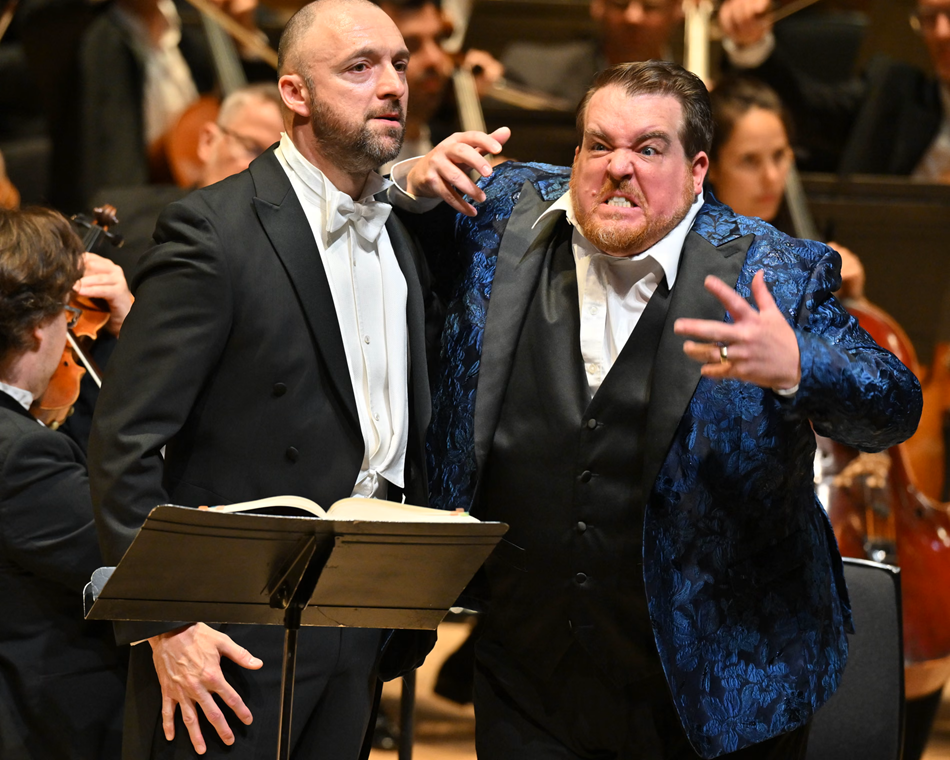
by John Earls. Photo credits of Clay Hilley (Tristan) with Gyula Oendt (Kurwenal) above and Sara Jakubiak below (c) Mark Allan
Wagner’s opera Tristan and Isolde is a piece of music like no other and this stunning concert performance by the London Symphony Orchestra under Sir Antonio Pappano (the first of two this month) showed why.
Such concert performances of opera must have been part of the thinking behind the appointment of Pappano as the LSO’s Chief Conductor in September 2024 (he had been Music Director of the Royal Opera House, Covent Garden, since 2002). The lack of onstage action in Tristan and Isolde makes it ideal for such performances, but that shouldn’t detract from this wonderful rendition which gripped for the whole of its near four hours.
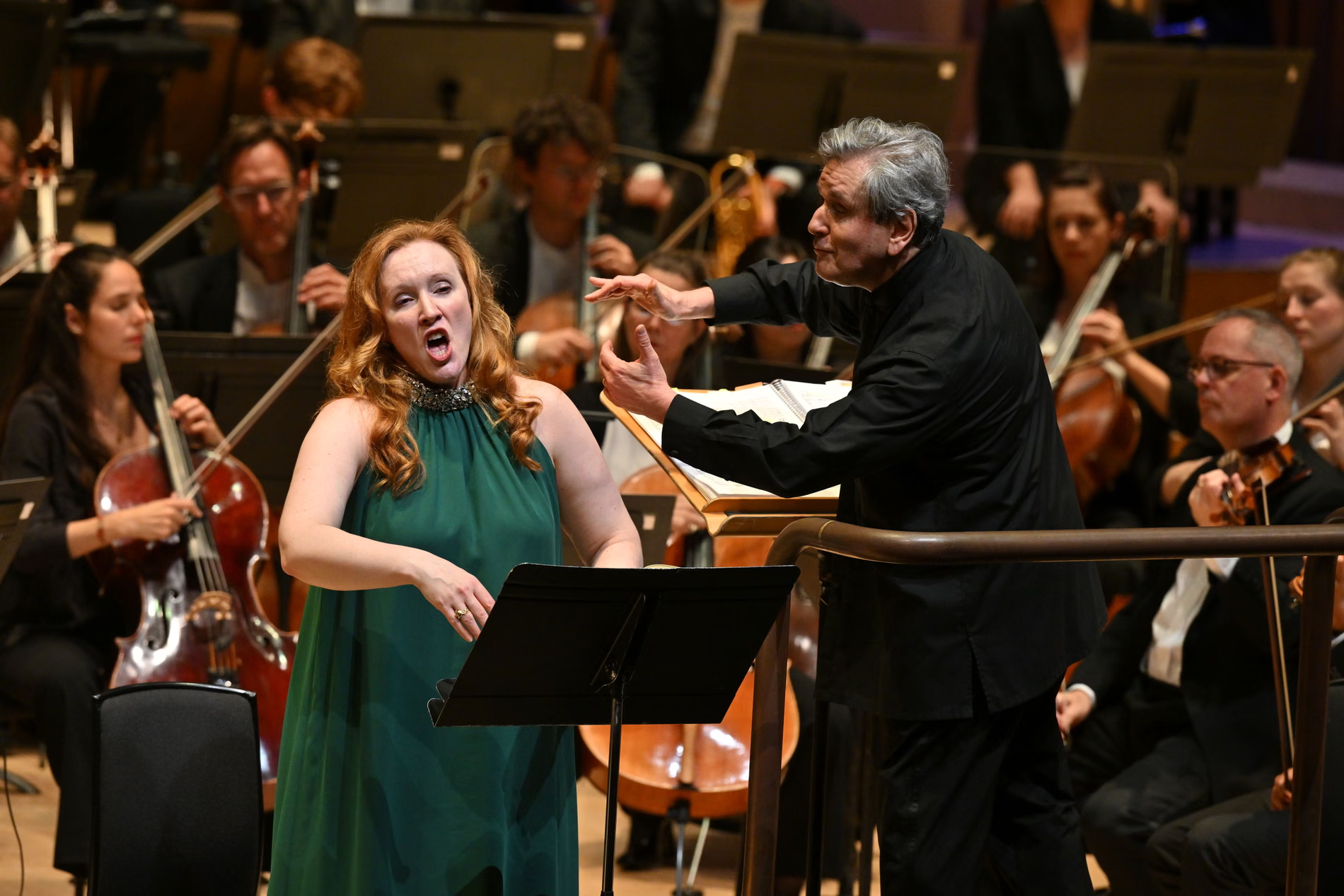
American soprano Sara Jakubiak (above), making her Isolde debut, admirably negotiated the piece’s duration and range in delivery, including a powerful closing Liebestod, as well as looking the part of the Irish Queen in her green dress. American tenor Clay Hilley showed his experience of previously playing Tristan in a performance without score that was convincingly dramatic both in terms of his singing and theatrics which included leaning heavily on the conductor’s podium for support in the final act. Both singers were impressive together in the lovers’ tryst of Act Two.
Russian mezzo Marina Prudenskaya was glorious as Brangäne, including when singing off-stage (or behind-stage to be exact) where the sonic mix worked well where I was sat in the gallery. Franz-Josef Selig as King Marke was both clear and passionate.
The remaining soloists – Gyula Orendt (Kurwenal), Neal Cooper (Melot), Michael Gibson (Sailor/Shepherd) and James Emerson (Steersman) – all gave good performances and the male voices of the London Symphony Chorus were suitably robust in the first act.
But, for me, the real stars of the evening were the orchestra and their Chief Conductor (directing proceedings sans baton). The strings were expressive, even visually at one point as the synchronicity and swooping of the bowing put me in mind of a murmuration of starlings. Repeated alternating notes on clarinet early in Act Two hung in the air in a way that almost stopped time. And Drake Gritton’s cor anglais solos, both in the balcony and onstage, were captivating.
The whole performance was compelling throughout and thoroughly deserving of the rapturous standing ovation given by the audience at the end.
John Earls is Director of Research at Unite the Union and posts at @johnearls.bsky.social on Bluesky and @john_earls on X. You can subscribe (free) to his Hanging Out a Window Substack column here: https://johnearls.substack.com/
Published post no.2,936 – Friday 3 July 2026

