
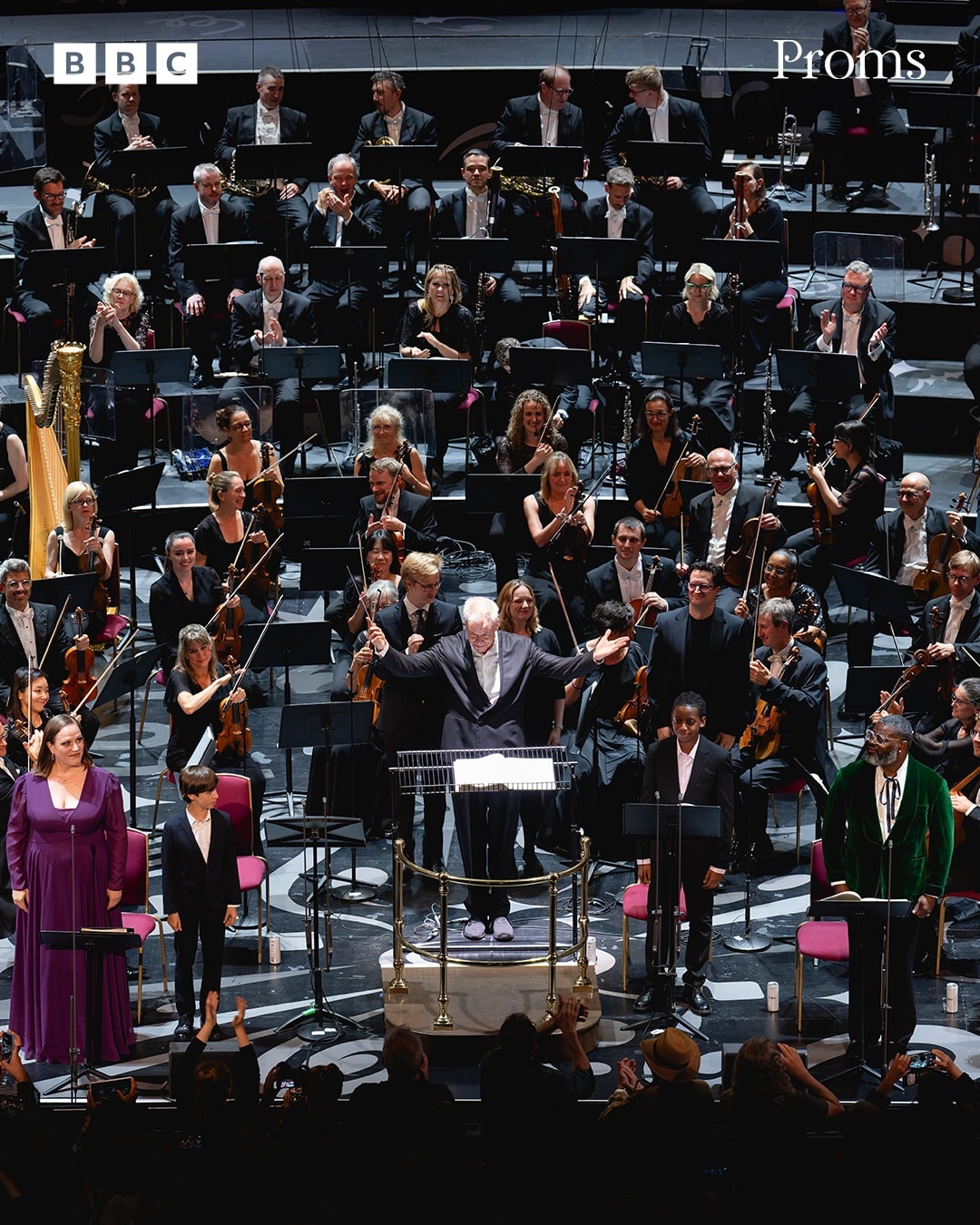
Natalya Romaniw (soprano), Jennifer Johnston (mezzo-soprano), Russell Thomas (tenor), James Newby (baritone) Carlos González Nápoles (treble), Malakai Bayoh (alto), Constanza Chorus, BBC Symphony Chorus, BBC Symphony Orchestra / Hannu Lintu
Boulez Rituel in memoriam Bruno Maderna (1974-75)
Mahler Das klagende Lied (1878-80)
Royal Albert Hall, London
Tuesday 4 August 2025
Reviewed by Richard Whitehouse Photos (c) BBC Proms (from the festival’s uncredited Facebook upload)
Boulez and Mahler may not seem an obvious coupling, until one recalls the would have-been centenarian regularly conducted all the latter’s major works including that heard tonight – as well having made the first recording of its original three-part version more than 55 years ago.
When it appeared in 1975, Rituel in memoriam Bruno Maderna was thought something of an anomaly in Boulez’s output – its hieratic aura and structural (if never literal) use of repetition a homage more to his teacher Messiaen than his late colleague who, revealingly perhaps, had grown disenchanted in the avant-garde project of the post-war era. To which this work might seem an envoi – one eschewing any trace of nostalgia as it pursues its inevitable course from the response of the individual to that of the collective then (almost) returning to the singular.
Outwardly Rituel unfolds a series of litanies from one to seven players and refrains for a 14-piece brass ensemble, but such distinctions increasingly merge towards its mid-point so that its latter half is an intricate mesh of overlaid textures, moving around those groups arrayed on stage. Maintaining audible balance is crucial – in which respect, Hannu Lintu succeeded admirably, as in pacing the overall sequence (memory recalls Boulez as opting for a discreet acceleration across the later stages) so its ending conveyed arrival though hardly fulfilment.

What marked a crucial juncture for Boulez was no less evident, almost a century before, for Mahler. The virtual absence of any previous music only makes Das klagende Lied the more remarkable for conveying the essence of what its composer, barely out of his teens, went on to achieve. At this time, he aspired to opera and though this cantata was never envisaged for staging, its scenic evocation and its dramatic immediacy suggest that, had he been awarded the 1881 Beethoven Prize for his entry, his creative priorities could have been very different.
The work has fared well at the Proms, this being its seventh hearing and the third to use the edition of the original version that restores the first of its three parts and enables the latter to be heard as conceived, thereby making musical as well as dramatic sense. A leisurely course through Waldmärchen enabled Lintu to highlight the motivic richness of its prelude, and if the alternation of solo verses with choral refrains felt a little stolid, the latter stages with the discovery of the flower, the fratricide and a desolate postlude were consummately rendered.
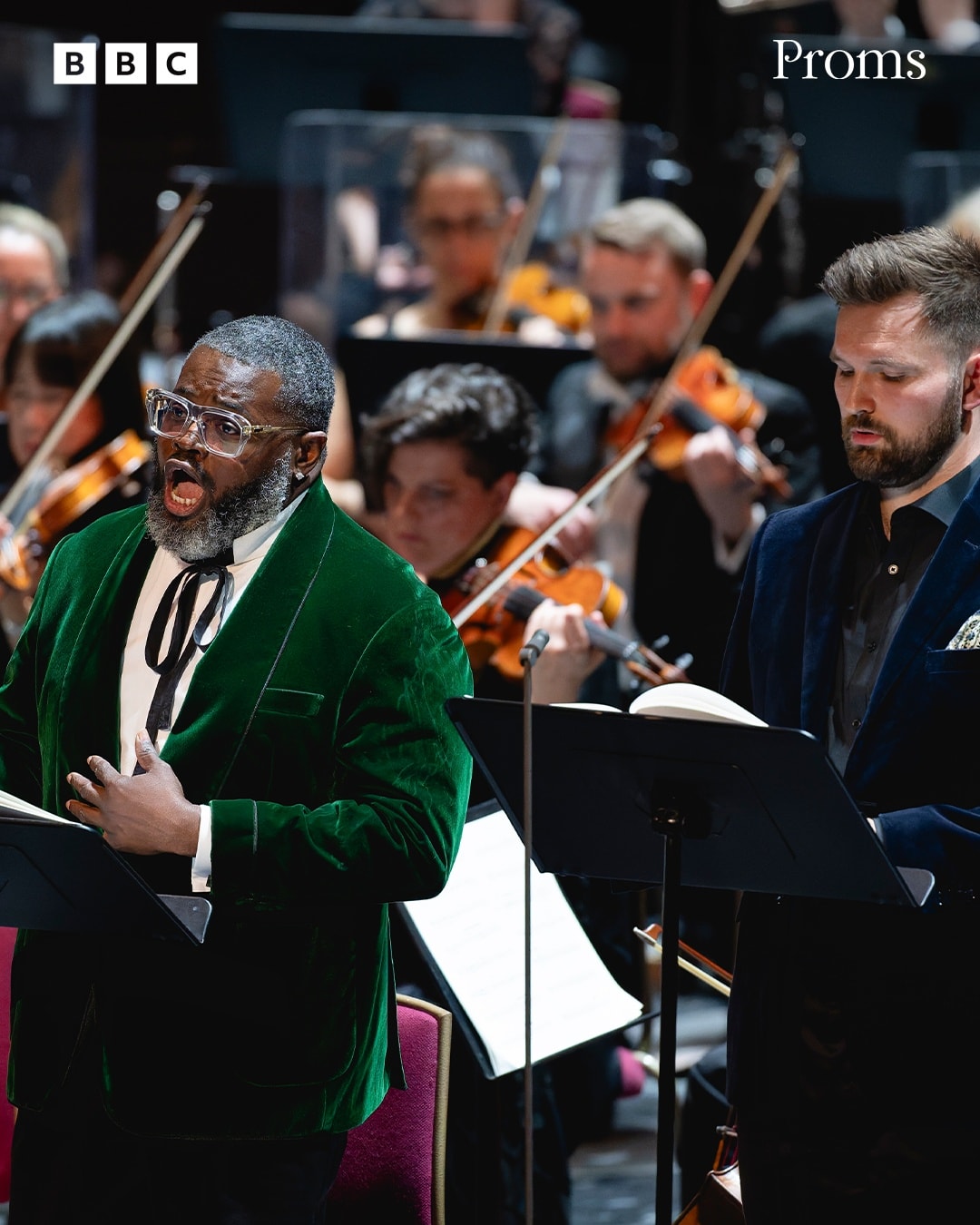
With its anticipations of later Mahler (via Wagner and Bruckner), Der Spielmann is the most characteristic part as it pivots deftly yet pointedly between genial whimsy and ominous dread. That this latter gains the upper hand with discovery of the ‘singing bone’ is offset by the blaze of glory with which Hochzeitstück begins; the offstage orchestra – head to advantage in the gallery – underpinning an increasingly desperate course of events as the fratricide is revealed and the wedding descends into mayhem, with deathly stillness pervading those final minutes.
There was some persuasive solo singing, notably Jennifer Johnston who carries the primary narrative thread; Russell Thomas was fervent if slightly strained and James Newby warmly eloquent, with Natalya Romaniw conveying real dramatic acuity. Treble and alto roles were poignantly taken, while Lintu drew an assured response from sizable choral and orchestral forces – the latter’s quartet of harps assuming a concertante role in an orchestration whose encompassing of dramatic impetus and intimate reflection is already that of Mahler alone.
Playing for around 70 minutes, Das klagende Lied seems as rich in incident as any Mahler symphony; not all of which, whatever their greater stylistic assurance or maturity, feature a conclusion as spine-tingling as this – and one which certainly drove its point across tonight.
You can listen back to this Prom concert on BBC Sounds until Sunday 12 October – or listen to recordings of the two works conducted by Pierre Boulez on Tidal here
Click on the artist names to read more about the Constanza Chorus, BBC Symphony Chorus and BBC Symphony Orchestra, conductor Hannu Lintu and soloists Natalya Romaniw, Jennifer Johnston, Russell Thomas and James Newby. Click also for more on the BBC Proms
Published post no.2,617 – Tuesday 5 August 2025

 Arcana.fm