Nash Ensemble – German Romantics II: Brahms, Mendelssohn & Schumann

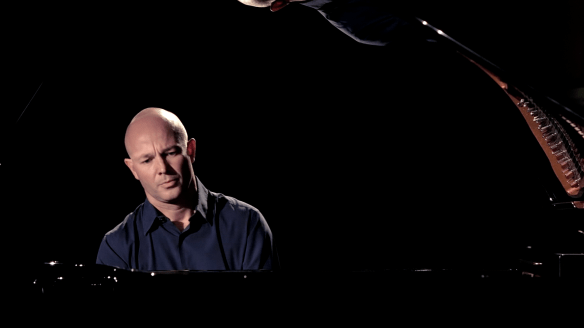
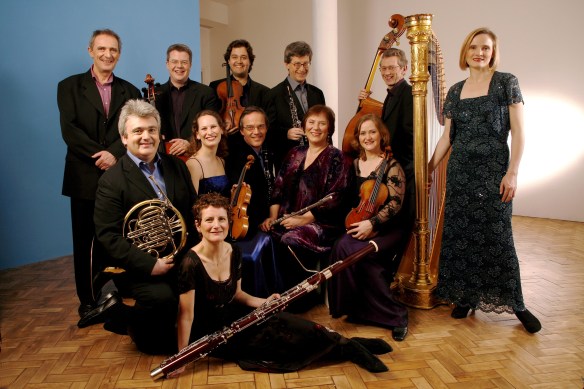
Nash Ensemble: Ian Brown (piano), Stephanie Gonley, Michael Gurevich (violins), Lawrence Power, Timothy Ridout (violas), Adrian Brendel (cello), Graham Mitchell (double bass), Philippa Davies (flute), Richard Hosford, Marie Lloyd (clarinets), Ursula Leveaux (bassoon), Richard Watkins (horn) / Martyn Brabbins (conductor, Brahms Serenade)

Wigmore Hall, London
Saturday 12 January 2018 7.30pm

Schumann Marchenerzahlüngen Op.132 (1853)
Brahms String Quintet no.2 in G major Op.111 (1890)
Mendelssohn Song Without Words in D major Op.109 (1845)
Brahms, reconstructed Alan Boustead Serenade no.1 in D major Op.11 (1857/58)

Written by Ben Hogwood

The second of the day’s concerts in the Nash Ensemble’s German Romantics series at the Wigmore Hall presented some of the finest 19th century chamber music to come from the country, picking up where the earlier concert of music by Clara Schumann and Fanny Mendelssohn left off.

We began with late Robert Schumann, his Marchenerzahlüngen Op.132 (Fairy Tales), written for the appealing combination of clarinet, viola and piano that Mozart had pioneered in his own Kegelstatt trio of 1786. Schumann’s approach was formally less rigid, preferring to give his trio a quartet of character pieces, unlabelled in meaning but clear in tempo. Richard Hosford, Lawrence Power and Ian Brown were the perfect foil for these pieces, where the second especially stood out for its questioning harmony. The first and third pieces were songlike and romantic, while the fourth felt like one of Schumann’s celebrations of life itself. It is difficult to imagine a better performance than this one, the beauty of tone from clarinet and viola in particular a joy.

Brahms’ String Quintet no.2, his last of seven chamber works for strings, is if anything even more positive and life affirming. While writing the piece in 1890 Brahms thought it would be his last work altogether, before going on to enjoy an unexpected Indian summer thanks to the inspiration of clarinettist Richard Mühlfield. The opening bars of the quintet are some of the very best in chamber music, and the tricky theme here was tackled heroically by cellist Adrian Brendel, the melody rising through the heady accompaniment of the others. The second theme of this movement was beautifully and soulfully rendered, setting the tone in the process for the second movement, an Adagio of heartfelt and profound utterance. The third movement, a silvery Intermezzo, was light on its feet while the finale recaptured the positive spirits of the first movement and pressed forward with impressive urgency. The Nash played brilliantly, communicating Brahms’ congested textures with apparent ease and enjoying the exchanges of ideas right to the end.

The second half of the concert, given to a packed Wigmore Hall, began with one of Mendelssohn’s most enjoyable trifles. His last work for cello and piano, the Song Without Words has at its heart a wonderful tune, which Adrian Brendel and Ian Brown clearly enjoyed. Brendel’s tone and forcefulness in the contrasting middle section were ideal.

This made an ideal prelude for early Brahms, the Serenade no.1. This wonderfully positive piece is usually heard in orchestral form, but here we heard Alan Boustead’s recreation of the original instrumentation of the piece, for nine solo instruments. With the combination of flute, two clarinets, bassoon, horn, violin, viola, cello and double bass, we were taken into the sound world of Beethoven’s Septet, written for a similar combination. Musically we were not far off either, and Martyn Brabbins joined the Nash Ensemble to conduct a highly spirited performance. Richard Watkins’ horn was the star of the show, projecting Brahms’s outdoorsy tunes with rustic charm, but in reality all nine players were superb, enjoying the relative lightness of texture and abundance of melody. The slow movement was placed second – not third, as the program said it would be – but this was an effective placement with some gorgeous textures. While this music was more thoughtful the Minuets and Scherzo returned us to the open air, while the Finale positively threw open the shutters for another winsome horn tune. This was Brahms at his most carefree, and Brabbins ensured the Nash Ensemble were too.

For more information on the Nash Ensemble’s German Romantics series at the Wigmore Hall visit their website

Further listening

The below Spotify playlist compiles the music used in both of the evening’s German Romantics series from the Nash Ensemble, using their recordings where possible:

Live review – Leonidas Kavakos, LSO / Sir Simon Rattle: Brahms, Debussy & Enescu

Leonidas Kavakos (violin, above), London Symphony Orchestra / Sir Simon Rattle (below)

Barbican Hall, London
Sunday 16 December 2018

Brahms Violin Concerto in D major Op.77 (1878)
Debussy Images (1905-12)
Enescu Romanian Rhapsody no.1 in A major Op.11/1 (1901)

Written by Richard Whitehouse

Sir Simon Rattle and the London Symphony Orchestra tonight continued their ‘Roots & Origins’ project with a diverse programme ranging from the innate classicism of Brahms, through the refracted (post-)impressionism of Debussy then on to the unaffected nationalism of Enescu.

A change in the running order saw a first half devoted to Brahms’s Violin Concerto – easy to pigeon-hole as archetypally Austro-German, though fairly permeated with elements derived from popular and traditional sources. Nor did Leonidas Kavakos deliver a bland or uneventful account, maintaining palpable momentum across the expansive initial movement that carried through to an uncommonly perceptive take on Joachim’s monumental cadenza, followed by an easeful coda in which the symbiosis between soloist and orchestra was at its most tangible.

While there was no undue lingering in the Adagio, Kavakos brought out its gentle eloquence in full measure – abetted by playing of burnished warmth from the LSO’s woodwind, though there was no lack of agitation in the contrasting central section. The Hungarian overtones of the finale were then given full rein, Kavakos projecting the music’s rhythmic drive as surely as he propelled the coda to its effervescent close. Throughout this performance, Rattle was at one with his soloist in a work he has no doubt given many times during the past four decades.

A dynamic and vividly projected reading, then, from Kavakos (very different from the inward and almost self-communing one he gave during last year’s Enescu Festival), who returned for a predictably scintillating account of the Les furies finale from Ysaÿe’s Second Solo Sonata.


Debussy’s Images has long been a Rattle staple: his running-order differs from that published – though there is arguably no ideal sequence for such a contrasting assemblage. Certainly, the fatefully understated Gigues makes a plausible opening, its fugitive gestures and searching ambivalence more an evocation of the composer in his last years as of any English environs. Rondes de printemps is the positive corollary, its vernal freshness and simmering energy an indication of that renewal in French culture made explicit by the late sonatas. In both pieces, Rattle secured a superfine response from the LSO and if characterization in Ibéria was less acute, this may have been owing to the music’s broad-brush Spanish quality than to any lack of insight. Not in doubt was the cohesion that Rattle drew from this composite work overall.

Cohesion was also key to his performance of Enescu’s First Romanian Rhapsody. More than a medley of popular tunes, its integration is that of a borne symphonist and Rattle responded accordingly as he built momentum across the suave initial episodes before cutting loose with the bacchanal. The degree of detail lost was outweighed by the visceral excitement that held good through to the coda. A piece associated with Rattle since the early 1980s, and of which the LSO gave a memorable televised reading a decade earlier, ended this concert in fine style.

The question remains why Rattle has never added further Enescu to his repertoire. Perhaps he considers him lesser to Szymanowski, whom he has championed assiduously? Pieces such as the Second Symphony, Third Suite and Vox Maris cry out for his advocacy. Maybe one day?

For more information on forthcoming concerts from the London Symphony Orchestra in 2019, you can visit their website. Meanwhile you can enjoy Kavakos in a recent performance of the Brahms Violin Concerto below:

Wigmore Mondays: Augustin Hadelich & Charles Owen – Brahms, Ysaÿe & Adams

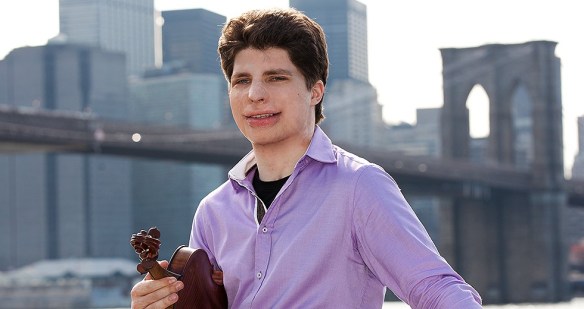
Augustin Hadelich (violin, above), Charles Owen (piano, below)

Brahms Violin Sonata no.1 in G major Op.78 (1878-9) (1:57-28:08)
Ysaÿe Sonata for solo violin no.4 in E minor Op.27/4 ‘Fritz Kreisler’ (1923) (30:31-40:44)
Adams Road Movies (1995) (43:33-1:00:24)

Wigmore Hall, London; Monday 10 December 2018

You can listen to the BBC Radio 3 broadcast by clicking here

Written by Ben Hogwood

This was the third Monday lunchtime in the last six weeks where BBC Radio 3 and the Wigmore Hall have been concentrating on music for violin and piano. This nicely constructed recital complemented the previous pair from Aleksey Semenenko and Inna Firsova, and Tai Murray and Silke Avenhaus, where we had heard two of the three violin sonatas by Grieg.

On this occasion we heard a contemporary of those works, the Brahms’ Violin Sonata no.1 in G major – a work written for his friend, the great violinist Joseph Joachim – and one also picked up by Clara Schumann. It is a highly attractive work and received an affectionate performance here, Augustin Hadelich and Charles Owen straight into the beatific air of the first movement (from 1:57 on the broadcast) With an equally genial theme from 3:24, this was Brahms at his most radiant, with a sweet tone from the violinist and flowing countermelodies from Owen. The airy role reversal at 5:20, with Owen playing the tune and Hadelich giving pizzicato (plucked) accompaniment was a lovely moment – as was the content beginning of the coda (11:35). In between this the music was passionate and animated, Brahms developing his source material.

The second movement (from 12:34) also benefited from Hadelich’s sweetly toned instrument, shaping up to be a lovely reverie until a much more animated central section blew away the cobwebs (15:00). Returning at 16:23, the main theme gained an extra layer from double stopping on the violin (playing more than one string at once), and Owen’s piano line continued as a model of sensitivity.

Clara Schumann stated that she would happily have the last movement of this sonata to accompany her on her journey ‘to the next world’, and you could hear why in this performance (from 20:05), which brought out its bittersweet quality. Brahms moves between G minor and G major, a delicate balancing act of music that sounds a bit fretful and gentler, uplifting thoughts. Hadelich and Owen caught them perfectly here, the latter’s nicely pointed piano working particularly well on the dance-like second idea of the movement. From 25:37 the major-minor tension resumed, resolved in a serene coda from 26:20, ending quietly.

Ysaÿe wrote his six solo violin sonatas at great speed, publishing them all together in 1923. The fourth pays particular homage to Bach, incorporating the dance forms that were used in his Sonatas and Suites for solo stringed instruments. It was dedicated to the violinist-composer Fritz Kreisler, one of the very greatest string players. Not surprisingly it makes technical demands on the performer but Hadelich was brilliant here (from 30:31), careful not to overdo the virtuosity at the expense of musical communication.

The three sections of the sonata moved from a dramatic first movement Allemanda (30:31) through a slowly evolving Sarabande used by the composer as a fugue (34:50) and then a bracing Finale (37:57). The Sarabande had the most striking sonorities of the three, thanks to the inventive pizzicato techniques matched spotlessly by Hadelich, but the last movement was a tour de force with which to finish!

Following this was one of the first pieces John Adams wrote for chamber forces, his evocative trip Road Movies, after a period where he admits to ‘studiously avoiding the chamber music format’. Yet, as this entertaining three movement piece proves, his music translates effortlessly to the smaller scale. The piano (played heroically here by Charles Owen!) supplies a lot of the rhythmic impetus and the bass foundations, leaving the violin to operate more freely up top.

The first movement, Relaxed Groove, is described by the composer as ‘a relaxed drive down a not unfamiliar road. Material is recirculated in a sequence of recalls that suggest a rondo form’. Both performers got to the nub of the bluesy music straight away, and also evoked the ‘solitary figure in an empty desert landscape’ in the second movement, entitled Meditative (49:11), where Hadelich had to detune his bottom string from a ‘G’ to an ‘F’. Finally the toe-tapping 40% Swing (55:19) closed out this virtuosic piece, both players smiling as they enjoyed its grooves and motifs.

We disembarked from the Adams vehicle, but an encore was waiting to see us on our way – a rather fine arrangement by Ysaÿe of the Chopin Nocturne in C sharp minor, played with appropriate tenderness by Hadelich. Owen’s flowing accompaniment, too, was finely judged.

Further listening

Augustin Hadelich has not yet recorded any of the works in this recital, but the following playlist brings together the music heard in the concert, including a version of the encore arranged by Nathan Milstein:

For those enjoying the Ysaÿe Solo Sonata, a logical next port of call would be the unaccompanied 24 Caprices by Paganini, which Hadelich has recently recorded:

For those enjoying the Adams, here is a disc including not just Road Movies but a collection of the composer’s works for keyboard:

Oxford Lieder Festival – Kai Rüütel and Roger Vignoles: Tallinn to St Petersburg

Kai Rüütel (soprano, above), Roger Vignoles (piano, below)

Härma Ei saa mitte vaiki olla (I cannot stay silent)
Brahms Wie Melodien Op.105/1, Immer leiser wird mein Schlummer Op.105/2, Klage Op.105/3, Auf dem Kirchhofe Op.105/4
Rachmaninov O, dolgo budu ja, v molchan’i nochi tajnoj (In the silence of the secret night) Op.4/3, Poljubila ja (The Soldier’s Wife) Op.8/4, Zdes’ khorosho (How fair is the spot) Op.21/7
Mägi Kolm laulu Betti Alveri luulele (3 songs on poems by Betti Alver) [(Päike paistis, kaste hiilgas (The sun was shining, the dew gleamed), Kui kajab muusika (When music echoes), Uneaknale, uneaknale kevad koputas (On the window of sleep)]
Tormis Nukrad Viivud (Sorrowful Moments) [Kevadpäike, ära looju veel (Spring sun, do not set yet), Sügislaul (Autumn Song), Ei ole roose õitsenud minule (‘No roses have bloomed for me’), Armastus (‘Love’)
Rimsky-Korsakov Plenivshis rozoj, solovey (The Nightingale) Op.2/2, Na kholmakh Gruzii (On Georgia’s Hills) Op.3/4, Serenade Op.4/4, Drobitsya, i pleshchet, i brizzhet volna (The wave breaks) Op.46/1, Kogda volnuyetsya zhelteyushchaya niva (When the ripening wheat fields gently stir) Op.40/1
Mart Saar nnemuiste (In Days of Yore), Kõrs kahiseb (The Straw Murmurs), Kadunud ingel ‘Lost Angel’, Sügismõtted (Autumn Thoughts), Mis see oli? (What was It?), Üks ainus kord (Only Once More)

Holywell Music Room, Oxford
Wednesday 17 October 2018 (evening)

Written by Ben Hogwood

Continuing the Baltic theme of this Wednesday at the Oxford Lieder Festival, Estonian mezzo-soprano Kai Rüütel and pianist Roger Vignoles gave a fascinating concert introducing their audience to Estonian song from the 20th century, helpfully placed in the context of Romantic Russian and German song. Rüütel had very helpfully provided English translations of the Estonian songs, which was particularly useful for those Festival goers who had attended the earlier ‘Language Lab’ in the Ashmolean museum, where we had an introduction to the language from Kerli Liksor.

Rüütel set the tone with the unaccompanied Estonian folk song Ei saa mitte vaiki olla (I cannot stay silent), before four late Brahms songs showed off the rich tones of her mezzo-soprano. Yet there was a feeling these were merely a prelude to the meat of the concert, which really began with a wonderfully evocative account of the first of three Rachmaninov songs, In the silence of the secret night. The value of Vignoles’ scene setting was incalculable both here and in the Brahms, with some complex piano writing handled with apparent ease and an instinctive sense of melody and expression. Rüütel inhabited the character of The Soldier’s Wife with a powerful sorrow, contrasted with a dream-like finish to How Fair Is The Spot.

There followed 3 Songs on poems by Betti Alver from the 96-year old Estonian composer Ester Mägi. These had a very clear sense of location in their folk-inspired melodies, with distinctive inflections that Rüütel was ideally placed to exploit. These were mirrored in the piano part, which provided a particularly dramatic introduction for the second song, Where Music Echoes. The directness of the text was strangely refreshing and was reflected in the economy of the music, slightly redolent of Janáček in its economy but forging a very distinctive path.

The name of Veljo Tormis will be a more familiar name to students of Baltic music. Known primarily for his choral work, he is a fine song composer too – and the 1958 collection Sorrowful Moments left a lasting impression. Its central pair, Autumn Song and No Roses Have Bloomed For Me, were darkly toned, but the final Love offered much greater hope, Rüütel singing from the heart of ‘the stars that light the traveller’s way’.

Photo credit (c) Ben Ealovega

We returned to Russia for the beginning of the second half, with some rarely heard songs from Rimsky-Korsakov. Given the melodic prowess and dramatic scene setting on show in songs like On Georgia’s Hills and The Wave Breaks it remains a mystery that Rimsky’s songs are not heard more in the concert hall. Rüütel sang them with great fullness of tone but also enjoyed the more tender moments of Serenade and When The Ripening Wheat Fields Gently Stir. Vignoles’ tumultuous evocation of The Wave Breaks was a highlight; so too the pair’s account of The Nightingale.

Finally we heard the music of Mart Saar, an Estonian composer from the first half of the 20th century who studied with Rimsky-Korsakov. In one of several helpful introductions Rüütel told of how Saar followed Rimsky’s advice to ‘be himself’ but also to take risks – and those qualities were evident in these deceptive songs. They were deceptive because some of the twists and turns had an individual quirk, Romantic in profile but alighting on unexpected harmonies or melodies. To Rüütel these were second nature, and in Autumn thoughts especially she found a deep, soulful mood. The first song, In days of yore, had more obvious folk music inflections, but perhaps the most dramatic song of all was Lost Angel, where Vignoles’ mastery of the challenging piano part set the way clear for Rüütel’s direct, emotive response.

As an encore Rüütel and Vignoles gave us a timeless account of Richard Strauss’s Morgen which, while brilliantly performed it did not distract from the impact of the Estonian and Russian music we had just heard. Clearly there are many riches to be discovered from the Baltics, and it is to be hoped Rüütel and Vignoles might set these down permanently for a record company such as Hyperion.

This was a memorable concert, and will be broadcast soon on BBC Radio 3. It comes with the strongest possible recommendation!

Further listening

There is relatively little material on streaming services with which to discover Estonian songs – but there is a new series devoted to the songs of Mart Saar that has just begun:

Meanwhile most of the music from the concert can be heard on the below Spotify playlist:

Wigmore Mondays: Catriona Morison & Yuka Beppu in songs by Brahms, Korngold & Mahler

Catriona Morison (mezzo-soprano, above), Yuka Beppu (piano, below)

Brahms Meine Liebe ist grün Op. 63/5 (1873) (2:01-3:27), Alte Liebe Op. 72/1 (c1876) (3:37-6:37), Geheimnis Op. 71/3 (6:48-8:50) (1877), Ständchen Op.106/1 (c1888) (8:54-10:21), Immer leiser wird mein Schlummer Op.105/2 (1886) (10:32-13:30), Dein blaues Auge hält so still Op.59/8 (1873) (13:37-15:20) and Von ewiger Liebe Op.43/1 (1864) (15:25-19:13)
Korngold 5 Lieder Op. 38 (1947) – Glückwunsch (21:35-24:06); Der Kranke (24:11-26:10); Alt-spanisch (26:25-27:44); Alt-englisch (27:49-28:45), Kein Sonnenglanz im Auge (28:46-30:44)
Mahler Rückert Lieder (1901-2) Ich atmet’ einen linden (32:59-35:20) Blicke mir nicht in die Lieder! (35:24-36:33); Liebst du um Schönheit (36:43-39:12); Um Mitternacht (39:21-45:22); Ich bin der Welt abhanden gekommen (45:35-51:50)

Wigmore Hall, London; Monday 8 October 2018

You can listen to the BBC Radio 3 broadcast by clicking here

Written by Ben Hogwood

Catriona Morison and Yuka Beppu began their first recital at the Wigmore Hall with a group of seven Brahms songs, drawn mostly from the composer’s forties and fifties. There was an immediate surge of headstrong passion with the music of Meine Liebe est grün (My love’s as green) (2:01 on the broadcast link), with a typically full texture in the piano, but shadows fell in a moving account of Alte Liebe (Old love) (3:37), especially when the music turned back to its original minor key.

Geheimnis (Secret) (6:48) was notable for its pure stillness, while Ständchen (Serenade) (8:54) was restless but enjoyably so. Dein blaues Auge (Your blue eyes) (13:37) was bittersweet, but the most substantial song was left until last. Von ewiger Liebe (Eternal love) (15:25) threw off the shackles to rejoice in the power of its subject matter. Morison was superb here, pacing herself through to the final, glorious ode, showing here and elsewhere an admirable control of the full tones she has at her disposal. Yuka Beppu was a sensitive partner, bringing clarity to Brahms’ more congested part writing.

Morison clearly has a soft spot for the music of Korngold, and enjoyed the characterisations offered by the composer’s 5 Lieder of 1947. In each his melodic gifts and economy of setting are clearly evident, and in Der Kranke (24:11) the piano’s obsession with a nagging phrase, brilliantly handled by Beppu, felt like a recurring ache. Morison enjoyed the contrasting Alt spanisch (26:25) and the brash Alt-englisch (27:49) before the softer tones of Kein Sonnenglanz im Auge (My mistress’ eyes) (45:35)

In the right performance Mahler’s Rückert Lieder can present an unforgettable concert experience, which was exactly the case here. The flowing, outdoorsy Ich atmet einen linden Duft (I breathed a gentle fragrance) (32:59) had the ideal weight and pitch, delighting in its floral subject, while Blicke mir nicht in die Lieder! (35:24) found the subtle humour comparing the privacy of bees and songwriters! The ‘dying’ phrases of Liebst du um Schönheit (If you love for beauty) (36:43) were really well done, turning inwards, Morison’s voice again an instrument of beauty, while the famous Um Mitternacht (39:21) cast its spell through descriptive piano playing and expressive singing in Morison’s gorgeous lower register sound, the song’s pain vividly conveyed. Finally Ich bin der Welt abhanden gekommen (I am lost to the world) (45:35) reduced the audience to silence and reflection on how remarkable it was that two young interpreters of this song could bring so much insight.

A deserved encore followed, returning us to Korngold and one of his finest songs, Schneeglöckchen – where Morison charmed throughout.

Further listening

Catriona Morison has not yet recorded the music heard in this concert, but it can be heard on the Spotify playlist below:

Meanwhile you can explore the chamber music and songs of Korngold on this double album from Deutsche Grammophon, with the mezzo-soprano Anne Sofie von Otter and friends:

Meanwhile the orchestral versions of the Mahler songs appear on this peerless disc from Dame Janet Baker, one of the all time classics of the vocal classical repertoire: