Wigmore Mondays – Imogen Cooper plays Brahms & Liszt

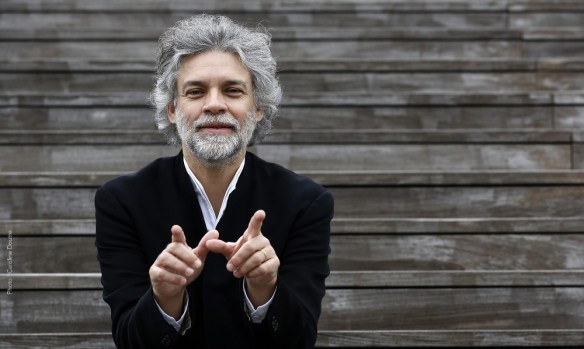
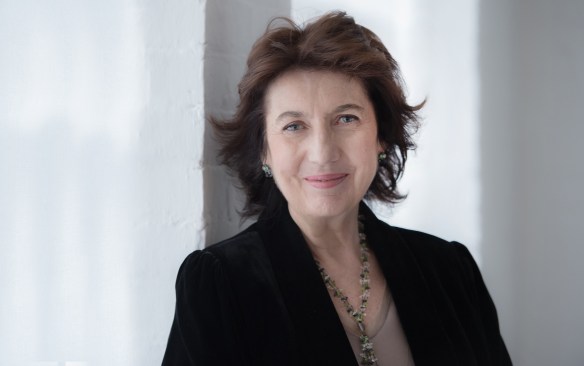
Imogen Cooper (piano)

Brahms Intermezzi Op.117 nos.1 & 2 (1892) (1:23 – 11:13)
Liszt Gretchen (Second movement of A Faust Symphony) (1854, arranged 1874) (11:52 – 30:05)
Brahms 7 Fantasien Op.116 (1892) (31:31 – 53:24)

Wigmore Hall, London
Monday 8 July 2019

To hear the BBC broadcast through BBC Sounds, please follow this link

Commentary and Review by Ben Hogwood Photo credit: Sim Canetty-Clarke

Brahms’ late piano music occupies a special place in 19th century repertoire. Rather like late Beethoven he makes use of the piano for some extremely confidential writing that starts to push at the boundaries of tonality and conventional rhythm. While Beethoven complemented his late piano works with a renewed inspiration for the string quartet, Brahms found the clarinet was his ideal ‘other’ vehicle in the early 1890s. Yet in the solo piano writing, here is a level of intimacy rarely found in the music of his time.

Imogen Cooper began her Wigmore Hall recital with two of the three late Brahms Intermezzi Op.117 – an example of where the composer would give a deliberately ambiguous title to a short piece, allowing himself the greatest possible freedom of form and expression. That said, the first – in E flat major – is simplicity itself, a much loved melody that Brahms used as consolation from the recent losses in his life. For this he drew inspiration from the Scottish ballad Lady Anne Bothwell’s Lament, and the piece benefits from Imogen Cooper’s unhurried approach in this performance (from 1:23 on the broadcast). The second piece in B flat minor is more flowing but also more directly troubled as it progresses (from 6:37), finishing in the lower recesses of the piano.

Published adjacently to the Op.117 Intermezzi are seven piano pieces Brahms called Fantasies – separate entities that work best as an overall whole. There are three Capriccio pieces, placed 1, 3 and 7 in the group, complemented with 4 Intermezzi, Brahms again keeping ambiguous labels for artistic freedom. Immediately however there is more heart on sleeve here, the first Capriccio in D minor (31:31) full of power and passion. The second piece, an Intermezzo in A minor, turns inwards, lost in thought (33:54), though there are brief glimpses of light in the central section.

The third piece, a Capriccio in G minor (37:42), has grand designs but still glints with a metallic darkness, using a falling melody whose outline is common to a number of late Brahms piano works, falling in melodic intervals of a third. A solemn central section is more hopeful before this music returns at 40:03. The fourth piece (40:55) is the first of three centred on the pitch of E, which seem to exist between major and minor keys. It is quite ambiguous, with a questioning harmony and uncertain rhythm – but finds calmer acceptance in its brief central section.

The fifth piece – another Intermezzo, now in E minor (45:06) is more mysterious still, its rhythm elusive, as though Brahms is in a dream state. Moving to E major for the sixth piece (47:58) we return towards earth, though the composer – and performer – are still in deep thought. A sudden jolt arrives with the final piece, another Capriccio in D minor (50:59), Brahms suddenly alert and on the front foot, and ending unexpectedly – and exultantly – in the major key. It is an ending hard won, but also slightly false, as it proves difficult to erase the deeply profound thoughts from earlier pieces.

The Liszt piece is a long slow movement taken from the composer’s orchestral / choral epic, A Faust Symphony. This is a portrait of Gretchen that transcribes particularly well for piano, Liszt’s gifts adapting his music and that of others between forms at its very best here. This is after all a composer who thought nothing of transcribing all nine Beethoven symphonies for solo piano.

Gretchen is tender and romantic, unfolding from the very start in a loving and flowing manner as played here by Imogen Cooper. Gradually the music becomes deeply passionate, Liszt building towards a series of weighty climaxes – the first around 19:10 and then again at 23:45. It can be heard as almost one unbroken phrase, and Cooper keeps a very natural feel to her phrasing, until the main theme returns at 24:14, where there is a very natural return to the mood and tenderness of the opening – before more extended dialogue. The period from 27:45 represents the coda, where a settled mood takes hold.

Throughout this concert Imogen Cooper let the music do the talking, as she always has done – not playing to the audience but producing beautifully rendered and carefully thought performances, with very impressive technical command – especially in the big-boned Brahms pieces. Of equal importance was her use of ‘rubato’, which is essentially breathing naturally in a musical sense so the rhythms sound more like phrases of a spoken or sung sentence. Everything came together wonderfully here, as it did in an encore of more Brahms – a beautifully observed account of the Waltz in A flat major Op.39/15, not heard on the broadcast.

Further reading and listening

The music in this concert can be heard below, in leading available versions. Imogen Cooper has yet to record late Brahms, so the playlist includes timeless versions of the pieces from Radu Lupu and Emil Gilels, along with Cooper’s recently recorded Liszt:

Cooper’s Liszt is part of an intriguing disc of piano music by Liszt and his contemporary and close relative Wagner, recorded for Chandos:

Another Imogen Cooper recommendation brings together piano music by Robert and Clara Schumann – a family affair with the former’s stormy Piano Sonata no.1 and Humoreske, nicely complemented with two of Clara’s Pièces caractéristiques:
Live review – CBSO / Mirga Gražinytė-Tyla: Honegger, Ravel & Brahms Second Symphony

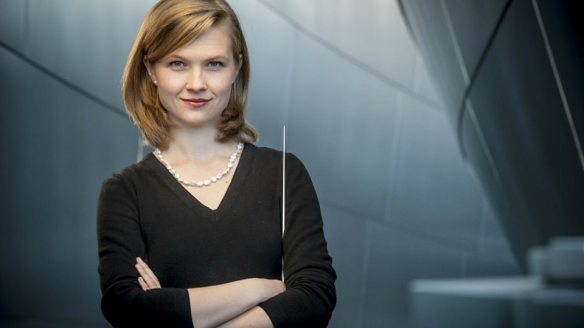
City of Birmingham Symphony Orchestra / Mirga Gražinytė-Tyla (above)

Symphony Hall, Birmingham
Friday 31 May 2019

Honegger Pastorale d’été (1920)
Ravel Introduction and Allegro (1905); Le tombeau de Couperin (1919)
Brahms Symphony no.2 in D major Op.73 (1877)

Written by Richard Whitehouse

Back from their extensive European tour, the City of Birmingham Symphony Orchestra and their music director Mirga Gražinytė-Tyla returned to home-base with this arresting programme of early 20th-century French music and a classic of the Austro-German symphonic repertoire.

Most understated among curtain-raisers, Honegger’s Pastorale d’été is always a pleasure to encounter and this account had its measure – whether in the evanescent outer sections with their intangible aura, or livelier central episode with its fleeting allusions to Swiss folksong. Gražinytė-Tyla has spoken of her desire to investigate composers ‘off the beaten track’ and Honegger would seem a plausible candidate; such works as the capricious Cello Concerto or anguished Fifth Symphony fairly crying out for reassessment and considered advocacy.

Ravel’s Introduction and Allegro enabled the conductor to take a break while a seven-strong ensemble from the CBSO gave this perfect marriage of formal lucidity and expressive poise; at its most perceptive in the wistful opening music that returns even more hauntingly towards mid-point, with a harp cadenza that Katherine Thomas rendered precisely while delicately. It duly prepared for Le tombeau de Couperin, Ravel’s highly oblique response to the enveloping tragedy of the First World War in an account that defined more fully than usual the character of its middle movements. The astringent irony of the Forlane became more so at Gražinytė-Tyla’s swift tempo, with the Menuet allowed space for its pathos and tenderness to register. If the Prélude and Rigaudon left less of an impression, there was little to fault with either.

After the interval, a performance of Brahms’s Second Symphony that went much of the way towards conveying those passing yet always tangible ambiguities which offset any general equanimity of mood. The opening movement felt not quite the sum of its parts – Gražinytė-Tyla tending to rush headlong into climaxes, and with a curiously indecisive transition into the development as suggested she might still be pondering over that repeat of the exposition. Yet such as the stark transition into the reprise (those granitic harmonies of trombones and tuba really hitting home) then the suffused eloquence of the coda were perfectly achieved, as was the slow movement which here emerged as a more complex amalgam of agitation and resignation than is often the case, not least in those fatalistic intimations towards the close.

Next came a winsome take on the Intermezzo, its pert alternations of elegance and animation deftly while never too knowingly rendered; after which, the finale had energy to spare, if not at the expense of that ambivalence as is made explicit with the mysterious transition into the reprise (a passage of which Mahler could hardly have been unaware). From here Gražinytė-Tyla steered a secure course through to the closing peroration, its exhilaration never risking bombast when emphatic brass chords drove home the prevailing tonality in bracing fashion.

An absorbing performance, then, bolstered by some consistently fine playing from the CBSO. Gražinytė-Tyla returns one final time this season when, in the middle of June, she tackles a piece that has become synonymous with this orchestra – Mahler’s Resurrection Symphony.

Further listening

You can hear a playlist of the pieces heard in this concert on Spotify below – none of which appear to be available in recordings made by the CBSO as yet:

Wigmore Mondays – Gould Piano Trio play Kirchner & Brahms

Gould Piano Trio (Lucy Gould (violin), Richard Lester (cello), Benjamin Frith (piano)

Kirchner Excerpts from Bunte Blätter Op.83 (1888) (1:48-16:40 on the broadcast link below)
Brahms Piano Trio no.1 in B major Op.8 (1854, revised 1888) (18:53-54:50)

Wigmore Hall, London
Monday 13 May 2019

To hear the BBC broadcast through BBC Sounds, please follow this link

Commentary and Review by Ben Hogwood

It was refreshing to hear the music of Theodor Kirchner in this concert, especially in the context of his friendship with the infinitely better known Johannes Brahms. Kirchner was a friend not just of Brahms but of Robert and Clara Schumann. His relative lack of lasting success is regrettable, due in part it seems to an addiction to gambling, yet his output includes a large amount of piano music. He has notably arranged both Brahms String Sextets for the piano trio combination, which suits his music well.

The Bunte Blätter (Coloured Leaves) is a collection of attractive miniatures that work well in concert, and the Gould Piano Trio chose seven of the twelve available for this concert. The first, Zwiegesang (from 1:48 on the broadcast link), is notable for the sweetly romantic notions of its duet between violin and cello. A Novellette (no.5, 3:49) takes a more playful air, while Mädchenlied (no.10, 6:30) is graceful and open. The Humoreske (no.2, 9:30) is bright, especially from the piano, but the Barcarola (no.7, 10:10) is much less charming than a normal example in this form would be – a real straight-faced affair.

Finally the Scherzino (no.4, 13:15) is a charming affair and the last piece, Abendmusik (14:13) has more obvious, heart on sleeve passion to complete a lovely set of miniatures, beautifully performed.

The short forms contrasted nicely with Brahms’ Piano Trio no.1 in B major Op.8, a much more substantial affair. Lasting 36 minutes in this performance, with a judicious use of repeats in the score, it is one of several powerhouses the composer published early on in his life. He returned to it nearly 35 years after composition, applying some extensive editing to all the movements save the second.

The first few bars (from 18:53) give an immediate impression of Brahms’s scope and ambition – and it is worth bearing in mind that this version is still truncated from what he originally wrote. Richard Lester’s expressive cello melody is beautifully phrased, and the ardent writing is handled with an ideal balance of romance and poise. The aching second theme (21:23) offers a nice contrast, after which the music becomes fraught, before the trio’s entire first section is repeated. Elements of mystery come into the middle section, where Brahms develops his melodic ideas, before a return to the theme brings stability (29:25 onwards). Pianist Benjamin Frith should be praised here for his combination of technical control and full expression.

The second movement, a Scherzo, has a detached theme first heard low down in the register (33:48). Contrasting with this are sweeping contours for the flowing ‘trio’ section, its long phrases responding well to the strings’ unison (36:57), though the tuning is tricky here. There is a lovely blend of light and shade at the end, a respite from the heady music of the first movement.

The slow movement (40:44) is intimate and heartfelt, with some particularly touching moments from the strings, from the cello melody with which it begins. Set in the ‘home’ key of B major, it unfolds with a natural grace, but also hints at the romantic thoughts of the young composer. It is a movement in which to completely lose yourself before the drama of the finale begins at 48:25.

This movement is a little unconventional for its time, Brahms reverting to the minor key in music notable for its stormy passion. Despite the heaviness of texture at times, Frith’s lightness of touch again helps focus the phrasing of the melodies and the substantial counterpoint that underpins them. By the end there is a powerful feeling of a victory hard won, the emphatic closing chords sealing the deal.

Further reading and listening

The music in this concert can be heard here, in the available versions:

The full Kirchner collection of pieces can be heard here:

Meanwhile the original version of the Brahms Piano Trio no.1 can be heard on this album below from Trio Opus 8, seemingly named after the piece itself:

Early Brahms is notable for its stature and heroic passion – and the playlist below brings together some of the works falling into this category, including the Piano Sonatas nos.1 & 3, the String Sextet no.1 in B flat major & the wonderful Serenade no.1 in D major for orchestra:

Live review – Sinfonia Tamesa & Matthew Taylor – Ethel Smyth Serenade & Brahms Third Symphony

Sinfonia Tamesa / Matthew Taylor

St James’s, Sussex Gardens, London
Saturday 9th March 2019

Schumann Genoveva Op.81 – Overture (1850)
Smyth Serenade in D major (1890)
Brahms Symphony no.3 in F major Op.90 (1883)

Written by Richard Whitehouse

Now into its eighteenth season, Sinfonia Tamesa has never been an orchestra afraid to ring the changes when it comes to programming. Tonight was no exception, with a rare hearing for Dame Ethel Smyth‘s Serenade to commemorate International Woman’s Day.

Not that this substantial piece proved unworthy of revival on its own merits. Brahms (whom Smyth admired above all others) is the obvious influence here, but Dvořák is equally evident in the rhythmic lilt and deft woodwind writing of its inner movements, an energetic scherzo followed by a hardly less animated intermezzo, and Matthew Taylor secured playing as lithe as it was incisive. He also brought out those expressive contrasts as make up for the opening Allegro’s lack of textural variety and ensured an underlying propulsion that carried the rather repetitious finale on to its decisive close. No major rediscovery, but a likeable and engaging work by a composer who wrote all too little purely orchestral music; should Tamesa choose to schedule Smyth’s masterly Double Concerto for Horn and Violin, then so much the better.

Framing this piece was music by Schumann and Brahms. The former’s only opera, Genoveva was a failure at its premiere and only infrequently revived today, but its melodic appeal helps compensate for some foursquare characterization – the overture making an effective concert item on its own terms. Some shaky intonation robbed the introduction of mystery, but what followed found a viable balance between agitation and an affirmation which (as also in the opera) ultimately wins through – evident here in the surging optimism of those closing bars.

After the interval came Brahms’s Third Symphony, its quiet ending merely one of the reasons why this is the least-often heard of the cycle. From the outset, Taylor secured the right tempo for an opening movement that can easily lose shape and direction; finding winsome charm in the second theme, before judging the development’s relaxation then accruing of momentum with assurance. The coda’s transfigured poise (Brahms’s riposte to Tristan?) carried over into the Andante, whose melodic simplicity belies an emotional ambiguity which was teased out from its ruminative asides before being made explicit in those confiding final pages. Good to hear what followed taken not as an unintentional slow movement, but rather an intermezzo whose pathos is accentuated by its deftly propelled motion. The finale brought a culmination in all respects, and though ensemble faltered during more dynamic passages, a sure impetus was sustained across the reprise (the thrilling modulation into which was tangibly conveyed) then a coda that recalls the work’s initial motto with a mingling of aspiration and benediction.

Make no mistake, this was a convincing and insightful take on a symphony of which such readings are still an exception to the rule. A fine showing, too, for Sinfonia Tamesa, which will return to St James’s on 6th July for a Rachmaninov programme under Matt Andrews.

For further information on Sinfonia Tamesa, visit the orchestra’s website – and for more on Matthew Taylor, click on this link

Wigmore Mondays – François-Frédéric Guy plays Debussy, Tristan Murail & Brahms

François-Frédéric Guy (piano)

Debussy Préludes, Book 2 (1912-13): Brouillards (1:27-4:25 on the broadcast link below); La puerta del vino (4:31-7:41); Les fées sont d’exquises danseuses (7:46-10:37); La terrasse des audiences du clair de lune (10:42-15:00; Feux d’artifice (15:03-19:07)
Debussy Images, Set 1 (1901-05): Reflets dans l’eau (20:47-25:37)
Tristan Murail Cailloux dans l’eau (2018, UK premiere) (25:40-32:30)
Brahms 4 Piano Pieces, Op.119 (1893) (34:35-48:23)

Wigmore Hall, London
Monday 11 February 2019

To hear the BBC broadcast through BBC Sounds, please follow this link

Commentary and Review by Ben Hogwood

If last year saw a surfeit of Debussy’s music in the composer’s centenary year, it was for a good reason. The composer is rightly revered as one of the leading lights of early 20th century music, and brought with him new approaches to melody and harmony, not to mention sound worlds and textures unlike anything that had been heard before.

His writing for the piano is indispensable and of a consistently high and original quality, whether taking inspiration from older forms or creating new ones. In his Préludes for the piano he builds on an approach perfected by Chopin, who used each key to create 24 such works. Debussy, however, made 24 character pieces, painting portraits either of specific or deliberately vague imagery.

In this lunchtime recital François-Frédéric Guy fully immersed himself in this revolutionary writing, showing a clear affinity with five of the Préludes from the later Book 2. The swirling mists of Brouillards (Mists) (from 1:27 on the broadcast link) are vividly portrayed, with a notable attention to detail on the weighting of the notes. The swagger of the Habanera inhabits La puerta del vino (The wine door) (4:31), with its exotic harmonies matched to a free rhythmic approach.

The parallel chords of Les fées sont d’exquises danseuses (Fairies are exquisite dancers) (7:46) are also beautifully weighted, while La terrasse des audiences du clair de lune (The terrace of moonlit audiences) (10:42) grows from its introduction with a masterful crescendo. Finally Feux d’artifice (Fireworks), 15:03) is captivating, and during it you can practically see sparklers being waved around, thanks to the twinkling figurations in Guy’s right hand.

Reflets dans l’eau, taken from Debussy’s Images Set 1, is another watery wonder (from 20:47), played here with exquisite control from both fingers and feet – the use of the sustain pedal being of great importance in Debussy’s music. The rippling sounds act as the inspiration for Tristan Murail’s tribute to the composer, Cailloux dans l’eau (25:40)

His response begins at a more measured tempo than Debussy’s, savouring the colours for longer and effectively making his water slower moving. Soon, however, the ripplies become much more pronounced and twist upwards to the higher pitches on the piano (c30:00), with frothy trills that gradually subside towards silence. Guy played this with absolute control, fully immersed in Murail’s writing.

To finish, the final works for piano by Brahms. These four pieces were written as the composer reached his 60s, and mark the end of a late creative flowering including a number of chamber works for clarinet and intimate pieces for the piano. Three of Op.119 are classed as Intermezzos, a title essentially giving the composer free rein.

No.1 feels the most free of all, with a soaring right hand line beautifully floated by Guy in this performance. A real song without words, it carries deep emotional impact here. Guy moves straight on to the second piece (38:20), a flowing piece with greater urgency and a sunnier theme in the centre.

Then at 42:27, the short third piece, with repeated notes using the ‘classic’ Brahms triplet rhythms. Guy missed a couple of notes here but gauged the piece just right leading to the heroic Rhapsody (43:51) This piece is a triumphant way to end any concert, but does finish on a darker note. Until then, Brahms develops the theme, moving by 46:30 to a mood that recalls the previous Intermezzo. Then the main tune returns with great force (47:37), and just as it looks like a sunny ending Brahms plunges us into the minor key, signing off with great fire and brimstone.

To calm the waters after this, Guy returned to Debussy, and the first book of Préludes – with the most famous excerpt of all, Clair de lune (49:52-53:55).

Further listening

François-Frédéric Guy has not yet recorded any of the music heard in this concert – however the below Spotify playlist includes some leading versions of the repertoire heard:

Unfortunately the Tristan Murail is not available anywhere yet; however his complete piano music up until 2013 can be heard here in recordings made by Marilyn Nonken:

For more Debussy, Mitsuko Uchida’s album of the Études, another extension of a form pioneered by Chopin, can be heard here in an award-laden disc:

Late Brahms is one of the pinnacles of the Romantic piano repertoire, and few recorded it with the authority of Steven Kovacevich, heard here in a wonderful album for Philips: