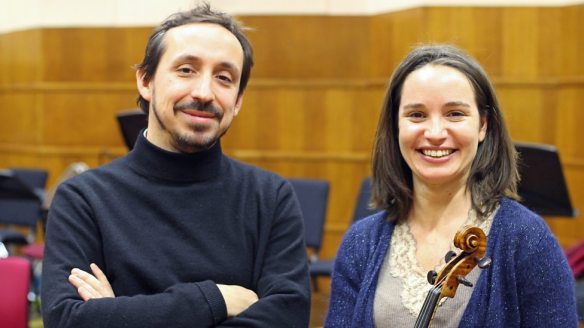
Wigmore Mondays – Lise Berthaud & David Saudubray: Schubert & Brahms sonatas

Lise Berthaud (viola), David Saudubray (piano)

Wigmore Hall, Monday 2 March 2020 (lunchtime)

You can listen to this concert on the BBC Sounds app here (opens in a new window)

Review and guide by Ben Hogwood

Neither of the two principal works in this BBC Radio 3 Lunchtime concert originated as viola pieces, but both have become repertoire staples for the instrument, the warmth of the Schubert Arpeggione Sonata and the sage experience of Brahms’s First Clarinet Sonata being ideal vehicles for its silvery tone.

The Schubert is an especially unusual case, being the only prominent piece written for the arpeggione. This was an instrument with six strings and frets like a guitar, which was bowed and held between the knees.
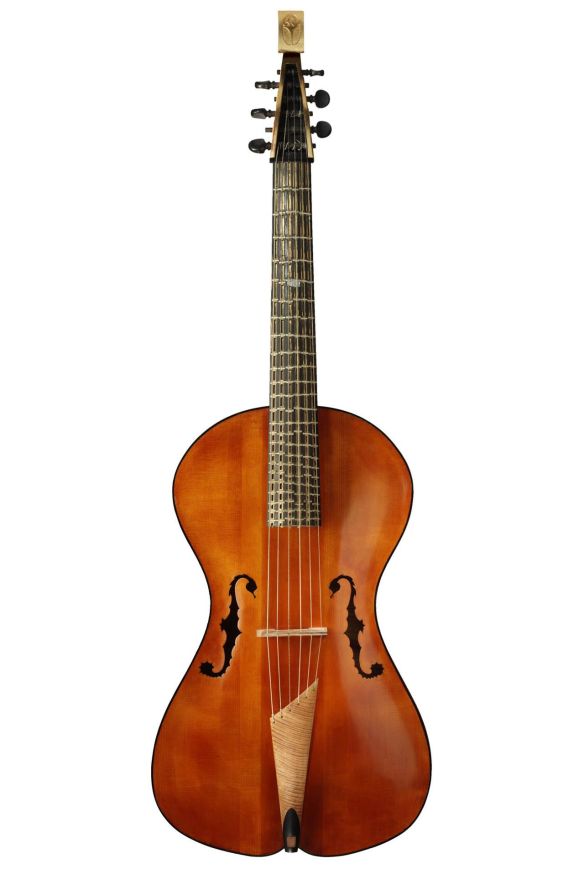
Though it did not catch on as an alternative to the cello or the viola, Schubert wrote a substantial piece for a friend of his who played it. Because of the practicality of performing the work it was not until 1867 that it was finally published, with the realisation that it transcribes ideally for either cello or viola with piano accompaniment, the melodies lying under the fingers with deceptive ease.

The Arpeggione Sonata is a largely happy work, though it begins lost in thought (from 2:42 on the broadcast link). This was a measured intro from David Saudubray but as the first movement progressed the songful tone of Lise Berthaud’s viola took over, the pair enjoying the spring in the step of the faster music as though they were venturing out to dance. There was a really nice passage around the 8:38 mark, the viola using pizzicato to accompany the piano.

The second movement Adagio (14:28) explored more tender thoughts, the piano’s rocking motion suggesting the profile of a lullaby, especially with Berthaud’s soft musings above. However it was not long before we were straight into the Allegretto finale (18:13), the players investing more urgency until we arrived back at the dance (19:31), Schubert unable to resist setting the players on the floor once again. This good humour continued until the bright ending.

Brahms’s first contribution to the viola and piano repertoire is a very different animal, being from late in his career. Having decided to finish as a composer in 1890 it was something of a surprise when Brahms, having rid himself of the pressure of a Fifth Symphony, found inspiration in the clarinet. He wrote a Trio, Quintet and two Sonatas for the clarinettist Richard Mühlfeld, but it was soon brought to his attention that the Trio and both Sonatas transcribed very easily for viola – and those arrangements were made with his blessing.

As Lise Berthaud showed, the profile of Brahms’ melodies in the Sonata in F minor Op.120/1 are ideal for the instrument, the wide range of the first movement (29:07) easily under her fingers. The sweep of this melody and its subsequent development was impressive, as was the graceful second theme, with just the occasional slip from Saudubray in Brahms’s more congested piano writing. The controlled but expressive Andante was delightfully played (37:14), its roots clearly in song. A lilting Intermezzo was third (42:10), both players finishing each other’s musical sentences as equals, the music itself like a breeze in the branches of an old tree. The fourth movement (46:07), marked Vivace, threw caution away, with a peal of bells from the piano leading to a flowing and good spirited exchange, prone to the odd outspoken burst from the piano. Here was proof that the older Brahms still had the enthusiasm and musical vitality of his youth.

Repertoire

This concert contained the following music (with timings on the BBC Sounds broadcast in brackets):

Schubert Arpeggione Sonata in A minor D821 (1824) (2:42)

Brahms Viola Sonata in F minor Op.120/1 (1894) (29:07)

As an encore we had a lovely piece from Frank Bridge, the Berceuse (52:40), whose rocking motion was evident in Saudubray’s sensitive piano playing, the ideal foil to Berthaud’s velvety tone.

Further listening & viewing

The music from this concert can be heard in the playlist below, with versions of the Schubert and Brahms recorded by Berthaud herself:

As alluded to in the review, late Brahms works particularly well for the viola, as this collection shows – with both sonatas and the trio for viola, cello and piano coupled together:

Frank Bridge wrote some winsome music for his first instrument, collected here by the viola player Louise Williams and pianist David Owen Norris, joined for three songs by mezzo-soprano Jean Rigby:
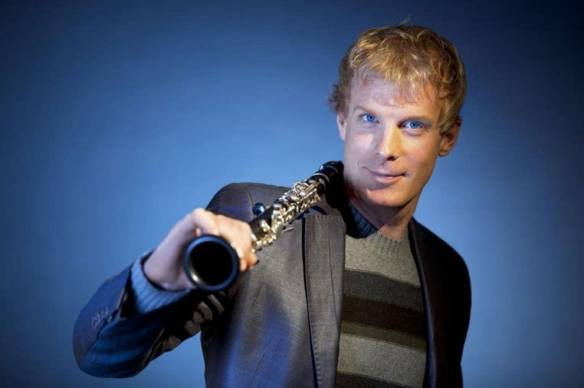
In concert – Martin Fröst & Roland Pöntinen at Wigmore Hall

Martin Fröst (clarinet), Roland Pöntinen (piano)

Wigmore Hall, Monday 16 December 2019

Review and guide by Ben Hogwood

A concert that was relatively short on music but extremely high on musicianship and virtuosity. Martin Fröst is one of the finest clarinettists at work today, and fellow-Swede Roland Pöntinen, with whom he has enjoyed a musical partnership for 25 years, is an extremely highly respected pianist either in a solo capacity or here as a chamber music ally. Both delighted their young Wigmore Hall audience – yes, that can be a thing at this venue’s concerts! – who were on their feet at the end.

The two gave us ‘French Beauties and Swedish Beasts’, a concert based on their first disc for BIS made 25 years ago. The beauties were first, in the shape of Debussy and Poulenc. The former’s Première rapsodie was written as a competition piece for the Paris Conservatoire, and later orchestrated in a form revealing its stylistic parallels with the composer’s ballet Jeux. There was a balletic feel to this interpretation too, Fröst’s languorous tone complemented by the stop-start rhythms of Pöntinen’s piano part. Initially the music was happy to indulge in its warm, lush surroundings but gradually it grew more agitated until Fröst’s final, bluesy solo.

Poulenc’s Clarinet Sonata, a late work, is dedicated to the composer Arthur Honegger and received its first performance in the hands of no less a duo than Benny Goodman and Leonard Bernstein. It is difficult to imagine a better account than here, with Fröst’s tone in the quieter and reflective passages simply sublime, layered with emotion. This was complemented by a sparky finale, where the music flew out of the gate like a horse let into an open field. The performers finished each other’s musical sentences in a performance of wit, charm and sensitivity.

The first of the ‘Swedish Beasts’ followed, a piece from Anders Hillborg written for the partnership before his breakthrough work, the Clarinet Concerto which Fröst recorded some seven years later. This was a piece of two extremes, flitting between reflective slow phrases and sharp retorts where the clarinet used the outer limits of its register. It was effective and a concentrated piece showing off Fröst’s technical prowess.

The second Swedish Beast was much more benign, but Roland Pöntinen’s own Mercury Dream showed an affinity with the blues. Nocturnal New York seemed to be its focus, especially in the easily paced piano introduction and postlude, but when Fröst joined the music became more animated.

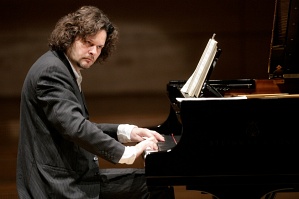
Prior to that the pianist (above) gave us two substantial chunks from Ravel’s Miroirs. His account of Une barque sur l’océan was highly pictorial, and his Alborada del gracioso had swagger, even if some of the initial phrases were clipped. Pöntinen has not yet recorded Ravel and it would be interesting to set alongside his many BIS recordings of earlier music.

The partnership finished with Chausson’s Andante and Allegro, a discovery from the composer’s Bayreuth period in his mid-twenties, before Wagner’s spell exerted itself on his music. This was an enjoyable piece, full of melodic grace in the flowing Andante before turning slightly darker for the passionate Allegro.

We had two superb encores from the duo, playing pieces Fröst has previously given with orchestra. Brahms’ Hungarian Dance no.1 in G minor surged forward passionately, while Göran Fröst, the clarinettist’s brother, contributed the hugely entertaining Klezmer Dance no.2, full of good tunes and musical banter between clarinet and piano. Given the technical expertise on show, the standing ovation that followed was inevitable.

Repertoire

This concert contained the following music:

Debussy Première rapsodie (1909-10)
Poulenc Clarinet Sonata (1962)
Hillborg Tampere Raw (1991)
Ravel Miroirs: Une barque sur l’océan; Alborada del gracioso (1904-5)
Pöntinen Mercury Dream (1994)
Chausson Andante and Allegro (1881)

Encores
Brahms Hungarian Dance no.1 in G minor ()
Göran Fröst Klezmer Dance no.2

Further listening

You can hear the music from this concert on the Spotify playlist below:

You can hear the album French Beauties and Swedish Beasts in its entirety on Spotify below. Alongside the items from this concert it includes the rather wonderful Saint-Saëns Clarinet Sonata:

Meanwhile Anders Hillborg’s Clarinet Concerto Peacock Tales’ written for Fröst, can be heard in its premiere recording here:

Wigmore Mondays – Nicolas Angelich plays Bach / Busoni, Brahms & Beethoven

Nicolas Angelich (piano)

Wigmore Hall, Monday 9 December 2019 (lunchtime)

You can listen to this concert on the BBC Sounds app here (opens in a new window)

Review and guide by Ben Hogwood

A concert of the three ‘B’s, all of them greats of keyboard literature – with a fourth, Busoni, added for good measure.

J.S. Bach and Busoni make a winning combination, the Italian 20th century composer having discovered a strong affinity with his ‘ancestor’s’ work in transcribing his organ and harpsichord works for piano. These were always done in a reverent way, and the famous Advent chorale prelude Nun komm, der Heiden Heiland (Now come, Saviour of the heathens) is no exception. Nicolas Angelich ensured all was still before beginning this account, and once started he left plenty of room for musical thought and variation of tempo and phrasing. Although at times it was a little too mannered, it was a nicely gauged start to the concert.

Angelich continued without a break into Brahms’ 7 Fantasien, hailed by Clara Schumann as ‘a true source of enjoyment, everything, poetry, passion, rapture, intimacy, full of the most marvellous effects’. The seven pieces work well as a whole, with three Capriccios placed 1, 3 and 7 in the group, interspersed with four Intermezzi. The relatively ambiguous labels mean Brahms has plenty of freedom for expression, and beyond the Capriccios being faster and stormy, and the Intermezzi slower, intimate and experimental, there is little to confine his work.

The performances here were well-informed, Angelich having recorded these works for Virgin Classics back in 2006. The first Capriccio in D minor (9:51) exhibits power and authority, with the composer’s beloved triplet rhythms in evidence, and is complemented by the first Intermezzo in A minor (12:11), one of several moments where Brahms’ thoughts turn wholly inwards – apart from the slightly sunnier middle section. The third piece, a Capriccio in G minor (16:23) has arpeggios tumbling downwards, and has a central section anticipating the tonal area (E) of the three Intermezzi to come. These are the fourth piece in E major (19:23), full of subtle but noticeable questioning in its melody, and the longest piece of the set. It is followed by the thoughtful fifth piece in E minor (23:59) and a sixth, mostly chordal piece back in E major (26:56) which quickly moves away from its harmonic base. Finally the power and passion returns for the seventh piece, a Capriccio in D minor (30:21). Brahms again is in his favourite two-against-three rhythmic figuration, and this signs off the set in the major key with some aplomb in Angelich’s performance.

Fantasy is also a theme for Beethoven’s most famous piano work, his Moonlight Sonata. In truth this piece sits between a fantasy and a sonata (hence the composer’s subtitle, Sonata quasi fantasia), and the first movement, though static in the profile of its arpeggios, is pure and magical imagery, Beethoven intentionally or not evoking moonlight over Lake Lucerne as perceived by his friend, the poet Ludwig Rellstab.

Angelich brought the stillness of the moment to the Wigmore Hall (35:30), reflective and deep in a reverie, only rousing slightly for a Scherzo of relatively downbeat thoughts (41:35). Those sentiments were well and truly blown away by the Finale (44:12), the only one of the three movements written in true ‘sonata form’ by Beethoven. This was a terrifically played account, carefully thought through and played with feeling rather than a need for technical prowess – though that was present too.

Angelich returned to late Brahms for his encore, the Intermezzo in E flat major Op.117/1 (54:02) Another late work, this one is based on an old Scottish ballad, Lady Anne Bothwell’s Lament – and brought the mood and chronology of the concert full circle.

Repertoire

This concert contained the following music (with timings on the BBC Sounds broadcast in brackets):

J.S. Bach arr. Busoni Nun komm, der Heiden Heiland BWV 659 (c1748, arr.1898) (4:36)
Brahms 7 Fantasien Op.116 (1892) (9:51)
Beethoven Piano Sonata no.14 in C sharp minor Op.27/2 ‘Moonlight’ (1802) (35:30)
Encore: Brahms Intermezzo in E flat major Op.117/1 (1892) (54:02)

Further listening

The music from this concert can be heard in leading available versions on Spotify below. These include Angelich’s recording of the Brahms pieces, with Murray Perahia playing the Bach / Busoni and Beethoven:

Angelich can be heard in a double album of late Brahms that includes the composer’s piano pieces published as Op.117-119. They hold a unique place in the piano repertoire, written by Brahms in the knowledge that his compositional career was nearly over and looking forward to innovations by composers such as Mahler, Berg and Schoenberg:

Busoni’s transcriptions of Bach organ works repay further exploration, especially at this time of year. This album from Kun-Woo Paik brings together some of the more famous examples, including the Toccata, Adagio and Fugue:

Beethoven’s 32 Piano Sonatas remain one of the wonders of his output, but even a listen to the four published after the Moonlight sonata reveal a composer striking out for new shores. The Piano Sonata no.15 in D major Op.28, known as the Pastoral, is similarly magical – before the group of three works published as Op.31 reveal humour in the first, stormy Romanticism in the second (nicknamed The Tempest) and an openness of expression in the beautiful third. The playlist below brings together leading recordings from Emil Gilels:

Wigmore Mondays – Marnis Petersen & Camillo Radicke: Anderswelt (The Otherworld)

Marnis Petersen (soprano, above), Camillo Radicke (piano, below)

Wigmore Hall, Monday 23 September 2019 (lunchtime)

You can listen to this concert on the BBC Sounds app here

Review and guide by Ben Hogwood

A song recital that was truly out of this world.

German coloratura soprano Marnis Petersen and pianist Camillo Radicke brought the concept of their most recent recording, Dimensionen: Anderswelt, to the Wigmore Hall for an hour of 20 songs by no fewer than 18 composers.

The description ‘coloratura soprano’ depicts a singer that specialises in an operatic style, often high in the register – and that fits the music in this extraordinary collection. Most of the songs – and a couple of the composers – will surely have been new even to the most devoted Wigmore Hall attendee, and as Petersen and Radicke threaded the links cleverly through sections entitled The Otherworld, Elves, Mermaids and Mermen and Northern Lights, they plotted a course from deepest Germany to northern Iceland.

To begin Petersen read a short passage before the first group of five songs. Hans Pfitzner’s Lockung (Temptation) (2:25), with its twinkling piano and entreating mermaids, beckoned us in to the first of the Elves sections. Here we found Reger depicting a ‘pert and wanton’ elf, to a suitably heady vocal from Petersen, then the first of three settings of Eichendorff’s Elfe poem from Bruno Walter (7:28).

Camillo Radicke was superb here, with the insistent trills high up in the piano’s register, over which Petersen floated beautifully. Julius Weismann’s setting of the same text (9:43) again opted for the high register, this time in an attractive triple time dance. Though written in the same year as the Walter, it felt considerably older – and transitioned nicely to Brahms, setting Heine’s seductive water nymph in Sommerabend (Summer evening) (11:21), which found Petersen’s vocal control in very fine shape.

The Mermaids and Mermen section, again five songs in length, had an intriguing juxtaposition of composers. Hans Sommer’s Lore im Nachen (Lore in the skiff) found Radicke catching the ‘shimmer in the evening gold’ on a tranquil lake, as Petersen again soared high in the register. Grieg’s Med en Vandlilje (With a water lily) (18:09) introduced a wary atmosphere with the lurking water sprite (18:09) before Carl Loewe, heard to such great effect in Benjamin Appl and Kristian Bezuidenhout’s recital the previous week, was at it again with the boldly descriptive Der Nöck (The nix) (20:46). The nix (Petersen) and its harp (Radicke) were both strikingly portrayed, and Petersen’s vocal was superb. Sinding’s Ich fürcht’ nit Gespenster (I fear no ghosts) (29:18) was also a striking song, appropriately ghoulish in its coda from Radicke after Petersen had confidently confronted her spectres. Finally we heard a pupil of Hindemith, Harald Genzmer, and the agitated Stimmen im Strom (Voices in the river) (31:32)

To another quintet of songs on Elves, beginning with the cheeky Elfenlied, Wolf’s subject humourously caught by Petersen, who sang into the piano as her subject staggered about having banged his head. Friedrich Gulda’s setting of Elfe – the third of the concert – was a collector’s item (37:34), the 16-year old intriguingly matching the other two in the high treble area for an impish setting. Carl Loewe’s second appearance was with the operatic Die Sylphide (39:20), Petersen’s voice again reaching sparkling heights. Franz Schreker’s Spuk (Spook) (41:42) felt like some of the most modern music here, flitting about with uncertainty and tension, while in a rare outing for the music of conductor-composer Hermann Zumpe, Liederseelen (Song-Souls) (43:58) was affectionately sung.

Petersen and Radicke saved the most adventurous part of their concert until last, with four songs from Scandinavia and Iceland. Ariels Sang (48:06) was a rapturous contribution from Nielsen, boldly delivered, before Sinding reappeared with Majnat (May night) (50:26), a more thoughtful affair. Swedish composer Stenhammar’s Fylgia (53:25) was fulsome and florid in its praise of the spirit, but Sigvaldi Kaldalóns’ Hamraborgin (Castle crags) (55:46) painted its subject with uncanny atmosphere, depicting the rarefied atmosphere of the Northern Lights. Petersen capped her vocal performance here with a stunning top ‘B’ at the end.

It was a great way to finish – though after Radio 3 had departed there was another gem in store courtesy of the Finnish composer Yrjö Kilpinen, and an encore of his song Berggeist.

This was a recital of great imagination and technical brilliance. As an introduction to the classical song it would present some challenges to the casual listener, but with the enchantment offered by Petersen and Radicke’s partnership it would prove difficult to resist. Those familiar with the world – or otherworld in this case – should dive right in, as there will definitely be something new!

Repertoire

Marnis Petersen and Camillo Radicke performed the following songs (with timings on the BBC Sounds broadcast in brackets):

The Otherworld

Pfitzner Lockung Op.7/4 (1888-9) (2:25)

Elves I

Reger Maiennacht Op.76/15 (1903-4) (5:23)
Walter Elfe (1910) (7:28)
Weismann Elfe Op.43/4 (1909-10) (9:43)
Brahms Sommerabend Op.85/1 (1878) (11:21)

Mermaids and Mermen

Sommer Lore im Nachen Op.13/1 (publ. 1891) (15:25)
Grieg Med en Vandlilje Op.25/4 (1876) (18:09)
Loewe Der Nöck Op.129/2 (1857) (20:46)
Sinding Ich fürcht’ nit Gespenster (1885) (25:42)
Genzmer Stimmen im Strom (1941) (31:32)

Elves II

Wolf Elfenlied (1888) (35:24)
Gulda Elfe (1946) (37:34)
Loewe Die Sylphide Op.9 (1837) (39:20)
Schreker Spuk Op.7/4 (1898-1900) (41:42)
Zumpe Liederseelen (publ. 1895) (43:58)

Northern Lights

Nielsen Ariels Sang (1916) (48:06)
Sinding Majnat Op.22/3 (1893) (50:26)
Stenhammar Fylgia Op.16/4 (1893-7) (53:25)
Kaldalóns Hamraborgin (c. 1910) (55:46)

Encore – Kilpinen Berggeist Op.99/3

Further listening

All the songs in this concert can be heard from Petersen and Radicke’s recording on the Spotify playlist below:

One of many possible further steps is Wings In The Night, a collection of Swedish songs from mezzo-soprano Anne Sofie von Otter and pianist Bengt Forsberg:

There are so many songs by Carl Loewe that it is difficult to know where you could start. Given his artistry, tenor Christoph Prégardien would seem to be a good bet, this album of songs recorded with pianist Cord Graben:

Arcana at the Proms – Prom 35: Martyn Brabbins – Enigma Variations

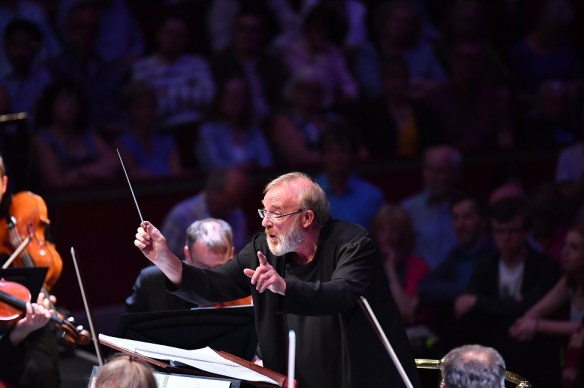
Idunnu Münch (mezzo-soprano), William Morgan (tenor), Nadine Benjamin (soprano), David Ireland (bass-baritone), English National Opera Chorus, BBC Singers, BBC Scottish Symphony Orchestra / Martyn Brabbins (above)

Various composers Pictured Within: Birthday Variations for M. C. B. (2019, BBC commission: world premiere)
Vaughan Williams Serenade to Music (1938)
Brahms Schicksalslied (Song of Destiny) Op.54 (1871)
Elgar Enigma Variations Op.36 (1899)

Royal Albert Hall, Tuesday 13 August 2019

Reviewed by Richard Whitehouse
Photo credits Chris Christodoulou

You can listen to this Prom on BBC Sounds here

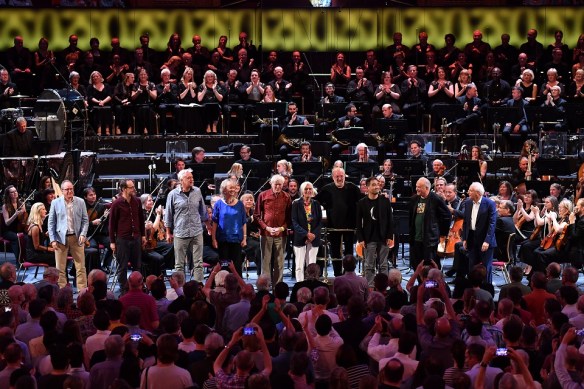
It was clearly a great idea that the BBC commission a piece to mark Martyn Brabbins’s 60th birthday, this concert also being his 36th appearance at these concerts, as well as featuring 14 composers with whom this most stylistically wide-ranging of conductors has been associated.

The result was Pictured Within: Birthday Variations for M.C.B, each composer contributing a variation on an anonymous theme in what is an inverse take on Elgar’s procedure in his own Variations on an Original Theme – whose ground-plan also furnished the formal framework. Space precludes more detailed discussion, though it is worth noting the degree to which these composers (the full list is here) were inhibited or liberated by their placing in the overall scheme. And as this theme yielded its potential more from a harmonic then melodic or rhythmic angle, the most successful made a virtue of such constraints – not least Judith Weir in her engaging 10th variation and John Pickard in a finale, The Art of Beginning, whose deft mingling of portentousness with humour might yet become the springboard for an entirely new venture.

Vaughan Williams’s Serenade to Music (premiered in this venue – but not at these concerts – 81 years ago) was conceived for 16 solo singers and the choral alternative inevitably loses some of the original’s intimacy, though not the distinctiveness in its setting of lines drawn from Shakespeare’s The Merchant of Venice. Joining the BBC Singers and members of the ENO Chorus were participants on the Harwood Young Artists programme, of whom Nadine Benjamin brought a wide-eyed wonder to the soprano solos which motivate the latter stages.

Less often heard in the UK, Brahms’s Song of Destiny is among his most ruminative choral works. Its setting of the eponymous poem by Friedrich Hölderlin might be seen as continuing from A German Requiem in its subdued fatalism, albeit with a more animated central section as hints at that starker resignation which overcame the composer in his later years. Brabbins presided over an unforced yet insightful account of a piece that, for its relative unfamiliarity, has garnered numerous distinguished admirers – among them the composer William Walton.

Closing this concert with Elgar’s Enigma Variations made for an effective symmetry as well as bringing the programme full circle. Brabbins is no stranger to the work and duly galvanized the BBC Scottish Symphony Orchestra in a performance which gave full rein to these widely contrasted portraits (never caricatures!) of the composer’s friends while also ensuring an overall unity to the greater design – with the only lengthy pause coming after a luminous account of the ninth Nimrod variation – that carried through to a finale whose elation was shorn of any bombast. There were various delights on the way, not least a winsome take on the fifth variation, with the numerous instrumental solos eloquently taken. Hard to believe Elgar extended that final variation only at the urging of others, so inevitably does this build to its resplendent ending.

Some might have wondered whether building a full Prom around the birthday of its conductor was excessive but, given the regard in which Brabbins is held and the conviction he invested into each of these pieces, that decision was manifestly justified. Many Happy Returns M.C.B!

Martyn Brabbins has recorded Elgar’s Enigma Variations with the BBC Scottish Symphony Orchestra for Hyperion. More details can be found on their website, or on the YouTube clip below: